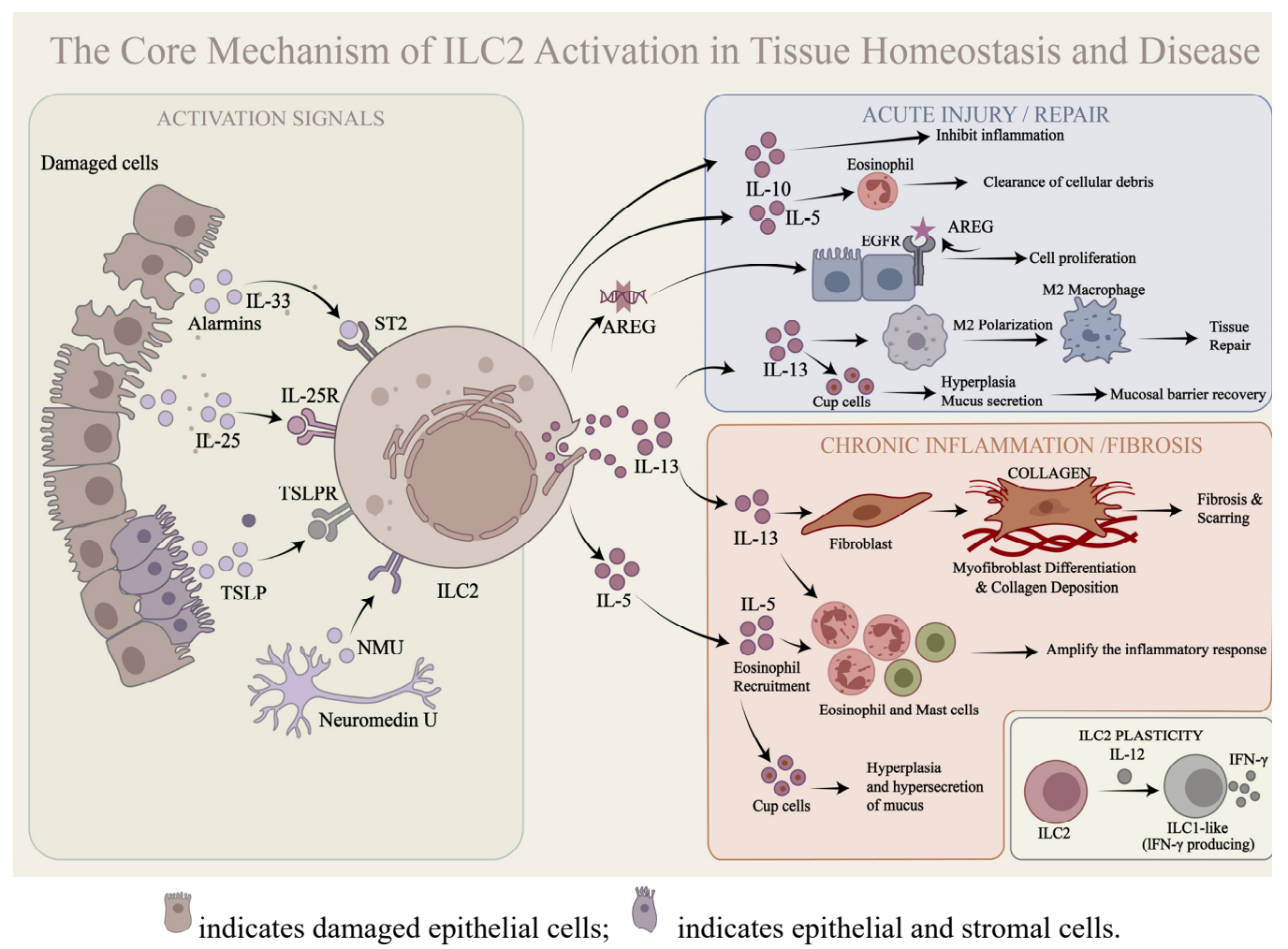
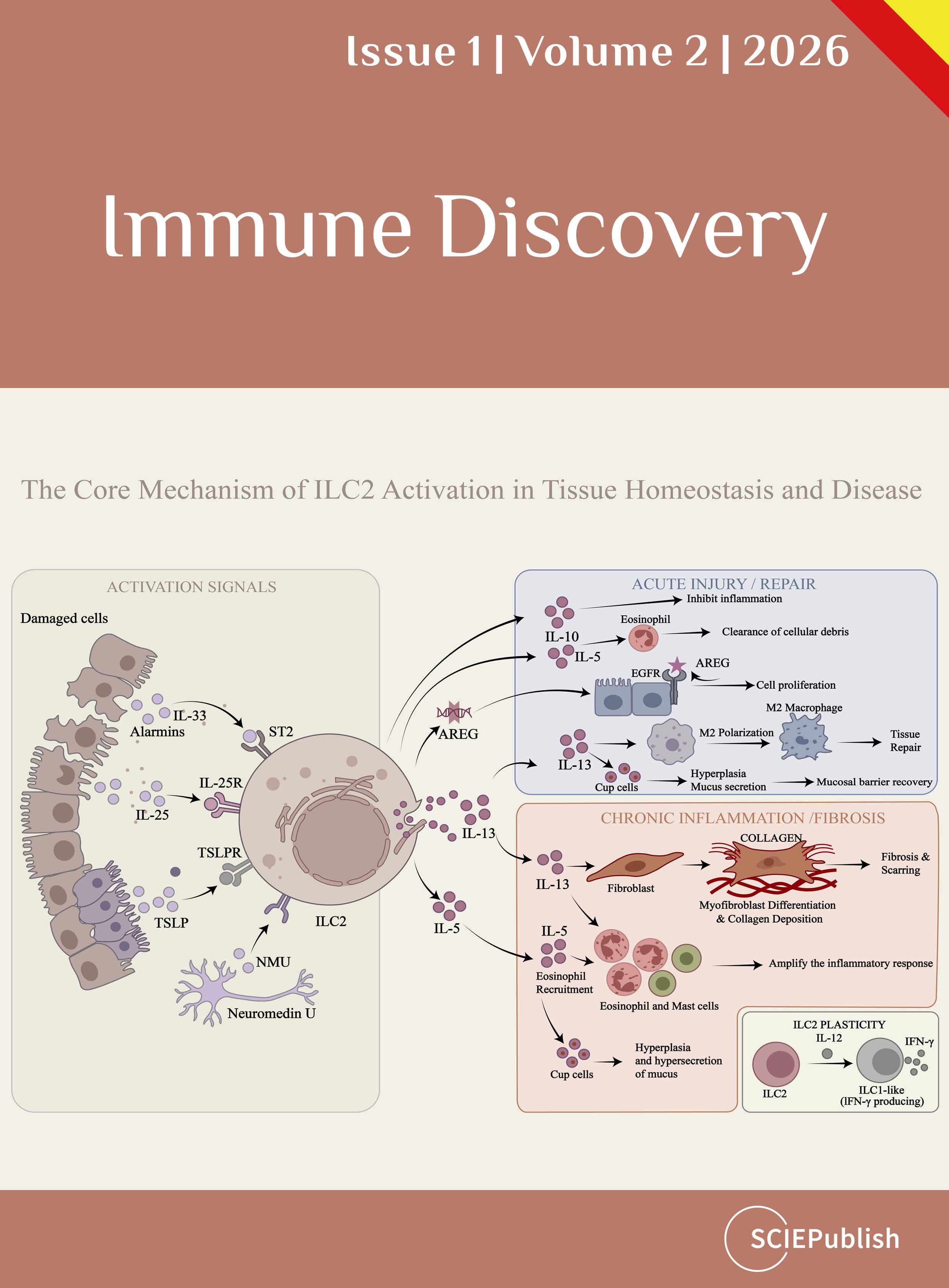
Group 2 innate lymphoid cells (ILC2s) are tissue-resident sentinels pivotal for maintaining barrier homeostasis and orchestrating type 2 immunity. Upon acute injury, alarmins rapidly activate ILC2s, which promote tissue repair by secreting amphiregulin, IL-5, and IL-13, driving epithelial proliferation and migration, anti-inflammatory macrophage polarization, and immune regulation. Under specific conditions, such as allergen immunotherapy, a subset of ILC2s can be induced to produce IL-10, further enhancing immune regulation and tissue repair. However, in chronic inflammatory or fibrotic diseases, such as asthma, atopic dermatitis, pulmonary and liver fibrosis, and cardiovascular disorders, persistent activation skews ILC2s toward a pathogenic state. Here, excessive cytokine production drives eosinophilia, mucus hypersecretion, and fibroblast activation, while microenvironmental cues can induce plasticity toward pro-inflammatory Group 1 innate lymphoid cell (ILC1)-like phenotypes. This review systematically details the dual, context-dependent roles of ILC2s across major organs, highlighting their function as critical regulators of the repair-fibrosis axis. We critically examine the sources of functional variability, including differences in injury models, disease chronicity, species-specific effects, and ILC2 subset definitions that may explain apparent contradictions in the literature. Where appropriate, we compare ILC2 functions with those of other immune cell types such as regulatory T cells (Tregs) and macrophages, emphasizing the unique and overlapping contributions of each population. Finally, we discuss emerging therapeutic strategies that aim to precisely inhibit pathogenic ILC2 responses or harness their reparative potential, offering promising avenues for treating a spectrum of chronic inflammatory and fibrotic diseases.