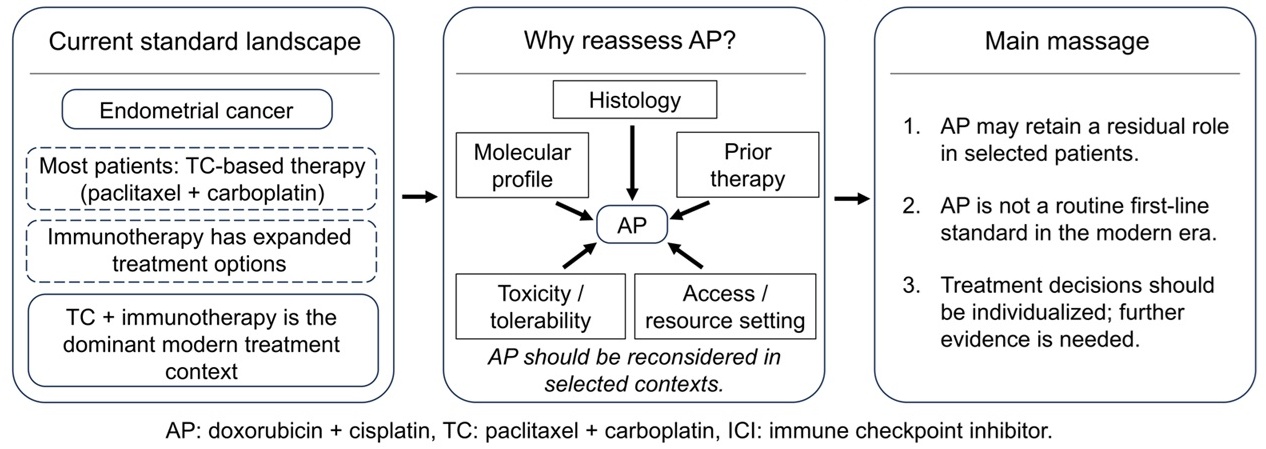
Doxorubicin plus cisplatin (AP) once played a central role in the systemic treatment of advanced and recurrent endometrial cancer and helped establish combination chemotherapy as a standard approach for extra-uterine disease. Contemporary practice, however, has shifted toward carboplatin plus paclitaxel (TC), which now serves as the cytotoxic backbone for first-line immunotherapy-based strategies. This transition should not be interpreted as the simple replacement of an ineffective regimen by a definitively superior one. No dedicated two-arm trial established the superiority or noninferiority of TC over AP across the full clinical spectrum. Rather, the change resulted from an accumulation of evidence: AP had established historical activity, the addition of paclitaxel to AP improved outcomes, and TC subsequently achieved similar efficacy to the three-drug regimen with better tolerability and practical feasibility. Molecular classification has further changed the treatment landscape. POLE-mutated, mismatch repair-deficient, p53-abnormal, and no specific molecular profile tumors differ in prognosis and therapeutic relevance, but no molecular subgroup has been shown to derive preferential benefit from AP rather than TC. TC also remains the platform for major first-line immunotherapy trials, whereas biomarker-directed and later-line options have further reduced the competitiveness of AP. Emerging biomarkers of cisplatin sensitivity and combinations of immune checkpoint blockade with PARP inhibition remain investigational and do not establish a new molecular niche for AP. AP should therefore be regarded as a historically important regimen with a narrow residual role as an exceptional fallback when established contemporary strategies cannot reasonably be used.
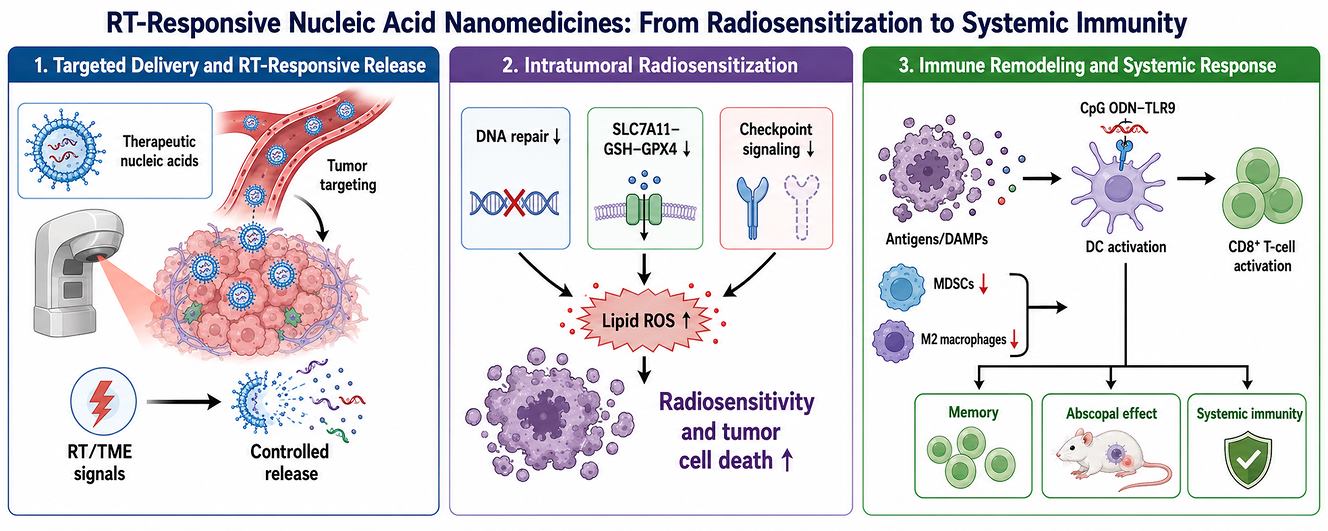
Radiotherapy (RT) remains a mainstay of cancer treatment, but its efficacy is limited by radioresistance and immunosuppression. Nucleic acid therapeutics, including siRNA, microRNA modulators, antisense oligonucleotides, aptamers, CpG oligodeoxynucleotides, and CRISPR systems, can remodel tumor responses at multiple levels. Nanotechnology enables their precise delivery, protection, and spatiotemporal activation. This review synthesizes recent advances in nucleic acid-enabled radiosensitization across four dimensions: (1) precise delivery via passive/active targeting and radiation-triggered release; (2) target selection from dominant-node inhibition to coordinated network regulation; (3) immune remodeling from checkpoint blockade to active immune instruction; and (4) multimodal integration where RT serves as a biological switch. We formally define programmable radio-nanomedicine as the co-design of nucleic acid cargo, carrier logic, activation trigger, and radiation schedule so that irradiation acts as a context-defining event. Translational barriers and a framework for next-generation design are discussed.
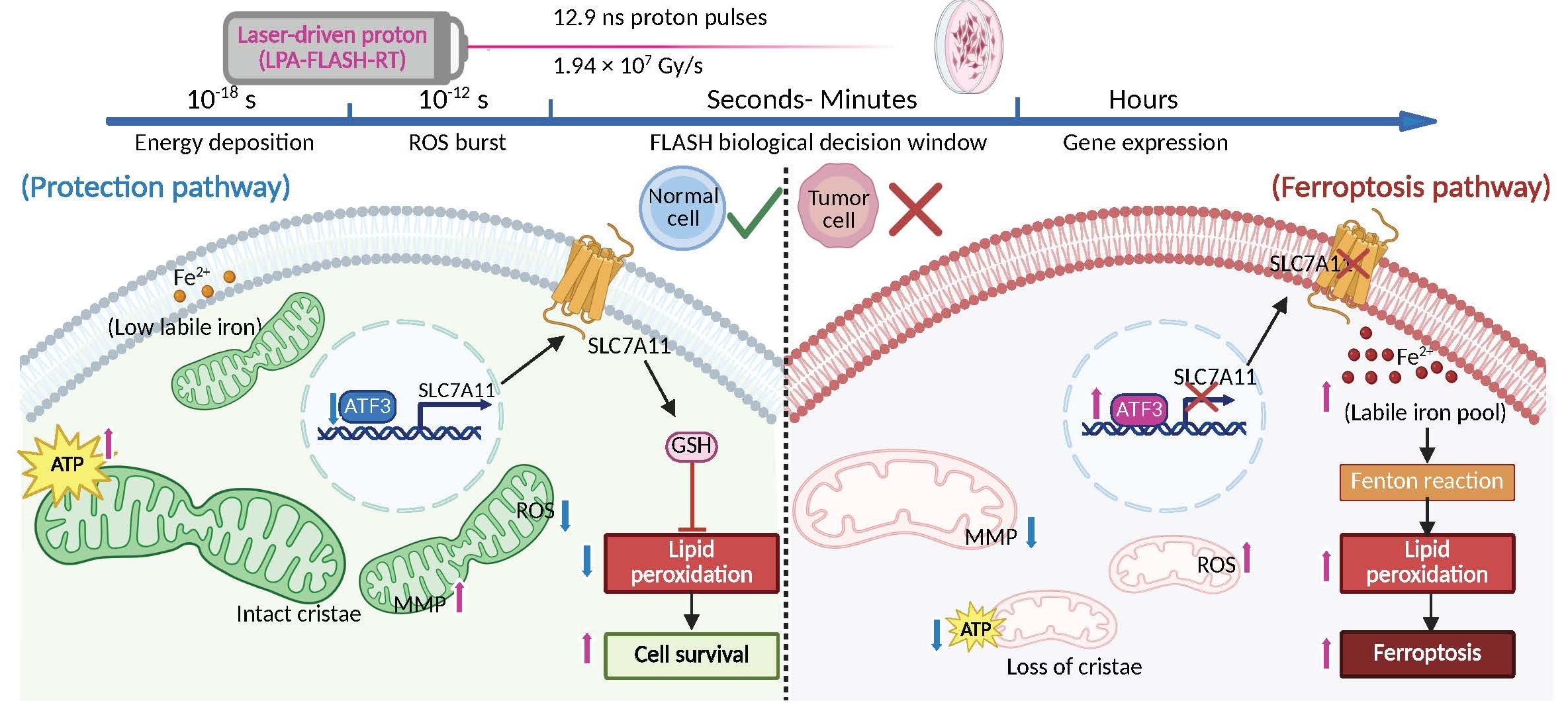
Radiotherapy’s clinical utility remains fundamentally constrained by the collateral damage to healthy tissues. Ultra-high dose rate (UHDR) irradiation, or FLASH-radiotherapy (FLASH-RT) has emerged as a transformative paradigm to mitigate such toxicity. However, the biological effects of FLASH-RT on the high-efficiency of tumor killing and normal tissue sparing remain poorly understood. In this work, we utilized a petawatt-class laser-plasma acceleration (LPA) platform to deliver discrete 12.9-nanosecond proton pulses at an extreme instantaneous dose rate of 1.94 × 10⁷ Gy/s. This temporal singularity achieved a profound sparing effect in normal bronchial epithelial cells, evidenced by a nine-fold reduction in the lethal α coefficient (from 0.47 to 0.05 Gy−1), while maintaining full tumoricidal potency against lung adenocarcinoma. Mechanistically, we demonstrated that LPA-FLASH could effectively bypass the ATF3-mediated stress response and circumvent the subsequent ferroptotic cascade. This molecular evasion could preserve the mitochondrial cristae integrity and trigger an adaptive bioenergetic ATP surge—a hallmark of metabolic resilience exclusively in healthy tissue cells. Therefore, our findings identify ferroptosis-mediated mitochondrial integrity as a unifying framework for selective normal-tissue protection at the physical limits of radiation delivery, and establish LPA-FLASH-RT as a potent, compact modality for next-generation oncology.
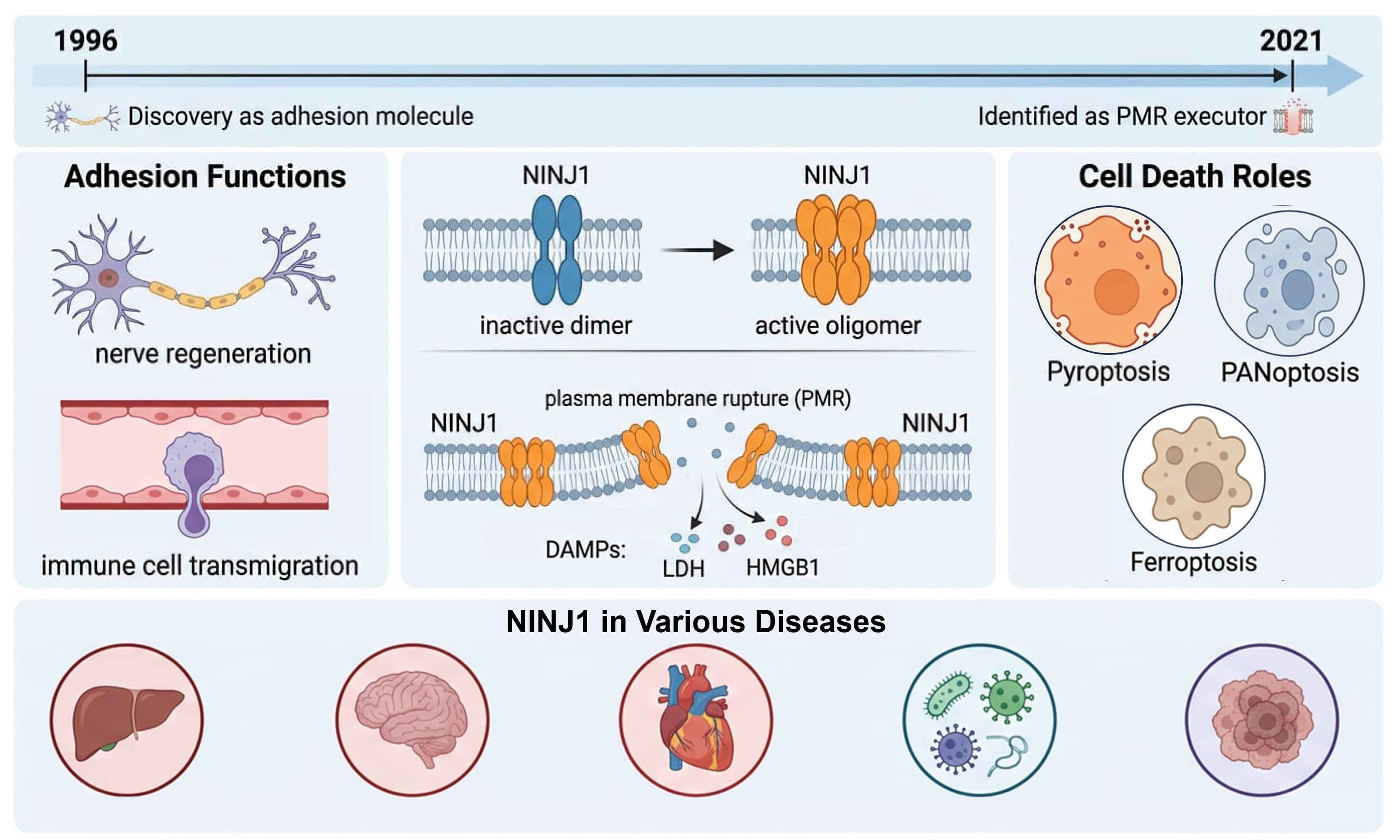
Nerve injury-induced protein 1 (NINJ1) was originally identified in 1996 as a homophilic adhesion molecule upregulated following nerve injury. For over two decades thereafter, research on NINJ1 primarily focused on areas such as nerve regeneration, immune cell migration, and inflammation regulation. In 2021, the discovery by Kayagaki’s group completely transformed the understanding of NINJ1—the protein was demonstrated to be a key executor of plasma membrane rupture (PMR) during lytic cell death, overturning the long-held view that PMR is a passive osmotic event. This finding rapidly sparked intensive research efforts in structural biology, cell death regulation, and therapeutic target development. This review is organized around the central scientific questions in NINJ1 research, systematically tracing the trajectory from molecular discovery, structural elucidation, and activation regulation to disease associations and therapeutic targeting. We critically analyze the logical relationships among different research avenues, discuss the underlying assumptions and limitations of current findings, and highlight the key knowledge gaps that remain in the field.
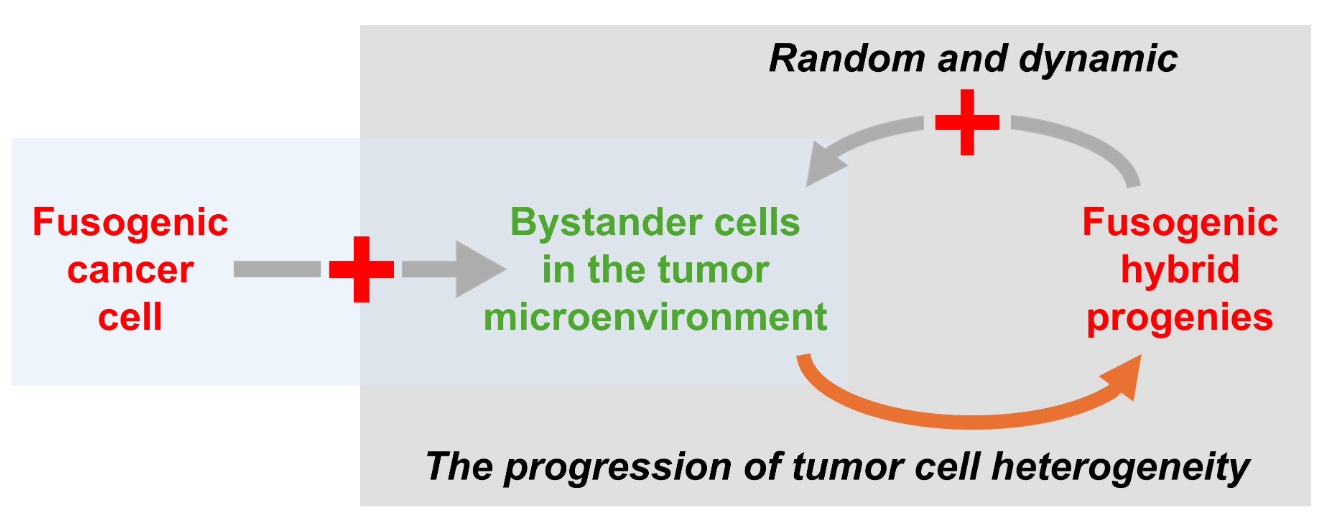
The mechanism of prostate cancer (PCa) progression and metastasis remains unclear. Spontaneous cancer cell fusion is one theory of etiology. This essay takes a reductionist approach to highlight spontaneous cancer cell fusion as the primary mechanism of PCa progression and metastasis. PCa cells can fuse with adjacent cancer cells or various bystander cells in the tumor microenvironment. The fate of the fusion hybrids is determined by the similarity of cell cycle timing between the fusing cancer cell and the cell being fused. A tumor cell with high proliferative activity, when fused with a non-proliferating neighbor, results in growth arrest. However, fusion with a proliferative cell may lead to abnormal hybrid cell division, causing the hybrid genome to undergo random recombination. This creates a hybrid derivative clone with a genotype and phenotype distinct from those of both the parental cancer cell and the cell being fused. The progression of tumor cell heterogeneity is dynamic, as the hybrid derivative clone can inherit the ability to fuse. Their fusion with various proliferative cells in the tumor microenvironment generates additional hybrid clones, each with a new genomic makeup and altered phenotype. The spontaneity of PCa cell fusogenicity enables an ever-changing tumor cell heterogeneity, which is the root cause of the pathological behavior of PCa progression and metastasis.
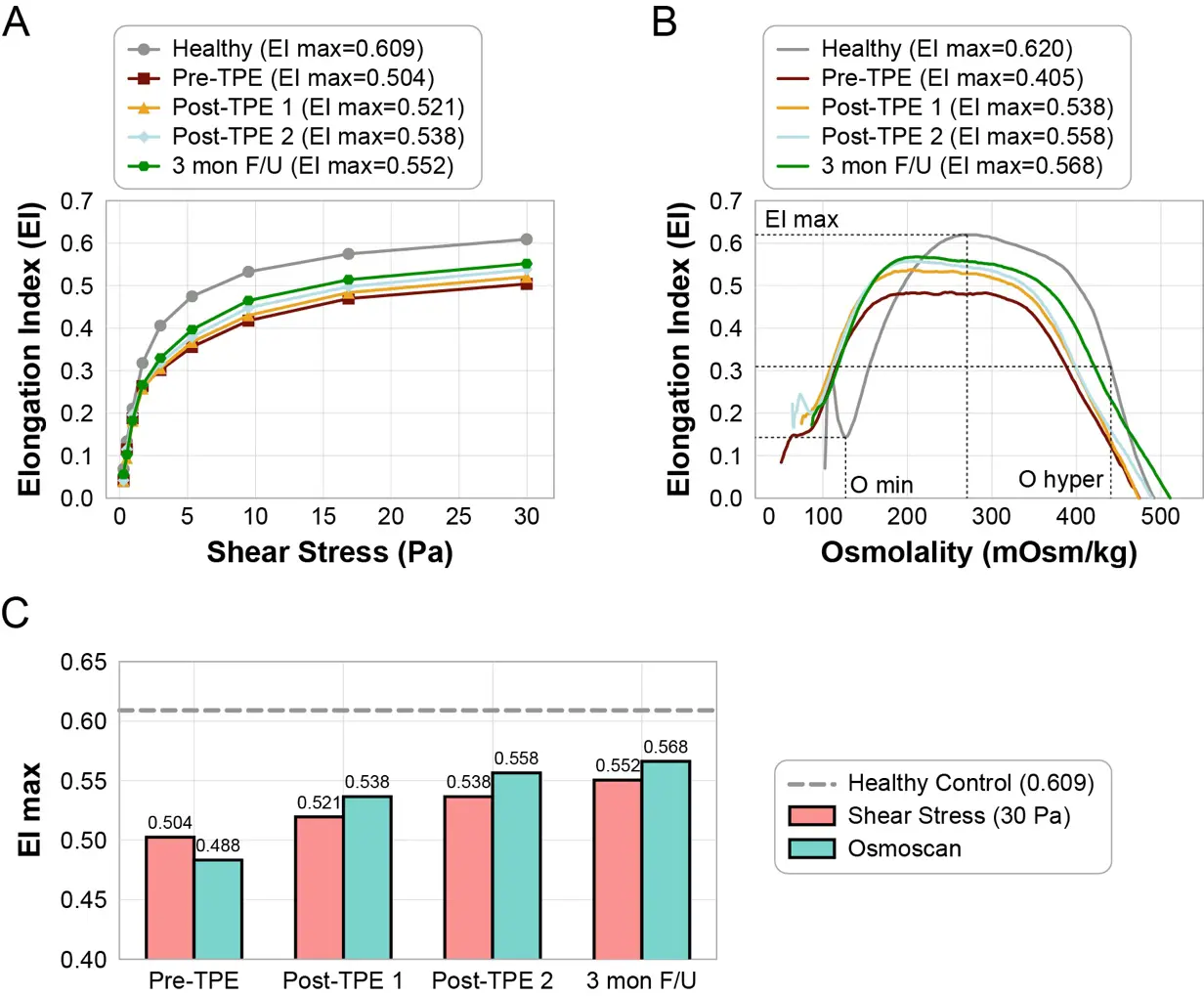
Waldenström macroglobulinemia (WM) is a lymphoplasmacytic lymphoma characterized by monoclonal immunoglobulin M (IgM) overproduction, leading to hyperviscosity syndrome and microvascular complications. While increased plasma viscosity is a well-recognized feature of WM, the impact of extreme IgM elevation on intrinsic red blood cell (RBC) mechanical properties remain incompletely characterized. Here, we report a case of WM with markedly elevated IgM associated with profound impairment of RBC deformability. Therapeutic plasma exchange rapidly reduced serum IgM levels, accompanied by parallel and sustained improvement in RBC deformability. Given the importance of RBC deformability in microvascular blood flow, these findings highlight a reversible, IgM-mediated alteration in RBC mechanics and provide novel insights into microcirculatory dysfunction in WM.
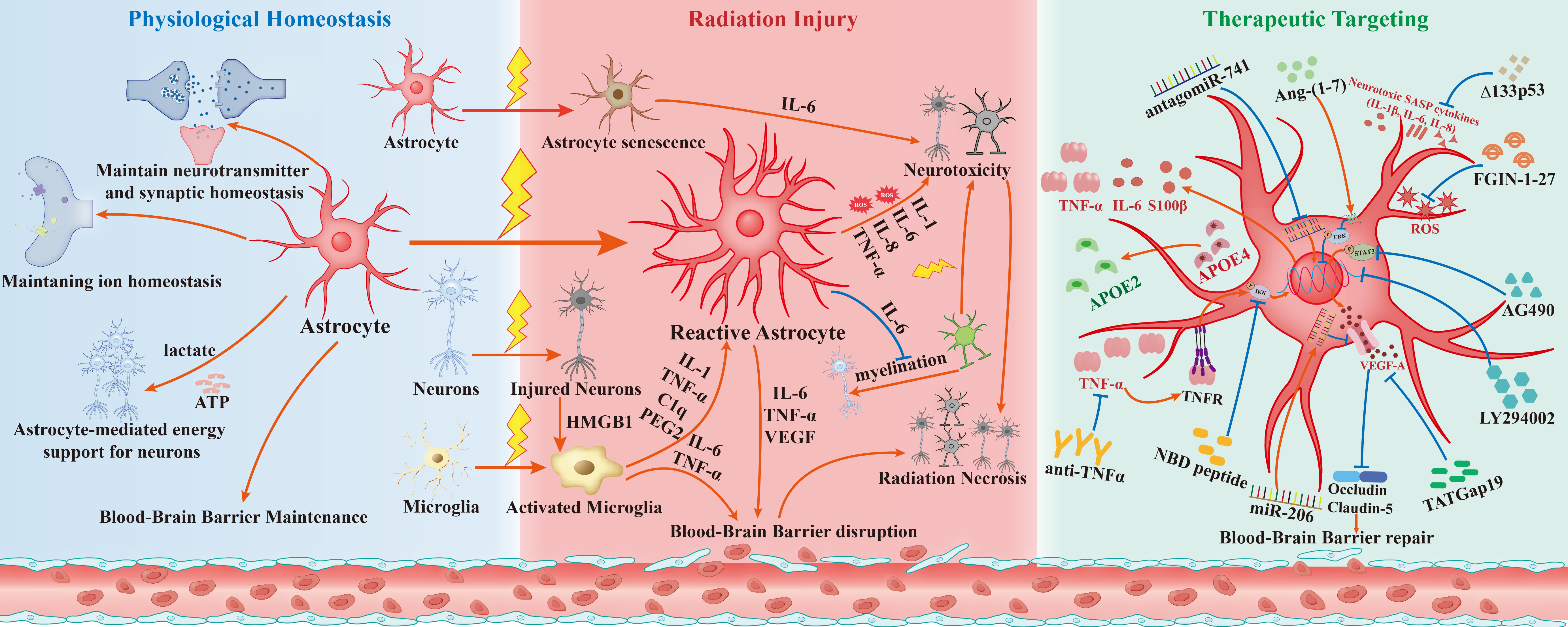
Radiation-induced brain injury (RIBI), a common adverse effect of cranial radiotherapy for head malignancies, causes severe complications, including blood-brain barrier (BBB) disruption, neuroinflammation, cognitive decline, and radiation necrosis (RN) that impair patients’ quality of life. The pathophysiology of RIBI involves intricate crosstalk between various central nervous system (CNS) cell types, with astrocytes, the principal CNS glial cells, serving as key mediators. Under physiological conditions, they sustain brain homeostasis, but their transition to reactive phenotypes and subsequent dysfunction propel RIBI development. This review summarizes recent advances in astrocytes’ pathophysiological roles in RIBI, focusing on mechanisms like reactive astrocyte polarization, neuroinflammation, BBB impairment, radiation-induced senescence, astrocyte-mediated RN progression, and pathological crosstalk with other CNS cells. It also outlines astrocyte-targeted therapeutic strategies with preclinical efficacy, including anti-inflammatory therapies, anti-vascular endothelial growth factor A (VEGFA) interventions, TSPO ligands, RAS blockers, apolipoprotein E (ApoE) regulation, Δ133p53, and microRNAs (miRNAs), which alleviate RIBI by targeting these pathological processes. A comprehensive understanding of astrocyte-mediated mechanisms and preclinical evidence will lay the foundation for developing targeted, low-toxicity therapies to mitigate RIBI in cranial radiotherapy patients.