
Metallic Iron, (Rain)Water, and the City: A Handout for Researchers and Policymakers
Metallic Iron, (Rain)Water, and the City: A Handout for Researchers and Policymakers
Yang Song
1
Adeline Mih Sih
2
Coretta Tchouandem Nzali
3
Abdurrahman Aliyu
2
Esther Laurentine Nya
4,5
Tulinave Burton Mwamila
6,7
Chérifa Abdelbaki
8
Bernard Konadu Amoah
9
Huiyang Qiu
1
Rui Hu
1
Willis Gwenzi
10
Chicgoua Noubactep
1,11,12,*

Received: 23 November 2025 Revised: 24 February 2026 Accepted: 23 March 2026 Published: 31 March 2026

© 2026 The authors. This is an open access article under the Creative Commons Attribution 4.0 International License (https://creativecommons.org/licenses/by/4.0/).
1. Introduction
Annual flooding in residential zones is recurrent in many parts of the world and is rightly correlated with population growth and rapid urbanization [1,2,3,4,5]. Urbanization essentially entails the transformation of pervious natural landscapes into impervious infrastructures, including buildings, courtyards, playgrounds, residences, roads, and streets. Rain falling on impervious surfaces is prevented from infiltrating (reducing aquifer recharge), while simultaneously increasing surface runoff and flooding vulnerability [1,3,6,7,8,9,10,11]. In many cases, the excess water that causes flooding for several weeks during the rainy season is unavailable a few months later, during the dry season [12,13]. From a pure mass balance perspective, it is argued that modern engineering tools can store floodwater for use during the dry season, while directing the excess volume to infiltrate and recharge aquifers. Good local water governance should start by making this harmful excess water (threat) from the rainy season into a useful resource for the whole year. If, in addition, the stored water volumes surpass the domestic needs of the population, there is excess water for productive activities, including irrigated agriculture, landscape restoration, and livestock production. Water governance is currently limited to redistributing groundwater and surface water (blue water) among stakeholders (Table 1) [14,15]. This corresponds to the application of the concept of integrated water resources management (IWRM), which constitutes the focus of Goal 6 of the United Nations Sustainable Development Goals (SDGs) [16]: “sustainable management of water and sanitation for all”. IWRM, which is target 6.5.1, promotes the coordinated management of water, land, and related resources to maximize economic and social welfare in an equitable manner. It is about answering the question, “Who gets how much of blue water and when?” [14]. In these efforts, the sustainability of ecosystems should not be compromised as well.
Table 1. Challenges faced in conventional rainwater harvesting (RHW) within the framework of integrated water resources management (IWRM) and opportunities in the “rainwater first” approach as a solution.
|
Challenges (in Conventional RWH) |
Opportunities (in the “Rainwater First” Approach) |
|---|---|
|
Demand-based management: volume of water required at the point of use over the year. Is there enough water for drinking, showers, taps, and toilets? Can that volume of water be supplied by the utilities? The total annual precipitation is not considered (no mass balance). |
Supply-based management: volume of water supplied by rainfall (annual precipitation) at the point of use (allotment scale) is the starting point. Is there enough water for drinking, showers, taps, and toilets? If not, can the water deficit be supplied by a borehole or well, an extended catchment area, or the utilities? If yes, the excess is used for (i) productive activities (e.g., irrigation, livestock production), (ii) aquifer recharge, or (iii) to feed the community tank. Water management is rooted in total annual precipitation. Excess water is infiltrated, ideally to the extent that no surface runoff is generated (zero-runoff approach) |
|
Challenges in managing stormwater or surface runoff to avoid soil erosion, street inundation, and flooding. |
The generation of stormwater is avoided. Ideally, the whole precipitation is captured, and a controlled discharge is operated in case cisterns and tanks are filled. |
|
Limited knowledge of detailed water demand patterns makes management and planning difficult for utilities |
Water demand patterns at the household or building level are easy to assess. Proper management is equivalent to fixing the volume or water to pump periodically (e.g., daily) from the underground reservoir into the elevated storage tank |
|
Lack of resources for modern RWH infrastructures |
Opportunity to start with low-cost traditional knowledge and extend to frugal innovations |
|
Lack or scarcity of skilled technicians |
Local training of constructors, like for the Calabash cisterns in Africa |
|
An increase in the female workload to collect water from community standpipes |
Water is made available in-homes: the workload of women is practically reduced and safe storage improved (e.g., Calabash). Boosting residential water self-sufficiency. |
Clearly, IWRM, as discussed for the past four decades, is rooted in an incomplete analysis of the natural cycle of water or hydrologic cycle [8,15,17,18,19]. The hydrologic cycle involves the continuous circulation of water within the hydrosphere and includes the following processes: condensation, evaporation, infiltration, precipitation, runoff, and transpiration (Figure 1) [20]. Figure 1 illustrates that groundwater results from infiltration of precipitation (rainfall), while surface water primarily represents the discharge or overflow of groundwater. In other words, precipitation is a primary source of water, while groundwater and surface water are just secondary sources: Precipitation = blue water + green water, Blue water = groundwater + surface water [20,21,22,23,24,25,26]. In the remaining text, “precipitation” and “rainfall” are randomly interchanged, although they are strictly two different natural processes [27]. This simplification is justified by the fact that snowmelt is unknown in many locations around the world. This communication starts from the point that regarding rain as a ternary source of water has been the cardinal oversight that has impeded the development of water management for the past two centuries. Clearly, water governance focuses on blue water governance while atmospheric water, green water, and rainwater are only marginally considered [15,19,28]. Clearly, research on RWH lags behind practical accomplishments.
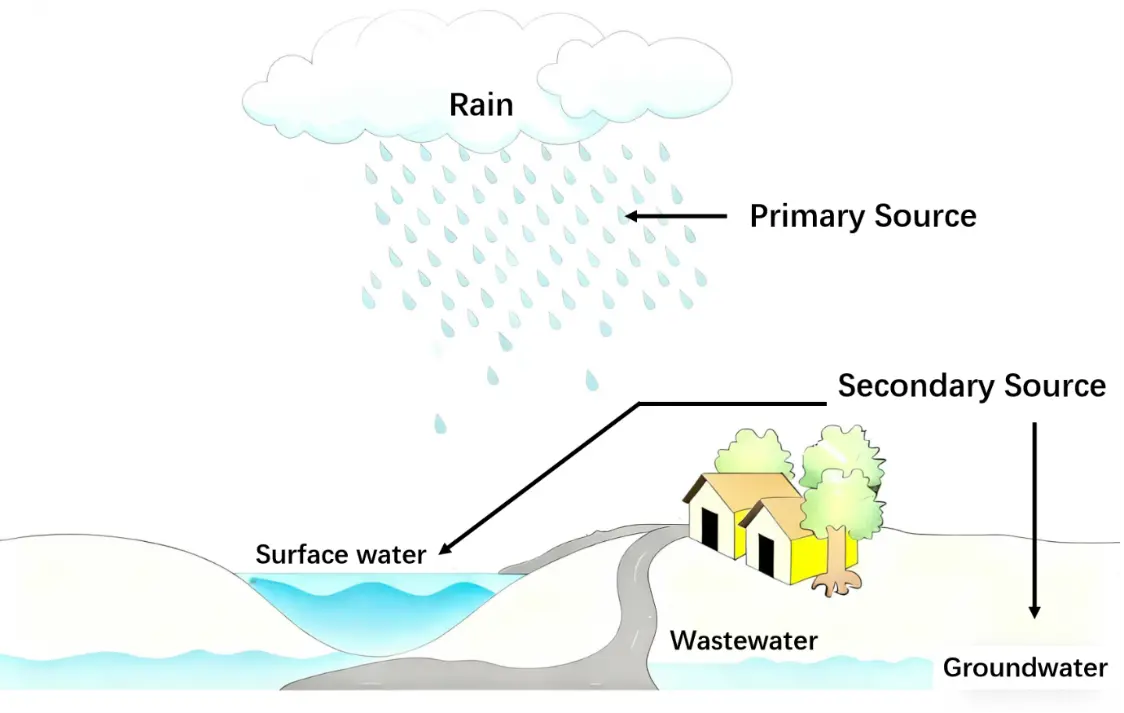
Figure 1. Conceptual representation of the three sources of freshwater on earth, highlighting the interconnected pathways between groundwater, rainwater, and surface water, and their interactions with human activities. Surface water and groundwater (secondary sources or blue water) come from rain (primary source). Recycling and desalination represent the ternary source of water. Modified after UN-Habitat [23].
The major driver of the conceptual error hindering the science-based advancement of water management is the sanitation-centred urban approach of the 1850s, which regarded rainwater primarily or even exclusively as a “nuisance” or a “threat” (“rain to the river”) [19,29]. According to this still prevailing concept, rainwater or stormwater must be drained as quickly as possible to the next surface water body. For heavy rain events or moderate events lasting “too long”, the infiltration capacity of soils is exceeded, and precipitation flows directly to the river, where it can cause pluvial flooding [19,30]. This corresponds to “lost rain” or “lost water” according to the vision of King Parakramabahu of Sri Lanka (12th century), who once proclaimed “Let not a single drop of water flow into the ocean without being used for human benefit” or “Do not let a single drop of water fall from the sky into the sea” [31]. The vision of King Parakramabahu suggests that IWRM is not a new concept; rather, what is most important is its full realization for the benefit of humankind and the living environment. The premise of this communication is that the know-how for universal access to safe drinking water through self-supply with harvested rainwater is already available but fragmented and scattered in the literature [18,32,33,34]. Engineered storage infrastructure (e.g., cisterns, dams, ponds, tanks) can enable water supply everywhere rain falls, whether the harvested volume is sufficient for a given purpose or not. This corresponds to the “catch it where it falls” slogan that India has been applying for the past 26 years [35]. In India and worldwide, water policy must rely on rigorous state-of-the-art scientific knowledge from different disciplines and traditional knowledge systems. However, there is currently no dedicated international body to systematically assess all relevant existing water data and communicate new findings [28]. Moreover, the current prevailing water management paradigm (e.g., IWRM) has not properly considered the natural water cycle as discussed above [19,34,36].
Since the 1850s, urban drinking water and wastewater have been supplied or collected in centralized piped networks [37]. In rural areas where such centralized systems are basically not affordable, small-scale systems using groundwater or rainwater are installed. When groundwater and surface water are unavailable or contaminated, rainwater is recognized as a stand-alone source of water for all uses. This is the case, for example, on many Caribbean small islands [38,39,40,41,42], in Tanzanian districts [43], and in some parts of India where blue water is polluted by arsenic or fluoride [44,45]. Finally, whenever there is a deficit of freshwater, desalinated and reclaimed waters are used as viable sources of freshwater, for example, in Windhoek, Namibia [46,47]. This consensual approach (also referred to as “conventional approach” or “traditional approach”) has been adopted almost uncritically to the extent that it is regarded as the norm. The corresponding priority order is “blue water first, then rainwater, or saline water, or reclaimed water”. To face a mounting freshwater scarcity, many regions are independently considering the so-called “non-conventional” water sources [48,49]. Unfortunately, these regions have ignored that rainwater is the only freshwater source elsewhere. Consequently, avoidable conflicts tend to occur over aspects like water quality and the feasibility of RWH. Therefore, there is a crucial need to clarify this issue, particularly to foster the application of the IWRM framework. For example, why not capture precipitation and avoid its pollution by excess nutrients, faecal matter, fats, and oils? These pollutants determine the level of treatment required to recycle and utilize wastewater [46].
Rainwater harvesting has been rightly regarded as a counterbalance to (i) irrigation requirements, (ii) replenishing depleted groundwater, and (iii) enhancing resilience to climate change, especially in the face of droughts and high precipitation [5,50]. Harvested rainwater, which is freshwater, stored in cisterns, natural reservoirs, ponds, tanks, and other structures during the rainy seasons, alleviates the variability in the water supply. Large-scale water infrastructure projects such as canals, dams, and reservoirs have been widely implemented since the twentieth century [50,51,52,53,54] to provide drinking water, flood protection, hydroelectric power, and water for irrigation. Recently, the use of domestic and communal wastewater for irrigation has provided benefits such as conserving freshwater resources, reducing environmental pollution, and providing nutrients to crops [55,56]. Water desalination has also been demonstrated to be an effective and innovative technique to minimize groundwater depletion and ensure water security across a range of climatic regions [54,57,58]. Moreover, reclaimed wastewater, river water, and stormwater are the main water sources for managed aquifer recharge (MAR) [54]. It appears that in efforts to reduce water insecurity, the trilogy blue water/stormwater/wastewater has been constantly considered [58,59]. For example, MAR seeks to augment blue water by infiltrating stormwater, reclaiming wastewater, and treating river water [60]. On the other hand, the One Water Concept (OWC), which is the most advanced form of IWRM, encompasses all three categories of water (blue water/stormwater/wastewater) [59,61]. In other words, managed aquifer recharge, rainwater collection, (sea)water desalination, and wastewater reclamation (water recycling) are being typically utilized to address water scarcity worldwide [58,61]. However, the OWC overlooks the evidence that stormwater is a fraction of rainwater, and that used harvested rainwater can be recycled like all other forms of wastewater. The OWC also does not directly consider rainwater [62]. Clearly, the OWC is not based on the water mass balance. The question arises: How can the water mass balance be properly considered in IWRM?
The aim of this paper is to critically examine how the IWRM concept can be better implemented worldwide through an interdisciplinary perspective. Specifically, the paper seeks to: (i) identify oversights that have impaired the understanding of the water cycle, (ii) synthesize historical insights from global success stories, and (iii) propose a citizen roadmap to foster water management at the smallest level. Because the aim is to show that RWH is a universal solution for self-reliance in safe drinking water supply, the affordability and efficiency of the filtration of metallic iron filtration systems (Fe0 filters) to treat rainwater to drinking water standards will be discussed. Fe0 filters should counter public doubts surrounding rainwater quality. This communication is regarded as the first attempt to realize the vision of Prof. Herrmann of Hannover (Germany), who published almost three decades ago the first call for RWH-based water supply after the industrial revolution [37]. In this approach, a compound or a household is the water management unit, not the commonly mentioned watershed (within a basin). Thus, every individual is both an interested stakeholder and a water manager. In summary, the current paper acknowledges the validity of the conventional Integrated Water Resources Management (IWRM) framework and its core principles as a foundation for further conceptual development. The rainwater-first and zero-runoff concepts extend IWRM by explicitly prioritizing and integrating rainwater-harvesting systems into the broader IWRM framework.
The paper proceeds as follows. First, the methodology used is disclosed (Section 2), followed by a Background and misconceptions on IWRM (Section 3). Next, the zero-runoff approach is presented (Section 4). Then, two historical success stories of RWH are presented to illustrate the global viability of this technology (Section 5). Section 6 discusses some key issues in the further development of RWH from the perspective of the zero-runoff approach. Conclusion and recommendations (Sections 7 and 8) close the presentation.
2. Methodology
An appraisal approach is used herein, consisting of collating the huge scientific literature on rainwater harvesting and extracting points of certainty and uncertainty, knowledge gaps, and open questions. An appraisal does identify levers for action [63,64]. The review is based on the authors’ expert knowledge. For this purpose, an authorship with skills in the following complementary disciplines was mobilized: biogeochemistry, civil engineering, ecology, environmental chemistry, environmental remediation, hydrogeochemistry, hydrology, urban geography, water engineering, water management, and water quality. A large bibliographic corpus was selected from all available sources, including Google Scholar, Researchgate and Web of Science. Scientific articles validated by peers, thesis research works (e.g., master, PhD), scientific reports, and technical reports were considered. The premise is that precipitation is a valuable resource and should be harvested everywhere it falls, whether it is abundant or not. This is because only a tiny fraction of precipitation is permanently available as groundwater (e.g., boreholes, tubewells, wells) or surface water (e.g., lakes, rivers, springs) [19,65]. Clearly, precipitation should be regarded as a stand-alone source of freshwater, capable of supplying certain communities with water for all uses. In other words, by considering RWH only optionally, the conventional approach of integrated water resources management (IWRM) is not holistic. The methodology used herein consists of mining the literature to falsify arguments that have been impairing the full consideration of RWH in IWRM efforts. In other words, two Chinese large scale success stories are presented and discussed.
For illustration, the following can be considered:
Conventional IWRM: Supply = (ground + surface) water + eventually (rain + recycled) water.
RWH-based IWRM: Supply = rainwater + eventually (ground + surface + recycled) water.
The key difference is that the alternative IWRM approach considers RWH fully (“rainwater first”). More so, groundwater and surface water are only optionally considered, for example, where precipitation is not abundant [19,48]. The key advantage of the alternative system is that erosion and flooding are addressed at the source, while the water supply is hugely augmented.
3. Background and Misconceptions on IWRM
The opportunity to regard rainwater as a “resource” was clearly neglected in the developed countries until some 40 or 50 years ago [32,37,66]. Herrmann and Hasse [37] rightly questioned the conventional way to get water, based on long-distance water pumping (centralized systems) as opposed to local rainwater utilization (decentralized systems). They clearly demonstrated the affordability and viability of rainwater harvesting for the developed countries, and recent calculations have confirmed these findings [67]. While occasionally citing Herrmann and colleagues [9,37,66,67], subsequent works have mostly limited the use of harvested rainwater to non-potable applications [68,69,70]. This occurred to the extent that Notaro et al. [69] argued that RWH cannot be a stand-alone approach for domestic water supply because people will still need safe drinking water (from other sources). This argument is counterintuitive for at least two reasons: (i) excellent decentralized water treatment technologies have been developed, tested, and validated [71,72,73,74,75], and (ii) there are many island communities around the world having precipitation as their single source of freshwater [76,77]. The true history of RWH is summarized by John Mbugua in the following words: “where piped water supplies have been provided, the importance of rainwater as a source of supply has diminished” [78].
Increased interest in rainwater harvesting has been witnessed for the past 50 years. The first water-harvesting symposium was held in March 1974 in Phoenix, Arizona, USA [32]. Between 1982 and 1995, seven international conferences were held by the International Rainwater Catchment Systems Association (IRCSA—https://uia.org/s/or/en, accessed on 27 February 2026). The IRCSA was founded to promote rainwater catchment systems, including planning, development, management, science, technology, research, and education worldwide [79]. The IRCSA has established an international forum for administrators, educators, engineers, scientists, and those concerned with RWH. IRCSA also drafts international guidelines on RWH, updates and disseminates information, and collaborates with and supports international programs [79]. Originally, the IRCSA was formed in response to the needs of the International Drinking Water Supply and Sanitation Decade (IDWSSD, 1981–1990), with the main objectives of: (i) promoting and advancing rainwater catchment technologies, (ii) attempting to link all those working in this field, (iii) drawing up a set of international guidelines for use of rainwater harvesting technology, and (iv) supporting a series of conferences. It is then certain that the IRCSA is playing its assigned role. For this article, the presentation of the activities of IRCSA is limited to the 1995 international conference in Beijing, China. This Beijing conference can be regarded as the birthplace of two decisive initiatives for the future of RWH as a technology (Section 4): (i) the dissemination of cisterns in the semi-arid area of Gansu Province, and (ii) the establishment of sponge cities. These two initiatives can be regarded as a benchmark demonstration of the huge potential of RWH in rural and urban areas, respectively. In other words, since the establishment of the first sponge cities (around 2015) [11,80,81], there is no longer a need to pilot test projects to demonstrate the viability of RWH.
The literature on IWRM and RWH is very versatile, with some 2010 articles already published in 2025 according to a ScienceDirect search (23 November 2025) with the keyword “rainwater harvesting”. A critical overview reveals that the water management literature is largely fragmented, incoherent, and mired in a virtual death, due to lack of adoption and implementation, despite the many United Nations conferences and the many institutions working on water management [7,28,80,81,82,83,84,85,86,87,88,89]. There are even voices for new specialized institutions [28]. For example, Herrfahrdt-Pähle et al. [28] argued that current measures cannot address the identified global goals, including SDG 6. Citing the United Nations, these authors stated that a sixfold increase in the rate of implementation is needed to achieve access to safe drinking water, and a fivefold increase for access to sanitation [90,91]. Herrfahrdt-Pähle et al. [28] primarily attributed the implementation challenges mostly with a lack of clear vision and political commitment. In contrast, Singh and Goyal [88] argued that the standard definition of IWRM is the key issue as it may lead to unrealistic expectations, “propagating a misconception that IWRM can address all water resource-based problems”. Singh and Goyal [88] argued that despite the correct implementation of IWRM, it would remain “challenging to balance natural and societal issues and integrate relevant sectors and stakeholders effectively”. These two examples are not isolated, suggesting that despite 40 years of intensive efforts, the global water crisis has no end in sight. A “dead end” or a “virtual death” is always an opportunity to question a working paradigm [92]. The presentation above has already outlined that the current understanding of IWRM predominantly focuses on sharing “blue water” to all stakeholders [93,94,95,96,97], while paying cursory attention to rainwater.
Instead, it is the whole freshwater mass (blue water and rainwater) that should be shared. A dire revision of the IWRM is urgently needed. It is anticipated that at this stage, no paradigm shift is preconceived but solely an adaptation, considering rain as the primary source of freshwater (Figure 1) [13,19,34,96,97,98].
A central point of convergence in the scientific literature is that IWRM offers a participatory framework for sustainable water management by tailoring solutions to local contexts [9,70,84,88,99]. This is because IWRM adopts a participatory approach that involves all stakeholders and manages water at the lowest appropriate level through decentralized systems. For RWH, the lowest appropriate level is the household or the farm. Accordingly, mainstreaming RWH should be the path to make “water management everybody’s business”. The objective of the study is to contribute to paving the way for mainstreaming RWH by presenting the scientific background of rainwater harvesting. It is not a systematic literature review but rather a critical assessment of available knowledge, aimed at eliminating misconceptions about RWH, including its use as potable water. The starting point is that RWH always improves water management by contributing to (i) alleviating water scarcity or improving water conservation (water availability), (ii) combating food insecurity or improving agricultural productivity, (iii) controlling erosion and flood (hydrological impacts), and (iv) recharging groundwater (hydrological impacts) [18,99,100].
Summarized, efforts over the past 4 to 5 decades to use IWRM as a leading framework for coordinating the sustainable water management across different sectors have been impaired by certain conceptual errors. The core ideas of IWRM (e.g., ecosystem protection, efficiency, equity) are sound and widely acknowledged. The zero-runoff approach builds upon this very same integrated perspective. All water is considered as a single, interconnected system with the subtle but crucial difference that precipitation is regarded as the primary source of water, or the mother of groundwater and surface water (blue water) on which the conventional centralized water supply is built. Accordingly, stormwater is just unharvested precipitation, an avoidable excess. Moreover, used harvested rainwater can be reclaimed as well. Clearly, rainwater and reclaimed water are not comparable components of the water cycle. The cooperation among institutions and communities to achieve an affordable and sustainable IWRM would benefit from a better system analysis.
4. The Zero-Runoff Concept
The zero-runoff concept negates the assumption that RWH is for arid and semi-arid regions only. RWH is also not only for the many areas of relatively high rainfall but also lacks adequate freshwater due to the pollution of groundwater and surface water, or their high salinity. It is also not intuitive to consider that RWH is an alternative to those who cannot afford centralized pipe water. Rather, learning from each other implies that any practice originating from one part of the global village (e.g., islands and semi-arid regions) can be transferred to other regions (e.g., humid regions). RWH is such a practice, developed as a matter of necessity in arid and semi-arid regions [32,33]. The well-established principles of this technology are of the greatest use for the realization of UN SDGs, Goal 6: “sustainable management of water and sanitation for all”. The key feature of RWH for this work is that it creates new blue water in the form of harvested rainfall stored in cisterns or tanks (artificial catchment) or artificially infiltrated rainwater (aquifer recharge).
4.1. General Aspects
Rainfall is the driver of agricultural activity and the motor of food production (a blessing) [32]. Rainfall also generates runoff or stormwater, which causes soil erosion and flooding (a curse) [7,101]. Whether rainfall is a blessing or a curse depends on the average intensity, depth, duration, and erosivity of each rainfall event [102]. These parameters or variables are frequently utilized to evaluate the impacts of rainfall variation on stormwater generation [102,103]. However, the named parameters cannot reflect the temporal intensity distribution within a natural rainfall event [89,102]. This is the reason why rainfall events with similar properties (e.g., duration, intensity) create significantly different volumes of stormwater. Therefore, scientists have been seeking ways and means to understand the characteristics of stormwater for more accurate predictions of flooding, soil erosion, and river siltation. Furthermore, the current application of the IWRM concept is focused on stormwater management. The basic principles of IWRM are: (i) reduce impervious area, (ii) disconnect impervious areas, (iii) intercept stormwater before it comes in contact with impervious areas, and (iv) detain and infiltrate stormwater on site, as close as possible to the source [104]. The question to be answered is merely: How can it be avoided that stormwater significantly disturbs the established water management system? Achieving less flooding and less soil erosion is a success for this approach, but a success that is difficult to quantify. For example, it is known that Germany is the leader in Europe in domestic RWH with 33% of all households practising it [80]. However, this number says nothing about the extent to which flooding or soil erosion has been mitigated. Starting from this point, our research group has developed a new approach (zero-runoff approach) which avoids the generation of stormwater instead of trying to struggle with its volume. If stormwater or surface runoff is avoided, then there is no rain-induced soil erosion, no flooding, and no siltation of reservoirs and rivers. This would correspond to the elimination of surface runoff, or the maximization of infiltration and groundwater recharge. Maximizing infiltration induces higher soil moisture content and higher groundwater recharge.
4.2. The Zero-Runoff Approach
The zero-runoff approach is proposed to address the limitations of the current water management [13,19]. The target is precipitation or rainfall and not stormwater (surface runoff) [95,105]. The premise is that long-distance transport of stormwater can be avoided, and rain falling on any impervious surface can be fully captured and fully or partly infiltrated or stored (Figure 2) [19,34,95,106]. Figure 2 shows that infiltration and storage have the same weight. The volume to store depends on the local demand. Relevant water demands are agricultural, domestic, and industrial water uses. Domestic activities comprise potable water, while agricultural activities encompass livestock production. It should be emphasized that a modular installation of related infrastructures is possible [107] and that a system can be designed for infiltration only or for storage only [10,34,96,97,108]. Thus, the zero-runoff approach acknowledges the evidence that there are two main techniques of RWH: (i) storage of rainwater for future use, and (ii) recharge to groundwater [18,59,61]. However, storing rainwater and infiltrating it should be practised hand in hand everywhere. The new approach promotes the engagement of all stakeholders in water management [19]. It is about becoming all water managers and harvesting rainwater because “rain falls on everyone’s soil” [96]. Decentralizing RWH infrastructure across the landscape and promoting smaller-scale infrastructural practice should be the goal [34,105,109]. Because this study is focused on residential RWH, systems will be designed for both infiltration and storage, with excess water directed to community tanks. At a larger scale, roadside RWH infrastructures can be installed, for example, after every one kilometre [106]. The zero-runoff approach uses average annual rainfall data to design the RWH infrastructures (RWHIs). The receiving infrastructure should be large enough to capture rainfall whenever it falls, regardless of its intensity (e.g., rainfall depth, event duration, number of rainy days per month/year).
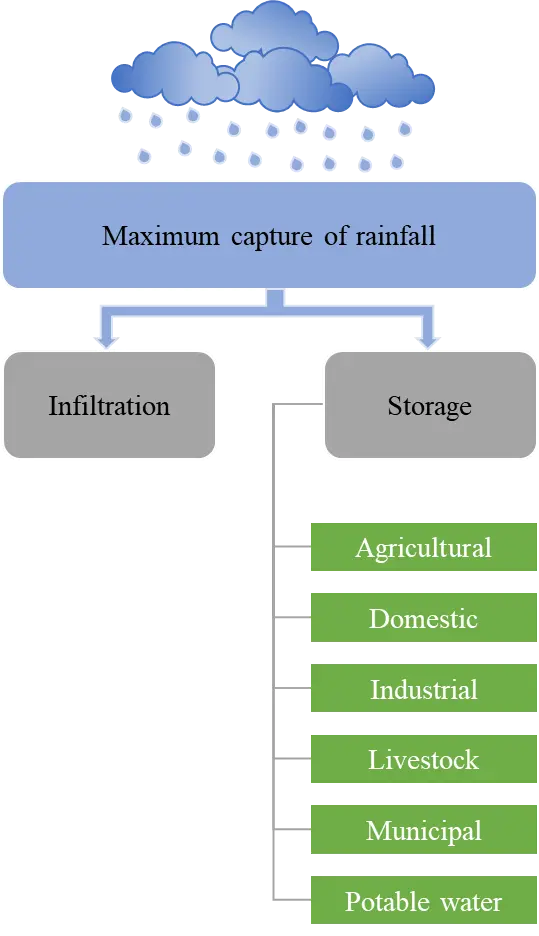
Figure 2. Conceptual representation of rainwater harvesting according to the zero-runoff approach (“rainwater first”): Rainfall collection is maximized, and the portion corresponding to the water demand is stored. The difference is infiltrated locally. For households, the priority is potable water, and it is certain that RWH will meet this need everywhere rain falls. RWH at all scales is broadened beyond volumetric storage of domestic, irrigation, or potable demands. Modified after Singh et al. [18].
4.3. General Design Aspects
Nature collects and stores rainfall in small and large basins, which correspond to depressions in the land (e.g., natural basins or natural catchments). This is how blue water (groundwater and surface water) is “created” or generated. RWH corresponds to “creating” new blue water in artificial “basins” or reservoirs (e.g., cisterns, dams, ponds, tanks—artificial catchments). Active or artificial rainwater infiltration also corresponds to the creation of blue water [110]. Therefore, mimicking nature corresponds to connecting or linking reservoirs to all artificial made impervious surfaces (e.g., courtyards, playgrounds, roofs, roads, streets). To achieve the pre-development stage, the volume of water infiltrated/stored from each impervious area should equal the amount that would have been infiltrated when the area was still vegetated. The zero-runoff approach goes one step further by giving control over the entire rainfall. This corresponds to collecting rain where it falls, irrespective of (i) annual rainfall pattern (climate and seasonal variations), (ii) availability of funds, (iii) existence of a conventional water supply system, (iv) permeability of the surface, (v) roofing materials, (vi) size of the catchment area, and (vii) topography. Rainfall should be harvested on the mountain and in the valley, and to the extent that no runoff is generated.
In Sri Lanka, for example, this would correspond to making 70% of total rainfall available for all uses [111]. Collecting 70% of rainfall corresponds to controlling the fraction of rainwater that is currently responsible for environmental pollution, flooding, and soil erosion [13,110,111,112]. Moreover, groundwater is recharged, and huge volumes of water are made available for domestic and economic activities. Potable uses of water comprise drinking, bathing, cooking, and dishwashing. Water used for these three activities must meet drinking water standards, with boiling and filtering being the most recommended treatment methods [111,113,114]. Reyneke et al. [115] summarized rainwater treatment technologies used in developing countries. These include chlorination, filtration, metal additives (Cu), ozonation, solar disinfection (SODIS), solar pasteurization, and ultraviolet (UV) treatment. Non-potable uses include flushing toilets, washing floors, and watering the garden. For this fraction of harvested rainwater, no specific treatment is required. The next sub-section deals with how to design a domestic RWH system.
4.4. Compound-Scale Design
At the compound scale, runoff from roofs or all available impervious and pervious surfaces (e.g., driveways, gardens, parks, pavements) is to be captured or collected (Section 1). A fraction of the collected water is stored for later use in domestic and economic activities. Another fraction is infiltrated for aquifer recharge. Rain falling on each surface is directed by gutters to downspouts and channelled into a storage system (Figure 3). It is preferable to store roof rainwater and water from other surfaces separately, and to store drinking water from the roof only. Similarly, runoff from catchment areas other than roofs should be used only for non-potable purposes, such as dust abatement, garden irrigation, groundwater recharge, and washing. Based on the rainfall data and the respective catchment areas, the storage tanks are designed to cover the yearly water demand of the household for domestic and economic activities. It is important to consider that the design can be modified to accommodate variables, such as the number of people in the household. In all the cases, increasing water demand corresponds to decreasing infiltration. When the water demand is minimal, infiltration is maximized. During heavy rain events, when the infiltration rate is lower than the rainfall intensity or rate, excess rainfall from the infiltration device is directed to the communal tank.
The main steps of the RWH process after the zero-runoff approach are collection, storage, and infiltration. Only a tiny fraction of stored rainwater is treated to drinking water standards. The corresponding process steps are: collection, storage, and treatment. In other words, the zero-runoff approach advocates for treating only the water used for bathing, cooking, dishwashing, and drinking to potable water standards. According to Huang et al. [74], this goal can be easily achieved using frugal filtration technologies without additional chlorination. This is because carefully harvested and stored rainwater encompasses safe storage and eliminates the risk of secondary contamination [116,117,118]. Accordingly, depending on the average annual rainfall, the “rainwater first” approach would enable the supply of (i) only drinking water, (ii) only domestic water, (iii) additional water for productive activities, and (iv) excess water for community reservoirs. In more humid locations, it is expected that some stored water will be discarded to create space for the next rainfall [119]. This corresponds to a negative water demand for flood protection. In other words, controlled discharge of harvested rainwater is an effective measure to prevent uncontrolled surface runoff [120,121]. To avoid such water loss, productive activities, for example, brickmaking, can be planned for the expected time of heavy precipitation.
Finally, domestic rainwater harvesting should follow the following steps: (i) collection from the catchment area, (ii) flow through a first-flush diverter, and (iii) entering and storage in the collection tank (water reservoir). A first-flush diverter is defined by its volume (L) and emptying time (h). Any volume exceeding the diverter capacity is directed to the water reservoir, while the diverter is emptied into the infiltration structure (e.g., pit, well), not into the sewer. The ideal water reservoir depicts three main features: (i) accessible to O2 to avoid water decomposition, (ii) inaccessible to insects and small ruminants, and (iii) opaque to light to avoid photosynthesis (algal and plant growth). For details on practical implementation, interested readers are referred to an excellent overview article by Uppala and Dey [113]. There is also a large number of design handbooks available [122,123,124,125].
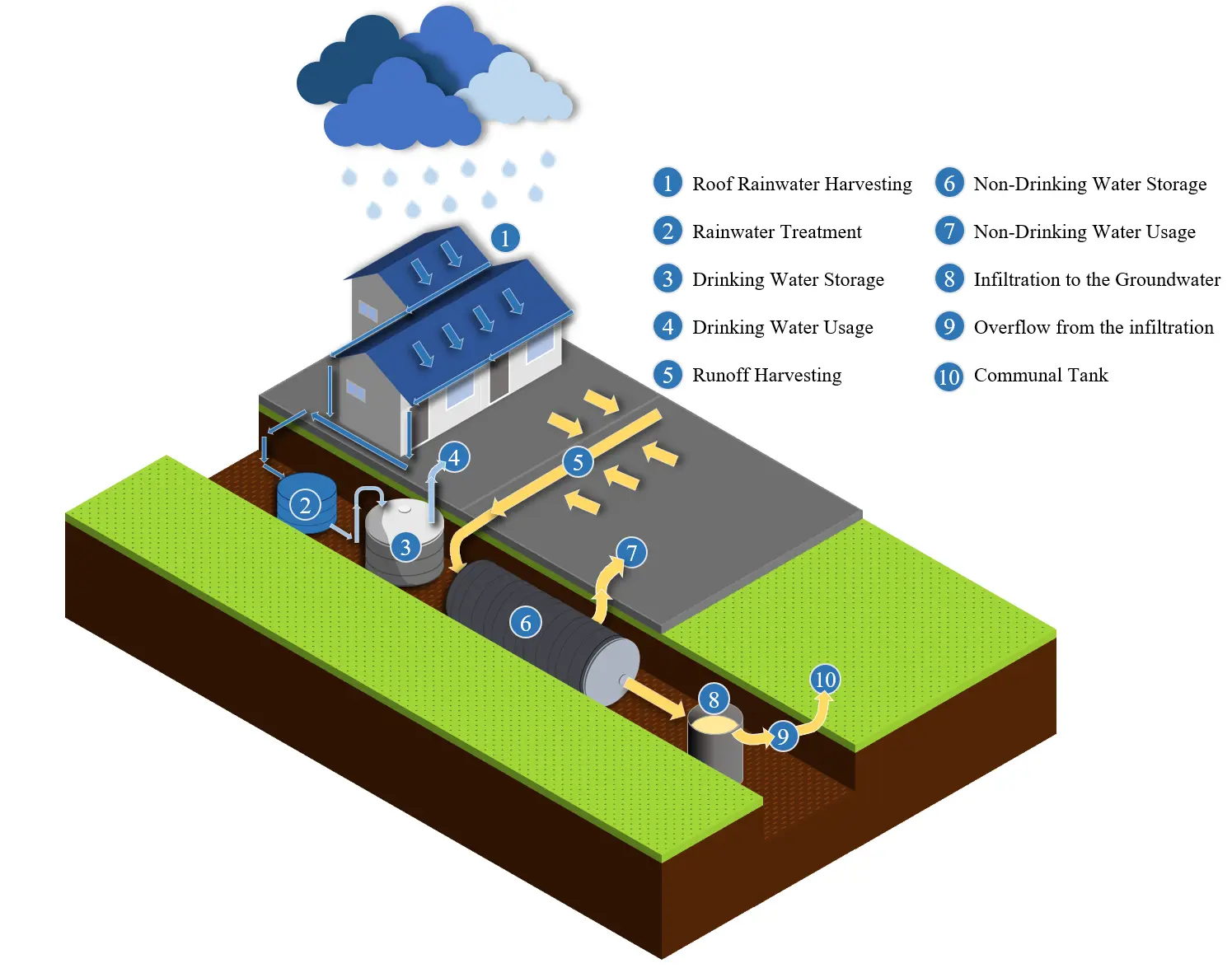
Figure 3. Conceptual representation of rainwater harvesting from the roof and courtyard according to the zero-runoff approach. Rain falling on other areas of the compound is also harvested (not shown). Overflows from all storage tanks are infiltrated or directed to the community’s reservoirs. Own design (Huiyang Qiu and Yang Song).
5. Lessons from China
The advantages of RWH are well-documented in the scientific literature, but the information is scattered and sometimes confusing [18,69,106,126]. There is a broad consensus that to advance the adoption and mainstreaming of RWH, awareness-raising campaigns and pilot demonstrations are urgently needed. This may be important to interested people who are not familiar with RWH. However, it is unlikely that anyone will have difficulty using water once it is made available. On the other hand, the technology is not new and has been demonstrated to be efficient at a large scale, particularly in China [81,100,127]. This section gives an overview of the two Chinese programs that have substantially demonstrated the viability of RWH.
5.1. The Governmental 1-2-1 Projects
Gansu province lies on the loess plateau area in north-central China. Its average annual rainfall is about 300 mm, occurring between July and September (3 months). Traditionally, people in Gansu province have valued rainfall as their primary water source. They used to excavate clay-lined underground cisterns (up to 20 m3) to store surface runoff at the household level. During dry years, the cisterns could not be filled, and people were forced to travel long distances to rivers or rely on governmental water trucks [127,128].
In the early 1980s, with federal government funding, the Gansu Research Institute launched 1-2-1 water conservancy projects. Test trials were first performed, and demonstrations and pilot projects have been carried out since 1988. Each family was provided with one clay tiled roof catchment area (1 roof), two upgraded cement water cellars (2 cellars), and plastic sheeting for concentrating rainwater runoff on one field (1 field). The 2 cellars were an upgraded version of the traditional clay-lined “shuijiao” (water cellars). Upgrading encompassed lining them with cement or concrete and adding small metal pumps [128]. These affordable, simple, effective, and replicable approaches of the 1-2-1 project have ensured that around 2.5 million people were provided with sufficient water for household uses, but also excess water for irrigation, resulting in good crop yields. By 2000, a total of 2,183,000 rainwater tanks had been built with a total capacity of 73.1 million cubic metres, supplying drinking water for about 2 million people and supplementary irrigation for 236,400 ha of land.
The Gansu experience has now been widely shared throughout China, mainly in remote and mountainous areas. This project has also inspired a similar project in Brazil: The “One Million Cisterns Program” (P1MC) [129,130,131]. The P1MC project was drawn up by a network of non-governmental organizations and executed by the civilian society in a decentralized manner (e.g., cluster, community, municipal). The P1MC project has supplied drought-proof drinking water to several 10,000 rural households. Also in Brazil, a family cistern (16 m3, produced locally) demonstrates a year-round drinking water supply solution. This water is also used during the long dry season for personal hygiene and cooking. The P1MC project was developed during the 1990s and rapidly showed significant improvement of small-scale farmers’ quality of life. Local and foreign NGOs have extended the project, but with a low degree of coordination, and thus progress is slower compared to the Chinese 1-2-1 project.
The 1-2-1 and P1MC cistern projects provided a decentralized water supply solution for all families, eliminating the need for households to travel to the typically common water point (e.g., drilled wells, improved springs). Hygienic precautions must be observed to ensure that water is provided at a clean, easily accessible location for all members of the family. The take-home message from this sub-section is that a large-scale supply of cisterns for RWH is possible and has already been realized for millions of world citizens in their semi-arid homes. Collecting and storing rainwater for household uses and food production is a process that should be initiated and encouraged everywhere rain falls. This initiative secures drinking water, reduces poverty, ensures food security, and thus improves the welfare of the population. It also generates income, promotes social participation, and facilitates adaptation to climate change [132]. The 1-2-1 and P1MC cistern projects have presented enough empirical evidence concerning their intended economic effects.
5.2. The Sponge City Program
The Sponge City Program (SCP) was initiated in China in 2013 to address urban stormwater runoff following heavy rainfall events [81,100]. A city should act like a “sponge” to absorb urban stormwater (unharvested precipitation) and store it temporarily to restore the natural hydrological processes via vegetation, soil, and water interactions [81,100,133,134]. The sponge city is thus an intelligent solution to cope with excess urban surface water (stormwater), resulting from heavy rains, and prone to inducing floods. In the urban hydrological cycle, the sponge city approach answers the question: Where to with stormwater? Draining stormwater to the river as quickly as possible was wrong and inefficient, given increasing urbanization and expected climatic extremes [135]. Clearly, the SCP is like blue-green infrastructure (BGI), low-impact development (LID), nature-based solutions (NBS), and sustainable urban drainage systems (SUDS) developed elsewhere [133,135,136]. 30 pilot “Sponge Cities” have been selected to pilot the concept of reducing urban flood risk [81,100,133,134]. The SCP test is already in its second stage.
A sponge city, or a “water-resilient city”, effectively prevents or significantly mitigates flash floods after heavy rainfall. Its fundamental principle involves implementing strategies such as ecological ditches, green belts, permeable pavements, and rain gardens to collect, infiltrate, and store rainwater [100]. This approach reduces stormwater volume and mitigates waterlogging. The increased vegetation coverage serves a dual purpose: (i) augmenting the rainwater infiltration (e.g., back to the pre-development stage), and (ii) enhancing rainwater interception. In total, it is about facilitating water storage and water infiltration and decelerating the flow of the residual stormwater. This helps eliminate or mitigate the severity of road water accumulation [81,100]. In sponge cities, large newly constructed buildings are requested to install systems for RWH [81]. The zero-runoff approach recommends extending this policy to all existing buildings, including homes and residences.
The two examples show that China is at the forefront of enabling access to clean water through RWH and safe living environments in urban areas. The two programs have played an important role in shaping the understanding of integrated water resource management (IWRM) for sustainable development. This is important to generate public awareness of the challenges rainwater poses to society. However, raising awareness is not enough; taking action to mainstream RWH is the essential next step. The next section contributes to this effort by clarifying some open issues from the perspective of the zero-runoff approach.
6. Preparing for the Application of the Zero-Runoff Approach
There are many locations around the world where RWH offers the only opportunity to develop on-site water supplies of good quality. Hilly and mountainous locations, for example, are difficult to supply with piped water, tubewells, and even with trucked water [112,118]. Coming from the sky and evenly reaching all roofs (“rain falls on all roofs”) and land parcels, rainfall deserves more attention from water resource planners and investigators. This work contributes to disseminating the sound principles of RWH while eliminating some misconceptions in order to start a new era of RWH-based IWRM.
6.1. Water Quality
Rainwater is a relatively clean source of water, typically presenting a slightly acidic pH of 5.0–5.6, and low dissolved minerals with a mean electrical conductivity of about 200 μScm–1 [26,65]. Rainwater quality varies with the following parameters: (i) atmospheric conditions, (ii) harvesting conditions, (iii) ocean proximity, and (iv) storage and usage conditions [9,21,26,137,138,139]. The typical public perception is that rainwater is not fit to drink and that treating it to drinking water standards is difficult [114]. Ironically, the same people would go for treating lake, pond, river, and well water with the same technologies. However, in the era of modern instrumental analysis, the biological and physicochemical quality of rainwater should not rely on emotional perceptions but actual analytical testing [140,141,142]. It is certain that rainwater can be polluted with a myriad of colloidal, dissolved, and suspended species occurring naturally. However, the extent of contamination depends on the timescale of RWH. For example, rainwater collects and removes atmospheric pollutants, which is why first-flush devices are mandatory in RWH designs [26,139,143]. This article argues that harvested rainwater should be regularly tested and, eventually, treated before use for sensitive applications such as domestic use [26,114,140].
Figure 4 shows the cross-sectional view of a filtration system using metallic iron (Fe0) as a reactive material. Reactive and filter materials are selected based on rainwater analysis results. While sand and gravel are used as filter materials for hydraulic purposes, Fe0 is chosen for its demonstrated ability to remove pathogens and a large array of inorganic and organic contaminants from polluted waters [144,145,146].
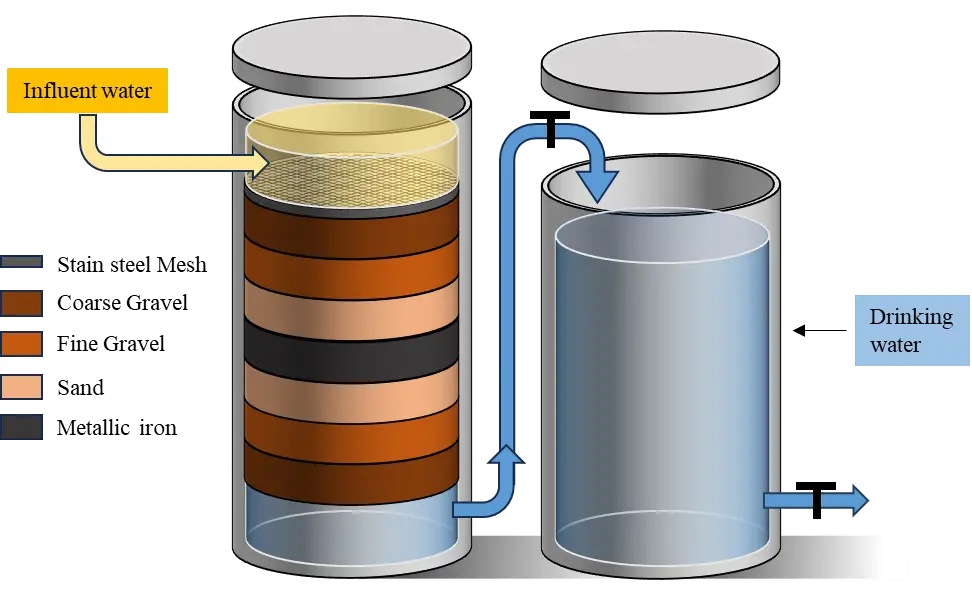
Figure 4. Cross-sectional view of a Fe0-based filtration system for rainwater treatment. Influent water comes from a tank harvesting rooftop rainwater. The daily drinking water need for the household can be filled in a clean jerrycan. Own design (Huiyang Qiu and Yang Song).
Fe0-based filtration systems for water treatment have a similar historical development like RWH. It was commonplace in Western Europe around the 1850s; however, it later declined and disappeared to the extent that using Fe0 for groundwater remediation was perceived as a new technology in the early 1990s (140 years later) [147,148,149,150]. Another point of similarity between Fe0 filtration and RWH is the abundance of conflicting reports on their viability. While RWH treats rain as a different source of water to be pilot tested for every new application, Fe0 research tests the suitability of Fe0 filters for individual contaminants and groups of contaminants. This extreme reductionist view of both Fe0 filtration and RWH suggests that something is wrong with the current scientific publishing system. In fact, scientific progress is built on creating new knowledge from ancient establishments or innovations. How is it possible that two distinct branches of science progress in parallel with the same fundamental oversight? It is evident that both research communities bear the burden of incomplete literature reviews [151]. However, even in the absence of a critical literature review, a thorough analysis of the system establishes scientific truth. In the context of RWH, the water mass balance or the Lavoisier Principle has recalled two important facts: (i) rainfall is the primary source of water on earth and is good freshwater, and (ii) surface runoff of rainwater (or stormwater) can be avoided. This implies that by combining hydraulic sciences with modern engineering tools, mankind can control the entire flow of rainfall. This operation is possible to the extent that cities and modern villages without long-distance drainage systems are possible. Clearly, flood-free cities are possible without intensive stormwater drainage. For example, Figure 5 shows a view of the rainwater canal at the entrance of the Jiangning Campus of Hohai University or Nanjing (China). The whole Jiangning sub-city is networked by such canals, which are comparable to empty beds of ephemeral rivers in semi-arid regions with the corresponding gallery forest [13]. By implementing the zero-runoff approach, the city of Nanjing can render these big canals superfluous and partly use these spaces for other purposes, including storing roadside rainwater for street cleaning or firefighting. It is very important to keep in mind that roads and streets are impervious surfaces that induce surface runoff. This road runoff can be systematically stored and used for municipal activities [97,106]. Figure 6 shows a view of a rainwater canal at a marketplace in Bangangté (Cameroon). This canal, constructed over the last decade, is relatively new and designed to provide adequate drainage for collected and conveyed stormwater. However, poor maintenance, in the form of uncontrolled waste dumping, can impair the system’s functionality and increase the risk of street flooding in Bangangté. In other words, no matter how excellent local flood management is implemented with drainage improvement, flood embankment, flood gates, infiltration bio-pores, rainwater harvesting, and retention ponds, some areas stay vulnerable because of poor maintenance [152]. With deficient maintenance, drainage systems are frequently clogged by solid waste (e.g., debris, plastic bags) or sediments. There are avoidable costs for dredging and cleaning these infrastructures (avoidable increased maintenance costs). In unplanned peripheral neighbourhoods, stormwater flows along natural ravines. These ravines cannot completely channel drain runoffs from heavy rain events. Stormwater becomes partly stagnant (mosquitoes breed) and becomes loaded with various pollutants (e.g., domestic wastewater, garbage, sediments) and represents an important risk vector in terms of human health and environment [153].
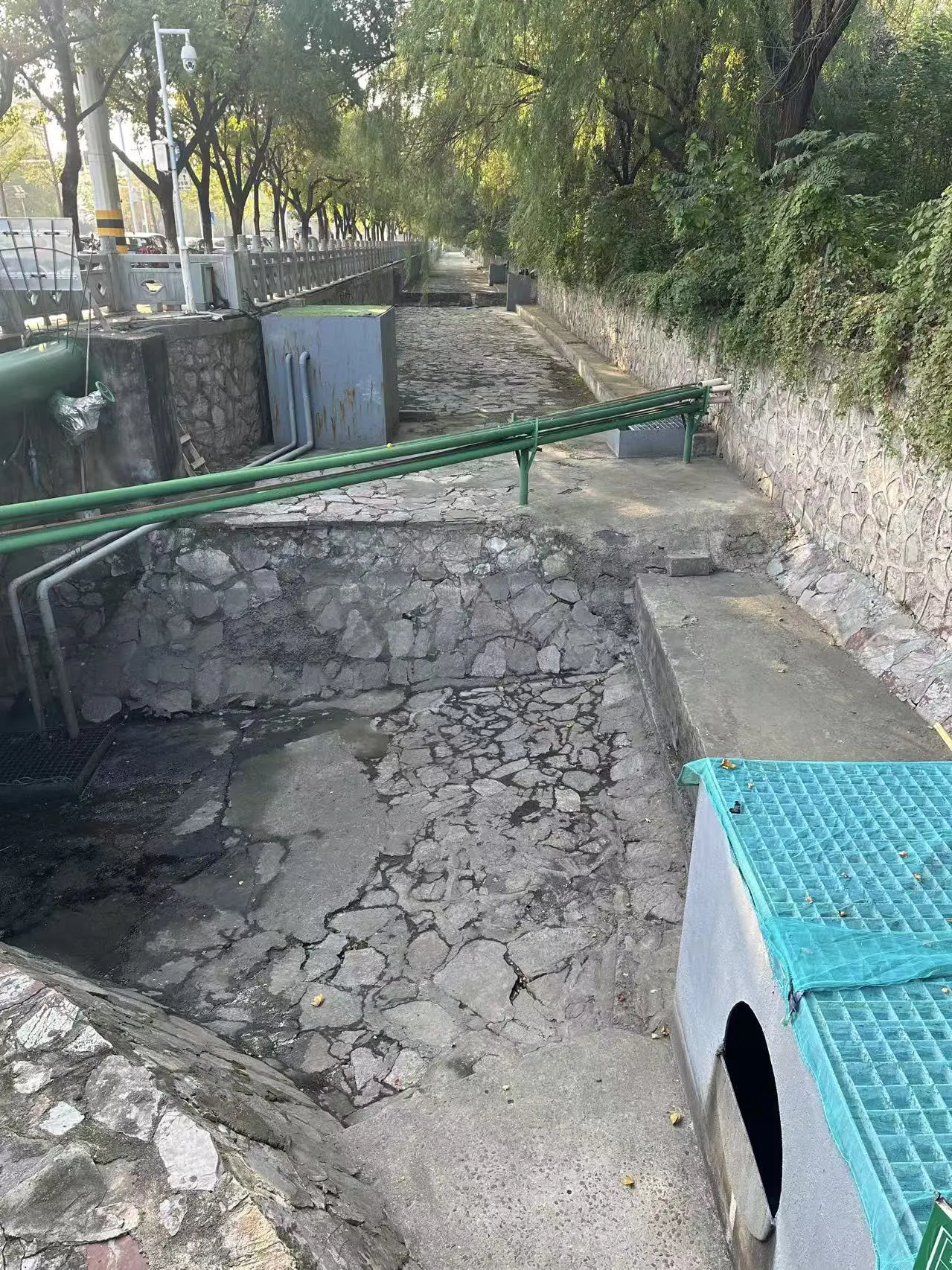
Figure 5. Photograph of the street canalization (stream channel) at the entrance of the Jiangning Campus of the Hohai University, Nanjing (China). Photo taken by Chicgoua Noubactep, November 2025.
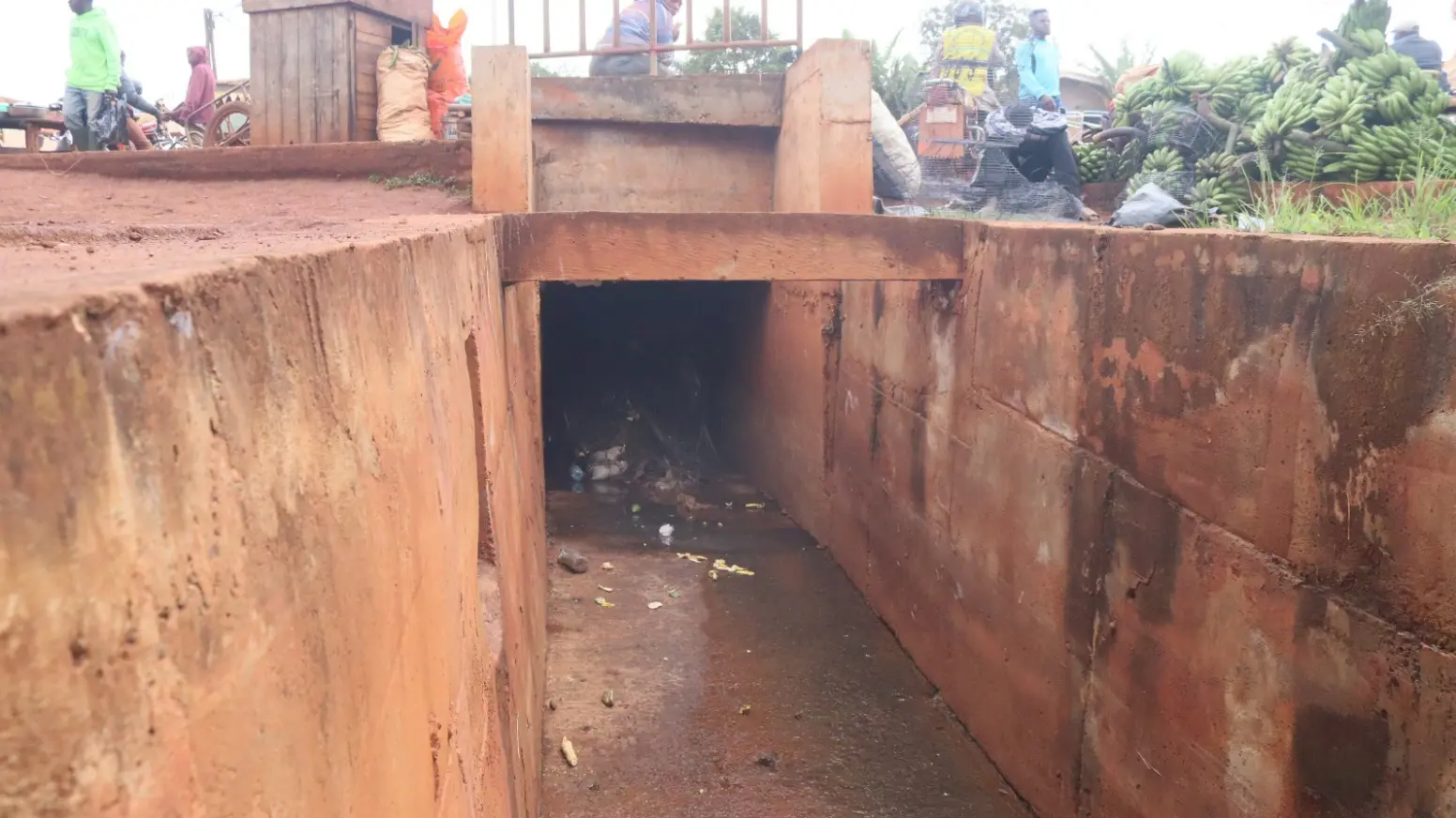
Figure 6. Photograph of the street canalization (stream channel) at one marketplace (Marché B) in Bangangté (Cameroon). Photo taken by Martial Kouamo Nkengne, August 2025.
6.2. Traditional and Modern Methods Working Hand in Hand
Rapid successes achieved by technological advancement (“high-tech”) around the world (e.g., large water conveyance and distribution systems, pumping groundwater) have avoided the development of decentralized water management systems (“low-tech”). Indigenous rainwater harvesting systems are such low-tech-solutions [99,110]. However, “high-tech” and “low-tech” are not mutually exclusive. The problem is that “high-tech” was opposed to “low-tech” prompt at the introduction [110]. In this context, Clément [110] complained about the fact that deep wells and small dams were presented in the Mandara Mountains of Cameroon as superior to shallow wells and terrace systems without any scientific proof [13]. For Clément [110], terrace systems are considered better because they infiltrate water for the long dry season. The current work is not designed to fuel that discussion but to state that the future of water management is an inclusive one [34,154,155]. Under specific environmental and topographic conditions, some “low-tech” water management methods are more resilient and more sustainable than “high-tech” systems [99,156]. The view of this communication is that it should always be possible to combine old systems and modern technologies [157]. Moreover, it should be possible to create more effective systems by integrating indigenous practices with modern technology [99]. For example, water can be made available by any technology (ancient or novel) and saved during irrigation thanks to the modern drip irrigation system, which optimally delivers water directly to the crop roots.
A common perception is that technologies for increasing water supply include (i) dew and fog harvesting, (ii) rainwater harvesting, (iii) rainfall augmentation, (iv) wastewater recycling, and (v) water desalination [58]. As for water conservation methods, the following can be enumerated: (i) artificial aquifer recharge, (ii) reduction of evaporation, (iii) reduction of seepage percolation losses, (iv) reduction of transpiration, (v) selection of crops for a more efficient water use, and (vi) use of trickle irrigation [24]. At each individual site, the selection of the water supply technology and the combined conservation tool would depend on their individual merit and applicability with the available resources and capabilities.
6.3. Watershed Management Revisited
Good watershed management aims to hold rain where it falls as precipitation while protecting against soil erosion. Various conventional technical and vegetative measures can achieve this by slowing the velocity of surface runoff (stormwater) along its path towards the next water body [13,86]. Alternatively, stormwater is directed into water-harvesting structures to augment soil moisture and replenish the aquifer. However, the success of these measures is difficult to evaluate directly. The ecological, economic, and financial improvements can only be indirectly accessed, for example, through the absence or the severity of flooding. The success of the zero-runoff approach, on the contrary, can be assessed at the individual household level. The questions to be answered are: (i) Has any runoff been generated within a compound? (ii) Could the household secure enough water for its potable demand? (iii) Could the overall domestic demand be covered? (iv) Could the residence secure excess rainwater for economic activity? These simple questions would also help promote the management of community water-harvesting systems. Remember that the household is the unit cell of water management (not only) in a watershed. In this perspective, it has been an oversight to limit mandatory RWH to new, larger buildings and houses [80,81,100]. For example, Zhou et al. [80] reported that, in 2020, Beijing, the leader in urban RWH development in China, collected rainwater on less than 2% of its total area. Imagine the outcome if the collecting area is increased to 30%. Beijing and other pilot sponge cities in China have selected only small urban areas for construction and demonstration. Moreover, even in these small areas, RWH is mandatory only for large new public buildings with large roof areas or where the number of water users exceeds a specified threshold [81]. However, to be effective, each drop must count, and small residences (e.g., roof catchments as small as 50 m2 in Tanzania) cover most urban areas worldwide. The question arises, how to involve each household in a community initiative?
Answering this question involves presenting a proposal to collect overflows from residences when they occur and manage them for the benefit of the community and the environment. There have been several proposals for cluster or community rainwater management [158,159,160,161,162,163]. Siphambe et al. [34] and Suprapti et al. [164] summarized the available approaches excellently. Suprapti et al. [164] considered domestic RWH (dRWH) as a costly and difficult to maintain system. A community or communal RWH (cRWH) is then adopted as an alternative solution. Accordingly, a cRWH system channels rainwater runoff from several roofs (e.g., in a cluster) and stores it in a communal cistern or tank. The collected water is processed and distributed back to the households for potable and non-potable water needs. Siphambe et al. [34] suggested a different model in which water is harvested for all uses at the residence level and only overflows are channelled to communal cisterns or tanks. Water in communal tanks is then the excess water from the community that can be sold or used locally for productive activities. Discharging is also an option, particularly in humid regions where excess water could cause flooding [119]. Community tanks should also be associated with infiltration devices to maximize aquifer recharge.
Qiu et al. [165] combined the advantages of cRWH and dRWH by considering individual dRWH systems wherever space is available for RWH infrastructure (e.g., buildings, residences, schools), and cRWH wherever space is lacking, for example, in slums. The premise of this work is that people living in residences are conscious enough to operate and maintain their dRWH systems (full decentralized systems), while cRWH systems in urban slums need centralized maintenance and control to ensure adequate water quality. Clearly, the cRWH option is retained only for land requirements, not because of capital costs or lack of maintenance culture.
6.4. Climate Change Resilience
The most important input variable for the dimensioning of RWH infrastructures (RWHIs) is the local pluviometric regime (annual precipitation or rainfall data) [166,167,168,169]. The annual precipitation, the soil permeability, the temperature variation, and the topography influence other characteristic parameters for the rainwater availability, including evapotranspiration, infiltration, soil moisture, and vegetation growth [169]. To obtain accurate precipitation data, it is necessary to have rainfall data from close to the site where the RWHIs are to be installed. Ideally, at least 30 years of data are required for a robust long-term water management of precipitation [166,167]. However, in places that have recently implemented rainfall monitoring, the use of shorter historical series is unavoidable [168]. Additionally, in some cases, the consideration of climate variability over time justifies the use of a short series (e.g., 5 years) for characterising the current climate context [170,171].
The presentation above has insisted on the fact that in many cases, groundwater depletion in urban areas is due to non-infiltration of rainfall because of increasing impervious surfaces (e.g., roofs, roads, streets) [172,173]. This man-made depletion can be corrected using the zero-runoff approach. In the agricultural sector, the deterioration of precipitation regimes causes the amount of precipitation falling in long periods to fall suddenly in shorter periods, changing runoff rates, increasing soil erosion, and causing flash floods [174,175]. This means that the gap between water availability and demand for crops is exacerbated by climate change [176]. In such situations, the soil water-holding capacity is expected to decrease, and irrigation water application schedules for agricultural activities are expected to change [174,175]. As explained above, the zero-runoff approach enables the harvesting of rainwater and makes it available to plants on purpose. In other words, the expected hindrance to water use efficiency is already addressed. All that is needed is to adapt and reschedule agricultural activities in form, scale, spatial, and temporal terms [174,175]. By “creating” water, the zero-runoff approach inevitably increases the amount of water available for rural and urban agricultural production, but also the amount of water available in populous cities. There is more water available for all stakeholders, and thus, more room to address the many issues attributed to an ever-growing population, climate change, rapid industrialization, and urbanization. Clearly, the expected negative impacts of climate change on water resources can be properly addressed despite the gradual decrease in blue water quality and quantity. It is also good to learn that in some countries, such as Tanzania, RWH has been acknowledged in the national climate change response strategy as a means of building resilience in water resources, wildlife, and human settlements [177]. Tanzania’s policy framework now explicitly recognizes RWH as a climate resilience strategy [178], but while this is a strong foundation, the enabling environment may not yet be fully adequate. Effective implementation will require stronger financing mechanisms, institutional coordination, technical capacity, and community-level uptake beyond policy statements. More so, rainwater harvesting through the zero-runoff approach is about artificially augmenting the volume of blue water. This means that the very first misuse of water on earth is the failure to harvest rainfall. Remember that RWH shapes a new landscape and contributes to creating new local water cycles. This means that even with little consideration for the water mass balance, RWH has already demonstrated its viability for climate change adaptation [68,106]. It appears that the zero-runoff approach is the missing puzzle of the IWRM concept.
6.5. Learning from Small Islands
Small islands are characterized by the shortest path of rainfall to the sea. Rainfall is freshwater, whereas seawater is saline, meaning that freshwater is quickly lost if it is not harvested in time. Typically, there is no groundwater on such islands for two reasons: (i) the small catchment area for groundwater recharge, and (ii) danger of salt intrusion following water withdrawal. As a result, there is not enough blue water available on all small islands. Consequently, small islands have been relying exclusively on harvested rainwater for immemorial times [138,179,180]. This is valid for small islands in Indonesia with abundant rainfall [181,182] and those of the Caribbean having a semi-arid climate [41,183]. Learning from small islands implies recognizing rainfall as a primary source of freshwater and starting to exploit it extensively, instead of searching for reasons why harvesting rainwater would make sense or not. Rainwater is a primary source of water, whether seawater desalination is affordable or not [138]. It has been wrong to consider RWH as just a reliable and cost-effective alternative for water supply. Small islands have always harvested rainwater and reduced their water consumption using various adaptation measures, reducing water demand or water consumption through efficiency and conservation [184,185]. From a pure scientific perspective, the global world would have saved huge resources just by taking small islands as a model for water management. This is because RWH is indigenous or traditional knowledge for many of these communities. This knowledge can be optimized using tools from modern civil engineering [19,106]. The “rainwater first” approach advocated in this work implies that rainwater is the first choice and that suitable RWH infrastructure is therefore permanently needed, not only for emergencies [138]. The most affordable and efficient among them will be installed on a site-specific basis. Ideally, the “rainwater first” approach should be a political decision.
6.6. Debunking the Last Misunderstanding
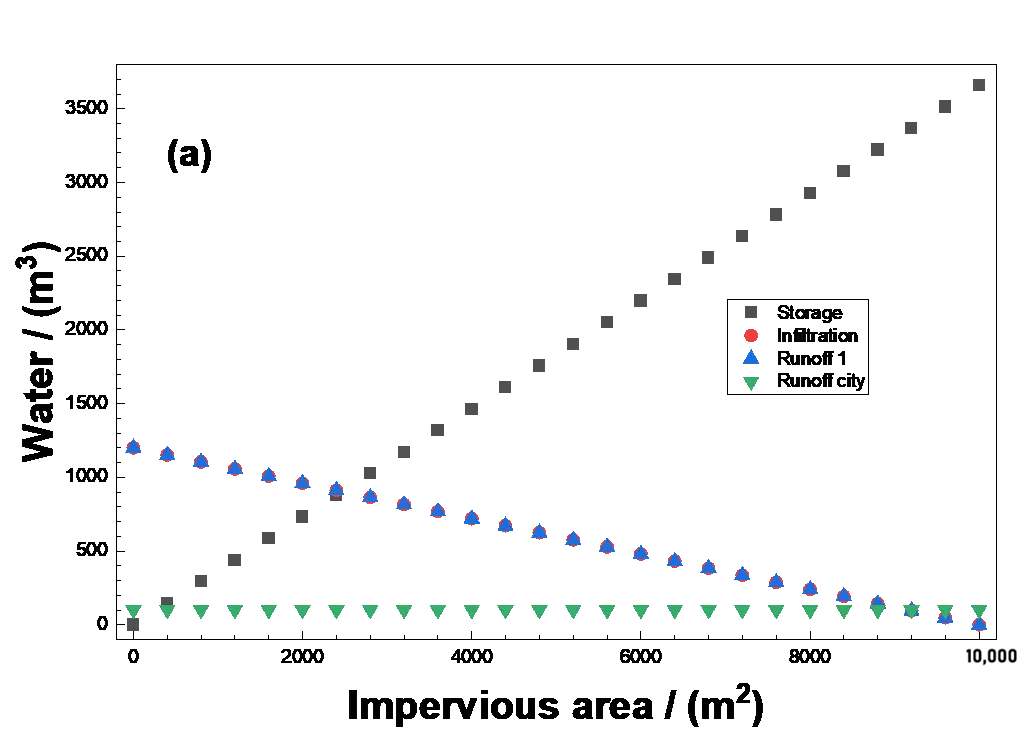
There is a widespread false assumption in the RWH literature about the risk of over-harvesting rainwater, which could threaten downstream communities [186,187]. A similar discussion is performed on whether the growth of cities decreases aquifer recharge due to an increased proportion of impermeable surfaces [172,173]. The argument of over-harvesting rain has no scientific roots. Surface runoff is unnecessary and is even a by-product of heavy rain events, which cause flash floods and intensive soil erosion on a few days each year. Figure 7 illustrates this by showing changes in the rainfall partitioning as 1 ha (10,000 m2) of a farmland is progressively changed to a residential area. Data used are adapted from Helmreich and Horn [188], regarding the semi-arid tropics of sub-Saharan Africa (average annual rainfall of 600 mm). The following partitioning is considered: rainfall (100%), plant transpiration (40%), evaporation from soil and loss by interception (20%), surface runoff (20%), deep percolation or infiltration (20%).
Calculations were performed with increments of 400 m2, corresponding to a hypothetical allotment. Each allotment can harvest 146.4 m3 of water per year (Supporting Information—Table S1). Figure 7a shows that the storage volume varies from 0 to 3660.0 m3, while the corresponding runoff suppression (Runoff 1) decreases from 1200 to 0 m3 (flood mitigation). The line for runoff coincides with the one for infiltration because of the made assumptions (infiltration = surface runoff = 20%). Plant transpiration (40%) and evaporation (20%) are not considered here. However, the results clearly indicate that storing rainwater poses no threat to downstream communities. On the contrary, it protects them from flooding. Moreover, if a fraction of the harvested rainwater is infiltrated, it could augment their water supply. The key feature of Figure 7a is that if RWH is not performed (Runoff city—“business-as-usual”), the runoff volume will increase from 1200 to 3660 m3 for each new ha of city. This represents a 205% increase relative to the baseline, corresponding to the pre-development stage (Figure 7b). A volume of water that can cause erosion or flooding, depending on the rain patterns (e.g., duration, intensity), the soil properties, and the topography. Unlike the “business-as-usual” scenario, a key novelty illustrated in Figure 7 is the quantitative storage and infiltration of rainwater.
Figure 7b shows the normalized values (%) and clearly delineates that the transformation of any farmland to a residential corresponds to decreased infiltration and increased runoff (Runoff 2—“business-as-usual”). This trend is universally valid, in both rural and urban settings, from the farming field or the residence to a watershed scale. There can be discussion on which catchment area can cause flooding or which extend of water storage and infiltration can mitigate flooding [189,190]. But questioning the suitability of RWH to mitigate flooding is counterintuitive and even counterproductive. It appears from Figure 7b that, when the impervious area reaches 3600 m2, 1317.6 m3 of rainwater is harvested, and the infiltration (768 m3) equals the runoff. This site-specific point (missed infiltration = volume of stormwater generated) may be important for stochastic modelling, but is not further considered herein.
In the normal case, rainfall is intercepted by vegetation and infiltrates into the soil, increasing soil moisture and the groundwater table [191]. This is why artificial infiltration corresponds to “create” water or turning surface runoff into blue water (Storage in Figure 7a). That is the scientific background for the technology of artificial aquifer recharge. A community relying on stormwater runoff would receive the same amount of water, or even more, from rivers if rainfall were quantitatively infiltrated (as preconized). The advantage of relying on infiltrated rainwater rather than stormwater is that it provides everyone with more time to fetch water from the river. Moreover, those people would also go to the river only when their stored rainwater is exhausted. In other words, the zero-runoff concept liberated humankind from the pressure to overstore water in dams and to rely on centralized piped water. That is the best lesson from 50 years (1974–2024) of rainwater harvesting and application. The question is who would be willing to lead the world out of the current valley of tears characterized by complains, punctuated by statements such as; “There should be money for this or that, more rules for this or that”, “governments are not doing enough”, “there is injustice”… while people are waiting in vain for clean water, their human right since 28 July 2010 [192,193]. What is needed most is action: “from niche to mainstream” [101,194]. This article has tried to contribute to shaping more efficient actions for a sustainable world.
 |
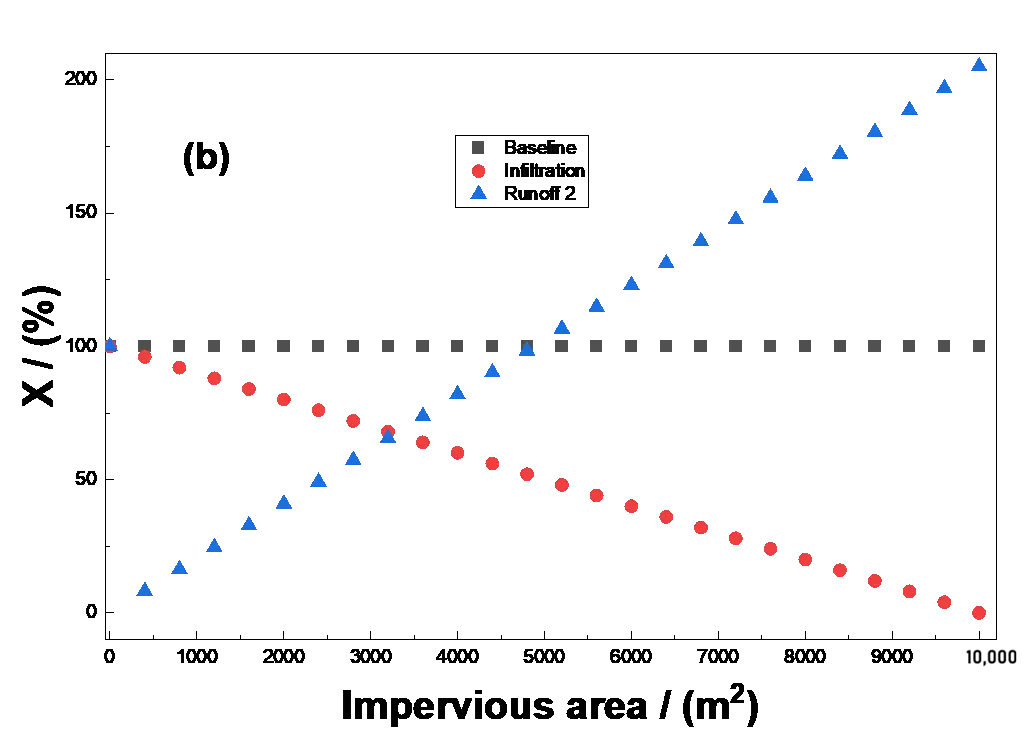 |
Figure 7. Overview of the partitioning of rainwater infiltration and surface runoff as rainwater harvesting is practiced while transforming 1 ha of farmland to a residential area: (a) absolute values, and (b) percent values. Data are from Helmreich and Horn [188]. Runoff in (a) stands for decreased runoff resulting from rainwater harvesting. Runoff in (b) stands for increased runoff resulting from non-harvesting rainwater or an increase in runoff volume.
6.7. Rainwater for All
Rainwater harvesting is an established solution for enabling groundwater recharge, enabling sustainable irrigation, nullifying or at least decreasing household-level reliance on piped water (raising water self-sufficiency), resolving urban water crises, and reducing flood risk [13,18]. Based on this knowledge, this contribution advocates a “rainwater first” approach [13,19,34,86], promoting rain as a primary and mandatory source of water rather than a supplementary option comparable to reclaimed or desalinated water [106,195,196]. The “rainwater first” approach implies that there is no threshold value (lower or upper) of the annual rainfall quantity for RWH. This means that the classification of rainwater systems according to their reliability for water supply [197] is not relevant anymore. Smet [197] identified four types of user regimes: (i) occasional (water is stored for a few days only in a small container), (ii) intermittent (all water demands are met by rainwater in the rainy season), (iii) partial (rainwater is used for drinking and cooking while for other sources cover the remaining needs), (iv) full (all water for all domestic purposes is rainwater). The full regime (“rainwater only”) is easily achieved in humid areas [198]. However, it should be remembered that Brazil [131] and China [128] have managed to create excess water even under semi-arid conditions, where the annual rainfall is lower than 500 mm/year. This means that the “rainwater only” approach is possible under semi-arid conditions as well. In other words, the potential of rainwater harvesting for water supply is immense. The “rainwater only” approach implies there is no need for any alternative water source, making blue water a “dessert” for mankind. If the domestic water supply is covered to 100% by RWH in an agricultural area, this makes 100% of blue water available for productive uses. Each government should weigh whether it makes sense to support domestic RWH to secure more freshwater for agricultural and industrial activities. “Creating” water for other stakeholders is certainly a new argument to justify subsidies for RWH. This is because the conventional arguments for designing RWH infrastructures are no longer valid. These arguments were based on parameters or variables like affordable storage capacity, available catchment area, consumption rate, and number of users, presence of alternative water sources, rainfall pattern (e.g., length of the rainy season), rainfall quantity, and water management strategy [195,196].
Rainwater for all is secured through the availability of many affordable point-of-use water treatment technologies, particularly biological sand filters (BSF) [199], and their numerous amended versions [200,201,202]. This article has favoured metallic iron-amended BSFs for two reasons: (i) the century-old technical expertise [144,148,149], and (ii) the commercial availability of sponge iron of controlled quality [203].
6.8. Would China Lead the Next Step?
The previous sections have shown that China has significantly contributed to the current state-of-the-art knowledge and consciousness for RWH. This was done through two large-scale actions [133,134]: (i) the governmental 1-2-1 projects, which have already enabled the construction of more than 7 million cisterns, and (ii) the sponge city program, which has been running for some 12 years already. Prior to these projects, Thailand had disseminated more than 10 million cisterns for drinking water in rural areas during the 1970s. During the colonial period (e.g., up to the 1950s/1960s), RWH was a common strategy for urban water supply in Africa, Asia, and South America [126,204,205]. Additionally, during the Medieval era, about 6000 underground tanks were used for RWH for household water supply in the city of Venice, Italy [206,207]. Back to the present day, a Dutch engineer, Paul Akkerman, has recently initiated and largely promoted the construction of Calabash cisterns (mostly 5000 litres or 5 m3 in capacity) by local masons in more than 14 countries in Africa, Asia, and South America [116,117]. Calabash-type RWH systems benefit low-income households across the developing world, with some 10,000 units having already been constructed (http://degevuldewaterkruik.nl/, accessed on 27 February 2026). A Calabash cistern is an above-ground rainwater harvesting tank characterized by its rounded, gourd-like shape, inspired by the calabash fruit (Figure 8). Such a cistern is specifically designed to collect and store rainwater effectively while being cost-effective and durable for rural settings [116,117,208].
China has initiated the first modern large-scale multi-purpose RWH systems. Taking the sponge city program as the first large-scale initiative for low-impact development is not neglecting efforts made by other countries like Australia, Germany, Japan, Malaysia, South Korea, the United Kingdom, and the United States of America [81,100,135]. The point is that it is more likely that China will take the next measures to significantly increase the proportion of RWH in the model sponge cities. It would suffice to make RWH according to the zero-runoff approach mandatory for all homes, large and small. This would correspond to the first demonstration of the zero-runoff concept.
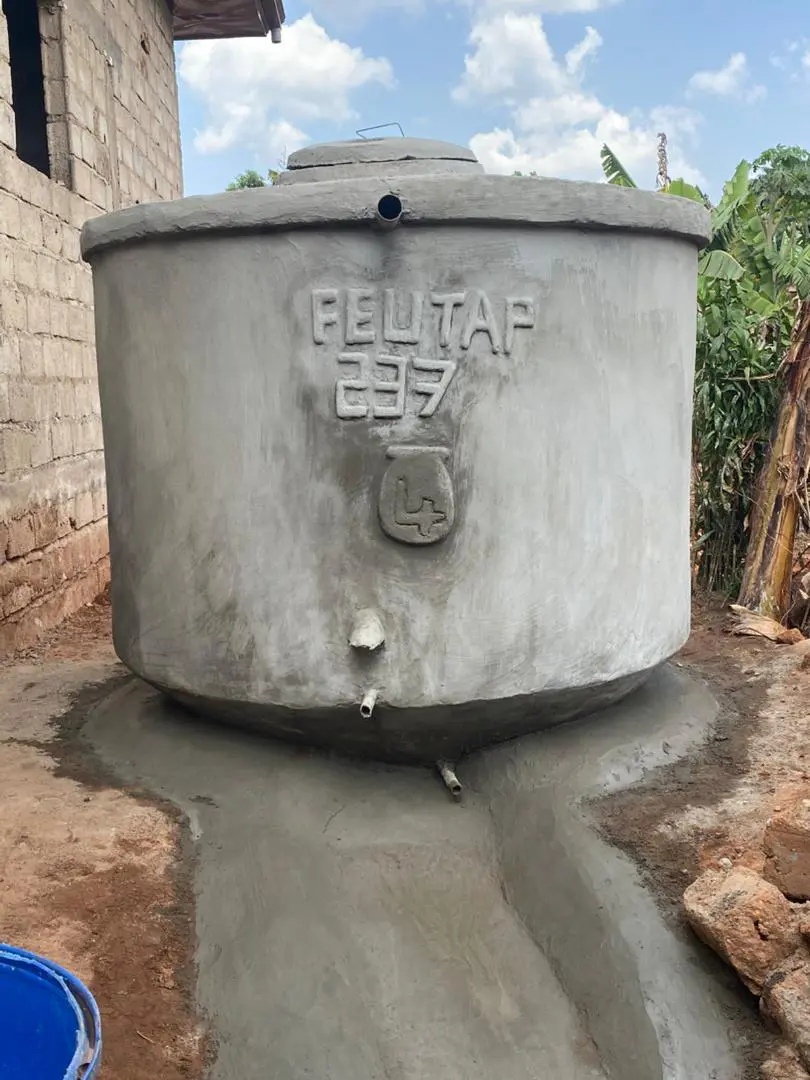
Figure 8. Photograph of an Akkerman Calabash recently constructed in Feutap (Bangangté, Cameroon). Photo taken by Vanick Fanseu (January 2026).
6.9. The Last Barrier
The hydrologic cycle demonstrates that water is a renewable resource, but is not naturally distributed homogenously across different spatial locations. The natural distribution of blue water depends on site-specific characteristics like climate, soil permeability, structural geology, and topography. However, in a small catchment area, rainfall is homogenously distributed. One popular expression for the local homogenous distribution of rainfall is that “rain falls on all roofs”. This was translated by a wise Kenyan into the following saying: “Catching the rain at your home saves you from following the runoff down the hill” [209]. Using the wording of the article, the Kenyan saying can be rewritten as: “Creating blue water at your home saves you from following natural blue water down the hill”. The question arises: Are scientists ready to change their negative perception of rainwater and begin regarding rainfall as a precious resource (a gift) to be harvested and used year-round, everywhere? Starting the reasoning from this point would make the achievement of the decade-old slogan “clean water for all” immediately possible. Exploiting rainfall for domestic and productive uses implies that the conventional centralized water supply is turned into an alternative or a supplement. This would represent a U-turn in water management efforts. This U-turn is urgently needed for the successful implementation of the IWRM framework. This study has shown that the water management community has been integrating blue water for some four decades already, with mitigated success [82,83,210]. Integrating the whole mass of freshwater (rainwater + blue water) is the path to the sustainable world people are longing for.
Brazil and China have demonstrated for more than 20 years that a universal drinking water supply is possible under semi-arid conditions (<500 mm/year) [128,131]. How is it possible that the viability of RWH is continuously discussed under more humid conditions [7,12,69]? A more scientific approach would have consisted of showing why RWH is not a solution, despite higher annual rainfall (>500 mm/year). The same remark is valid for the quality of harvested rainwater. It has been repeatedly demonstrated that rainwater is very easy to treat to drinking-water standards [7,74,116,117,211]. Why is the quality of rainwater still regarded as a barrier to this affordable technology? The zero-runoff approach makes RWH mandatory in efforts to protect populations against flash floods and safeguard soil from erosion [19,34,106]. This makes RWH a catastrophe-relieving measure. All these arguments are universally valid, meaning that no further demonstration is needed, not even in the form of a pilot study (proof of concept), unless something else is coupled with RWH. For example, it is certain that RWH makes irrigation water available; testing the optimal conditions for individual crops justifies a pilot study. Not RWH is pilot tested, but the application. It appears that the most difficult barrier on the path to mainstreaming RWH is the wrong perception of rainfall, which is people’s opinions, not the science of the system. The most efficient weapon against this and other barriers is awareness campaigns at several levels, and among all stakeholders. Where necessary, videos on success stories will support these efforts.
6.10. Ending the Sectorial Thinking
Rainwater harvesting is a very old technology whose science is well established, yet it remains underacknowledged by many active researchers working in individual sectors (e.g., irrigation, landscape restoration, livestock production, urban drainage, water supply). This sectorial approach has presented many deterministic and stochastic models that have subsequently been corrected or invalidated [7,81,82,212,213,214]. Despite the global application of IWRM using various models and concepts, simultaneously addressing water scarcity (e.g., infiltration, storage) and water-related risks (e.g., erosion mitigation, flood control) under changing climate and land-use conditions is still difficult. Even the One Water Concept [59,61,215], which recognizes that drinking water, stormwater, and wastewater are a single, interconnected resource, contains an oversight [62,216]. A common oversight in past efforts is that they have attempted to use observations to infer models [92]. However, it is the essence of science that such endeavours cannot be successfully carried out. Most of the models, if not all, have been invalidated by field observations [19,34,214]. The zero-runoff approach is rooted in a single equation, distributing harvested rainwater (Q) to several sectors (Equation (1)) (Figure 2):
|
```latex\mathrm{Q = Q_{\text{Agriculture}} + Q_{\text{Domestic}} + Q_{\text{Industry}} + Q_{\text{Livestock}} + Q_{\text{Municipal}}}``` |
(1) |
The value of Q is fixed by three main variables: (i) the annual rainfall (in mm/year), (ii) the catchment area (m2), and (iii) the runoff coefficient [204]. The runoff coefficient reflects the permeability of the catchment area. Accordingly, there can be a rainwater deficit or rainwater surplus at each individual location, depending on the goal of the stakeholders. For example, for a household, the rooftop rainwater can satisfy only the potable needs, or both potable needs and domestic needs. Depending on the annual rainfall and the roof size, there can be excess water for productive activities. Equation (1) is applicable everywhere (e.g., house/residence, rural/urban) and by everyone (e.g., citizen, homeowner, farmer). It is thus a universal equation that should be written and discussed before any simulation effort starts. In fact, many confusing reports in the literature originate from an ill-defined starting point. For this reason, the zero-runoff approach suggests that the whole rainfall is captured, a fraction is stored for the uses specified in Equation (1), and the surplus is infiltrated for groundwater recharge (Equation (2)). Groundwater recharge can be regarded as a task of the municipality (QMunicipal) in Equation (1).
|
```latex\mathrm{Q = Q_{\text{Demand}} + Q_{\text{Infiltration}}}``` |
(2) |
Equation (1) and Equation (2) recall that the same harvested rainfall is used for all applications, including aquifer recharge. It is just an excellent illustration of the One Water Concept [217]. Equation (1) clearly shows that the sectorial approach is wrong and that the “rainwater first” approach is the best way to make water management everyone’s matter and use “every last drop” of rainwater [13,86,98,106]. This is because rainfall is quantitatively converted into blue water. Equation (1) is regarded as a novel framework for developing sustainable rainwater management strategies for both urban and rural settings in a changing climate. Equation (1) contains all components, as individual components can be further subdivided. For example, QMunicipal encompasses water for dust abatement, firefighting, landscape irrigation, and street cleaning. This framework should be used to reevaluate and adapt investigations for the implementation of the IWRM concept and guide decision-making for sustainable water management.
7. Rainwater Harvesting with Confidence
The presentation until here has described how rainwater has evolved to a “non-conventional” or “non-traditional” water source and how the decision-making in its implementation is not straightforward. Rooftop RWH is considered to have highly variable water quality and microbial contamination concerns [58,114]. Therefore, a uniform framework for the operation and maintenance of RWH infrastructures is needed to address water quality concerns everywhere.
7.1. The Importance of Rainwater
Prof. George W. Reid (University of Oklahoma, USA) stated in an introduction to a talk on the history of rainwater cistern systems: “Technology is the application of science to the resolution of a current problem” [33]. He excellently demonstrated that RWH was, at the time (1982), a retrogressive technology because, in earlier times, typical middle-class dwellings stored rainwater in cisterns and used it for domestic supply, private bathing, and other purposes. Retrogressive clearly means backward. This wording of Prof. Reid is intentionally maintained in this section to underscore the readiness to learn from history. The retrogressive character of RWH refers to the low level of technology involved in its management, rather than to the quality of water. From the 1980s to date, RHW has been mostly discussed as an appropriate technology or an intermediate technology mainly for the developing world [188,211,218]. Prof. Reid continued his lecture by drawing the parallel between energy supply and water supply through technologies from earlier times (retrogressive technologies) that might be acceptable today. The historical path/sequence of energy supply has been wood, followed by peat, coal, coke, oil, and then electricity [33]. Wood as an energy source lacks much of the convenience associated with electricity. Cisterns for water supply present a similar potential in reduced complexity because they require no or less energy, no chemicals, and are essentially cheap. Prof. Reid clearly stated that cisterns are “adequate for reasonable water requirements and are convenient”. The past four decades have continued the argumentation, also in the framework of the nature-based-solution (e.g., LID, sponge cities), to present more advantages favouring universal and even mainstreaming RHW as summarized in this article [68,114,219,220].
The key message from Prof. Read’s lecture is that water for domestic use may be abstracted from various points of the hydrologic cycle: (i) as roof runoff or drainage before it reaches the ground (RWH 1), (ii) as surface runoff from ground catchment before it runs off or percolates downwards (RWH 2) into the sewer system, (iii) as water from a compound well (groundwater), (iv) as spring water at the point of re-emergence to the ground surface, and (v) as surface water from rivers and lakes [33]. To these natural possibilities may be added man-made or non-traditional ones, such as (i) atmospheric and condensate harvesting, (ii) creating or increasing groundwater supplies by induced or artificial recharge, (iii) recycling wastewater and greywater, and (iv) desalinating seawater and brackish water [58,219]. From these eight (08) possibilities, only two (RWH 1 and RWH 2) are always available everywhere, the sole disadvantage being the stochastic nature of rain events. However, this perceived disadvantage was turned into a design parameter in the zero-runoff approach. Clearly, the developing world should reassess whether it makes sense to promote rainwater use through local skills or to spend millions of dollars on long-distance water supply [37,66,126,221,222,223]. As an example, to improve the water supply of the city of Yaoundé (Cameroon), a large project, “Drinking water supply in Yaoundé and its surroundings from the Sanaga (PAEPYS)” has been implemented. PAEPYS involved the construction of a water treatment plant fed by the Sanaga River (100 km from Yaoundé) with a capacity of 300,000 m3/day. This number (300,000 m3/day) reads huge and can justify the need for international expertise and funding. However, calculations (supporting information) show that 300,000 m3/day can be harvested by 498,475 houses with a roof area of 150 m2 (annual precipitation: 1628.3 mm/year). The corresponding to roof area of 74,771,233.8 m2 or 7477.1 ha or 74.8 km2 represents only about 42% of the urban area of Yaoundé (180 km2). Assuming residences with 7 inhabitants each, this provides daily water for 3,489,325 citizens, which is less than the actual population of the city (3.76 million). Considering that RWH from roads and streets is not assessed, these results demonstrate the huge potential of RWH as a driver for self-supply in a modern city. This potential of RWH as a stand-alone water source or the site-specific applicability of the “rainwater first” approach is further demonstrated while fuelling the debate for the acceptance of self-supply [224,225,226,227]. In fact, Wainaina and Barbosa [226] advocated for considering the self-supply as a “foundational, not a complementary model” for water supply in rural households.
Summarized, rainwater has been mistakenly turned into one of the several non-traditional water sources [68,153,219], while rainwater harvesting is, at worst, a retrogressive, but appropriate water supply technology [33,34,211]. The need to consider rainwater harvesting systems as an integral component of IWRM, and to bring this notion to all stakeholders, was the main reason for writing this communication with a subtitle, ‘A handout for researchers and policymakers’. The term handout refers to a summary of useful information to support the mainstreaming of RWH. Thus, the handout is for all stakeholders, including scientists and municipalities.
7.2. Rainwater at the Heart of Sanitation
Mainstreaming RWH means involving all individual households. Thus, as the main catchment surface, roofs should be maintained clean, and poor roofing should be improved. This is because the quality of harvested rainwater is affected by the nature and the degree of maintenance of the catchment surfaces [33,58]. The guttering system should also be maintained, and non-avoidable dirt shall be eliminated in the first flush to be emptied in the infiltration well. The storage reservoir, for example, a reinforced concrete cistern, ideally receives water already free from suspended particles through sand filters built at the entrance of the reservoir. If strained water is further filtered through Fe0-amended filters, one can always rely on the safety of stored water. In other words, well-designed and operated RWH infrastructures made any disinfection superfluous, because even secondary contamination is eliminated at the design phase. All these advantages make RWH the first choice for chemistry-free and energy-free self-sufficiency in water supply.
The last interesting feature of the zero-runoff approach [19,33,34,58,93,94,95] is that stormwater is eliminated at the source. In other words, self-supply through rainwater harvesting solves many environmental problems, including avoiding erosion and flooding, and reducing point-source pollution. Rainwater that is harvested and used can be recycled and reused for non-potable applications like car washing, dust abatement, and irrigation. Any reduction of the need for “original rainwater” is equitable to a new water source. Thus, similar to channelled blue water in the conventional centralized water supply scheme, rainwater should be placed at the top of the pyramid of water-reuse cascades. Section 7 has recalled that RWH unifies ancient and modern approaches to water management. The long history of RWH has identified the optimal conditions for the sustainable application of the “cistern” technology [19,33,34,37,66]. The time for action has come.
7.3. Economic Aspects of RWH
Economic viability has long been considered an important parameter for deciding whether to adopt RWH or not [228,229]. The total costs of RWH infrastructures (RWHIs) can be divided into investment costs (e.g., materials procurement and installation services) and operating costs (e.g., maintenance, pumping). Investment costs are often the main economic barrier to implementing RWH in developing countries. However, the discussion until now was rooted in RWH as an alternative water source, and its affordability was discussed in terms of demand for non-potable water, for instance. Clearly, making water tariff a key factor in discussing the economic viability of RHW is non-intuitive. The net result has been that a semi-arid country like South Africa has declared RWH to be economically not viable [230,231]. The Economic viability is also often analyzed based on how long it takes to attain return on investment [229]. In this context, Khastagir and Jayasuriya [232] reported that the return on investment in areas with low precipitation (≤450 mm) is affected by the water tariff. For the zero-runoff approach, RWH should be mandatory; the question is then how to assist low-income households to implement RWHs? Clearly, for the length of return on investment, time is not an obstacle to spreading RWH anymore. The government of China has subsidized RWH in many regions [81,100,233], and those regions were more successful in RWH than others [229,233]. RWHIs bring benefits to society and the environment, and these benefits are difficult to express in monetary terms only.
According to Petit-Boix et al. [234], RWH is an attractive measure as a source of water, especially during dry seasons, such as drought, as this system has a low implementation cost, simple construction, low energy consumption during the stage of use, and requires slight treatment to use water for non-potable purposes. In addition, during dry seasons, the price of water becomes higher, but the payback from this system can be attained in a longer period, as it is at the residential level [235]. The RWHS viability is associated with the price of water from the central water supply system, its considered lifespan, and the implementation site features, such as the amount of rain (rainfall data). Other benefits of RWHIs include (i) erosion and flood mitigation, (ii) increasing local water security, and (iii) reducing electricity use and greenhouse gas emissions. These key aspects have been included in the system’s feasibility analysis since the 1990s [37]. The reduction of the volume of stormwater runoff and associated problems has also been discussed as advantageous for the adoption of RWHIs, with the storage capacity being a key design parameter. The zero-runoff concept relativizes the soundness of this argumentation since there should be no more quantitative stormwater to cope with.
Finally, rainwater quality issues are the remaining acceptable argument against RWH according to the prevailing paradigm [228]. However, harvested rainwater must not be used as drinking water. In other words, while drinking harvested rainwater is optional, harvesting rainfall is mandatory. Arguments like lack of technical knowledge about RWHIs have been eliminated by several successful projects in the most remote rural areas of developing countries [49,87,116,117,236]. At the end of the day, the challenge is to accept the U-turn and use the many advantages of the zero-runoff approach for humankind and the environment. Regulations and subsidies are definitely the most effective ways to implement RWHIs everywhere and facilitate its mainstreaming worldwide.
7.4. Outlook
Conceptually, research on RWH lags behind practical accomplishments [33,37,66,211,237]. The major issue of future research should be to provide a sound scientific basis for the site-specific optimal application of RWH techniques. Various factors influence the successful implementation of RWH, including geographical features (e.g., annual precipitation), land cover, and land use. In contrast, very few studies have directly linked annual precipitation with specific purposes; fewer still focus on how much water can be collected from the roofs and roads and used for non-potable demands. Effective point-of-use water treatment technologies are also available but have not been considered while discussing rainwater quality as a limiting factor for mainstreaming RWH [114]. Future research should focus closely on the applicability of the zero-runoff approach to provide site-specific, feasible solutions.
The zero-runoff approach, like the terrace system [13,112], is only efficient when many citizens adopt it and regularly maintain it. Improper management, or partial subsequent abandonment of RWH according to the zero-runoff approach, may result in sudden flooding, for example, when cisterns are permanently full [119]. Proper management and maintenance of the RWH infrastructures (RWHIs) in perpetuity should therefore be taught as a central feature for sustainable RWH systems. Therefore, future studies should consider the following for maintaining RWH in perpetuity: (i) maintenance and repair of the RWHIs, (ii) controlling systems to monitor and document the functionality of RWHIs and water quality, and (iii) introducing rainwater harvesting into the scholar curriculum, particularly in developing countries [219,238,239,240]. Additionally, the legislation must introduce mandatory RWH at all scales, and special funds should be provided to support the installation of cisterns to incentivize improved RWH practices. Finally, there is a need for knowledge provision from universities and policy framers regarding RWH to the local farmers about sustainable water management practices. It is anticipated that this approach will revolutionize integrated water resource management and help in promoting ecological, economic, and social development.
8. Conclusions and Recommendations
The past four decades have witnessed rising shortages of freshwater and safe drinking water, and have called for collective emphasis on integrated water resources management (IWRM). However, conventional IWRM practices are limited to redistributing blue water (groundwater and surface water) among all relevant stakeholders. Considering blue water as rainfall harvested by nature, the conventional IWRM has been a pure “mining” activity. This study has introduced the zero-runoff concept as a tool to purposefully harvest rainfall and store it in local reservoirs (e.g., cisterns, lakes, ponds, tanks) or infiltrate it into the aquifer. This corresponds to “creating” water because rainfall is directly transformed into blue water stored in artificial reservoirs. RWH increases crop production, provides drinking, household, and sanitation water. Water for commercial, industrial, and livestock purposes can also be secured. This makes rainwater a potential stand-alone technology for domestic water supply. In all the cases, the new slogan should be “rainwater first”, meaning that blue water is sought only in case of deficit. Taking the zero-runoff concept as the new compass, initiatives to mainstream RWH are urgently needed. Policies, legal directives, and governmental budgets designed for promoting IWRM should be adapted and realized. There is no doubt that the perceived water scarcity will be transformed into hard scientific facts, while considering “created” water. The water quality issue is easily addressed using frugal technologies such as Fe0-based filters. It is about making decentralized systems the rule for water management, while using local resources and manpower.
To stimulate the further development of household RWH to the extent that water management becomes everyone’s business, more attention needs to be paid to:
-
-
Coupling traditional knowledge and modern engineering knowledge to design the most efficient and affordable solutions to harvest rainwater according to the zero-runoff concept.
-
-
Share knowledge and experience on all aspects concerning the healthy operation and maintenance of RWH infrastructures (RWHIs).
-
-
Mainstreaming the implementation of RWHIs into development projects, national strategies, and action plans.
-
-
Encouraging coordination and collaboration among stakeholders, particularly regarding the hygienic maintenance of RWHIs.
-
-
Assuring effective decentralization and good governance by regularly offering capacity building and training, as well as regularly organizing awareness campaigns.
-
-
Making decentralization of water supply and water treatment a part of the curriculum since elementary school.
Supplementary Materials
The following supporting information can be found at: https://www.sciepublish.com/article/pii/944, Table S1: Changes in rainfall partitioning (infiltration and runoff) as 1 hectare (10,000 m2) of farmland is transformed into a residential area.
Acknowledgements
Martial Kouamo Nkengne (Film Director and Photograph in Yaoundé/Cameroon) and Vanick Fanseu (Civil Engineer in Bangangté/Cameroon) are thanked for technical support.
Author Contributions
Conceptualization, Y.S., A.M.S., C.T.N., A.A., B.K.A., H.Q., C.N.; writing—original draft preparation, Y.S., A.M.S., W.G., H.Q., R.H., C.N.; writing—review and editing, Y.S., A.M.S., C.T.N., A.A., E.L.N., T.B.M., C.A., B.K.A., W.G., H.Q., R.H., C.N. All authors have read and agreed to the published version of the manuscript.
Ethics Statement
Not applicable.
Informed Consent Statement
Not applicable.
Data Availability Statement
Not applicable.
Funding
Funding for this study was received from the National Natural Science Foundation of China (NSFC Grant No. 42372280), “Investigating the permeability loss and the spatial heterogeneous permeability change of zero-valent iron permeable reactive barrier for groundwater remediation”.
Declaration of Competing Interest
The authors declare that they have no known competing financial interests or personal relationships that could have appeared to influence the work reported in this paper.
References
- Wang N, Sun F, Koutsoyiannis D, Iliopoulou T, Wang T, Wang H, et al. How can Changes in the Human‐Flood Distance Mitigate Flood Fatalities and Displacements? Geophys. Res. Lett. 2023, 50, e2023GL105064. DOI:10.1029/2023GL105064 [Google Scholar]
- Boncz MA, Bezerra ET, Marcato J, Jr., Rocha Prudencio GI, Dittmer U, Loureiro Paulo P. Rainwater harvesting potential and impact on stormwater drainage in an urban environment. Water Reuse 2025, 15, 319–328. DOI:10.2166/wrd.2025.091 [Google Scholar]
- Rotimi FE, Kalatehjari R, Moshood TD, Abu Ali Z. Assessing Surface Water Flood Mitigation Strategies: A Global Comparative Review. J. Flood Risk Manag. 2025, 18, e70049. DOI:10.1111/jfr3.70049 [Google Scholar]
- Armando Camargo Sandoval E, Ahammed F. Performance Impacts of Rainwater Tanks on Stormwater Drainage Systems. Hydroecol. Eng. 2025, 2, 10002. DOI:10.70322/hee.2025.10002 [Google Scholar]
- Ndayiragije JM, Nkunzimana A. Overviewing the influencing factors of flash floods and assessing their impacts on human life with a focus on Burundi, mitigation measures. Next Sustain. 2026, 7, 100249. DOI:10.1016/j.nxsust.2026.100249 [Google Scholar]
- Cristiano E, Farris S, Deidda R, Viola F. How much green roofs and rainwater harvesting systems can contribute to urban flood mitigation? Urban Water J. 2022, 20, 140–157. DOI:10.1080/1573062X.2022.2155849 [Google Scholar]
- Nandi S, Gonela V. Rainwater harvesting for domestic use: A systematic review and outlook from the utility policy and management perspectives. Util. Policy 2022, 77, 101383. DOI:10.1016/j.jup.2022.101383 [Google Scholar]
- Shoja Razavi N, Prodanovic V, Zhang K. Advancing stormwater harvesting: a comprehensive review of current drivers, implementation advancements, and pathways forward. Environ. Technol. Rev. 2024, 13, 478–501. DOI:10.1080/21622515.2024.2376293 [Google Scholar]
- Ali S, Sang YF, Pilla F, Singh VP, Dilawar A. Implementing urban rainwater harvesting systems: Multiple potential performances, barriers, challenges, solutions, and future perspectives. Renew. Sustain. Energy Rev. 2025, 218, 115793. DOI:10.1016/j.rser.2025.115793 [Google Scholar]
- Sadima MM. Evaluating the Effectiveness of Water Sensitive Urban Design (WSUD) Measures in reducing Runoff at the Water Institute in Dar es Salaam, Tanzania. J. Water Resour. Eng. Manag. Policy 2025, 2, 138–152. DOI:10.56542/w.jwempo.v2.i2.a9.2025 [Google Scholar]
- Oluk I, Rey SD, Foltz ME, Schussler JC, Byrne DM. Characterizing sustainability of green stormwater infrastructure technologies using life cycle assessment and life cycle costing: A systematic review. Water Res. 2026, 288, 124586. DOI:10.1016/j.watres.2025.124586 [Google Scholar]
- Lee KE, Mokhtar M, Mohd Hanafiah M, Abdul Halim A, Badusah J. Rainwater harvesting as an alternative water resource in Malaysia: Potential, policies and development. J. Cleaner Prod. 2016, 126, 218–222. DOI:10.1016/j.jclepro.2016.03.060 [Google Scholar]
- Madomguia D, Nya EL, Njomou-Ngounou EL, Gatcha-Bandjun N, Mwamila TB, Balna J, et al. Revisiting water resources management in the Mandara Mountains. Heliyon 2025, 11, e41692. DOI:10.1016/j.heliyon.2025.e41692 [Google Scholar]
- Iza A, Stein R. RULE—Reforming Water Governance; International Union for Conservation of Nature: Gland, Switzerland, 2009. [Google Scholar]
- te Wierik SA, Gupta J, Cammeraat ELH, Artzy‐Randrup YA. The need for green and atmospheric water governance. WIREs Water 2019, 7, e1406. DOI:10.1002/wat2.1406 [Google Scholar]
- United Nations. Transforming Our World: The 2030 Agenda for Sustainable Development (No. A/RES/70/1); United Nations: New York, NY, USA, 2015. Available online: https://sdgs.un.org/2030agenda (accessed on 27 February 2026).
- Falkenmark M, Wang-Erlandsson L, Rockström J. Understanding of water resilience in the Anthropocene. J. Hydrol. X 2019, 2, 100009. DOI:10.1016/j.hydroa.2018.100009 [Google Scholar]
- Singh S, Yadav R, Kathi S, Singh AN. Treatment of harvested rainwater and reuse: Practices, prospects, and challenges (Chapter 14). In Cost Effective Technologies for Solid Waste and Wastewater Treatment Advances in Environmental Pollution Research; Kathi S, Devipriya S, Thamaraiselvi K, Eds.; Elsevier: Amsterdam, The Netherlands, 2022. DOI:10.1016/B978-0-12-822933-0.00003-6 [Google Scholar]
- Siphambe TV, Aliyu A, Souadji K, Bayongwa SA, Amans T, Fomena-Tchinda H, et al. Mitigating flash flooding in the city: Drain or harvest? Water Supply 2024, 24, 812–834. DOI:10.2166/ws.2024.023 [Google Scholar]
- Perrier A, Tuzet A. Le cycle de l’eau et les activités au sein de l'espace rural. Enjeux globaux, solutions locales et régionales. Comptes Rendus. Géosci. 2004, 337, 39–56. DOI:10.1016/j.crte.2004.10.019 [Google Scholar]
- Davis F. An Elementary Handbook on Potable Water; Silver, Burdett & Co: New York, NY, USA; Boston, MA, USA; Chicago, IL, USA, 1981; 118p. Available online: https://books.google.com/books?hl=en&lr=&id=QQtd6XzLt-kC&oi=fnd&pg=PA7&dq=21.%09Davis+F.+(1891):+An+Elementary+Handbook+on+Potable+Water.+Silver,+Burdett+%26+Co,+New+York,+Boston,+Chicago+/+USA+118+pp.&ots=zOKHTzwguS&sig=EOS1gv6WtPfOsu7q2ft9TMKuSJc#v=onepage&q&f=false (accessed on 27 February 2026).
- Falkenmark M. Land-water linkages: A synopsis. Land and water integration and river basin management. In FAO Land and Water Bulletin; FAO: Rome, Italy, 1995; Volume 1; pp. 15–16. [Google Scholar]
- UN-HABITAT. Rainwater Harvesting and Utilisation. In Blue Drop Series on Rainwater Harvesting and Utilisation—Book 3: Project Managers and Implemetation Agency; United Nations Human Settlements Programme (UN-HABITAT): Nairobi, Kenya, 2005. [Google Scholar]
- Jiang Z-Y, Li X-Y, Ma Y-J. Water and energy conservation of rainwater harvesting system in the Loess Plateau of China. J. Integr. Agric. 2013, 12, 1389–1395. DOI:10.1016/S2095-3119(13)60553-5 [Google Scholar]
- Rohilla SK, Jainer S, Matto M. Mainstreaming Rainwater Harvesting in Noida; Centre for Science and Environment: New Delhi, India, 2017. [Google Scholar]
- Tenebe IT, Emenike PC, Babatunde EO, Neris JB, Fred-Ahmadu OH, Dede-Bamfo N, et al. Assessing the state of rainwater for consumption in a community in dire need of clean water: Human and health risk using HERisk. Water Pract. Technol. 2022, 17, 2005–2022. DOI:10.2166/wpt.2022.109 [Google Scholar]
- Levizzani V, Kidd C. Precipitation. In Precipitation: Geophysics and Environmental Physics; Springer: Cham, Switzerland, 2025. DOI:10.1007/978-3-031-97096-2_4 [Google Scholar]
- Herrfahrdt-Pähle E, Houdret A, Dombrowsky I, Cullmann J, Mukherji A, Unver O, et al. Empowering global water governance: Taking the 2023 UN Water Conference outcomes forward to address the current water crises. Water Int. 2025, 50, 4–10. DOI:10.1080/02508060.2025.2452108 [Google Scholar]
- Gwenzi W, Marumure J, Makuvara Z, Simbanegavi TT, Njomou-Ngounou EL, Nya EL, et al. The pit latrine paradox in low-income settings: A sanitation technology of choice or a pollution hotspot? Sci. Total Environ. 2023, 879, 163179. DOI:10.1016/j.scitotenv.2023.163179 [Google Scholar]
- Cao Y, Barbier R, Baron C, Barreteau O, Besenval A, Duffrene MPC, et al. Commoning water and integrating nonhuman entities into water governance in Europe. Ambio 2025, 1–13. DOI:10.1007/s13280-025-02286-7 [Google Scholar]
- Meter KJV, Basu NB, Tate E, Wyckoff J. Monsoon Harvests: The Living Legacies of Rainwater Harvesting Systems in South India. Environ. Sci.Technol. 2014, 48, 4217–4225. DOI:10.1021/es4040182 [Google Scholar]
- Frasier GW. (Ed.). Proceedings of the Water Harvesting Symposium. Phoenix, Arizona, March 26–28; Agricultural Research Service, U.S. Department of Agriculture: Washington, DC, USA, 1975. [Google Scholar]
- Reid GW. Lessons of History in the Design and Acceptance of Rain Water Cistern Systems. In Proceedings of the 1st International Conference on Rainwater Cistern Systems, Honolulu, HI, USA, 9–15 June 1982. [Google Scholar]
- Siphambe TV, Ahana BS, Aliyu A, Tiwangye A, Fomena-Tchinda H, Tchouandem-Nzali C, et al. Controlling stormwater at the source: Dawn of a new era in integrated water resources management. Appl. Water Sci. 2024, 14, 262. DOI:10.1007/s13201-024-02324-x [Google Scholar]
- Agarwal A, Narain S, Khurana I. Making Water Everybody's Business: Policy and Practice of Water Harvesting; Centre for Science and Environment: New Delhi, India, 2001. [Google Scholar]
- Hering JG, Ingold KM. Water Resources Management: What Should Be Integrated? Science 2012, 336, 1234–1235. DOI:10.1126/science.1218230 [Google Scholar]
- Herrmann T, Hasse K. Ways to get water: rainwater utilization or long-distance water supply? A holistic assessment. Water Sci. Technol. 1997, 36, 313–318. DOI:10.2166/wst.1997.0685 [Google Scholar]
- Espersen R. Water Use at Palmetto Point and Middle Island, Saba, Dutch Caribbean: A Modeled Approach for Settlement Viability. Int. J. Hist. Archaeol. 2013, 17, 806-827. DOI:10.1007/s10761-013-0243-0 [Google Scholar]
- Peters EJ. Financing Domestic Rainwater Harvesting in the Caribbean. J. Sustain. Dev. 2017, 10, 107. DOI:10.5539/jsd.v10n5p107 [Google Scholar]
- Voth-Gaeddert LE, Momberg D, Brathwaite K, Schranck A, Libbey S, Lemley M. Evaluating the costs and components of a territory-wide household water storage and treatment program in the US Virgin Islands. Water Policy 2022, 24, 1692–1703. DOI:10.2166/wp.2022.127 [Google Scholar]
- Loen S. Thirsty Islands and Water Inequality: The Impact of Colonial Practices on Freshwater Challenges in the Dutch Caribbean. Blue Papers 2023, 2, 124–131. DOI:10.58981/bluepapers.2023.1.12 [Google Scholar]
- Forde MS, Cashman A, Mitchell K. Sustainability of water resources in Caribbean small island developing states: An overview. Discov. Sustain. 2024, 5, 265. DOI:10.1007/s43621-024-00478-x [Google Scholar]
- Mwamila TB, Katambara Z, Han MY. Strategies for Household Water Supply Improvement with Rainwater Harvesting. J. Geosc. Environ. Protect. 2016, 4, 146–158. DOI:10.4236/gep.2016.49011 [Google Scholar]
- Roy B, Hartigan J. Empowering the Rural Poor to Develop Themselves: The Barefoot Approach (Innovations Case Narrative: Barefoot College of Tilonia). Innov. Technol. Govern. Global. 2008, 3, 67–93. DOI:10.1162/itgg.2008.3.2.67 [Google Scholar]
- Hartigan M. Help from Above: Considering Rainwater Harvesting as An Alternative to Filtration (Innovations Case Discussion: SONO Filters). Innovations 2009, 4, 103–106. DOI:10.1162/itgg.2009.4.3.103 [Google Scholar]
- Lahnsteiner J, van Rensburg P, Esterhuizen J. Direct potable reuse—A feasible water management option. J. Water Reuse Desalin. 2018, 8, 14–28. DOI:10.2166/wrd.2017.172 [Google Scholar]
- Lahnsteiner J, Honer T, Ashipala L, Nikodemus K, Poussade Y, van Rensburg P. Windhoek/Goreangab Direct Potable Water Reuse, Case Study Namibia. In Handbook of Water and Used Water Purification; Lahnsteiner J, Ed.; Springer: Cham, Switzerland, 2024. DOI:10.1007/978-3-319-78000-9_170 [Google Scholar]
- Saurí D, Garcia X. Non-conventional resources for the coming drought: The development of rainwater harvesting systems in a Mediterranean suburban area. Water Int. 2020, 45, 125–141. DOI:10.1080/02508060.2020.1725957 [Google Scholar]
- Marchioni M, Raimondi A, Di Chiano MG, Sanfilippo U, Mambretti S, Becciu G. Costs-benefit analysis for the use of shallow groundwater as non-conventional water resource. Water Resour. Manag. 2023, 37, 2125–2142. DOI:10.1007/s11269-023-03483-3. [Google Scholar]
- Mubeen M, Jatoi WN, Hashmi MZ, Ahmad M. Innovations in Agricultural Water Management; Springer: Cham, Switzerland, 2025. DOI:10.1007/978-3-031-91883-4 [Google Scholar]
- Boes R, Droz P, Leroy R. Role of Dams and Reservoirs in a Successful Energy Transition; CRC Press: London, UK, 2025. [Google Scholar]
- Wang X, Liu Z, Wu J. Inter-basin water transfer and water security: A landscape sustainability science perspective. J. Environ. Manag. 2025, 390, 126326. DOI:10.1016/j.jenvman.2025.126326 [Google Scholar]
- Gao J, Zhang J, Gong Y, Yang K, Quan W, Li L, et al. From climate change to dam construction: A multi-stressor analysis of global river water temperature change. Clim. Risk Manag. 2026, 51, 100778. DOI:10.1016/j.crm.2025.100778 [Google Scholar]
- Sinshaw BG, Dahlke HE, Viers JH, Safeeq M. Global advances in managed aquifer recharge: A systematic synthesis. Environ. Rev. 2026, 34, 1–18. DOI:10.1139/er-2025-0195 [Google Scholar]
- Singh A. A review of wastewater irrigation: Environmental implications. Resour. Conserv. Recycl. 2021, 168, 105454. DOI:10.1016/j.resconrec.2021.105454 [Google Scholar]
- Penserini L, Moretti A, Mainardis M, Cantoni B, Antonelli M. Tackling climate change through wastewater reuse in agriculture: A prioritization methodology. Sci. Total Environ. 2024, 914, 169862. DOI:10.1016/j.scitotenv.2023.169862 [Google Scholar]
- Abushammala MFM, Al-Harrasi SHS, Qazi WA. Optimal selection of seawater desalination technology in Oman. J. Environ. Eng. Sci. 2021, 16, 11–18. DOI:10.1680/jenes.19.00049 [Google Scholar]
- Quon H, Jiang S. Decision making for implementing non-traditional water sources: A review of challenges and potential solutions. NPJ Clean Water 2023, 6, 56. DOI:10.1038/s41545-023-00273-7 [Google Scholar]
- Pokhrel SR, Chhipi-Shrestha G, Hewage K, Sadiq R. Sustainable, resilient, and reliable urban water systems: Making the case for a “one water” approach. Environ. Rev. 2022, 30, 10–29. DOI:10.1139/er-2020-0090 [Google Scholar]
- Rahman MA, Wiegand BA, Badruzzaman ABM, Ptak T. Hydrogeological analysis of the upper Dupi Tila Aquifer, towards the implementation of a managed aquifer-recharge project in Dhaka City, Bangladesh. Hydrogeol. J. 2013, 21, 1071–1089. DOI:10.1007/s10040-013-0978-z [Google Scholar]
- Pokhrel SR, Chhipi-Shrestha G, Mian HR, Saleem S, Kaur M, Hewage K, et al. Conceptual model of one water community: A path to move forward. J. Clean. Prod. 2023, 415, 137886. DOI:10.1016/j.jclepro.2023.137886 [Google Scholar]
- Nya EL, Mwamila TB, Ahana BS, Mih-Sih A, Abdelbaki C, Balna J, et al. An evergreen rainwater harvesting paradigm: “A house wife approach” or the missing puzzle of the “One water approach”. In Proceedings of the African Conference on Resilient and Sustainable Cities, Dar es Salaam, Tanzania, 26–27 February 2025; pp. 642–663. [Google Scholar]
- Le Moal M, Gascuel-Odoux C, Ménesguen A, Souchon Y, Étrillard C, Levain A, et al. Eutrophication: A new wine in an old bottle? Sci. Total Environ. 2019, 651, 1–11. DOI:10.1016/j.scitotenv.2018.09.139 [Google Scholar]
- Mycoo MA, Roopnarine RR, Muhammad S. Water resource sustainability: Challenges, opportunities and research gaps in the English-speaking Caribbean Small Island Developing States. PLOS Water 2024, 3, e0000222. DOI:10.1371/journal.pwat.0000222 [Google Scholar]
- Che-Ani A, Shaari N, Sairi A, Zain M, Tahir M. Rainwater harvesting as an alternative water supply in the future. Eur. J. Sci. Res. 2009, 34, 132–140. Available online: https://www.researchgate.net/profile/A-Che-Ani/publication/237821822_Rainwater_Harvesting_as_an_Alternative_Water_Supply_in_the_Future/links/00b4952def39b1b6c4000000/Rainwater-Harvesting-as-an-Alternative-Water-Supply-in-the-Future.pdf (accessed on 27 February 2026).
- Herrmann T, Schmida U. Rainwater utilisation in Germany: efficiency, dimensioning, hydraulic and environmental aspects. Urban Water 2000, 1, 307–316. DOI:10.1016/S1462-0758(00)00024-8 [Google Scholar]
- Takeuchi H, Tanaka H. Water reuse and recycling in Japan—History, current situation, and future perspectives. Water Cycle 2020, 1, 1–12. DOI:10.1016/j.watcyc.2020.05.001 [Google Scholar]
- Fletcher TD, Shuster W, Hunt WF, Ashley R, Butler D, Arthur S, et al. SUDS, LID, BMPs, WSUD and more—The evolution and application of terminology surrounding urban drainage. Urban Water J. 2014, 12, 525–542. DOI:10.1080/1573062X.2014.916314 [Google Scholar]
- Notaro V, Liuzzo L, Freni G. Evaluation of the optimal size of a rainwater harvesting system in Sicily. J. Hydroinform. 2017, 19, 853–864. DOI:10.2166/hydro.2017.150 [Google Scholar]
- van Dijk S, Lounsbury AW, Hoekstra AY, Wang R. Strategic design and finance of rainwater harvesting to cost-effectively meet large-scale urban water infrastructure needs. Water Res. 2020, 184, 116063. DOI:10.1016/j.watres.2020.116063 [Google Scholar]
- Shannon MA, Bohn PW, Elimelech M, Georgiadis JG, Mariñas BJ, Mayes AM. Science and technology for water purification in the coming decades. Nature 2008, 452, 301–310. DOI:10.1038/nature06599 [Google Scholar]
- Banerji T, Chaudhari S. A cost-effective technology for arsenic removal: Case study of zerovalent iron-based IIT Bombay arsenic filter in West Bengal. In Water and Sanitation in the New Millennium; Nath KJ, Sharma VP, Banerji T, Chaudhari S, Eds.; Springer: New Delhi, India, 2017; pp. 127–137. [Google Scholar]
- Pooi CK, Ng HY. Review of low-cost point-of-use water treatment systems for developing communities. NPJ Clean Water 2018, 1, 11. DOI:10.1038/s41545-018-0011-0 [Google Scholar]
- Huang Z, Nya EL, Cao V, Gwenzi W, Rahman MA, Noubactep C. Universal Access to Safe Drinking Water: Escaping the Traps of Non-Frugal Technologies. Sustainability 2021, 13, 9645. DOI:10.3390/su13179645 [Google Scholar]
- Lee C, Lin LS, Martínez-Huitle CA, Pensini E. Towards decentralized and sustainable water and wastewater treatment systems. Sci. Rep. 2025, 15, 14331. DOI:10.1038/s41598-025-93897-3 [Google Scholar]
- Aladenola O, Cashman A, Brown D. Impact of El Niño and Climate Change on Rainwater Harvesting in a Caribbean State. Water Resour. Manag. 2016, 30, 3459–3473. DOI:10.1007/s11269-016-1362-2 [Google Scholar]
- Carrard N, Foster T, Willetts J. Groundwater as a Source of Drinking Water in Southeast Asia and the Pacific: A Multi-Country Review of Current Reliance and Resource Concerns. Water 2019, 11, 1605. DOI:10.3390/w11081605 [Google Scholar]
- Smet J, van Wijk C. (Eds.). Small Community Water Supplies: Technology, People and Partnership; Technical paper Series 40; IRC International Water and Sanitation Centre: Delft, The Netherlands, 2002; p. 585. [Google Scholar]
- Gleason Espíndola JA, Corona Sánchez Y. The importance of rainwater catchment systems. In International Rainwater Catchment Systems Experiences: Towards Water Security; Espíndola JAG, Flores CAC, Pacheco-Vega R, Montes MRP, Espíndola JAG, Sánchez YC, Eds.; IWA Publishing: London, UK, 2020. DOI:10.2166/9781789060584_0003 [Google Scholar]
- Zhou J, Pang Y, Fu G, Wang H, Zhang Y, Memon FA. A review of urban rainwater harvesting in China. Water 2023, 13, 1–17. DOI:10.2166/wrd.2023.041 [Google Scholar]
- Chen S, Sun H, Chen X. Towards a new era of rainwater utilization: implementation status, barriers, and prospects of decentralized rainwater harvesting systems in China. Environ. Rev. 2025, 33, 1–21. DOI:10.1139/er-2024-0114 [Google Scholar]
- Biswas AK. Integrated Water Resources Management: A Reassessment. Water Int. 2004, 29, 248–256. DOI:10.1080/02508060408691775 [Google Scholar]
- Biswas AK. Integrated Water Resources Management: Is It Working? Int. J. Water Resour. Dev. 2008, 24, 5–22. DOI:10.1080/07900620701871718 [Google Scholar]
- Holland-Stergar B. The Law and Policy of Rainwater harvesting: A Comparative Analysis of Australia, India, and the United States. J. Environ. Law Policy 2018, 36, 127–165. DOI:10.5070/L5361039903 [Google Scholar]
- WHO/UNICEF. Water, Sanitation, Hygiene, Environmental Cleaning and Waste Management in Health Care Facilities: 2023 Data Update and Special Focus on Primary Health Care; World Health Organization (WHO) and the United Nations Children’s Fund (UNICEF): Geneva, Switzerland; New York, NY, USA, 2024. [Google Scholar]
- Alao JO, Eze SU, Onyenweife GI, Ibe AA, Otorkpa OJ, Ayejoto DA, et al. Enhancing water security through integrated storage mechanisms and rainwater harvesting for sustainable development. Discov. Sustain. 2025, 6, 941. DOI:10.1007/s43621-025-01914-2 [Google Scholar]
- Partzsch L. Smart regulation for water innovation—The case of decentralized rainwater technology. J. Clean. Prod. 2009, 17, 985–991. DOI:10.1016/j.jclepro.2009.01.009. [Google Scholar]
- Singh S, Goyal MK. A review of India's water policy and implementation toward a sustainable future. J. Water Clim. Change 2025, 16, 493–510. DOI:10.2166/wcc.2025.560 [Google Scholar]
- Song M, Yang D, Ramu AG, Choi D. Overcoming water scarcity: A rainwater harvesting prototype for drinking water with advanced monitoring. Sustain. Water Resour. Manag. 2025, 11, 59. DOI:10.1007/s40899-025-01234-3 [Google Scholar]
- UNEP—United Nations Environment Program. Progress on Integrated Water Resources Management. Tracking SDG 6 Series: Global Indicator 6.5.1 Updates and Acceleration Needs (Report No. DEP/2376/NA); UNEP: Nairobi, Kenya, 2021. [Google Scholar]
- United Nations. Blueprint for Acceleration: Sustainable Development Goal 6 Synthesis Report on Water and Sanitation 2023. Available online: https://www.unwater.org/sites/default/files/2023-08/UN-Water_SDG6_SynthesisReport_2023.pdf (accessed on 27 February 2026).
- Brenner S. Sequences and consequences. Philos. Trans. R. Soc. B Biol. Sci. 2010, 365, 207–212. DOI:10.1098/rstb.2009.0221 [Google Scholar]
- Burns MJ, Fletcher TD, Hatt B, Ladson AR, Walsh CJ. Can allotment-scale rainwater harvesting manage urban flood risk and protect stream health? In Proceedings of the NovaTech 2010—7th International Conference on Sustainable Techniques and Strategies for Urban Water Management, Lyon, France, 27 June−1 July 2010. [Google Scholar]
- Burns MJ, Fletcher TD, Walsh CJ, Ladson A, Hatt B. Setting objectives for hydrologic restoration: From site-scale to catchment-scale. In Proceedings of the NovaTech 2013—8th International Conference on Planning and Technologies for Sustainable Management of Water in the City, Lyon, France, 23−27 June 2013. [Google Scholar]
- Burns MJ, Fletcher TD, Duncan HP, Hatt BE, Ladson AR, Walsh CJ. The performance of rainwater tanks for stormwater retention and water supply at the household scale: An empirical study. Hydrol. Process. 2015, 29, 152–160. DOI:10.1002/hyp.10142 [Google Scholar]
- Noubactep C. Collecte des Eaux Pluviales—Un Manuel de Sensibilisation. 2024. Available online: https://www.researchgate.net/publication/384200766_Collecte_des_Eaux_Pluviales_-_Un_manuel_de_sensibilisation (accessed on 27 February 2026).
- Noubactep C. Collecte des Eaux Pluviales—Un second manuel de sensibilisation. 2025. Available online: https://www.researchgate.net/profile/Chicgoua-Noubactep/publication/396162754_Collecte_des_Eaux_Pluviales_-_Un_second_manuel_de_sensibilisation/links/68eba4de7d9a4d4e87090596/Collecte-des-Eaux-Pluviales-Un-second-manuel-de-sensibilisation.pdf (accessed on 27 February 2026).
- Gebreeyesus M, Gwenzi W, Mwamila TB, Noubactep C. Mitigating freshwater supply shortages in regions of high demand in Ethiopia: Integrated water resources management approach. Environ. Earth Sci. 2025, 84, 99. DOI:10.1007/s12665-025-12119-1 [Google Scholar]
- Aklan M, de Fraiture C, Hayde LG. Why we should revitalize indigenous water harvesting systems: Lessons learned. Int. Soil Water Conserv. Res. 2025, 13, 152–163. DOI:10.1016/j.iswcr.2024.05.004 [Google Scholar]
- Chen P, Yu H, Sun Y. Mitigating urban rainstorm waterlogging disasters in China through enhanced vegetation coverage and sponge city construction. Sci. Rep. 2025, 15, 36251. DOI:10.1038/s41598-025-20274-5 [Google Scholar]
- García Soler N, Moss T, Papasozomenou O. Rain and the city: Pathways to mainstreaming rainwater harvesting in Berlin. Geoforum 2018, 89, 96–106. DOI:10.1016/j.geoforum.2018.01.010 [Google Scholar]
- Duan J, Zheng H, Wang L, Liu Y, Mo M, Yang J. Rainfall intensity profile induced changes in surface‒subsurface flow and soil loss as influenced by surface cover type: A long-term in situ field study. Int. Soil Water Conserv. Res. 2025, 13, 27–42. DOI:10.1016/j.iswcr.2024.05.003 [Google Scholar]
- Kinnell PIA. The influence of time and other factors on soil loss produced by rain-impacted flow under artificial rainfall. J. Hydrol. 2020, 587, 125004. DOI:10.1016/j.jhydrol.2020.125004 [Google Scholar]
- Maliva RG. Low Impact Development and Rainwater Harvesting. In Anthropogenic Aquifer Recharge; Springer: Cham, Switzerland, 2020. DOI:10.1007/978-3-030-11084-0_23 [Google Scholar]
- Wilfong M, Patra D, Pavao-Zuckerman M, Leisnham PT. Diffusing responsibility, decentralizing infrastructure: Hydrosocial relationships within the shifting stormwater management paradigm. J. Environ. Plan. Manag. 2022, 67, 830–851. DOI:10.1080/09640568.2022.2133687 [Google Scholar]
- Roy S, Pani P. Assessing the hydrological potential of rainwater harvesting along the major Indian roadways for sustainable water resource development. Phys. Chem. Earth 2025, 141, 104199. DOI:10.1016/j.pce.2025.104199 [Google Scholar]
- Teston A, Ghisi E, Vaz ICM, Scolaro TP, Severis RM. Modular life cycle assessment approach: Environmental impact of rainwater harvesting systems in urban water systems. Sci. Total Environ. 2024, 908, 168281. DOI:10.1016/j.scitotenv.2023.168281 [Google Scholar]
- Odiyo Z. Integrated Water Resources Management Using the Zero-Runoff Approach: A Case Study of the Kisii Area (Kenya). Master Dissertation, Ruhr University of Bochum, Bochum, Germany, 2025. [Google Scholar]
- Radonic L. Re-conceptualising water conservation: Rainwater harvesting in the desert of the Southwestern United States. Water Altern. 2019, 12, 699–714. Available online: https://www.water-alternatives.org/index.php/alldoc/articles/vol12/v12issue2/499-a12-2-6/file (accessed on 27 February 2026).
- Clément D. Eau et pouvoir dans les Monts Mandara choix techniques en hydraulique villageoise. In Man and Water in the Lake Chad Basin; Jungraithmayr H, Barbteau D, Seibert U, Eds.; Éditions de I’Orstom, Collection Colloques et séminaires: Paris, France, 1997; pp. 367–373. [Google Scholar]
- Balasuriya BMCM, Arachchige USPR. Rainwater harvesting for drinking purposes in Sri Lanka. J. Res. Technol. Eng. 2021, 2, 37–46. Available online: https://www.academia.edu/download/67934362/5_Final.pdf (accessed on 27 February 2026).
- Qamar R, Ashraf S, Abbas FT, Javeed HM, Nadeem MA, Yaseen M, et al. Terrace Farming for Better Water Management in Agriculture. In Innovations in Agricultural Water Management; Mubeen M, Jatoi WN, Hashmi MZ, Ahmad M, Eds.; Springer: Cham, Switzerland, 2025. DOI:10.1007/978-3-031-91883-4_7 [Google Scholar]
- Uppala P, Dey S. Design of Potential Rainwater Harvesting Structures for Environmental Adoption Measures in India. Polytechnica 2021, 4, 59–80. DOI:10.1007/s41050-021-00035-9 [Google Scholar]
- Lepcha R, Kumar Patra S, Ray R, Thapa S, Baral D, Saha S. Rooftop rainwater harvesting a solution to water scarcity: A review. Groundw. Sustain. Dev. 2024, 26, 101305. DOI:10.1016/j.gsd.2024.101305 [Google Scholar]
- Reyneke B, Waso M, Khan S, Khan W. Rainwater treatment technologies: Research needs, recent advances and effective monitoring strategies. Curr. Opin. Environ. Sci. Health 2020, 16, 28–33. DOI:10.1016/j.coesh.2020.02.010 [Google Scholar]
- Hans Hartung HH, Paul Akkerman PA. Field report: Roofwater harvesting on the coastal islands of Guinea-Bissau: Rainwater tank construction adapted to the local context. Waterlines 2014, 33, 160–167. DOI:10.3362/1756-3488.2014.017 [Google Scholar]
- Akkerman P. The Calabash cistern 5000 L in Africa. In International Rainwater Catchment Systems Experiences: Towards Water Security; Espíndola JAG, Flores CAC, Pacheco-Vega R, Montes MRP, Eds.; IWA Publishing: London, UK, 2020. DOI:10.2166/9781789060584_0229 [Google Scholar]
- Nya EL, Mwamila TB, Komguem-Poneabo L, Njomou-Ngounou EL, Fangang-Fanseu J, Tchoumbe RR, et al. Integrated water management in mountain communities: The case of Feutap in the Municipality of Bangangté, Cameroon. Water 2023, 15, 1467. DOI:10.3390/w15081467 [Google Scholar]
- Gee KD, Hunt WF. Enhancing Stormwater Management Benefits of Rainwater Harvesting via Innovative Technologies. J. Environ. Eng. 2016, 142, 04016039. DOI:10.1061/(ASCE)EE.1943-7870.0001108 [Google Scholar]
- Xu WD, Burns MJ, Cherqui F, Duchesne S, Pelletier G, Fletcher TD. Real-time controlled rainwater harvesting systems can improve the performance of stormwater networks. J. Hydrol. 2022, 614, 128503. DOI:10.1016/j.jhydrol.2022.128503 [Google Scholar]
- Talebi A, Dolatshahi M, Kerachian R. A framework for real-time operation of urban detention reservoirs: Application of the cellular automata and rainfall nowcasting. J. Environ. Manag. 2024, 350, 119638. DOI:10.1016/j.jenvman.2023.119638 [Google Scholar]
- Hasse R. Rainwater Reservoirs Above Ground Structures for Roof Catchment; GATE, GTZ GmbH: Wiesbaden, Germany, 1989. [Google Scholar]
- Mbugua J. Rainwater harvesting. Small Community Water Supplies IRC Tech. Pap. Ser. 2002, 40. Available online: https://sswm.info/sites/default/files/reference_attachments/SMET%202002%20Rain%20Water%20Harvesting%20Chapter%207.pdf (accessed on 27 February 2026).
- Barron J, Salas JC. Rainwater Harvesting: A Lifeline for Human Well-Being; United Nations Environment Programme/Stockholm Environment Institute: Stockholm, Sweden, 2009. [Google Scholar]
- FAO. Compendium on Rainwater Harvesting for Agriculture in the Caribbean Sub-Region, Concepts, Calculations and Definitions for Small, Rain-Fed Farm Systems; FAO: Rome, Italy, 2014. [Google Scholar]
- Pandey DN, Gupta AK, Anderson DM. Rainwater harvesting as an adaptation to climate change. Curr. Sci. 2003, 85, 46–59. Available online: https://www.jstor.org/stable/24107712 (accessed on 27 February 2026).
- Cook S. Assessing the achievements and problems of rural resource management programs in western China: A case study from Gansu Province. China. Environ. Series 2004, 7, 55–60. Available online: https://www.wilsoncenter.org/sites/default/files/media/documents/publication/CES%207%20Commentaries%2C%20pp.55-60.pdf (accessed on 27 February 2026).
- Li F, Cook S, Geballe GT, Burch WR, Jr. Rainwater Harvesting Agriculture: An Integrated System for Water Management on Rainfed Land in China’s Semiarid Areas. AMBIO J. Hum. Environ. 2000, 29, 477–483. DOI:10.1579/0044-7447-29.8.477 [Google Scholar]
- Gnadlinger J. Rainwater harvesting management (RWHM) for Climate Change Adaptation in the Rural Area of Semi-Arid Brazil. In Proceedings of the 3rd International RWHM Workshop, World Water Congress, Vienna, Austria, 7–12 September 2008. [Google Scholar]
- Garfì M, Ferrer-Martí L, Bonoli A, Tondelli S. Multi-criteria analysis for improving strategic environmental assessment of water programmes. A case study in semi-arid region of Brazil. J. Environ. Manag. 2011, 92, 665–675. DOI:10.1016/j.jenvman.2010.10.007 [Google Scholar]
- Heijnen H. Enhancing Economic Resilience in North Eastern Brazil by Harnessing Rain; Rainwater Harvesting Implementation Network (RAIN): Amsterdam, The Netherlands, 2013. [Google Scholar]
- Casagrande D, Emanuel L, Freitas C, Oliveira F. Climate adaptation policies and rural income: Evidence from social technologies in Brazil. World Dev. 2024, 181, 106683. DOI:10.1016/j.worlddev.2024.106683 [Google Scholar]
- Chan FKS, Li L, Cheshmehzangi L, Thadani DR, Ives CD. The Transformation of the Green Infrastructure Intervention Under the Case of Sponge City Program: Positions, Challenges, and Prospects in China. In Green Infrastructure in Chinese Cities, Urban Sustainability; Cheshmehzangi A, Ed.; Springer: Singapore, 2022. DOI:10.1007/978-981-16-9174-4_5 [Google Scholar]
- Xu J, Dai J, Wu X, Wu S, Zhang Y, Wang F, et al. Urban rainwater utilization: A review of management modes and harvesting systems. Front. Environ. Sci. 2023, 11, 1025665. DOI:10.3389/fenvs.2023.1025665 [Google Scholar]
- Wartalska K, Grzegorzek M, Bełcik M, Wdowikowski M, Kolanek A, Niemierka E, et al. The Potential of RainWater Harvesting Systems in Europe—Current State of Art and Future Perspectives. Water Resour. Manag. 2024, 38, 4657–4683. DOI:10.1007/s11269-024-03882-0 [Google Scholar]
- Cheshmehzangi A. (Ed.). Green Infrastructure in Chinese Cities; Springer Nature: Singapore, 2022. DOI:10.1007/978-981-16-9174-4 [Google Scholar]
- de La Hire P. Remarques sur l’eau de pluie, et sur l’origine des fontaines avec quelques particularités sur la construction des citernes; Mémoires de Mathématique et de Physique de l’Académie Royale des Sciences: Paris, France, 1703. [Google Scholar]
- Yu Y, Chen X, Wang Y, Mao J, Ding Z, Lu Y, et al. Producing and storing self-sustaining drinking water from rainwater for emergency response on isolated island. Sci. Total Environ. 2021, 768, 144513. DOI:10.1016/j.scitotenv.2020.144513 [Google Scholar]
- Gupta S, Mishra PK, Khare D. Advancements and Challenges in Roof-Top Harvested Rainwater Filtration: A Review. Environ. Process. 2025, 12, 7. DOI:10.1007/s40710-025-00748-4 [Google Scholar]
- Ndé-Tchoupé AI, Tepong-Tsindé R, Lufingo M, Pembe-Ali Z, Lugodisha I, Mureth RI, et al. White Teeth and Healthy Skeletons for All: The Path to Universal Fluoride-Free Drinking Water in Tanzania. Water 2019, 11, 131. DOI:10.3390/w11010131 [Google Scholar]
- Tepong-Tsindé R, Ndé-Tchoupé AI, Noubactep C, Nassi A, Ruppert H. Characterizing a Newly Designed Steel-Wool-Based Household Filter for Safe Drinking Water Provision: Hydraulic Conductivity and Efficiency for Pathogen Removal. Processes 2019, 7, 966. DOI:10.3390/pr7120966 [Google Scholar]
- Ogisma L, O’Donnell FC, Sawadgo W, Molnar JJ, Huluka G, Laguerre E. Pricing drinking water testing in northern Haiti: Financial sensitivity to operating costs, user demand, and economic conditions. Heliyon 2024, 10, e38063. DOI:10.1016/j.heliyon.2024.e38063 [Google Scholar]
- García-Ávila F, Guanoquiza-Suárez M, Guzmán-Galarza J, Cabello-Torres R, Valdiviezo-Gonzales L. Rainwater harvesting and storage systems for domestic supply: An overview of research for water scarcity management in rural areas. Results Eng. 2023, 18, 101153. DOI:10.1016/j.rineng.2023.101153 [Google Scholar]
- Naseri E, Ndé-Tchoupé A, Mwakabona H, Nanseu-Njiki C, Noubactep C, Njau K, et al. Making Fe0-Based Filters a Universal Solution for Safe Drinking Water Provision. Sustainability 2017, 9, 1224. DOI:10.3390/su9071224 [Google Scholar]
- Heimann S, Ndé-Tchoupé AI, Hu R, Licha T, Noubactep C. Investigating the suitability of Fe0 packed-beds for water defluoridation. Chemosphere 2018, 209, 578–587. DOI:10.1016/j.chemosphere.2018.06.088 [Google Scholar]
- Noubactep C. Metallic Iron for Environmental Remediation: Prospects and Limitations. Chap. 36. In A Handbook of Environmental Toxicology: Human Disorders and Ecotoxicology; D’Mello JPF, Ed.; CAB International: Wallingford, UK, 2020; pp. 531–544. DOI:10.1079/9781786394675.0531 [Google Scholar]
- Van Craenenbroeck W. Easton & Anderson and the water supply of Antwerp (Belgium). Ind. Archaeol. Rev. 2013, 20, 105–116. DOI:10.1179/iar.1998.20.1.105 [Google Scholar]
- Mwakabona HT, Ndé-Tchoupé AI, Njau KN, Noubactep C, Wydra KD. Metallic iron for safe drinking water provision: Considering a lost knowledge. Water Res. 2017, 117, 127–142. DOI:10.1016/j.watres.2017.03.001 [Google Scholar]
- Antia DDJ. Water treatment and desalination using the eco-materials n-Fe0 (ZVI), n-Fe3O4, n-FexOyHz[mH2O], and n-Fex[Cation]nOyHz[Anion]m [rH2O]. In Handbook of Nanomaterials and Nanocomposites for Energy and Environmental Applications; Kharissova OV, Martínez LMT, Kharisov BI, Antia DDJ, Eds.; Springer Nature: Cham, Switzerland, 2020. DOI:10.1007/978-3-030-11155-7_66-1 [Google Scholar]
- Gheju M. Mechanisms of contaminant removal with metallic iron (Fe0): A comprehensive and critical review. Sep. Purif. Technol. 2025, 364, 132503. DOI:10.1016/j.seppur.2025.132503 [Google Scholar]
- Cao V, Ndé-Tchoupé AI, Hu R, Gwenzi W, Noubactep C. The mechanism of contaminant removal in Fe(0)/H2O systems: The burden of a poor literature review. Chemosphere 2021, 280, 130614. DOI:10.1016/j.chemosphere.2021.130614 [Google Scholar]
- Nur I, Shrestha KK. An Integrative Perspective on Community Vulnerability to Flooding in Cities of Developing Countries. Proc. Eng. 2017, 198, 958–967. DOI:10.1016/j.proeng.2017.07.141 [Google Scholar]
- Shivakumar AR. World’s largest rainwater harvesting project in Karnataka. Curr. Sci. 2007, 92, 161–163. Available online: https://search.ebscohost.com/login.aspx?direct=true&profile=ehost&scope=site&authtype=crawler&jrnl=00113891&asa=N&AN=24096397&h=iHxc0w9PvirGuU5waU3aJiTLvK1nf7SJ7KdjU3qrMGHzrosHTUCyvh2utA8%2BpswCItTRn1yoWZhFBlxBq1f2Kg%3D%3D&crl=c (accessed on 27 February 2026).
- Ward SL. Rainwater Harvesting in the UK: A Strategic Framework to Enable Transition from Novel to Mainstream. Ph.D. Dissertation, University of Exeter, Exeter, UK, 2010. [Google Scholar]
- Ward S, Memon FA, Butler D. Performance of a large building rainwater harvesting system. Water Res. 2012, 46, 5127–5134. DOI:10.1016/j.watres.2012.06.043 [Google Scholar]
- Guttmann-Bond E. Sustainability out of the past: How archaeology can save the planet. World Archaeol. 2010, 42, 355–366. DOI:10.1080/00438243.2010.497377 [Google Scholar]
- Schumacher EF. Small Is Beautiful: Economics as if People Mattered; Harper & Row: New York, NY, USA, 1973. [Google Scholar]
- Cook S, Sharma A, Chong M. Performance Analysis of a Communal Residential Rainwater System for Potable Supply: A Case Study in Brisbane, Australia. Water Resour. Manag. 2013, 27, 4865–4876. DOI:10.1007/s11269-013-0443-8 [Google Scholar]
- Hashim H, Hudzori A, Yusop Z, Ho WS. Simulation based programming for optimization of large-scale rainwater harvesting system: Malaysia case study. Resour. Conserv. Recycl. 2013, 80, 1–9. DOI:10.1016/j.resconrec.2013.05.001 [Google Scholar]
- Gurung TR, Sharma A. Communal rainwater tank systems design and economies of scale. J. Cleaner Prod. 2014, 67, 26–36. DOI:10.1016/j.jclepro.2013.12.020 [Google Scholar]
- Seo Y, Park S, Kim YO. Potential Benefits from Sharing Rainwater Storages Depending on Characteristics in Demand. Water 2015, 7, 1013–1029. DOI:10.3390/w7031013 [Google Scholar]
- Silva AS, Ghisi E. Uncertainty analysis of daily potable water demand on the performance evaluation of rainwater harvesting systems in residential buildings. J. Environ. Manag. 2016, 180, 82–93. DOI:10.1016/j.jenvman.2016.05.028 [Google Scholar]
- Marinoski AK, Rupp RF, Ghisi E. Environmental benefit analysis of strategies for potable water savings in residential buildings. J. Environ. Manag. 2018, 206, 28–39. DOI:10.1016/j.jenvman.2017.10.004 [Google Scholar]
- Suprapti S, Kusuma MSB, Kardhana H, Cahyono M, Juliana IC. Communal-based domestic rainwater harvesting system: A novel approach to alternative solutions for increasing water supply and recharging groundwater in Jagakarsa urban area, South Jakarta. Case Stud. Chem. Environ. Eng. 2025, 11, 101126. DOI:10.1016/j.cscee.2025.101126 [Google Scholar]
- Qiu H, Tchouandem NC, Shegwando OB, Konadu AB, Nya EL, Mwamila TB, et al. Restoring the historical role of chemistry to facilitate universal access to safe drinking water. Discov. Water 2026, 4f72cba4-8d49-477f-8883-45f43bb67643, in revision. [Google Scholar]
- Montanari A, Young G, Savenije HHG, Hughes D, Wagener T, Ren LL, et al. “Panta Rhei—Everything Flows”: Change in hydrology and society—The IAHS Scientific Decade 2013–2022. Hydrol. Sci. J. 2013, 58, 1256–1275. DOI:10.1080/02626667.2013.809088 [Google Scholar]
- Dimitriadis P, Koutsoyiannis D, Iliopoulou T, Papanicolaou P. A Global-Scale Investigation of Stochastic Similarities in Marginal Distribution and Dependence Structure of Key Hydrological-Cycle Processes. Hydrology 2021, 8, 59. DOI:10.3390/hydrology8020059 [Google Scholar]
- Fioramonte B, Campos MAS, de Freitas SR, Basso RE. Rainfall data used for rainwater harvesting systems: A bibliometric and systematic literature review. J. Water Suppl. Res. Technol. 2022, 71, 816–834. DOI:10.2166/aqua.2022.034 [Google Scholar]
- Singh KK, Kleinhans M, Markham K, Mensah F, BenYishay A, Adewopo J. Investment trends and evaluation gaps in rainwater harvesting in Sub-Saharan African drylands. Agric. Water Manag. 2026, 327, 110265. DOI:10.1016/j.agwat.2026.110265 [Google Scholar]
- Rezende JH, Tecedor N. Use of rooftop rainwater of buildings: Reservoir volume estimation by methods described in the NBR 15527. Revista Ambiente e Água 2017, 12, 1040–1053. DOI:10.4136/ambi-agua.1940 [Google Scholar]
- Campos Cardoso RN, Cavalcante Blanco CJ, Duarte JM. Technical and financial feasibility of rainwater harvesting systems in public buildings in Amazon, Brazil. J. Clean. Prod. 2020, 260, 121054. DOI:10.1016/j.jclepro.2020.121054 [Google Scholar]
- Siddik MS, Tulip SS, Rahman A, Islam MN, Haghighi AT, Mustafa SMT. The impact of land use and land cover change on groundwater recharge in northwestern Bangladesh. J. Environ. Manag. 2022, 315, 115130. DOI:10.1016/j.jenvman.2022.115130 [Google Scholar]
- Kiflay E, Schirmer M, Foppen JW, Moeck C. Impact of urbanization on groundwater recharge: Altered recharge rates and water cycle dynamics for Arusha, Tanzania. Hydrogeol. J. 2025, 33, 33–47. DOI:10.1007/s10040-024-02870-3 [Google Scholar]
- Kurukulasuriya P, Rosenthal S. Climate Change and Agriculture: A Review of Impacts and Adaptations; World Bank Climate Change Series; Agriculture, and Rural Development Department: Washington, DC, USA, 2003. [Google Scholar]
- Ertop H, Kocięcka J, Atilgan A, Liberacki D, Niemiec M, Rolbiecki R. The Importance of Rainwater Harvesting and Its Usage Possibilities: Antalya Example (Turkey). Water 2023, 15, 2194. DOI:10.3390/w15122194 [Google Scholar]
- Afzal M, Battilani A, Solimando D, Ragab R. Improving water resources management using different irrigation strategies and water qualities: Field and modelling study. Agric. Water Manag. 2016, 176, 40–54. DOI:10.1016/j.agwat.2016.05.005 [Google Scholar]
- United Republic of Tanzania. National Climate Change Response Strategy (2021–2026); Vice President’s Office, 940 Division of Environment, Government Printer: Dodoma, Tanzania, 2021. [Google Scholar]
- Ministry of Water, The United Republic of Tanzania. National Water Policy 2002, Version 2025; Ministry of Water, The United Republic of Tanzania: Dodoma, Tanzania, 2025. [Google Scholar]
- Bailey RT, Beikmann A, Kottermair M, Taboroši D, Jenson JW. Sustainability of rainwater catchment systems for small island communities. J. Hydrol. 2018, 557, 137–146. DOI:10.1016/j.jhydrol.2017.12.016 [Google Scholar]
- Post VEA, Bosserelle AL, Galvis SC, Sinclair PJ, Werner AD. On the resilience of small-island freshwater lenses: Evidence of the long-term impacts of groundwater abstraction on Bonriki Island, Kiribati. J. Hydrol. 2018, 564, 133–148. DOI:10.1016/j.jhydrol.2018.06.015 [Google Scholar]
- Schwerdtner Máñez K, Husain S, Ferse SCA, Máñez Costa M. Water scarcity in the Spermonde Archipelago, Sulawesi, Indonesia: Past, present and future. Environ. Sci. Policy 2012, 23, 74–84. DOI:10.1016/j.envsci.2012.07.004 [Google Scholar]
- Hasibuan HS, Elizandri BN, Asrofani FW, Putra GAY. Potential application of rain water harvesting technology as an alternative clean water source to mitigate land subsidence. Global J. Environ. Sci. Manag. 2025, 11, 277–294. Available online: https://www.researchgate.net/profile/Gede-Aswin-Putra/publication/387128185_Potential_application_of_rain_water_harvesting_technology_as_an_alternative_clean_water_source_to_mitigate_land_subsidence/links/676174322d60b863e276b93c/Potential-application-of-rain-water-harvesting-technology-as-an-alternative-clean-water-source-to-mitigate-land-subsidence.pdf (accessed on 27 February 2026).
- Yang L, Quinones ER, Yao EB, Lin Q, Tang Z, Araya WF, et al. Making waves: Harnessing stormwater for resilient water supply—A blueprint for vulnerable continental coasts and oceanic islands. Water Res. 2025, 268, 122593. DOI:10.1016/j.watres.2024.122593 [Google Scholar]
- Bartlett JA, Dedekorkut-Howes A. Adaptation strategies for climate change impacts on water quality: A systematic review of the literature. J. Water Clim. Change 2023, 14, 651–675. DOI:10.2166/wcc.2022.279 [Google Scholar]
- Lebu S, Lee A, Salzberg A, Bauza V. Adaptive strategies to enhance water security and resilience in low- and middle-income countries: A critical review. Sci. Total Environ. 2024, 925, 171520. DOI:10.1016/j.scitotenv.2024.171520 [Google Scholar]
- Kumar MD, Ghosh S, Patel A, Singh OP, Ravindranath R. Rainwater harvesting in India: some critical issues for basin planning and research. Land Use Water Resour. Res. 2006, 6, 1–17. DOI:10.22004/ag.econ.47964 [Google Scholar]
- Bouma JA, Biggs TW, Bouwer LM. The downstream externalities of harvesting rainwater in semi-arid watersheds: An Indian case study. Agric. Water Manag. 2011, 98, 1162–1170. DOI:10.1016/j.agwat.2011.02.010 [Google Scholar]
- Helmreich B, Horn H. Opportunities in rainwater harvesting. Desalination 2009, 248, 118–124. DOI:10.1016/j.desal.2008.05.046 [Google Scholar]
- Brunner MI, Viviroli D, Sikorska AE, Vannier O, Favre A, Seibert J. Flood type specific construction of synthetic design hydrographs. Water Resour. Res. 2017, 53, 1390–1406. DOI:10.1002/2016WR019535 [Google Scholar]
- Fischer S, Pahlow M, Singh SK. Impact of catchment and climate attributes on flood generating processes and their effect on flood statistics. J. Hydrol. 2025, 646, 132361. DOI:10.1016/j.jhydrol.2024.132361 [Google Scholar]
- Doost ZH, Alsuwaiyan M, Yaseen ZM. Runoff Management based Water Harvesting for Better Water Resources Sustainability: A Comprehensive Review. Knowl.-Based Eng. Sci. 2024, 5, 1–45. DOI:10.51526/kbes.2024.5.1.1-45 [Google Scholar]
- United Nations. Resolution Adopted by the General Assembly. 64/292. The Human Right to Water and Sanitation. A/RES/64/292; United Nations: New York, NY, USA, 2010. Available online: https://digitallibrary.un.org/record/687002?v=pdf (accessed on 27 February 2026).
- Hall RP, Van Koppen B, Van Houweling E. The Human Right to Water: The Importance of Domestic and Productive Water Rights. Sci. Eng. Ethics 2013, 20, 849–868. DOI:10.1007/s11948-013-9499-3 [Google Scholar]
- Yuan Q, Liu Y, Qie Y, Hu C, Meng Y, Luan F. Unlocking global rainwater harvesting potential for safe drinking water access. Nat. Commun. 2025, 16, 11320. DOI:10.1038/s41467-025-66429-w [Google Scholar]
- Jacque H, Knox JW, Gush M, Holman IP. Modelling the potential of rainwater harvesting to improve the sustainability of landscape and public garden irrigation. J. Environ. Manag. 2023, 348, 119167. DOI:10.1016/j.jenvman.2023.119167 [Google Scholar]
- Jacque H, Mozafari B, Dereli RK, Cotterill S. Implications of water conservation measures on urban water cycle: A review. Sustain. Prod. Consum. 2024, 50, 571–586. DOI:10.1016/j.spc.2024.08.026 [Google Scholar]
- Smet J. Domestic Rainwater Harvesting. WELL Fact Sheet—March 2003. Aavailable online: https://www.ircwash.org/sites/default/files/Smet-2003-Domestic.pdf (accessed on 22 December 2025).
- Bhattacharya S, Chakraborty P, Majhi T. Comprehensive Analysis of Water Harvesting Technologies: Optimizing Resource Management in Semi-Arid and Arid Regions (Chapter 6). In Agriculture Re-Imagined: Innovations and Strategies for Sustainable Growth; Sarkar T, Sengupta S, Eds.; Bright Sky Publications TM: New Delhi, India, 2024. [Google Scholar]
- Manz DH. Biosand Water Filter Technology—Household Concrete Design. 2007. Aavailable online: https://sswm.info/sites/default/files/reference_attachments/MANZ%202004%20BioSand%20Water%20Filter%20Technology%20Household%20Concrete%20Design.pdf (accessed on 27 February 2026).
- Deng Y. Making Waves: Principles for the Design of Sustainable Household Water Treatment. Water Res. 2021, 198, 117151. DOI:10.1016/j.watres.2021.117151 [Google Scholar]
- Alsulaili A, Al-Harbi M, Elsayed K. The influence of household filter types on quality of drinking water. Proc. Saf. Environ. Protect. 2020, 143, 204–211. DOI:10.1016/j.psep.2020.06.051 [Google Scholar]
- Medeiros RC, de Mn Fava N, Freitas BL, Sabogal-Paz LP, Hoffmann MT, Davis J, et al. Drinking water treatment by multistage filtration on a household scale: Efficiency and challenges. Water Res. 2020, 178, 115816. DOI:10.1016/j.watres.2020.115816 [Google Scholar]
- Singh R, Vigelahn L, Schütt C, Burmeier H, Chakma S, Birke V. Defining quality assurance guidance for effective selection of technical grade zero-valent iron production batch for groundwater remediation using permeable reactive barrier. J. Environ. Manag. 2024, 368, 121945. DOI:10.1016/j.jenvman.2024.121945 [Google Scholar]
- Lee KT, Lee CD, Yang MS, Yu CC. SW—Soil and water: Probabilistic design of storage capacity for rainwater cistern systems. J. Agric. Eng. Res. 2000, 77, 343–348. DOI:10.1006/jaer.2000.0597 [Google Scholar]
- Nya EL, Feumba R, Fotsing Kwetché PR, Gwenzi W, Noubactep C. A Hybrid Model for Achieving Universal Safe Drinking Water in the Medium-Sized City of Bangangté (Cameroon). Water 2021, 13, 3177. DOI:10.3390/w13223177 [Google Scholar]
- Gianighian G. Venice and fresh water: Reintroduction of the use of ancient systems through rehabilitation of traditional cisterns in parancola. In L’Acqua Salvata: Utilizzo Integrato in una Prospettiva di Biofitodepurazione; Trevisiol S, Trevisiol ER, Eds.; IUAV-DAEST: Venice, Italy, 1996. [Google Scholar]
- Gentilcore D. The cistern-system of early modern Venice: Technology, politics and culture in a hydraulic society. Water Hist. 2021, 13, 375–406. DOI:10.1007/s12685-021-00288-2 [Google Scholar]
- Varsha. Construction of Demonstration Calabash Cistern and Mason Training. Varsha April/June 2025 Newsletter Lanka Rainwater Harvesting Forum. 2025. Available online: http://www.lankarainwater.org/ (accessed on 27 February 2026).
- Danert K, Motts N. Uganda Water Sector and Domestic Rainwater Harvesting Sub-Sector Analysis. The Earth Institute, Enterprise Works/VITA; Uganda, 2009; p. 62. [Google Scholar]
- Quentin Grafton R, Biswas AK, Bosch H, Fanaian S, Gupta J, Revi A, et al. Goals, progress and priorities from Mar del Plata in 1977 to New York in 2023. Nat. Water 2023, 1, 230–240. DOI:10.1038/s44221-023-00041-4 [Google Scholar]
- Khan AS. A Comparative Analysis of Rainwater Harvesting System and Conventional Sources of Water. Water Resour. Manag. 2023, 37, 2083–2106. DOI:10.1007/s11269-023-03479-z [Google Scholar]
- Li R, Zhang S, Guo Y, Zhang F, Zhang W, Yan J, et al. Impacts of compatibility between rainwater availability and water demand on water saving performance of rainwater harvesting systems. J. Environ. Manag. 2024, 370, 122722. DOI:10.1016/j.jenvman.2024.122722 [Google Scholar]
- Li S, Liu Y, Nguyen AH, Wu Z, Al-Farsi MZ, Choi T, et al. A framework for creating sustainable rainwater harvesting and reuse strategies for urban landscape irrigation in a changing climate. J. Environ. Manag. 2025, 392, 126852. DOI:10.1016/j.jenvman.2025.126852 [Google Scholar]
- Lu Y, Wang Y, Chen S, Chen T. Typological identification of surface rainwater utilization under a supply–demand synergy framework: A case study of Tianjin, China. Sustain. Cities Soc. 2026, 139, 107212. DOI:10.1016/j.scs.2026.107212 [Google Scholar]
- Kourgialas NN, Angelakis AN, Tchobanoglous G. Implementing the One Water Concept in Greece: Evidence from Case Studies and Policy Pathways. Water 2025, 17, 3525. DOI:10.3390/w17243525 [Google Scholar]
- Nya EL. Rainwater harvesting for water supply and sanitation in the municipality of Bangangté (Cameroon). In SASA Conference Proceeding; Romm N, Akena FA, Sekiwu D, Joachim Kapalanga J, Eds.; Springer Book: Heidelberg, Germany, 2026. [Google Scholar]
- US Water Alliance. One Water Roadmap: The Sustainable Management of Life’s Most Essential Resource. 2016. Available online: https://uswateralliance.org/wp-content/uploads/2023/09/Roadmap-FINAL_0.pdf (accessed on 22 December 2025).
- Nolde E. Possibilities of rainwater utilisation in densely populated areas including precipitation runoffs from traffic surfaces. Desalination 2007, 215, 1–11. DOI:10.1016/j.desal.2006.10.033 [Google Scholar]
- Campisano A, Butler D, Ward S, Burns MJ, Friedler E, DeBusk K, et al. Urban rainwater harvesting systems: Research, implementation and future perspectives. Water Res. 2017, 115, 195–209. DOI:10.1016/j.watres.2017.02.056 [Google Scholar]
- Staddon C, Rogers J, Warriner C, Ward S, Powell W. Why doesn’t every family practice rainwater harvesting? Factors that affect the decision to adopt rainwater harvesting as a household water security strategy in central Uganda. Water Int. 2018, 43, 1114–1135. DOI:10.1080/02508060.2018.1535417 [Google Scholar]
- Defo C. Pollution of water resources and challenges for efficient water development in the Republic of Cameroon. In Natural Resource Endowment and the Fallacy of Development in Cameroon; Langaa Research & Publishing Common Initiative Group: Bamenda, Cameroon, 2019; pp. 295–323. [Google Scholar]
- Matari DF, Jiuhe W, Boateng KAA, Morris LGF, Jr. Assessing the Water Supply Chain Activities in Tanzania Water Authorities, a case of Arusha region. Int. J. Res. Innov. Soc. Sci. 2024, 8, 1406–1435. DOI:10.47772/IJRISS.2024.804105. [Google Scholar]
- Daniel P, Macha I. Comparative Analysis of the Efficiency of Reverse Osmosis and Hydroxyapatite for Fluoride Removal in Water: A Case of AUWSA. Tanzan. J. Eng. Technol. 2025, 44, 80–89. DOI:10.52339/tjet.v44i2.1268 [Google Scholar]
- Grönwall J, Danert K. Regarding Groundwater and Drinking Water Access through A Human Rights Lens: Self-Supply as A Norm. Water 2020, 12, 419. DOI:10.3390/w12020419 [Google Scholar]
- Bakobie N, Essandoh HMK, Oduro-Kwarteng S, Appiah-Adjei EK, Ahammad SZ, Chakma S. Self-supply groundwater in five communities: Moshie Zongo, Aboabo, Kotei, Ayeduase and Apemso in Kumasi Metropolis, Ghana. Heliyon 2024, 10, e23823. DOI:10.1016/j.heliyon.2023.e23823 [Google Scholar]
- Wainaina GK, Barbosa H. Revisiting the self‐supply model: A foundational, not a complimentary model for water supply in rural households. World Water Policy 2024, 10, 1162–1169. DOI:10.1002/wwp2.12222 [Google Scholar]
- Shuaibu AW, Hassan A, Abubakar IJ. Towards integrating self-supply to enhance urban water governance in Yola North, Nigeria. J. Umm Al-Qura Univ. Eng. Archit. 2025, 16, 1184–1193. DOI:10.1007/s43995-025-00151-y [Google Scholar]
- Ouyang W, Xu Y, Cao J, Gao X, Gao B, Hao Z, et al. Rainwater characteristics and interaction with atmospheric particle matter transportation analyzed by remote sensing around Beijing. Sci. Total Environ. 2019, 651, 532–540. DOI:10.1016/j.scitotenv.2018.09.120 [Google Scholar]
- de Sá Silva ACR, Bimbato AM, Balestieri JAP, Vilanova MRN. Exploring environmental, economic and social aspects of rainwater harvesting systems: A review. Sustain. Cities Soc. 2022, 76, 103475. DOI:10.1016/j.scs.2021.103475 [Google Scholar]
- Fisher-Jeffes L, Armitage N, Carden K. The viability of domestic rainwater harvesting in the residential areas of the Liesbeek River Catchment, Cape Town. Water SA 2017, 43, 81. DOI:10.4314/wsa.v43i1.11 [Google Scholar]
- Wanjiru E, Xia X. Sustainable energy-water management for residential houses with optimal integrated grey and rain water recycling. J. Clean. Prod. 2018, 170, 1151–1166. DOI:10.1016/j.jclepro.2017.09.212 [Google Scholar]
- Khastagir A, Jayasuriya N. Investment Evaluation of Rainwater Tanks. Water Resour. Manag. 2011, 25, 3769–3784. DOI:10.1007/s11269-011-9883-1 [Google Scholar]
- Liang X, van Dijk MP. Economic and financial analysis on rainwater harvesting for agricultural irrigation in the rural areas of Beijing. Resour. Conserv. Recycl. 2011, 55, 1100–1108. DOI:10.1016/j.resconrec.2011.06.009 [Google Scholar]
- Petit-Boix A, Devkota J, Phillips R, Vargas-Parra MV, Josa A, Gabarrell X et al. Life cycle and hydrologic modeling of rainwater harvesting in urban neighborhoods: implications of urban form and water demand patterns in the US and Spain. Sci. Total Environ. 2018, 621, 434–443. DOI:10.1016/j.scitotenv.2017.11.206 [Google Scholar]
- Khan S. Perceptions on the usability and applications of rainwater harvesting a comprehensive literature review. Gob. Sci. J. 2024, 12, 2126–2132. Available online: https://www.globalscientificjournal.com/researchpaper/Perceptions_on_the_usability_and_applications_of_Rain_Water_Harvesting_a_Comprehensive_Literature_Review.pdf (accessed on 27 February 2026).
- Noubactep C, Schöner A, Woafo P. Metallic Iron Filters for Universal Access to Safe Drinking Water. CLEAN Soil Air Water 2009, 37, 930–937. DOI:10.1002/clen.200900114 [Google Scholar]
- Marwa J, Lufingo M, Noubactep C, Machunda R. Defeating Fluorosis in the East African Rift Valley: Transforming the Kilimanjaro into a Rainwater Harvesting Park. Sustainability 2018, 10, 4194. DOI:10.3390/su10114194 [Google Scholar]
- Kalwij I, Stephan RM, Tedla MG, Molden D. Unravelling the multiple entanglements of water and climate change. Water Int. 2025, 50, 189–196. DOI:10.1080/02508060.2025.2500180 [Google Scholar]
- Li X, Yang S, Li J, Li Y, Liu D, Xiong F, et al. Impacts of rainfall characteristics and land cover types on an urban river water quality: A case study of sponge city Beijing. J. Clean. Prod. 2025, 505, 145411. DOI:10.1016/j.jclepro.2025.145411 [Google Scholar]
- Shefaei A, Maleki A, van der Hoek JP, van de Giesen N, Abraham E. Optimising rainwater harvesting systems under uncertainty: A multi-objective stochastic approach with risk considerations. Resour. Conserv. Recycl. Adv. 2025, 26, 200254. DOI:10.1016/j.rcradv.2025.200254 [Google Scholar]