
“What the Meta Is Going On?”—A Scoping Review of the Different Methods and Methodology of Qualitative Synthesis

“What the Meta Is Going On?”—A Scoping Review of the Different Methods and Methodology of Qualitative Synthesis
Received: 08 January 2026 Revised: 24 February 2026 Accepted: 26 February 2026 Published: 02 March 2026

© 2026 The authors. This is an open access article under the Creative Commons Attribution 4.0 International License (https://creativecommons.org/licenses/by/4.0/).
1. Introduction
Qualitative evidence synthesis has become an essential component of evidence-based practice, particularly for lifespan development and mental-health research, where understanding lived experiences, perceptions, and contextual factors is critical. While searching for qualitative studies is a foundational step in any synthesis, and appraisal of study quality is variably applied depending on philosophical stance and review purpose, the process of synthesis itself remains the most conceptually challenging and least standardized aspect of qualitative reviews. Currently, there is an abundance of terms used to describe the synthesis process; for instance, the term meta is accompanied by a high number of variations illustrating different synthesis approaches. This includes, but is not limited to, Meta-ethnography [1], Meta-study [2], Meta-synthesis [3], Meta-aggregation [4], and Meta-interpretation [5]. The term ‘synthesis’ faces similar problems due to the sheer number of terms used in academic literature. For instance, the following terms have been identified describing approaches to synthesis, including interpretive synthesis [6], aggregative synthesis [7], concept synthesis [8], narrative synthesis [9], textual narrative synthesis [10], thematic synthesis [11], and translation synthesis [12].
Compared to empirical methods for synthesis, review-based approaches are often not linked closely and clearly linked to accompanying methodologies or philosophies. For instance, thematic analysis could be used within a study situated within a subtle realist world view and using interpretive hermeneutic phenomenology; alternatively, social constructivist grounded theory is clearly associated with pragmatism [13] and has very specific, clear steps and considerations for analysis. Further empirical approaches could be named as such. The important point from this is that empirical approaches are easily operationalizable by knowing a methodology and philosophy, whereas the development of review synthesis approaches does not always appear to be. The inability to link methodology with synthesis approaches consistently means there is a greater need to understand the philosophical foundation of the synthesis approach to ensure the product of synthesis is what is intended by the approach. Recently, Soundy and Heneghan [14] identified an approach that combines an empirical method of analysis (social constructivist grounded theory) with a well-established review technique (meta-ethnography), which may be one way of answering this problem and retaining or honouring key analytical strategies [15]. However, the extent to which this problem is considered and identified in past reviews on synthesis approaches e.g., ref. [16] is limited. A review that examines the underlying philosophical considerations to the meta-synthesis approach would be useful to allow scholars to establish these links and ensure a higher standard of practice for reviewing articles related to lifespan development and mental-health research.
Given the above, it is possible that reviewers of qualitative research are confused by an extremely high number of terms that don’t necessarily clearly fit with a methodology or philosophy. In addition to this, there appear to be several articles that talk across synthesis techniques but, in themselves, may not provide enough guidance to enable the different named approaches to be operationalised. For instance, Hannes and Macaitis [17], Nye [18] do an excellent job of introducing approaches, but the ability to operationalise each may be limited by what literature is available. A previous scoping review by Tricco et al. [8] highlighted that many synthesis methods described in the literature were difficult to operationalise. A more recent scoping review by Perlman et al. [19] identifies an excellent consideration of some of the processes; however, the details considered around the synthesis methods are lacking. This lack of clarity around methods of synthesis poses challenges for researchers attempting to apply these methods rigorously and transparently. Given this, it is important that an understanding of the aims of research that details different approaches is better understood.
To illustrate the relevance of this review to lifespan development and mental-health research, it is important to anchor associate it within a specific area of psychology. For example, qualitative studies exploring adolescents’ lived experiences of depression would represent a good health psychology example topic. This topic includes interesting domains of psychology, including identity formation, peer relationships, emotional regulation, and developmental transitions. These domains are contextual and interpretive and provide opportunity for different approaches to be selected and chosen based on the overall outcome of the review which could be to identify and aggregate descriptions from papers, to use an established framework found in an area like emotional regulation to represent results of a review, to develop a new theory by examining experiences identified in papers or to reveal important and contextual difference that may exist across cultures and populations. Further to this, the area has been selected as recent examples of different review methodologies are available e.g., [20,21,22,23,24].
Due to the proliferation of new synthesis techniques, there is a need to revisit and update the landscape of qualitative synthesis approaches with a special focus on which techniques may be possible to operationalise. This scoping review aims to identify and map the range of qualitative synthesis methods currently described in the literature. Identify those which could be operationalised and explore the approaches for association to methodology as well as philosophical foundations that underpin these approaches.
2. Methods
2.1. Design
A scoping review methodology was selected following the framework proposed by PRISMA [25]. This design is appropriate for mapping key concepts, identifying gaps, and clarifying definitions in complex and heterogeneous fields.
2.2. Eligibility Criteria
The eligibility criteria are based on the acronym PCC.
2.3. Population
Qualitative synthesis articles that have been written and published by academics interested in synthesis methodology and produce articles related to synthesis.
2.4. Concept
Articles that identify a methodological approach to conducting qualitative synthesis and identify some considerations towards the steps or methods involved in that approach. For this review, qualitative synthesis methods are defined as approaches that focus on bringing together research data that represent, or attempt to honour, participants’ voices, behaviours, or actions. Such data must not have been restricted to numerical categories or scales, nor converted for the purposes of statistical or quantitative methods of synthesis. Approaches that do not focus on synthesising qualitative data using qualitative analysis procedures fall outside this definition. Any type of qualitative approach was acceptable, including variations that may be associated with different methodologies or philosophical positions. Approaches that include the analysis of qualitative data using case studies were included. Worked examples of the synthesis procedures were used during the process of analysis. It was identified that the procedure was commonly understood and recognized, and could be operationalised as an approach.
Chapters and books were only included if the methodological named approach could not be accessed via an article. Handbooks or commissioned reports that refer to articles when identifying synthesis and do not produce their own version of synthesis were excluded. Articles that identify an analysis approach designed for empirical studies. For instance, content analysis articles or thematic analysis articles would only be included if specifically designated for the purpose of being included as a step in a qualitative literature review. Quantitative meta-analyses or mixed methods reviews that are not solely focused on qualitative synthesis were excluded. For instance, meta-narrative (a qualitative and mixed methods approach), critical interpretive synthesis (an approach which draws on qualitative principles but is a methodological hybrid used for qualitative and quantitative sources), realist synthesis (a mixed methods approach designed to identify how and why interventions work), grounded meta-analysis (a methodological hybrid approach that can extend beyond qualitative data), qualitative comparative analysis (an approach which combines qualitative case knowledge with formal mathematical, and quasi-quantitative logic) and case survey (an approach which converts case studies to quantitative analysis) were excluded as approaches. Further, for the purpose of this review, umbrella review approaches were excluded. The main reason for this is because this could introduce a different set of literature and some approaches, like mega-ethnography, have just used the phases proposed by meta-ethnography e.g., [26].
2.5. Context
Only English language studies were included. Publications from any discipline, provided they focus on synthesizing qualitative data. Where multiple versions of the same article or approach exist by the same authors, only one of those articles was included. This was to avoid duplication and repetition; for instance, multiple references to the emerging guidelines were excluded, and one was selected to represent the approach.
2.6. Information Sources and Search Strategy
A comprehensive search was conducted across five electronic databases, including MEDLINE, CINAHL, PsycINFO, Scopus, and Web of Science. The first 30 pages of electronic search engines Google Scholar and ScienceDirect were searched. Grey literature and reference lists of included studies were also screened using ProQuest and GreyMatters. Search terms for electronic databases included combinations of: “qualitative synthesis” or “realist synthesis” “meta-ethnography” or “synthesis” or “meta-synthesis” or “framework synthesis” or “descriptive synthesis” or “narrative synthesis” or “critical interpretive synthesis” or “meta interpretation” or “grounded theory synthesis” AND “review” or “overview” or “methods” AND “qualitative” or “framework” or “approach”. A key and critical stage of citation chasing of included articles occurred to elaborate further and consider the approaches identified. The search strategy was intentionally methodological and not topic-specific. To demonstrate practical relevance for lifespan mental-health research, we provide examples drawn from adolescent mental health. These examples were selected post hoc for illustration only and were not used as inclusion criteria above or as keywords within the search.
2.7. Selection Process for Sources of Evidence
Titles and abstracts were screened by the study author. Covidence was used to assist in the storage of identified texts and allow assessment of inclusion criteria to occur with two reviewers. Full texts were retrieved for potentially relevant studies and assessed against inclusion criteria. Discrepancies were resolved through discussion or consultation with a third reviewer.
2.8. Data Extraction
For any included study, the author developed a standardized data extraction form that captured the following sections of information: name of author, year, aim of paper, and type of synthesis method used.
2.9. Analysis
Descriptive statistics were used to summarize the frequency and distribution of synthesis methods. Graphs were used to document the frequency of terms identified to describe synthesis. The summary aims of the articles were aggregated for the most common aims, with descriptive statistics added. The definition of terms was developed by aggregating study definitions. Further detailed descriptive analysis was undertaken for the most common 10 approaches to synthesis. This included identifying study originators or the earliest reference from results, if frameworks were used, the philosophical foundation (e.g., interpretivist, constructivist) of the approach, identification of synthesis approaches used to create operational guidance, and examples of application.
3. Results
3.1. Search Output
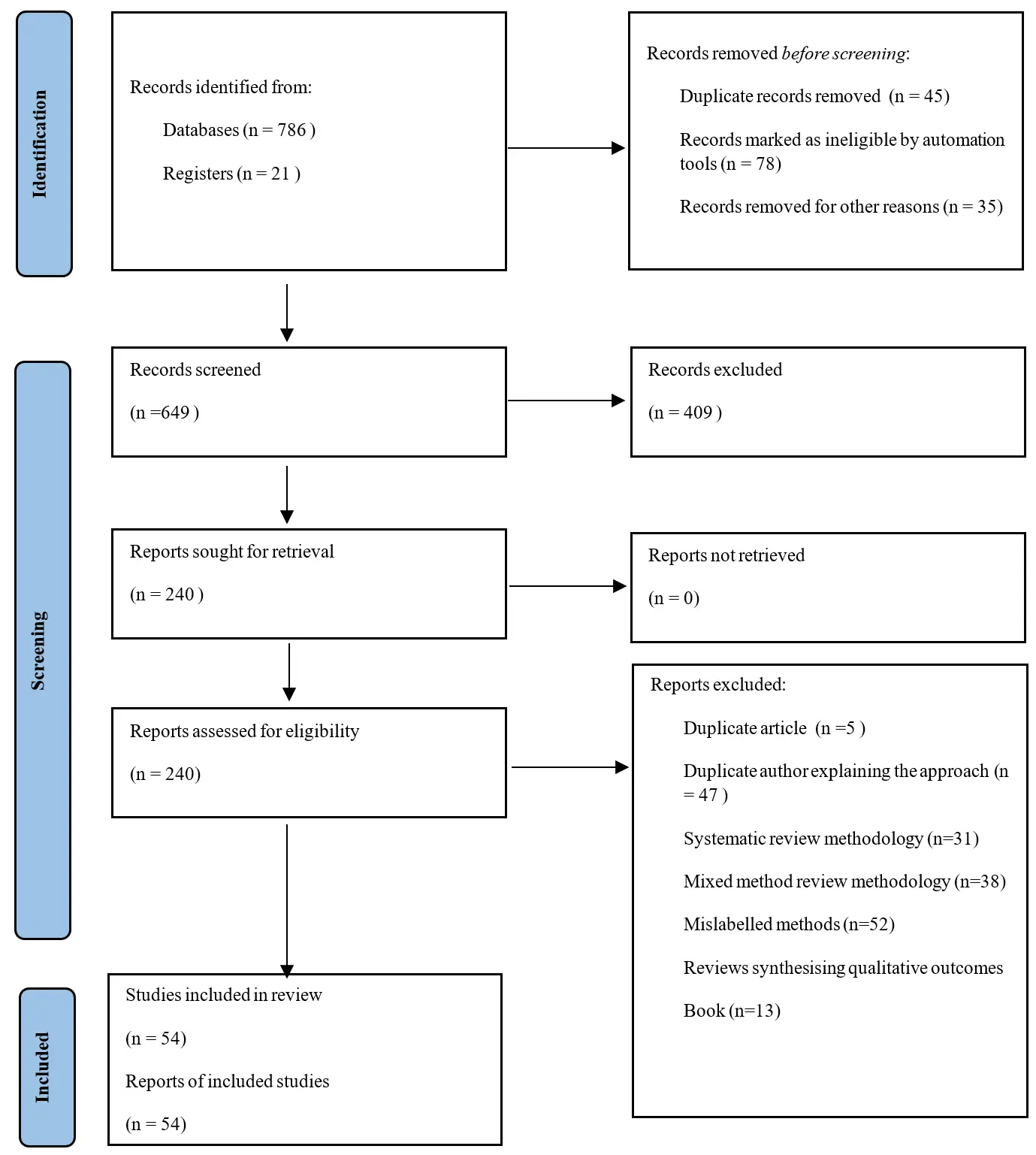
A total of 806 articles were identified, of which 54 were selected [3,4,5,7,8,9,11,15,16,17,18,27,28,29,30,31,32,33,34,35,36,37,38,39,40,41,42,43,44,45,46,47,48,49,50,51,52,53,54,55,56,57,58,59,60,61,62,63,64,65,66,67,68,69]. Figure 1 provides the PRISMA flow diagram.
3.2. Charting the Data and Synthesis
Of the included studies, the UK and the USA had produced the most work centered around qualitative synthesis. This is identified as follows UK: 22, USA: 10, Canada: 5, Australia: 4, Germany: 3, France: 2, Ireland: 2, The Netherlands: 2, Norway: 1, Taiwan: 1, Belgium: 1 and Finland: 1. In addition to this, most of the research (n = 26) was published between 2006 and 2018 when around 3.5 papers/year were produced. Between 1975–1999, there were 2 identified; between 2000–2009, 19; between 2010–2019, 25; and 8 from 2020 onwards.
The main aims of the articles included can be considered in Table 1. The three most common aims mentioned were; (a) to develop an innovative method, (b) to provide an overview of approaches, and (c) guidance for conducting synthesis.
Table 1. Detailed Summary of Common Aims in the Scoping Review.
|
Aim Category |
Description |
Example |
|---|---|---|
|
1. Methodological development/innovation (18 papers) |
These papers aimed to develop, refine, or introduce new synthesis methods or frameworks. They often proposed novel techniques, adapted existing ones, or created hybrid approaches to improve the rigour, flexibility, or applicability of synthesis. |
“To introduce a synthesised technique for using grounded theory in nursing research” |
|
2. Overview or review of existing methods (15 papers) |
These papers provided comprehensive overviews, comparisons, or critiques of existing synthesis methods. Their goal was to map the landscape of available approaches and help researchers understand the strengths, limitations, and contexts of use. |
“To bring together and review the full range of methods of synthesis that are available” |
|
3. Guidance or instruction for applying methods (10 papers) |
These papers offered practical guidance, frameworks, or step-by-step instructions for conducting synthesis. They were often aimed at helping researchers apply methods correctly and consistently. |
“To provide clear methodological instructions to assist others in applying these synthesis methods” |
|
4. Exploration of specific synthesis techniques (8 papers) |
These focused on particular synthesis types (e.g., meta-ethnography, thematic synthesis, narrative synthesis), often elaborating on their processes, benefits, and challenges. |
“To demonstrate the benefits of applying meta ethnography to the synthesis of qualitative research” |
|
5. Conceptual or epistemological discussion (6 papers) |
These papers explored the theoretical foundations, philosophical assumptions, or epistemological implications of synthesis. They often questioned the validity or coherence of combining certain methods or paradigms. |
“To discuss whether this meta-aggregation form of research has a sound epistemological foundation and should be considered a viable form of meta-synthesis” |
|
6. Application to case studies or specific fields (5 papers) |
These papers applied synthesis methods to specific domains (e.g., occupational therapy, psychiatry, supply chain management) or types of data (e.g., case studies), often to demonstrate feasibility or generate domain-specific insights. |
“Provide the research design of a meta-synthesis of qualitative case studies” |
The results are now split into an analysis of qualitative methodologies and methods.
3.3. Methodologies Identified
A total of 14 review methodologies were identified, see Figure 2. The three most frequently mentioned types of methodology were: meta-ethnography (n = 22), meta-synthesis (n = 15), framework synthesis (n = 11). Figure 2 identifies the frequency of the different types of review methodologies.
The methodological approaches are presented in Table 2. All approaches named in the table aim to produce higher order insights that transcend individual studies. Many approaches identify the need for iterative analysis and place emphasis on contextual meaning. The most developed approaches which both utilise one name for synthesis were meta-ethnography and meta-synthesis. Meta-ethnography, which has two frameworks developed [15,46] and illustrates a consistent use of steps for undertaking synthesis as well as specific terms used, which have all been derived from the original text [1]. Meta-synthesis had the most articles that identified stages of the approach, although these stages were not consistent, and referenced a similar process.
Readers should be mindful that meta-ethnography, thematic synthesis, and narrative synthesis have clear, agreed stages that help with the process of operationalizing the methodology based solely on the methodological article. In contrast, meta-synthesis and meta-interpretation are more flexible and ideographic. Framework synthesis and meta-study rely on formal frameworks and theories to inform the approach.
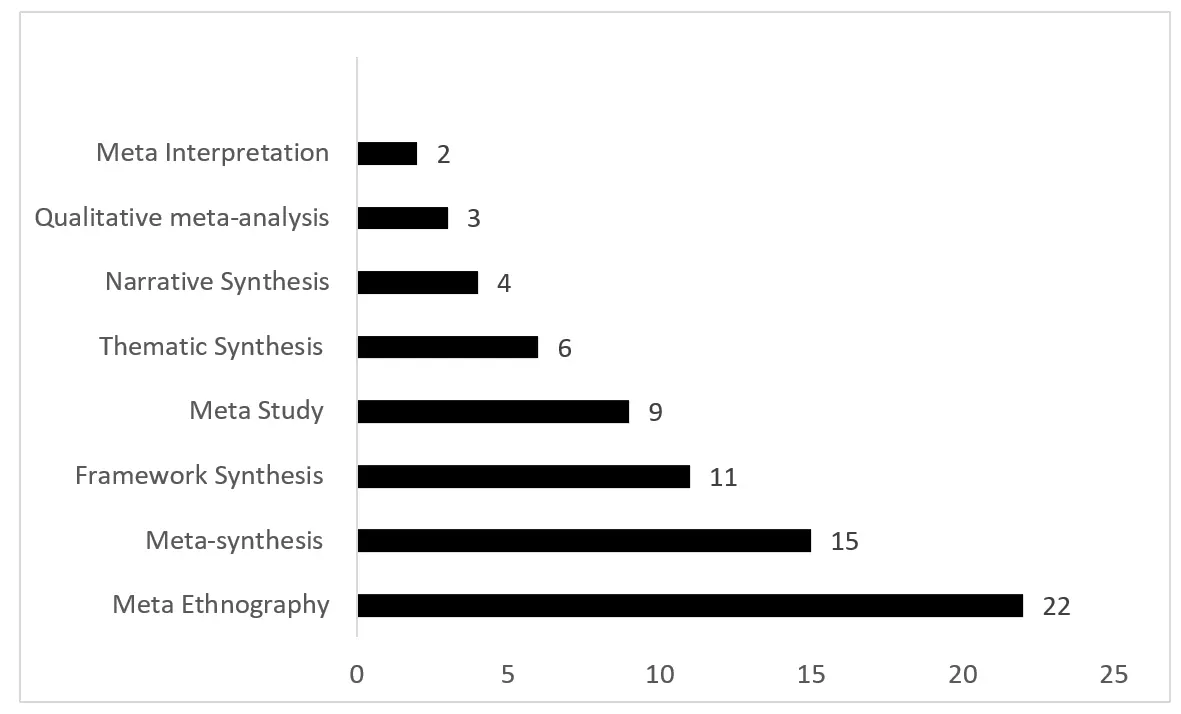
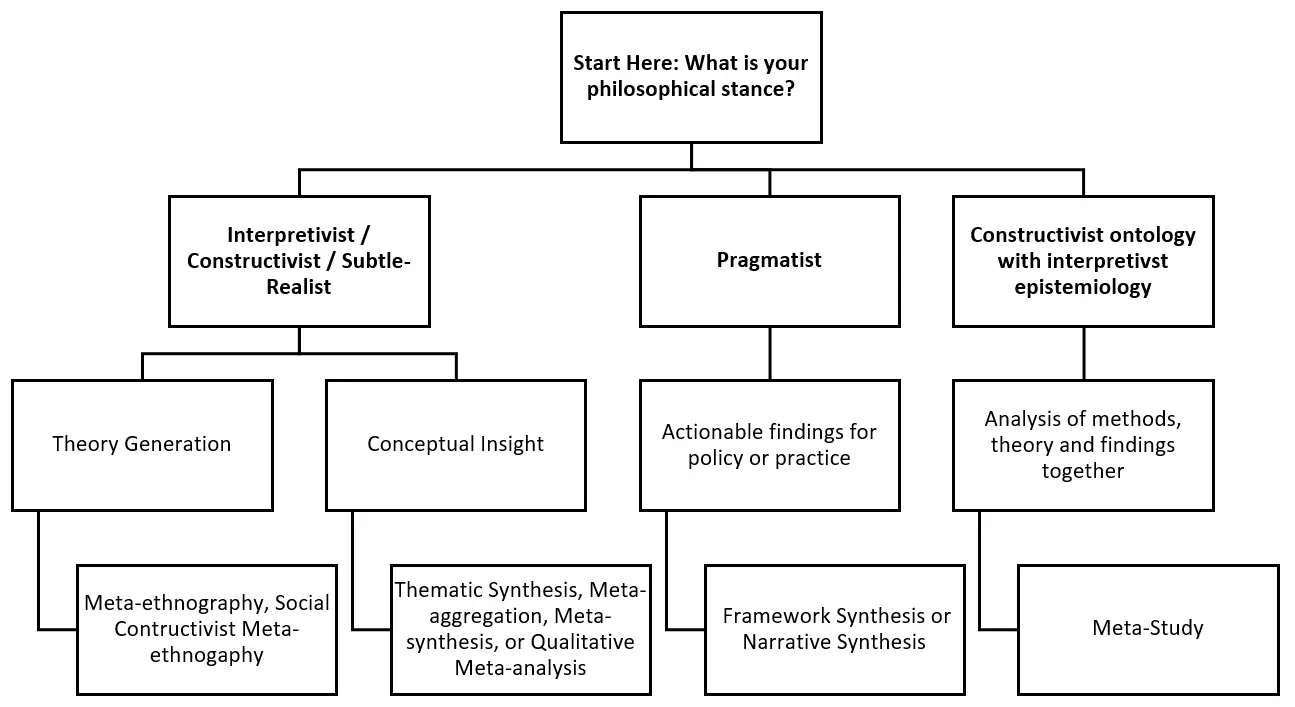
Table 3 identifies the philosophical assumptions of each approach, as well as indicating specific findings about the approaches. It is important to locate the ontology and epistemology of approaches, especially when considering the product of the synthesis and what the synthesis is attempting to honor. Inductive theory building appears central to meta-synthesis and meta-ethnography. Whereas pluralism, historical context, and reflexivity are important to other approaches like meta-study. Figure 3 provides a decision aid tool for researchers considering which approach may be most useful.
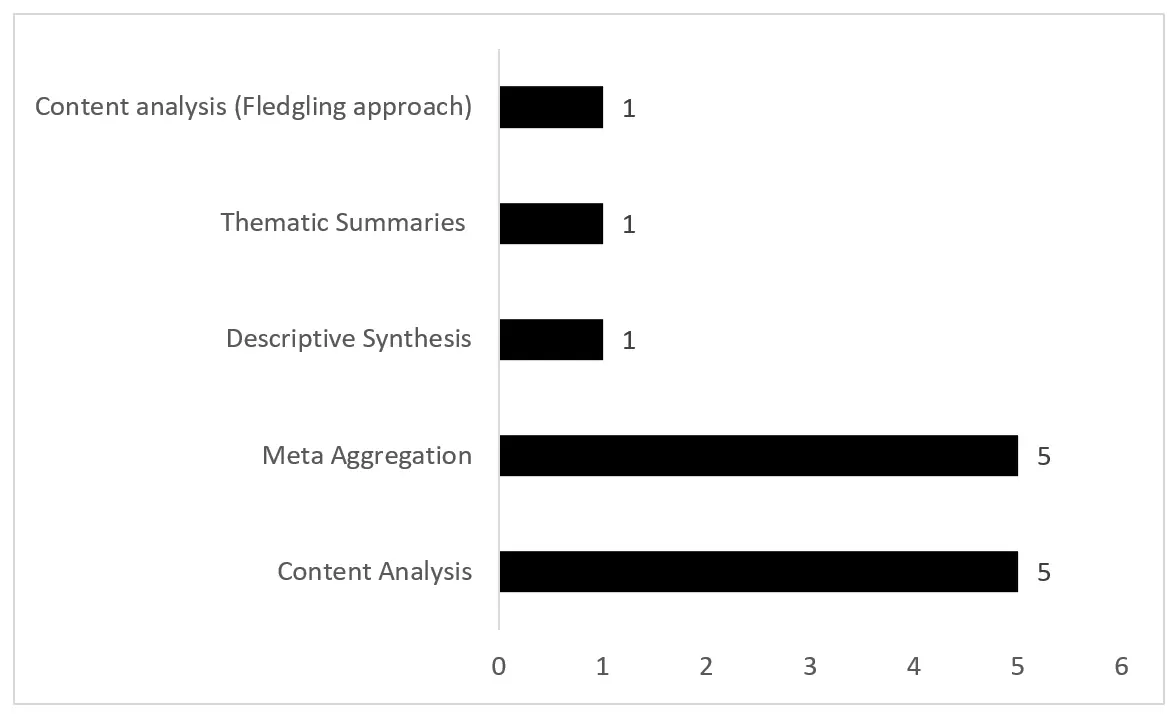
Table 2. Identifying the various qualitative methodologies.
|
Approach |
What Is An Aggregated Definition Across Studies of the Approach |
Identified Sub-Types of the Approach and Key Differences? |
Are There Agreed Stages and What Are the Processes |
Originator or Earliest Reference Identified |
Framework That Accompanies the Approach & Articles with Detailed Description |
|---|---|---|---|---|---|
|
Meta-ethnography |
Meta-ethnography is an interpretive method for synthesizing qualitative studies. It involves the translation of concepts and metaphors across studies to build explanatory theory, new conceptual understandings, and higher-order interpretations. The method goes beyond summarizing findings by merging and combining insights to form a line-of-argument synthesis. |
Social constructivist meta-ethnography [15], which assumes a social constructivist philosophical position and brings grounded literature theory from the work of Charmaz.
This approach emphasizes interpretation and conceptual translation, aiming to construct new theoretical understandings |
Agreed stages Yes
Key stages Reciprocal Translational Analysis (RTA): Aligns concepts across studies. Refutational Synthesis: Explores contradictions. Lines-of-Argument (LOA): Builds a coherent whole from parts. |
Noblit and Hare [1] |
Frameworks: EMERGE [46]. Social Constructivist Framework [15].
Articles Britten et al. [30], Cahill et al. [32], France et al. [45,46], Mohammed et al. [52], Moser and Korstjensc [53], Soundy [15], Whittemore et al. [64]. |
|
Thematic synthesis |
Thematic synthesis is a flexible and interpretative method that involves identifying, analyzing, and reporting themes across qualitative studies. It includes line-by-line coding, the development of descriptive and analytical themes, and aims to generate new insights, hypotheses, and conceptual frameworks. |
No.
This approach balances data-driven and theory-driven synthesis, moving from descriptive to interpretive insights. |
Agreed stages Most studies identify Thomas and Hardin [60] and there three step approach. Step one coding text using line-by-line coding.
Key stages Line-by-line coding Descriptive theme development Analytical theme generation Pattern identification, categorization, and hypothesis development |
Dixon-Woods et al. [6] |
Framework No framework.
Articles |
|
Meta-synthesis |
Meta-synthesis is an interpretive and systematic approach to integrating findings from multiple qualitative studies. It aims to generate new theoretical insights, holistic understanding, and conceptual interpretations of a phenomenon. Unlike meta-analysis, it focuses on synthesizing textual data and translating qualitative accounts to produce higher-level explanations and generalizations. |
No. But many identify specific steps.
This approach emphasizes holistic integration and theoretical insight, respecting dissonance and preserving original voices. |
Agreed stages No but many detailed approaches are available.
Key stages Primary analysis and within-case coding Cross-case synthesis and translation Theory development and meta-theory Narrative presentation |
Jensen and Allen [48] identified a 6 stage process |
Framework No framework
Articles: Gewurtz et al. [47] identify a 5 stage process |
|
Meta-Study |
Meta-study is a multifaceted and highly systematic research approach designed to analyse and synthesize qualitative research. It involves three core components: Meta-data analysis: Examining the findings across studies to identify patterns, themes, and insights. Meta-method: Analysing the methodologies used in the original studies to understand their influence on outcomes. Meta-theory: Investigating the theoretical frameworks that underpin the research to explore how they shape interpretation. |
No. All references linked back to a book by Paterson et al. [2]
This is a multi-layered synthesis, combining empirical, methodological, and theoretical insights. |
Agreed stages Yes. The agreed stages are based on work by Paterson et al. [2]
Key stages Meta-data, meta-method, and meta-theory analysis Integration into mid-range theory |
Paterson et al. [2] |
Framework: Ronkainen et al. [57] provides steps and best practice guidelines
Articles Paterson et al. [2] Ronkainen et al. [57] |
|
Framework synthesis |
Framework synthesis is a qualitative evidence synthesis approach that adapts the logic and tools of Framework Analysis to reviews: it begins with an a priori conceptual framework (from existing theory, models, or review objectives), codes study findings against that framework, and then extends or revises it inductively to generate an explanatory model fit for decision-making and policy. |
Yes. Best-Fit Framework Synthesis (BFFS; Carroll and Booth [29]) starts from a pre-existing model that is the “best fit” for the review question, uses deductive coding to accommodate much of the data, and then applies an inductive phase to incorporate data not covered by the initial framework, producing a refined, context-specific model. |
Agreed stages. Yes. Brunton et al. [31]. Familiarization, framework selection, indexing, charting, mapping and interpretation. Alternative steps for BFFS see Booth and Carroll [29] |
Ritchie & Spencer [70] |
Framework Brunton et al. [31]. Booth and Carroll [29]
Articles Barnett-Page and Thomas [16] Flemmings and Noyes [44] Caroll et al. [33] |
|
Narrative Synthesis |
Narrative synthesis is an approach to the systematic review and synthesis of findings from multiple studies that relies primarily on the use of words and text to summarise and explain the findings. While it can manipulate statistical data, its defining characteristic is a textual approach that tells the story of the evidence across studies. It aims to bridge research, policy, and practice by bringing evidence together in a convincing narrative. The attached materials also characterise narrative synthesis as a systematic and transparent analytical process that integrates findings using conceptual mapping and reflection. |
Yes. The output can vary. Excluding mixed methods application, a descriptive or thematic narrative synthesis is possible by summarising findings per study looking at common themes/patterns. Alternatively a structure synthesis with conceptual mapping. Key approaches can include juxtaposing findings, integrating and interpreting them and conceptual mapping to build a conceptual map. |
Agreed stages: Yes. Based on Popay et al. [9].
Key stages: 1.Developing a theory of how the intervention works, why and for whom. 2. Developing a preliminary synthesis of findings of included studies. 3. Exploring relationships of the data. 4. Assessing the robustness of the synthesis. |
Popay et al. [9] |
Framework Popay et al. [9]
Articles: None that provide detail beyond framework. |
|
Qualitative meta-analysis |
A systematic, interpretive approach for synthesizing findings from multiple qualitative studies to generate higher-order insights and theoretical contributions that go beyond individual contexts. It emphasizes emergence, meaning new properties or insights arise from the interaction of multiple studies, not visible in any single study alone. Core characteristics:
Interpretive rather than aggregative Preserves richness and complexity of qualitative data Focused on patterns, relationships, and conceptual advancements |
Yes. Emergent framework (Fendt [41]) Grounded meta-analysis (mixed methods version not included here; (Hossler & Scalese-Love [71]) Integrity-focused meta-analysis (Levitt et al. [50]). |
Yes.
Emergent framework: Formulate research question with an emergent lens, select studies to enable emergent patterns, extract data to surface latent structures, synthesise to reveal higher order emergent insights, document emergent insights and analytical evolution, write up to communicate emergent contributions
Integrity focused: identifying and describing primary studies, transforming primary findings into units of data, organising units into categories or themes, enhancing methodological integrity, |
Timulak [61] |
Framework Emergent framework (Fendt [41]) Integrity-focused meta-analysis (Colins and Levitt [22]; Levitt et al., [50]).
Articles Timulak [61] |
|
Meta-Interpretation |
Interpretivist synthesis method that can maintain an interpretivist epistemology, using interpretation (not raw data) from published studies, focuses son meaning in context (valuing differences rather than reducing them to common denominators) produced. Emerging conceptual innovation and insights are valued as ouputs. |
No. |
Yes. Identify research area (consider theoretical sensitivity and maximum variation sampling), undertake initial analysis concurrent thematic and context analysis, iterative theoretical sampling and saturation, develop and refine exclusion criteria, maintain transparent audit trail, final synthesis and statement of applicability. |
Weed [63]. |
Framework Weed [63] Weed [5]
Articles No. |
Table 3. Philosophical Foundations of Synthesis Approaches.
|
Approach |
Philosophical Foundation |
Adolescent and Mental Health Example, and Worked Examples of the Approach |
|---|---|---|
|
Meta-ethnography Social constructivist Meta-ethnography |
Meta-ethnography originally was identified a relativist ontology and interpretivist epistemology [1,46]. Social constructivist meta-ethnography assumes a pragmatist ontology and relativist epistemology [72]. |
Adolescent mental health example: Lucas et al. [22] Worked examples: Britten et al. [30], Sattar et al. [73] Social constructivist worked example: McMillan and Soundy [74] |
|
Thematic Synthesis |
Thomas and Hardin [60] do not specifically identify the terms ontology and epistemology. However, it is likely that the ontology is relativism or contextualism. They state qualitative research is “specific to a particular context, time, and group of participants” and the epistemology is interpretivist as reviewers actively shape understanding. |
Adolescent mental health example: Broad et al. [21]. Worked examples: Thomas and Hardin [60]. Kavanagh et al. [75]. |
|
Meta-synthesis |
Ontology is identified as constructivist assuming that reality is socially constructed and context-dependent and epistemology is interpretivist and knowledge generated by the reviewer by conceptualization and interpretation [34]. |
Adolescent mental health example: Rodriguez et al. [76]. Worked examples: Aguirre and Bolton [77]. Finfgeld-Connett [78]. Nye et al. [18]. |
|
Meta-Study |
Constructivist ontology identifying socially constructed reality with contextual truths. A single reality is not sought rather multiple interpretations are considered. The epistemology is interpretivist emphasising constructed knowledge [79]. |
Mental health example: Watkins et al. [80]. Worked example: Rycroft-Malone et al. [81]. Paterson et al. [2]. |
|
Framework Synthesis |
The ontology is likely subtle realist with the attempt to gain useable common findings. The epistemology is partially interpretivist but also structured and deductive and begins within an a priori framework [33]. |
Adolescent mental health example: Viduani et al. [24]. Worked example: Carroll et al. [82] Rapid best fit worked example: Shaw et al. [83]. |
|
Narrative Synthesis |
It is likely (because not specifically stated by Popay et al. [9] that the approach is situated within a pragmatism or post-positivism. The pragmatic positioning is supported as the approach looks to consider how the intervention works, why and for whom [9,16]. This supports a central component of pragmatism which looks to consider what works rather than what is true. |
Adolescent mental health example: Ballesteros-Urpi et al. [84] Worked example: Gross et al. [85]. Le Boutillier et al. [86]. |
|
Qualitative Meta-analysis |
Levit et al. [87] considers this approach within an emergence epistemology due to the complexity of social life, the idea is to consider new ideas when studies are combined, so knowledge is considered as interpretive and evolving. |
Mental health example: de Vos et al. [88] |
|
Meta Interpretation |
Interpretivist epistemology rejecting positivist assumptions of objectivity [5]. Knowledge is considered as situated and socially constructed. Importance is considered as meaning in context. Synthesis process is described as a triple hermeneutic (interpretations of interpretations of interpretations). Value in differences contextually ad methodological as sources of insight. |
Adolescent/mental health example: No identified example. Worked example: Santos et al. [90] |
3.4. Methods Identified
A total of 8 qualitative synthesis methods were identified, see Figure 3. The three most used qualitative synthesis approaches were meta-grounded theory (n = 10), meta-aggregation (n = 5), and content analysis (n = 5).
The approaches identified represent a broad spectrum of synthesis methods, ranging from five aggregative methods (see Figure 3 and Table 4) which aim to summarise and generalize to inform practice (e.g., meta-aggregation, qualitative meta-summary, content analysis) to ten interpretive methods see (Figure 4 and Table 5) which aim to interpret findings or add new findings as an approach (e.g., interpretive synthesis, meta-grounded theory). Meta-aggregation and content analysis have been designed to be included within and follow systematic review protocols with clearly defined steps. Whereas meta-grounded theory and interpretive synthesis are more iterative and flexible methods.
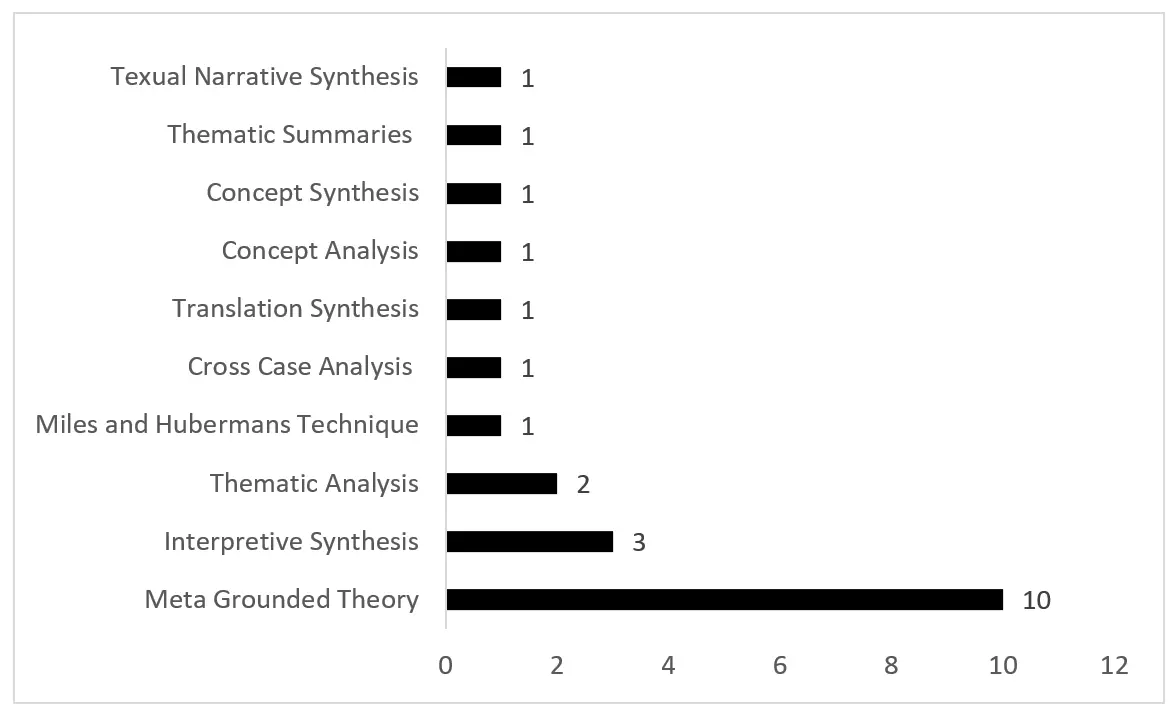
Table 4. A summary of the methods of aggregative synthesis methods identified.
|
Approach |
Definition |
Aggregated Steps/Process |
Supporting Sources |
|---|---|---|---|
|
Content Analysis |
A systematic, rule-governed method for coding and categorising textual data across studies to identify patterns, relationships, and conceptual structures; it can be applied inductively (codes emerge from data) or deductively (a priori categories), and may also quantify findings via counts/tabulations (manifest and latent content), thereby supporting transparent, replicable synthesis. |
|
Dixon-Woods et al. [6]; Finfgeld-Connett et al. [43]; Hannes & Macaitis [17]; Seuring & Gold [59]; Snilstveit et al. [11]. |
|
Meta Aggregation (JBI) |
A qualitative synthesis method that avoids reinterpretation of included studies and instead accurately presents findings as intended by original authors. Grounded in pragmatism and transcendental phenomenology, it aims to produce practice-level theory or lines of action for healthcare policy and practice. It is structured like a systematic review and focuses on aggregating findings rather than generating new theory. |
Standard JBI process:
|
|
|
Meta-Aggregation general descriptors |
A method inspired by quantitative systematic reviews, aiming to produce generalizable statements from qualitative findings. Focuses on common meaning across studies, uses tree-like structures to categorize findings, and avoids theorization or critical interpretation. Purpose: guide practice and policy through inductive generalization. Critiques note risks of reducing rich, context-bound data into thin abstractions and ignoring contradictions. |
Core steps (aggregated from multiple sources):
|
|
|
Descriptive synthesis |
Descriptive synthesis that summarises findings from individual studies without transforming them into higher-level abstractions; maintains fidelity to original data. |
|
Habersang & Reihlen [7] |
|
Thematic summaries |
Organises findings under salient themes, often structured by a conceptual framework; uses tabulation and reports divergence. |
|
Snilstveit et al. [11] |
|
Content analysis (fledgling approach) |
Condenses text into content-related categories; aggregative technique used as a fledgling synthesis approach. |
|
Barnett-Page & Thomas [16] |
|
Qualitative meta summary (Sandelowski & Barroso) |
Aggregative rather than transformative; quantifies frequency of findings and can calculate effect-size-like metrics for qualitative data. |
|
Table 5. A summary of the methods of interpretive synthesis methods identified.
|
Approach |
Definition |
Aggregated Steps/Process |
Supporting Sources |
|---|---|---|---|
|
Interpretive Synthesis |
A synthesis method that reconfigures findings across multiple studies to develop new concepts, frameworks, and theory. It avoids fixing concepts early, acknowledges the authorial voice, prioritises plausibility and transparency, and integrates qualitative (and quantitative) evidence through interpretation. It is presented as the most interpretive and abstract form of synthesis (often drawing on meta-ethnography) and focuses on understanding patterns, mechanisms, and causal relationships across qualitative studies. |
Several steps are involved:
|
|
|
Meta grounded theory |
An inductive synthesis that applies grounded theory methods (e.g., constant comparison, theoretical sampling, memoing, and multi-level coding) across primary grounded theory studies (and sometimes broader qualitative literature) to produce a higher-order, abstract theory (grounded formal theory) that generalises beyond the original studies. It emphasises emergent theory building, process-orientation, and conceptual integration across studies, matching synthesis procedures to the methodological logic of the included grounded theories. |
Several steps
|
Barnett-Page and Thomas [16]; Chen and Boore [35]; Dixon-Woods et al. [36]; Eaves [38]; Finlayson and Dixon [42]; Hannes and Macaitis [17]; Nye [18]; Schick-Makaroff [58]; Whittemore et al. [64]; Wolfswinkel et al. [65]. |
|
Miles & Huberman’s technique |
Cross-case interpretive approach using meta-matrices and thematic coding to compare and integrate findings across studies. |
|
Dixon-Woods et al. [6] |
|
Cross-case analysis |
Systematic comparison of categories across studies to refine and align constructs; noted as transparent, with limited guidance on sampling/appraisal. |
|
Finlayson & Dixon [42] |
|
Translation synthesis |
Constructivist synthesis using reciprocal translation of studies into one another to build interpretations from multiple perspectives. |
|
Hoon [12] |
|
Concept analysis |
Systematically clarifies a concept by extracting its attributes from the literature, definitions, and case examples to specify meaning in a domain/context. |
|
Schick-Makaroff [58] |
|
Concept synthesis |
Identifies concepts, viewpoints or ideas; focuses on defining attributes and developing a synthesis model. |
|
Tricco et al. [8] |
|
Thematic analysis |
Flexible interpretive method to identify, analyse and report themes; can be data-driven (themes emerge) or theory-driven (pre-specified). |
|
|
|
Thematic synthesis |
Draws on thematic methods used in primary research—coding, theme development and analytical interpretation—to move beyond description. |
|
Snilstveit et al. [11] |
|
Textual narrative synthesis |
Groups studies into homogeneous sets and compares them using structured summaries; highlights context and heterogeneity. |
|
4. Discussion
This scoping review mapped the landscape of qualitative synthesis methodologies and methods. This revealed a clear selection of methodologies with accompanying guidance documents, as well as a selection of methods, which at times require further consideration if the methods are to be successfully operationalized. The findings underscore several critical issues that merit further discussion, particularly around the operationalisation, philosophical foundations, and terminological clarity of synthesis methods.
4.1. Proliferation and Confusion of Terminology
Most synthesis development occurred between 2006 and 2018, with the UK and USA leading in publication output. This suggests a period of methodological innovation and consolidation, possibly driven by increased interest in qualitative evidence synthesis within health and social sciences. However, the decline in recent publications may indicate either saturation or a shift toward refining existing methods rather than introducing new ones.
One of the most striking findings is the sheer volume and variation of terms used to describe qualitative synthesis approaches. Across 54 papers, 14 methodologies, 5 methods of aggregative synthesis, and 10 of interpretive synthesis. This terminological diversity had previously added layers of confusion for researchers when decided on a qualitative approach to synthesis. The lack of standardised naming conventions may hinder methodological transparency and reduce the accessibility of synthesis techniques. Research has begun to categorise synthesis into types; for instance, the aggregative and interpretive types provide a useful focus e.g., [92]. However, the current paper identifies methodologies that provide a useful basis for decision making.
4.2. Operationalisation: A Key Focus
While many synthesis approaches are conceptually rich, only a subset appear to be sufficiently developed to allow for practical application. Notably, meta-ethnography, meta-synthesis, framework synthesis, and meta-study were identified as more easily operationalisable due to the presence of frameworks, agreed stages, and detailed guidance. Meta-ethnography, for example, benefits from two established frameworks [15,46] and a consistent set of analytical steps derived from Noblit and Hare [1]. In contrast, other approaches, such as grounded theory synthesis or thematic synthesis, often lack unified guidance, making their application more variable and dependent on reviewer interpretation. This disparity in operational clarity reflects a broader issue: many synthesis methods are introduced or discussed conceptually but lack sufficient detail to be implemented rigorously. This aligns with previous reviews e.g., [8,19], which noted the difficulty of operationalising synthesis techniques due to limited methodological elaboration. It is important to note, however, that the evaluation of operationalisability is based on published procedural guidance rather than empirical evidence of implementation fidelity in applied reviews.
4.3. Philosophical Foundations: Interpretive versus Aggregative Approaches
Understanding the philosophical roots of each approach is essential, as these foundations influence not only the synthesis process but also the nature of the findings produced. One useful distinction of methods is by interpretive methods, such as qualitative meta-synthesis and critical interpretivist synthesis, versus aggregative synthesis, grounded in realism and pragmatism, which often seeks to summarize findings for practical application, often avoiding reinterpretation. This is true for both methodologies and methods. One danger of interpretive approaches is that multiple syntheses on the same topic may create nuanced but potentially overlapping insights. This raises concerns about redundancy and the risk of rewording existing knowledge rather than generating genuinely novel understandings.
4.4. Implications for Reviewers and Methodologists
Given the findings from the current scoping review, several implications emerge:
-
-
Four methodologies have the most guidance, including meta-ethnography, meta-synthesis, framework synthesis, and meta-study. Each of these methodologies will provide a different output and warrant consideration.
-
-
Clearer guidance is needed for reviewers to select and apply synthesis methods appropriately. Meta-aggregation is arguably the easiest method to apply due to the guidance being associated with the Joanna Briggs Institute.
-
-
Methodologies can be selected using a decision tree. This decision tree reflects current guidance and may be subject to change as more approaches are developed. See Figure 5.
-
-
Terminological standardisation could help reduce confusion and improve the comparability of synthesis approaches.
-
-
Training and education in qualitative synthesis should emphasise the link between philosophical foundations and methodological choices, helping researchers navigate the interpretive-aggregative spectrum more effectively.
4.5. Illustrative Application: Synthesising Qualitative Research on Adolescent Depression
The methodological distinctions identified in this review can be illustrated by presenting worked examples of reviews that have synthesised qualitative studies on adolescent depression. Based on Figure 5, examples are given by the four purpose statements and outcomes of reviews (generation of theory, conceptual insight, actionable findings for policy or practice, and an analysis of methods, theory, and findings together). Examples are considered against guidelines, and where appropriate, deviations from guidelines are reported to help establish best practice for operationalisability.
4.5.1. Examples of Theory Generation (Meta-Ethnography and Social Constructive Meta-Ethnography)
Two examples are given around the use of meta-ethnography. Example 1, Lucas et al. [22] developed a meta-ethnography focusing on young women’s perception of mental health during and after pregnancy. A process for identifying participant quotes (first-order translations), author quotes (second-order translations), and their own interpretation across studies (third-order translations) is given. A thematic representation, including perceptions, experiences of support, and social and economic experiences, is identified, and, to aid context, a focus on specific countries is given. Alongside the interpretations and themes, a line of argument analysis is developed (going beyond the data). This suggests that different levels the experience of these women should be considered in terms of the individual personal and physical exercise, the relationship influence, the economic security, the social surveillance, and narrative reparation.
Example 1 Comparison Against the Referenced Guidelines
Sub-titles are not listed correctly when compared against the eMERGe guidelines [46]. Detail is missing in both the protocol and the published review. For example, within the synthesising translations sub-title, eMERGe calls for reporting the methods used to develop overarching concepts and potential alternative interpretations—neither of which is provided. Some older references are used to justify stages of extraction and synthesis [30,93], which may have limited or influenced the choice of what to include, despite the authors citing the eMERGe guidelines. A line-of-argument synthesis is presented in the results but not described in the methods, meaning that how it was identified and tested is not clear. No supplementary material or audit trail is provided. No consideration of certainty assessment (e.g., ConQual [94] or CERQual [95]) is given.
Example 2, the basis for a social constructivist meta-ethnographic review could be considered by identifying a specific past area of research such as adolescent coping with mood disorders, include related studies e.g., [96] as well as other searching, that could include past theories and conceptualizations of coping e.g., [37] to allow the iterative process of theory development to take place with the emphasis on developing a substantive theory through identifying a process, model and theory.
Example 2 Considerations Against a Referenced Standard
Authors must adhere to the social constructivist meta-ethnographic framework [15]. This means appreciating a pragmatist ontology and relativist epistemology, and understanding that the author is an embodied and situated knowledge producer, open to multiple perspectives, including an appreciation of the cultural, historical, social, and environmental factors that shape their inquiry. Attention must be given to aspects such as inequity, injustice, silenced voices, and taken-for-granted meanings, as this ensures a stance suitable for critical inquiry.
Finally, key phases of immersive reading, coding, memoing, focused coding, and development of categories are required and should be clearly presented. Categories, models, or processes identified during the synthesis need to be challenged through a process of iterative idea generation, which involves techniques adopted from social constructivist grounded theory (including, but not limited to, constant comparison, theoretical sampling, and abductive reasoning). Unlike traditional meta-ethnography, multiple searches are possible, and an audit trail is essential (see [74] for a worked example with supplementary material).
4.5.2. Examples of Reviews Providing Conceptual Insight (Thematic Synthesis, Meta Aggregation, and Meta-Synthesis)
Three examples are given that provide conceptual insight. Example 1, a systematic review according to JBI guidance and meta-aggregation study by Twivy et al. [23] was undertaken this which undertook a process the extraction of verbatim text from qualitative studies looking at the lived experience of depression. This review identified several findings (like codes). Focusing on those with the most support (using a ranked system normally). The ranking wasn’t mentioned in the study, but the following steps of grouping findings together to create categories (which need at least 2 findings) with the support of NVivo software [version number not given by paper]. Following these categories are brought together in a group, which was identified as synthesised findings. Three synthesized finding areas were identified, including causes (3 categories), symptoms (8 categories), and coping (5 categories). The resultant synthesis identifies different categories and locates all references that discuss them. This means the work was aggregative and did not seek to interpret the findings.
Example 1 Comparison Against the Referenced Guidelines
The use of meta-aggregation within Example 1 references the JBI Manual and related guidance documents, including the JBI checklist [51], the extraction-of-findings tables supported by JBI, and the JBI credibility rating scales (identified as unequivocal, credible and unsupported). This aligns with the guidelines [51] and is further supported by reference to a previous worked example [97]. The authors define these ratings on page 757; however, even with the supplementary material, it is difficult to understand what “findings without question” (unequivocal rating) looked like versus findings that were “partially supported” (credible rating). Greater clarity regarding the steps following the extraction of results would be helpful, ideally in the form of an audit trail. Furthermore, JBI recommends a certainty assessment e.g., ConQual [94], which was not conducted.
Example 2: A thematic synthesis was undertaken by Broad et al. [21] to consider the transition from child mental health services to adult mental health services. The authors identify a thematic synthesis that first independently identified codes, which was followed by meetings to develop a consensus of codes and meaning, and this was completed by the main reviewer, identifying three (complex interplay of multiple concurrent transitions, balancing autonomy and the need for supports and factors impacting your experience of transition) over-arching themes. Each theme has no sub-themes, but example quotes to illustrate points.
Example 2 Comparison Against the Referenced Guidelines
The review references a protocol through PROSPERO and the use of the ENTREQ [98] framework and checklist to assist reporting. The authors identify a data analysis section and mention initial ‘content analysis’ followed by thematic synthesis. They identify independent coding to develop a consensus of codes and describe trustworthiness through independent analysis, triangulation of perspectives, and revision of the coding dictionary.
Whilst they acknowledge that their approach adapts methods from meta-ethnography and grounded theory, they do not specifically name these methods or include an audit trail that would allow a reader to follow the analytic processes. This review did not undertake a sensitivity analysis for the critical appraisal, nor did it describe the three stages of analysis using sub-titles or outline the generation of analytical themes as the final stage [60].
The risk with this review is that reporting a protocol and using a checklist such as ENTREQ may create the appearance of quality; however, the description and level of detail provided do not offer sufficient evidence to understand how the synthesis was guided or how it aligns with the stated approach.
Example 3, a meta-synthesis was undertaken by Achterbergh et al. [20] considering the experiences of loneliness among young people with depression. The synthesis is based on the work of Lachal et al. [3] and identifies 6 stages of analysis. The analysis process is identified as involving independent researchers importing all text related to loneliness. This was important into the Invivo software, and the independent researchers then identified what to include from this. A final database of extracted data was then coded independently to develop a coding framework which was then refined through a process of iteration and taxonomy of themes. The thematic synthesis is presented in a similar way to Broad et al. [21] but also included sub-themes. It should be noted that a breakdown of the stages identified by Lachal el al [3] is not provided for instance Lachal et al. [3] identifies active reading in stage 1 (which he identifies as appraising, familiarizing, identifying, extracting, organising, relating, mapping, stimulating comparing and verifying) and then two further stages which are not mentioned by Achterbergh et al. [20].
Example 3 Comparison Against Referenced Guidelines
The authors of Example 3 introduce the term meta-synthesis first as a method based on interpretation, citing four methodological papers. They then identify thematic synthesis, which they state is influenced by meta-ethnography and grounded theory, citing meta-ethnographic texts before returning to the six-step methodological approach to meta-synthesis proposed by Lachal et al. [3]. The reference to different named approaches may confuse readers.
However, inspection of the methodological paper on meta-synthesis by Lachal et al. [3] shows that the steps of synthesis are indeed associated with other named approaches. Four steps of synthesis are identified: reading and re-reading each study (step 1); coding (step 2), linked to Interpretative Phenomenological Analysis [99]; grouping codes into categories and producing a hierarchical tree (step 3), linked to the meta-ethnographic step of translation; and, finally, developing analytical themes (step 4), which corresponds to the meta-ethnographic process of third-order interpretations and a line-of-argument synthesis.
Importantly, within the data analysis section of the article, these four steps are not mentioned. Instead, the authors describe the use of software, the coding of a dataset, and the comparison of codes among four researchers to develop a coding framework, which was then refined through an iterative process to produce a taxonomy of analytical themes. No supplementary file is available, and the protocol demonstrates deviations in analysis and terminology—for example, the protocol specifies percentages for reviewer agreement and names thematic analysis within it.
Quality markers include triangulation from researchers with diverse backgrounds [3], and Example 3 provides evidence of improving external validity through the use of a multidisciplinary team.
4.5.3. Example of Analysing Methods, Theory and Findings Together (Meta study)
Example 1 of Analyzing Methods, Theory, and Findings (Meta-Study). One example of a meta-study is identified. Example 1 was a meta-study by Watkins et al. [80] which examined the meta-theory considering how theories were considered within the topic of interest around black male mental health and well-being (no adolescent example was available). The authors examined the meta-methods and identified the outcome measures and sampling approach procedures used, and finally, the meta-data analysis was able to consider new interpretations from the analysis of qualitative data, although this example identifies using meta-ethnographic principles for this final phase.
Example 1 Comparison Against the Referenced Guidelines
The example of meta-study does not present the six steps (1. formation of the team, objectives and theoretical lens; 2. identification and assessment of existing studies; 3. categorising data based on methodology, sample, publication year or other criteria; 4. analysis of methodologies and how they impact methods and presentation of findings; 5. examination of theory in primary studies and the implications for subsequent theory development; 6. critical synthesis of methodological directions, ideas, and implications) as identified by Paterson et al. [2]
The authors do, however, identify general stages including meta-theory (using Lenski’s [61]) standards for theory construction), meta-method (appraisal of individual studies in “search of proper ‘fit’ with stated research methods and their influence on research findings” (p. 208), as well as an appraisal of themes), meta-data analysis (referred to as the analysis of “processed data”, involving comparative analysis of individual studies and, in this instance, drawing on the meta-ethnographic approach to analysing text [1]), and a synthesis approach of meta-synthesis (described as the final step and involving a new interpretation of the phenomenon that accounts for the data, method, and theory). This was identified in the article as follows Paterson et al.’s [2] three-stage approach (recoding, organising lists of codes, and re-analysing original findings focusing on central study metaphors).
This synthesis process, without an audit trail, is extremely difficult to follow, and the mention of other approaches such as meta-ethnography, or the later reference in the results to “content and constant comparative analyses” (p. 316)—may confuse readers.
4.5.4. Example of Providing Actionable Findings for Theory and Practice (Framework Synthesis and Narrative Synthesis)
Two examples of synthesis that provide actionable findings are given. Example 1, a narrative synthesis is proposed by Ballesteros-Urpi et al. [84], which identifies a specific application using predefined stages. They identify a need for a preliminary synthesis, which will first produce a summary of mental health and adolescent recovery, including definitions, theories, conceptual and theoretical frameworks, domains, and dimensions. Studies will be grouped by setting and type, and work will be tabulated to identify where concepts are similar, different, and where overlap occurs, with reasons for these identified. This preliminary synthesis will be discussed and focus on common themes and sub-themes used to identify an initial conceptual framework. A secondary synthesis will follow this to develop the framework.
Example 1 Considerations Against the Reference Standard
This example does not mention the expected four stages of narrative synthesis (developing a theory, preliminary synthesis, exploring relationships, and assessing the robustness of the synthesis) as identified by Popay et al. [9]. The worked example demonstrates some alignment with Popay et al. [9], including intentions to produce a preliminary synthesis and plans to develop a conceptual framework. However, Stage 1 (developing a theory) is not mentioned, and Stage 4 (assessing the robustness of the synthesis) is also omitted. Furthermore, no reference is made to tools or techniques such as grouping and clusters, idea webs, or textual descriptions, which are recommended by Popay et al. [9]. These omissions may make the synthesis process harder to follow.
Example 2, a framework analysis is undertaken by Viduani et al. [24] to understand the experience of depression in adolescents. The framework used in the analysis is based on two theories: illness representation theory [100] and ecological theory [101]. This enabled the researcher the ability to index the interactions identified in studies between individuals and their environment.
Example 2 Comparison Against the Reference Standard
Example 2 references Brunton et al. [31]; however, it does not mention all the stages of framework synthesis (familiarisation, framework selection, indexing, charting, mapping, and interpretation) as sub-titles. The article describes indexing studies according to past theories and coding across broad areas (personal meaning of depression, contextual factors influencing depression, and the ways adolescents coped). Line-by-line coding is identified, followed by the development and description of themes.
Further description of familiarisation, charting, mapping, and interpretation, as well as examples of framework matrices, could be provided, as could clarification of the relationship between theoretical coding and emergent codes. As with other articles, a protocol was published, and supplementary materials are available; however, understanding the framework approach remains limited even with these additional resources.
4.6. Future Directions
Future research should aim to:
-
-
Develop consensus frameworks for under-defined synthesis approaches.
-
-
Ensure that review authors do not treat good practice as a simple ‘box ticking exercise’. This includes cases where authors state that a protocol was developed or that a guideline was followed, without demonstrating how these shaped the synthesis. Reviewers should instead be encouraged to detail the specific synthesis stages as outlined in well-developed qualitative synthesis articles, using the same stages, phases, or terms as the original methodological authors. Authors should also take care when mentioning different synthesis types, methods, stages, or techniques within another synthesis approach, as this may confuse readers about what was undertaken.
-
-
Provide an audit trail within supplementary materials so that reviewers and readers can establish the authenticity of the approach and understand how results from individual studies were translated into the final synthesis. Explore the epistemological implications of repeated interpretive syntheses on the same topic.
-
-
Investigate how synthesis methods can be better linked to empirical methodologies, potentially enhancing coherence and applicability.
-
-
Examine the impact of philosophical alignment on the quality and utility of synthesis findings, particularly in applied fields such as health policy and rehabilitation.
4.7. Limitations
This review did not include books or handbooks that could capture relevant material. It is possible that this review has not captured all types of synthesis approaches. The review is limited by its focus on synthesis approaches and keywords used, and not the fuller or broader steps of review. Only the most elaborate papers from a researcher or research group on a synthesis approach were included. Because not every synthesis paper from each author was included, there may be some limitations in findings. Finally, the boundary for deciding which qualitative synthesis approaches to include meant that the current review shouldn’t be considered as an exhaustive list of synthesis and it may be possible to reconsider limits of eligibility to include other qualitative synthesis techniques that were currently excluded (see eligibility criteria).
Statement of the Use of Generative AI and AI-Assisted Technologies in the Writing Process
Microsoft co-pilot was used to check for typographical errors.
Author Contributions
A.S. designed and undertook all processes for this review.
Ethics Statement
No ethical review was undertaken.
Informed Consent Statement
Not applicable.
Data Availability Statement
All data is avaliable via the supplementary material in references.
Funding
No funding is declared.
Declaration of Competing Interest
The authors declare that they have no known competing financial interests or personal relationships that could have appeared to influence the work reported in this paper.
References
- Noblit GW, Hare RD. Meta-Ethnography: Synthesizing Qualitative Studies; Sage: Thousand Oaks, CA, USA, 1988. [Google Scholar]
- Paterson BL, Thorne SE, Canam C, Jillings C. Meta-Study of Qualitative Health Research: A Practical Guide to Meta-Analysis and Meta-Synthesis; Sage: Thousand Oaks, CA, USA, 2001. [Google Scholar]
- Lachal J, Revahevy A, Orri M, Moro MR. Metasynthesis: An original method to synthesize qualitative literature in psychiatry. Front. Psychiatry 2017, 8, 269. DOI:10.3389/fpsyt.2017.00269 [Google Scholar]
- Bergdahl E. Is meta-synthesis turning rich descriptions into thin reductions? A criticism of meta-aggregation as a form of qualitative synthesis. Nurs. Inq. 2019, 26, e12273. DOI:10.1111/nin.12273 [Google Scholar]
- Weed M. A potential method for the interpretive synthesis of qualitative research: Issues in the development of ‘meta-interpretation’. Int. J. Soc. Res. Methodol. 2008, 11, 13–28. DOI:10.1080/13645570701401222 [Google Scholar]
- Dixon-Woods M, Cavers D, Agarwal S, Annandale E, Arthur A, Harvey J, et al. Conducting a critical interpretive synthesis of the literature on access to healthcare by vulnerable groups. BMC Med. Res. Methodol. 2006, 6, 35. DOI:10.1186/1471-2288-6-35 [Google Scholar]
- Habersang S, Reihlen M. Advancing Qualitative Meta-Studies (QMS): Current Practices and Reflective Guidelines for Synthesizing Qualitative Research. Organ. Res. Methods 2024, 28, 210–244. DOI:10.1177/10944281241240180 [Google Scholar]
- Tricco AC, Soobiah C, Antony J, Cogo E, MacDonald H, Lillie E, et al. A scoping review identifies multiple emerging knowledge synthesis methods, but few studies operationalize the method. J Clin Epidemiol. 2016, 73, 19–28. DOI:10.1016/j.jclinepi.2015.08.030 [Google Scholar]
- Popay J, Roberts H, Sowden A, Petticrew M, Arai L, Rodgers M, et al. Guidance on the Conduct of Narrative Synthesis in Sytematic Reviews—Teesside University’s Research Portal; Institute for Health Research: London, UK, 2016. [Google Scholar]
- Lucas PJ, Baird J, Arai L, Law C, Roberts HM. Worked examples of alternative methods for the synthesis of qualitative and quantitative research in systematic reviews. BMC Med. Res. Methodol. 2007, 7, 4. DOI:10.1186/1471-2288-7-4 [Google Scholar]
- Snilstveit B, Oliver S, Vojtkova M. Narrative approaches to systematic review and synthesis of evidence for international development policy and practice. J. Dev. Eff. 2012, 4, 409–429. DOI:10.1080/19439342.2012.710641 [Google Scholar]
- Hoon C. Meta-synthesis of qualitative case studies: An approach to theory building. Organ. Res. Methods 2013, 16, 522–556. DOI:10.1177/1094428113484969 [Google Scholar]
- Charmaz K. The power of constructivist grounded theory for critical inquiry. Qual. Inq. 2017, 23, 34–45. DOI:10.1177/1077800416657105 [Google Scholar]
- Soundy A, Heneghan NR. Meta-ethnography. Int. Rev. Sport Exerc. Psychol. 2022, 15, 266–286. DOI:10.1080/1750984X.2021.1966822 [Google Scholar]
- Soundy A. Social constructivist meta-ethnography—A framework construction. Int. J. Qual. Methods 2024, 23, 1–10. DOI:10.1177/16094069241244863 [Google Scholar]
- Barnett-Page E, Thomas J. Methods for the synthesis of qualitative research: A critical review. BMC Med. Res. Methodol. 2009, 9, 59. DOI:10.1186/1471-2288-9-59 [Google Scholar]
- Hannes K, Macaitis K. A move to more systematic and transparent approaches in qualitative evidence synthesis: Update on a review of published papers. Qual. Res. 2012, 12, 402–442. DOI:10.1177/1468794111432992 [Google Scholar]
- Nye E, Melendez-Torres GJ, Bonell C. Origins, methods, and advances in qualitative metasynthesis. Rev. Educ. 2016, 4, 57–79. DOI:10.1002/rev3.3065 [Google Scholar]
- Perlman S, Ben-Sheleg E, Ellen ME. Making sense of conducting a critical interpretive synthesis: A scoping review. Res. Synth. Methods 2025, 17, 30–41. DOI:10.1017/rsm.2025.10041 [Google Scholar]
- Achterbergh L, Pitman A, Birken M, Pearce E, Sno H, Johnson S. The experience of loneliness among young people with depression: A qualitative meta-synthesis of the literature. BMC Psychiatry 2020, 20, 415. DOI:10.1186/s12888-020-02818-3 [Google Scholar]
- Broad KL, Sandhu VK, Sunderji N, Charach A. Youth experiences of transition from child mental health services to adult mental health services: A qualitative thematic synthesis. BMC Psychiatry 2017, 17, 380. DOI:10.1186/s12888-017-1538-1 [Google Scholar]
- Lucas G, Olander EK, Ayers S, Salmon D. No straight lines—Young women’s perceptions of their mental health and wellbeing during and after pregnancy: A systematic review and meta-ethnography. BMC Women’s Health 2019, 19, 152. DOI:10.1186/s12905-019-0848-5 [Google Scholar]
- Twivy E, Kirkham M, Cooper M. The lived experience of adolescent depression: A systematic review and meta-aggregation. Clin. Psychol. Psychother. 2023, 30, 754–766. DOI:10.1002/cpp.2834 [Google Scholar]
- Viduani A, Arenas DL, Benetti S, Wahid SS, Kohrt BA, Kieling C. Systematic Review and Meta-Synthesis: How Is Depression Experienced by Adolescents? A Synthesis of the Qualitative Literature. J. Am. Acad. Child Adolesc. Psychiatry 2024, 63, 970–990. DOI:10.1016/j.jaac.2023.11.013 [Google Scholar]
- Tricco AC, Lillie E, Zarin W, O’Brien KK, Colquhoun H, Levac D, et al. PRISMA extension for scoping reviews (PRISMA-ScR): checklist and explanation. Ann. Intern. Med. 2018, 169, 467–473. DOI:10.7326/M18-0850 [Google Scholar]
- Toye F, Seers K, Barker L. Living life precariously with rheumatoid arthritis—A mega-ethnography of nine qualitative evidence syntheses. BMC Rheumatol. 2019, 3, 5. DOI:10.1186/s41927-018-0049-0 [Google Scholar]
- Bearman M, Dawson P. Qualitative synthesis and systematic review in health professions education. Med. Educ. 2013, 47, 252–260. DOI:10.1111/medu.12092 [Google Scholar]
- Booth A, Sommer I, Noyes J, Houghton C, Campbell F. Rapid reviews methods series: Guidance on rapid qualitative evidence synthesis. BMJ Evid.-Based Med. 2024, 29, 194–200. DOI:10.1136/bmjebm-2023-112620 [Google Scholar]
- Booth A, Carroll C. How to build up the actionable knowledge base: The role of ‘best fit’ framework synthesis for studies of improvement in health care. Br. Med. J. Qual. Saf. 2015, 24, 700–708. DOI:10.1136/bmjqs-2014-003642 [Google Scholar]
- Britten N, Campbell R, Pope C, Donovan J, Morgan M, Pill R. Using meta ethnography to synthesise qualitative research: A worked example. J. Health Serv. Res. Policy 2002, 7, 209–215. DOI:10.1258/135581902320432732 [Google Scholar]
- Brunton G, Oliver S, Thomas J. Innovations in framework synthesis as a systematic review method. Res. Synth. Methods 2019, 11, 316–330. DOI:10.1002/jrsm.1399 [Google Scholar]
- Cahill M, Robinson K, Pettigrew J, Galvin R, Stanley M. Qualitative synthesis: A guide to conducting a meta-ethnography. Br. J. Occup. Ther. 2018, 81, 129–137. DOI:10.1177/0308022617745016 [Google Scholar]
- Carroll C, Booth A, Leaviss J, Rick J. Best fit framework synthesis: Refining the method. BMC Med. Res. Methodol. 2013, 13, 37. DOI:10.1186/1471-2288-13-37 [Google Scholar]
- Chrastina J. Meta-Synthesis of Qualitative Studies: Background, Methodology and Applications. Education Resources Information Centre. 2020. Available online: https://files.eric.ed.gov/fulltext/ED603222.pdf (accessed on 15 October 2025).
- Chen H-Y, Boore JRP. Using a synthesised technique for grounded theory in nursing research. J. Clin. Nurs. 2009, 18, 2251–2260. DOI:10.1111/j.1365-2702.2008.02684.x [Google Scholar]
- Dixon-Woods M, Agarwal S, Jones D, Young B, Sutton A. Synthesising qualitative and quantitative evidence: A review of possible methods. J. Health Serv. Res. Policy 2005, 10, 45–53. DOI:10.1177/135581960501000110 [Google Scholar]
- Dixon-Woods M, Bonas S, Booth A, Jones DR, Miller T, Shaw RL, et al. How can systematic reviews incorporate qualitative research? A critical perspective. Qual. Res. 2006, 6, 27–44. DOI:10.1177/1468794106058867 [Google Scholar]
- Eaves YD. A synthesis technique for grounded theory data analysis. J. Adv. Nurs. 2001, 35, 654–663. DOI:10.1046/j.1365-2648.2001.01897.x [Google Scholar]
- Estabrooks CC, Field PA, Morse JM. Aggregating Qualitative Findings: An Approach to Theory Development. Qual. Health Res. 1994, 4, 503–511. DOI:10.1177/104973239400400410 [Google Scholar]
- Evans D, Pearson A. Systematic reviews of qualitative research. Clin. Eff. Nurs. 2001, 5, 111–119. DOI:10.1054/cein.2001.0219 [Google Scholar]
- Fendt J. Embracing emergence in qualitative meta-analysis: A guide to higher-order synthesis. Methodol. Innov. 2025, 18, 143–167. DOI:10.1177/20597991251352414 [Google Scholar]
- Finlayson K, Dixon A. Qualitative meta-synthesis: A guide for the novice. Nurse Res. 2008, 15, 59–71. DOI:10.7748/nr2008.01.15.2.59.c6330 [Google Scholar]
- Finfgeld-Connett D. Use of content analysis to conduct knowledge-building and theory-generating qualitative systematic reviews. Qual. Res. 2013, 14, 341–352. DOI:10.1177/1468794113481790 [Google Scholar]
- Flemming K, Noyes J. Qualitative evidence synthesis: Where are we at? Int. J. Qual. Methods 2021, 20, 1–13. DOI:10.1177/1609406921993276 [Google Scholar]
- France EF, Wells M, Lang H, Williams B. Why, when and how to update a meta-ethnography qualitative synthesis. Syst. Rev. 2016, 5, 44. DOI:10.1186/s13643-016-0218-4 [Google Scholar]
- France EF, Cunningham M, Ring N, Uny I, Duncan EAS, Jepson RG, et al. Improving reporting of meta-ethnography: The eMERGe reporting guidance. BMC Med. Res. Methodol. 2019, 19, 25. DOI:10.1186/s12874-018-0600-0 [Google Scholar]
- Gewurtz R, Stergiou-Kita M, Shaw L, Kirsh B, Rappolt S. Qualitative meta-synthesis: Reflections on the utility and challenges in occupational therapy. Can. J. Occup. Ther. 2008, 75, 301–308. DOI:10.1177/000841740807500513 [Google Scholar]
- Jensen LA, Allen MN. Meta-synthesis of qualitative findings. Qual. Health Res. 1996, 6, 553–560. DOI:10.1177/104973239600600407 [Google Scholar]
- Leary H, Walker A. Meta-analysis and meta-synthesis methodologies: Rigorously piecing together research. TechTrends 2018, 62, 525–534. DOI:10.1007/s11528-018-0312-7 [Google Scholar]
- Levitt HM. How to conduct a qualitative meta-analysis: Tailoring methods to enhance methodological integrity. Psychother. Res. 2018, 28, 367–378. DOI:10.1080/10503307.2018.1447708 [Google Scholar]
- Lockwood C, Munn Z, Porritt K. Qualitative research synthesis: Methodological guidance for systematic reviewers utilizing meta-aggregation. Int. J. Evid. -Based Healthc. 2015, 13, 179–187. DOI:10.1097/XEB.0000000000000062 [Google Scholar]
- Mohammed AA, Moles RJ, Chen TF. Meta-synthesis of qualitative research: The challenges and opportunities. Int. J. Clin. Pharm. 2016, 38, 695–704. DOI:10.1007/s11096-016-0289-2 [Google Scholar]
- Moser A, Korstjens I. Series: Practical guidance to qualitative research. Part 7: Qualitative evidence synthesis for emerging themes in primary care research: Scoping review, meta-ethnography and rapid realist review. Eur. J. Gen. Pract. 2023, 29, 2274467. DOI:10.1080/13814788.2023.2274467 [Google Scholar]
- Noah PD. A systematic approach to the qualitative meta-synthesis. Issues Inf. Syst. 2017, 18, 196–205. DOI:10.48009/2_iis_2017_196-205 [Google Scholar]
- Pawson R. Evidence-based policy: In search of a method. Evaluation 2002, 8, 157–181. DOI:10.1177/1358902002008002512 [Google Scholar]
- Petticrew M, Rehfuess E, Noyes J, Higgins JPT, Mayhew A, Pantoja T, et al. Synthesizing evidence on complex interventions: How meta-analytical, qualitative, and mixed-method approaches can contribute. J. Clin. Epidemiol. 2013, 66, 1230–1243. DOI:10.1016/j.jclinepi.2013.06.005 [Google Scholar]
- Ronkainen N, Wilshire G, Willis M. Meta-study. Int. Rev. Sport. Exerc. Psychol. 2022, 15, 226–241. DOI:10.1080/1750984X.2021.1931941 [Google Scholar]
- Schick-Makaroff K, MacDonald M, Plummer M, Burgess J, Neander W. What synthesis methodology should I use? A review and analysis of approaches to research synthesis. AIMS Public Health 2016, 3, 172–215. DOI:10.3934/publichealth.2016.1.172 [Google Scholar]
- Seuring S, Gold S. Conducting content-analysis based literature reviews in supply chain management. Supply Chain Manag. Int. J. 2012, 17, 544–555. DOI:10.1108/13598541211258609 [Google Scholar]
- Thomas J, Harden A. Methods for the thematic synthesis of qualitative research in systematic reviews. BMC Med. Res. Methodol. 2008, 8, 45. DOI:10.1186/1471-2288-8-45 [Google Scholar]
- Timulak L. Meta-analysis of qualitative studies: A tool for reviewing qualitative research findings in psychotherapy. Psychother. Res. 2009, 19, 591–600. DOI:10.1080/10503300802477989 [Google Scholar]
- Walsh D, Downe S. Meta-synthesis method for qualitative research: A literature review. J. Adv. Nurs. 2005, 50, 204–211. DOI:10.1111/j.1365-2648.2005.03380.x [Google Scholar]
- Weed M. Meta interpretation: A method for the interpretive synthesis of qualitative research. Forum Qual. Soc. Res. 2005, 6, 17. DOI:10.17169/fqs-6.1.508 [Google Scholar]
- Whittemore R, Chao A, Jang M, Minges KE, Park C. Methods for knowledge synthesis: An overview. Heart Lung 2014, 43, 453–461. DOI:10.1016/j.hrtlng.2014.05.014 [Google Scholar]
- Wolfswinkel JF, Furtmueller E, Wilderom CPM. Using grounded theory as a method for rigorously reviewing literature. Eur. J. Inf. Syst. 2013, 22, 45–55. DOI:10.1057/ejis.2011.51 [Google Scholar]
- Wong G, Greenhalgh T, Westhorp G, Pawson R. Development of methodological guidance, publication standards and training materials for realist and meta-narrative reviews: The RAMESES (Realist And Meta-narrative Evidence Syntheses—Evolving Standards) project. Health Serv. Deliv. Res. 2014, 2, 1–252. DOI:10.3310/hsdr02300 [Google Scholar]
- Xu Y. Methodological issues and challenges in data collection and analysis of qualitative meta-synthesis. Asian Nurs. Res. 2008, 2, 173–183. DOI:10.1016/S1976-1317(08)60041-9 [Google Scholar]
- Zhao S. Metatheory, Metamethod, Meta-data-analysis: What, Why, and How? Sociol. Perspect. 1991, 34, 377–390. DOI:10.2307/1389517 [Google Scholar]
- Zimmer L. Qualitative meta-synthesis: A question of dialoguing with texts. J. Adv. Nurs. 2006, 53, 311–318. DOI:10.1111/j.1365-2648.2006.03721.x [Google Scholar]
- Ritchie J, Spencer L. Qualitative Data Analysis for Applied Policy Research. In Analyzing Qualitative Data; Bryman A, Burgess RG, Eds.; Routledge: London, UK, 1994; pp. 173–194. [Google Scholar]
- Hossler D, Scalese-Love P. Grounded meta-analysis: A guide for research syntheses. Rev. High. Educ. 1989, 13, 1–28. DOI:10.1353/rhe.1989.0000 [Google Scholar]
- Mohajan D, Mohajan HK. Constructivist grounded theory: A new research approach in social science. Res. Adv. Educ. 2022, 1, 8–16. DOI:10.56397/rae.2022.10.02 [Google Scholar]
- Sattar R, Lawton R, Panagioti M, Johnson J. Meta-ethnography in healthcare research: A guide to using a meta-ethnographic approach for literature synthesis. BMC Health Serv. Res. 2021, 21, 50. DOI:10.1186/s12913-020-06049-w [Google Scholar]
- McMillan J, Soundy A. Exploration of how uncertainty tolerance, emotion regulation, and hope are linked and influenced in people with chronic low back pain: A worked example of a social constructivist meta-ethnography study. Behav. Sci. 2025, 15, 1399. DOI:10.3390/bs15101399 [Google Scholar]
- Kavanagh J, Campbell F, Harden A, Thomas J. Mixed Methods Synthesis: A Worked Example. In Evidence for Policy and Practice Information and Co-Ordinating Centre (EPPI-Centre); Social Science Research Unit, Institute of Education, University of London: London, UK, 2011. [Google Scholar]
- Rodriguez J, Radjack R, Moro MR, Lachal J. Migrant adolescents’ experience of depression as they, their parents, and their health-care professionals describe it: A systematic review and qualitative meta-synthesis. Eur. Child Adolesc. Psychiatry 2024, 33, 1–19. DOI:10.1007/s00787-022-01971-2 [Google Scholar]
- Aguirre RTP, Bolton KW. Qualitative interpretive meta-synthesis in social work research: Uncharted territory. J. Soc. Work 2014, 14, 279–294. DOI:10.1177/1468017313476797 [Google Scholar]
- Finfgeld-Connett D. Generalizability and transferability of meta-synthesis research findings. J. Adv. Nurs. 2010, 66, 246–254. DOI:10.1111/j.1365-2648.2009.05250.x [Google Scholar]
- Grass K. The three logics of qualitative research: Epistemology, ontology, and methodology in political science. Am. J. Qual. Res. 2024, 8, 42–56. DOI:10.29333/ajqr/14083 [Google Scholar]
- Watkins DC, Walker RL, Griffith DM. A meta-study of black male mental health and well-being. J. Black Psychol. 2010, 36, 303–330. DOI:10.1177/0095798409353756 [Google Scholar]
- Rycroft-Malone J, McCormack B, Hutchinson AM, DeCorby K, Bucknall TK, Kent B, et al. Realist synthesis: Illustrating the method for implementation research. Implement. Sci. 2012, 7, 33. DOI:10.1186/1748-5908-7-33 [Google Scholar]
- Carroll C, Booth A, Cooper K. A worked example of “best fit” framework synthesis: A systematic review of views concerning the taking of some potential chemopreventive agents. BMC Med. Res. Methodol. 2013, 11, 29. DOI:10.1186/1471-2288-11-29 [Google Scholar]
- Shaw L, Nunns M, Briscoe S, Anderson R, Thompson Coon J. A “Rapid Best-Fit” model for framework synthesis: Using research objectives to structure analysis within a rapid review of qualitative evidence. J. Res. Synth. Methods 2020, 12, 368–383. DOI:10.1002/jrsm.1462 [Google Scholar]
- Ballesteros-Urpi A, Slade M, Manley D, Padro-Hernandez H. Conceptual framework for personal recovery in mental health among children and adolescents: A systematic review and narrative synthesis protocol. BMJ Open 2019, 9, e029300. DOI:10.1136/bmjopen-2019-029300 [Google Scholar]
- Gross J, Vancampfort D, Stubbs B, Gorczynski P, Soundy A. A narrative synthesis investigating the use and value of social support to promote physical activity among individuals with schizophrenia. Disabil. Rehabil. 2015, 38, 123–150. DOI:10.3109/09638288.2015.1024343 [Google Scholar]
- Le Boutillier C, Urch C. Conceptual framework for living with and beyond cancer: A systematic review and narrative synthesis. Psycho-Oncology 2019, 28, 948–959. DOI:10.1002/pon.5046 [Google Scholar]
- Levitt HM, Pomerville A, Surace FI. A qualitative meta-analysis examining clients’ experiences of psychotherapy: A new agenda. Psychol. Bull. 2016, 142, 801–829. DOI:10.1037/bul0000057 [Google Scholar]
- de Vos JA, LaMarre A, Radstaak M, Bijkerk CA, Bohlmeijer ET, Westerhof GJ. Identifying fundamental criteria for eating disorder recovery: A systematic review and qualitative meta-analysis. J. Eat. Disord. 2017, 5, 34. DOI:10.1186/s40337-017-0164-0 [Google Scholar]
- Wu MB, Levitt HM. A qualitative meta-analytic review of the therapist responsiveness literature: Guidelines for practice and training. J. Contemp. Psychother. 2020, 50, 161–175. DOI:10.1007/s10879-020-09450-y [Google Scholar]
- Santos Í, Kontio H, Pekkola E. Findings from a Meta-Interpretation. In Mechanisms Affecting International Organisations’ Education Development Work; Brill: Leiden, The Netherlands, 2026. DOI:10.1163/9789004689121_015 [Google Scholar]
- Sandelowski M, Barroso M. Handbook for Synthesizing Qualitative Research; Springer: New York, NY, USA, 2007. [Google Scholar]
- Drisko JW. Qualitative research synthesis: An appreciative and critical introduction. Qual. Soc. Work. 2020, 19, 736–753. DOI:10.1177/1473325019848808 [Google Scholar]
- Malpass A, Shaw A, Sharp D, Walter F, Feder G, Ridd M, et al. “Medication career” or “moral career”? The two sides of managing antidepressants: A meta-ethnography of patients’ experience of antidepressants. Soc. Sci. Med. 2009, 68, 154–168. DOI:10.1016/j.socscimed.2008.09.068 [Google Scholar]
- Munn Z, Porritt K, Lockwood C, Aromataris E, Pearson A. Establishing confidence in the output of qualitative research synthesis: The ConQual approach. BMC Med. Res. Methodol. 2014, 14, 108. DOI:10.1186/1471-2288-14-108 [Google Scholar]
- Lewin S, Booth A, Glenton C, Munthe-Kaas H, Rashidian A, Wainwright M, et al. Applying GRADE-CERQual to qualitative evidence synthesis findings: Introduction to the series. Implement. Sci. 2018, 13 (Suppl. S1), 2. DOI:10.1186/s13012-017-0688-3 [Google Scholar]
- Meadus RJ. Adolescent coping with mood disorder: a grounded theory study. J. Psychiatr. Ment. Health Nursing 2007, 14, 2. DOI:10.1111/j.1365-2850.2007.01067.x [Google Scholar]
- Hunter H, Lovegrove C, Haas B, Freeman J, Gunn H. Experiences of people with Parkinson's disease and their views on physical activity interventions: A qualitative systematic review. JBI Evid. Synth. 2019, 17, 548–613. DOI:10.11124/JBISRIR-2017-003901 [Google Scholar]
- Tong A, Flemming K, McInnes E, Oliver S, Craig J. Enhancing transparency in reporting the synthesis of qualitative research: ENTREQ. BMC Med Res Methodol. 2012, 12, 181. DOI:10.1186/1471-2288-12-181 [Google Scholar]
- Smith JA. Interpretative Phenomenological Analysis. In Qualitative Psychology: A Practical Guide to Research Methods; SAGE: Trowbridge, UK, 2008. [Google Scholar]
- Leventhal H, Leventhal EA, Cameron L. Representations, procedures, and affect in illness self-regulation: A perceptual-cognitive model. In Handbook of Health Psychology; Baum A, Revenson T, Singer J, Eds.; Lawrence Erlbaum: Mahwah, NJ, USA, 2001; pp. 19–48. [Google Scholar]
- Bronfenbrenner U. Toward an experimental ecology of human development. Am. Psychol. 1977, 32, 513–531. DOI:10.1037/0003-066X.32.7.513 [Google Scholar]