Transforming
Growth Factor-β1 Signaling in Macrophages: From MAD/SMAD Homology to Diabetic
Complications
Author Information
Other Information
ABSTRACT:
Transforming
growth factor-β1 (TGF-β1) is a pleiotropic cytokine that plays pivotal but
often opposing roles in immune regulation and tissue homeostasis. In
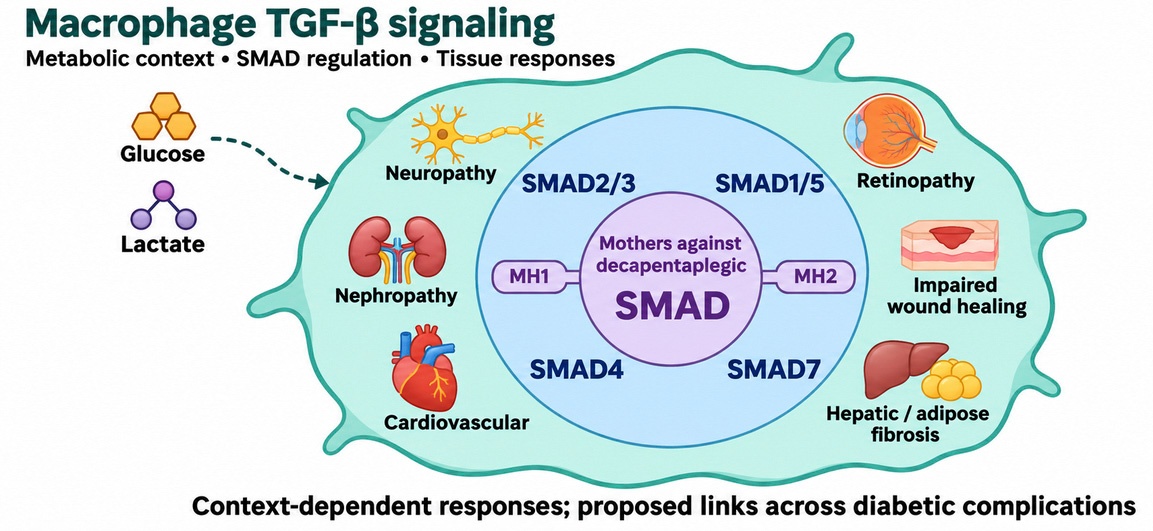
macrophages, TGF-β1 signaling integrates inflammatory, metabolic, and fibrotic
responses in a highly context-dependent manner. This review comprehensively
investigates TGF-β1 signaling mechanisms, metabolic crosstalk, and clinical
significance in macrophages, with a focus on diabetic complications. The
canonical SMAD2/3-dependent pathway, together with alternative
SMAD1/5-dependent signaling and non-SMAD routes (including mitogen-activated
protein kinase (MAPK) and phosphoinositide 3-kinase/protein kinase B (PI3K/AKT)
signaling), enables signaling divergence that allows TGF-β1 to exert both
anti-inflammatory and profibrotic effects. Pioneering work established the core
mechanistic framework, while other studies elucidated its role in alternative
macrophage activation and tissue remodeling. Recent investigations associate
high-glucose culture conditions with increased lactate and altered
TGF-β1/SMAD1/5 signaling in human macrophages, suggesting a link between
metabolic reprogramming and pro-atherogenic programs. In diabetes, chronic
hyperglycemia can reprogram macrophages and alter their responses to TGF-β1,
potentially sustaining inflammation and fibrosis. These macrophage responses
are discussed in relation to diabetic kidney disease, retinopathy, neuropathy,
cardiomyopathy, and impaired wound healing. The glucose–lactate–TGF-β1/SMAD1/5
sequence remains a candidate mechanism: lactate mediation, osmotic effects, and
consequent organ injury have not been resolved. Therapeutic targeting of TGF-β1
remains challenging because of its dualistic nature, which requires
context-specific modulation and direct assessment of repair and safety. This
review discusses emerging strategies, including macrophage-targeted approaches
and combined immunometabolic interventions. A deeper understanding of
context-dependent TGF-β1 signaling in macrophages is essential for developing
precision therapies that mitigate diabetic complications while preserving
physiological immune and reparative functions.
Keywords:
TGF-β1;
Innate immunity; Macrophages; SMAD signaling; Immunometabolism; Diabetic complications