
Offshore Renewable Energy-Based Hydrogen Production Systems: Technologies, Challenges, and Future Perspectives
Offshore Renewable Energy-Based Hydrogen Production Systems: Technologies, Challenges, and Future Perspectives
Qiang Fu 1,2 Shan Jiang 2 Chunjie Wang 1,2 Zhe Xu 1,2,* Lin Cui 2,3,*
Received: 03 September 2026 Revised: 16 September 2026 Accepted: 12 October 2026 Published: 28 October 2026

© 2026 The authors. This is an open access article under the Creative Commons Attribution 4.0 International License (https://creativecommons.org/licenses/by/4.0/).
1. Introduction
Global hydrogen demand surpassed 100 million tons in 2025 [1], and the share of hydrogen energy in end-use energy consumption has continued to increase. Renewable energy-based hydrogen production is gradually moving toward large-scale deployment. Offshore renewable energy-based hydrogen production systems provide an effective approach to mitigating renewable power curtailment, enhancing marine renewable energy accommodation capacity, and promoting the development of key technologies and equipment across the hydrogen energy supply chain. Therefore, accelerating the development of offshore hydrogen production infrastructure is of great practical significance and long-term strategic value for improving low-carbon energy supply structures and expanding marine engineering applications of hydrogen energy [2].
Constrained by harsh marine environments, offshore renewable energy-based hydrogen production systems still face several critical technical challenges that restrict their large-scale, efficient, and reliable operation. Offshore wind power and other renewable energy sources exhibit strong intermittency and stochastic fluctuations, which affect the stable operation and energy conversion efficiency of hydrogen production systems [3]. Under complex marine conditions, the operating mechanisms of seawater electrolysis-based hydrogen production units remain insufficiently understood. Meanwhile, seawater corrosion and salt deposition continuously deteriorate equipment operating conditions, accelerating component degradation and failure processes [4]. In addition, the insufficient accuracy of real-time online monitoring makes it difficult to identify degradation trends of electrolyzers in advance, thereby reducing equipment service life [5].
To address these challenges, extensive investigations have been conducted worldwide on key technologies, including the deep integration of offshore wind power and hydrogen production equipment with cascade energy utilization, hierarchical coordinated control strategies for wind–solar–storage–hydrogen systems, and salt-corrosion-resistant seawater electrolysis catalyst systems. Although these efforts have improved equipment compatibility, energy management strategies, and corrosion-resistant electrolysis technologies, existing studies remain fragmented, primarily focusing on the isolated optimization of individual components or subsystems without a holistic systems-engineering perspective. Comprehensive theoretical frameworks and coordinated technical solutions addressing dynamic energy coupling, accurate operating-condition matching, and multi-scenario operational stability have not yet been established. Furthermore, the lack of standardized system design methodologies, high-accuracy simulation analysis approaches, and comprehensive offshore experimental validation platforms continues to restrict large-scale engineering deployment.
Drawing upon recent global research advances and representative marine engineering demonstrations, this paper presents a narrative review of the critical technical challenges of offshore renewable energy-based hydrogen production systems, clarifies the multidimensional interaction mechanisms among information, energy, and material flows, and analyzes the coupling relationships among different subsystems. Unlike conventional studies focusing on individual component optimization, this review develops a system-level integrated analysis framework from a holistic perspective, providing theoretical foundations and engineering references for future integrated optimization, multi-unit coordinated operation, and large-scale deployment of offshore green hydrogen systems.
2. Offshore Renewable Energy Generation Technologies
Compared with terrestrial renewable energy resources, oceans possess abundant and diverse clean energy resources, providing an important foundation for large-scale renewable power development and supporting emerging green industries such as hydrogen energy. Currently, renewable energy generation technologies suitable for offshore engineering applications and capable of supplying power to offshore hydrogen production systems have developed into a diversified technological portfolio. The main technology categories include offshore wind power, offshore photovoltaic (PV), wave energy, tidal energy, and ocean thermal energy conversion (OTEC), as shown in Table 1. These technologies exhibit differentiated application advantages by exploiting the unique resource characteristics of marine environments [6,7,8,9]. Among them, offshore wind power and PV technologies have achieved relatively high technological maturity and strong engineering adaptability. They have already realized large-scale commercial deployment and represent the dominant renewable energy sources for offshore green hydrogen production. Wave energy and tidal energy utilize marine water movement characteristics for energy harvesting and possess inherent advantages in generation stability and predictability, which can effectively compensate for the intermittency of wind and solar power generation. OTEC utilizes the temperature difference between deep and shallow seawater layers to achieve energy conversion. With abundant resource potential and continuous operation capability, it represents a promising technology direction for long-term energy supply in deep-sea regions.
Table 1. Comparison of characteristics of offshore renewable energy technologies.
|
Energy Generation Technology |
Advantages of Power Output |
Limitations of Power Output |
|---|---|---|
|
Offshore PV |
High annual power generation potential; Suited for stable daytime generation. |
Significant seasonal variations; affected by cloud cover and seasonality. |
|
Offshore wind power |
Abundant resource potential; stable seasonal power output; high energy density. |
Minute-to-hour stochastic fluctuations; subject to weather conditions. |
|
Wave energy |
High predictability; fast power response capability. |
Large short-term power fluctuations; strongly affected by marine conditions. |
|
Tidal energy |
Highly predictable power generation; clear periodic characteristics. |
Periodic output variations; limited by tidal cycles. |
|
OTEC |
Continuous power output; low environmental impact sensitivity. |
Small temperature gradients; low energy conversion efficiency. |
Offshore wind power, PV, and tidal energy technologies exhibit significant development potential. However, affected by complex marine environmental conditions, their power outputs are characterized by strong intermittency, uncertainty, and stochastic fluctuations, creating multiple technical barriers to the large-scale deployment of offshore hydrogen production systems. Single offshore renewable energy generation modes are highly dependent on natural environmental conditions. Temporal variations in marine resources, including wind speed, solar irradiation intensity, and tidal cycles, directly lead to unstable power generation outputs, making continuous and reliable energy supply difficult to achieve. Meanwhile, severe fluctuations in renewable energy output may cause short-term power deficits in hydrogen production systems, leading to frequent operating-condition transitions and repeated start-stop operations of key components, such as electrolyzers. These dynamic variations not only reduce equipment operational stability and service life but also significantly increase system operation and maintenance costs. Furthermore, offshore wind and photovoltaic resources often generate considerable surplus electricity during peak generation periods. Due to insufficient offshore energy storage facilities and limited local energy utilization pathways, surplus clean electricity cannot be effectively accommodated, resulting in severe power curtailment and deteriorating overall energy efficiency and economic performance of offshore hydrogen production systems. Meanwhile, the hydrogen storage and transportation segment is confronted with bottlenecks including high technical costs and challenging safety management, which further hinder the large-scale deployment of offshore hydrogen-production systems.
To address these challenges, numerous research teams worldwide have conducted extensive studies on renewable energy output stabilization, electrolyzer operation optimization, surplus electricity accommodation, and offshore hydrogen production system configuration adaptation. Representative research progress is shown in Table 2.
Table 2. Representative research on offshore renewable energy generation technologies.
|
Research Team |
Research Achievements |
Research Outcomes |
|---|---|---|
|
Chenghuan Tian et al. |
Proposed the concept of “co-located wind and photovoltaic development” [10]. |
Average fluctuation reduction: 1.9–13.8% |
|
Nisha Kaur et al. |
Developed a hybrid renewable energy system integrating offshore wind power, offshore PV, and wave energy generation [11]. |
Power generation increment: 22–45% |
|
Bo Gao et al. |
The full-chain coupling technology integrating electricity-hydrogen-carbon-methanol is proposed [12]. |
Levelized cost of methanol reduction: 11.39% |
|
Yang Fu et al. |
Proposed a coordinated operation strategy combining lithium-ion batteries and hydrogen energy storage systems (HESS) [13]. |
Total planned cost reduction: 53.21% |
|
Hui Jin et al. |
Proposed a hybrid improved maximum-power-point tracking (MPPT) control strategy integrating intelligent algorithms and conventional perturbation and observation methods [14]. |
Tracking efficiency ≥ 99.85% |
Chenghuan Tian et al. proposed the innovative concept of “co-located offshore wind and photovoltaic development”, which overcomes the conventional independent deployment mode of offshore wind farms and PV systems, as shown in Figure 1a. This concept enables integrated planning and optimized deployment of offshore wind turbines, photovoltaic arrays, substations, transmission lines, and other supporting infrastructures within the same marine area. By fully exploiting offshore spatial resources and utilizing the complementary temporal characteristics of wind and photovoltaic power generation, this approach achieves multi-energy integration and complementary utilization. During daytime periods with sufficient solar irradiation, photovoltaic generation contributes a higher proportion of power output, while offshore wind power can provide effective compensation during morning/evening periods and in cloudy weather conditions. Through dynamic coordination between wind and photovoltaic generation, this approach effectively mitigates intermittency and uncertainty of renewable energy generation, reduces power output variations, and improves both marine resource utilization efficiency and power supply stability [10].
Bo Gao et al. focused on the research on full-chain coupling technology for electricity-hydrogen-carbon-methanol for an off-grid green methanol system deployed on offshore energy islands, as shown in Figure 1b. When the output power of hybrid offshore renewable energy generation is sufficient, part of the surplus renewable electricity is supplied to electrolyzers for hydrogen production, and the generated hydrogen is stored in hydrogen storage tanks; the other part is delivered to the capture unit for CO2 adsorption and capture to reserve carbon sources for methanol synthesis. Under the condition of insufficient renewable-energy output, battery energy storage realizes short-term power smoothing. Part of the green hydrogen from hydrogen storage tanks is utilized to maintain the basic power consumption of the entire island, while the rest guarantees the long-term continuous operation of the methanol synthesis unit. This effectively mitigates the prominent difficulties and high costs associated with hydrogen storage and transportation [12].
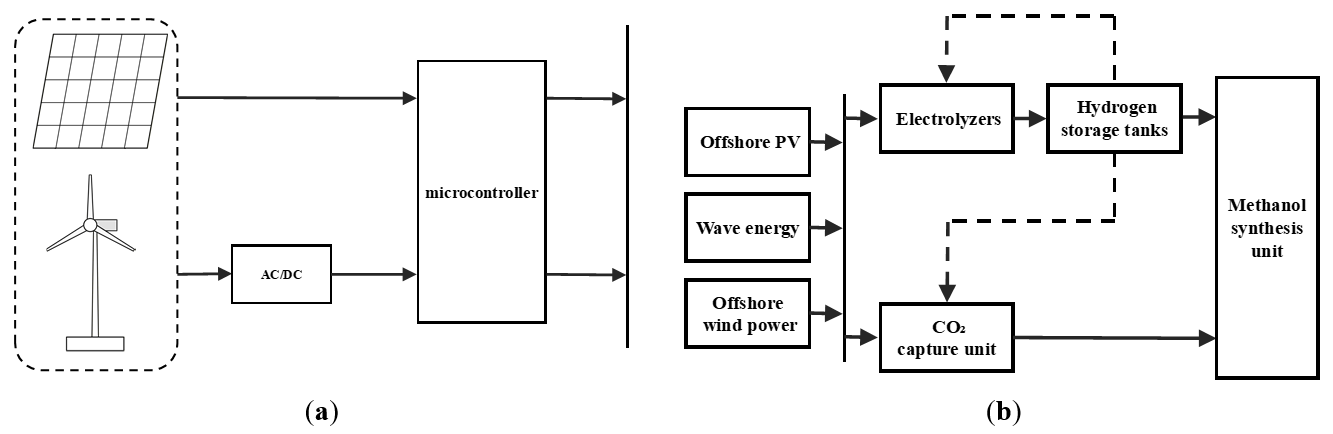
Figure 1. Representative research outcomes: (a) Structure of wind-PV power-generation system; (b) Full-coupling framework of electricity-hydrogen-carbon-methanol.
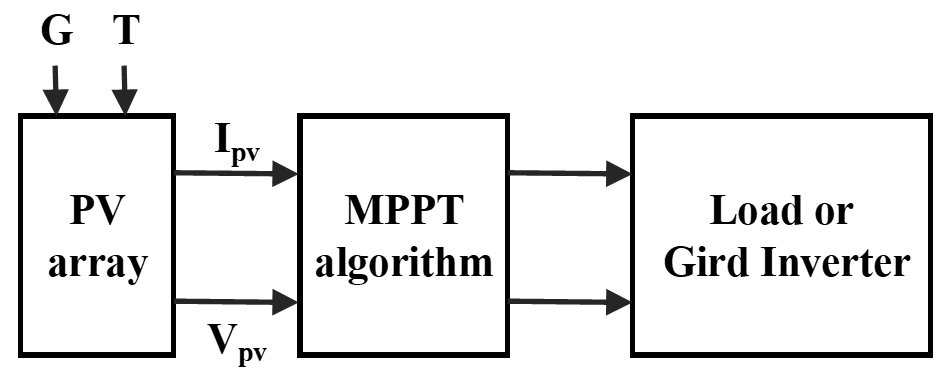
Hui Jin et al. focused on floating PV systems under complex operating conditions and developed a quantitative evaluation framework for MPPT performance under full-time operating scenarios, as shown in Figure 2. This framework enables accurate adaptation to rapidly varying and non-uniform solar irradiation conditions in offshore environments. Furthermore, a hybrid MPPT control strategy that integrates intelligent algorithms with conventional perturbation and observation methods was proposed. The proposed strategy effectively addresses key limitations of traditional MPPT algorithms under complex irradiation conditions, including global peak tracking failures, slow convergence speed, and insufficient tracking accuracy. The developed approach significantly improves photovoltaic conversion efficiency and operational reliability of floating PV systems, providing essential technical support for efficient operation and maintenance of PV applications [14].
Current offshore renewable energy generation technologies mitigate the stochastic fluctuations of individual energy sources through multi-energy integration and complementary utilization, thereby improving the overall stability and continuous power supply capability of offshore energy systems. These strategies can effectively address the challenges associated with short-term renewable energy fluctuations and long-term surplus renewable energy accommodation. However, optimization only from the power generation side has certain limitations. The stochastic variations in renewable energy output power can directly cause severe operating condition instability of electrolytic equipment, significantly reducing the overall hydrogen production efficiency. Therefore, coordinated control and optimization of seawater electrolysis-based hydrogen production units should be simultaneously considered.
3. Seawater Electrolysis-Based Hydrogen Production Technology
Seawater electrolysis-based hydrogen production technology uses natural seawater as the raw material and does not consume freshwater resources. It can effectively overcome water resource limitations and represents a key pathway for low-cost and large-scale green hydrogen production. Its main technical routes are divided into seawater desalination pretreatment-based hydrogen production and direct seawater electrolysis-based hydrogen production technology. At the early stage of technology development, seawater desalination pretreatment-based hydrogen production was the dominant approach. This method isolates chloride ions in seawater at the source, effectively avoiding anodic chlorine evolution side reactions, electrode corrosion, and catalyst degradation. Meanwhile, impurities such as calcium and magnesium ions can be removed to prevent electrode active site coverage and membrane blockage. This technology is compatible with various mainstream electrolyzer systems and provides high hydrogen purity and stable operating conditions. In addition, the freshwater produced can meet the water supply requirements of offshore platforms, resulting in relatively high resource utilization efficiency. Several studies have demonstrated its feasibility. The team from Nanyang Technological University and Rice University developed an integrated desalination-hydrogen production reactor, achieving long-term stable operation with simultaneous production of green hydrogen and drinking water [15]. The team led by Zhifeng Yang and Zhang Wang developed a solar-driven membrane distillation and electrolysis coupled system, in which waste heat from photovoltaic power generation was recovered to drive seawater desalination and produce high-purity freshwater [16].
With the development of offshore hydrogen production systems toward large-scale and high-capacity applications, the engineering limitations of traditional seawater desalination pretreatment-based hydrogen production routes have become increasingly apparent. The seawater desalination pretreatment process involves multiple stages, resulting in complex equipment configurations and increased system complexity. Under high salinity and high humidity offshore environments, high-salinity and humid marine environments intensify salt crystallization and membrane scaling, imposing notable parasitic energy losses, structural weight penalties, and elevated operation and maintenance expenditures. These challenges become more significant for deep-sea offshore platforms, limiting large-scale engineering deployment.
Under this background, direct seawater electrolysis-based hydrogen production technology has attracted increasing attention due to its better suitability for large-scale offshore hydrogen production. This technology eliminates the entire seawater desalination pretreatment process and significantly simplifies the overall system configuration. It can reduce the equipment footprint and structural load requirements, which better satisfy the limited installation space and load constraints of offshore platforms. From an economic perspective, this technology reduces the initial investment associated with complex pretreatment units and decreases long-term operation and maintenance costs related to consumable replacement and component cleaning. Therefore, it provides an important pathway to improving the cost-effectiveness of offshore wind and photovoltaic coupled hydrogen production systems. However, direct seawater electrolysis still faces critical challenges, including seawater impurity interference, electrode corrosion, and scaling-induced performance degradation.
Direct seawater electrolysis-based hydrogen production technology requires highly coordinated design of electrolyzer membrane electrodes, electrolytes, and flow field structures. Currently, mainstream electrolyzer technologies mainly include alkaline electrolyzers (ALK), proton exchange membrane electrolyzers (PEM), and emerging anion exchange membrane electrolyzers (AEM) and solid oxide electrolyzers (SOEC) [17]. ALK technology has reached a high level of maturity and currently dominates the market. PEM technology features a simple process and high operational efficiency, but relies on precious metals such as platinum, making it more suitable for distributed small-scale hydrogen production applications. AEM electrolyzers are compatible with non-noble-metal catalysts and possess the advantages of low cost and high dynamic response. They are currently in the initial exploration stage of commercialization and represent a promising novel low-cost hydrogen-production technology. SOEC electrolyzers deliver ultra-high energy conversion efficiency relying on high-temperature electrolysis operating conditions, and can be coupled with industrial waste heat to reduce energy consumption. Nevertheless, constrained by material stability and operating-condition adaptability issues, they are still dominated by laboratory-scale research and pilot-scale verification at the present stage.
To achieve performance comparable to pure water electrolysis, several fundamental mechanisms in direct seawater electrolysis need to be further addressed. The dynamic evolution mechanism of catalyst active sites remains unclear, and complex seawater components can accelerate electrode corrosion and reduce electrode performance uniformity. Under high-temperature and high-salinity conditions, membrane structures are prone to degradation, accompanied by filler aggregation and pore collapse, which limits large-scale continuous membrane fabrication. In addition, the dynamic evolution mechanism of electrolysis kinetics under coupled energy-quality fluctuations remains insufficiently understood. Large power fluctuations can significantly affect system operational stability. Furthermore, precise electrolyzer assembly remains challenging, which may lead to uneven current and fluid distribution within the electrolyzer stack. Integrated electrolyzer system solutions suitable for deep-sea offshore platforms are still lacking. Under extremely high-temperature and high-salinity corrosive environments, the corrosion failure mechanisms of structural materials are highly complex, leading to component degradation and increased operation and maintenance requirements. Therefore, several research teams have conducted targeted investigations, as shown in Table 3.
Heping Xie et al. proposed a water transport technology, which belongs to direct seawater electrolysis technologies [5]. A hydrophobic porous membrane was selected as the gas transport interface, and a concentrated KOH solution was used to construct a self-buffered electrolyte system. Through the selective transport characteristics of the membrane phase, a stable water transport pathway can be continuously maintained when the water migration rate reaches dynamic equilibrium with the electrolysis consumption rate. This approach eliminates the need for complex seawater pretreatment and enables efficient and flexible direct seawater electrolysis, providing a new technical pathway for seawater-based hydrogen production.
Erdong Wang et al. developed a CN@NiCoS electrocatalyst with excellent intrinsic hydrogen evolution reaction activity and long-term operational stability [18]. To address the irreversible sulfur dissolution and insufficient catalytic stability commonly observed in transition metal sulfides during electrolysis, the team proposed an interface-controlled sulfur migration strategy. Through multiple characterization techniques, the dynamic evolution mechanism of active sites in sulfide catalysts was investigated. This study provides important theoretical insights and practical guidance for the structural design and performance optimization of highly stable seawater electrolysis catalysts.
Table 3. Representative research on direct seawater electrolysis-based hydrogen production technology.
|
Research Team |
Research Achievements |
Technology Readiness Level |
|---|---|---|
|
Samuel S. Veroneau et al. |
Developed an osmotic membrane technology based on ion transport control and constructed a direct seawater electrolysis system using seawater as the electrolyte [19]. |
Phosphate solute reaches a leakage of ca. 3% within 48 h. |
|
Sören Dresp et al. |
Conducted research on alkaline seawater electrolysis and developed electrode materials and electrolysis systems suitable for seawater electrolysis applications [20]. |
The oxygen Faradaic efficiency ranges from 73% to 88%. |
|
Heping Xie et al. |
Developed a water transport technology-based electrode and achieved direct seawater electrolysis through a water migration mechanism [5]. |
Hydrogen purity > 99.9%; the impurity-ion rejection efficiency > 99.99%. |
|
Min L et al. |
Constructed a CN@NiCoS-based composite catalyst and proposed an interface-controlled sulfur migration strategy to improve catalyst stability [18]. |
Under alkaline seawater conditions, stable operation is achieved at 100 mA/cm2 for 400 h. |
|
Tao Liu et al. |
Developed a multifunctional electrocatalytic system and regulated hydrogen evolution reaction (HER) and chlorine evolution reaction processes to achieve efficient seawater electrolysis [21]. |
The electrolysis energy consumption is 5.0 kWh/Nm3 H2. |
By optimizing key structures, including internal flow channels, membranes, and electrode arrays, the electrolysis conversion performance of direct seawater electrolysis-based hydrogen production systems has improved significantly. These structural improvements effectively alleviate electrode corrosion and scaling blockage caused by seawater impurities, reduce energy losses during the electrolysis process, and enable efficient utilization of offshore renewable energy power output. The optimized systems can better adapt to the intermittency and stochastic fluctuations of renewable energy generation, thereby reducing the impact of power fluctuations on hydrogen production units [22].
However, marine environmental conditions are highly complex and continuously changing. Parameters such as solar irradiation, wind speed, seawater salinity, and temperature vary dynamically over time. These fluctuations make it difficult to maintain stable operating loads and hydrogen production efficiency of electrolyzers under designed conditions. During long-term operation, performance degradation of electrodes and significant deviations between actual and expected hydrogen production may occur. Therefore, further research is needed to optimize real-time operating-condition monitoring and intelligent diagnostic technologies. Dynamic regulation of electrolysis operating parameters should be developed to ensure the long-term stable operation of hydrogen production systems.
4. Intelligent Monitoring and Health Diagnosis Technology
Complex marine operating environments involve highly variable conditions, including salt spray erosion, seawater corrosion, and wave-induced disturbances. These factors can easily cause corrosion degradation of metal structures, performance degradation of electrolyzers, and hidden damage to power generation components. Therefore, the operating conditions of offshore hydrogen production systems exhibit significant dynamic uncertainty. Developing intelligent online monitoring platforms and improving health diagnosis technologies to carry out full-life-cycle dynamic performance evaluation are essential for ensuring the long-term stable operation of hydrogen production systems.
The EU H2Ocean project developed an integrated multi-physics field monitoring system [23]. This system overcomes the limitations of conventional single-point monitoring methods, which cannot capture multidimensional variations simultaneously. It enables synchronous acquisition and coupled analysis of marine environmental conditions, equipment operating states, and environmental parameters. The developed system provides comprehensive and accurate data support for the long-term stable operation and safe maintenance of offshore hydrogen production systems.
Adopting multi-physics-field monitoring technologies to conduct health diagnosis for offshore renewable-energy-based hydrogen production systems enables timely hazard identification and reduction of operational risks. Nevertheless, the offshore hydrogen-production industry is still in its initial stage. The limited number of demonstration projects results in insufficient measured data, which hinders the construction of comprehensive databases and restricts the technical iteration, algorithm training, and engineering application of multi-physics-field diagnosis technologies. Onshore electrolytic hydrogen-production systems are comparatively more mature, with substantial existing research on health diagnosis, abundant measured data, well-established monitoring approaches, and fault-diagnosis models. These can provide important references for the research and development of health-diagnosis technologies for offshore hydrogen-production systems.
Wenmiao Liu et al., whose work is based on onshore hydrogen-production systems, classified PEM fault-diagnosis technologies into three categories: model-based methods, data-driven methods, and on-site test-based methods [24]. The model-based approaches rely on electrochemical impedance spectroscopy, distribution of relaxation times, and multi-physics-field modelling. Faults such as blockage and membrane degradation are identified according to the residual error between measured data and model outputs. Such methods feature interpretable mechanisms yet suffer from high computational complexity and poor real-time performance. Data-driven methods employ algorithms such as decision trees, fuzzy logic, and particle filtering to identify faults using operational data, including voltage and temperature. They deliver fast responses and are suitable for online scenarios, but they heavily depend on dataset quality, and false-alarm risks tend to occur when using simulation-generated data. On-site test-based diagnosis identifies faults in thermal management and power devices based on sensor signal residuals and is mostly applied under single operating conditions.
Onshore-oriented studies are equipped with abundant measured data and stable environmental conditions. They can provide theoretical references for offshore hydrogen production, yet cannot be directly transferred to complex marine working conditions. Offshore hydrogen-production systems operate persistently in marine environments with high humidity and severe salt-spray corrosion. Meanwhile, the output of renewable energy such as wind and solar power features strong fluctuations, leading to drastic dynamic variations in system operating conditions. Restricted by hardware installation space, sealing protection requirements, and sensor deployment constraints, key state parameters, including the degree of corrosion of internal electrolyzer plates and the status of interface contact, cannot be directly measured online during practical operation. The available valid monitoring data commonly suffer from sparse samples and incomplete information. Accordingly, it is necessary to explore the mapping relationship between limited observed data and internal degradation characteristics, and to construct health-diagnosis algorithms that are adaptive to complex marine operating conditions, so as to enable the identification of implicit corrosion damage in core equipment such as electrolyzers. Furthermore, they enable remaining useful life prediction, improving system reliability and operation and maintenance efficiency [25].
Targeting the pain point of scarce fault-labeled samples under offshore scenarios, the National Ocean Technology Center has proposed a health-state detection scheme based on self-supervised contrastive learning. This method collects multi-modal operational data of the system and constructs a neural network consisting of unimodal feature extraction, feature fusion, and state prediction. Unlabeled operational data are adopted for model optimization. It enables health diagnosis with limited or even zero fault samples to support the full-life-cycle assessment of the system. Capable of adapting to disturbances such as marine salt spray and power supply fluctuations, the scheme can identify implicit degradation faults of the system and provide technical support for condition evaluation and early warning of offshore hydrogen-production equipment [26].
5. Integrated Hydrogen Production System Technology
At present, optimization studies on offshore renewable energy-based hydrogen production systems mainly focus on the refined optimization of individual devices and independent subsystems. Through targeted improvements in electrolyzer operation strategies, energy storage charging and discharging mechanisms, seawater pretreatment processes, and renewable energy generation control strategies, the operating conditions of individual components can be effectively improved. These approaches provide practical engineering benefits for detailed system operational management and for exploring energy-saving potential in individual devices. However, the subsystems within hydrogen production systems do not operate independently. Instead, they exhibit strong coupling relationships and dynamic constraints.
The offshore renewable energy generation unit serves as the power supply subsystem of the system. Its inherent intermittency and stochastic fluctuations can cause significant variations in hydrogen production power, resulting in reduced hydrogen production efficiency and accelerated equipment degradation. Meanwhile, the operating load and operational requirements of the seawater electrolysis-based hydrogen production unit impose reverse constraints on the renewable energy generation unit. The start-stop operation and dynamic load adjustment of hydrogen production equipment require real-time adaptation of power generation output. If the renewable energy output cannot match the hydrogen production load demand, excessive electricity waste or insufficient hydrogen production capacity may occur.
The monitoring and diagnosis unit provides essential support for coordinated and stable system operation. Its monitoring accuracy, response speed, and data coverage directly determine the effectiveness of multi-unit coordinated control. Delayed monitoring data and insufficient fault diagnosis accuracy may lead to inaccurate system coordination, intensify interactions among subsystems, and eventually cause overall system operation failures [27].
Therefore, optimization of individual subsystems cannot achieve comprehensive system-level coordination. It may result in operational imbalance among subsystems and limited improvement in overall energy efficiency. Considering the multi-unit coupling and dynamic interaction characteristics of offshore renewable energy-based hydrogen production systems, optimization research should be conducted from an integrated system perspective.
The whole-chain coordinated optimization system for offshore renewable energy-based hydrogen production connects five types of medium and signal transmission links, namely electric power, seawater, hydrogen, thermal energy, and information control, as shown in Figure 3. It can deeply integrate diversified marine renewable energy sources including offshore wind power, offshore photovoltaic power, and wave energy, breaking through the limitations of power generation from a single energy source. Relying on multi-energy complementary power generation technologies, the system effectively compensates for the shortcomings of intermittency and stochastic fluctuations inherent to single energy sources. On this basis, an electricity-hydrogen-carbon-alcohol multi-medium coupling and coordination system is established to realize efficient conversion and cyclic utilization of energy and materials, and substantially improve the utilization efficiency of marine energy resources. Adopting the new process of direct seawater electrolysis for hydrogen production, the system simplifies the production workflow and reduces capital investment as well as operational energy consumption of equipment. Meanwhile, equipped with multi-source heterogeneous data acquisition and multi-physics-field coupled monitoring technologies, it comprehensively captures equipment operational parameters and marine environmental data. By introducing neural network intelligent algorithms, the system can accurately identify fault conditions such as internal corrosion and wear inside electrolyzers, carry out quantitative evaluation of corrosion severity, and realize real-time equipment health diagnosis and precise prediction of remaining useful life. The neural network is trained using historical multi-physics corrosion datasets. The well-trained model is deployed in the system to perform inference in the online stage. With real-time collected data as inputs, it sequentially outputs the corrosion level, equipment health status, and remaining useful life. Ultimately, it achieves full-life-cycle performance assessment, research judgment, and optimized regulation for the complete hydrogen-production equipment set.
This solution is not a fixed paradigm and can be flexibly adjusted according to application scenarios. For three distinct engineering scenarios, namely near-shore platforms, deep-sea floating platforms, and retrofitting of existing oil-and-gas platforms, differentiated selections can be made for power-generation portfolios, hydrogen-production electrolysis routes, energy-storage configurations, and hydrogen-energy consumption modes.
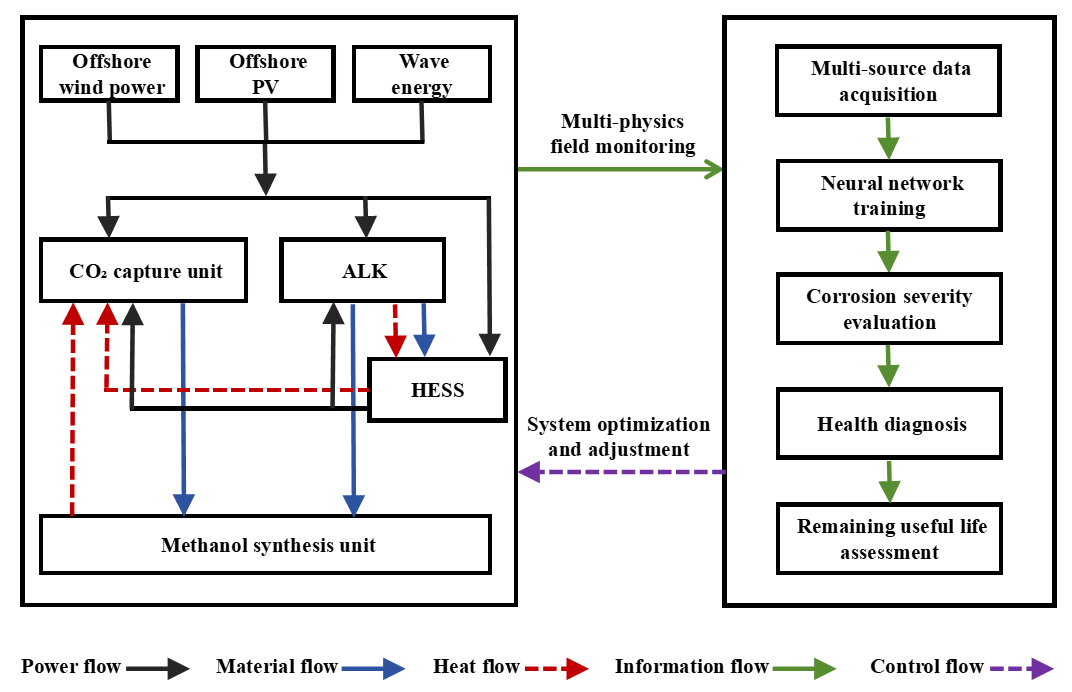
Figure 3. Whole-chain Collaborative Optimization System for Offshore Renewable Energy Hydrogen Production.
The system architecture comprehensively considers multiple operational constraints such as the upper and lower power limits of the electrolyzer. Using indicators such as maximizing system hydrogen production efficiency and minimizing operating energy consumption as the multi-objective optimization function, dynamic cooperative matching of multiple modules and refined optimal regulation of the whole process are achieved, as shown in Table 4.
Table 4. Definition of objectives and constraints for the system multi-objective optimization model.
|
Item |
Content |
|---|---|
|
Optimization Objectives |
Maximize system hydrogen production efficiency; minimize system operating energy consumption; minimize equipment health degradation; maximize energy supply stability. |
|
Optimization Variables |
Electrolyzer operating power; energy storage charge-discharge power; thermal management system control variables. |
|
Constraints |
Electrolyzer power upper and lower limit constraints; energy storage SOC operating range constraints; equipment thermal load boundary constraints; system power balance constraints; power ramp rate and equipment dynamic operation constraints. |
At the research framework level, a multi-unit coordinated simulation and optimization framework can be developed. This framework can overcome the conventional research mode based on independent simulation and isolated optimization of individual modules. A whole-chain co-simulation platform can be established to accurately reproduce the dynamic coupling behaviors among different subsystems under complex marine operating conditions. This approach enables effective identification of power supply-demand mismatches and system performance limitations. At the operational control level, a coordinated dynamic control mechanism for the entire system can be established. By considering the fluctuation characteristics of renewable energy generation and the operating characteristics of electrolysis-based hydrogen production equipment, adaptive power matching and coordinated operating strategies can be developed based on real-time feedback from monitoring and diagnosis units. These strategies can dynamically balance renewable energy output and hydrogen production load, reduce negative interactions among subsystems, and achieve efficient, stable, and coordinated operation of offshore renewable energy-based hydrogen production systems.
6. Representative Engineering Cases
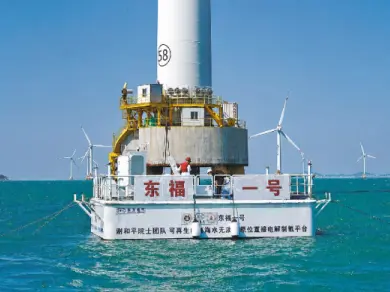
In March 2023, the Dongfu No.1 platform completed the world’s first offshore demonstration of offshore wind power-driven direct seawater electrolysis-based hydrogen production technology without desalination pretreatment in Fujian, China, as shown in Figure 4a. As a representative demonstration project of direct seawater electrolysis-based hydrogen production, Dongfu No.1 integrates the phase-change mass transfer membrane technology developed by the team led by Heping Xie. The technology uses vapor pressure differences to drive water vapor transport into the electrolyzer and effectively blocks harmful impurities, including chloride ions and calcium/magnesium ions [5]. Therefore, the conventional seawater desalination pretreatment process can be eliminated. The platform deeply integrates the water vapor mass transfer module with an alkaline electrolyzer and incorporates modular units suitable for offshore operating conditions, including power fluctuation mitigation, salt spray protection, and gas collection systems. This project overcomes the conventional fragmented architecture in which offshore wind power generation, seawater pretreatment, and hydrogen production operate independently. It achieves whole-chain coordination among floating wind power supply, hydrogen production, and operating condition monitoring. Furthermore, the spatial integration of hydrogen production equipment and floating platforms is realized, providing a feasible technical pathway for offshore direct seawater electrolysis-based hydrogen production.
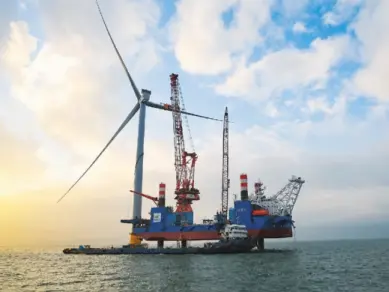
In December 2025, the Offshore Wind Power Phase II and Green Hydrogen-Based Energy Demonstration Project was officially launched. The project aims to explore an offshore wind power-based hydrogen production and green methanol supply chain in the offshore areas of the South China Sea, as shown in Figure 4b. As a demonstration project for the offshore wind power-based hydrogen production industry chain, the project is equipped with the world’s first offshore thousand-cubic-meter-scale modular PEM hydrogen production system [28]. By integrating corrosion-resistant encapsulation materials, high-performance mass transfer flow fields, and fast-response control systems, the project can rapidly respond to offshore wind power fluctuations. Different from conventional fragmented development focused on individual hydrogen production units, this project establishes a whole-chain integrated framework involving offshore wind power supply, organic liquid hydrogen storage, and CO2-coupled green methanol production. It enables coordinated operation among energy supply, offshore hydrogen production, and hydrogen storage and transportation processes. By leveraging the excellent dynamic adaptation capabilities of PEM electrolyzers, the system can effectively accommodate intermittent offshore wind power generation and establish an integrated industrial system that combines offshore green electricity, green hydrogen, and marine fuels. This project provides an engineering reference for large-scale offshore hydrogen production systems.
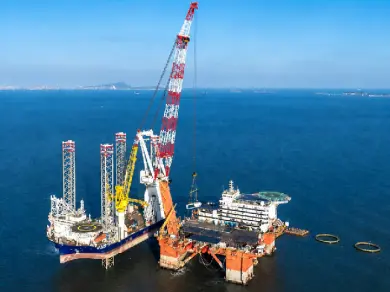
In March 2025, the Yantai Marine Hydrogen-Ammonia-Methanol Integrated Project in Shandong Province was completed. The project provides practical validation of the entire offshore hydrogen production process and offers technical support for establishing industrial standards for marine hydrogen energy development, as shown in Figure 4c. The project adopts a megawatt-scale offshore renewable energy off-grid hydrogen production system and a flexible integrated ammonia/methanol synthesis process. It is equipped with compact and highly efficient alkaline (ALK) electrolyzers and PEM electrolyzers suitable for marine environments [29]. Furthermore, intelligent, flexible control technology that covers the entire offshore electricity-hydrogen-chemical energy chain has been developed. The system can utilize offshore renewable energy for off-grid hydrogen production and further convert hydrogen into ammonia and methanol, enabling integrated utilization of offshore renewable energy and hydrogen-based chemical products.
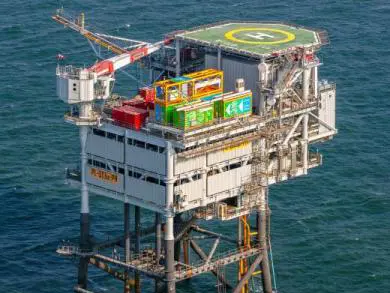
In July 2026, the Dutch PosHYdon demonstration project achieved offshore hydrogen production in the North Sea, as shown in Figure 4d. The project explores an integrated technical pathway combining oil and gas platform retrofitting, offshore wind power-based hydrogen production, and hydrogen blending into existing natural gas transportation systems for near-shore applications in the North Sea [28]. The project deploys a 1 MW offshore PEM electrolyzer. Supported by the platform-based seawater pretreatment unit, marine corrosion protection system, and dynamic regulation control system, the hydrogen production system can rapidly respond to offshore wind power fluctuations. Unlike conventional development approaches that focus on independent hydrogen production units, the project establishes a coupled system architecture integrating offshore wind power supply, offshore hydrogen production, and hydrogen blending into natural gas pipelines. This configuration enables coordinated operation among green electricity supply, offshore hydrogen production, and hydrogen energy transportation. By utilizing the strong dynamic adaptability of PEM electrolyzers, the system effectively accommodates intermittent offshore wind power generation and establishes a local demonstration framework integrating offshore green electricity, green hydrogen, and hydrogen-blended fuels.
 |
 |
|
(a) |
(b) |
 |
 |
|
(c) |
(d) |
Figure 4. Engineering case: (a) Dongfu-1 platform; (b) Shenneng Hainan CZ2; (c) Offshore Hydrogen-Ammonia-Methanol Integrated Project in Yantai, Shandong. (d) Dutch PosHYdon demonstration project.
7. Conclusions
This paper presents a narrative review of the key technologies and recent research advances of offshore renewable energy-based hydrogen production systems. Multi-energy integration and complementary utilization technologies can substantially mitigate power output fluctuations and the inherent intermittency of offshore renewable power generation. In addition, reliable meteorological forecasting support is also indispensable. With the in-depth application of artificial intelligence in the field of marine energy, intelligent meteorology and power output prediction technologies can integrate massive marine meteorological observation datasets and historical samples of offshore renewable energy output to construct deep-learning forecasting models. By mining multi-dimensional meteorological features such as wind speed and solar irradiance and conducting correlation analysis, the coupling relationships between meteorological variations and renewable-energy power output can be precisely characterized, enabling high-accuracy short-, medium-, and long-term prediction of marine meteorological evolution trends and input-power fluctuations of hydrogen-production systems. Via catalyst material modification and electrolyzer structural optimization, the adaptability, operational stability, and energy-conversion efficiency of hydrogen-production equipment under complex seawater operating conditions can be effectively enhanced. Furthermore, intelligent monitoring technologies built upon multi-source heterogeneous data fusion address the core limitations of conventional hydrogen production systems, such as insufficient multi-dimensional state perception and unsatisfactory real-time accuracy for fault diagnosis. Given the huge volume of real-time operational data of the system and highly complex nonlinear correlations among parameters, artificial intelligence techniques can be incorporated. The deep integration of intelligent algorithms such as machine learning and deep learning with dynamic simulation models enables efficient filtering, feature extraction, and dimensionality reduction for massive and complex operational data. It simplifies the redundant computational logic of conventional simulation models, eliminates invalid computation procedures, and substantially shortens simulation computation time and feedback cycles, thus providing core technical support for refined and intelligent operation-control of offshore hydrogen-production systems.
Existing studies mostly concentrate on independent optimization of individual subsystems, lacking investigation into the full-chain coupling characteristics of offshore hydrogen production systems. Targeting this research gap, this paper adopts a holistic system-level perspective to comprehensively summarize full-chain technical architectures and multidimensional coupling mechanisms among subsystems, and constructs a dedicated research framework to remedy the deficiencies of conventional fragmented optimization strategies.
Prominent technical and scientific bottlenecks still persist in current relevant research. Dynamic energy coupling, accurate operating-condition matching, and stable multi-scenario adaptation constitute core scientific issues awaiting further breakthroughs. Besides, the industry is still short of unified standardized design methodologies, high-accuracy simulation analysis approaches, and comprehensive offshore experimental validation platforms. From an engineering application perspective, this review provides solid theoretical foundations and technical references for the integrated design and large-scale engineering deployment of offshore renewable energy-based hydrogen production systems, and further promotes the development of marine zero-carbon energy systems.
The future development of offshore renewable energy-based hydrogen production systems will feature deep-sea deployment, large-capacity output and system-wide integrated operation. Driven by continuous progress in multi-energy complementary technologies, including offshore wind power, PV, and wave energy, as well as breakthroughs in highly corrosion-resistant seawater electrolysis catalysts and novel membrane materials, direct seawater electrolysis is expected to achieve lower energy consumption and reduced operation and maintenance costs. Meanwhile, multi-physics-field intelligent monitoring and diagnosis systems based on multi-source heterogeneous data fusion will be further improved to realize early-stage fault warning and full-life-cycle health management for offshore hydrogen-production equipment.
Notwithstanding these promising development prospects, challenges concerning marine environmental adaptability, long-term operational reliability, and economic competitiveness still constrain the large-scale popularization of offshore green hydrogen systems. Owing to the excessive weight of current offshore hydrogen-storage equipment and the absence of dedicated industrial standards for subsea hydrogen-transport pipelines, future development calls for the research and development of lightweight and corrosion-resistant offshore hydrogen-storage facilities, advancement of low-cost synthesis technologies for hydrogen-derived products, and improvement of the safety-monitoring system for offshore hydrogen storage and transportation. These measures will foster the comprehensive development of the complete industrial chain for offshore green hydrogen.
Statement of the Use of Generative AI and AI-Assisted Technologies in the Writing Process
During the preparation of this manuscript, the author used Gemini in order to assist with language refinement and content organization. After using this tool, the author reviewed and edited the content as needed and take full responsibility for the content of the published article.
Author Contributions
Conceptualization, Q.F. and S.J.; Methodology, S.J.; Resources, L.C.; Data Curation, S.J.; Writing—Original Draft Preparation, C.W.; Writing—Review & Editing, Q.F., S.J. and C.W.; Visualization, Z.X.; Supervision, L.C.; Project Administration, ang Funding Acquisition, L.C.
Ethics Statement
Not applicable.
Informed Consent Statement
Not applicable.
Data Availability Statement
This review is based on previously published literature. No new experimental datasets were generated or analysed during the preparation of this manuscript. All sources reviewed are cited in the reference list.
Funding
This research is partly supported by the National KeyR&D Program of China (grant number 2023YFB4005105).
Declaration of Competing Interest
The authors declare that they have no known competing financial interests or personal relationships that could have appeared to influence the work reported in this paper.
References
- Remme U. Global Hydrogen Review 2026; International Energy Agency (IEA): Paris, France, 2026. [Google Scholar]
- Ning M, Yao Y, Zhan Y, Pan F, Fu Y, Chen D, et al. Hydrogen Production from Marine Renewable Energy: A Review. Energies 2025, 18, 6490. DOI:10.3390/en18246490 [Google Scholar]
- Liu L, Ma J, Wu D, Zhao Y. Offshore Integrated Energy Systems for Low-Carbon Transition: A Review of Offshore Renewables, Geothermal Integration, Multi-Energy Coupling, and Optimization Methods. Processes 2026, 14, 2162. DOI:10.3390/pr14132162 [Google Scholar]
- O'Neill F, Mehmanparast A. A review of additive manufacturing capabilities for potential application in offshore renewable energy structures. Forces Mech. 2024, 14, 100255. DOI:10.1016/j.finmec.2024.100255 [Google Scholar]
- Liu T, Zhao Z, Tang W, Chen Y, Lan C, Zhu L, et al. In-situ direct seawater electrolysis using floating platform in ocean with uncontrollable wave motion. Nat. Commun. 2024, 15, 5305. DOI:10.1038/s41467-024-49639-6 [Google Scholar]
- van der Zant HF, Pillet AC, Schaap A, Stark SJ, de Weijer TA, Cahyaningwidi AA, et al. The energy park of the future: Modelling the combination of wave-, wind- and solar energy in offshore multi-source parks. Heliyon 2024, 10, e26788. DOI:10.1016/j.heliyon.2024.e26788 [Google Scholar]
- Du W, Cai G, Zhang J, Li Y, Zhou Z, Chen X, et al. An integrated spatiotemporal techno-economic assessment of offshore renewable energy complementarity: A case study in China’s maritime zones. Appl. Energy 2026, 410, 127513. DOI:10.1016/j.apenergy.2026.127513 [Google Scholar]
- Wen Y, Wu J, Lin P, Low YM. The role of offshore wind and solar PV resources in global low-carbon transition. Sci. Adv. 2025, 11, eadx5580. DOI:10.1126/sciadv.adx5580 [Google Scholar]
- Du W, Cai G, Qi X, Wang P, Zhang J. Review on development and utilization of offshore renewable energy: An analysis based on a five-dimensional framework. Resour. Sci. 2025, 47, 675–690. DOI:10.18402/resci.2025.04.01 [Google Scholar]
- Tian C, Zhang Q, Mei D, Zhang X, Li Z, Chen E. Hybrid Energy Storage Capacity Optimization for Power Fluctuation Mitigation in Offshore Wind–Photovoltaic Hybrid Plants Using TVF-EMD. Processes 2025, 13, 3282. DOI:10.3390/pr13103282 [Google Scholar]
- Kaur N, Sudhakar K, Mohamed MR, Ramkiran B, Barbulescu D. Offshore hybrid renewable energy: Insights from real-world implementations. Front. Energy Res. 2026, 14, 1779158. DOI:10.3389/fenrg.2026.1779158 [Google Scholar]
- Gao B, Zhou X, Tian Y, Elfeky KE, Yu W, Ge K, et al. Full-process modelling and 4E analysis of an off-grid offshore green methanol production system for an energy island. Energy 2026, 356, 141295. DOI:10.1016/j.energy.2026.141295 [Google Scholar]
- Fu Y, Zhou Y, Ge X, Diao G, Fei F, Huang R. Multi-objective Planning of Source-side Electro-hydrogen Hybrid Energy Storage for Offshore Wind Power Fluctuations Across Time Scales. Power Syst. Technol. 2025, 49, 3244–3255. DOI:10.13335/j.1000-3673.pst.2024.1776 [Google Scholar]
- Jin H, Kong X, Wang C, Zhang D, Yao Y. A methodology for simulation of power generation characteristics and enhancement of MPPT performance of offshore floating photovoltaic arrays. Appl. Energy 2025, 393, 126129. DOI:10.1016/j.apenergy.2025.126129 [Google Scholar]
- Wu T, Zhu S, Zhang Y, Lin X, Liu L, Ye H, et al. Electrolysis with built-in seawater desalination by porous-solid-electrolyte reactor. Nat. Sustain. 2026, 9, 523–532. DOI:10.1038/s41893-026-01772-4 [Google Scholar]
- Feng D, Wang L, Chen Y, Su C, Woo YC, Yang Z, et al. Highly-Efficient Seawater Hydrogen Production via a Plug-and-Play Solar-Powered Membrane Distillation-Electrolysis System. Environ. Sci. Technol. 2026, 60, 9597–9608. DOI:10.1021/acs.est.5c11512 [Google Scholar]
- Kumarasamy S, Selvanathan SP, Ghazali MF. From offshore renewable energy to green hydrogen: Addressing critical questions. Clean Energy 2025, 9, 108–122. DOI:10.1093/ce/zkaf003 [Google Scholar]
- Li M, Li H, Fan H, Liu Q, Yan Z, Wang A, et al. Engineering interfacial sulfur migration in transition-metal sulfide enables low overpotential for durable hydrogen evolution in seawater. Nat. Commun. 2024, 15, 6154. DOI:10.1038/s41467-024-50535-2 [Google Scholar]
- Veroneau SS, Nocera DG. Continuous electrochemical water splitting from natural water sources via forward osmosis. Proc. Natl. Acad. Sci. USA 2021, 118, e2024855118. DOI:10.1073/pnas.2024855118 [Google Scholar]
- Dresp S, Dionigi F, Loos S, Ferreira de Araujo J, Spöri C, Gliech M, et al. Direct Electrolytic Splitting of Seawater: Activity, Selectivity, Degradation, and Recovery Studied from the Molecular Catalyst Structure to the Electrolyzer Cell Level. Adv. Energy Mater. 2018, 8, 1800338. DOI:10.1002/aenm.201800338 [Google Scholar]
- Liu T, Lan C, Tang M, Li M, Xu Y, Yang H, et al. Redox-mediated decoupled seawater direct splitting for H2 production. Nat. Commun. 2024, 15, 8874. DOI:10.1038/s41467-024-53335-w [Google Scholar]
- Zhang Y, Zhang Y, Li Z, Yu E, Ye H, Li Z, et al. A Review of Hydrogen Production via Seawater Electrolysis: Current Status and Challenges. Catalysts 2024, 14, 691. DOI:10.3390/catal14100691 [Google Scholar]
- Development of a Wind-Wave Power Open-Sea Platform Equipped for Hydrogen Generation with Support for Multiple Users of Energy. Available online: https://cordis.europa.eu/project/id/288145/reporting (accessed on 18 September 2026).
- Liu W, Li J, Zhang L, Wu Q, Qian X, Lin Q, et al. Failure mechanisms and diagnosis of proton exchange membrane electrolyzers and fuel cells. Clean Coal Technol. 2025, 31, 1–15. DOI:10.13226/j.issn.1006-6772.ZCSY25050802 [Google Scholar]
- Zhao T, Sun L, Zhou Y, Kang Z, Li H, Kang J. Offshore Wind-Hydrogen Systems Fault Detection Based on CNN-BiLSTM-AM Algorithm. Qual. Reliab. Eng. Int. 2025, 41, 1092–1107. DOI:10.1002/qre.3706 [Google Scholar]
- CN121496492B; Method, Apparatus and Equipment for Detecting Health State of Electrolytic Seawater Hydrogen-Production System. National Ocean Technology Center: Tianjin, China, 2026. [Google Scholar]
- Rodríguez Castillo CA, Yeter B, Li S, Brennan F, Collu M. A critical review of challenges and opportunities for the design and operation of offshore structures supporting renewable hydrogen production, storage, and transport. Wind Energ. Sci. 2024, 9, 533–554. DOI:10.5194/wes-9-533-2024 [Google Scholar]
- Cheng B, Zhu L, Zheng H, Wu Y, Fu Q. Research on the Development Strategy of Multi-Energy Integration for Offshore Wind Power in China. Strateg. Study CAE 2026, 28, 1–12. DOI:10.15302/J-SSCAE-2026.03.008 [Google Scholar]
- Deng J, Wang G, Hu G, Zhong L. Research on the Development of Multi-Scenario Offshore Integrated Energy Islands in China. Strateg. Study CAE 2026, 28, 40–53. DOI:10.15302/J-SSCAE-2026.03.010 [Google Scholar]