
Photocatalytic Reduction of Cr(VI) with Titanium Dioxide Supported on SiO2-Coated Magnetite Particles
Photocatalytic Reduction of Cr(VI) with Titanium Dioxide Supported on SiO2-Coated Magnetite Particles
Juan P. Montañez
1,2,*
 Carla L. Heredia
3
Edgardo L. Sham
1,3
Elsa Monica Farfan Torres
1,2
Received: 31 July 2026 Revised: 09 September 2026 Accepted: 23 September 2026 Published: 28 September 2026

© 2026 The authors. This is an open access article under the Creative Commons Attribution 4.0 International License (https://creativecommons.org/licenses/by/4.0/).
Graphical Abstract
1. Introduction
Contamination of natural watercourses with wastewater is a serious problem. Many anthropogenic pollutants are dumped into rivers, lakes, and streams, affecting their aquatic flora and fauna. Between them, heavy metals aggravate the problem.
These elements are found naturally in the environment, but their industrial, domestic, agricultural, medical, and technological applications promote their presence in amounts that can be toxic [1]. For example, if the isolation of urban garbage dumps is ineffective, leachate from waste containing these metals can reach watercourses, making them extremely dangerous for the flora, fauna, and populations near them. Many of these heavy metals (mercury, cadmium, chromium, thallium, lead, etc.) have toxic effects even at very low concentrations [2,3,4]. In particular, hexavalent chromium, Cr(VI), is a known carcinogen that can cause multiple damages to human health, either by inhalation or ingestion through mains water [5,6,7]. It is present mainly in industrial environments such as tanneries, foundries, welding, and chrome plating. Smoke from traditional and electronic cigarettes and automobile exhaust gases also contains it [5]. The elimination of this heavy metal (and others) becomes a priority activity that deserves immediate attention.
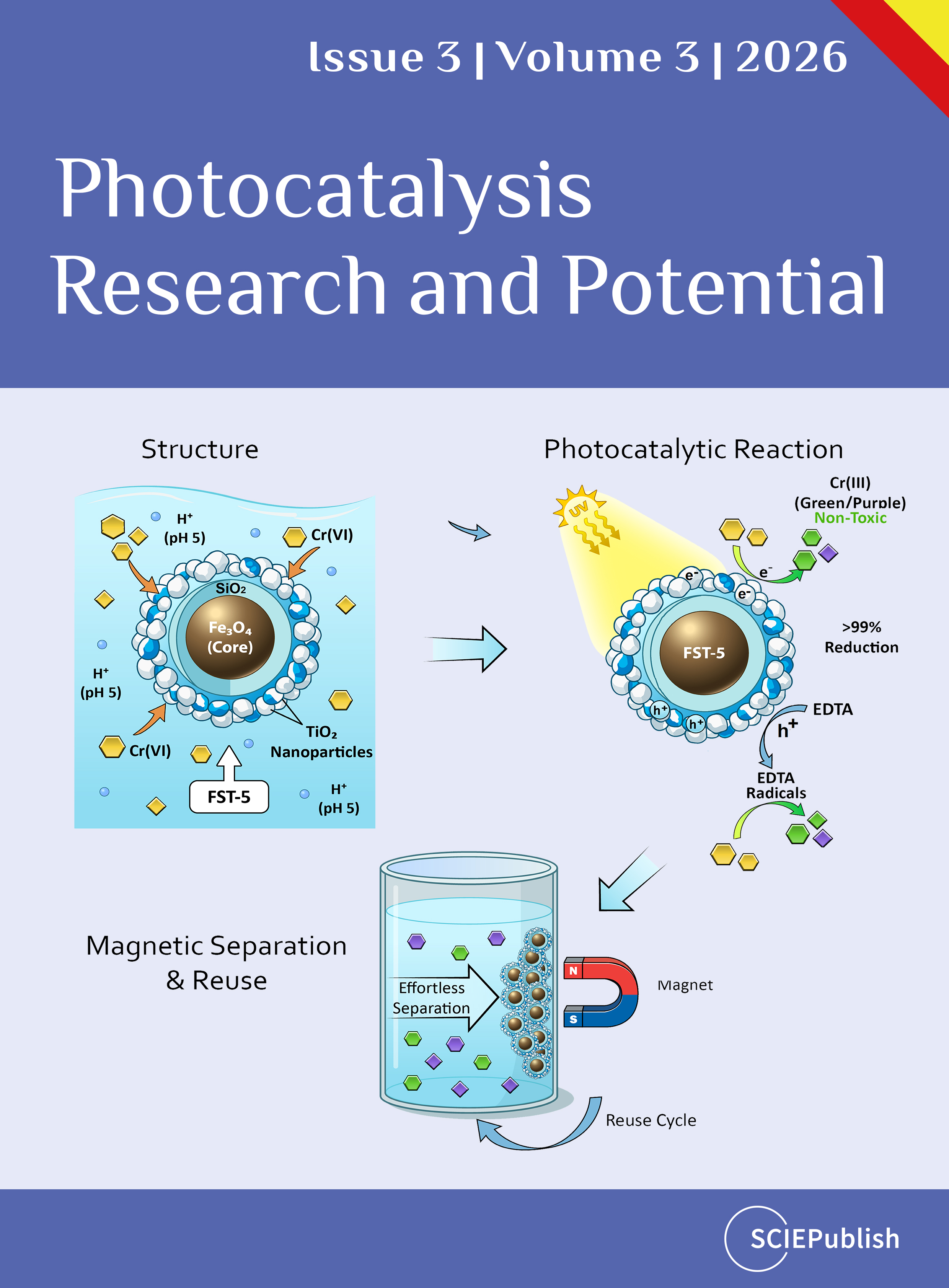
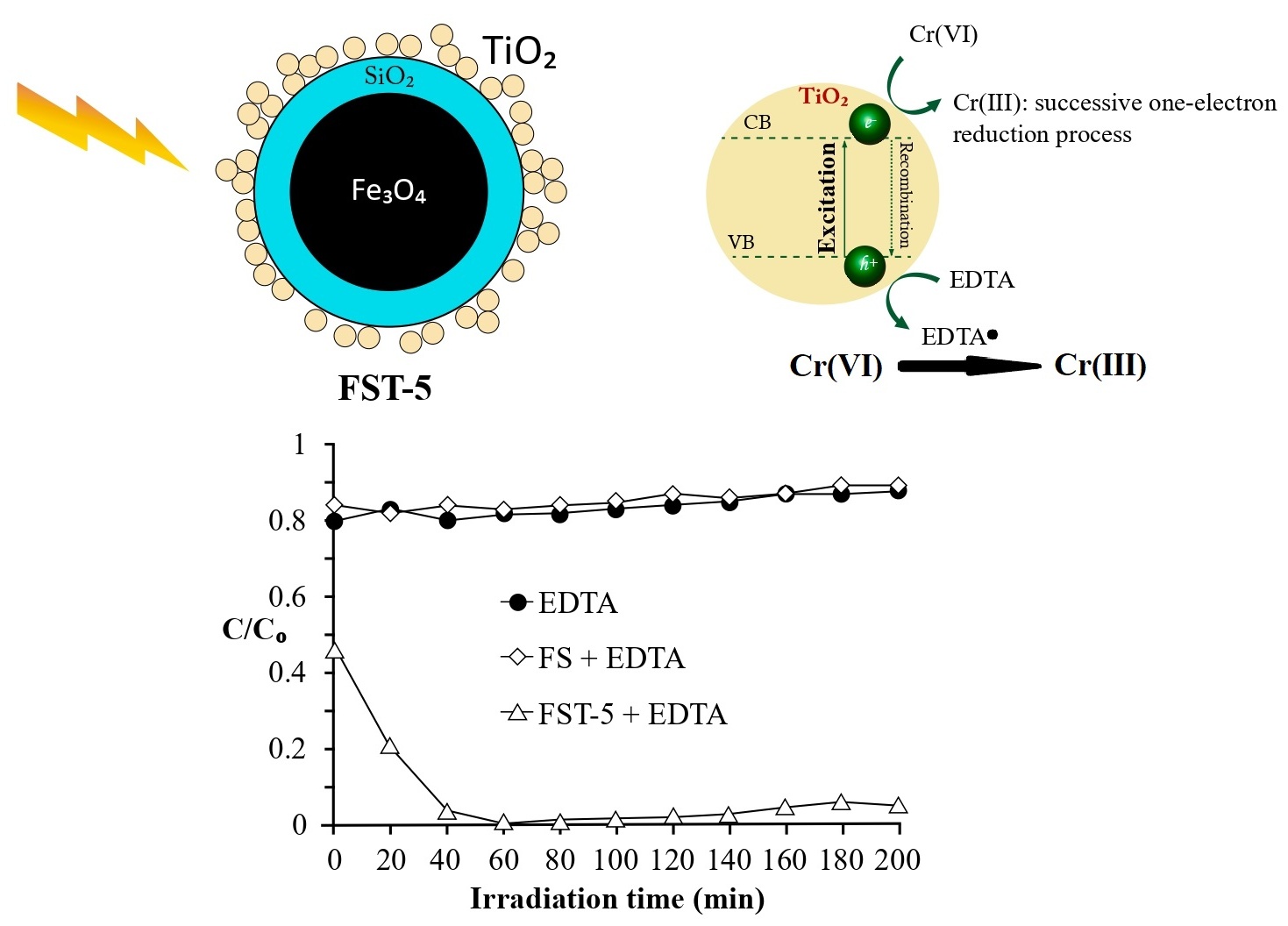
The removal of Cr(VI) anions in aqueous media can be carried out by different methods [8,9,10,11,12]. However, photocatalytic reduction with a semiconductor (mainly TiO2) is one of the most used processes [13,14,15,16], due to its efficiency to reduce small amounts of this anion [17]. In this redox process, hexavalent chromium is converted to Cr(III) species, which are significantly less toxic at low concentrations; on the other hand, Cr(III) is considered an essential trace element for human life [18]. Furthermore, if the redox process is carried out in neutral aqueous media, Cr(III) can precipitate as insoluble Cr(OH)3, which greatly facilitates its separation. However, the subsequent removal of bulk TiO2 is not considered, which could cause serious damage to the environment [19,20,21,22]. To prevent it, TiO2 was immobilized on magnetite particles, Fe3O4, coated with SiO2 (to prevent the reduction of its photocatalytic properties) [23]. This support makes it easy to remove with a magnetic field. This catalyst, called FST-5, has been successfully tested in the degradation of a herbicide present in a commercial formulation [23]. To extend its use as a remediation method, its activity in the photocatalytic reduction of Cr(VI) to Cr(III) was evaluated under varying conditions. To the best of our knowledge, the photocatalytic reduction of Cr(VI) by TiO2 immobilized on magnetic support has not yet been reported by other researchers.
2. Experimental
2.1. Catalyst Synthesis and Characterization
All catalysts were synthesized and characterized by previously reported methods [23]. Briefly, TiO2 was obtained by the sol-gel method. Magnetite particles encapsulated in SiO2 were called FS. The immobilization of TiO2 on the FS support (FST-5 catalyst) was carried out by evaporation of solvents at reduced pressure. Finally, these solids were oven-dried.
2.2. Reagents
Potassium Chromate (K2CrO4) and Ethylenediaminetetraacetic acid (EDTA) were supplied by Timper (La Plata, Argentina) and BDH Chemicals Ltd., (Poole, UK), respectively, and used as received.
2.3. Evaluation of Photocatalytic Activity
The experiments were carried out in duplicate in an open glass reactor, with a 300 W lamp as the irradiation source [23].
25 mg·L−1 K2CrO4 solutions were obtained from a stock solution of 400 mg·L−1, with adequate dilutions with distilled or mains water. The initial pH of these solutions was adjusted to 5 in all experiments with dilute nitric acid, unless otherwise indicated, due to the isoelectric point of FST-5, 5.4 [23]. Under these conditions, the catalyst surface, positively charged, strongly attracts Cr(VI) anions. 2.5 g·L−1 of FST-5 was added to the reactor; at this amount, this solid showed higher photocatalytic activity [23]. Bulk TiO2, either commercial Degussa P25 (Evonik, Rheinfelden, Alemania) or synthesized according to the sol-gel technique described above (s-TiO2), was used for comparative experiments at 1.185 g·L−1, which corresponds to 47.4% of the FST-5 catalyst [23]. Also, FS support was employed at 1.32 g·L−1, according to 52.3% of FST-5 [23].
Before illumination, the suspensions with Cr(VI) anions and different catalysts or FS support were mechanically stirred to establish the adsorption equilibrium. 20 min was enough according to dark absorption experiments (previous equilibrium time). At the end of each experiment, the solids were removed from the samples by magnetic attraction (FST-5 or FS) or 0.20 μm filters (P25 or s-TiO2).
The reuse of FST-5 and s-TiO2 was evaluated over five cycles, each lasting 200 min. Both catalysts were washed with distilled water and immediately reused with a fresh 25 mg·L−1 K2CrO4 solution containing EDTA.
The variation in CrO42− concentration was evaluated by UV spectrometry at λ = 370 nm in a GBC Scientific Equipment (Melbourne, Australia) Cintra 10e double-beam spectrometer.
3. Results and Discussion
3.1. Cr(VI) Reduction-Effect of Adding EDTA
Figure 1 shows the photocatalytic reduction of Cr(VI) on FST-5 and FS catalysts. At the previous equilibrium time, 43% of these anions were adsorbed on this catalyst, as can be seen in this Figure (t = 0 min). The negligible adsorption of Cr(VI) on the magnetic support FS indicates that this compound is mainly deposited on the TiO2 surface immobilised on FST-5. This semiconductor has a positive surface charge due to the acidic aqueous medium.
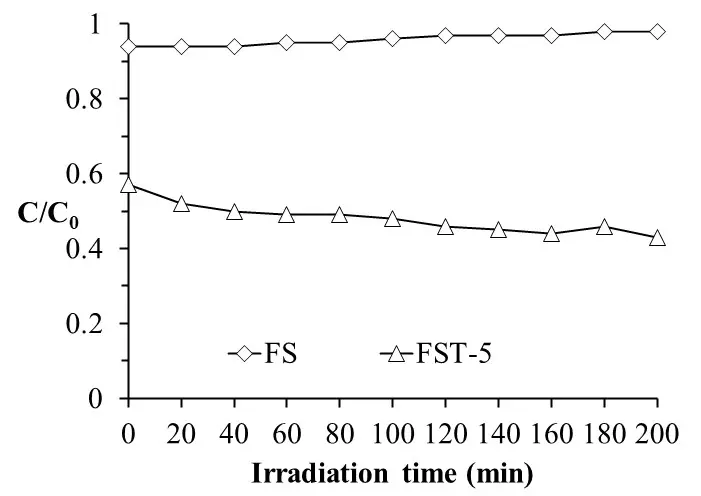
Figure 1. Photocatalytic reduction of Cr(VI) with magnetically separable FST-5 or FS composites. [FS] = 1.32 g·L−1. [FST-5] = 2.5 g·L−1. [Cr(VI)] = 25 mg·L−1. Initial pH = 5 in all experiments.
Also, FS does not possess photocatalytic activity due to its SiO2 shell. This compound has a band gap value between 7.62–9.70 eV [24], which requires wavelengths close to 130 nm to photogenerate electron/hole pairs (e−/h+). These wavelengths are not emitted by the lamp used in these experiments.
At the end of the irradiation time, 43% of the initial Cr(VI) amount remains in the aqueous medium containing FST-5. The incomplete elimination of Cr(VI) is due to the reoxidation of Cr(III) species, obtained by the reduction of this pollutant. On the surface of supported TiO2, the photogenerated h+, or the OH• radicals that they generate, are responsible for this detrimental process [25]. Recombination of e−/h+ pairs is also an unproductive reaction.
To improve the reduction of Cr(VI), a sacrificial agent is needed. These compounds prevent the recombination of e−/h+ pairs, and they can act as electron donors to the reaction system [26]. Among them, EDTA is a very useful sacrificial agent because it has both properties. When h+/OH• react with EDTA molecules, strongly reducing species EDTA• are generated. Thus, photogenerated electrons or EDTA• radicals reduce Cr(VI) to Cr(III) using sequential one-electron reactions [14].
With the FST-5 catalyst, three EDTA/Cr(VI) molar ratios were evaluated (Figure 2). All tested molar ratios significantly reduce the presence of Cr(VI) anions at the end of the reaction time. However, EDTA/Cr(VI) equal to 3:1 is the optimum ratio for the catalyst activity due to the higher initial rate, decreasing more than 99% of the Cr(VI) amount within 60 min. On the other hand, the pH value of these experiments is optimal for EDTA activity [27].
The initial decrease in the Cr(VI) amount (ca. 50%) is due to two combined effects: the adsorption of these anions on FST-5 (previously mentioned), and the spontaneous oxidation of EDTA by Cr(VI) anions in acidic conditions.
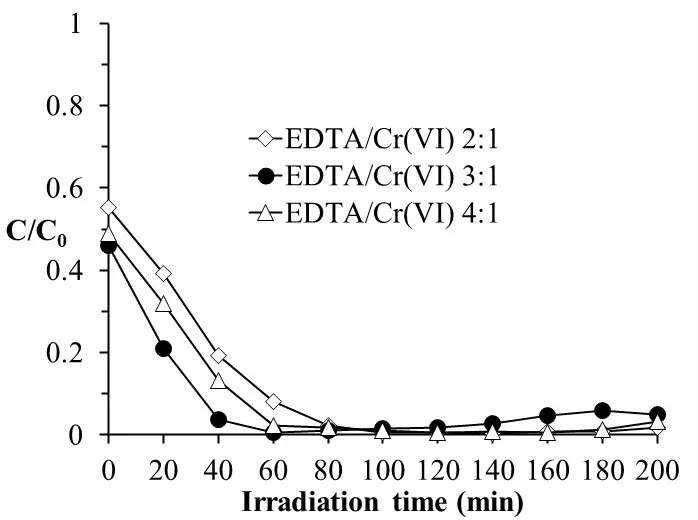
Figure 2. Effect of three EDTA/Cr(VI) molar ratios on the photocatalytic reduction of Cr(VI) with FST-5. [FST-5] = 2.5 g·L−1. [Cr(VI)] = 25 mg·L−1. Initial pH = 5 in all experiments.
Once the optimum EDTA/Cr(VI) molar ratio was determined, it was used to evaluate its influence on the photoactivity of EDTA and FS support to reduce Cr(VI) anions. These results are shown in Figure 3.
Without FST-5, EDTA shows no photoreducing activity on Cr(VI), even when it is combined with FS. FS does not generate e−/h+ pairs because it does not receive the appropriate wavelengths (as mentioned above), and EDTA does not form additional reduction species under irradiation. In dark conditions without FST-5, EDTA shows similar reducing activity (Figure 4).
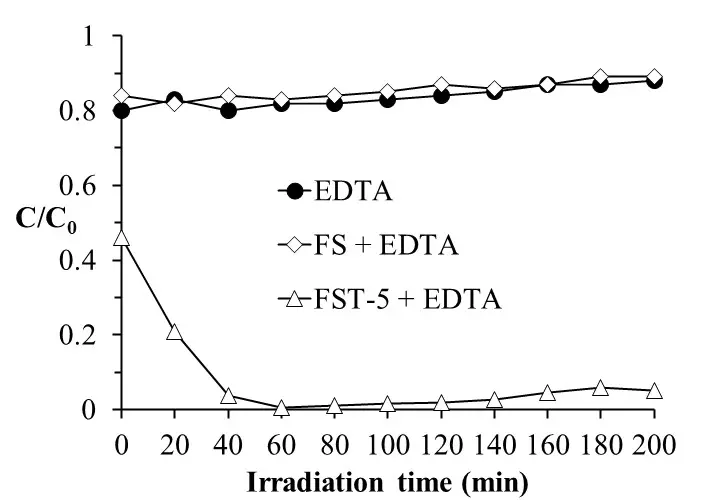
Figure 3. Photoreduction of Cr(VI) with EDTA (without FST-5) or FS + EDTA. Photoactivity of FST-5 (white triangles) was added for comparative purposes. EDTA/Cr(VI) = 3:1. [Cr(VI)] = 25 mg·L−1. [FS] = 1.32 g·L−1. [FST-5] = 2.5 g·L−1. Initial pH = 5 in all experiments.
Six days later, aliquots from photostimulated reactions were analyzed again (Figure 4). In all of them, the Cr(VI) amount additionally decreased by ca. 20%. It indicates that the spontaneous reduction of Cr(VI) by EDTA was active under dark conditions during this period, an effect observed by Boyd-Boland [28]. This fact is very important because it indicates that EDTA can be used as a pretreatment method for watercourses contaminated with Cr(VI) species.
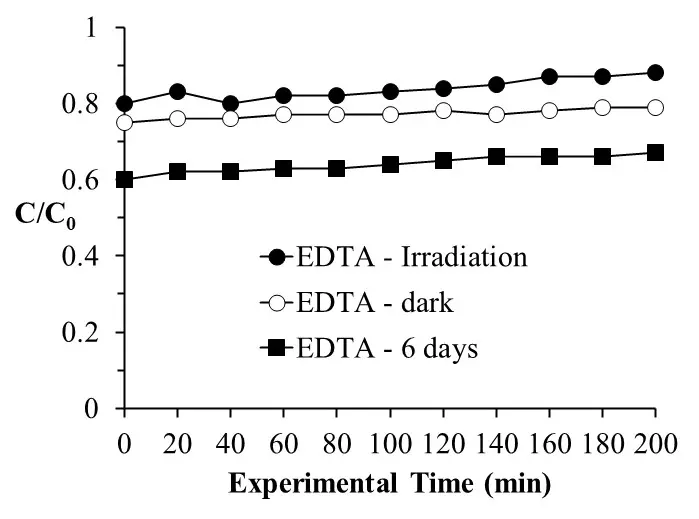
Figure 4. Spontaneous reduction of Cr(VI) by EDTA at different experimental conditions. Photoactivity of EDTA (black circles) was added for comparative purposes. EDTA/Cr(VI) = 3:1. [Cr(VI)] = 25 mg·L−1. Initial pH = 5 in all experiments.
3.2. Reduction of Cr(VI) Anions with Bulk TiO2
Figure 5 shows the activity of the supported TiO2 (in FST-5) in comparison with that corresponding to its equivalent amount of bulk TiO2 (s-TiO2 and P25). The initial reduction of Cr(VI) anions on P25 was lower than that of other catalysts. Due to that, the spontaneous reduction of EDTA is present in all cases, and all TiO2 surfaces are positively charged, the difference lies in the amount of Cr(VI) anions adsorbed on each catalyst. This fact depends on the specific surface of TiO2 particles, mostly in the anatase phase, which is inversely proportional to the average particle size: 15.8 nm for P25 [29], 8.9 and 5.40 nm for s-TiO2 and supported TiO2, respectively [23]. The latter can be more evenly distributed across the entire surface of the FS support, thereby avoiding agglomeration. Therefore, this order explains the observed adsorption effect.
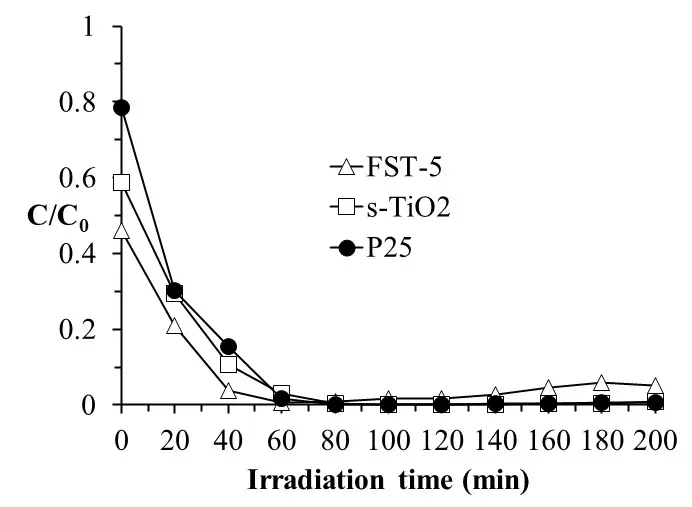
Figure 5. Photocatalytic reduction of Cr(VI) with bulk TiO2 (s-TiO2 and P25). Photoactivity of FST-5 was added for comparative purposes. [s-TiO2] = 1.18 g·L−1 = [P25]; EDTA/Cr(VI) = 3:1 in all experiments. [FST-5] = 2.5 g·L−1. [Cr(VI)] = 25 mg·L−1. Initial pH = 5 in all experiments.
All catalysts showed the same rate of reduction and reached the same final values of Cr(VI) in the solution. However, the magnetic support facilitates the removal of the supported TiO2, which is an advantage over the other two solids.
3.3. Reduction of Cr(VI) Anions in Mains Water
The optimized conditions were applied to reduce these anions in mains water. Initially, its original pH value (6.60) was not modified. The photostimulated reactions were carried out under two conditions: with and without the addition of FST-5 during the adsorption/desorption equilibrium time (Figure 6). In this last condition, the catalyst was added at the start of irradiation to evaluate the effect of EDTA at the equilibrium time, with a pH close to neutrality. At these conditions, the EDTA species HY3− (the triply-deprotonated form of EDTA) predominates, repels Cr(VI) anions, and prevents their reduction, as can be seen in Figure 6. On the other hand, the presence of FST-5 in the equilibrium time slightly decreases the initial concentration of Cr(VI) due to adsorption on the catalyst surface, despite its electrostatic repulsion. In both experiences, only 41% of these anions were reduced at the end of the reaction time.
At pH = 5, the reduction of Cr(VI) in mains water became more efficient. At the beginning of the reaction time, its initial concentration was reduced by 60% due to the aforementioned effects of spontaneous reduction by EDTA and adsorption on the catalyst surface. Also, the oxidation of aqueous organic matter by Cr(VI) anions under acidic conditions should be considered. These three factors could be responsible for the significant decrease in the amount of Cr(VI) at low irradiation times compared to distilled water samples. Consequently, as there are fewer Cr(VI) anions, their reduction occurs at a faster rate, reaching minimum values in solution before 40 min of irradiation.
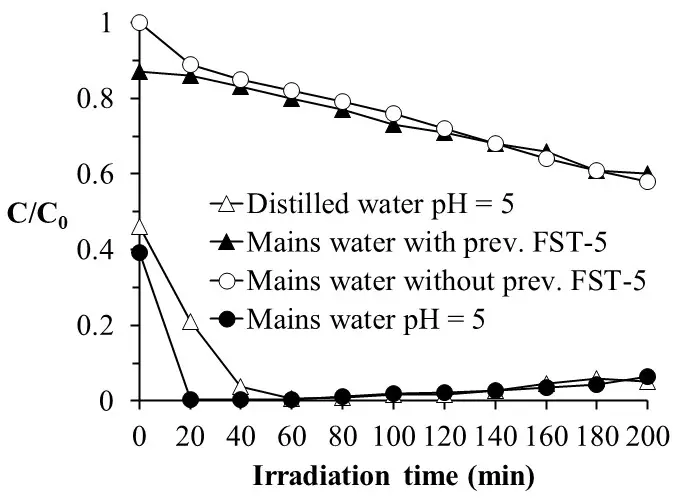
Figure 6. Photoreduction of Cr(VI) in mains water. FST-5 was added in the previous equilibrium time (black triangles) or at the beginning of the irradiation time (white circles). Initial pH = 6.6 in both experiments. In mains water at pH = 5 (black circles), FST-5 was added at the beginning of the previous equilibrium time. Photoactivity of this catalyst in distilled water (white triangles) was added for comparative purposes. EDTA/Cr(VI) = 3:1 in all experiments. [Cr(VI)] = 25 mg·L−1. [FST-5] = 2.5 g·L−1.
FST-5 may be composed of a fraction of magnetite particles that have not been efficiently coated by SiO2. On these bare particles, the Cr(III) species may be adsorbed [30].
3.4. Catalyst Reuse
Recovery and reuse of catalysts are very important processes because they extend their useful life and save costs [31]. Both factors influence the choice of a catalyst for remediating contaminated watercourses.
Figure 7 shows the photocatalytic reduction of Cr(VI) by FST-5 or bulk s-TiO2 over five cycles in distilled water or mains water.
The activity of FST-5 depends on the aqueous medium. In distilled water samples, FST-5 is more active than in mains water samples. This difference may be due to anions present in the latter samples, capable of adsorbing on the surface of supported TiO2, thus decreasing its activity. This fact decreases the electrostatic attraction among Cr(VI) anions or EDTA and supported TiO2. In mains water, EDTA is partially used as a sacrificial agent, and it can form complexes with Cr(III). For this reason, a purple aqueous compound was observed in the supernatant once the fifth cycle had ended. This compound is a Cr(III)-EDTA complex, determined by UV-visible spectrometry at 545 nm; this wavelength was reported by Meichtry et al. (2014) [25]. This complex is formed at pH values between 5 and 6, with a temperature close to 20 °C [32]. These conditions are met in this reaction medium. On the other hand, in distilled water samples with Cr(VI) anions, the aforementioned factors do not occur. EDTA acts as a sacrificial reduction agent, and the Cr(III) species may be deposited on uncoated magnetite particles, as mentioned above.
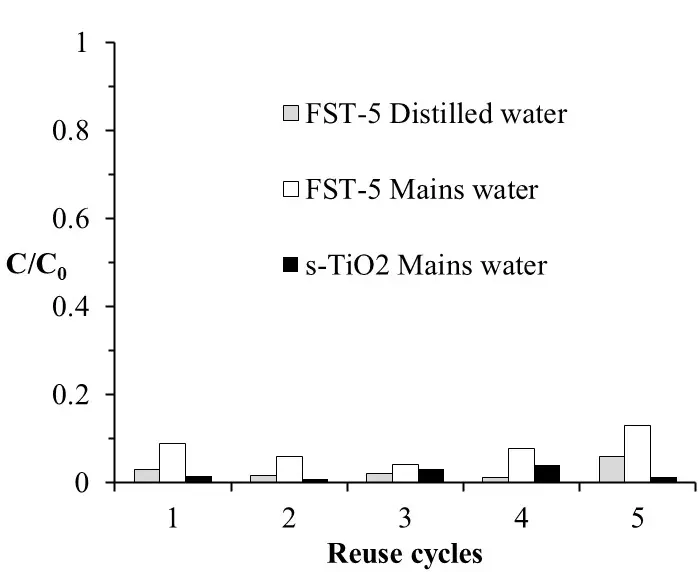
Figure 7. Residual concentration of Cr(VI) after photoreduction process with FST-5 or s-TiO2 at consecutive cycles. pH = 5, EDTA/Cr(VI) = 3:1 in all experiments. [FST-5] = 2.5 g·L−1, [s-TiO2] = 1.18 g·L−1 only in the first cycle.
Finally, Figure 7 shows the reuse cycles of bulk s-TiO2 in mains water. It should be noted that, in all cycles, it has better reduction activity than FST-5, decreasing the initial concentration of Cr(VI) anions by 99% in the last one. Also, a weak purple color of the Cr(III)-EDTA complex was observed in the solution, along with green Cr2O3 on the catalyst surface, as was previously observed by Meichtry et al. (2025) [33]. This last compound intensified its color through successive cycles, which was observed on P25 by Meichtry et al. (2014) [25]. This fact indicates that EDTA significantly participates in the redox reaction, unlike what happens with FST-5. On the other hand, Cr2O3 does not interfere with s-TiO2 activity. Further studies are required to understand these questions.
4. Conclusions
Reduction of Cr(VI) anions by supported TiO2 on magnetite particles coated with SiO2 (FST-5 catalyst), with or without added EDTA, has been evaluated. Both FST-5 and EDTA can reduce these anions, but their individual activity is low. When both are combined in a photostimulated reaction medium, the reduction of Cr(VI) is significantly increased, and the Cr(III) species generated can be deposited on the catalyst support or surface, or form purple complexes with EDTA, depending on the catalyst used.
FST-5 or s-TiO2 can also be reused in successive cycles with mains water, maintaining its activity at significant values. However, only FST-5 can be easily removed from the treated aqueous medium, indicating its suitability for application in watercourses contaminated with Cr(VI) anions.
Acknowledgments
We gratefully acknowledge Gaston Sham for his technical assistance in preparing the Graphical Abstract.
Author Contributions
Conceptualization, E.L.S. and E.M.F.T.; Methodology, J.P.M. and C.L.H.; Validation, J.P.M.; Formal Analysis, J.P.M. and C.L.H.; Investigation, J.P.M. and C.L.H.; Resources, E.L.S.; Writing—Original Draft Preparation, J.P.M.; Writing—Review & Editing, J.P.M.; Visualization, J.P.M. and E.M.F.T.; Supervision, E.L.S. and E.M.F.T.; Project Administration, E.L.S. and E.M.F.T.; Funding Acquisition, E.L.S. and E.M.F.T.
Ethics Statement
Not applicable.
Informed Consent Statement
Not applicable.
Data Availability Statement
Not applicable.
Funding
This research was funded by CONICET, grant number PUE 2018 (22920180100028CO), and Consejo de Investigación de la Universidad Nacional de Salta, grant number A2754.
Declaration of Competing Interest
The authors declare that they have no known competing financial interests or personal relationships that could have appeared to influence the work reported in this paper.
References
-
Tchounwou PB, Yedjou CG, Patlolla AK, Sutton DJ. Heavy Metal Toxicity and the Environment. In Molecular, Clinical and Environmental Toxicology; Luch A, Ed.; Springer: Berlin/Heidelberg, Germany, 2012; pp. 133–164. DOI:10.1007/978-3-7643-8340-4_6 [Google Scholar]
-
César dos Santos Lima J, Gazonato Neto AJ, de Pádua Andrade D, Freitas EC, Moreira RA, Miguel M, et al. Acute toxicity of four metals to three tropical aquatic invertebrates: The dragonfly Tramea cophysa and the ostracods Chlamydotheca sp. and Strandesia trispinosa. Ecotoxicol. Environ. Saf. 2019, 180, 535–541. DOI:10.1016/j.ecoenv.2019.05.018 [Google Scholar]
-
Koller M, Saleh HM. Introductory Chapter: Introducing Heavy Metals. In Heavy Metals; Saleh H, Ed.; IntechOpen: Rijeka, Croatia, 2018; pp. 3–11. DOI:10.5772/intechopen.74783 [Google Scholar]
-
Wani AL, Ara A, Usmani JA. Lead toxicity: A review. Interdiscip. Toxicol. 2015, 8, 55–64. DOI:10.1515/intox-2015-0009 [Google Scholar]
-
Chen QY, Murphy A, Sun H, Costa M. Molecular and epigenetic mechanisms of Cr(VI)-induced carcinogenesis. Toxicol. Appl. Pharmacol. 2019, 377, 114636. DOI:10.1016/j.taap.2019.114636 [Google Scholar]
-
Sun H, Brocato J, Costa M. Oral Chromium Exposure and Toxicity. Curr. Environ. Health Rep. 2015, 2, 295–303. DOI:10.1007/s40572-015-0054-z [Google Scholar]
-
VonHandorf A, Sánchez-Martín FJ, Biesiada J, Zhang H, Zhang X, Medvedovic M, et al. Chromium disrupts chromatin organization and CTCF access to its cognate sites in promoters of differentially expressed genes. Epigenetics 2018, 13, 363–375. DOI:10.1080/15592294.2018.1454243 [Google Scholar]
-
Kumar V, Dwivedi SK. Hexavalent chromium reduction ability and bioremediation potential of Aspergillus flavus CR500 isolated from electroplating wastewater. Chemosphere 2019, 237, 124567. DOI:10.1016/j.chemosphere.2019.124567 [Google Scholar]
-
Liu H, Wang Y, Zhang H, Huang G, Yang Q, Wang Y. Synchronous detoxification and reduction treatment of tannery sludge using Cr (VI) resistant bacterial strains. Sci. Total Environ. 2019, 687, 34–40. DOI:10.1016/j.scitotenv.2019.06.093 [Google Scholar]
-
Xu Y, Chen J, Chen R, Yu P, Guo S, Wang X. Adsorption and reduction of chromium(VI) from aqueous solution using polypyrrole/calcium rectorite composite adsorbent. Water Res. 2019, 160, 148–157. DOI:10.1016/j.watres.2019.05.055 [Google Scholar]
-
Yu YY, Cheng QW, Sha C, Chen YX, Naraginti S, Yong YC. Size-controlled biosynthesis of FeS nanoparticles for efficient removal of aqueous Cr(VI). Chem. Eng. J. 2020, 379, 122404. DOI:10.1016/j.cej.2019.122404 [Google Scholar]
-
Zhang L, Zhang Y, Gao X, Xu C. Insights on the effects of pH and Fe(II) regeneration during the chromate sequestration by sulfidated zero-valent iron. Chem. Eng. J. 2019, 378, 122115. DOI:10.1016/j.cej.2019.122115 [Google Scholar]
-
Islam JB, Furukawa M, Tateishi I, Katsumata H, Kaneco S. Photocatalytic Reduction of Hexavalent Chromium with Nanosized TiO2 in Presence of Formic Acid. ChemEngineering 2019, 3, 33. DOI:10.3390/chemengineering3020033 [Google Scholar]
-
Litter MI. Last advances on TiO2-photocatalytic removal of chromium, uranium and arsenic. Curr. Opin. Green Sustain. Chem. 2017, 6, 150–158. DOI:10.1016/j.cogsc.2017.04.002 [Google Scholar]
-
Loryuenyong V, Jarunsak N, Chuangchai T, Buasri A. The Photocatalytic Reduction of Hexavalent Chromium by Controllable Mesoporous Anatase TiO2 Nanoparticles. Adv. Mater. Sci. Eng. 2014, 2014, 348427. DOI:10.1155/2014/348427 [Google Scholar]
-
Malakootian M, Mansuri F. Hexavalent chromium removal by titanium dioxide photocatalytic reduction and the effect of phenol and humic acid on its removal efficiency. Int. J. Environ. Health Eng. 2015, 4, 19. DOI:10.4103/2277-9183.157720 [Google Scholar]
-
Ngo AB, Nguyen HL, Hollmann D. Criticial Assessment of the Photocatalytic Reduction of Cr(VI) over Au/TiO2. Catalysts 2018, 8, 606. DOI:10.3390/catal8120606 [Google Scholar]
-
Monga A, Fulke AB, Dasgupta D. Recent developments in essentiality of trivalent chromium and toxicity of hexavalent chromium: Implications on human health and remediation strategies. J. Hazard. Mater. Adv. 2022, 7, 100113. DOI:10.1016/j.hazadv.2022.100113 [Google Scholar]
-
Brown DM, Danielsen PH, Derr R, Moelijker N, Fowler P, Stone V, et al. The mechanism-based toxicity screening of particles with use in the food and nutrition sector via the ToxTracker reporter system. Toxicol. Vitr. 2019, 61, 104594. DOI:10.1016/j.tiv.2019.104594 [Google Scholar]
-
Liu S, Zeng P, Li X, Thuyet DQ, Fan W. Effect of chronic toxicity of the crystalline forms of TiO2 nanoparticles on the physiological parameters of Daphnia magna with a focus on index correlation analysis. Ecotoxicol. Environ. Saf. 2019, 181, 292–300. DOI:10.1016/j.ecoenv.2019.06.014 [Google Scholar]
-
Thiagarajan V, Pavani M, Archanaa S, Seenivasan R, Chandrasekaran N, Suraishkumar G, et al. Diminishing bioavailability and toxicity of P25 TiO2 NPs during continuous exposure to marine algae Chlorella sp. Chemosphere 2019, 233, 363–372. DOI:10.1016/j.chemosphere.2019.05.270 [Google Scholar]
-
Wang J, Wang J, Liu Y, Nie Y, Si B, Wang T, et al. Aging-independent and size-dependent genotoxic response induced by titanium dioxide nanoparticles in mammalian cells. J. Environ. Sci. 2019, 85, 94–106. DOI:10.1016/j.jes.2019.04.024 [Google Scholar]
-
Montañez JP, Heredia CL, Sham EL, Farfán Torres EM. Photodegradation of herbicide Metsulfuron-methyl with TiO2 supported on magnetite particles coated with SiO2. J. Environ. Chem. Eng. 2018, 6, 7402–7410. DOI:10.1016/j.jece.2018.07.006 [Google Scholar]
-
Güler E, Uğur G, Uğur Ş, Güler M. A theoretical study for the band gap energies of the most common silica polymorphs. Chin. J. Phys. 2020, 65, 472–480. DOI:10.1016/j.cjph.2020.03.014 [Google Scholar]
-
Meichtry JM, Colbeau-Justin C, Custo G, Litter MI. Preservation of the photocatalytic activity of TiO2 by EDTA in the reductive transformation of Cr(VI). Studies by Time Resolved Microwave Conductivity. Catal. Today 2014, 224, 236–243. DOI:10.1016/j.cattod.2013.10.021 [Google Scholar]
-
Singh R, Dutta S. Integrated photocatalytic hydrogen production and pollutants or wastes treatment: Prospects and challenges. In Sustainable Fuel Technologies Handbook; Dutta S, Hussain C, Eds.; Academic Press: London, UK, 2021; pp. 541–549. DOI:10.1016/B978-0-12-822989-7.00020-2 [Google Scholar]
-
Su EC, Huang BS, Liu CC, Wey MY. Photocatalytic conversion of simulated EDTA wastewater to hydrogen by pH-resistant Pt/TiO2–activated carbon photocatalysts. Renew. Energy 2015, 75, 266–271. DOI:10.1016/j.renene.2014.09.052 [Google Scholar]
-
Boyd-Boland A. Applications of Solid Phase Microextraction; Royal Society of Chemistry: London, UK, 2007. [Google Scholar]
-
Comarmond MJ, Payne TE, Harrison JJ, Thiruvoth S, Wong HK, Aughterson RD, et al. Uranium Sorption on Various Forms of Titanium Dioxide—Influence of Surface Area, Surface Charge, and Impurities. Environ. Sci. Technol. 2011, 45, 5536–5542. DOI:10.1021/es201046x [Google Scholar]
-
Shahriari T, Nabi Bidhendi G, Mehrdadi N, Torabian A. Effective parameters for the adsorption of chromium(III) onto iron oxide magnetic nanoparticle. Int. J. Environ. Sci. Technol. 2014, 11, 349–356. DOI:10.1007/s13762-013-0315-z [Google Scholar]
-
Miceli M, Frontera P, Macario A, Malara A. Recovery/Reuse of Heterogeneous Supported Spent Catalysts. Catalysts 2021, 11, 591. DOI:10.3390/catal11050591 [Google Scholar]
-
Balaska F, Bencheikh-Lehocine M, Meniai AH, Chikhi M, Bouledjouidja A. Removal of Chromium (III) Ions from Aqueous Solutions by Polymer Assisted Ultrafiltration Using Experimental and Calculation Approach. Part 1: Optimization of Complexation Conditions. Energy Procedia 2012, 18, 622–631. DOI:10.1016/j.egypro.2012.05.075 [Google Scholar]
-
Meichtry JM, Rodríguez HB, Grela MA, San Román E, Litter MI. Correlation between Adsorption and Photocatalysis in the Aqueous System Cr(VI)-TiO2. Photocatal. Res. Potential 2025, 2, 10015. DOI:10.70322/prp.2025.10015 [Google Scholar]