
Performance-Based Topology Optimization of Main Steel Girders in Composite Bridges with Multi-Criteria Environmental Sustainability Evaluation

Performance-Based Topology Optimization of Main Steel Girders in Composite Bridges with Multi-Criteria Environmental Sustainability Evaluation

Received: 10 July 2026 Revised: 26 August 2026 Accepted: 07 September 2026 Published: 10 September 2026

© 2026 The authors. This is an open access article under the Creative Commons Attribution 4.0 International License (https://creativecommons.org/licenses/by/4.0/).
1. Introduction
In modern bridge design, structural optimization has become necessary, particularly for composite steel-concrete structures, where structural efficiency, sustainability, and economical use of materials are of utmost importance. The need to optimize steel beams in composite bridges has gained increased interest because it can lead to a reduction in material usage and improved serviceability [1,2,3]. Reinforced concrete piers, steel girders, and concrete decks form the basic building blocks of the composite bridge. The use of steel girders for transferring loads in a composite bridge can save money on construction and maintenance if the right design and selection of steel girders are used [4,5].
Topology optimization techniques are used by engineers to redistribute materials on the cross-section of a composite steel beam through the systematic removal of non-essential materials while maintaining or improving the structural strength and stiffness [6,7,8,9]. The Solid Isotropic Material with Penalization (SIMP), as indicated by Sigmund [6] and Bendsøe [7], is one of the most commonly used methods in this sector because it provides a balance between design flexibility and computing efficiency. Recent studies have indicated how well SIMP minimizes weight by developing an optimum structure to maintain an acceptable stress distribution within steel buildings subjected to expected (dead/live) and ultimate loads [8,9]. It also provides the ability to use Eurocode-based combinations of loads to ensure that optimized designs are designed with current structural safety requirements in mind [10].
In bridge engineering, current designs focus on mechanical elements and sustainability. The production of structural steel uses a massive amount of energy; therefore, as materials are removed from use, embodied CO2 emissions will decrease accordingly [11,12]. Recent studies have shown that topology optimization has the potential to reduce life cycle costs and CO2 emissions while maintaining structural durability [13,14,15]. The goal of global sustainable construction can be aided by paving the way for more sustainable construction through the design of steel beams in composite bridges to achieve the same load and deflection distribution using significantly less material.
Finite Element Analysis (FEA) serves as the computational basis for structural optimization. The accurate evaluation of the stress and displacement fields through high-fidelity FEA models allows for the most accurate results possible for topology optimization by guiding either the calculation of where the material should be removed or redistributed [16,17,18]. The frameworks developed by Sigmund and Andreassen [6,8] illustrate how FEA can be optimally used for quick iterations on complex geometries, such as bridge girders, for the efficient implementation of topology optimization. The methods facilitate the integrated assessment of concrete decks and steel beams in composite bridge systems, such that the optimized steel sections function appropriately with other structural components.
The development of structural optimization started with the use of various researchers to create the foundations of intermediate representations for the ideal material layout of a structure [7] and a variety of optimization methods based on material and structural attributes [19] to create a basis for fundamental techniques for the development of state-of-the-art computational techniques used on bridge girders. Rozvany continued to apply optimization methods to large-scale civil engineering projects [20]. Structural optimization methods have been developed and applied in a multi-scale context, where the cross-sectional efficiency of materials is optimized locally, and the performance of the overall structure is optimized at the global level [21,22].
Topology optimization also provides an opportunity for designers and creators to create unique structures. By generating non-intuitive cross-sections, engineers can achieve superior load distribution, decreased weight, and enhanced appearance [23]. Recent research has shown that an improved beam shape can carry the same service loads with less deflection and bending moments than conventional beams while meeting the requirements of Eurocode [8,15]. The studies discussed above identify the advantages of innovative design and structural efficiencies.
The material distribution inside a beam cross-section is modified through an iterative optimization process based on deformation and stress requirements. Materials are maintained in regions with high concentrations of stress, whereas areas with low levels of stress gradually decrease. This strategy is designed to ensure that important performance criteria are not only maintained but often improved, including maximum bending stress, deflection limits, and lateral-torsional stability [5,9]. In addition, improving the robustness of optimal designs by accounting for uncertainty in material properties, changes in loads, and construction tolerances, more recent research indicates an increased emphasis on probabilistic and reliability-based approaches [11,14,15].
Owing to the high costs of maintenance, inspection, and retrofitting (i.e., the potential for future problems owing to design limitations), the consideration of life-cycle costs is extremely important for bridges. Life-cycle costs can be minimized by utilizing optimized cross sections and reduced material, as well as using more lightweight beams, as they can create lower loads on the foundation, allowing for less concrete and reduced CO2 emissions in piers and abutments [11,12]. This comprehensive view of reusing and recycling structural components at the end of their useful life complements the principles of a circular economy [13].
By utilizing Machine Learning Technology, such as topology optimization, new-age structural engineers can increase their design iteration rate while simultaneously improving the overall quality of their designs [18]. The use of computational tools has enabled engineers to automate the evaluation of hundreds of geometrically and materially efficient steel beam configurations through techniques that integrate FEA and SIMP methodologies as well as Generative Design Methods. In modern Bridge Engineering, where consideration of complex geometry and multiple project requirements is common, these methods are essential [15,18].
In conclusion, these elements (i.e., limiting material consumption, assuring compliance with Eurocode regulations, reducing environmental impact, and achieving structural efficiency) are integrated into the topology and size optimization process of steel composite bridge beams. Engineers can develop designs that substantially reduce material consumption while still achieving stress and deflection characteristics comparable to those of traditional structural methods using the SIMP method of topology optimization through Virtual Finite Element Analysis (FEA). Numerous researchers, such as Sigmund [6], Bendsøe and Kikuchi [7], Rozvany, Zhou and Birker [20], Wu, Sigmund and Groen [15], have provided evidence that these methods enhance both the sustainability of materials and the mechanical performance of structures. New tools that leverage machine learning are available to further increase the design space for structural engineers by enabling the fast exploration of alternative beam geometries that provide both economic and environmental advantages. Recent advances in computer modeling and simulation have demonstrated that all three engineering disciplines, namely, computational mechanics, structural engineering, and sustainability, are merging with respect to their importance to today’s bridges because of the role that topology optimization plays in creating strong, light, and sustainable structures.
There has been significant improvement in the optimization frameworks of steel–concrete composite bridges in recent years, but there are still some significant research gaps that could benefit from new development. In the past, most studies were based on simplified or pre-designed cross-sectional shapes (box girders or typical I-girder), and cost, environmental impact, and serviceability constraints were investigated using metaheuristic methods. While the topological optimization with multi-criteria environmental sustainability evaluation has been studied, the integration of high-fidelity finite element analysis (FEA) into the optimization loop for the design of a main girder structure has not been attempted by many studies, and many optimization techniques still use surrogate models, simplified beam representations, or two-stage procedures, which cannot capture the interactions between steel girders and concrete slabs. Additionally, more sophisticated FEA model updating techniques point to the fact that there are still ongoing uncertainties in the modelling of the interfaces, bearing conditions, and cross-frame effects, but they are not usually integrated into girder optimization methods. There is a lack of rigorous multi-objective optimization of the main steel girders that considers realistic system-level behavior from detailed 3D FEA, structural performance, cost efficiency, and sustainability metrics. The novelty of the proposed work is the combination of a high-resolution FEA environment focusing on compliance minimization subject to a volume constraint with a multi-criteria evaluation framework (as far as balancing structural performance, cost efficiency, and carbon footprint reduction). Such a method offers an alternative to computational optimization for bridge engineering, providing more accurate, more fidelity, and more applicable design solutions than existing methods in the literature that rely on surrogate approaches.
2. Methodology
In this study, the Topology Optimization of composite steel beam girders was performed using an optimization framework based on a design parameter density-based structural optimization rule.
2.1. Structural Optimization Strategy for Composite Steel Bridge Girders
The basic method behind the design parameter configuration in the Topology Optimization of composite steel beam girders is a methodology that allows controlled modification of the structure in an expected design volume based on the design criteria through the process of Solid Isotropic Material with Penalization (SIMP), enabling systematic evaluation of the material design area for the purpose of increasing structural performance.
Topology-based design optimization (topology was previously known as tessellation) is much more versatile than traditional sizing methods that are often employed in bridge engineering; it allows material redistribution across steel girders while meeting strong structural properties, serviceability, and durability requirements. In current practice, recent publications demonstrate that density-based topology optimization is becoming more frequently utilized by civil engineers to perform large-scale designs, especially in bridges [24,25].
The optimization process outlined in this study involved four major steps. The initial step is to define the design objective, followed by defining the overall application area, creating a geometric model, analyzing all materials used in the foundation design, and finally, performing the final design verification in accordance with all relevant codes for bridges.
2.2. Definition of the Optimization Problem
The first step of the proposed methodology is to define the structural optimization problem. The goal, constraints, and design domain of the problem must be properly de-fined for convergence to a feasible and viable solution.
2.2.1. Design Domain
The design domain is the steel girder of the composite bridge. For structural analysis, the reinforced concrete slab was included in the analysis and retained a constant geometric shape and material properties owing to its composite action. Therefore, the only consideration in the optimization process is the redistribution of steel material within the confines of the girder’s previously predetermined geometry, clearance, and manufacturing constraints [26,27].
2.2.2. Objective of Optimization
The objective of the structural optimization process is to maximize the structural efficiency by minimizing the compliance (maximizing the stiffness) and minimizing the total amount of steel consumed. As a result, the optimization method produces a steel girder that weighs less while supporting the same or better structural capacity under the applied loading conditions, as required by the design of the bridge structure.
In many cases, the addition of sustainability considerations as part of the current research on bridge optimization could allow for the use of cost or environmental indicators as part of the overall objectives, depending on the goals of the research project [28].
2.2.3. Design Constraints
The structural viability of the generated girder layouts is assessed against important performance criteria specified in standard design codes (EC3 and EC4), in addition to volume limits and compliance minimization that are directly incorporated into the optimization kernel. These requirements in an all-encompassing design workflow consist of:
-
-
Ultimate Limit State (ULS) requirements, evaluated via equivalent von Mises stress criteria to prevent material yielding,
-
-
Serviceability Limit State (SLS) requirements, evaluated through vertical deflection limits to ensure adequate structural stiffness,
-
-
Material volume constraints to ensure material efficiency and sustainability.
The optimization algorithm is directly driven by compliance minimization subject to volume limitations, but the final optimized solutions are guaranteed to be structurally viable by comparing the resulting stress and deflection fields against EC3 and EC4 limits [26,27].
2.3. Finite Element Modeling of the Steel Beam of the Composite Bridge System
The steel beam of the composite bridge girder was analyzed using a three-dimensional finite element model (3D model).
Quantitatively, the models will be based on:
-
-
The composite bridge system’s steel beam exhibits nonlinear material behavior.
-
-
The interaction between shear connectors is shown.
-
-
Stability effects are captured by geometric nonlinearity.
-
-
Various load scenarios, such as traffic loads and permanent loads.
The optimization process is closely related to the finite element solver because stiffness, stress, and displacement are evaluated for every iteration through structural analysis while executing the optimization process. This process of repeated analysis and evaluation is fundamental to any structural optimization technique [26].
2.4. SIMP-Based Topology Optimization Procedure
The base structural optimization methodologies are the “Solid Isotropic Material with Penalization” (SIMP) method, which contains a variable for the density of the finite element; the domain for steel girders is divided into finite elements, and a density variable indicates the presence of material (i.e., it indicates whether there is steel or not).
In optimizing materials:
-
It is assumed that the initial distribution of material is uniform.
-
Finite element analysis is performed to compute the structural response due to loading.
-
Each component’s effect on overall structural performance is considered.
-
Materials are progressively reallocated to locations of highest stress, with less density given to areas of lower structural effect.
-
Methods of Penalization are used to promote a distinct and solid-void solution while evading regions of intermediate density.
In density-based topology optimization, filtering and regularization approaches are employed to stabilize the numerical solution procedures by eliminating the so-called “checkerboard” or “mesh” dependent patterns and numerical instabilities during the optimization process [29].
At each iteration of solving the topology optimization problem, a sensitivity analysis is performed to determine how minor variations in the element density contribute to achieving the overall design goals. Therefore, this information can be used to ensure that convergence is achieved effectively and to direct the redistribution of material for use in the optimization process.
2.5. Sensitivity Analysis and Optimization Algorithm
At every iteration of the optimization process, a sensitivity analysis is conducted to determine how even the most minor change in any element density will affect the total objective. Sensitivity analysis provides essential data to ensure effective convergence, thereby directing the redistribution of the material.
For the large-scale topology optimization problems investigated in this study, the optimization updates used a gradient-based approach (specifically, the “Method of Moving Asymptotes” (MMA), which has proven successful in many structural optimization applications [30]).
Optimization process involves:
-
Setting up the density variables
-
FEM analysis
-
Objective and constraint evaluations
-
Sensitivity computation
-
Updating the densities
-
Applying filtering and projection
-
Verification of convergence
This systematic procedure allows for computational efficiency and numerical stability, even for extremely large bridge models, in addition to conventional bridge structures that are abundant in construction projects.
2.6. Post-Processing and Structural Verification
The resulting mass density distribution was analyzed after completing the optimization process to create a usable girder design. Topology optimization may result in geometries that are unmanufacturable; therefore, there will be a rationalization phase after the design of the optimized layout has been developed into a viable configuration for a steel girder.
The rebuild girder is then:
-
-
Redesigned in an environment with improved finite elements
-
-
Confirmed using nonlinear analysis
-
-
Compared to all applicable code provisions
-
-
Assessed in terms of performance enhancement and weight loss
This final stage of testing ensures that the improved design is both practically usable under actual bridge-building conditions and structurally sound [26,27].
2.7. Solving Structural Optimization Problems Through Mathematical Formulation
The Solid Isotropic Material with Penalization (SIMP) approach was used to optimize the structural performance of the steel beam in a composite steel-concrete bridge girder, with the main results being both resource savings and optimization of the behavior of the structure under any form of loading to which it is subjected. While the reinforced concrete slab is regarded as a non-design domain with set mechanical properties, the goal is to identify the ideal material distribution within a predetermined design domain Ω, that corresponds to the steel girder area.
N finite elements are used to discretize the design domain. Every component has a density variable attached to it.
|
```latex{x}_{{e}}\in \left[0, 1\right]{,\,\,\,\,\, e}=1, 2,\text{ ...,}\text{ }{N}``` |
(1) |
where:
-
-
Solid steel is represented by xe = 1
-
-
Void is represented by xe = 0.
-
-
An intermediate destiny is represented by 0 < xe < 1
The optimization issue is stated as:
| ```latex\underset{\text{x }}{\text{min }{c}}\left(\mathbf{x}\right)={\mathbf{F}}^{\mathrm{T}}\cdot \mathbf{u},``````latex\text{subject to:}``````latex\mathbf{Κ}\left(\mathbf{x}\right)\cdot \mathbf{u}=\mathbf{F}\text{,}``````latex\sum_{{e=}\text{1}}^{N}{v}_{e}\cdot {x}_{e}\le \varphi \cdot {V}_{0},```
```latex{x}_{{min}}\le {x}_{e}\le \text{1,}``` |
(2) |
where:
-
-
The volume of element e is represented by ve
-
-
V0 is the overall volume of the design.
-
-
φ is the required volume fraction of the filler.
2.7.1. Material Interpolation and Penalization
The Young’s modulus of each element was interpolated using the SIMP technique as follows:
|
```latex{\mathbf{E}}_{{e}}\left({x}_{e}\right)={{x}_{e}}^{\mathrm{p}}\cdot {\mathbf{E}}_{0}``` |
(3) |
where:
-
-
The Young’s modulus of structural steel is represented by Ε0
-
-
The penalization factor, p, is usually equal to 3 (typically p = 3)
Therefore, discrete 0–1 solutions, which are necessary for manufacturing steel bridge components, are naturally encouraged by the optimization method [24,27,31].
2.7.2. Finite Element Formulation
Each element’s stiffness matrix is written as:
|
```latex{\mathbf{K}}_{{e}}\left({x}_{e}\right)={{x}_{e}}^\text{p}\cdot {{\mathbf{K}}_{e}}^{0}``` |
(4) |
where:
-
-
The solid steel stiffness matrix is denoted by $${{\mathbf{K}}_{e}}^{0}$$
The global stiffness matrix is put together as follows:
|
```latex\mathbf{K}\left(\mathbf{x}\right)=\sum_{{e}\text{=1}}^{N}{{x}_{e}}^{\mathrm{p}}\cdot {{{\mathbf{K}}}_{e}}^{0}``` |
(5) |
Regarding the composite bridge beam:
|
```latex{\mathbf{K}}_{\text{total}}={\mathbf{K}}_{\text{steel}}\left(\mathbf{x}\right)+{\mathbf{K}}_{\text{concrete}}+{\mathbf{K}}_{\text{interface}}``` |
(6) |
The shear connection stiffness is represented by the interface matrix, which guarantees a composite interaction between the concrete and steel [32,33,34,35].
2.7.3. Compliance Objective Function
Structural compliance is defined as:
|
```latex\text{c}\left(\mathbf{x}\right)={\mathbf{F}}^{\mathrm{T}}\cdot \mathbf{u},``` |
(7) |
Additionally, employing equilibrium (2):
|
```latex\text{c}\left(\mathbf{x}\right)={\mathbf{u}}^{\mathrm{T}}\cdot {\mathbf{K}}_{\left(\mathbf{x}\right)}\cdot \mathbf{u}=\sum_{{e=}\text{1}}^{N}{{x}_{e}}^{\mathrm{p}}\cdot {{\bm{u}}_{e}}^{\mathrm{T}}\cdot {{\mathbf{K}}_{e}}^{0}\cdot {\bm{u}}_{e}``` |
(8) |
The total strain energy is represented by the compliance. Reducing compliance guarantees that the material is removed from low-energy zones and kept in high-stress areas (such as the bottom flange at midspan) [26,27].
2.7.4. Sensitivity Analysis
In relation to density, the derivative of compliance is:
|
```latex\frac{\partial c}{\partial {x}_{e}}=-\mathrm{p}\cdot {{x}_{e}}^{\mathrm{p}-1}\cdot {{\bm{u}}_{e}}^{\mathrm{T}}\cdot {{\mathbf{K}}_{e}}^{0}\cdot {\bm{u}}_{e}``` |
(9) |
The strain energy density of each element is represented by this phrase. During optimization, areas with minimal energy contributions typically lose material [26,27].
The volume constraint’s derivative is:
|
```latex\frac{\partial V}{\partial {x}_{e}}={v}_{e}``` |
(10) |
2.7.5. Optimality Criteria Update
|
```latex\mathrm{£}=\text{c}\left(\mathbf{x}\right)+\mathrm{\lambda }\cdot \left(\sum_{{e=}\text{1}}^{N}{x}_{e}\cdot v_{e}-\varphi \cdot {V}_{0}\right)``` |
(11) |
|
```latex{{x}_{e}}^{\mathrm{n}\mathrm{e}\mathrm{w}}=\mathrm{max}\left({x}_{min},min\left(\text{1,}{x}_{e}\sqrt{\frac{-\frac{\partial c}{\partial {x}_{e}}}{\mathrm{\lambda }\cdot {v}_{e}}}\right)\right)``` |
(12) |
2.8. Methodological Advantages for Composite Bridge Applications
There are many advantages to using SIMP-based structural optimization for composite bridge girders. These include:
-
-
Efficient use of material
-
-
Systematic detection of areas where structural material is not doing any work
-
-
A higher stiffness-to-weight ratio
-
-
Compatibility with modern finite element software
-
-
Compatibility and complement (with) the concept of “Sustainable” (environmentally friendly) bridge design
Recent studies on the outcomes of density-based topology optimization have reported promising results for bridge-scale applications [36,37].
2.9. Significance and Suitability of SIMP for Composite Bridge Girders
Theoretically and practically, the following arguments support the use of the SIMP approach:
-
Using SIMP, the discrete topological problem is converted into a continuous nonlinear optimization problem, which allows for the use of effective gradient-based solution techniques. This is important for finite element models of the size of bridges, which would contain thousands of elements [7,8,9,10].
-
The penalization technique ensures the convergence of the designed structure to a finite number of unique and manufacturable patterns. It is essential that the SIMP solutions are black and white, because there are no “intermediate” densities in reality for the bridge-steel girders.
-
The bending-dominant behavior of bridge girders is combined with physical laws related to compliance reduction. The algorithm assumes that, based on conventional structural mechanics, it will then focus on the strength where it has the highest strain energy.
-
SIMP can be easily incorporated into composite beam modeling, in which the steel, concrete, and shear connections all contribute to the stiffness matrix. It is suitable for this application because it can be used in a composite (steel-concrete) bridge system [32,33,34,35,38,39].
-
Finally, by using volume-controlled SIMP optimization, modern performance-oriented approaches can be used to design the bridge system while reducing the steel consumption and embodied carbon in the design of a sustainable infrastructure [38,39,40,41,42,43].
These attributes make SIMP the most suitable optimization method for the current study, as it provides a good balance of high computational efficiency, mathematical and engineering principles, and understanding of the final product through what would be considered standard engineering practices.
2.10. Environmental Impact Indicator
To quantify the environmental advantage linked to the decrease in structural steel, the embodied carbon of the designs was calculated using an emission factor (EF) of 2.107 kg CO2e per kg of S235 steel, as reported in the literature [44] and presented in the equation below:
|
```latex{\mathrm{E}\mathrm{F}}_{S235}=2.107\mathrm{ }\,\mathrm{k}\mathrm{g}\,\mathrm{ }\mathrm{C}\mathrm{O}2\mathrm{e}/\mathrm{k}\mathrm{g}\mathrm{ }\,\mathrm{s}\mathrm{t}\mathrm{e}\mathrm{e}\mathrm{l}``` |
(13) |
2.11. Bridge Design Details, Loads, Constraints, and Material Properties
In this section, the optimization of the main steel beams in a composite bridge, which comprises a roadbed slab composed of reinforced concrete and the primary structural steel beams supporting it, is presented. The planned bridge uses reinforced concrete.
The bridge consists of three openings, each 10.50 m long (Figure 1). The deck plate is 10.00 m wide and consists of walkways and a road for automobiles and other wheeled vehicles. The walkways are 1.00 m wide and are situated on the left and right sides of the paved highway, which is 7.00 m wide and will have two traffic lanes, each measuring 3.50 m.
The deck plate thickness is 0.30 m, except for sidewalks, where the thickness increases by 0.25 m. The concrete slab was made of C30/37 grade concrete and reinforcement B500C.
The main steel girders of the aforementioned bridge, which will be optimized in this study, are spaced 3.50 m apart beneath the concrete slab and have a typical HEB700 cross-section. Their height is 0.70 m, their soles are 0.30 m wide, and their trunk and soles are 0.017 and 0.032 m thick, respectively.
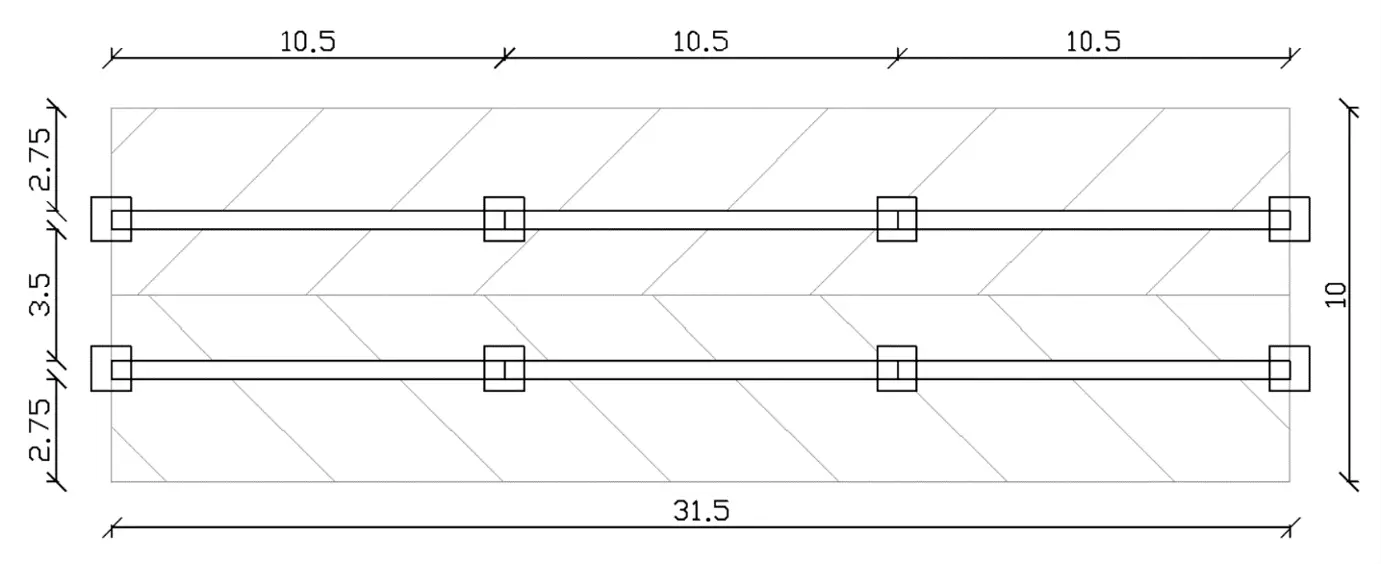
The loads acting on the bridge under investigation were separated into longitudinal moving loads acting on the roadbed surface level along the axis of any lane of the bridge plate and vertical moving loads acting on the roadbed plate. All the aforementioned loads were applied at the bridge deck level and transferred to the major bridge girders via the appropriate effect surfaces. The loads that affect the bridge deck are
- A.
- Vertical loads
Permanent loads
-
-
Concrete slab self-weight
-
-
Asphalt pavement slab layers
-
-
Reinforced concrete pavement slopes
-
-
Pavement materials
Traffic (Live) Loads
-
-
Traffic loads (combined loads of two axles, TS, and uniformly distributed loads, UDL)
- B.
- Longitudinal loads
-
-
Longitudinal concentrated force applied to the pavement surface level along the axis of any lane
Twelve distinct load combinations are necessary to compute the ultimate loads of the primary bridge girders, upon which topological optimization will be implemented in accordance with Eurocode 3 (EC3).
This study’s primary goal is to optimize the topology of the primary steel girders, not the secondary design of the piers, shear connectors, or concrete deck slab. Modeling a single girder with fixed-end boundary conditions provides a computationally effective and representative idealization for the critical sections of continuous multi-span systems, in accordance with well-established structural optimization literature for composite bridges.
Full composite action was assumed (full shear connection) between the reinforced concrete deck and the steel girder. As stated in Section 2.11, deck actions (calculated in kN/m2) were assessed strictly in accordance with Eurocode 3 (EC3) design criteria. By multiplying by the appropriate deck tributary width and dividing by the span length, these planar loads were transformed into comparable line loads (calculated in kN/m) operating on the primary girder.
After determining the surface loads on the road surface plate and transferring them to the beams through the proper effect surfaces, the total linear loads computed in this study for the structural optimization of steel main girders are as follows:
Vertical permanent and traffic (live) loads: 162.51 kN/m
Longitudinal load along the road surface: 9.72 kN/m
The material properties are depicted in Table 1.
Table 1. Material properties.
|
Density |
7850.00 kg/m3 |
|
Young Modulus |
210,000.00 MPa |
|
Poisson Ratio |
0.30 |
|
Type of structural steel |
S235 (in compliance with the European standard EN 10025) |
|
Yield |
235.00 MPa |
|
Maximum Tensile Strength |
345.00 MPa |
|
Length of girders |
10.50 m |
|
Girders’ vertical distributed load |
162.51 kN/m |
|
Girders’ horizontal distributed load |
9.72 kN/m |
|
Standard metal structural steel cross-section |
HEB700 |
|
Girders’ structural conditions |
Both ends are anchored (fixed-ended girder). |
3. Results
Results of Anchored Steel Girder HEB 700 in Composite Bridge
The following graphs display the stresses and displacements of the standard anchored steel girder in the composite bridge (Figure 2 and Figure 3). In this section, an initial optimization of the beam is performed to identify areas of the cross-section where material is not required (Figure 4, Figure 5 and Figure 6). Subsequently, an optimized version of the original cross-section was designed, for which stresses and deformations were calculated (Figure 7, Figure 8, Figure 9, Figure 10, Figure 11 and Figure 12) and compared with those of the unoptimized beam.
The following figures show the first analysis of the stresses and displacements of the standard anchored steel girder HEB 700 in the composite bridge. Spatially finite three-dimensional arrays have been used for topological optimization. The elemental stresses were computed after the nodal displacements. The construction became lighter, and less material was used in areas with high stress. The von Mises stress, which is analyzed extensively in this study, is a scalar invariant derived from the stress state of a material. It is an equivalent uniaxial stress measure used to assess yielding because it is calculated directly from the fundamental stresses. Regardless of its direction, the coordinate system was always positive and constant.
According to the first figure, the stress of each finite element was calculated (in MPa), with blue denoting the lowest stress values and red and orange denoting the maximum stress values, ranging from 0.038 MPa to 27.09 MPa.
The displacement in millimeters between 0.00 and 1.12 mm is shown in the second figure. In the finite element method, the displacements are calculated first, followed by the stresses. The displacements and von Mises stress were calculated for each analysis. The displacement is expressed in mm, and the tension is expressed in MPa.
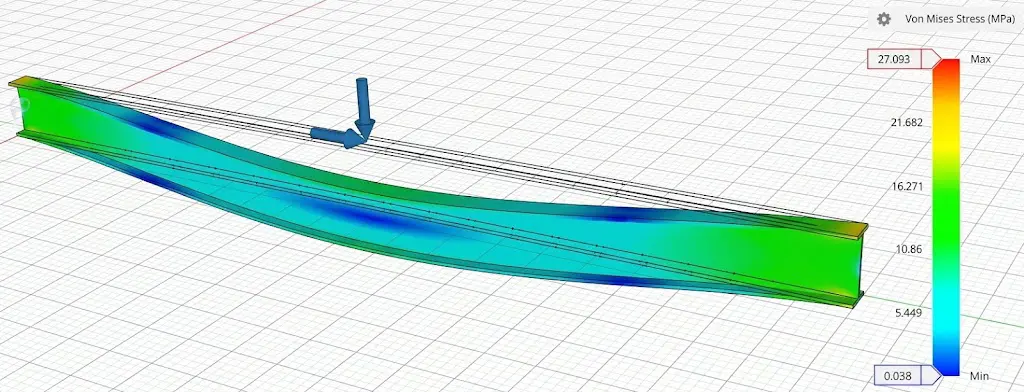
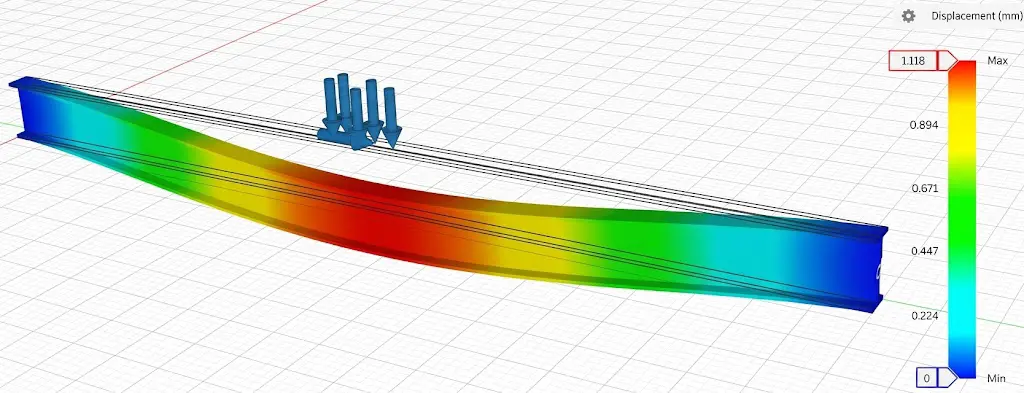
Subsequently, 20%, 50%, and 65% of the available material was removed to optimize the conventional steel beam structure. This identified the areas of the structure where material reduction was feasible and where stresses were not concentrated. Prior to implementing the topological optimization, the original mass of the cross-section was 2556.08 kg. The predicted beam weight was 1953.43 kg for the 80% case, 1298.03 kg for the 50% case, and 916.41 kg for the 35% case (~64% weight reduction). The following graphs show the first optimization for 80%, 50%, and 35% of the original fixed-ended steel girder’s construction material in composite bridges (Figure 4, Figure 5 and Figure 6), and Table 2 shows the aggregate results of material savings from the optimization percentage as well as the material reduction percentage, which also shows us the positive environmental impact of the optimization process.
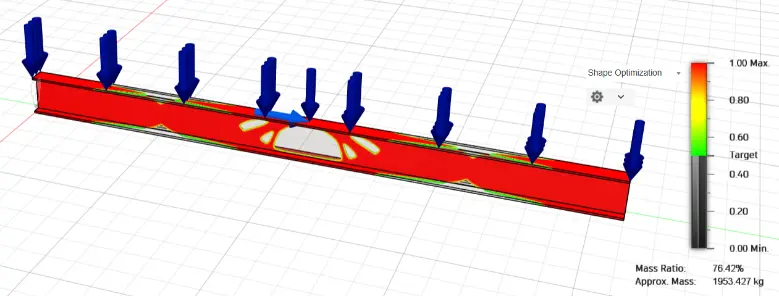
Figure 4. Optimization of the standard fixed-ended steel girder HEB 700 in a composite bridge, using 80% of the construction material.
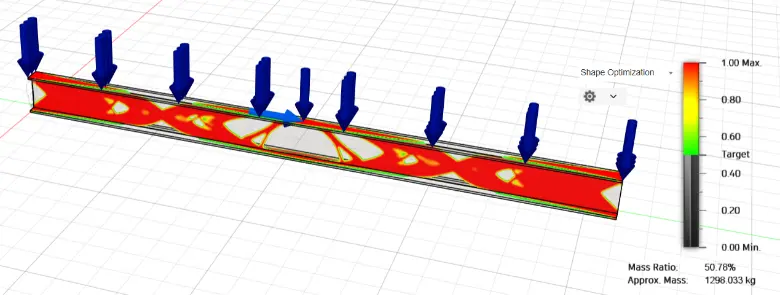
Figure 5. Optimization of the standard fixed-ended steel girder HEB 700 in a composite bridge, using 50% of the construction material.
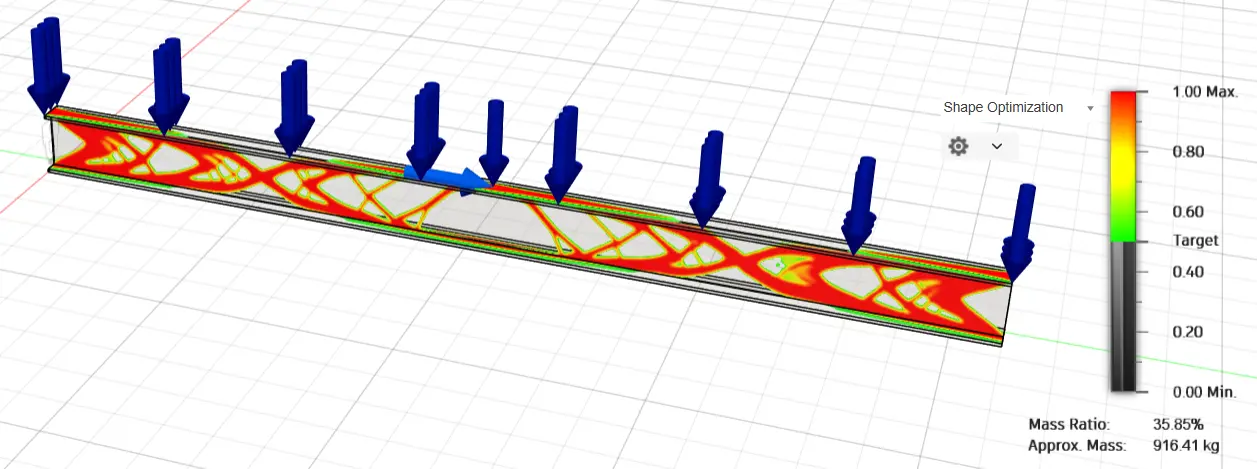
Figure 6. Optimization of the standard fixed-ended steel girder HEB 700 in a composite bridge, using 35% of the construction material.
Table 2. Material savings and rate of reduction of a fixed-ended girder HEB 700 in a composite bridge.
|
Cross-Sections |
Mass (kg) |
Material Saving (kg) |
% Rate of Reduction |
|---|---|---|---|
|
HEB 700 |
2556.08 |
0.00 |
0% |
|
Optimization using 80% of the construction material |
1953.43 |
602.65 |
24% |
|
Optimization using 50% of the construction material |
1298.03 |
1258.05 |
49% |
|
Optimization using 35% of the construction material |
916.41 |
1639.67 |
64% |
The stresses and displacements of the anchored steel girder in the composite bridge are displayed below after the optimization process. The original fixed-ended steel girder of the composite bridge was optimized in three different ways, using 80%, 78%, and 75% of the construction material, with elliptical material removal at the middle of the beam. In these areas, the optimization graphs indicate that material reduction is possible and show no significant stress percentages. After many assessments, we were able to sufficiently decrease the material and achieve equivalent stress and displacement rates between the standard and optimized structures. We chose the previously specified optimization approach and geometric features of the optimization girders. The following graphs display the findings of the aforementioned analyses (Figure 7, Figure 8, Figure 9, Figure 10, Figure 11 and Figure 12).
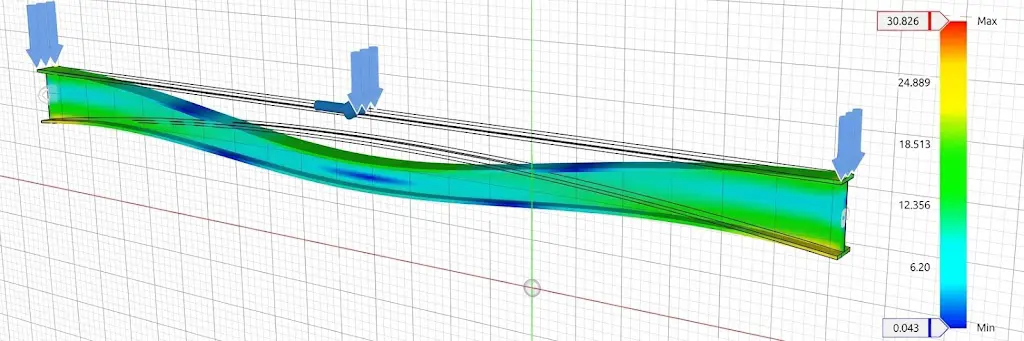
Figure 7. Stress (von Mises—MPa) of an optimized fixed-ended steel girder HEB 700 in composite bridge, using 80% of the construction material.
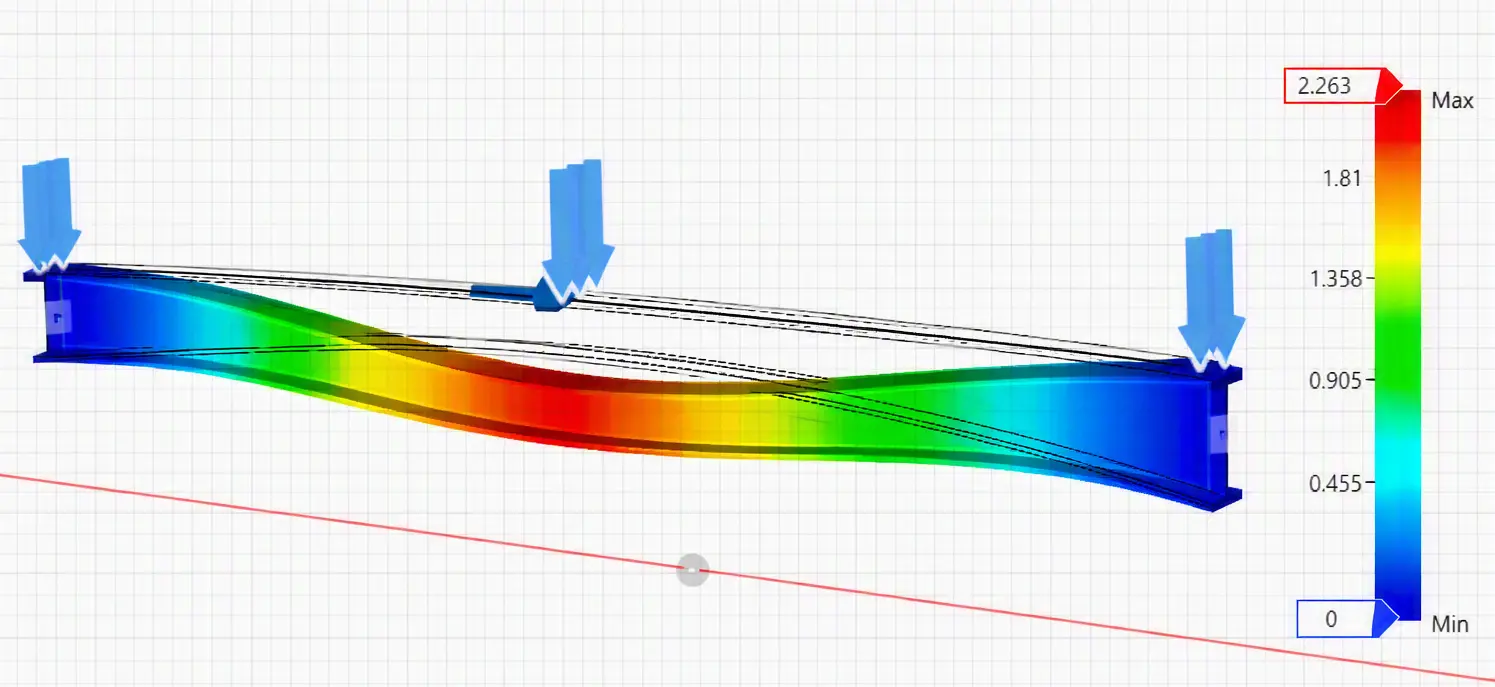
Figure 8. Displacement (mm) of an optimized fixed-ended steel girder HEB 700 in composite bridge, using 80% of the construction material.
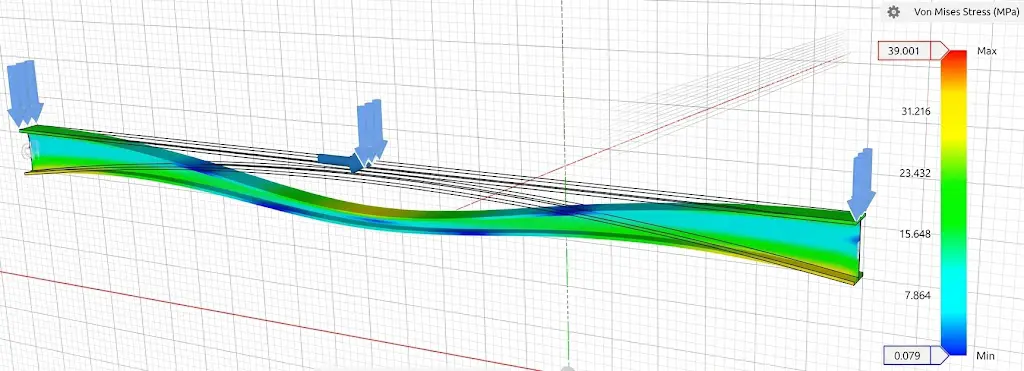
Figure 9. Stress (von Mises—MPa) of an optimized fixed-ended steel girder HEB 700 in composite bridge, using 78% of the construction material.
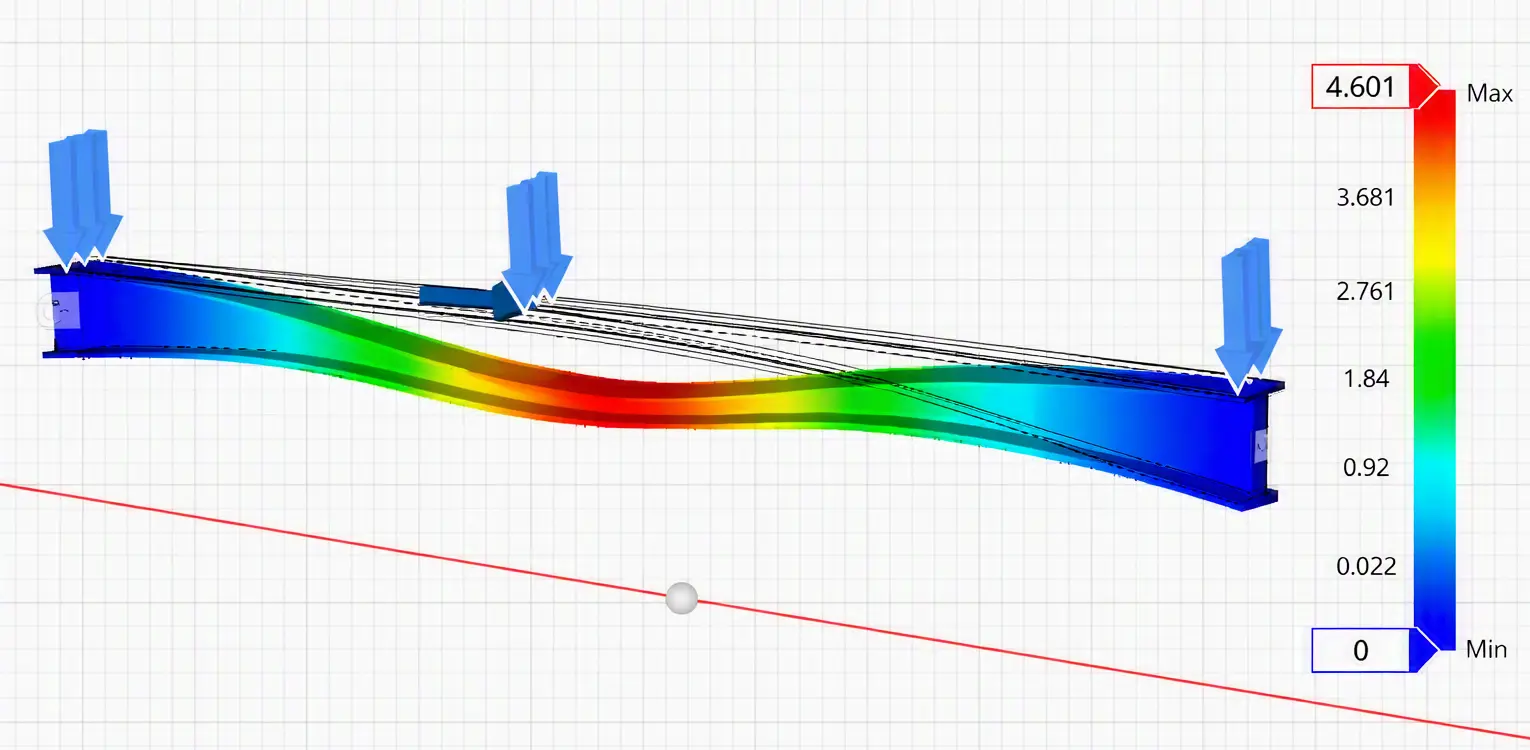
Figure 10. Displacement (mm) of an optimized fixed-ended steel girder HEB 700 in composite bridge, using 78% of the construction material.
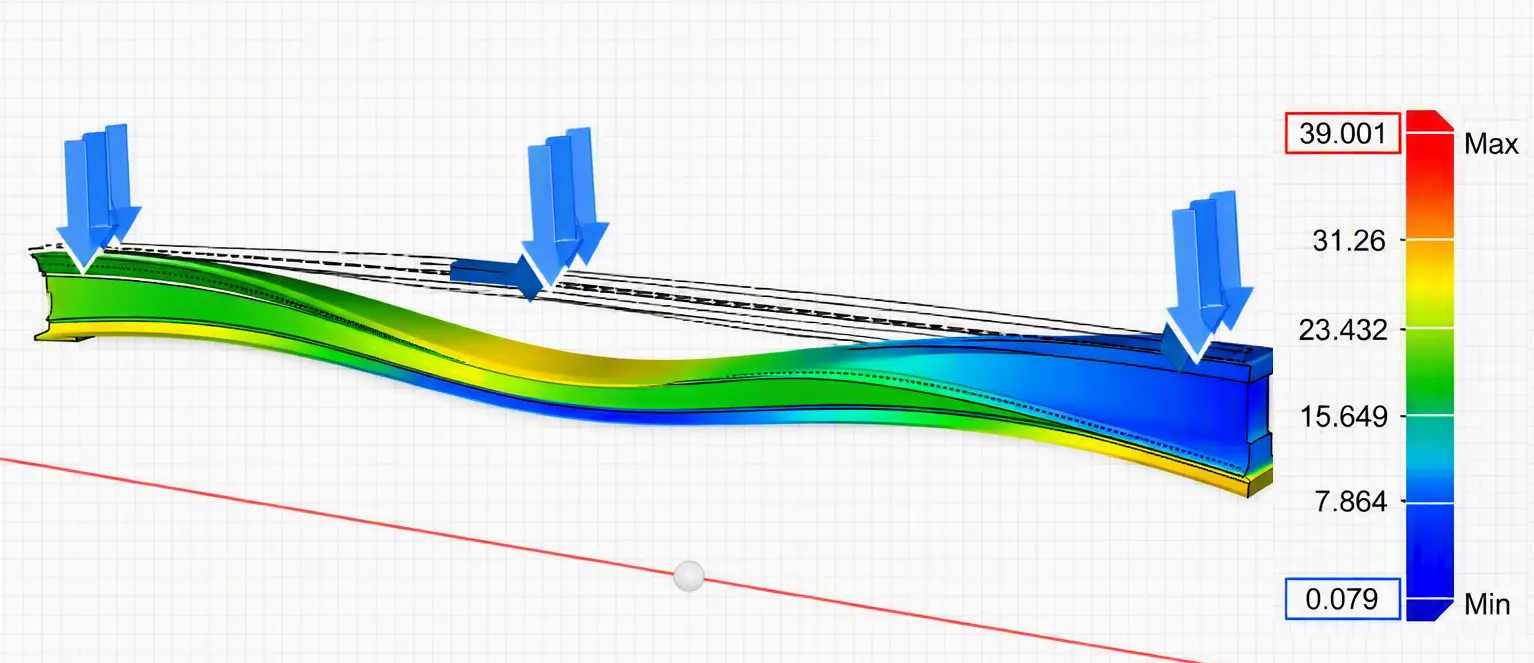
Figure 11. Stress (von Mises—MPa) of an optimized fixed-ended steel girder HEB 700 in a composite bridge, using 75% of the construction material.
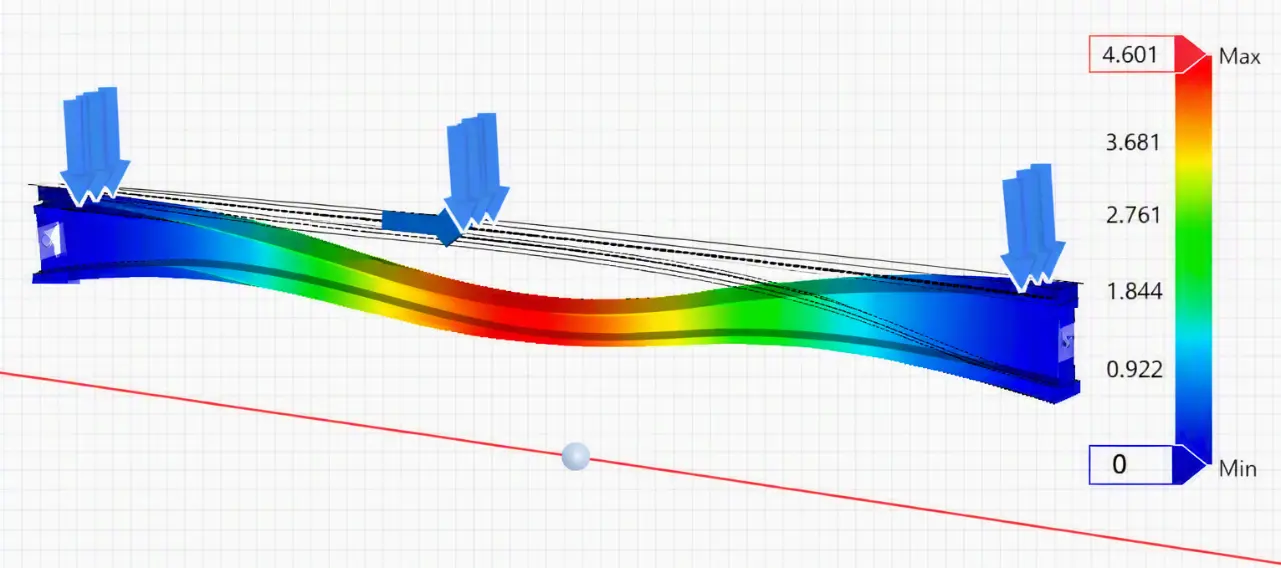
Figure 12. Displacement (mm) of an optimized fixed-ended steel girder HEB 700 in a composite bridge, using 75% of the construction material.
The stress and displacement analysis findings for both the standard anchored steel girder in the composite bridge and the optimized cross-sections of the standard cross-section are displayed in the following Table 3.
Table 3. Results of analysis of a fixed-ended girder HEB 700 in a composite bridge.
|
Cross-Sections |
Stress (MPa) |
Displacement (mm) |
Mass (kg) |
Material Saving (kg) |
No. of Nodes |
No. of Elements |
|---|---|---|---|---|---|---|
|
HEB 700 |
27.09 |
1.12 |
2556.08 |
0.00 |
392,366 |
1,563,415 |
|
Optimization using 80% of the construction material |
30.83 |
2.26 |
2122.99 |
433.09 |
301,468 |
1,196,390 |
|
Optimization using 78% of the construction material |
33.40 |
3.49 |
1998.39 |
557.69 |
280,535 |
1,132,837 |
|
Optimization using 75% of the construction material |
39.00 |
4.60 |
1911.32 |
664.76 |
348,830 |
1,518,130 |
To provide a quantitative indication of the environmental benefit associated with the reduction in structural steel, according to Equation (13), the emission factors (embodied carbon and avoided CO2e) were calculated and are summarized in the Table 4.
Table 4. Emission factors of a fixed-ended girder HEB 700 in a composite bridge.
|
Cross-Sections |
Mass (kg) |
Material Saving (kg) |
Embodied Carbon (kg CO2e) |
Avoided CO2e (kg) |
|---|---|---|---|---|
|
HEB 700 |
2556.08 |
0.00 |
5385.66 |
- |
|
Optimization using 80% of the construction material |
2122.99 |
433.09 |
4473.14 |
912.52 |
|
Optimization using 78% of the construction material |
1998.39 |
557.69 |
4210.61 |
1175.05 |
|
Optimization using 75% of the construction material |
1911.32 |
664.76 |
4027.15 |
1400.65 |
Based on the Table 4, it can be observed that the maximum material saving of 664.76 kg, using 75% of the construction material, achieved by the proposed topology optimization corresponds to an estimated emission reduction of approximately 1401.65 kg CO2e (saving approximately 1t CO2e). This assessment is limited to the material production stage (cradle-to-gate), while the transportation, construction, use, maintenance, and end-of-life stages are not considered [45,46]. The Avoided CO2e (kg) indicator presented in the Table 4 shows the emission reductions (in kg) achieved for each cross-section optimization carried out in this study.
Simultaneously, the following charts (Figure 13, Figure 14 and Figure 15) present the changes in the stresses, displacements, and masses between the initial standard cross-section and the optimized versions of this cross-section.
The first chart presents the stress optimization graph between the initial standard and optimized cross-sections, where the differences in the stresses of the initial standard cross-section in relation to the optimized cross-sections are considered negligible for the science of structural engineering.
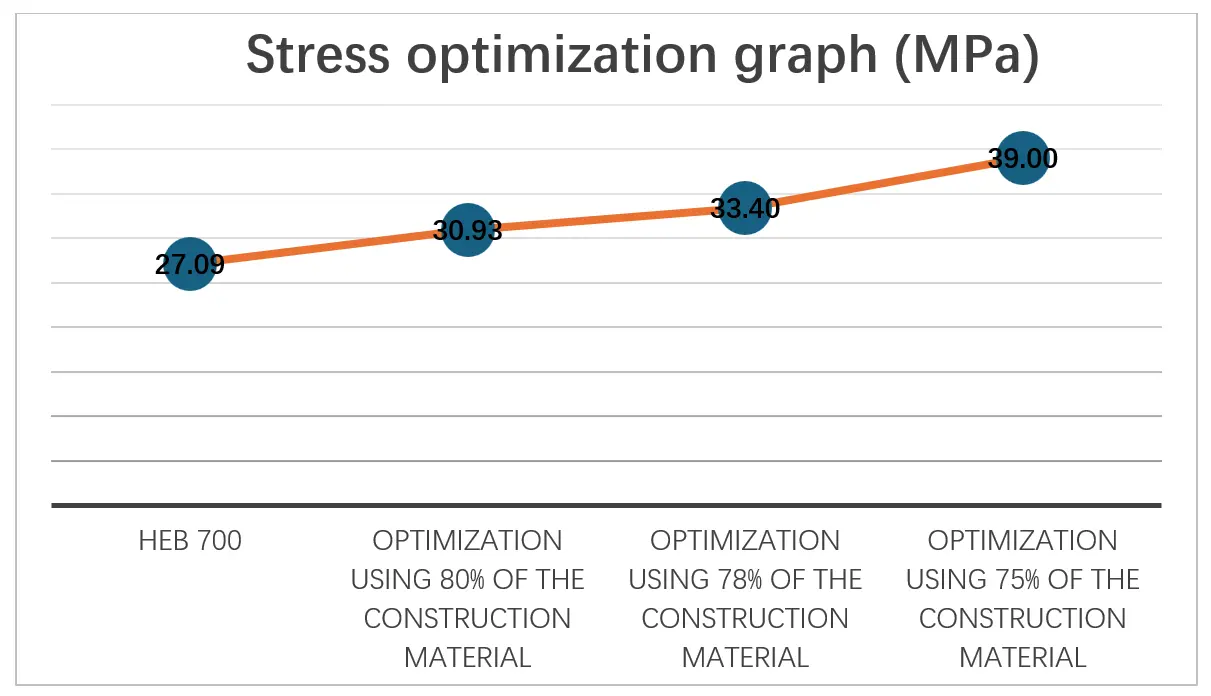
Figure 13. Stress optimization graph between the initial standard cross-section and the optimized cross-section.
The second chart presents the displacement optimization graph between the initial standard and optimized cross-sections, drawing similar conclusions to those drawn above regarding the effectiveness of the method.
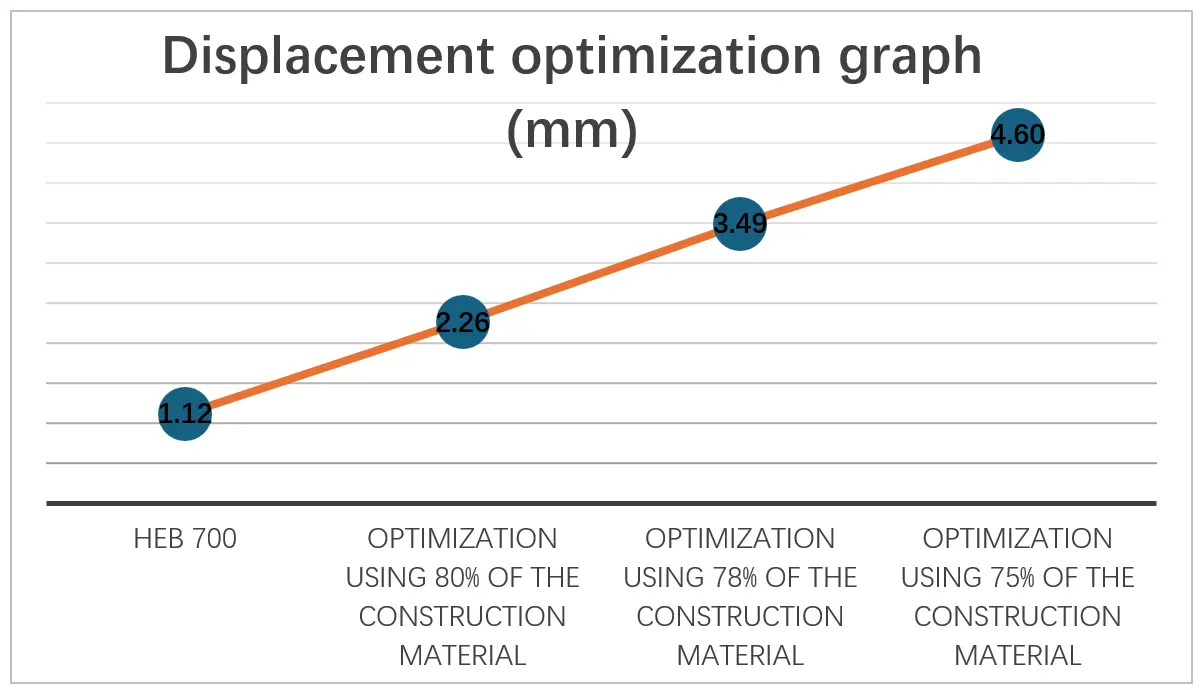
Figure 14. Displacement optimization graph between the initial standard cross-section and the optimized cross-section.
Finally, in the third chart, the mass optimization graph between the initial standard and optimized cross-sections is presented. In this chart, a significant reduction in the available material is observed between the initial and optimized cross-sections, which demonstrates the effectiveness of the optimization method from both a structural engineering perspective and the general perspectives of environmental protection and cost reduction.
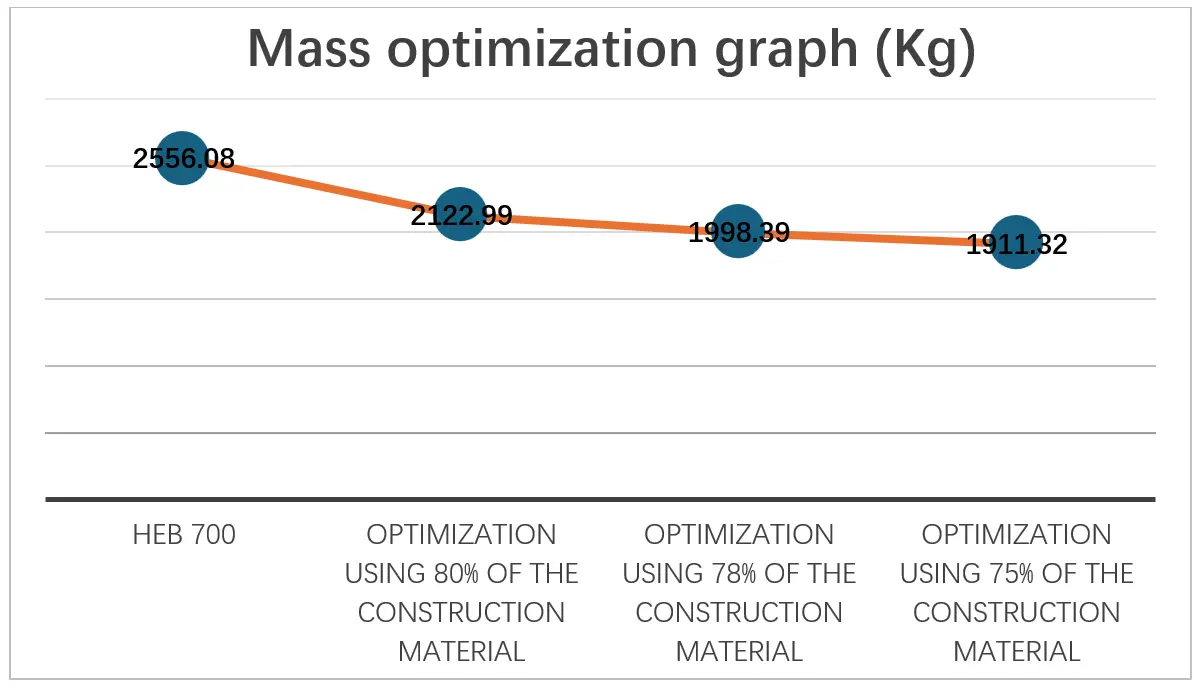
Figure 15. Mass optimization graph between the initial standard cross-section and the optimized cross-section.
The effective optimization of the fixed-ended girder HEB 700 in the composite bridge of the current study is confirmed by the aforementioned results, which show that the optimized cross-sections exhibit comparable stress and displacement values with respect to the original design structure, with any deviations in stresses and deformations deemed to be within acceptable limits, as they remain well below the yield strength of the construction material.
More specifically:
The Von Mises Stress increases from 27.09 MPa to 39.00 MPa (+43.9%). However, 39.00 MPa represents only 16.6% of the yield strength (fy = 235 MPa for S235 steel), leaving a massive structural safety margin.
The vertical deflection increases from 1.12 mm to 4.60 mm. However, 4.60 mm represents only 10.95% of the allowable limit for L/250, which is the functionality limit.
In this study, the first three eigenmodes of the original fixed-ended steel girder under study were analyzed and compared with the corresponding eigenmodes of the cross-sections that underwent structural optimization, the results of which are presented in the graphs below (Figure 16, Figure 17, Figure 18, Figure 19, Figure 20, Figure 21, Figure 22, Figure 23, Figure 24, Figure 25, Figure 26 and Figure 27).
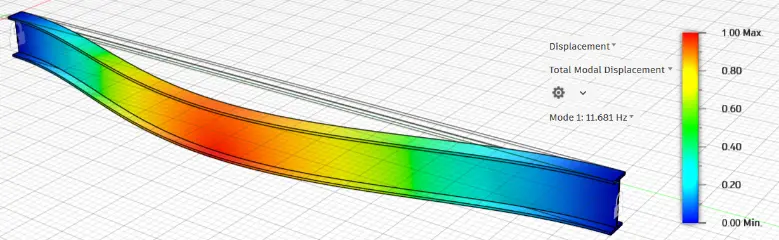
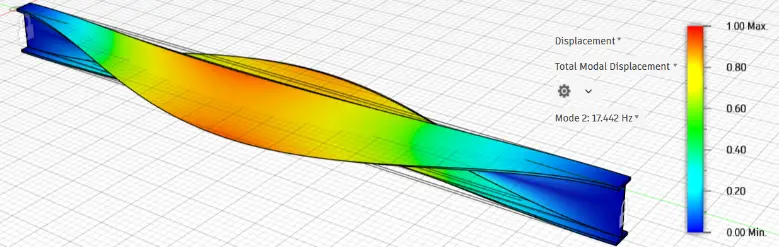
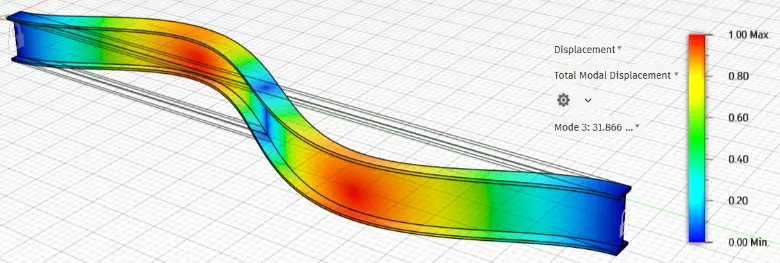
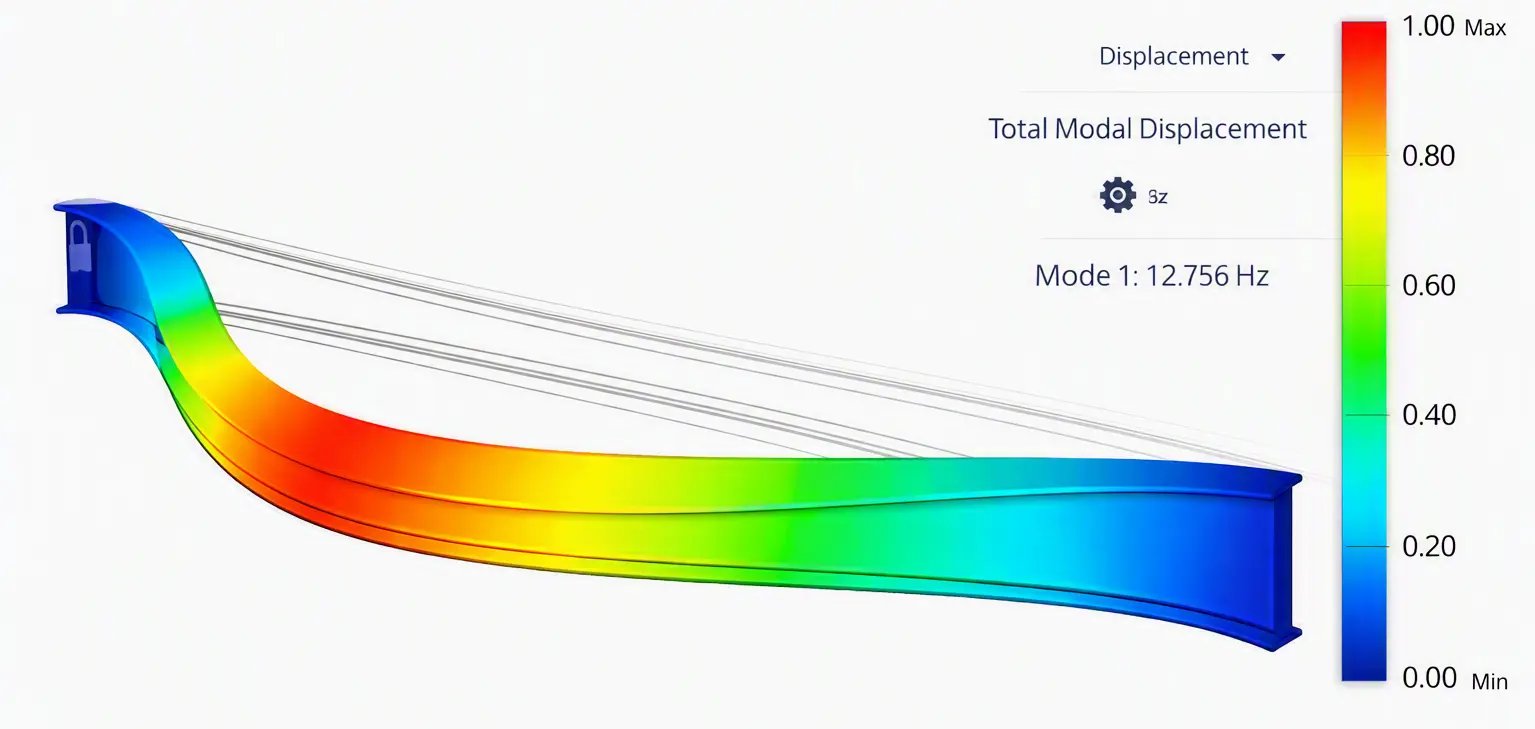
Figure 19. First eigenmode of an optimized fixed-ended steel girder HEB 700 in a composite bridge, using 80% of the construction material.
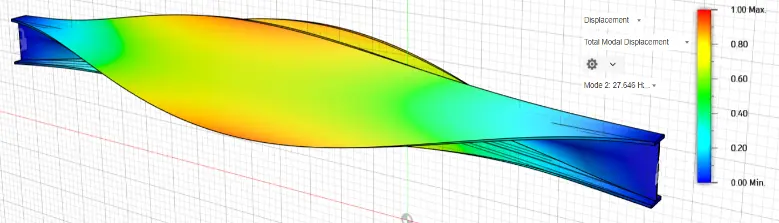
Figure 20. Second eigenmode of an optimized fixed-ended steel girder HEB 700 in a composite bridge, using 80% of the construction material.
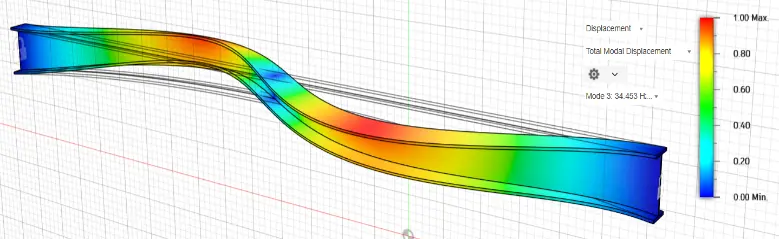
Figure 21. Third eigenmode of an optimized fixed-ended steel girder HEB 700 in a composite bridge, using 80% of the construction material.
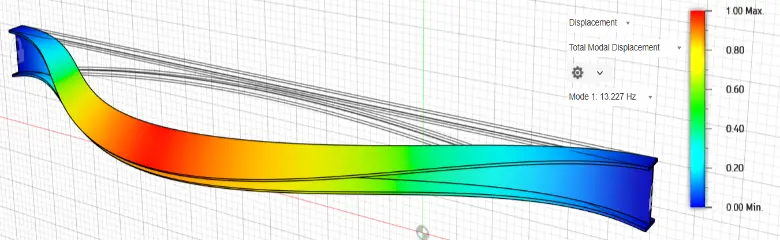
Figure 22. First eigenmode of an optimized fixed-ended steel girder HEB 700 in a composite bridge, using 78% of the construction material.
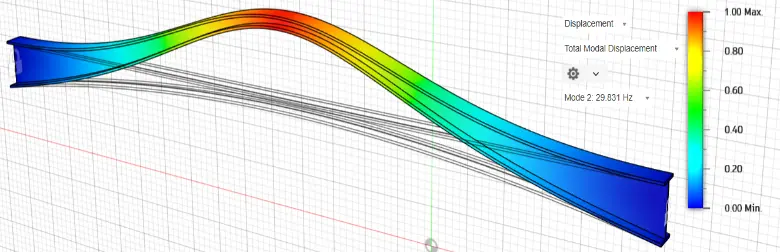
Figure 23. Second eigenmode of an optimized fixed-ended steel girder HEB 700 in a composite bridge, using 78% of the construction material.
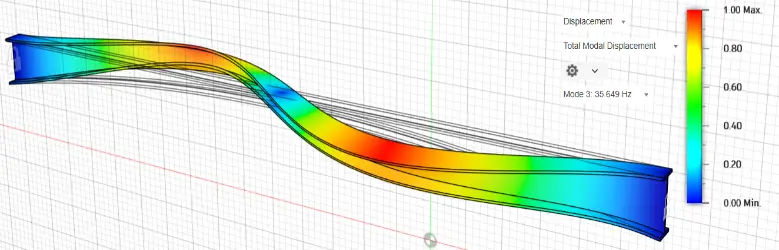
Figure 24. Third eigenmode of an optimized fixed-ended steel girder HEB 700 in a composite bridge, using 78% of the construction material.
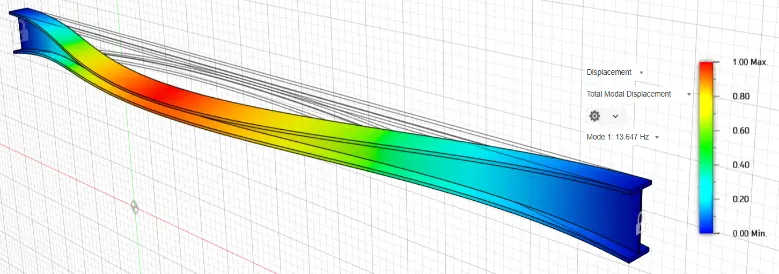
Figure 25. First eigenmode of an optimized fixed-ended steel girder HEB 700 in a composite bridge, using 75% of the construction material.
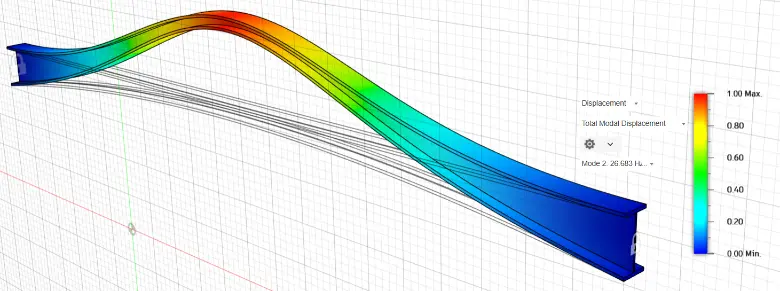
Figure 26. Second eigenmode of an optimized fixed-ended steel girder HEB 700 in a composite bridge, using 75% of the construction material.
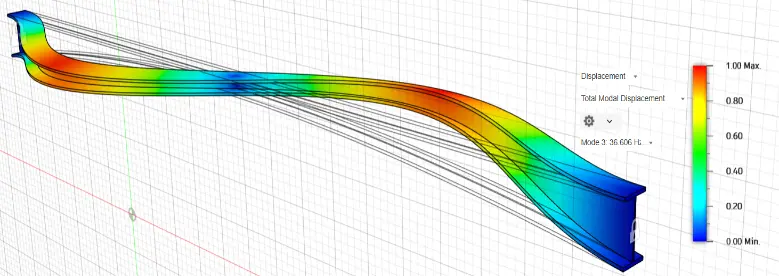
Figure 27. Third eigenmode of an optimized fixed-ended steel girder HEB 700 in a composite bridge, using 75% of the construction material.
The eigenmodes of the original and improved cross-section beams exhibited comparable analytical results, according to the aforementioned findings.
For a more in-depth analysis, the Table 5 presents all eigenmode results for both the initial and optimized cross-section.
Table 5. Eigenmode results of a fixed-ended girder HEB 700 in a composite bridge.
|
Cross-Sections |
First Eigenmode (Hz) |
Second Eigenmode (Hz) |
Third Eigenmode (Hz) |
|---|---|---|---|
|
HEB 700 |
11.68 |
17.44 |
31.87 |
|
Optimization using 80% of the construction material |
12.76 |
27.65 |
34.45 |
|
Optimization using 78% of the construction material |
13.23 |
29.83 |
35.65 |
|
Optimization using 75% of the construction material |
13.65 |
26.68 |
36.61 |
From the mode shape Table 5, it is evident that dynamic integrity is maintained across all mode shapes for both the initial and optimized cross-sections. Specifically, natural frequencies increased as material was removed from the web, as mass was reduced in areas that did not contribute significantly to primary stiffness. Removing this “dead” mass lightened the beam without compromising its fundamental bending characteristics; consequently, the fundamental frequency rose slightly (from 11.68 Hz to 13.65 Hz) relative to the initial cross-section. In engineering terms, this represents an optimal dynamic response and constitutes another crucial factor in ensuring the beam’s proper dynamic behavior throughout the optimization process.
The difference observed in the second mode shape of the original beam is considered entirely normal, as removing material from the web of an HEB section alters the local torsional stiffness or the shear mode shapes. Evidently, the second mode shape of the original beam likely involved a local torsional or transverse displacement, which shifted to a higher frequency following the material removal.
In conclusion, the mode shapes and their corresponding values for the initial and optimized versions of the cross-section under study constitute yet another indisputable proof of the precision and efficacy of the analyses in this study concerning the structural optimization of the fixed-ended steel beam composite bridge.
4. Discussion
In summary, several observations may be made based on the findings of the optimizations of the fixed-ended steel girder HEB 700 in composite bridges and the eigenmodes of the cross-section concurrently. These conclusions are examined in more depth in the following sections.
Despite a reduction in the quantity of building materials available, the data presented in Table 2 show that the stresses and displacements of the optimized steel girder under investigation in relation to the original steel girder in this study often remain the same. Therefore, by optimizing the specific cross-section, it is possible to achieve the same percentages of stress and displacement with less building material. Consequently, fewer building materials are available, which improves environmental preservation and saves money.
The commonalities in the assessments of the eigenmodes of the girders further support the efficacy of the techniques employed in this study.
However, both the standard solid HEB 700 steel girder and its improved counterparts created comparatively little stress and displacement. This was based on the load data of the anchored steel girder of the composite bridge under study, which was obtained from the longitudinal loads of the composite bridge pavement as specified by the law (Eurocode 3, EC3), as well as the transfers of vertical permanent and moving loads. The design engineer claimed that this demonstrated that the steel girder under investigation had sufficient material that could be removed to increase its levels of stress and displacement without exceeding the yield limits for stress, displacement limits, and bending arrows for distortions.
To ensure that every model in this investigation had the same discretization in finite elements, a similar separation was applied to the finite elements on average in all experiments (average node discretization 330,000 and average element discretization 1,350,000).
Concurrently, the current study seeks to show how crucial it is to reduce the amount of material used in structural construction whenever possible to achieve fully efficient behavior in the limit states of strength and functionality, while also considering the budget for construction and the economic aspect. Large mass percentage cross-sections are not ideal for building projects unless adequate stress limit states can be attained. The phenomena of overconsumption and abuse of available construction resources occur when a structure has cross-sections that include more material than is required to support tension. Structural optimization addresses this issue.
Finally, regarding the optimization of the original cross-sections, evaluations of the optimized cross-sections revealed stress and displacement rates similar to those of the original cross-sections. This outcome demonstrates how the science of structural optimization helps the community by preserving building materials, which also contributes to environmental protection, and design engineers, who aim to achieve the previously mentioned savings in construction materials while ensuring the corresponding resistance to the limit states of the stresses encountered. Traditional buildings with a long history of use are known as civil engineering structures. This invention suggests a different form for the buildings. It would have been constructed long ago if the principles of classical mechanics were straightforward.
In summary, this study used topological optimization, finite elements, and the SIMP technique to investigate a novel type of structural beam. The aforementioned strategy was used to reduce the amount of material on this beam with the main objective of decreasing expenses by using less material, as well as lowering the energy it attracts and conserving the environment, assuming that all of the aforementioned are accomplished. The optimization kernel targets compliance minimization under volume constraints, the global evaluation framework holistically assesses structural, economic, and environmental impact metrics. To achieve a realistic execution, all of the aforementioned aspects are finally applied to the architectural appearance of the structure.
Topological optimization enables the construction of new, contemporary structures with inventive shapes and lightweight, streamlined designs. Changing the beam cross-section is an innovation because it alters huge buildings that have traditionally employed conventional cross-sections.
5. Conclusions
Through case examples, the structural optimization methods showed significant potential for successfully producing lightweight structural parts. If structural optimization techniques are employed to reduce the structural component weight, they will also provide cost savings and reduce an organization’s environmental footprint by utilizing much less material and energy during manufacturing and construction, resulting in significant cost savings. Therefore, the following are the main conclusions drawn from the analysis of this case study:
The original fixed-end steel girder cross-sections included in the composite bridge under analysis and the optimized versions of the same cross-sections had very little difference in the computed displacement and resulting stresses. This finding supports the success of cross-section optimization methods in creating a viable method for producing lightweight cross-section versions of steel while still producing displacements and stresses comparable to those produced in larger, unoptimized cross-sections.
Utilizing structural optimization to successfully produce cross-sections with minimal material provides a cheap and green building solution for creating structural elements. The end result of limiting the overall space and the use of material to construct a structurally sound system or framework is to minimize the use of the greatest possible number of natural resources.
Standard high-section beams, such as IPE, HEA, and HEB, are more effective than other construction cross-sections of the same height and breadth in steel buildings. The results of the investigation showed that these typical high-rise sections improved stress distribution under comparable load scenarios without exceeding the material yield limitations. Significant material savings are possible, promoting environmental sustainability and economic efficiency while preserving structural integrity in terms of stress and deformation. At the same time, the reduced quantity of structural steel—achieved solely through structural optimization—is expected to directly lower material procurement costs, limit embodied energy and CO2 emissions during construction, and reduce the permanent loads and dead weights transferred to the bridge piers and foundations.
From an environmental perspective, the maximum material reduction of 25.0% in this study corresponds to an estimated avoidance of approximately 1.40 t CO2e per optimized structural member, based on the adopted embodied-carbon factor for S235 steel, according to international literature. This also indicates a quantitative measure of the optimization method’s success—not only in terms of engineering and structural integrity but also regarding emission reductions and environmental protection in general.
Topological optimization has the advantage of making structures lighter and more contemporary. Building contemporary structures with contemporary aesthetics is crucial for topological optimization. The construction of lighter alternatives that can function similarly is the main emphasis of all current structures. This investigation achieved this objective in its entirety. This study presents a unique method for improving civil engineering construction. For many years, traditional styles have not changed in form or have used the same basic patterns. A new geometric shape (or cross-section) that departs significantly from the long-standing reliance on the standard way of doing things is a major advancement.
Revisiting previously used beam designs based on classical mechanics is difficult. However, recent developments in topology optimization have allowed for lightweight, high-performance designs of completely new classes of structures. This study aims to redefine the cross-sectional profiles of beams by providing new solutions to the traditional shapes previously utilized in large-scale construction through the use of a new design method. The ultimate purpose of this study is to improve the structural behavior of these systems and the efficient use of materials, thereby facilitating future developments in civil engineering. This article provides a second revision that applies to the structural design of a steel beam of a composite bridge using an optimized method based on the seismic loading/bending of the main and secondary axes (including superimposed shear and flexural-torsional stability). The innovation of this work lies in the significant contribution of topology optimization to material minimization, thereby enhancing the economic efficiency and sustainability of structures. Future research will examine topology optimization under other constraints, such as buckling and various loading conditions, which were not deemed necessary herein, as the primary loading of the main beams of the structure under study is bending.
Author Contributions
T.M., A.M. and M.P.: investigation, software, formal analysis, writing review, and editing; A.M.: methodology; N.V.: supervision and validation. All the authors have read and agreed to the published version of the manuscript.
Ethics Statement
Not applicable.
Informed Consent Statement
Not applicable.
Data Availability Statement
The data presented in this study are available upon request from the corresponding authors.
Funding
This research received no external funding.
Declaration of Competing Interest
The authors declare that they have no known competing financial interests or personal relationships that could have appeared to influence the work reported in this paper.
References
- Srisomporn S, Bureerat S. Geometrical Design of Plate-Fin Heat Sinks Using Hybridization of MOEA and RSM. IEEE Trans. Compon. Packag. Technol. 2008, 31, 351–360. DOI:10.1109/TCAPT.2008.916799 [Google Scholar]
- Zitzler E, Thiele L. Multiobjective evolutionary algorithms: A comparative case study and the strength Pareto approach. IEEE Trans. Evol. Comput. 1999, 3, 257–271. DOI:10.1109/4235.797969 [Google Scholar]
- Maute K, Frangopol DM. Reliability-based design of MEMS mechanisms by topology optimization. Comput. Struct. 2003, 81, 813–824. DOI:10.1016/S0045-7949(03)00008-7 [Google Scholar]
- Wang Y, Yao Y, Chen L, Zhang L. Enhanced mechanical properties of 3D printed composites via continuous metal fiber reinforcement and process parameter optimization. Addit. Manuf. 2026, 120, 105144. DOI:10.1016/j.addma.2026.105144 [Google Scholar]
- Zhu J, Zhou H, Wang C, Zhou L, Yuan S, Zhang W. A review of topology optimization for additive manufacturing: Status and challenges. Chin. J. Aeronaut. 2021, 34, 91–110. DOI:10.1016/j.cja.2020.09.020 [Google Scholar]
- Sigmund O. Topology optimization: A tool for the tailoring of structures and materials. Philos. Trans. R. Soc. London. Ser. A Math. Phys. Eng. Sci. 2000, 358, 211–227. DOI:10.1098/rsta.2000.0528 [Google Scholar]
- Bendsøe MP, Kikuchi N. Generating optimal topologies in structural design using a homogenization method. Comput. Methods Appl. Mech. Eng. 1988, 71, 197–224. DOI:10.1016/0045-7825(88)90086-2 [Google Scholar]
- Andreassen E, Clausen A, Schevenels M, Lazarov BS, Sigmund O. Efficient topology optimization in MATLAB using 88 lines of code. Struct. Multidiscip. Optim. 2011, 43, 1–16. DOI:10.1007/s00158-010-0594-7 [Google Scholar]
- Liu S, Li Q, Liu J, Chen W, Zhang Y. A Realization Method for Transforming a Topology Optimization Design into Additive Manufacturing Structures. Engineering 2018, 4, 277–285. DOI:10.1016/j.eng.2017.09.002 [Google Scholar]
- EN 1993-1-1; Eurocode 3: Design of Steel Structures—Part 1-1: General Rules and Rules for Buildings. European Committee for Standardization: Brussels, Belgium, 2005. [Google Scholar]
- Plevris V, Almutairi A, Rios AJ. Advancing Sustainability Through Structural Optimization: Innovations in Material Efficiency and Environmental Impact Reduction. In The 1st International Conference on Net-Zero Built Environment; Kioumarsi M, Shafei B, Eds.; Springer: Cham, Switzerland, 2025; pp. 1611–1623. [Google Scholar]
- Xie W, Xia Q, Yu Q, Li Y. An effective phase field method for topology optimization without the curvature effects. Comput. Math. Appl. 2023, 146, 200–212. DOI:10.1016/j.camwa.2023.06.037 [Google Scholar]
- Muayad H, Raffaele C, Marco D, Hamed F, Movahedi Rad M. Thermo-mechanical reliability-based topology optimization for imperfect elasto-plastic materials. Int. J. Mech. Mater. Des. 2025, 21, 1755–1776. DOI:10.1007/s10999-025-09799-9 [Google Scholar]
- Habashneh M, Movahedi Rad M. Plastic-limit probabilistic structural topology optimization of steel beams. Appl. Math. Model. 2024, 128, 347–369. DOI:10.1016/j.apm.2024.01.029 [Google Scholar]
- Wu J, Sigmund O, Groen JP. Topology optimization of multi-scale structures: A review. Struct. Multidiscip. Optim. 2021, 63, 1455–1480. DOI:10.1007/s00158-021-02881-8 [Google Scholar]
- Dzierżanowski G. On the comparison of material interpolation schemes and optimal composite properties in plane shape optimization. Struct. Multidiscip. Optim. 2012, 46, 693–710. DOI:10.1007/s00158-012-0788-2 [Google Scholar]
- Lógó J, Ismail H. Milestones in the 150-Year History of Topology Optimization: A Review. Comput. Assist. Methods Eng. Sci. 2020, 27, 97–132. Available online: https://re.public.polimi.it/handle/11311/1190020 (accessed on 23 May 2026).
- Chamatidis I, Stoumpos M, Kazakis G, Kallioras NA, Triantafyllou S, Plevris V, et al. Overview on Machine Learning Assisted Topology Optimization Methodologies. In Machine Learning in Modeling and Simulation: Methods and Applications; Rabczuk T, Bathe K-J, Eds.; Springer International Publishing: Cham, Switzerland, 2023; pp. 373–394. ISBN 978-3-031-36644-4 [Google Scholar]
- Dorn WS, Gomory RE, Greenberg HJ. Automatic Design of Optimal Structures. 1964. Available online: https://www.sid.ir/paper/596045/en (accessed on 23 May 2026).
- Rozvany GIN, Zhou M, Birker T. Generalized shape optimization without homogenization. Struct. Optim. 1992, 4, 250–252. DOI:10.1007/BF01742754 [Google Scholar]
- Tang T, Wang L, Zhu M, Zhang H, Dong J, Yue W, et al. Topology Optimization: A Review for Structural Designs Under Statics Problems. Materials 2024, 17, 5970. DOI:10.3390/ma17235970 [Google Scholar]
- Shin S, Shin D, Kang N. Topology optimization via machine learning and deep learning: A review. J. Comput. Des. Eng. 2023, 10, 1736–1766. DOI:10.1093/jcde/qwad072 [Google Scholar]
- Liu S, Li Q, Hu J, Chen W, Zhang Y, Luo Y, et al. A Survey of Topology Optimization Methods Considering Manufacturable Structural Feature Constraints for Additive Manufacturing Structures. Addit. Manuf. Front. 2024, 3, 200143. DOI:10.1016/j.amf.2024.200143 [Google Scholar]
- Sigmund O, Maute K. Topology optimization approaches. Struct. Multidiscip. Optim. 2013, 48, 1031–1055. DOI:10.1007/s00158-013-0978-6 [Google Scholar]
- Deaton JD, Grandhi RV. A survey of structural and multidisciplinary continuum topology optimization: Post 2000. Struct. Multidiscip. Optim. 2014, 49, 1–38. DOI:10.1007/s00158-013-0956-z [Google Scholar]
- Papadrakakis M, Lagaros ND, Tsompanakis Y, Plevris V. Large scale structural optimization: Computational methods and optimization algorithms. Arch. Comput. Methods Eng. 2001, 8, 239–301. DOI:10.1007/BF02736645 [Google Scholar]
- Bendsøe MP, Sigmund O. Topology Optimization: Theory, Methods, and Applications; Springer: Berlin/Heidelberg, Germany, 2013. [Google Scholar]
- Martínez-Muñoz D, Martí JV, Yepes V. Steel‐Concrete Composite Bridges: Design, Life Cycle Assessment, Maintenance, and Decision‐Making. Adv. Civ. Eng. 2020, 2020, 8823370. DOI:10.1155/2020/8823370 [Google Scholar]
- Li L, Khandelwal K. Volume preserving projection filters and continuation methods in topology optimization. Eng. Struct. 2015, 85, 144–161. DOI:10.1016/j.engstruct.2014.10.052 [Google Scholar]
- Svanberg K. The method of moving asymptotes—A new method for structural optimization. Numer. Meth Eng. 1987, 24, 359–373. DOI:10.1002/nme.1620240207 [Google Scholar]
- Guest JK, Prévost JH, Belytschko T. Achieving minimum length scale in topology optimization using nodal design variables and projection functions. Numer. Meth Eng. 2004, 61, 238–254. DOI:10.1002/nme.1064 [Google Scholar]
- Ranzi G, Dall’Asta A, Ragni L, Zona A. A geometric nonlinear model for composite beams with partial interaction. Eng. Struct. 2010, 32, 1384–1396. DOI:10.1016/j.engstruct.2010.01.017 [Google Scholar]
- Katwal U, Tao Z, Hassan MK. Finite element modelling of steel-concrete composite beams with profiled steel sheeting. J. Constr. Steel Res. 2018, 146, 1–15. DOI:10.1016/j.jcsr.2018.03.011 [Google Scholar]
- Luo Z, Wang S, Wang J, Yuan H. Research on flexural performance of composite girders with different shear connection degrees. Structures 2025, 77, 109144. DOI:10.1016/j.istruc.2025.109144 [Google Scholar]
- Skoglund O, Leander J, Karoumi R. Optimizing the steel girders in a high strength steel composite bridge. Eng. Struct. 2020, 221, 110981. DOI:10.1016/j.engstruct.2020.110981 [Google Scholar]
- Jia J. Static Analysis and Optimization Design of Bridge Structures under Different Load Conditions. SHS Web Conf. 2024, 196, 03009. DOI:10.1051/shsconf/202419603009 [Google Scholar]
- Jankowski R, Manguri A, Hassan H, Saeed N. Topology, Size, and Shape Optimization in Civil Engineering Structures: A Review. Comput. Model. Eng. Sci. 2025, 142, 933–971. DOI:10.32604/cmes.2025.059249 [Google Scholar]
- Baandrup M, Sigmund O, Aage N. Structural topology optimization of bridge girders in cable supported bridges. In IABSE Conference: Engineering the Developing World; International Association for Bridge and Structural Engineering: Zurich, Switzerland, 2018; pp. 975–982. [Google Scholar]
- Martins JP, Correia J, Ljubinković F, Simões da Silva L. Cost optimisation of steel I-girder cross-sections using genetic algorithms. Structures 2023, 55, 379–388. DOI:10.1016/j.istruc.2023.06.030 [Google Scholar]
- Xue C, Fan Z, Wu F, Liu L, He L, Cui X. Research on the Shear Behaviour of Composite Shear Connectors. Buildings 2022, 12, 1726. DOI:10.3390/buildings12101726 [Google Scholar]
- Kaveh A, Ghazaan MI. Meta-Heuristic Algorithms for Optimal Design of Real-Size Structures; Springer: Cham, Switzerland, 2018. [Google Scholar]
- Hassanzadeh A, Moradi S, Burton HV. Performance-Based Design Optimization of Structures: State-of-the-Art Review. J. Struct. Eng. 2024, 150, 03124001. DOI:10.1061/JSENDH.STENG-13542 [Google Scholar]
- Tormen AF, Pravia ZM, Ramires FB, Kripka M. Optimization of Steel-Concrete Composite Beams Considering Cost and Environmental Impact. Steel Compos. Struct. 2022, 34, 409–421. DOI:10.12989/scs.2020.34.3.409 [Google Scholar]
- Symons K. Book review: Embodied Carbon: The Inventory of Carbon and Energy (ICE). A BSRIA Guide. Proc. Inst. Civ. Eng. Energy 2011, 164, 206–206. DOI:10.1680/ener.2011.164.4.206 [Google Scholar]
- Nuss P, Eckelman MJ. Life Cycle Assessment of Metals: A Scientific Synthesis. PLoS ONE 2014, 9, e101298. DOI:10.1371/journal.pone.0101298 [Google Scholar]
- Robati M, Oldfield P, Nezhad AA, Carmichael DG, Kuru A. Carbon value engineering: A framework for integrating embodied carbon and cost reduction strategies in building design. Build. Environ. 2021, 192, 107620. DOI:10.1016/j.buildenv.2021.107620 [Google Scholar]