
Electromagnetic Tracking for Rehabilitation Applications—A Survey

Electromagnetic Tracking for Rehabilitation Applications—A Survey
Hai Lan
1,2,†
 Pengrong Chen
1,2,†
Chengwen Zhang
1,2
Zhihua Zhou
2,3
Xinying Shan
4
Houde Dai
1,3,*
Tim C. Lueth
5
Pengrong Chen
1,2,†
Chengwen Zhang
1,2
Zhihua Zhou
2,3
Xinying Shan
4
Houde Dai
1,3,*
Tim C. Lueth
5
Received: 20 May 2026 Revised: 10 June 2026 Accepted: 03 July 2026 Published: 16 July 2026

© 2026 The authors. This is an open access article under the Creative Commons Attribution 4.0 International License (https://creativecommons.org/licenses/by/4.0/).
1. Introduction
Motion tracking modules in rehabilitation engineering serve as an indispensable cornerstone for monitoring, quantifying, and analyzing a patient’s kinematic movements during physical therapy or recovery from neurological and musculoskeletal impairments [1,2,3,4,5]. By capturing high-fidelity motion trajectories, these systems empower clinicians to objectively assess pathological progress, customize patient-specific treatment protocols, and ultimately improve rehabilitation outcomes. Over the past decades, diverse motion-tracking modalities have been deployed in clinical settings, including inertial sensing, electromyography (EMG), force plates, and optical or depth-sensing approaches.
However, each mainstream modality inherently suffers from distinct technical bottlenecks that limit its efficacy in complex rehabilitation scenarios. Inertial sensing is perpetually restricted by cumulative, uncontrollable integration drift over time, demanding continuous external corrections for long-term accuracy [6]. EMG signals are notoriously noisy, cross-talk-prone, and movement-sensitive [7,8], primarily reflecting muscle activation rather than precise spatial kinematics. Force plates, while robust, are spatially confined and limited to measuring weight distribution and the balance center of pressure [9]. Meanwhile, optical and markerless vision-based systems [6,7,10] frequently fail under non-ideal lighting conditions, struggle with featureless or reflective surfaces, and are susceptible to line-of-sight (LOS) occlusions in crowded spaces, not to mention the escalating concerns regarding patient privacy.
To overcome these localized limitations, electromagnetic tracking (EMT) technology has emerged as a compelling paradigm. Utilizing controlled magnetic fields, EMT technologies are capable of delivering real-time pose estimation with sub-millimeter precision [1,2,11,12], offering either five-degree-of-freedom (5-DoF) or full six-degree-of-freedom (6-DoF) tracking depending on the sensor coil configuration. Crucially, EMT operates entirely free from LOS constraints, allowing accurate measurement even when sensors are completely obscured by clothing, bandages, or anatomical structures. This unique combination of occlusion-free capabilities, minimal latency, and exceptional precision renders EMT uniquely suited for a vast spectrum of advanced rehabilitation applications. These range from real-time joint-angle monitoring in smart orthotics and prosthetics to fine-motor tracking in stroke-induced neurological therapy, immersive virtual reality (VR) rehabilitation, and wearable exoskeleton control. Furthermore, EMT facilitates precise spatiotemporal feedback in gait analysis for motor symptoms of Parkinson’s disease (PD) and enables reliable, remote home-based telerehabilitation.
Despite its profound clinical potential, the full exploitation of EMT in modern rehabilitation faces a changing landscape. The rapid convergence of cutting-edge sensor design, artificial intelligence (AI), and edge computing is fundamentally reshaping EMT methodologies, offering unprecedented opportunities to mitigate legacy challenges such as electromagnetic interference and constrained tracking volumes. To bridge the knowledge gap and accelerate clinical translation, this paper provides a comprehensive, structured survey of the EMT landscape tailored for rehabilitation engineering. The remainder of this survey is organized as follows: we first elucidate the foundational physical principles and core algorithmic frameworks of EMT. Next, a critical review of state-of-the-art technological advancements and commercial products is presented. Finally, we analyze open challenges and outline future research trajectories to guide the next generation of EMT-driven healthcare solutions.
2. EMT Technology: Principles and Algorithms
There are some EMT systems or modules available on the market [1], such as NDI Aurora® (Northern Digital Inc., Waterloo, ON, Canada) [13], Liberty™ Latus™ (Polhemus Inc., Colchester, VT, USA) [14], Radwave® EM Tracking platform (Radwave Technologies Inc., Saint Paul, MN, USA) [15], and AMFITRACK™ (Amfitech Inc., Jens Groens, Denmark) [16]. Besides, some special EMT solutions have been provided by TT Electronics [17], Magic Leap [18], Ommo Technologies [19], Stryker [20], Medtronic [21], Heal Force [22], Augmedics [23], Orthaligen [24], Koninklijke Philips N.V [25], Calypso [26], etc.
The components of an EMT module comprise the transmitter (with a signal or field generator), control units, and magnetic sensors. The control unit drives the transmitter and manages magnetic sensors. The transmitter emits low-frequency or static magnetic fields. Magnetic sensors or small coils attached to the object being tracked detect the field strength at a point in space around the transmitter. The control unit estimates the sensor’s pose by processing the sensor data.
2.1. Principle of EMT
EMT technology, as a high-precision positioning method without LOS restrictions, is fundamentally based on the laws of electromagnetics. EMT modules determine the pose of target objects in 3D space by analyzing magnetic field distribution characteristics, providing a unique motion capture solution for rehabilitation engineering. Understanding its working principles is crucial for developing effective rehabilitation applications [1,2].
From a physical perspective, EMT technology can be broadly categorized into two types: static magnetic field systems and alternating current (AC) electromagnetic field systems. Static magnetic field systems typically employ neodymium-iron-boron (NdFeB) permanent magnets as the magnetic source. Their advantages include no external power requirements, simple structure, and low power consumption, making them particularly suitable for implantable medical devices and wearable rehabilitation apparatus [27]. In contrast, AC electromagnetic field systems generate alternating electromagnetic fields by passing AC through transmitter coils. Although they require power support, they offer a higher signal-to-noise ratio (SNR), a larger tracking range, and can effectively suppress environmental interference through frequency selection [28].
The core mathematical model for both systems is based on the magnetic dipole theory. According to the Biot-Savart law, current passing through a conductor generates a magnetic field surrounding the wire, while the magnetic dipole model simplifies the transmitter source to a point magnetic dipole whose magnetic field strength decays with the cube of the distance. For AC electromagnetic field systems, the magnetic flux density generated by the transmitter coil at spatial point (x, y, z) can be expressed as in Figure 1:
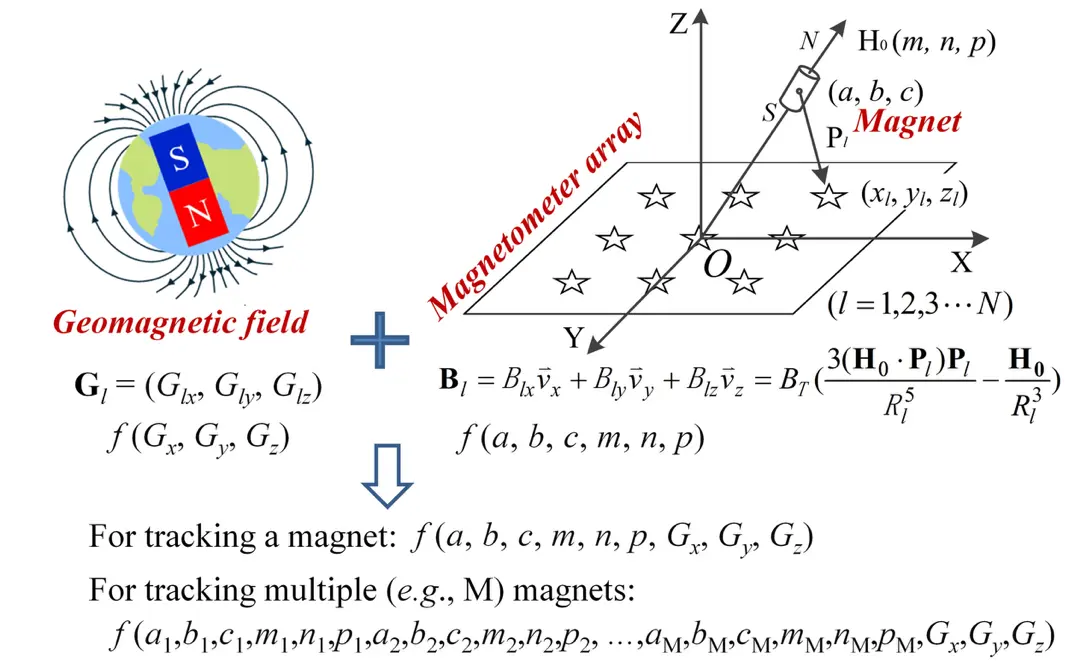
Figure 1. Schematic diagram of the EMT principle based on permanent magnets. The star symbol denotes the magnetometer. For the l-th magnetometer, the magnetic field distribution generated by a permanent magnet is a 3D static magnetic field vector Bl = (Blx, Bly, Blz), mixed with the 3D geomagnetic field vector Gl = (Glx, Gly, Glz). Thus, Gl should be removed from the sensor signals [29] or modeled as an unknown variable vector G = (Gx, Gy, Gz) to be estimated with the pose parameters (a, b, c, m, n, p) [30].
In the prototype implementation, a typical EMT architecture includes tri-axis orthogonal transmitter coils and tri-axis orthogonal sensing coils (see Figure 2). The transmitter coils are usually arranged in specific geometric configurations and generate alternating magnetic fields through time-division excitation mode [31]. The sensing coils detect the magnetic field strength in space and convert the weak induced signals into amplified, filtered, and digitized outputs through signal processing circuits. The signal processing stage employs techniques such as phase-locked amplification, band-pass filtering, and phase-sensitive detection to extract effective signals from noise, ensuring high-precision positioning [32].
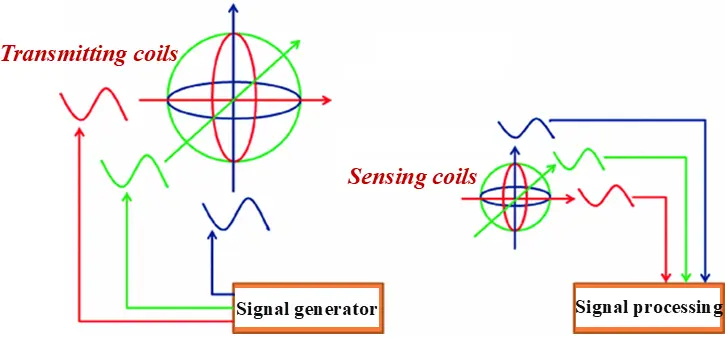
Figure 2. System diagram of AC magnetic field-based EMT system, with wired or wireless configuration. Different colors indicate different AC excitation frequencies used by the transmitting coils. The wired style depicts that the signal generator and the signal processing module are connected to the same microcontroller. The wireless style means there is no direct connection between the signal generator and the signal processing module, whereas the magnetic field sign ambiguity issue should be resolved [33]. Compared to the magnet, the AC magnetic field yields a higher signal-to-noise ratio and a larger tracking range.
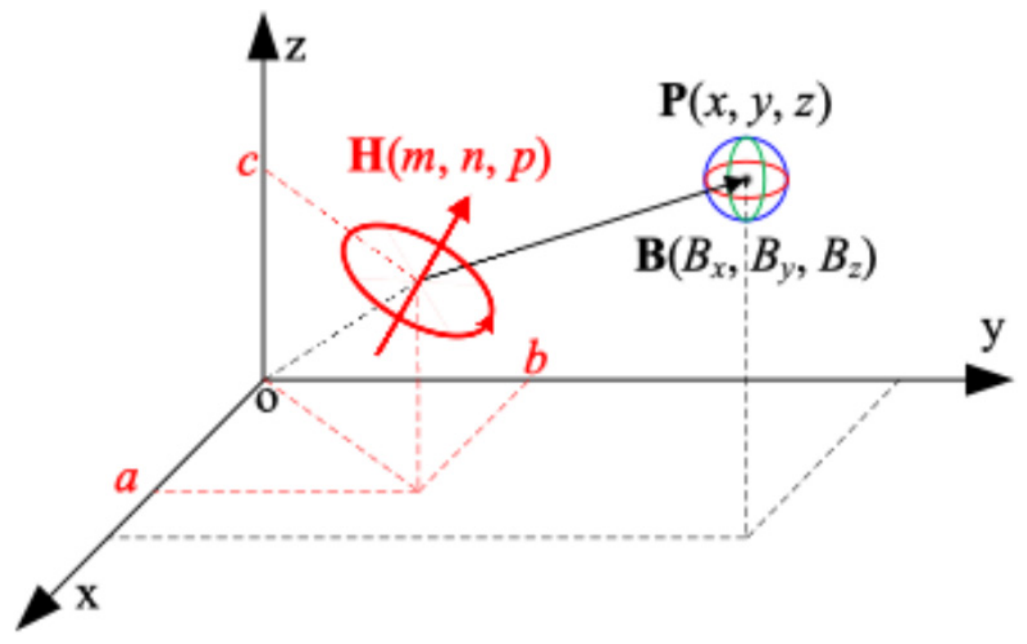
According to Biot-Savart Law, the magnetic flux intensity at point (x, y, z) generated by the transmitting coil is $$\bm{B}$$. Thus, as shown in Figure 3, the estimated magnetic field strength according to the dipole model is depicted as:
|
```latex\bm{B}={B}_{x}{\bm{e}}_{x}+{B}_{y}{\bm{e}}_{y}+{B}_{z}{\bm{e}}_{z}=\frac{{\mu }_{0}{\mu }_{ϵ}\bm{M}}{4\pi }\left(\frac{3\left(\bm{H}\cdot \bm{P}\right)\bm{P}}{{r}^{5}}-\frac{\bm{H}}{{r}^{3}}\right)``` |
(1) |
The magnetic field strength for the point of the l-th magnetometer or l-th sensing coil can be estimated according to the dipole model, as $${\bm{B}}_{calc}$$. Meanwhile, the measured magnetic field strength is $${\bm{B}}_{meas}$$. Thus, the magnet pose (a, b, c, m, n, p) of the target object can be calculated by the optimization process between the measured and estimated magnetic field strengths, as:
|
$$\left\{\begin{array}{l}\displaystyle \,min E = \sum\nolimits_{l=1}^{N}\left[\left(meas_{(xl)}^{B}-calc_{(xl)}^{B}\right)^{2}+\left(meas_{(yl)}^{B}-calc_{(yl)}^{B}\right)^{2}+\left(meas_{(zl)}^{B}-calc_{(zl)}^{B}\right)^{2}\right]\\ \,\,\,\,\,\,\,\,\,\,\,\,\,\,\,\,\,\,\,\,\,\,\,\,\,\,\,\,\,\,\,\,\,\,\,\,\,\,\,\,\,\,\,\,\,\,\,\,\,\,\,\,\,\,\,\,\,\,\,\,\,\,\,\,\,\,\,\,\,\,\,\,\,\,\,\,\,\,\,\,\,\,\,\,m^{2}+n^{2}+p^{2}=1\end{array}\right.$$ |
(2) |
As the dipole model cannot reflect the rotation around its axis, only a 5-DoF pose, i.e., 3D position and 2D orientation, cannot be directly yielded [34].
Degrees of freedom analysis is key to understanding EMT performance. Based on a single magnetic dipole model, the system can directly calculate 5-DoF pose (i.e., 3D positions + 2D orientations), as the magnetic dipole model cannot reflect rotation around its own axis. To achieve complete 6 degrees of freedom tracking, modern systems employ multiple innovative approaches: inertial sensor fusion schemes combine 5D magnetic tracking with 3D inertial measurement unit (IMU) data through Kalman filters [35]; opposing magnet pair schemes use two relatively positioned magnets, achieving full degrees of freedom by tracking their relative positions [36]; rotating magnetic dipole schemes generate rotating magnetic fields through two orthogonally excited coils, calculating complete pose using phase and amplitude information from induced signals [37].
For magnet-based tracking, a rectangular permanent magnet or an annular magnet with the equivalent magnetizing current can be adopted as the signal source [30,38]. 5-D magnetic tracking and 3-D inertial sensing can be fused to output 6-DoF pose, whereas an inertial measurement unit should be attached to the magnet. Besides [35], 6-DoF EMT can be accomplished using an opposing-magnet pair, which functions as the tracking of two magnets [36].
Environmental interference represents a major factor affecting EMT accuracy. Earth’s magnetic field compensation involves calibrating and measuring the Earth’s magnetic field distribution and subtracting the Earth’s magnetic field components from sensor data [39]. Metal interference compensation establishes interference models or employs machine learning algorithms to identify and compensate for magnetic field distortions caused by ferromagnetic materials [40]. Advanced EMT systems also utilize adaptive filtering algorithms for dynamic correction, ensuring stability in complex environments [41].
To track more targets, multi-target tracking technology has become a research focus. Related studies include 6-DoF tracking algorithms based on Particle Swarm Optimization (PSO) [38] or dual-domain few-shot learning [42], geomagnetic compensation techniques in magnetic tracking [39], magnetic tracking of wireless capsule endoscopes in mobile setups [30], etc. These research efforts provide theoretical and technical support for multi-target applications of EMT systems in complex rehabilitation scenarios.
2.2. EMT Algorithms
2.2.1. Optimization-Based EMT Algorithms
High-precision magnetic field modeling remains a highly complex task [43,44]. Moreover, EMT inverse problems, which aim to estimate the position and orientation of magnetic sources from measured magnetic field distributions, are inherently nonlinear and often ill-posed [45,46]. Therefore, nonlinear optimization has been widely adopted as a conventional strategy in magnetic tracking systems.
For a general EMT system consisting of M magnetic sources and N sensors, the overall objective error can be expressed as:
|
$$E\left(x,y,z,\alpha ,\beta ,\gamma \right)=\sum _{i=1}^{M}\sum _{j=1}^{N}\sum _{k=1}^{3}{\left[{B}_{ij}^{k}\left(x,y,z,\alpha ,\beta ,\gamma \right)-{B}_{ij}^{\mathrm{\prime}k}\right]}^{2}$$ |
(3) |
where $${y}_{k}^{B}\left(x,y,z,\alpha ,\beta ,\gamma \right)$$ denotes the magnetic flux density component along the k-axis at the pose $$\left(x,y,z,\alpha ,\beta ,\gamma \right)$$, as calculated by the magnetic field model. $${y}_{k}^{B}$$ represents the corresponding magnetic field component measured by the sensors. The optimization objective of the proposed cost function in Equation (3) is to determine the optimal state vector $$\left(x,y,z,\alpha ,\beta ,\gamma \right)$$ that minimizes the residuals between theoretical predictions and experimental measurements.
Various iterative nonlinear optimization algorithms have been developed for electromagnetic tracking, including the Gauss–Newton method [31,32,47], the Levenberg–Marquardt (LM) method [37,48], and the Nelder–Mead method [49,50]. Among these methods, the LM algorithm has been extensively employed because it provides a favorable balance between estimation accuracy and computational efficiency [51,52]. In addition, the LM method has demonstrated robust performance in both single-point and multi-point tracking applications [34,53].
However, traditional nonlinear optimization algorithms are computationally intensive, highly dependent on initial guesses, and generally unable to guarantee convergence to the global optimum [2]. Consequently, various strategies have been proposed to provide approximately accurate initial estimates for nonlinear optimization algorithms, thereby reducing the risk of convergence to local optima. One class of approaches generates initial guesses using heuristic algorithms, such as PSO [37,54] and the Whale Optimization Algorithm (WOA) [53], as illustrated in Figure 4. Another class combines linear and nonlinear algorithms, in which the initial estimates are first obtained using linear methods and subsequently refined through nonlinear optimization [28,55].
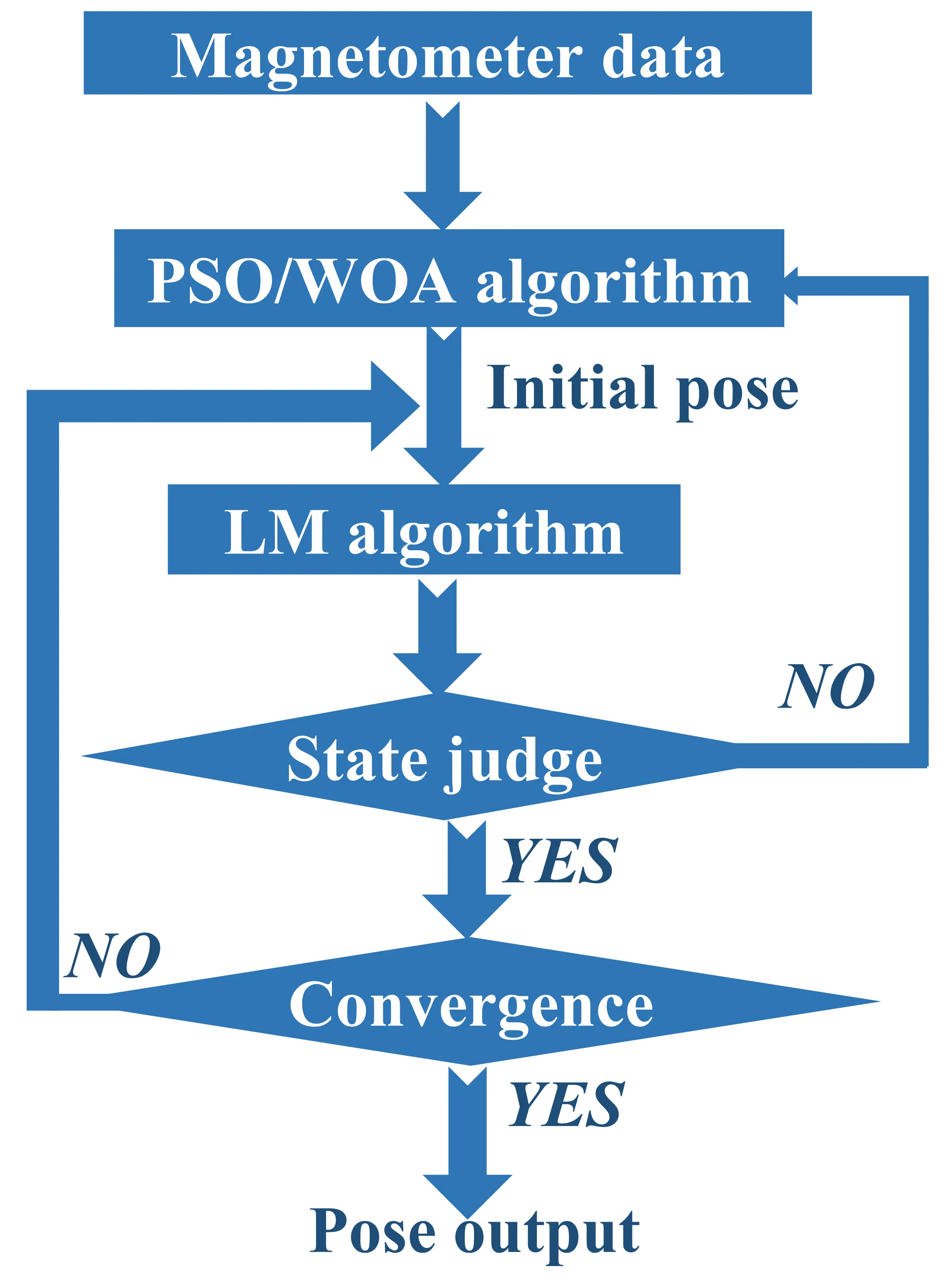
Figure 4. Diagram of the EMT algorithm with the combination of swarm intelligence (e.g., PSO or WOA) and nonlinear optimization (e.g., LM) to achieve the global optimum.
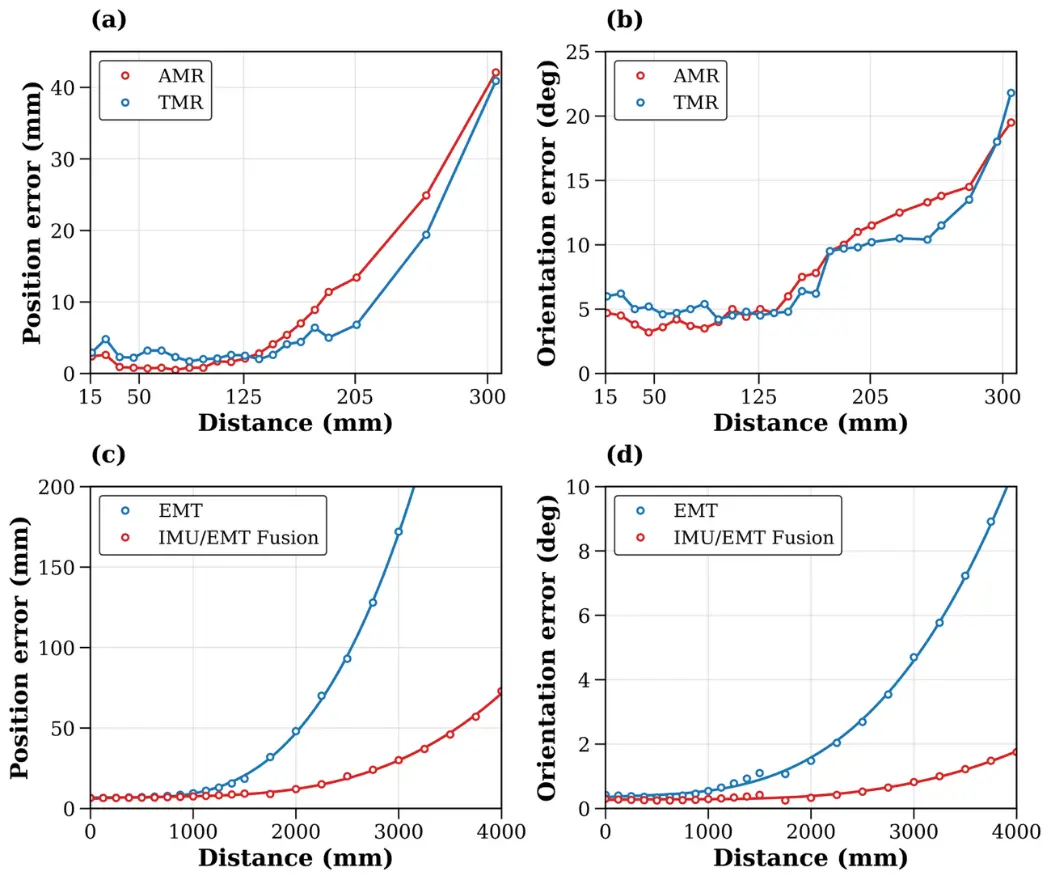
As shown in Figure 5, the relationship between the tracking accuracy and the distance for the permanent magnet-based system was investigated [52,56]. The relationship between the tracking accuracy and the distance is also presented for the wireless EMT system.
2.2.2. Filter-Based Fusion Algorithms
Existing EMT approaches based on optimization algorithms are limited to stationary or low-speed motions.
The iteration time of the optimization algorithms is measured in hundreds or thousands of milliseconds. However, a greater discrepancy in the actual values of the pose parameters is observed between the two adjacent magnetometer sequences when the robot performs a high-speed motion, i.e., ms-level duration for a single iteration. Consequently, the iteration error for the magnet pose is subject to a considerable margin of error. Consequently, robots utilising magnetic nails for sorting cannot employ optimisation algorithms, as is the case with EMT methods, thus resulting in constrained tracking performance.
The Kalman filter (KF) and the extended Kalman filter (EKF) algorithms have been demonstrated to be effective in estimating state quantities of nonlinear systems [57,58]. Song et al. [38] advanced an EKF-based permanent magnetic tracking (PMT) algorithm to reduce the computational cost of the optimization algorithm-based PMT method for minimally invasive surgery. The experimental results demonstrate that the EKF-based PMT algorithm has the capacity to reduce the tracking latency while maintaining accurate positional accuracy. However, the maximum recorded velocity of the magnet was 8 mm/s, and the magnet trajectories were determined in advance. Lee et al. [59] employed the iterated dual-EKF to track a moving transmitter, demonstrating excellent convergence speed in simulation. Dai et al. presented a PMT method for the fast motion of a magnet target based on EKF [58], where the random walk model was adopted for the state equation model of the magnet. The state update model parameter of the EKF estimation pertaining to state update is subject to adaptive adjustment in accordance with varying magnet speeds. Consequently, the tracking performance remains consistent even in cases of varying magnet speeds. The tracking performance of the proposed PMT method is verified with random motion tasks at a maximum speed of 40 mm/s for technical verification and experiments in a real environment.
2.2.3. Simplified Tracking Model for the Execution in an Embedded Microcontroller
For the magnetic dipole, Equation (1) is valid for the magnetic distribution around the magnet or coil, where the coordinate origin is the center point of the magnet or coil. However, Equation (1) is a quintic nonlinear equation.
If the origins of coordinate systems {g} and {s} coincide and the S-N axis of the magnet is parallel to the Z-axis, (x, y, z, m, n, p) is equal to (0, 0, 0, 0, 0, 1). Thus, Equation (1) can be simplified as
|
```latex\begin{cases}B_x=B_T\frac{3ac}{r^5}\\B_y=B_T\frac{3bc}{r^5}\\B_z=B_T\left(\frac{3c^2}{r^5}-\frac{1}{r^3}\right)&&\end{cases}``` |
(4) |
where the magnetic field intensity B = (Bx, By, Bz) can be measured by tri-axis magnetometers or coils at one or more measuring points; the position component c is a fixed value; BT can be obtained by the calibration process [60].
For the EMT prototype with tri-axis orthogonal coils and tri-axis orthogonal coils, a 6-DoF pose can be obtained with a simplified tracking algorithm [55,61]. This analytical method can significantly reduce computational resources, thereby being deployed in a low-cost microcontroller.
2.2.4. Regression-Based EMT Algorithms
The transition from traditional analytical models to deep learning-based regression algorithms has significantly reshaped the landscape of EMT, particularly for rehabilitation applications where nonlinear magnetic distortions and complex motion dynamics are prevalent. Early explorations in this domain, such as the work of Sasaki and Ohta [62], established the fundamental feasibility of using machine learning architectures to map magnetic field measurements directly to spatial coordinates. This shift away from model-dependent sensing has paved the way for more sophisticated architectures capable of handling higher degrees of freedom and specific anatomical constraints. For instance, Ouyang et al. developed a specialized neural network approach to measure the 3-D rotation angles of spherical joints [63]. By leveraging the magnetic effect within a regression-based framework, this method provides a precise solution for monitoring prosthetic or anatomical joint movements, which are critical for objective rehabilitation assessment.
To further improve the precision and robustness of these estimations, recent research has integrated advanced structural components into the regression pipeline. Yang et al. introduced PRPosNet [64], a novel architecture that combines the local feature extraction capabilities of Convolutional Neural Networks (CNNs) with the global context-awareness of Transformers. By incorporating coordinate attention mechanisms, PRPosNet effectively captures the intricate spatial relationships within sensor arrays, leading to highly accurate and stable pose estimation even in noisy environments. In scenarios where purely data-driven approaches might struggle to achieve absolute numerical accuracy, researchers have turned to more integrated methodologies. A notable example is the work of Guo et al. [65], who proposed a hybrid end-to-end framework termed the ResNet-LM fusion algorithm. This approach utilizes a residual network to provide a rapid, coarse pose regression, which is then refined by an LM optimization layer. Such a hybrid architecture ensures that the system maintains the high-speed inference of deep learning while benefiting from the rigorous convergence properties of traditional optimization.
One of the primary challenges in deploying deep learning for rehabilitation tracking is the scarcity of high-quality, labeled clinical data. To address this, data-efficient learning strategies have emerged as a vital research frontier. Su et al. proposed AMagPoseNet [42], which achieves real-time 6-DoF magnet pose estimation through dual-domain few-shot learning. By extracting features from prior physical models and transferring them to the neural network, the system can achieve high performance with minimal real-world training samples. Similarly, Wang et al. explored Sim-to-Real transfer learning techniques specifically for magnet localization [66], demonstrating that models pre-trained in synthetic magnetic environments can be successfully adapted to real-world sensors with very few shots. Pushing the boundaries of label-free estimation, Liu et al. presented an unsupervised deep learning approach for 5-D position estimation [67]. Their model-free algorithm leverages internal geometric constraints to learn the mapping without the need for ground-truth labels, offering a scalable path for deploying EMT systems in diverse clinical settings where calibration data is difficult to obtain.
Finally, the practical utility of these regression models in rehabilitation hinges on their ability to withstand environmental interference, such as that caused by metallic hospital equipment. Su et al. addressed this through the MagRobustNet framework [40], which enhances the anti-interference capabilities of magnetic tracking systems. By integrating self-supervised anomaly detection with a measurements recovery mechanism, the framework can identify corrupted magnetic signals and reconstruct the true pose, ensuring reliable operation in complex, real-world environments. Collectively, these advancements—ranging from hybrid end-to-end frameworks to few-shot and unsupervised learning—provide the necessary technological backbone for modern rehabilitation systems, enabling precise, robust, and patient-specific movement tracking.
2.2.5. Enhanced Anti-Interference Algorithm
Environmental interference is a major factor that limits the translation of EMT from controlled laboratory settings to clinical and home-based rehabilitation scenarios. Compared with optical tracking (OT), EMT does not require a direct line of sight (LOS), which makes it suitable for rehabilitation tasks involving occlusion, wearable devices, or frequent changes in limb posture. This advantage, however, depends on the consistency between the predefined magnetic field model and the magnetic field measured in the actual working environment. In rehabilitation settings, wheelchairs, rehabilitation robots, metallic exoskeleton structures, motors, treatment beds, mobile electronic devices, and conductive or ferromagnetic materials near the human body can perturb the magnetic field distribution and introduce systematic errors. Previous reviews have reported that such interference can substantially degrade the accuracy of EMT, with errors that are often spatially, orientationally, and environmentally dependent rather than purely random [1,3]. For rehabilitation applications, these errors may affect joint angle estimation, limb trajectory reconstruction, VR feedback, and robot-assisted control. Therefore, interference mitigation in EMT should go beyond conventional noise filtering and address the identification, modeling, calibration, and compensation of magnetic field distortions induced by the environment.
In an AC EMT system, transmitting coils generate low-frequency alternating magnetic fields, whereas receiving coils or magnetic sensors recover spatial pose through synchronous demodulation, phase-based demodulation, or multi-axis magnetic-field measurement and reconstruction. A major source of error in these systems is conductive metal, in which alternating magnetic fields induce eddy currents. The resulting secondary magnetic fields change the amplitude and phase of the original field, thereby modifying the field–pose relationship rather than merely adding random noise. Existing compensation strategies can be broadly divided into signal-level distortion suppression and model-level distortion compensation. Signal-level methods reduce distortion during excitation or demodulation. For example, non-sinusoidal excitation waveforms, including quadratic excitation, exploit the different derivative characteristics of the directly induced signal and the distortion-induced signal to reduce eddy-current errors caused by metal [68]. In contrast, model-level methods formulate environmental interference as a field-modeling problem by characterizing, interpolating, or parameterizing the distorted measurement space for compensated pose estimation. Representative methods include offline volume calibration, interpolated magnetic field maps, virtual magnetic dipole sources, and dynamic field reconstruction [69]. Near large metallic medical devices, such as C-arms, dynamic field distortion can increase EMT errors to the centimeter level, whereas real-time field modeling and compensation can substantially reduce these errors [70,71]. Witness-sensor-based methods further support online compensation by monitoring magnetic field changes at fixed locations and enabling the selection or interpolation of pre-trained compensation models [41]. Studies on eddy-current-induced phase effects in AC EMT have also shown that phase differences and calibration algorithms can model secondary fields, providing a basis for the joint compensation of synchronization errors, phase shifts, and metallic distortion [72].
Beyond physics-based modeling and calibration, data-driven methods have been increasingly explored to improve the robustness of EMT in complex environments. Conventional analytical models usually assume a known transmitter field and a relatively ideal measurement environment, but these assumptions may fail under strong distortion, nonlinear field distributions, or local metallic occlusion. Machine learning methods, including random forests and artificial neural networks, have been adopted to learn nonlinear magnetic field mappings in electromagnetic navigation systems, thereby improving modeling capacity in distorted field environments [73]. For online compensation, neural networks can learn spatial error distributions from real-time sampled data, while spatial uncertainty information can be used to estimate the reliability of compensation in different regions [74]. Domain-adaptation methods, such as CycleGAN, have also been used to map EMT positions acquired in distorted C-arm environments to an undistorted or less distorted domain, reducing the need for repeated full calibration [75]. In wireless EMT, receiver power consumption, signal amplitude, synchronization links, and phase consistency can affect the SNR and the stability of pose inversion. Therefore, low-noise acquisition, multi-frequency or multi-axis demodulation, filtering constraints, and model priors are important for reducing the impact of SNR degradation on tracking accuracy [28].
Overall, data-driven methods should be viewed as complements to physical modeling rather than replacements. Their value lies in learning nonlinear and spatially varying error fields that are difficult to describe analytically, whereas their main limitation is the dependence on training data that adequately cover the expected device layouts, metallic objects, sensor positions, and user movements.
Permanent-magnet and static magnetic tracking are outside the typical AC EMT framework, but some of their interference-mitigation concepts may still inform the design of low-power wearable rehabilitation systems. Geomagnetic compensation, background magnetic-field compensation, and differential measurement have been used to suppress slowly varying or spatially uniform background fields. IMU-assisted attitude estimation can compensate for changes in geomagnetic projection caused by rotation of the sensor array [29], whereas differential signals can partially cancel spatially uniform background magnetic fields [30,39]. Although these methods were mainly developed for static magnetic localization, their underlying principles can provide useful guidance for reference sensors, differential arrays, and IMU-fusion strategies in wearable rehabilitation tracking. For rehabilitation-oriented EMT, the choice of an interference-mitigation strategy should match the application setting: fixed clinical environments may benefit from pre-calibrated field maps and volume compensation, mobile rehabilitation devices may require online sensor monitoring and dynamic field models, and home-based wearable systems may rely more on lightweight, low-power, and adaptive fusion-based compensation methods.
To provide a clearer overview of the current state of EMT systems applied in rehabilitation, Table 1 summarizes the key characteristics of representative EMT platforms, including their tracking modality, degrees of freedom, accuracy, range, and rehabilitation applications.
Table 1. Comparison of representative EMT systems for rehabilitation applications.
|
System |
Type |
DoF |
Accuracy |
Range |
Sensor |
Rehab Application |
|---|---|---|---|---|---|---|
|
NDI Aurora [13] |
EMT |
5/6 |
~0.5 mm |
~1.5 m |
Coil |
Upper-limb assessment, gait analysis |
|
Polhemus Liberty [14] |
EMT |
6 |
~0.1 mm |
~1.5 m |
Coil |
Shoulder kinematics, VR-assisted therapy |
|
Radwave [15] |
EMT |
6 |
<1.0 mm |
~2.0 m |
Coil |
Surgical navigation |
|
FluxPose FBT [76] |
EMT |
6 |
~5.0 mm |
~3.0 m |
Coil |
Whole-body motion capture |
|
OMMO [19] |
PMT |
6 |
~2.0 mm |
~3.0 m |
TMR |
Joint kinematic assessment |
|
Myokinetic [77] |
PMT |
6 |
~1.0 mm |
~0.1 m |
Implanted |
Prosthetic control |
|
Magnetomicrometry [78] |
PMT |
1D |
Sub-mm |
~0.05 m |
Implanted |
Muscle-tendon length measurement |
3. Rehabilitation Applications
Advanced sensing, wearable systems, and data-driven methods have increasingly been applied to orthopedic and home-based rehabilitation, offering methodological insights for translating tracking technologies into rehabilitation applications [4,79,80]. EMT provides real-time, drift-free pose estimation without line-of-sight constraints. Thus, EMT technology is more robust to occlusion than optical systems and more spatially stable than inertial sensing, making it well-suited for fine hand movements and constrained rehabilitation settings.
Existing reviews have summarized the technical foundations, validation methods, interference sources, and medical applications of EMT [1,3]. Within rehabilitation, assessment applications focus on objective kinematic metrics, training applications require low-latency movement-quality feedback, and assistive-device applications demand stable, embeddable control interfaces. This section reviews EMT and related magnetic sensing technologies by application scenario and target population.
3.1. Classification by Application Scenarios
3.1.1. Rehabilitation Assessment
Quantitative assessment is the most established rehabilitation application of EMT. Clinical scales remain essential for evaluating impairment and function; however, task scores alone cannot fully describe movement execution. EMT can complement clinical scales by measuring movement time, trajectory length, peak velocity, movement smoothness, range of motion, and inter-joint coordination.
Post-stroke upper-limb assessment provides the strongest evidence. Saes et al. [81] used an electromagnetic motion tracking system to quantify reach-to-grasp movements after stroke and reported that the spectral arc length (SPARC) smoothness metric was associated with upper-extremity Fugl-Meyer scores. Van Dokkum et al. [82] further showed that reach-to-grasp kinematics could distinguish paretic-limb, non-paretic-limb, and healthy-control movements during early post-stroke recovery. Together, these studies indicate that EMT-derived kinematics can provide objective information on motor recovery beyond task completion.
Hand and finger assessment is another suitable application. Fine hand motion is difficult to capture with optical systems due to self-occlusion and the multiple degrees of freedom involved. Wearable magnetic induction sensors, iterative magnetic tracking algorithms, magnetic–inertial fusion, and electromagnetic sensor layouts have been proposed to estimate hand and finger kinematics [83,84,85,86]. These studies support the feasibility of magnetic tracking for fine motor assessment, although patient-level validation remains limited.
EMT has also been used in shoulder and lower-limb assessment. Electromagnetic tracking has served as a reference for mixed-reality hand tracking in shoulder rehabilitation assessment [87]. Three-dimensional EMT has been applied to quantify shoulder movement patterns in patients with frozen shoulder [88]. Repeatable three-dimensional treadmill gait kinematics have also been obtained using an electromagnetic tracking system [89]. These studies suggest that EMT can provide objective joint-motion information in selected musculoskeletal and locomotor rehabilitation settings.
Overall, EMT-based assessment is relatively mature in upper-limb kinematic evaluation, especially after stroke. Broader clinical use still requires standardized protocols, robust interference compensation, and stronger associations between EMT-derived variables and clinical outcomes.
3.1.2. Rehabilitation Training
In rehabilitation training, EMT systems can provide real-time motion information for feedback, task adaptation, and interactive exercise. A typical EMT-assisted training system includes motion acquisition, feature extraction, and feedback generation. Position and orientation data can be converted into range of motion, repetition count, movement smoothness, joint coordination, and compensatory movement.
Compared with offline assessment, training requires lower latency, higher robustness, and better usability. EMT may be useful for hand training, upper-limb reaching, virtual-reality interaction, and robot-assisted exercise because near-body and occluded movements can be tracked. Magnetic–inertial fusion and compact magnetic sensing methods provide technical support for such applications [27,63,85]. Multitransmitter electromagnetic positioning may further enlarge the effective workspace for rehabilitation movements with larger ranges [90].
EMT can also support virtual and game-based rehabilitation. Magnetic tracking devices have been benchmarked for rehabilitative gaming [91]. Sparse electromagnetic trackers have been used for three-dimensional human pose estimation [92]. 6-DoF magnetic tracking has also been investigated for human gait analysis and classification [93]. These studies suggest that EMT may support avatar-driven training, whole-body interaction, and gait-related rehabilitation analysis.
However, rehabilitation training requires reliable tracking in complex environments. Metallic beds, wheelchairs, robotic frames, motors, and electronic devices may distort magnetic fields. Anti-interference methods such as MagRobustNet have therefore been proposed to improve the robustness of magnetic tracking to environmental disturbances [40]. Current evidence mainly supports technical feasibility rather than rehabilitation efficacy. Future studies should determine whether EMT-based feedback improves motor outcomes, training intensity, adherence, and transfer to daily activities.
3.1.3. Control Interface for Assistive Devices and Prosthetics
Assistive devices and prosthetics are another translational application of magnetic tracking. In this scenario, magnetic tracking is not only used to measure external limb motion. Instead, muscle deformation, tissue length change, or implanted magnet displacement is transformed into control signals for prosthetic hands, orthoses, exoskeletons, or assistive robots. Compared with surface electromyography, magnetic interfaces may provide passive implants, wireless sensing, deep-tissue access, and parallel multi-degree-of-freedom control.
Magnetomicrometry provides a representative example. Taylor et al. introduced implanted magnetic beads for real-time tissue length tracking [78]. By measuring relative magnet displacement, this method provides direct information on muscle or tendon mechanics. Such information may be useful for closed-loop prosthetic and exoskeleton control.
The myokinetic interface further translates magnetic tracking into prosthetic control. Early studies investigated multiple implanted magnet localization and the feasibility of permanent magnets as a control interface for amputees [77,94]. A first-in-human study later implanted six permanent magnets into the residual forearm muscles of a transradial amputee, and used transcutaneous magnetic localization to control a dexterous prosthetic hand [95]. This study provides strong evidence that implanted magnetic tracking can restore grasping-related control.
Several technical barriers have also been addressed. Transcutaneous localization, implantation planning, data-driven real-time tracking, multi-magnet dynamic reconfiguration, and physical disturbance rejection have been investigated for myokinetic prosthetic interfaces [77,96,97,98,99,100]. These studies define a coherent development path from sensing principle to embedded prosthetic control. However, implantation safety, magnet migration, socket motion, external magnetic interference, long-term stability, and regulatory validation remain unresolved.
Compared with prosthetic control, EMT applications in orthoses and rehabilitation robots are less mature. Sensor-driven shoulder exoskeleton control and upper-limb exoskeleton kinematic compatibility have been reviewed or analyzed in rehabilitation contexts [5,101]. EMT may serve as a reference system for evaluating joint alignment, human–robot kinematic compatibility, or movement assistance. However, current evidence is insufficient to support EMT as a mature control solution for rehabilitation robots.
3.2. Target Population
The current evidence is unevenly distributed across rehabilitation populations. Stroke survivors are the most frequently studied group, especially for upper-limb kinematic assessment. EMT can quantify reach-to-grasp quality, movement smoothness, and compensatory strategies after stroke [81,82]. These measures are clinically relevant because task completion may mask abnormal movement patterns. When combined with surface electromyography, movement kinematics may also help relate neural drive, muscle activity, and movement output [102,103].
Patients with musculoskeletal disorders represent another relevant population. EMT can quantify shoulder and gait kinematics in controlled settings [88,89]. Compact magnetic sensing may further support local joint assessment, prosthetic joint monitoring, and wearable motion detection [27,63]. However, the evidence base remains smaller than that for post-stroke upper-limb assessment.
Amputees are the most promising population for implanted magnetic interfaces. Myokinetic prosthetic control has a clear rationale because residual muscle displacement can be transformed into prosthetic commands [77,94,95,96,97,98,99,100,104]. In this population, magnetic tracking is not only an assessment method but also a potential control interface for functional restoration.
Other populations, including patients requiring pulmonary, lower-limb, postural, or home-based rehabilitation, remain at an exploratory stage. Magnetic-field-based respiration sensing has been proposed for pulmonary rehabilitation monitoring [105]. However, this approach differs from full 6-DoF EMT. For home rehabilitation, magnetic sensing may be attractive because compact and occlusion-resistant devices can be designed. Nevertheless, uncontrolled metallic environments, sensor placement variability, and calibration burden remain major barriers.
In summary, EMT has the strongest evidence for rehabilitation in post-stroke upper-limb assessment and myokinetic prosthetic control. Applications in feedback-based training, orthoses, rehabilitation robots, home rehabilitation, and whole-body monitoring are promising but still require stronger clinical validation.
4. Prospect
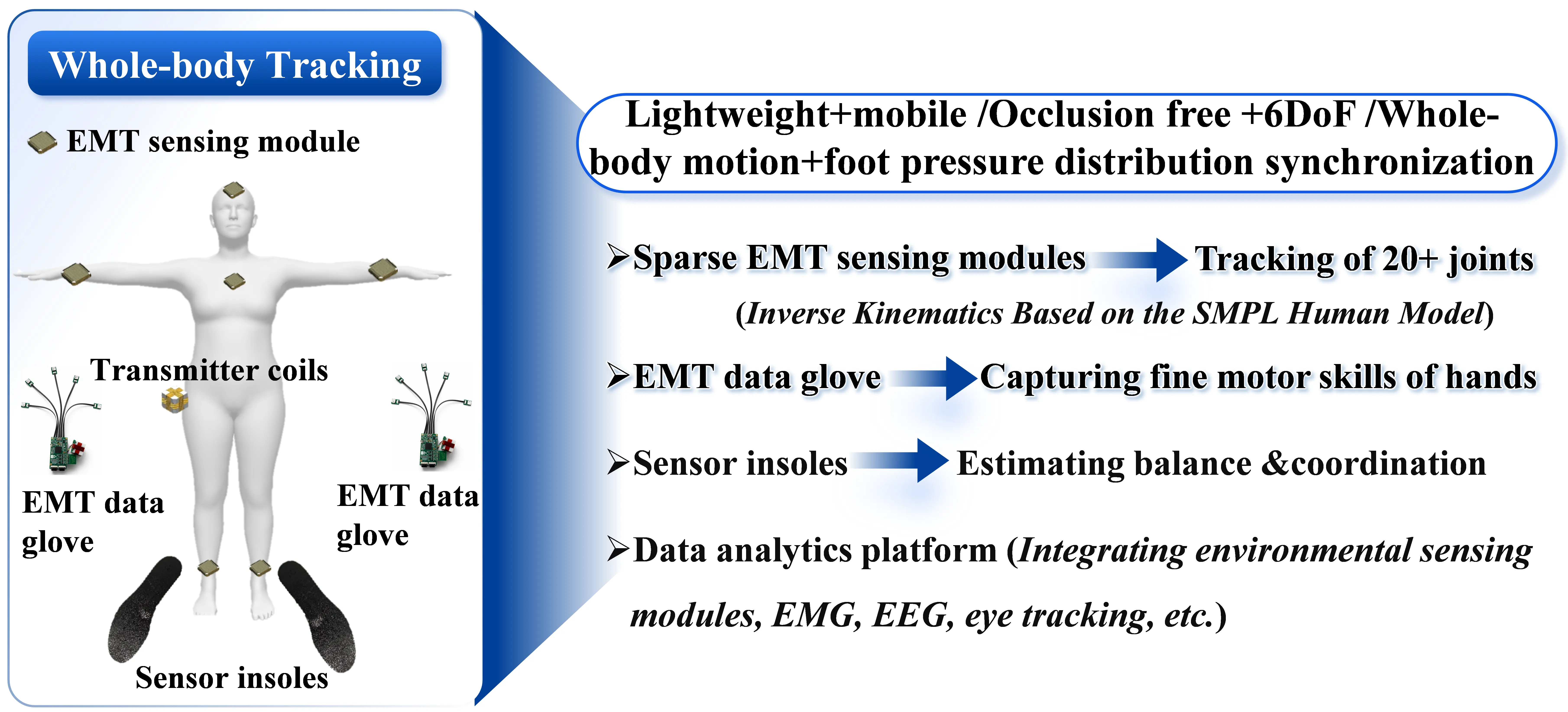
Wireless EMT-based whole-body tracking systems, such as the FluxPose FBT kit (FluxPose Inc., Amsterdam, The Netherlands) [76], have been proposed by some startups. In an era of wearable sensing, this whole-body tracking approach enables motion tracking outside the room with a lightweight and mobile solution, as shown in Figure 6.
Accordingly, the future of EMT-based whole-body tracking in rehabilitation lies in transitioning from episodic, clinic-bound interventions to continuous, ubiquitous, and intelligence-driven patient care. To fully unlock this clinical potential, future developments must synergize hardware miniaturization with algorithmic intelligence. Advanced multi-sensor fusion and deep-learning motion priors will be crucial to overcome environmental magnetic interference and visual occlusions, thereby enabling precise, long-term kinematic assessment and immersive biofeedback during functional training in naturalistic home environments. Concurrently, the evolution toward ultra-low-power flexible sensor arrays and wearable field generators will deliver low-latency, drift-free control interfaces for assistive devices, prostheses, and exoskeletons. Ultimately, these advancements will establish wearable EMT as an imperceptible yet powerful backbone for next-generation personalized telerehabilitation and seamless human-machine coordination.
5. Discussion
EMT technology has great potential in rehabilitation applications due to its unique physical advantages, such as being occlusion-free and capable of providing full 6-DoF pose tracking. From a hardware integration perspective, the specific choice of EMT configurations should be strictly guided by clinical requirements. For post-stroke upper-limb assessment, high-end AC systems (e.g., NDI Aurora) with sub-millimeter accuracy remain the gold standard, although their wired architecture and fixed transmitter placement limit portability. For wearable and home-based rehabilitation, compact permanent-magnet systems with TMR sensors offer a favorable trade-off between tracking range, power consumption, and form factor, albeit at the cost of reduced absolute accuracy. For prosthetic control interfaces, implanted magnet systems provide direct muscle-tendon length measurements that are not achievable by any external tracking modality, but they introduce surgical complexity and long-term biocompatibility concerns.
To further clarify the technical boundaries, Table 2 summarizes a rigorous comparison of EMT, OT, and IMUs across key physical dimensions. From a spatial topology perspective, these modalities represent fundamentally different tracking references that dictate their environmental constraints. Traditional OT systems offer the highest spatial accuracy but operate on an Outside-In architecture (Fixed Infrastructure). This setup restricts patients to structured laboratory volumes and is highly vulnerable to LOS occlusions, making it unsuitable for near-body or bed-ridden tasks. Conversely, IMUs function as an Inside-In modality (Infrastructure-Free); they provide unlimited tracking ranges for ambulatory and long-duration in-the-wild monitoring but suffer from unconstrained position drift over time. EMT occupies a unique, intermediate niche that can be conceptualized as a Local Outside-In system. By tethering the coordinate system to a Local Source rather than a fixed room, EMT delivers drift-free, sub-millimeter tracking without LOS requirements. This spatial flexibility makes it uniquely well-suited for rehabilitation scenarios involving occluded joints, bedside monitoring, or portable home-based telerehabilitation.
Table 2. Comparison of motion tracking modalities for rehabilitation applications.
|
Tech. |
LOS Req. |
Drift |
Pos. Acc. |
Ori. Acc. |
Work Range |
Deployment |
Interference |
|---|---|---|---|---|---|---|---|
|
EMT |
N |
N |
0.1–5 mm |
0.1°–1° |
0.5–3 m |
Local Source |
Ferromagnetic/Metal |
|
OT |
Y |
N |
<0.1 mm |
<0.1° |
2–20 m |
Fixed Infrastructure |
Ambient light/Occlusion |
|
IMU |
N |
Y |
N/A |
0.5°–2° |
Unlimited |
Infrastructure-Free |
Magnetic fields/Iron |
Note: Values in this table represent typical ranges from literature and vary by hardware setup. OT refers to marker-based multi-camera systems. N/A for IMU position denotes time-dependent cumulative drift without external constraints (e.g., zero-velocity updates).
Despite these distinct advantages, several intrinsic physical challenges must be addressed before widespread clinical translation. The primary limitation of EMT is its susceptibility to environmental interference; nearby ferromagnetic materials or electromagnetic fields can distort the magnetic flux, compromising tracking accuracy. Furthermore, its working range is fundamentally bounded by the localized field generator, typically restricting active tracking to a workspace of 0.5–3 m.
Looking forward, the future directions of EMT will focus on breaking these physical boundaries through hybrid tracking frameworks. Integrating EMT with inertial sensors or optical tracking can yield robust, multi-modal fusion systems that mitigate drift and occlusion simultaneously. Concurrently, the convergence of hardware miniaturization, wireless communication, and AI-driven magnetic field distortion compensation will accelerate the transition of EMT from laboratory prototypes to clinical-grade, unobtrusive wearable devices. Standardized evaluation protocols, larger clinical validation studies, and regulatory frameworks will be essential to realize this clinical potential.
6. Conclusions
In this paper, a comprehensive survey of EMT technologies for rehabilitation engineering was provided. The paper systematically focused on EMT configurations that deliver robust, LOS-free pose estimation in complex clinical settings. We categorized these solutions based on their hardware architectures and tracking paradigms, evaluating the trade-offs between interference immunity and effective tracking volumes. Depending on the coil designs and algorithmic frameworks, current EMT systems offer 5-DoF or 6-DoF tracking with accuracies ranging from sub-millimeter to centimeter scales. This systemic diversity demonstrates that no single EMT configuration completely dominates the field; rather, the optimal system selection is strictly dictated by specific rehabilitation requirements, such as target populations and clinical scenarios. Moving forward, the convergence of advanced sensor designs and data-driven deep learning models will serve as the primary catalyst for expanding the accessibility of EMT in personalized healthcare.
Statement of the Use of Generative AI and AI-Assisted Technologies in the Writing Process
During the preparation of this manuscript, the authors used ChatGPT and Gemini to improve the grammar and language of the manuscript. After using this tool, the authors reviewed and edited the content as needed and take full responsibility for the content of the published article.
Author Contributions
Conceptualization, H.D., X.S. and H.L.; Methodology, H.D., H.L. and P.C.; Writing—Original Draft Preparation, H.D., H.L., P.C., C.Z. and Z.Z.; Writing—Review & Editing, H.D., P.C. and H.L.; Visualization, H.D., P.C., C.Z. and H.L.; Supervision, H.D. and T.C.L.; Project Administration, H.L.; Funding Acquisition, H.D.
Ethics Statement
Not applicable.
Informed Consent Statement
Not applicable.
Data Availability Statement
There is no research data linked to this paper.
Funding
This research was funded by the Fujian Provincial Science and Technology Plan Projects under Grants 2025J08137, 2025T3006, and 2025T3025, the Major Science and Technology Project of Fujian Province under Grants 2024HZ025022 and 2024YZ036017, the Open Project Program of Fujian Key Laboratory of Special Intelligent Equipment Measurement and Control, Fujian Special Equipment Inspection and Research Institute under Grant FJIES2023KF02, and the Projects of Strategic Emerging Industries and Future Industries of Fuzhou-Xiamen-Quanzhou National Independent Innovation Demonstration Zone, and the Joint Funds for Innovation of Science and Technology, Fujian Province under Grant 2023Y9136.
Declaration of Competing Interest
The authors declare that they have no known competing financial interests or personal relationships that could have appeared to influence the work reported in this paper.
References
- Franz AM, Haidegger T, Birkfellner W, Cleary K, Peters TM, Maier-Hein L. Electromagnetic Tracking in Medicine—A Review of Technology, Validation, and Applications. IEEE Trans. Med. Imaging 2014, 33, 1702–1725. DOI:10.1109/TMI.2014.2321777 [Google Scholar]
- Yi J, Liu J, Zhang C, Lu X. Magnetic Motion Tracking for Natural Human Computer Interaction: A Review. IEEE Sensors J. 2022, 22, 22356–22367. DOI:10.1109/JSEN.2022.3215285 [Google Scholar]
- Sorriento A, Porfido MB, Mazzoleni S, Calvosa G, Tenucci M, Ciuti G, et al. Optical and Electromagnetic Tracking Systems for Biomedical Applications: A Critical Review on Potentialities and Limitations. IEEE Rev. Biomed. Eng. 2020, 13, 212–232. DOI:10.1109/RBME.2019.2939091 [Google Scholar]
- Kuroda Y, Young M, Shoman H, Punnoose A, Norrish AR, Khanduja V. Advanced rehabilitation technology in orthopaedics—A narrative review. Int. Orthop. 2021, 45, 1933–1940. DOI:10.1007/s00264-020-04814-4 [Google Scholar]
- Karasheva M, Saudanbekova A, Utepbergen A, Akkulova S, Niyetkaliyev A, Ozhikenov K, et al. Sensor-driven control strategies for post-stroke shoulder rehabilitation exoskeletons: A systematic review. MethodsX 2025, 15, 103648. DOI:10.1016/j.mex.2025.103648 [Google Scholar]
- Hindle BR, Keogh JWL, Lorimer AV. Inertial-Based Human Motion Capture: A Technical Summary of Current Processing Methodologies for Spatiotemporal and Kinematic Measures. Appl. Bionics Biomech. 2021, 2021, 6628320. DOI:10.1155/2021/6628320 [Google Scholar]
- Afzal HMR, Louhichi B, Alrasheedi NH. Challenges in Combining EMG, Joint Moments, and GRF from Marker-Less Video-Based Motion Capture Systems. Bioengineering 2025, 12, 461. DOI:10.3390/bioengineering12050461 [Google Scholar]
- Song R, Tong KY. EMG and kinematic analysis of sensorimotor control for patients after stroke using cyclic voluntary movement with visual feedback. J. Neuroeng. Rehabil. 2013, 10, 18. DOI:10.1186/1743-0003-10-18 [Google Scholar]
- Prosperini L, Pozzilli C. The Clinical Relevance of Force Platform Measures in Multiple Sclerosis: A Review. Mult. Scler. Int. 2013, 2013, 756564. DOI:10.1155/2013/756564 [Google Scholar]
- Hong W, Kennedy A, Burgos-Artizzu XP, Zelikowsky M, Navonne SG, Perona P, et al. Automated measurement of mouse social behaviors using depth sensing, video tracking, and machine learning. Proc. Natl. Acad. Sci. USA 2015, 112, E5351–E5360. DOI:10.1073/pnas.1515982112 [Google Scholar]
- Qian B, Guo X, Boateng GO, An R, Liu H, Lai Z, et al. Magnetoquasistatic Positioning: Recent Advances, Applications, Potential Solutions, and Future Prospects. IEEE Internet Things J. 2025, 12, 6250–6274. DOI:10.1109/JIOT.2024.3521084 [Google Scholar]
- Pasku V, De Angelis A, De Angelis G, Arumugam DD, Dionigi M, Carbone P, et al. Magnetic Field-Based Positioning Systems. IEEE Commun. Surv. Tutorials 2017, 19, 2003–2017. DOI:10.1109/COMST.2017.2684087 [Google Scholar]
- Northern Digital Inc. Aurora-Electromagnetic Tracking System. 2024. Available online: https://www.ndigital.com/aurora/ (accessed on 15 July 2026).
- Polhemus Inc. LIBERTY LATUS-Wireless Magnetic Motion Tracking. 2024. Available online: https://polhemus.com/all-trackers/liberty-latus (accessed on 15 July 2026).
- Radwave Technologies Inc. Radwave EM Tracking Platform. 2024. Available online: https://radwavetech.com/product/ (accessed on 15 July 2026).
- Amfitech Inc. AMFITRACK Gen3 Product Brochure. 2024. Available online: https://www.amfitrack.com/download (accessed on 15 July 2026).
- TT Electronics. Electromagnetic Tracking Solutions for Surgical Navigation. 2026. Available online: https://www.ttelectronics.com/products/power/electromagnetic-tracking/ (accessed on 15 July 2026).
- US10948721B2; Electromagnetic Tracking with Augmented Reality Systems. Magic Leap Inc.: Plantation, FL, USA, 2021. Available online: https://patents.google.com/patent/US10948721B2/en (accessed on 15 July 2026).
- OMMO Technologies. Next Generation 3D Tracking Powered by Permanent Magnet. 2026. Available online: https://www.ommo.co/ (accessed on 15 July 2026).
- Stryker. Stryker ENT Navigation System. 2026. Available online: https://www.stryker.com/us/en/ent/products/stryker-ent-navigation-system.html (accessed on 15 July 2026).
- Medtronic. StealthStationTM S8 Navigation Platform. 2026. Available online: https://www.medtronic.com/us-en/healthcare-professionals/products/surgical-navigation-imaging/surgical-navigation-systems/stealthstation-s8-navigation-platform.html (accessed on 15 July 2026).
- Heal Force Bio-Meditech. Excelim-04 Surgical Navigation System. 2026. Available online: https://en.healforce.com/surgical-navigation-system.html (accessed on 15 July 2026).
- Augmedics. xvision Spine System (AR Surgical Navigation). 2026. Available online: https://augmedics.com/ (accessed on 15 July 2026).
- OrthAlign Inc. KneeAlign and OrthAlign Plus Systems. 2026. Available online: https://www.orthalign.com/ (accessed on 15 July 2026).
- Koninklijke Philips N.V. UroNav MR/Ultrasound Guided Fusion Biopsy System. 2026. Available online: https://www.usa.philips.com/healthcare/product/HC784026/uronav-mrultrasound-guided-fusion-biopsy-system (accessed on 15 July 2026).
- Willoughby TR, Kupelian PA, Pouliot J, Shinohara K, Aubin M, Roach M, et al. Target localization and real-time tracking using the Calypso 4D localization system in patients with localized prostate cancer. Int. J. Radiat. Oncol. Biol. Phys. 2006, 65, 528–534. DOI:10.1016/j.ijrobp.2006.01.050 [Google Scholar]
- Masiero F, Ianniciello V, Raeli R, Sinibaldi E, Masia L, Cipriani C. Preliminary Assessment of Accurate Motion Detection via Magnetic Tracking Toward Wearable Technologies. IEEE Trans. Med. Robot. Bionics 2025, 7, 59–65. DOI:10.1109/TMRB.2024.3504003 [Google Scholar]
- Fu Y, Li Y, Wu X, Liu M, Guo YX. Wireless Electromagnetic Tracking System for Wireless Capsule Endoscope. IEEE Trans. Instrum. Meas. 2025, 74, 1–13. DOI:10.1109/TIM.2025.3550218 [Google Scholar]
- Dai H, Hu C, Su S, Lin M, Song S. Geomagnetic Compensation for the Rotating of Magnetometer Array During Magnetic Tracking. IEEE Trans. Instrum. Meas. 2019, 68, 3379–3386. DOI:10.1109/TIM.2018.2875965 [Google Scholar]
- Song S, Wang S, Yuan S, Wang J, Liu W, Meng MQH. Magnetic Tracking of Wireless Capsule Endoscope in Mobile Setup Based on Differential Signals. IEEE Trans. Instrum. Meas. 2021, 70, 1–8. DOI:10.1109/TIM.2021.3069488 [Google Scholar]
- Osaki Y, Hashi S, Yabukami S, Kanetaka H, Ishiyama K. Wireless Magnetic Position-Detection System with Four Excitation Coils. IEEE Sensors J. 2017, 17, 4412–4419. DOI:10.1109/JSEN.2017.2707388 [Google Scholar]
- Santoni F, De Angelis A, Skog I, Moschitta A, Carbone P. Calibration and Characterization of a Magnetic Positioning System Using a Robotic Arm. IEEE Trans. Instrum. Meas. 2019, 68, 1494–1502. DOI:10.1109/TIM.2018.2885590 [Google Scholar]
- Chen P, Lan H, Lian Y, Xia X, Yu H, Huang C, et al. Dynamic Phase Reference Synthesis Methodology for Resolving Magnetic Field Sign Ambiguity in Wireless Electromagnetic Tracking. IEEE Internet Things J. 2026, 13, 14604–14616. DOI:10.1109/JIOT.2025.3650176 [Google Scholar]
- Yousefi M, Nejat Pishkenari H, Alasty A. A Fast and Robust Magnetic Localization Technique Based on Elimination of the Orientation Variables from the Optimization. IEEE Sensors J. 2021, 21, 21885–21892. DOI:10.1109/JSEN.2021.3104404 [Google Scholar]
- Dai H, Song S, Hu C, Sun B, Lin Z. A Novel 6-D Tracking Method by Fusion of 5-D Magnetic Tracking and 3-D Inertial Sensing. IEEE Sensors J. 2018, 18, 9640–9648. DOI:10.1109/JSEN.2018.2872650 [Google Scholar]
- Qiu X, Song S, Meng MQH. A Novel 6-D Pose Detection Method Using Opposing-Magnet Pair System. IEEE Sensors J. 2017, 17, 2642–2643. DOI:10.1109/JSEN.2017.2682882 [Google Scholar]
- Yang W, Zhang C, Dai H, Hu C, Xia X. A Novel Wireless 5-D Electromagnetic Tracking System Based on Nine-Channel Sinusoidal Signals. IEEE/ASME Trans. Mechatron. 2020, 26, 246–254. DOI:10.1109/TMECH.2020.3011732 [Google Scholar]
- Yang W, Hu C, Meng MQH, Song S, Dai H. A Six-Dimensional Magnetic Localization Algorithm for a Rectangular Magnet Objective Based on a Particle Swarm Optimizer. IEEE Trans. Magn. 2009, 45, 3092–3099. DOI:10.1109/TMAG.2009.2019116 [Google Scholar]
- Zeising S, Thalmayer A, Fischer G, Kirchner J. Differential Geomagnetic Compensation Method for the Static Magnetic Localization of Capsule Endoscopes During Activities of the Daily Life. IEEE Trans. Instrum. Meas. 2022, 71, 1–10. DOI:10.1109/TIM.2021.3129206 [Google Scholar]
- Su S, Lan H, Gao H, Dai H, Ren H. Enhancing Anti-Interference of Magnetic Tracking: A MagRobustNet-Based Framework with Self-Supervised Anomaly Detection and Measurements Recovery. IEEE Trans. Ind. Inf. 2025, 21, 781–790. DOI:10.1109/TII.2024.3461774 [Google Scholar]
- Cavaliere M, Cantillon-Murphy P. Enhancing electromagnetic tracking accuracy in medical applications using pre-trained witness sensor distortion models. Int. J. Comput. Assist. Radiol. Surg. 2023, 19, 27–31. DOI:10.1007/s11548-023-02994-z [Google Scholar]
- Su S, Yuan S, Xu M, Gao H, Yang X, Ren H. AMagPoseNet: Real-Time Six-DoF Magnet Pose Estimation by Dual-Domain Few-Shot Learning From Prior Model. IEEE Trans. Ind. Inf. 2023, 19, 9722–9732. DOI:10.1109/TII.2022.3233675 [Google Scholar]
- Chang Q, Liu R, Wang Y, Wang L. High-Precision Magnetic Field Reconstruction and Anomaly Classification. IEEE Sensors J. 2023, 23, 19163–19175. DOI:10.1109/JSEN.2023.3295363 [Google Scholar]
- Sucre O, Glöggler S. Optimization Method Based on Zonal Harmonics for Axially Symmetric Magnets. IEEE Trans. Magn. 2025, 61, 1–9. DOI:10.1109/TMAG.2024.3516373 [Google Scholar]
- Formisano A. A Comparison of Different Formulations for an Inverse Source Magnetostatic Problem. In Proceedings of the 2019 International Applied Computational Electromagnetics Society Symposium (ACES), Miami, FL, USA, 14–19 April 2019; pp. 1–2. Available online: https://ieeexplore.ieee.org/document/8713032 (accessed on 24 April 2026).
- Dorn O, Lesselier D. Introduction to the special issue on electromagnetic inverse problems: Emerging methods and novel applications. Inverse Probl. 2010, 26, 070201. DOI:10.1088/0266-5611/26/7/070201 [Google Scholar]
- US6073043A; Measuring Position and Orientation Using Magnetic Fields. Cormedica Corp: Houston, TX, USA, 2000. Available online: https://patents.google.com/patent/US6073043A/en (accessed on 24 April 2026).
- Dai H, Guo P, Su S, Song S, Zhao S, Cheng S. A Simplified Magnetic Positioning Approach Based on Analytical Method and Data Fusion for Automated Guided Vehicles. IEEE/ASME Trans. Mechatron. 2022, 27, 3065–3075. DOI:10.1109/TMECH.2021.3106679 [Google Scholar]
- Santoni F, Angelis AD, Moschitta A, Carbone P. A Distributed Data Acquisition Architecture for Magnetic Positioning Systems. In Proceedings of the 2018 IEEE International Systems Engineering Symposium (ISSE), Rome, Italy, 1–3 October 2018; pp. 1–6. DOI:10.1109/SysEng.2018.8544394 [Google Scholar]
- Moschitta A, De Angelis A, Dionigi M, Carbone P. Analysis of simultaneous 3D positioning and attitude estimation of a planar coil using inductive coupling. In Proceedings of the 2017 IEEE International Instrumentation and Measurement Technology Conference (I2MTC), Turin, Italy, 22–25 May 2017; pp. 1–6. DOI:10.1109/I2MTC.2017.7969848 [Google Scholar]
- Hu C, Meng MQ, Mandal M. Efficient magnetic localization and orientation technique for capsule endoscopy. In Proceedings of the 2005 IEEE/RSJ International Conference on Intelligent Robots and Systems, Edmonton, AB, Canada, 2–6 August 2005; pp. 628–633. DOI:10.1109/IROS.2005.1545490 [Google Scholar]
- Su S, Yang W, Dai H, Xia X, Lin M, Sun B, et al. Investigation of the Relationship Between Tracking Accuracy and Tracking Distance of a Novel Magnetic Tracking System. IEEE Sensors J. 2017, 17, 4928–4937. DOI:10.1109/JSEN.2017.2713886 [Google Scholar]
- Lv B, Qin Y, Dai H, Su S. Improving Localization Success Rate of Three Magnetic Targets Using Individual Memory-Based WO-LM Algorithm. IEEE Sensors J. 2021, 21, 21750–21758. DOI:10.1109/JSEN.2021.3101299 [Google Scholar]
- Zhang Q, Li Y, Xu H, Li X, Zhang X. Magnetic Localization Method of Capsule Endoscope Based on Hybrid Model. IEEE Trans. Instrum. Meas. 2023, 72, 1–10. DOI:10.1109/TIM.2023.3261943 [Google Scholar]
- Hu C, Song S, Wang X, Meng MQH, Li B. A Novel Positioning and Orientation System Based on Three-Axis Magnetic Coils. IEEE Trans. Magn. 2012, 48, 2211–2219. DOI:10.1109/TMAG.2012.2188537 [Google Scholar]
- Lv B, Chen Y, Dai H, Su S, Lin M. PKBPNN-Based Tracking Range Extending Approach for TMR Magnetic Tracking System. IEEE Access 2019, 7, 63123–63132. DOI:10.1109/ACCESS.2019.2917140 [Google Scholar]
- Jin R, Jung B. Magnetic Tracking System for Heart Surgery. IEEE Trans. Biomed. Circuits Syst. 2022, 16, 275–286. DOI:10.1109/TBCAS.2022.3163172 [Google Scholar]
- Luo J, Huang Q, Dai H, Wang S, Chen Y. Adaptively Adjusted EKF-Based Magnet Tracking Method for Fast-Moving Object. IEEE Trans. Instrum. Meas. 2023, 72, 1–9. DOI:10.1109/TIM.2023.3253892 [Google Scholar]
- Lee K, Oh J, You K. TDOA-/FDOA-Based Adaptive Active Target Localization Using Iterated Dual-EKF Algorithm. IEEE Commun. Lett. 2019, 23, 752–755. DOI:10.1109/LCOMM.2019.2899615 [Google Scholar]
- Su S, Dai H, Cheng S, Chen Z. Improved Magnetic Guidance Approach for Automated Guided Vehicles by Error Analysis and Prior Knowledge. IEEE Trans. Intell. Transport. Syst. 2021, 22, 6843–6852. DOI:10.1109/TITS.2020.2995368 [Google Scholar]
- Kim W, Song J, Park FC. Closed-Form Position and Orientation Estimation for a Three-Axis Electromagnetic Tracking System. IEEE Trans. Ind. Electron. 2018, 65, 4331–4337. DOI:10.1109/TIE.2017.2760244 [Google Scholar]
- Sasaki AI, Ohta E. Magnetic-Field-Based Position Sensing Using Machine Learning. IEEE Sensors J. 2020, 20, 7292–7302. DOI:10.1109/JSEN.2020.2979071 [Google Scholar]
- Ouyang K, Hu P, Liao J, Yang L. Measurement Method of 3-D Rotation Angle of Spherical Joint Based on Neural Network and Magnetic Effect. IEEE Sensors J. 2024, 24, 26866–26876. DOI:10.1109/JSEN.2024.3418143 [Google Scholar]
- Yang K, Yin X, Qi C, Ai S, Yan S, Mu W, et al. PRPosNet: A CNN–Transformer Model With Coordinate Attention for Precision and Robust Magnetic Pose Estimation. IEEE Sensors J. 2025, 25, 24017–24029. DOI:10.1109/JSEN.2025.3571599 [Google Scholar]
- Guo P, Dai H, Yang Q, Huang Q, Yao H. An Improved Magnetic Tracking Approach Based on ResNet-LM Fusion Algorithm. IEEE Trans. Instrum. Meas. 2022, 71, 1–10. DOI:10.1109/TIM.2022.3216597 [Google Scholar]
- Wang Y, Pittiglio G, Lin X, Dupont PE. Few-Shot Magnet Localization Using Sim-to-Real Transfer Learning. IEEE Robot. Autom. Lett. 2025, 10, 12660–12667. DOI:10.1109/LRA.2025.3623010 [Google Scholar]
- Liu H, Yu H, Yuan W, Du Z. A Novel Approach for 5-D Magnet Position Estimation via Model-Free Algorithms and Unsupervised Deep Learning. IEEE Trans. Ind. Electron. 2026, 73, 9493–9504. DOI:10.1109/TIE.2025.3647893 [Google Scholar]
- Bien T, Li M, Salah Z, Rose G. Electromagnetic tracking system with reduced distortion using quadratic excitation. Int. J. Comput. Assist. Radiol. Surg. 2014, 9, 323–332. DOI:10.1007/s11548-013-0925-4 [Google Scholar]
- Sadjadi H, Hashtrudi-Zaad K, Fichtinger G. Simultaneous Electromagnetic Tracking and Calibration for Dynamic Field Distortion Compensation. IEEE Trans. Biomed. Eng. 2016, 63, 1771–1781. DOI:10.1109/TBME.2015.2502138 [Google Scholar]
- Cavaliere M, Cantillon-Murphy P. Intraoperative compensation of magnetic field distortions for fluoroscopic and electromagnetic hybrid navigation. Int. J. Comput. Assist. Radiol. Surg. 2022, 17, 1717–1721. DOI:10.1007/s11548-022-02663-7 [Google Scholar]
- Cavaliere M, Crowley D, Jaeger HA, O’Donoghue K, Cantillon-Murphy P. Magnetic Model Calibration and Distortion Compensation for Electromagnetic Tracking in a Clinical Environment. IEEE Trans. Magn. 2023, 59, 1–12. DOI:10.1109/TMAG.2023.3275297 [Google Scholar]
- Hou Q, Yan S, Wu X. Calibration method for AC electromagnetic positioning systems distorted by eddy currents. Measurement 2025, 240, 115572. DOI:10.1016/j.measurement.2024.115572 [Google Scholar]
- Yu R, Charreyron SL, Boehler Q, Weibel C, Chautems C, Poon CCY, et al. Modeling Electromagnetic Navigation Systems for Medical Applications using Random Forests and Artificial Neural Networks. In Proceedings of the 2020 IEEE International Conference on Robotics and Automation (ICRA), Paris, France, 31 May–31 August 2020; pp. 9251–9256. DOI:10.1109/ICRA40945.2020.9197212 [Google Scholar]
- Krumb H, Hofmann S, Kügler D, Ghazy A, Dorweiler B, Bredemann J, et al. Leveraging spatial uncertainty for online error compensation in EMT. Int. J. Comput. Assist. Radiol. Surg. 2020, 15, 1043–1051. DOI:10.1007/s11548-020-02189-w [Google Scholar]
- Krumb H, Das D, Chadda R, Mukhopadhyay A. CycleGAN for interpretable online EMT compensation. Int. J. Comput. Assist. Radiol. Surg. 2021, 16, 757–765. DOI:10.1007/s11548-021-02324-1 [Google Scholar]
- FluxPose Inc. FluxPose FBT Kit-Electromagnetic Whole-Body Tracking. 2026. Available online: https://www.fluxpose.com/ (accessed on 15 July 2026).
- Milici S, Gherardini M, Clemente F, Masiero F, Sassu P, Cipriani C. The Myokinetic Control Interface: How Many Magnets Can be Implanted in an Amputated Forearm? Evidence from a Simulated Environment. IEEE Trans. Neural Syst. Rehabil. Eng. 2020, 28, 2451–2458. DOI:10.1109/TNSRE.2020.3024960 [Google Scholar]
- Taylor CR, Srinivasan SS, Yeon SH, O’Donnell MK, Roberts TJ, Herr HM. Magnetomicrometry. Sci. Robot. 2021, 6, eabg0656. DOI:10.1126/scirobotics.abg0656 [Google Scholar]
- Lee SI, Adans-Dester CP, Grimaldi M, Dowling AV, Horak PC, Black-Schaffer RM, et al. Enabling Stroke Rehabilitation in Home and Community Settings: A Wearable Sensor-Based Approach for Upper-Limb Motor Training. IEEE J. Transl. Eng. Health Med. 2018, 6, 1–11. DOI:10.1109/JTEHM.2018.2829208 [Google Scholar]
- Liao Y, Vakanski A, Xian M. A Deep Learning Framework for Assessing Physical Rehabilitation Exercises. IEEE Trans. Neural Syst. Rehabil. Eng. 2020, 28, 468–477. DOI:10.1109/TNSRE.2020.2966249 [Google Scholar]
- Saes M, Mohamed Refai MI, van Kordelaar J, Scheltinga BL, van Beijnum BJF, Bussmann JBJ, et al. Smoothness metric during reach-to-grasp after stroke: Part 2. longitudinal association with motor impairment. J. NeuroEng. Rehabil. 2021, 18, 144. DOI:10.1186/s12984-021-00937-w [Google Scholar]
- van Dokkum L, Hauret I, Mottet D, Froger J, Métrot J, Laffont I. The Contribution of Kinematics in the Assessment of Upper Limb Motor Recovery Early After Stroke. Neurorehabil. Neural Repair 2014, 28, 4–12. DOI:10.1177/1545968313498514 [Google Scholar]
- Kharitonov VN, Namsaraev ZZ, Brizitskii RV, Samardak AS, Ognev AV. Precise 6-DOF Motion Tracking of Fine Motor Skills of Fingers Based on Wearable Magnetic Induction Sensors. IEEE Sensors J. 2024, 24, 11295–11305. DOI:10.1109/JSEN.2024.3354898 [Google Scholar]
- Schmidt T, Hoffmann J, Boueke M, Bergholz R, Klinkenbusch L, Schmidt G. A New Iterative Algorithm for Magnetic Motion Tracking. Sensors 2024, 24, 6947. DOI:10.3390/s24216947 [Google Scholar]
- Yang Z, Yan S, van Beijnum BJF, Li B, Veltink PH. Hand-Finger Pose Estimation Using Inertial Sensors, Magnetic Sensors and a Magnet. IEEE Sensors J. 2021, 21, 18115–18122. DOI:10.1109/JSEN.2021.3085993 [Google Scholar]
- Shenoy P, Sompur V, Skm V. Methods for Measurement and Analysis of Full Hand Angular Kinematics Using Electromagnetic Tracking Sensors. IEEE Access 2022, 10, 42673–42689. DOI:10.1109/ACCESS.2022.3168674 [Google Scholar]
- Salinas SA, Grolinger K, LeBel ME, Trejos AL. Evaluating Mixed Reality Technology for Tracking Hand Motion for Shoulder Rehabilitation Assessment. In Proceedings of the 2024 10th IEEE RAS/EMBS International Conference for Biomedical Robotics and Biomechatronics (BioRob), Heidelberg, Germany, 1–4 September 2024; pp. 1049–1056. DOI:10.1109/BioRob60516.2024.10719812 [Google Scholar]
- Vermeulen HM, Stokdijk M, Eilers PHC, Meskers CGM, Rozing PM, Vlieland TPMV. Measurement of three dimensional shoulder movement patterns with an electromagnetic tracking device in patients with a frozen shoulder. Ann. Rheum. Dis. 2002, 61, 115–120. DOI:10.1136/ard.61.2.115 [Google Scholar]
- Mills PM, Morrison S, Lloyd DG, Barrett RS. Repeatability of 3D gait kinematics obtained from an electromagnetic tracking system during treadmill locomotion. J. Biomech. 2007, 40, 1504–1511. DOI:10.1016/j.jbiomech.2006.06.017 [Google Scholar]
- Zhong P, Zhao X, Yuan Z, Zhang T, Feng Y, Zhao J. A Novel Multitransmitter and Multitarget Electromagnetic Positioning Model with Large Range and High Accuracy. IEEE Trans. Instrum. Meas. 2025, 74, 1–12. DOI:10.1109/TIM.2025.3565068 [Google Scholar]
- Ushaw G, Davison R, Eyre J, Morgan G. Benchmarking motion sensing devices for rehabilitative gaming. In Proceedings of the 30th Annual ACM Symposium on Applied Computing, Salamanca, Spain, 13–17 April 2015; pp. 143–148. DOI:10.1145/2695664.2695677 [Google Scholar]
- Kaufmann M, Zhao Y, Tang C, Tao L, Twigg C, Song J, et al. EM-POSE: 3D Human Pose Estimation from Sparse Electromagnetic Trackers. In Proceedings of the 2021 IEEE/CVF International Conference on Computer Vision (ICCV), Montreal, QC, Canada, 10–17 October 2021; pp. 11490–11500. DOI:10.1109/ICCV48922.2021.01131 [Google Scholar]
- Shankar RA. 6DOF Magnetic Tracking and Its Application to Human Gait Analysis. Ph.D. Dissertation, Purdue University, West Lafayette, IN, USA, 2024. DOI:10.25394/PGS.26067031.v1 [Google Scholar]
- Gherardini M, Clemente F, Milici S, Cipriani C. Localization accuracy of multiple magnets in a myokinetic control interface. Sci. Rep. 2021, 11, 4850. DOI:10.1038/s41598-021-84390-8 [Google Scholar]
- Gherardini M, Ianniciello V, Masiero F, Paggetti F, D’Accolti D, La Frazia E, et al. Restoration of grasping in an upper limb amputee using the myokinetic prosthesis with implanted magnets. Sci. Robot. 2024, 9, eadp3260. DOI:10.1126/scirobotics.adp3260 [Google Scholar]
- Ianniciello V, Gherardini M, Cipriani C. Transcutaneous Magnet Localizer for a Self-Contained Myokinetic Prosthetic Hand. IEEE Trans. Biomed. Eng. 2024, 71, 1068–1075. DOI:10.1109/TBME.2023.3325910 [Google Scholar]
- Paggetti F, Gherardini M, Lucantonio A, Cipriani C. To What Extent Implanting Single vs Pairs of Magnets Per Muscle Affect the Localization Accuracy of the Myokinetic Control Interface? Evidence From a Simulated Environment. IEEE Trans. Biomed. Eng. 2023, 70, 2972–2979. DOI:10.1109/TBME.2023.3272977 [Google Scholar]
- Mendez SP, Gherardini M, Santos GVDP, Munoz DM, Ayala HVH, Cipriani C. Data-Driven Real-Time Magnetic Tracking Applied to Myokinetic Interfaces. IEEE Trans. Biomed. Circuits Syst. 2022, 16, 266–274. DOI:10.1109/TBCAS.2022.3161133 [Google Scholar]
- Pertuz Mendez SA, De Alencar Mendes D, Gherardini M, Muñoz DM, Vicente Hultmann Ayala H, Cipriani C. Dynamic Reconfiguration for Multi-Magnet Tracking in Myokinetic Prosthetic Interfaces. IEEE Trans. Med. Robot. Bionics 2024, 6, 1678–1687. DOI:10.1109/TMRB.2024.3464093 [Google Scholar]
- Paggetti F, Gherardini M, Ianniciello V, Cirelli S, Cipriani C. Physical Disturbance Rejection Methods in Myokinetic Control of Prosthetic Limbs. IEEE Trans. Biomed. Eng. 2025, 72, 2168–2177. DOI:10.1109/TBME.2025.3536854 [Google Scholar]
- Pan J, Astarita D, Baldoni A, Dell’Agnello F, Crea S, Vitiello N, et al. A Self-Aligning Upper-Limb Exoskeleton Preserving Natural Shoulder Movements: Kinematic Compatibility Analysis. IEEE Trans. Neural Syst. Rehabil. Eng. 2023, 31, 4954–4964. DOI:10.1109/TNSRE.2023.3341219 [Google Scholar]
- Wang C, Peng L, Hou ZG, Li J, Zhang T, Zhao J. Quantitative Assessment of Upper-Limb Motor Function for Post-Stroke Rehabilitation Based on Motor Synergy Analysis and Multi-Modality Fusion. IEEE Trans. Neural Syst. Rehabil. Eng. 2020, 28, 943–952. DOI:10.1109/TNSRE.2020.2978273 [Google Scholar]
- Steele KM, Papazian C, Feldner HA. Muscle Activity After Stroke: Perspectives on Deploying Surface Electromyography in Acute Care. Front. Neurol. 2020, 11, 576757. DOI:10.3389/fneur.2020.576757 [Google Scholar]
- Gherardini M, Masiero F, Ianniciello V, Cipriani C. The myokinetic interface: Implanting permanent magnets to restore the sensory-motor control loop in amputees. Curr. Opin. Biomed. Eng. 2023, 27, 100460. DOI:10.1016/j.cobme.2023.100460 [Google Scholar]
- Carmo AS, Carvalho I, Pinto JF, Chambel G, Martins A, Roberto R, et al. A Magnetic Field-Based Wearable Respiration Sensor for Real-Time Monitoring During Pulmonary Rehabilitation. IEEE Trans. Biomed. Eng. 2024, 71, 2243–2252. DOI:10.1109/TBME.2024.3367536 [Google Scholar]