
Exploration of Management Systems for Characteristic and Endemic Regional Food Resources in China
Exploration of Management Systems for Characteristic and Endemic Regional Food Resources in China
Jiao Liu 1,2,3 Hao Huai 1 Mengdie Song 1 Tingyang Ai 1,2,3 Jiawei Wan 1,2,3 Nan Yang 4 Wenjie Yan 5 Hong Liu 1,2,3 Siyi Pan 6 Rui Qin 1,2,3,*
Received: 16 December 2025 Revised: 03 April 2026 Accepted: 24 April 2026 Published: 13 May 2026

© 2026 The authors. This is an open access article under the Creative Commons Attribution 4.0 International License (https://creativecommons.org/licenses/by/4.0/).
1. Introduction
As a major world’s agricultural country, China possesses precious agricultural resource endowments, including rich and diverse biological resources and a long history of utilization. Among the three major global centers of agricultural origin, China is the birthplace of the East Asian center. Archaeological evidence from Hemudu, Yuyao, Zhejiang Province, confirms that China is the cradle of global rice cultivation civilization [1]. Wild soybean (Glycine max (L.) Merr.) originated in China and was domesticated by the Chinese first about 5000 years ago before being introduced to other countries. Millet (Setaria italica (L.) P. Beauv.), originally domesticated from wild foxtail grass in the Yellow River Basin of China [2]. Kiwifruit (Actinidia chinensis Planch.) originated in China, and was taken from Hubei by a New Zealand schoolteacher in 1930 and subsequently domesticated and cultivated in New Zealand [3]. Since China’s accession to the WTO in 2001, its local specialties have gradually entered the global market. Starting from 2021, about a hundred of Chinese GI products have been approved for entry into the EU market. For example, Mengzi pomegranate from the ancient city in southern Yunnan has achieved an export volume of over 100 million yuan, fully demonstrating the charm and development potential of China’s characteristic agricultural products [4].
Located in eastern Eurasia, China spans three topographic steps. The unique geographical location endows it with diverse climatic, geomorphological, and hydrological conditions. Together with China’s rich and diverse ethnic culture, these factors have nurtured many regionally distinctive agricultural ecosystems. As one of the key elements of agricultural ecosystem, food resources bear multiple missions such as human’s ecological adaptation, cultural inheritance, and social connection. Food resources are thus one of the most critical carriers reflecting how humans interact with Mother Nature.
Currently, China still adopts the GI system proposed by the WTO. By the end of 2023, the number of Chinese GI products had reached more than 2523, with an output value exceeding 800 billion yuan [5]. Figure 1 illustrates the distribution and main composition of GI products in China. Similar to the application of GI systems in other countries, the GI mark in China is only used for intellectual property protection during product sales and purchasing steps. Although GI marks could prevent consumers from buying fake products, they fail to connect the product’s authentic quality to its original regional natural environment and anthropological attributes. The current GI registration system does not require crucial information, including the authentic cultivar, planting practices, or nutritional quality that the products should fulfill. Not only will this lead to a lack of guidelines for the cultivation process [6], but it also puts the local farmers in a disadvantaged position in the commodity chain [7].
Being aware of these issues, the present perspective study first conducts a small review of the current policy status of the GI system worldwide. A discussion was then presented on the weaknesses inherent in China’s GI system, along with an analysis of the underlying reasons that constrain the high-value development of the regional agricultural product economy. Finally, in response to existing problems, we proposed a new definition for the “characteristic” and “endemic” food resources and a framework for their classification system. It advocates that research on regional food resources should adopt appropriate scientific methods that are sufficient to cover both the biological characteristics and anthropological attributes. Thus, from an interdisciplinary perspective, integrating approaches of modern life sciences, food nutrition, ecology, and anthropology to investigate the multiple values of regional food resources in China is urgently needed for rural revitalization as well as for the practice of the Chinese ancient concept of “harmony between humans and nature”.
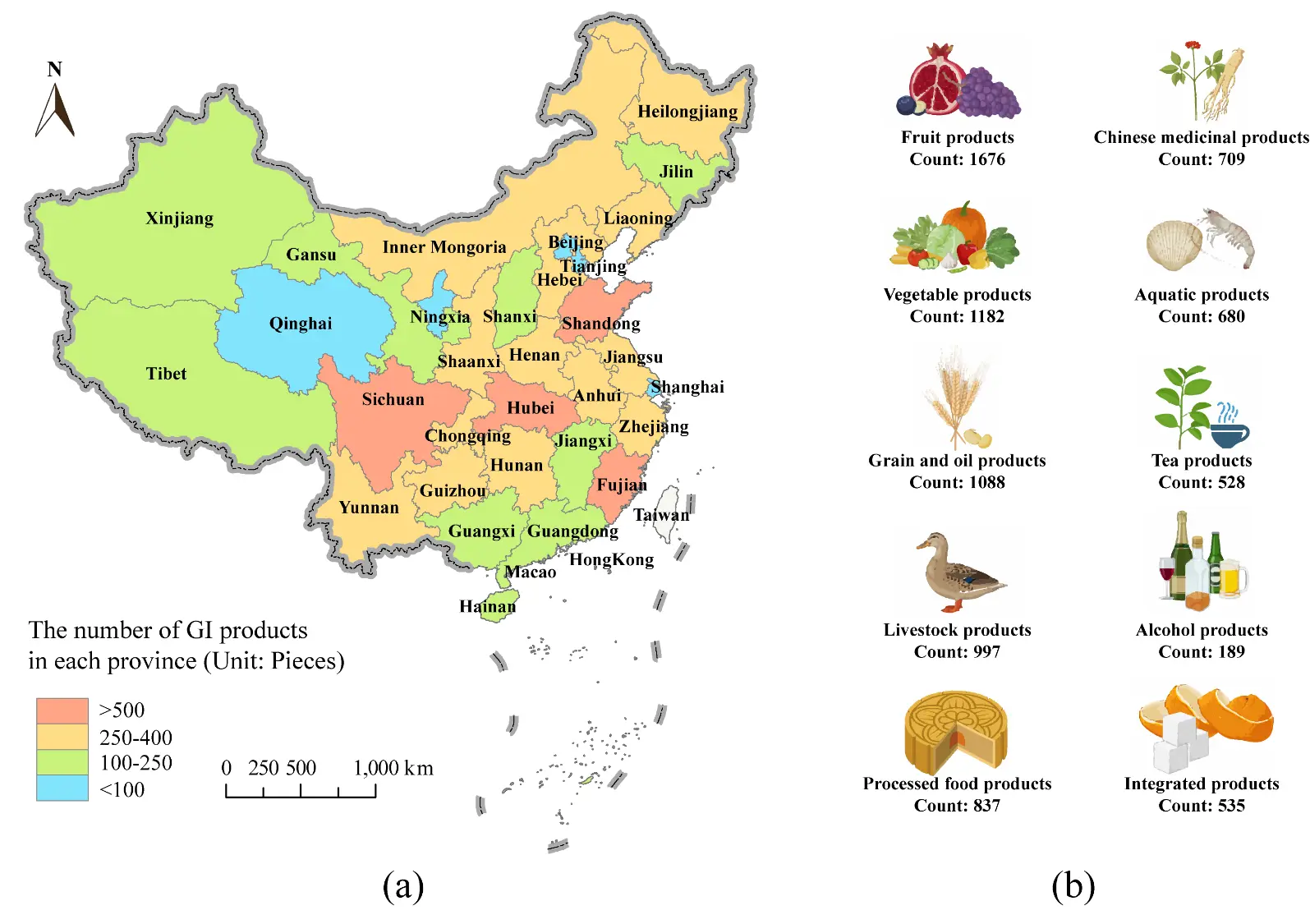
Figure 1. Geographical Distribution (a) and Composition (b) of GI Products in China. The data is sourced from www.sinogi.cn, accessed on 23 August 2025.
2. Heterogeneity of the Localization of International GI Policies
The World Intellectual Property Organization (WIPO) defines a GI as a sign of products that have a specific geographical origin and possess certain qualities or a reputation due to that origin [8]. The proposal of GI products reflects human awareness of protecting small-scale, regionally distinctive agricultural industries. Particularly, it emphasizes the importance of agricultural culture preservation, since it has been threatened by the wave of agricultural industrialization and capitalization globally. With the improvement of the Western industrial system and the development of food processing technology, the originally regional and artisanal production models have gradually transformed into standardized, large-scale, and unified industrial production models. Under the international norm of market-oriented global trade and flattened logistics, some large transnational food production enterprises can fully reduce the production costs of agricultural products through capital operation and intervention in national economic policy formulation, thereby maintaining the absolute advantage of industrialized food in the international market. Against this background, the concept of GI was first proposed in the 1883 Paris Convention, advocating that countries impose certain restrictions on the capitalist development of agriculture to prevent neoliberal, market-oriented trade from eroding the small-scale, regional characteristics of agriculture. Its direct measure is to endow the “terroir” characteristics of agricultural product origins with certain market value within a specific agreement framework, enhancing their cost bargaining power. The added value is decided by a collection of elements, including the origin of raw materials, prominent nutrition and flavor, traditional production methods, and contained intangible cultural attributes [9]. The price increase of GI products prevents unfair competition between small-scale producers and manufacturers and large-scale industry, thereby facilitating the survival of small and medium-sized food processing enterprises.
Guided by the WTO’s GI policies, many countries have successively developed their own GI systems. However, the paths taken and results achieved in the localization of GI still vary [10]. The major arguments lie in: Should GI only serve as commercial signs? If protected solely through trademark law, which group will be the core beneficiaries? Due to the ambiguity of these issues, the current international GI application models are mainly divided into two parties: (1) Led by EU countries, they insist that the natural environment, history, and cultural characteristics of the origin are the guarantee of the authenticity of GI products, stipulating that GI belongs to the common property of residents in the origin; (2) Led by American countries, they downplay the connection between GI products and the origin, only emphasizing their trademark function, and hold that GI can be a private brand property owned by individuals or companies. In principle, the EU GI system safeguards the interests of growers and small-scale processors in the origin, facilitating the sustainable development of the origin’s economy and ecology. In contrast, the American-style GI system may lead to the monopolization of GI property rights by large non-origin processing enterprises, leading GI to become a tool for capital to profit unilaterally [11].
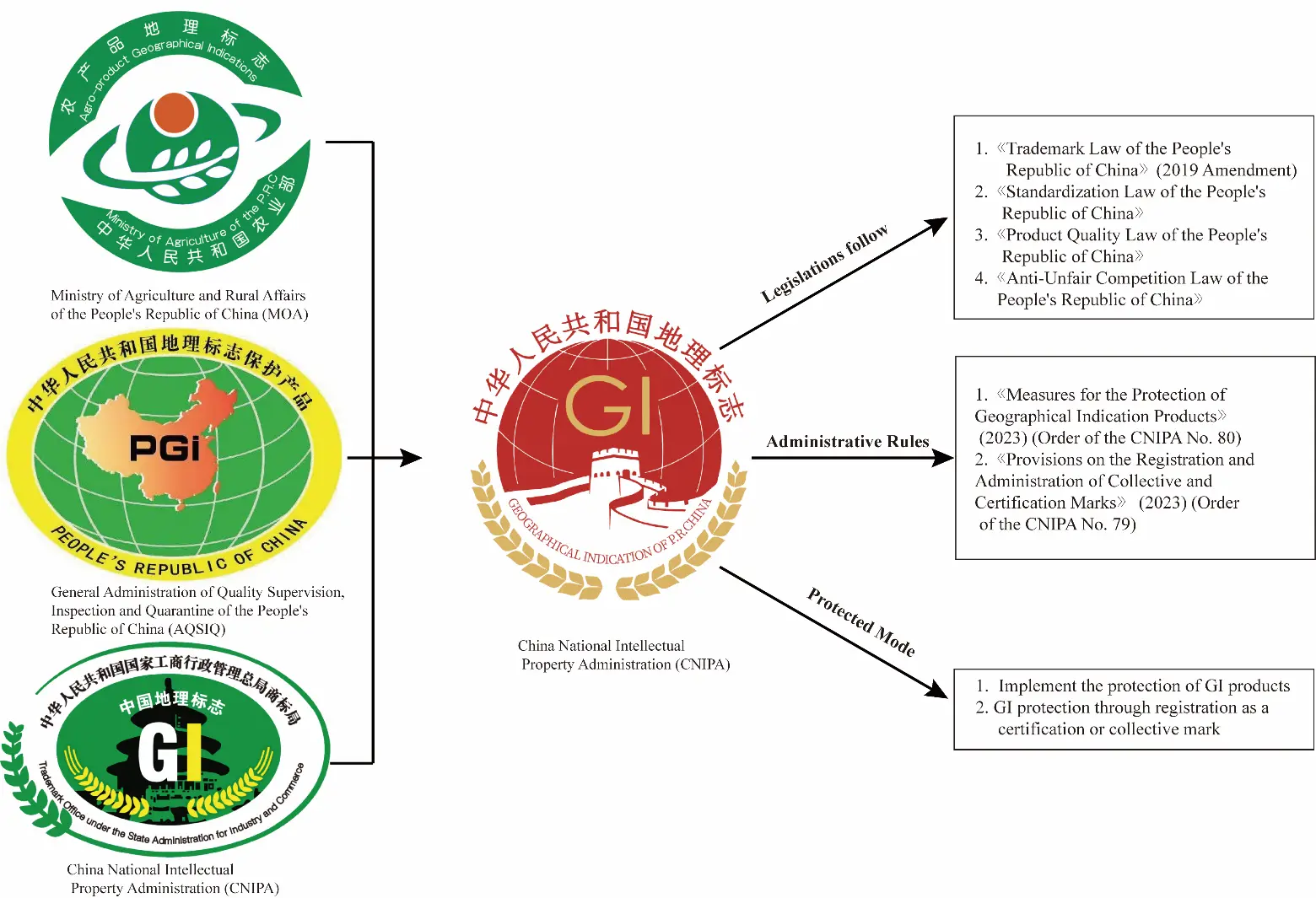
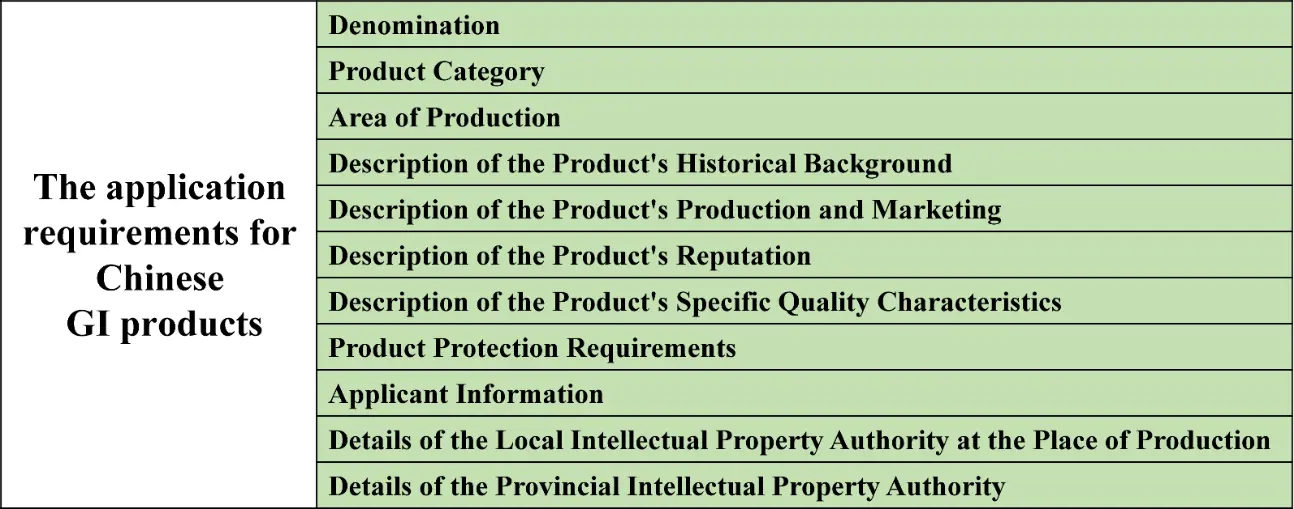
China’s GI product system started in 1999, when the State Bureau of Quality and Technical Supervision issued the “Regulations on the Protection of Products with GI”, initiating exploration into the protection of such products. In March 2001, the State Administration of Entry-Exit Inspection and Quarantine successively issued the “Regulations on the Administration of Origin Marks” and the “Implementation Measures for the Regulations on the Administration of Origin Marks”, starting the protection of origin marks. In October 2001, the revised “Trademark Law” officially incorporated the concept of geographical indication into the legal provisions (Article 16). In June 2005, the General Administration of Quality Supervision, Inspection and Quarantine issued the “Regulations on the Protection of GI Products”, merging the two systems of products with geographical indications and origin marks within its jurisdiction into a unified protection system for GI products, renaming products with GI as geographical indication products, and registering and managing them in accordance with this departmental regulation. Since then, China has created a product operation model of “GI products + leading enterprises + farmers” through the coordination of collective trademark and certification trademark systems and the geographical indication product protection system, accumulating rich practical experience. This model, with GI as the link and leading enterprises as intermediaries, organizes scattered farmers, effectively improving their competitiveness and status in market competition, and achieving remarkable economic benefits. After more than 20 years of development, China’s GI system has undergone tremendous changes (Figure 2). Meanwhile, many problems have emerged, such as imperfect review procedures, especially the lack of requirements to submit information describing the authenticity of products’ quality (Figure 3); insufficient guidance on the use and management of GI products; and an unclear definition of infringement acts. To improve China’s GI system, the China National Intellectual Property Administration (CNIPA) formulated the “Measures for the Protection of GI Products” in January 2024. Compared with the previous “Regulations”, the newly formulated “Measures” specifically stipulate that geographical indication products shall possess authenticity, regionality, specificity, and relevance.
3. Factors Restricting the Development of China’s Regional Agricultural Product Industries
China’s existing GI product system is still in the initial exploration stage, which still lacks sustained impetus to support the economy growth of regional agriculture. The fundamental reason is that the GI product application system does not clearly define its key biological, ecological, and anthropological attributes as detailed below:
- (1)
-
Failure to reflect species characteristics: The name of a GI product is a commodity name, generally expressed as “geographical origin name + general product name”, emphasizing that the commodity is a public domain brand shared by a region. From a taxonomy point of view, the certification materials of GI products lack clear information on the family, genus, and variety of the species, which is prone to confusion in germplasm origin. Thus, multiple geographical indications may be repeatedly applied. When the authentic producing area of the same variety is located at the junction of multiple administrative regions, the division of administrative regions may also lead to repeated applications. For instance, Chuan Niuxi (Cyathula officinalis K. C. Kuan, 川牛膝) has its authentic producing area in the border counties of Ya’an City, including Baoxing and Jinkouhe, thus corresponding GI products such as “Baoxing Chuan Niuxi (宝兴川牛膝)” and “Jinkouhe Chuan Niuxi (金口河川牛膝)” have been applied for GI [12]. Laifeng ginger (Zingiber officinale Roscoe, 来凤姜(凤头姜)), a GI product from Laifeng County, Hubei Province, still suffers from a lack of officially certified Laifeng ginger varieties. Local farmers are arbitrary in preserving and purchasing ginger seeds, resulting in mixed seeds and inconsistent product quality [13]. Astragalus (Astragalus membranaceus (Fisch.) Bunge, 黄芪) is widely distributed in China with rich genetic diversity. Studies have shown that even astragalus harvested within a very small producing area often has high genetic background diversity [14].
- (2)
-
Failure to reflect ecological characteristics: From the perspective of trait expression, phenotypic traits are the results of the interaction between genes and the environment. The lack of clarification between the specific environmental factors (e.g., temperature, humidity, altitude, soil) in the species native habitat and their authentic quality will often result in unstable product quality during production. Studies have stated that Dendrobium officinale harvested in non-authentic areas had significantly compromised medicinal efficacy [15]. Saponin of American ginseng (Panax quinquefolius L., 西洋参) differed notably when grown in Northeast China vs. Shandong, due to gene expression modulation by climatic factors [16]. Recent advances in gene sequencing and metagenomics have confirmed that plant-microbe interactions in the rhizosphere regulate the synthesis and accumulation of secondary metabolites in plants [17]. For instance, in the authentic production area of Xinhui tangerine peel (Citrus reticulata ‘Chachiensis’, 新会陈皮), the rhizosphere bacteria’s activities with rhizome in response to the high salinity-alkalinity are the critical reasons for its special quality [18]. Unfortunately, soil microbial community characteristics in most GI product origins are still poorly understood, and the fertilization and pesticide use during cultivation are likely to disrupt native soil microbial diversity, ultimately leading to authentic quality deterioration.
- (3)
-
Failure to reflect sociological characteristics: For example, Yunnan is a province with 26 ethnic groups and more than 60% of the country’s flora and fauna resources. The ways in which various ethnic groups utilize the food resources are not only related to available biological resources but also closely linked to their nutritional needs, traditional handicraft customs, labor habits, sacrifices, and other cultures [19]. “The Dong people favors fermented food” (侗不离酸). Fermented banquets are indispensable in important occasions such as weddings, funerals, and house construction in the Dong areas. This special dietary culture is due to three reasons: first, sour food helps digest glutinous rice; second, salt was scarce in the region in early years, and sourness could replace salt; third, the climate is humid, and sourness can dispel dampness [20]. Shefan (社饭) is a food for sacrificing to the god of the land among ethnic groups such as the Tujia, Miao, and Dong peoples. It is mainly eaten on the She Festival (the fifth Wu day after the Start of Spring) to pray for a smooth year, abundant harvests, and family harmony. Shefan must use fresh artemisia annua, picked and dried, to reduce swelling, detoxify, and enhance gallbladder function. It is clear that a lack of clarification of sociological attributes of regional food resources will lead to the underestimation of their importance in local dietary nutrition balance and cultural and social activities. Once the species are lost due to inadequate management, it will not only cause the nutritional imbalance but also result in the loss of traditional intangible agricultural cultural heritage.
4. Characteristic-Endemic Food Resource System
4.1. Definitions
In summary, we believe that the definition of regional food resources should emphasize the temporal-spatial position and functional relationships of food resources with other taxa, environmental factors, and human groups in ecosystems and human social activities. Thus, regional foods should be further classified via multi-dimensional information, including ecological, nutritional, and anthropological attributes. Here, we proposed that regional food resources can be divided into two categories with an inclusive relationship:
-
-
Characteristic food resources: Resources that have significant iconic characteristics in the distribution area, nutritional components, and utilization methods, and for which detectable standards can be formulated.
-
-
Endemic food resources: A subset of characteristic food resources that are distributed in native habitats, have distinct nutritional components (in terms of type or content) compared to other varieties, and have the earliest utilization history and unique utilization methods.
4.2. Grading System and Research Methods
In order to ascertain whether a regional good product belongs to characteristic food resources or endemic food resources, scientific research should be systematically conducted, which includes two main aspects:
- (1)
-
Spatial niche: The resources exist in specific ecological function zones of ecosystems, with the native habitat of the community possessing specific characteristics such as temperature, humidity, altitude, soil, and corresponding genetic traits (Note: Exotic species can be included if they have adapted to the local ecological environment without adverse impacts and formed special nutritional quality or genetic characteristics). To address intensive agricultural changes and shifts in cultivation regions in China over recent decades, reasonable ecological criteria must be established to support standardized ex-situ biomimetic cultivation, so as to meet the market demand while maintaining authentic quality.
- (2)
-
Functional niche: The resources have a documented utilization history, providing essential nutritional value in the local diet, and carry unique cultural attributes in social activities (Note: Exotic species can be included if they have been highly integrated into the local social life). The social and cultural dimension is particularly critical for culturally distinctive products. As exemplified by Daodi (genuine traditional, 道地的) herbal medicines, authenticity is recognized and validated by long-term traditional use, standardized traditional processing methods, and reliance on specific local cultivars.
Interdisciplinary approaches, including modern life sciences, food nutrition, ecology, and anthropology, are thus required to be used. For various regional food resources, due to differences in ecological regional characteristics, nutritional value, and status in contemporary social activities, the focus of each product’s industrial chain construction or future scientific research cannot be simply generalized. As shown in Table 1, under the general categories of endemic and characteristic food resources, each group can be further divided into different grades (e.g., Endemic Grade I, Endemic Grade II, Characteristic Grade I, Characteristic Grade II) based on attribute characteristics in various dimensions. This grading comprehensively reflects the scarcity of the resource among numerous agricultural species resources in China.
Table 1. Grading System of Characteristic and Endemic Food Resources.
|
Classification |
Spatial Niche |
Function Niche |
Industrial Development Strategy |
Research Strategy |
|||
|---|---|---|---|---|---|---|---|
|
Nutritional Attributes (vs. Other Regional Resources) |
Cultural Attributes |
||||||
|
Regionality |
Original Habitat |
Content |
Varieties |
Earliest Utilization History or Unique Application Methods |
|||
|
Endemic Grade I (Hani Red Rice, 哈尼红米) |
√ |
√ |
√ |
√ |
√ |
|
|
|
Endemic Grade II (Chrysosplenium Tourn. ex L., 金腰属) |
√ |
√ |
√ |
√ |
|
|
|
|
Characteristic Grade I (Laifeng Ginger, 来凤姜) |
√ |
√ |
√ |
|
|
||
|
Characteristic Grade II (Safflower, 红花) |
√ |
√ |
|
|
|||
4.2.1. Endemic Grade I Food Resources
Endemic Grade I food resources refer to those whose native habitat of the species is local, which can synthesize certain unique nutritional components with stable genetic traits only when grown locally. Meanwhile, they have the earliest or unique utilization history in the dietary structure or social activities of local residents. They have the closest connection with the origin, which is irreplaceable for their industrial development. This grade is strictly restricted to native habitats, and thus, “off-terroir” cultivation is not supported. Research or political strategy should give priority to germplasm and ecosystem conservation, in line with the criterion of “irreplaceable ecological attributes”.
Hani Red Rice (Oryza sativa L., 哈尼红米), a distinctive cultivar in Yuanyang County, Yunnan, the core of a Globally Important Agricultural Heritage System (GIAHS), was domesticated from wild rice by the Hani people in the Sui-Tang dynasties (~1300 years ago) [21]. Yunnan is recognized as the origin center of cultivated rice [22]. Research indicates that Hani Red Rice contains the highest levels of seed coat anthocyanins and γ-aminobutyric acid among 15 Chinese red rice varieties [23]. Evolutionary genetics confirms that extant Yuanyang red rice retains wild rice genes, with a genome three times larger than that of hybrid rice; it exhibits low yield but strong stress resistance and high nutritional value [24]. Culturally, it is pivotal to Hani heritage, underpinning rituals, weddings, funerals, and worship of the Grain God.
As a Grade I endemic germplasm, Hani Red Rice is ideal for the “One County, One Product” initiative, with priority on germplasm collection/conservation, geographical protection, and nutritional trait excavation. Key strategies include: (1) Establishing a germplasm repository for local landraces to prevent genetic erosion; (2) Systematic evaluation of genetics, agronomic traits, resistance and nutrition for breeding; (3) Investigating high-altitude climate/soil effects on grain quality, elucidating authentic trait formation and constructing in-situ conservation zones; (4) Assessing unique nutrients’ health benefits and dose-response relationships; (5) Integrating ethnological/artistic approaches to explore its cultural value and develop agro-cultural tourism. These efforts will yield proprietary industrial standards (seed provenance, cultivation, quality) to regulate primary/secondary industries and ensure sustainable development.
4.2.2. Endemic Grade II Food Resources
Endemic Grade II food resources lack unique nutritional elements but have elevated contents of certain nutrients, which form distinct traits. Its academic research should prioritize characteristic breeding: exploit local germplasm and adopt genetic techniques to cultivate cultivars with ultra-high characteristic components and stable heritable traits, or explore new unique-component varieties to upgrade them to Grade I status.
Chrysosplenium Tourn. ex L. (金腰属), a perennial herbaceous genus, has 70 species worldwide (mainly Northern Hemisphere). China hosts about 38 species, 15 varieties, and 23 endemics, and is recognized as the genus diversification center [25,26,27,28]. C. alternifolium L. (互叶金腰) is used in Western salads [29], while C. flagelliferum F. Schmidt (蔓金腰) is approved as a food in South Korea [30]. In China, the genus has served as traditional Tibetan medicine for over 400 years, with major bioactive compounds (highly hydroxylated/methoxylated flavonoids, triterpenoids) exhibiting anti-tumor, antibacterial, antiviral, hepatoprotective, and antioxidant effects [31,32]. However, its food resource potential remains unexploited, with most populations currently wild. Future efforts should focus on the breeding of cultivars for functional vegetables, including: (1) Integrating multi-omics data to clarify ecological regulation of nutritional traits; (2) Evaluating native species’ edibility via pharmacological and nutritional approaches; (3) Exploring its role in Tibetan and other ethnic social practices using ethnological methods.
4.2.3. Characteristic Grade I Food Resources
Characteristic Grade I food resources are non-indigenous. They develop distinctive nutritional traits after local acclimatization and form unique utilization modes via deep integration with local culture. Thus, future development of “off-terroir” cultivation in ecologically similar regions is allowed for this grade, ensuring market supply under standard compliance, balancing ecological criteria and industrial demand.
A representative example is Laifeng Ginger, a GI product designated as a national specialty by the Ministry of Agriculture and Rural Affairs in 2023 [33]. Ginger was introduced to Laifeng County over a century ago and has evolved its unique flavor and texture after 700 years of adaptation to the area’s subtropical monsoon mountain climate and mineral- and selenium-rich soil. Laifeng Ginger features crisp, tender texture and low volatile pungent compounds [34]. Local residents consume it directly in dishes like pickled ginger and ginger-braised duck, breaking the traditional perception of ginger as a mere spice and enabling its use as a vegetable. Future research should focus on upgrading its characteristic phenotyping through the molecular breeding strategies: (1) Leveraging published whole-genome sequences and transcriptomic data from other ginger varieties, we developed Laifeng ginger-specific molecular markers to facilitate the selection of superior cultivars [35]; (2) Clarify regulatory pathways of key quality traits, such as low fiber and high polysaccharide contents, via transcriptomic and metabolomic analyses; (3) Elucidate the formation mechanism of its authentic quality by integrating ecological environment science, soil science, and soil microbiomics; (4) Explore its cultural and social significance using anthropological and ethnological approaches.
4.2.4. Characteristic Grade II Food Resources
Characteristic Grade II food resources have established different varieties for different regions. Their utilization modes are relatively unified: raw materials from producing areas are purchased by large-scale enterprises for refined deep processing. For this grade, well-established high-yield cultivation systems have been implemented across multiple ecologically suitable regions, ensuring stable product quality while satisfying large-scale market demand.
Safflower (Carthamus tinctorius L., 红花) originated from the Eastern Mediterranean “Fertile Crescent” and was introduced to China by Zhang Qian during the Western Han Dynasty [36]. Currently, the growing regions include Xinjiang, Yunnan, Gansu, Sichuan, and Henan. Safflower is mainly used for medicine, pigment extraction, and oil production. Driven by downstream industrial demands, regionally adapted varieties for different uses have been bred [37]. For instance, “Yunnan Safflower” (e.g., Yunnan Safflower No. 7, thornless with high hydroxysafflor yellow A and kaempferol) is grown in 1000–1600 m mountainous areas for dual flower-oil use [38]. “Xinjiang Safflower” and “Henan Safflower” prioritize high seed oil content. “Sichuan Safflower” features dual-purpose use and a higher 1000-seed weight [37]. Future research should leverage published safflower whole-genome and population resequencing data to sort strains [39]. Develop molecular markers for the most valuable traits, such as high linoleic acid or hydroxysafflor yellow A, exploring key regulatory genes and environmental mechanisms via GWAS, transcriptomics, and metabolomics; applying pan-genome technology to unlock full genetic potential for breeding breakthroughs. Additionally, safflower red pigment (“true red”), a traditional dye for high-grade brocades (recorded in Qi Min Yao Shu and Tian Gong Kai Wu, 齐民要术和天工开物), holds promise for high-end cosmetics and textiles.
4.3. Significance
The application of the classification system for characteristic and endemic food resources is of profound significance to China due to its economic, socio-cultural, and ecological environmental value, as detailed below:
- (1)
-
Highlighting origin scarcity via authentic quality to boost farmers’ substantial income: The globalization and capitalization of food supply rely inherently on cost reduction and scale expansion. While this has alleviated food shortages to some extent, it undermines the interests of small-scale producers, particularly in underdeveloped regions. Trapped in a disadvantaged position in raw material transactions, these producers often lose bargaining power against private enterprises and face exploitation [40]. The unique qualities of characteristic and endemic food resources reflect the distinctiveness and scarcity of their growing areas, requiring the state to prioritize resource protection and equitable distribution [41]. By leveraging interdisciplinary research (biology, ecology, food science) to explore the formation mechanism of authentic quality, scientific evidence can be provided to support brand premiums. Crucially, authenticity ensures the core profit from such premiums accrues to the origin, maximizing benefits for local farmers and preventing large-scale processing enterprises from suppressing raw material purchase prices.
- (2)
-
Facilitating diversified and nutritious dietary patterns: Long-term epidemiological studies across multiple countries have confirmed that unhealthy diets are a key contributor to non-communicable diseases. High sodium intake and insufficient consumption of fruits, whole grains, and miscellaneous grains are linked to the highest mortality rates [42]. Low-cost industrial foods often suffer from over-processing and nutritional imbalances (e.g., high sugar, salt, and fat), yet their low price, large output, and extensive distribution enable them to dominate supermarket and convenience store shelves [43]. In response, the WHO/FAO has called on countries to develop sustainable, green, and healthy dietary habits and food supply systems [44]. The classification of characteristic and endemic food resources provides guidance for the development of high-quality regional food in China, enriching dietary diversity, ensuring nutritional balance for residents across regions, and serving as a key practice of a diversified food supply system under the “big food” and “big agriculture” frameworks.
- (3)
-
Supporting the protection and modern practice of agricultural cultural heritage: Proposed by FAO, Globally Important Agricultural Heritage Systems (GIAHS) are “unique land use systems and agricultural landscapes formed through long-term co-evolution between rural communities and their environments, boasting rich biodiversity, meeting local socio-economic and cultural needs, and promoting sustainable development” [45]. This global framework includes iconic systems worldwide, such as the Ifugao Rice Terraces of the Philippines, which represent millennia-old terrace agriculture adapted to mountainous landscapes, and the Chinampa floating field system of Mexico. This traditional wetland agroecosystem integrates water management, biodiversity conservation, and high food productivity. China leads the world with 22 GIAHS (e.g., Hebei Kuancheng’s chestnut cultivation, Anhui Tongling’s white ginger cultivation, Zhejiang Xianju’s bayberry integrated farming), which are all closely linked to local characteristics and endemic food resources. These resources are integral to agricultural systems: their classification system compiles critical data (species, origin, climate), providing material support for GIAHS. The anthropological value embedded in these resources, shaped by local communities’ utilization of nature, embodies Chinese farming wisdom (e.g., “adapting to seasons, abiding by natural laws”, 应时, 取宜, 守则, 和谐). Cultural practices like the Dong Grand Chorus (侗族大歌), Hani Four-Season Production Song (哈尼四季生产调), and Qingtian Fish Lantern Dance (青田鱼灯舞) are intertwined with such agricultural systems [46]. These food resources serve as key entry points for integrating primary, secondary, and tertiary industries and building regional rural tourism brands [47].
- (4)
-
Promoting a sustainable and resilient agrifood system: FAO defines agrifood biodiversity as crop and livestock biodiversity, biodiversity of wild-harvested organisms, and indirectly related biodiversity (e.g., environmental microorganisms and insects). Its 2019 report, The State of the World’s Biodiversity for Food and Agriculture, emphasizes that agrifood biodiversity is critical to agrifood systems [48]. First, germplasm genetic diversity serves as a gene pool for agricultural breeding; second, species and ecosystem diversity enhances system resilience against climate change and pests/diseases while reducing the environmental impact of increased food production. The report also notes that ongoing biodiversity loss threatens global food security: data from 91 countries show that while over 6000 crops are cultivated worldwide, 66% of global food production in 2014 came from just nine crop categories; among over 7000 global livestock breeds, only 40 are used for meat, egg, and milk production, with other breeds declining rapidly or facing extinction. Leveraging China’s rich biodiversity endowment, promoting the protection and utilization of characteristic and endemic food resources is a key component of biodiversity conservation. Additionally, amid volatile international political situations, expanding these characteristic food sources constitutes a strategic measure to ensure China’s food supply security.
5. Conclusions
Among China’s abundant agricultural resources, characteristic and endemic food resources are extremely important components. Their close connection with the local ecological environment and social life precisely reflects their unique ecological, nutritional, and anthropological values. Combining China’s actual conditions, this study innovatively proposes definitions and a grading system for characteristic and endemic food resources, emphasizing the status of food resources in the local ecological environment and social functions as a criterion for comprehensively evaluating resource scarcity. For characteristic and endemic food resources of different grades, targeted research strategies and industrial development strategies should be implemented. Through systematic research, integrating interdisciplinary research methods such as biology, ecology, food science, and ethnology, to explore the genetic characteristics, nutritional quality, formation mechanism of authentic quality, and key growth environment factors of characteristic and endemic food resources, it is conducive to establishing a series of standards covering the entire production chain from seeds to planting to products, and promoting the standardized development of local related industries.
Statement of the Use of Generative AI and AI-Assisted Technologies in the Writing Process
During the preparation of this manuscript, the authors used Chat-gpt 4.0 in order to polish the language. After using this tool, the authors reviewed and edited the content as needed and takes full responsibility for the content of the published article.
Acknowledgments
We express our sincere gratitude to all the researchers and institutions mentioned in this article for their valuable contributions to the exploration of management systems for characteristic and endemic regional food resources in China.
Author Contributions
Writing—Original Draft Preparation, J.L., H.H. and M.S.; Writing—Review & Editing, T.A. and J.W.; Visualization, J.L., H.H. and M.S.; Supervision, N.Y., W.Y. and S.P.; Project Administration, H.L.; Funding Acquisition, R.Q.
Ethics Statement
Not applicable.
Informed Consent Statement
Not applicable.
Data Availability Statement
This is a scoping review article based on findings in published literature and did not involve analysis of newly generated data.
Funding
This research was funded by the Academic Innovation Team Fund of South-Central Minzu University (XTZ24020), the Key Program of Basic Scientific Research Funds for Central Universities of South-Central Minzu University (CZZ24003), The Central Government’s Project Guiding Local Science and Technology Development of Hubei Province (2025CF015), and Key Research and Development Program Project of Ningxia Hui Autonomous Region (2025BEG02020).
Declaration of Competing Interest
The authors declare that they have no known competing financial interests or personal relationships that could have appeared to influence the work reported in this paper.
References
- Zheng Y. Consensus Change of Rice Cultivation Origination and Chinese Civilization by Archaeology in China. China Rice 2021, 27, 12–16. Available online: http://www.zgdm.net/EN/abstract/abstract13689.shtml (accessed on 17 May 2021).
- Zheng D, Liu X, Li Y. Cultivated Plants Originated in China. J. Plant Genet. Resour. 2012, 13, 1–10. DOI:10.13430/j.cnki.jpgr.2012.01.002 [Google Scholar]
- Xiao W. The Impact Analysis of Industry Safety on China’s Agriculture after Its Entering in WTO. Ph.D. Thesis, Hunan Agricultural University, Changsha, China, 2012. [Google Scholar]
- Fang Y. What signals does the implementation of the China-Eu Geographical Indications Agreement send? China’s Foreign Trade 2020, 8–9. Available online: https://kns.cnki.net/kcms2/article/abstract?v=VrduTR4bJX4GqGbopa1rPXpAPXp0TM0MLtA6liMd815xqZ7PAELxGe_6paXR34W107Uw2NvBZBr3WgEnA4frkeO8HYzTJTtvU2PPhpinlHKoyL_9hFN8CWqCD78j537tnIVGXJlbVneaQ-s5npBH3vlNNiadq1bHx_oiGr8a1OVbeSTEdQak7A==&uniplatform=NZKPT&language=CHS (accessed on 16 September 2024).
- China Has Identified a Total of 2523 Geographical Indication Protection Products. Available online: https://www.gov.cn/lianbo/bumen/202409/content_6974886.htm (accessed on 16 September 2024).
- Liu J, Zhang D, Liu H, Yang L, Yan W, Xiong H, et al. Construction of the Evaluation System on the Authenticity of China’s Regional Specialty Food Resources. Food Nutr. China 2024, 30, 29–37. DOI:10.19870/j.cnki.11-3716/ts.2024.06.002 [Google Scholar]
- Bowen S. Embedding Local Places in Global Spaces: Geographical Indications as a Territorial Development Strategy. Rural Sociol. 2010, 75, 209–243. DOI:10.1111/j.1549-0831.2009.00007.x [Google Scholar]
- World Intellectual Property Organization (WIPO). Available online: https://www.wipo.int (accessed on 13 December 2025).
- Parasecoli F. Chapter Four: Food and Power, 1st ed.; Columbia University Press: New York, NY, USA, 2022; pp. 92–108. [Google Scholar]
- Jing X, Yu Y, Wei H. Development and protection mode of international geographical indication agricultural products and experience enlightenment. China Conf. Exhib. 2024, 36–39. DOI:10.20130/j.cnki.1674-3598.2024.06.009 [Google Scholar]
- Artini F, Maria C, Mario V, Michele D. Intellectual Property Rights of Geographical Indications, 1st ed.; Cambridge Scholars Publishing: Newcastle upon Tyne, UK, 2016; pp. 133–145. [Google Scholar]
- Chen Y, Kang Q, Qu L, Huang Q, He J, Wu R, et al. Empirical analysis and research on development countermeasures on protection of geographical indication products of genuine Chinese medicinal materials. Chin. Tradit. Herb. Drugs 2021, 52, 3467–3474. Available online: https://kns.cnki.net/kcms2/article/abstract?v=j0ZbOfXgIAhkakDNnHu-5yY27Q11wLF1bqXYtABIJ-Ns2Ap7JAEBM2VpW6ipoiMOUVHDfIDa5zCh9KWF8UZT-Csc1giFZ2Y2Hz0wQMJCPUjFUhpxLFMk5Ar-n8zcWWE2077ZYeNZUYTpu_BIX1jzaFzFHiNdXGvR_BZIZMB-2STxDVhJ1Y9deg==&uniplatform=NZKPT&language=CHS (accessed on 16 September 2024).
- Wu J, Zhou J, Fu J, Xiao Y, Guo F. Production Status and Recommended Cultivars of Zingiber officinaie Roscoe in Laifeng County of Hubei. J. Chang. Veg. 2020, 8–10. Available online: https://kns.cnki.net/reader/xml?invoice=jYBhertDePJZqxCkB3kAhmMS2c59MbORz3d5IliqAQh0RmqmP5s%2F8DoyiWtqopBDHlBObbhS5k9QcC9aX%2BrP7s%2B5lWpRZ9uWRIt960PPbSMxVcolcIxR%2BWKki3x17P4A4eX9%2FBgbpRImx51NTGWFNk8NbauprYI7jZ2h7LQhntc%3D&platform=NZKPT&sourcetype=nxgp&product=CJFQ&filename=CJSC202023004&tablename=cjfdlast2020&type=JOURNAL&scope=readonline&cflag=html&dflag=xml&pages=&language=CHS&trial=&nonce=38F4C20F1C7C4B20B76B2D32D672120E&loginType=trialRead (accessed on 13 December 2025).
- Zhang X, Feng X, Li X, Wang R, Xi X, Feng X, et al. Review of Research on Genetic Diversity of Radix Astragali. Mol. Plant Breed. 2026, 24, 2080–2034. DOI:10.13271/j.mpb.024.002028 [Google Scholar]
- Su H. Study on Discriminant of Genuine Traditional Chinese Medicine Based on Ensemble Learning—A Case for Geographical Origin Traceability of Dendrobii offcinalis Caulis. Master’s Thesis, Zhejiang Gongshang University, Hangzhou, China, 2023. [Google Scholar]
- Zheng S. Research on the Biological Mechanisms of Geo-Authenticity in Traditional Chinese Medicine: Case Studies of Panax quinquefolius and Cistanche deserticola. Master’s Thesis, Peking Union Medical College, Beijing, China, 2016. [Google Scholar]
- Luo S, Tian C, Zhang J, Ji L, Yao Z, Sun G, et al. The influence of rhizosphere microorganisms on the genuineness of medicinal materials and its application prospect. J. Li-Shizhen Tradit. Chin. 2022, 33, 948–950. Available online: https://kns.cnki.net/reader/xml?invoice=LI7b3Qd3hPlTyROiuHtVDko0%2F64A0iXh2yZ2KL0oItcpE%2Bt4NyzzO7SfjfdukMJJv14lm9%2BcPELgbORgNzU56TGTxEg4kBCrz%2B8x5kdUBor2MShleMCg6y0sgRr%2B%2BQnZGxi%2BziM%2FPSD0fxQT0PHUkfGJHaxZTMYgtWdSFUHchMA%3D&platform=NZKPT&sourcetype=nxgp&product=CJFQ&filename=SZGY202204051&tablename=cjfdlast2022&type=JOURNAL&scope=readonline&cflag=html&dflag=xml&pages=&language=CHS&trial=&nonce=BF196C221A3A4EB5A79F6145F9D68A54&loginType=trialRead (accessed on 13 December 2025).
- Mu J, Teng B, Shi Z, He X, Lai J, Zhu L, et al. Examining the Structure and Diversity of Inter-root Soil Microbial Communities in Astragalus membranaceus Plantation Areas of Gansu Based on High-throughput Sequencing. Chin. Wild Plant Resour. 2022, 41, 15–24. Available online: https://kns.cnki.net/reader/xml?invoice=J6zZ%2BAdVeobGbj69Gu1HJI96cidZQrue4b3pJ%2BgvrxZ%2BXqIKgR3IMi1FPb%2F9r58TW9gX7JA1rnOYO%2FGJ%2Bmt%2F3k7a1gf0AQEYyLS6fy0jaXTSF0zw0df1z4lFr5hUBrWdoWlZJ6zDAcwBAQSBUz3SDegNluFjTUv8qGAW9nRufW4%3D&platform=NZKPT&sourcetype=nxgp&product=CJFQ&filename=ZYSZ202203003&tablename=cjfdlast2022&type=JOURNAL&scope=readonline&cflag=html&dflag=xml&pages=&language=CHS&trial=&nonce=3935EE3F7FF646A6B89B82B9F47CF85C&loginType=trialRead (accessed on 13 December 2025).
- Su J, Wang Y, Bai M, Peng T, Li H, Xu H, et al. Soil conditions and the plant microbiome boost the accumulation of monoterpenes in the fruit of Citrus reticulata ‘Chachi’. Microbiome 2023, 11, 61. DOI:10.1186/s40168-023-01504-2 [Google Scholar]
- Lu D, Liu X, Huang X. Agricultural Biological Resources of Ethnic Minorities Unique to Yunnan and Their Traditional Cultural Knowledge, 1st ed.; Science Press: Beijing, China, 2013; pp. 2–21. [Google Scholar]
- Yang J. Hani terrace red rice: Red agate on Ailao Mountain. Agric. Prod. Mark. 2022, 18–19. Available online: https://kns.cnki.net/kcms2/article/abstract?v=j0ZbOfXgIAij4p0euOl9nTxxYQvfOx8mIIdEZ6BdSOcjL6qO7qEeEwy_FLebJZE7rqpevmXx7-dtnHoY6llHL1SFTBMHZ8-1HsgBJpZVJ_xyNa4DIPe-js_mdxydEYdj60mW1DCdGI0bwH0y1eAJe32sjs4gvJA6OcLtDm9AhXQEW3aXf-hXdQ==&uniplatform=NZKPT&language=CHS (accessed on 13 December 2025).
- Zeng Y, Zhang H, Li Z, Shen S, Sun J, Wang M, et al. Evaluation of Genetic Diversity of Rice Landraces (Oryza sativa L.) in Yunnan, China. Breed. Sci. 2007, 57, 91–99. DOI:10.1270/jsbbs.57.91 [Google Scholar]
- Zhang W, Hou Z, Ren G, Tan Z, Xue P. Comparison of Nutrient Composition of Red Rice from Different Areas. Sci. Technol. Food Ind. 2019, 40, 263–267. DOI:10.13386/j.issn1002-0306.2019.06.044 [Google Scholar]
- Ma M, Zhou X, Zheng Y, Zhang T, Zhang X, Lu B. Genetic Diversity and Population Structure Analysis of Red Rice from Hani Terraced Fields Based on SRAP Markers. Mol. Plant Breed. 2019, 17, 2231–2237. DOI:10.13271/j.mpb.017.002231 [Google Scholar]
- Fu L, Liao R, Lan D, Wen F, Liu H. A new species of Chrysosplenium (Saxifragaceae) from Shaanxi, north-western China. PhytoKeys 2020, 159,127–135. DOI:10.3897/phytokeys.159.56109 [Google Scholar]
- Liu H, Luo J, Liu Q, Lan D, Qin R, Yu X. A new species of Chrysosplenium (Saxifragaceae) from Zhangjiajie, Hunan, central China. Phytotaxa 2016, 277, 287–292. DOI:10.11646/phytotaxa.277.3.7 [Google Scholar]
- Soltis D, Tago-Nakazawa M, Xiang J, Kawano S, Murata J, Wakabayashi M, et al. Phylogenetic relationships and evolution in Chrysosplenium (Saxifragaceae) Based on matK sequence data. Am. J. Bot. 2001, 88, 883–893. DOI:10.2307/2657040 [Google Scholar]
- Pan J. A study on the genus Chrysosplenium L. from China. J. Univ. Chin. Acad. Sci. 1986, 2, 81–97. Available online: http://journal.ucas.ac.cn/EN/abstract/abstract9976.shtml (accessed on 13 December 2025).
- Olszewska M, Gudej J. Quality evaluation of golden saxifrage (Chrysosplenium alternifolium L.) through simultaneous determination of four bioactive flavonoids by high-performance liquid chromatography with PDA detection. J. Pharm. Biomed. Anal. 2009, 50, 771–777. DOI:10.1016/j.jpba.2009.06.020 [Google Scholar]
- Choi J, Park G, Choi H, Lee J, Kwon H, Choi M, et al. Anti-obesity and immunostimulatory activity of Chrysosplenium flagelliferum in mouse preadipocytes 3T3-L1 cells and mouse macrophage RAW264.7 cells. Exp. Ther. Med. 2024, 28, 315. DOI:10.3892/etm.2024.12604 [Google Scholar]
- National Compilation Group of Chinese Herbal Medicines. National Compilation of Chinese Herbal Medicines, 1st ed.; People’s Medical Publishing House: Beijing, China, 1975; pp. 701–720. [Google Scholar]
- Zhao J, Qiu X, Zhao Y, Wu R, Wei P, Tao C, et al. A review of the genus Chrysosplenium as a traditional Tibetan medicine and its preparations. J. Ethnopharmacol. 2022, 290, 115042. DOI:10.1016/j.jep.2022.115042 [Google Scholar]
- Tang C. Development Status, Problems and Countermeasures of Ginger Industry in Laifeng County. J. Chang. Veg. 2021, 1–3. Available online: https://kns.cnki.net/reader/xml?invoice=JtO%2FfTcIL%2FjsxtKPkZxhcMP6s6n9YtycEpFbQV%2FlJfS1jk0ox%2Fp%2FkTEKx7mFDzEH1pGOU3hAn%2BBExunPY%2B5jg30oJpDIxvXa8MV8irwJEylNXNo7dkG%2FsQ7%2BOqY3mWk2e4wsrTJV%2FcMAqtruUo5JlA1%2BFmYY2nghLKdkxe2bCEU%3D&platform=NZKPT&sourcetype=nxgp&product=CJFQ&filename=CJSC202113001&tablename=cjfdlast2021&type=JOURNAL&scope=readonline&cflag=html&dflag=xml&pages=&language=CHS&trial=&nonce=9C96BFCABB05437A85D4AF0CC66E0B3D&loginType=trialRead (accessed on 13 December 2025).
- Xiao J, Ai T, Wan J, Yin C, Qin Z, Liu J, et al. Antioxidant, antibacterial activity and volatile compounds of Zingiber officinale from Laifeng. J. Food Saf. Qual. 2023, 14, 19–28. DOI:10.19812/j.cnki.jfsq11-5956/ts.2023.08.007 [Google Scholar]
- Cheng S, Jia K, Liu H, Zhang R, Li Z, Zhou S, et al. Haplotype-resolved genome assembly and allele-specific gene expression in cultivated ginger. Hortic. Res. 2021, 8, 188. DOI:10.1038/s41438-021-00599-8 [Google Scholar]
- Liang C, Chen W, Yang R, Liu Q, Liu H. Herbal Textural Research on Carthamus tinctorius. J. Anhui Univ. Chin. Med. 2024, 43, 99–103. Available online: https://kns.cnki.net/reader/xml?invoice=SuhblzNqR5sDmCgTo40ddZHlQKr85gOVz2wWV5%2F4%2FtNNvrDYoxK7TLr0i0wPKbA0l3%2Bb4X7K%2BQy5V50QeOfJwByqIMGV8Sdabg49Qw7D2D%2BLaUSvzgTd%2FGUemqQTaZ%2BZSw6ZlOn%2Bo8aKEJ72tE8tnkHC8RLBdVxbdsZW9E4S%2FJ0%3D&platform=NZKPT&sourcetype=nxgp&product=CJFQ&filename=AHZY202403020&tablename=cjfdlast2024&type=JOURNAL&scope=readonline&cflag=html&dflag=xml&pages=&language=CHS&trial=&nonce=BAD1E280739D424BA7DC4AC5B23EC3A1&loginType=trialRead (accessed on 13 December 2025).
- Xu L, Liang H, Yu Y, Yang H, Tan Z, Dong W, et al. Research progress on characteristics, adaptability and cultivation techniques of safflower varieties in China. J. Chin. Med. Mater. 2020, 43, 2037–2041. DOI:10.13863/j.issn1001-4454.2020.08.046 [Google Scholar]
- Hu X, Wang P, Hu Z, Yang J, Zhang J, Liu X. Breeding of New Safflower Varieties “Yunhonghua No. 7” and “Yunhonghua No. 8” for Dual Use of Medicine and Oil. Mod. Chin. Med. 2022, 24, 2157–2162. DOI:10.13313/j.issn.1673-4890.20220114004 [Google Scholar]
- Wu Z, Liu H, Zhan W, Yu Z, Qin E, Liu S, et al. The chromosome-scale reference genome of safflower (Carthamus tinctorius) provides insights into linoleic acid and flavonoid biosynthesis. Plant Biotechnol. J. 2021, 19, 1725–1742. DOI:10.1111/pbi.13586 [Google Scholar]
- Bonanno A, Sekine K, Feuer H. Geographical Indication and Global Agri-Food, 1st ed.; Routledge: London, UK, 2019; pp. 112–135. [Google Scholar]
- Linking People, Places and Products. A Guide for Promoting Quality Linked to Geographical Origin and Sustainable Geographical Indications. Available online: http://www.fao.org/3/i1760e/i1760e.pdf (accessed on 10 May 2021).
- Afshin A, Sur P, Fay K, Cornaby L, Ferrara G, Salama J, et al. Health effects of dietary risks in 195 countries, 1990–2017: A systematic analysis for the Global Burden of Disease Study 2017. Lancet 2019, 393, 1958–1972. DOI:10.1016/S0140-6736(19)30041-8 [Google Scholar]
- Kickbusch I, Allen L, Franz C. The commercial determinants of health. Lancet Glob. Health 2016, 4, e895–e896. DOI:10.1016/S2214-109X(16)30217-0 [Google Scholar]
- Sustainable Healthy Diets: Guiding Principles. Available online: https://www.who.int/publications/i/item/9789241516648 (accessed on 29 October 2019).
- Globally Important Agricultural Heritage Systems (GIAHS). Combining Agricultural Biodiversity, Resilient Ecosystems, Traditional Farming Practices and Cultural Identity. Available online: http://www.fao.org/3/i9187en/I9187EN.pdf (accessed on 15 October 2018).
- The Light of Farming Culture Shines Through the Green Mountains and Clear Waters—A Record of China’s Efforts to Strengthen the Protection, Inheritance and Development of Globally Important Agricultural Heritage Systems. Available online: https://www.news.cn/fortune/2022-07/23/c_1128857908.htm (accessed on 23 July 2022).
- Chen Y. The Current Significance and Key Issues of Agricultural Heritage Participating in the Transformation of Food System. J. China Agric. Univ. 2022, 39, 74–87. DOI:10.13240/j.cnki.caujsse.2022.03.005 [Google Scholar]
- The State of the World’s Biodiversity for Food and Agriculture. Available online: http://www.fao.org/3/ca3129en/CA3129EN.pdf (accessed on 9 July 2019).