Insights in Heart Failure and Transplantation

Deadline for manuscript submissions: 31 July 2026.
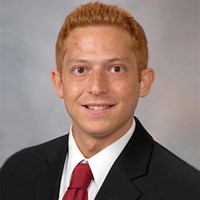
Guest Editor (1)

David  Snipelisky
Dr. David Snipelisky 
Robert and Suzanne Tomsich Department of Cardiology, Section of Heart Failure and Cardiac Transplant Medicine, Cleveland Clinic, 2950 Cleveland Clinic Boulevard, Weston, FL 33331, USA
Interests: Advanced Heart Failure; Amyloidosis; Cardiomyopathies; Heart Transplantation

Special Issue Information

Heart failure and cardiac transplantation remain among the most biologically and technically challenging areas in cardiovascular medicine. Despite advances in surgical technique and device engineering, fundamental questions about myocardial injury and repair, alloimmune responses, organ preservation, and the interface between advanced devices and recipient biology continue to limit curative progress. Recent breakthroughs in molecular cardiology, high-resolution imaging, immunomodulatory biology, regenerative strategies, and computational modelling are opening new mechanistic avenues that demand consolidation and critical appraisal.

This special issue, Insights in Heart Failure and Transplantation, seeks to curate high-quality basic, translational, and mechanistic clinical research that advances understanding of disease biology and therapeutic innovation. We invite contributions that elucidate molecular and cellular drivers of heart failure, refine approaches to immune monitoring and tolerance induction, improve donor organ assessment and preservation, and accelerate regenerative or device-integrated therapeutic strategies.

We welcome original research articles, focused reviews, systematic reviews and meta-analyses, and case reports addressing topics such as pathophysiology and molecular biomarkers of heart failure, myocardial regeneration and cell-based therapies, immunology of transplantation and rejection surveillance technologies, organ preservation and viability assessment, ventricular assist device design and biocompatibility, advanced imaging and diagnostic modalities, and computational or AI-driven models that illuminate biological mechanisms or predict biological responses.

Keywords:
  • Heart failure
  • Transplant immunology
  • Organ preservation
  • Myocardial regeneration
  • VAD biocompatibility
  • AI modeling

Published Papers (1 Papers)

Open Access

Review

07 April 2026

Full-Spectrum Heart Failure Management by Tracking Performance of Multiple Cardiac Chambers via Cardiac Time Intervals

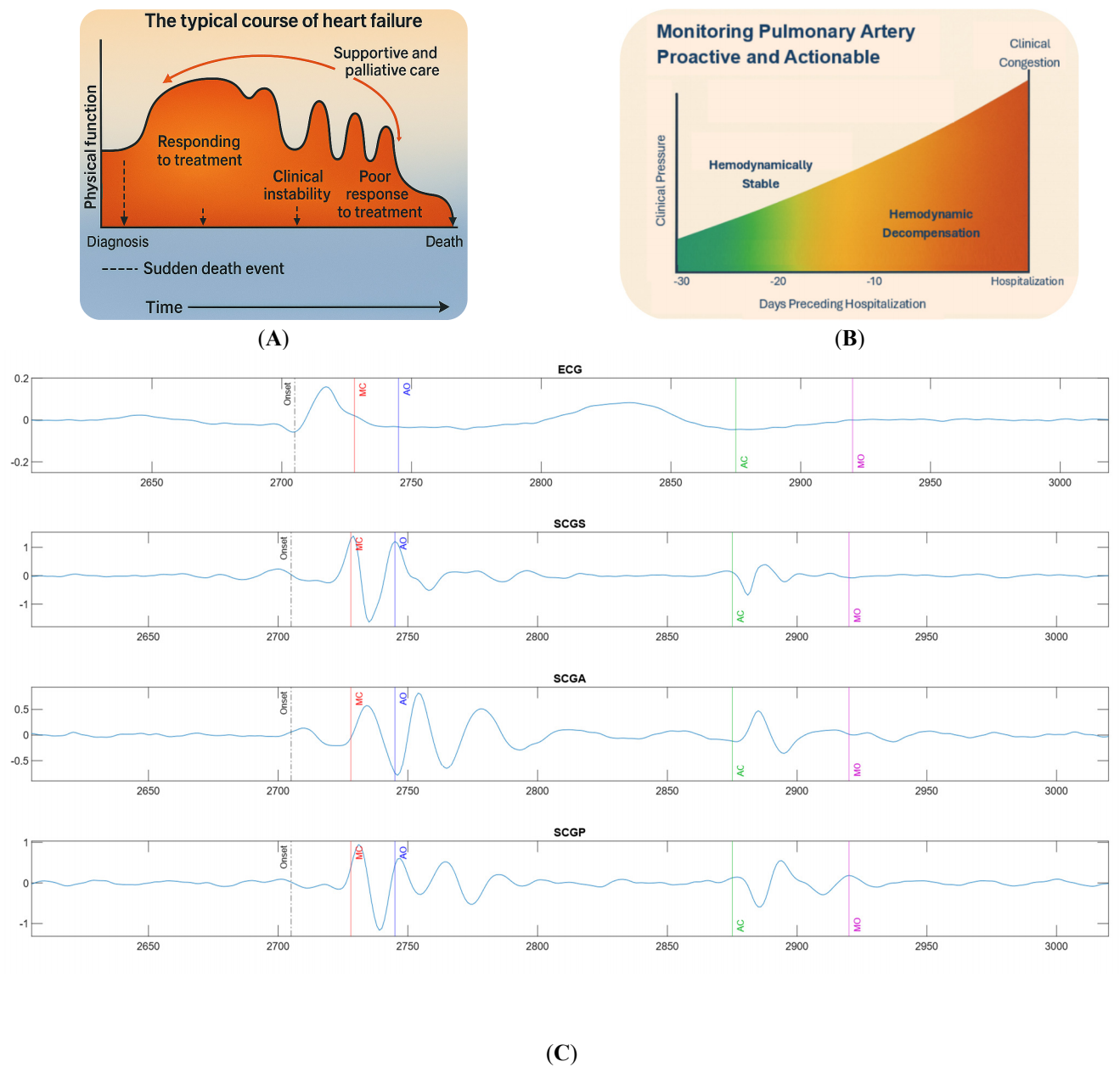
Congestive heart failure (CHF) encompasses both reduced and preserved ejection fraction phenotypes. Modern management increasingly demands actionable insights into cardiac function beyond standard vitals. Cardiac time intervals (CTIs), including mitral valve closure (MVC), aortic valve opening (AVO), aortic valve closure (AVC), and mitral valve opening (MVO), as well as isovolumetric contraction time (IVCT) and isovolumetric relaxation time (IVRT), offer a window into the electromechanical timing of systole and diastole. These intervals provide clinically relevant markers of systolic function, diastolic filling dynamics, and chamber compliance. In HFrEF (reduced ejection fraction), CTI monitoring captures deterioration in contractile efficiency; in HFpEF (preserved ejection fraction), diastolic stiffness and shortened filling times can be tracked. Remote CTI monitoring facilitates timely therapy adjustments, prevents hospitalizations, empowers patients in their disease management, and provides clinicians with early warning signals of worsening physiology. CTIs enable a comprehensive, non-invasive assessment of cardiac chamber performance. This is especially relevant across the full spectrum of heart failure, including both HFrEF and HFpEF. The ability to deliver precise cardiac timing data outside of traditional clinical settings makes it a transformative tool for proactive, physiology-based heart failure management.

Robert Chait
Fergie RamosTuarez
Jesus E.Pino
David Snipelisky*
Cardiovasc. Sci.
2026,
3
(2), 10003; 
TOP