Found 19 results
Open Access
Article
18 April 2025Factors Influencing the Incomes of Chinese Herdsmen in the Context of Grassland Ecological Compensation: A Meta-Analysis
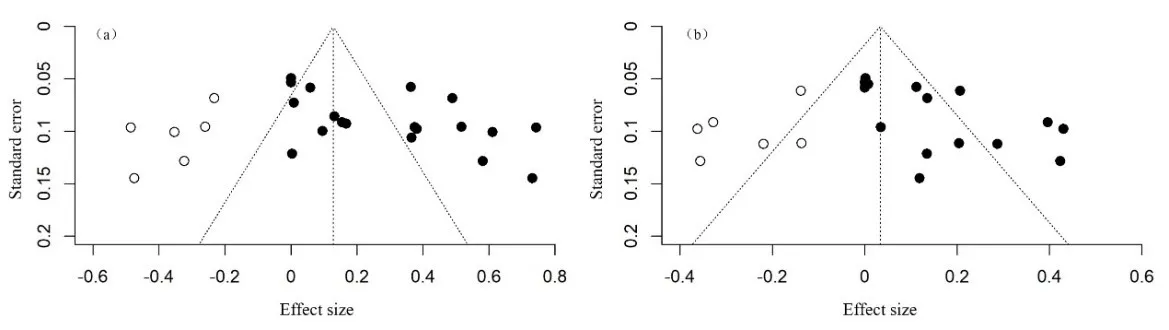
This original paper, within the context of grassland ecological protection subsidies and reward policies, draws on 27 empirical studies conducted between 2011 and 2024 to conduct a meta-analysis of the factors influencing Chinese herdsmen’s incomes concerning heterogeneity and its sources. The results reveal 16 variables that have a significant positive impact on herdsmen’s incomes. These include herdsmen’s gender, age, ethnicity, level of education, household size, labor force, membership in cooperatives, subsidy amount, livestock quantity, living and production expenses, fixed assets, grassland area, per capita grassland area, grassland quality, and location. Among them, the quantity of livestock shows the greatest effect. Significant heterogeneity is evident across six variables: Subsidy amount, livestock quantity, grassland area, labor force, production expenses, and per capita grassland area. The heterogeneity in subsidy amount and grassland area originates from the use of different statistical methods, while the heterogeneity in livestock quantity is attributable to differences in the type of literature; per capita, grassland area heterogeneity is caused by differences in the geographical regions under analysis.
Open Access
Article
08 April 2025Research on the Logic of Mobile Governance from the Perspective of Path Dependency: A Case Study of the Implementation of the “Coal-to-Gas” Policy in Rural Areas of Handan
Mobile governance, a commonly used governance approach in China, has always been controversial. Behind the persistence of mobile governance lies the underlying governance logic. This paper takes the implementation of the “coal-to-gas” policy in rural areas of Handan as a case study to analyze the path-dependent logic inherent in mobile governance. The paper argues that mobile governance’s selection path embodies path dependency characteristics, including three paths: conformist path dependency, policy-based path dependency, and demand-based path dependency. Mobile governance can be regulated through three paths: formulating a comprehensive list of rights and responsibilities for grassroots governance, the provincial government enacting relevant regulations to standardize the grassroots governance process, and vigorously developing e-government and digital government technologies to enhance the rule of law and standardization in grassroots governance.

Open Access
Article
28 November 2024A Review of the Energy Policy in Greece in the Last 50 Years and Its Implications for Prosperity
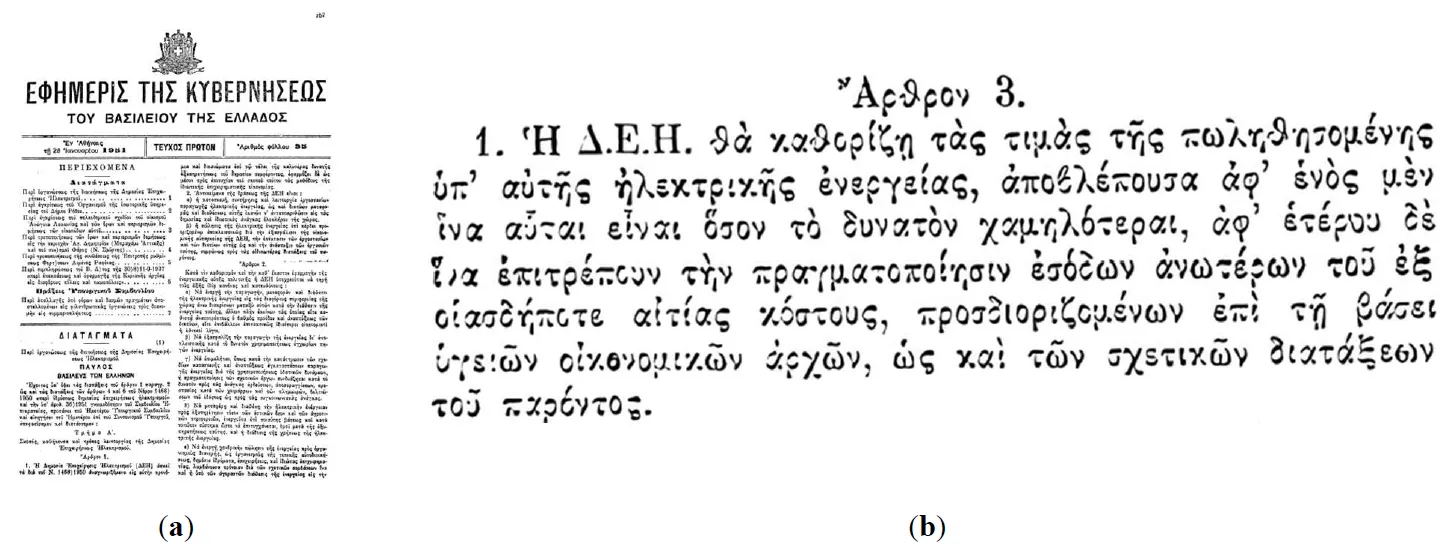
This paper elucidates the development of electricity production and distribution in Greece from the 1950s to date, in correlation with national and European energy policy. During this period, Greece experienced a multifaceted energy transition, including both the transition of ownership of energy generation companies from public to private and a transition from an energy mix in which coal (lignite) served as a major and inexpensive resource to a mix in which wind power, solar power and natural gas gained a primary role, but with high costs for energy generation. The correlation between electrical energy consumption and economic growth is explored in this context, revealing an increase in consumption before the 2009 recession and a decline thereafter. The study investigates the correlation between escalating electricity prices and legislative dependencies that mandated the purchase of wind- and solar-generated electricity at exorbitant rates, the closure of cost-effective lignite units, and the reliance on natural gas—a commodity susceptible to geopolitical shifts. It also shows that, given the structure of the Greek energy mix, the increase in the share of wind and solar energy in the mix is directly related to the increase in the price of electricity. Highlighting the importance of energy costs for prosperity, this paper underscores, through the detailed review of the Greek energy “landscape”, that the major determinants of electricity prices are both the accessibility to natural resources but also their proper and judicious management.
Open Access
Article
18 October 2024Multi-Objective Distributed Real-Time Trajectory Planning for Gliding Aircraft Cluster
A new combat strategy that enables coordinated operations of gliding aircraft clusters for multi-target strikes imposes higher demands on the coordination, real-time responsiveness, and strike accuracy of gliding aircraft clusters. Due to the high speed and large inertia characteristics of gliding aircraft, traditional trajectory planning methods often face challenges such as long computation times and difficulty in responding to dynamic environments in real-time when dealing with large-scale gliding aircraft clusters. This paper proposes a distributed cooperative trajectory planning method for multi-target strikes by gliding aircraft clusters to address this issue. By introducing a multi-objective distributed real-time trajectory planning approach based on Multi-Agent Deep Deterministic Policy Gradients (MADDPG), the gliding aircraft execute distributed cooperative trajectory planning based on the trained model. Due to its robust real-time performance, the gliding aircraft do not need to recalculate trajectories for different initial positions of the cluster. Simulation results show that the average error between the gliding aircraft cluster and the target point is 2.1 km, with a minimum error of 0.06 km and a hit rate of 96.6%, verifying the significant advantages of this method in real-time planning capability and strike accuracy.

Open Access
Article
29 August 2024Incentive for Ecosystem Services: Governance and Policy Coherence in Nepal
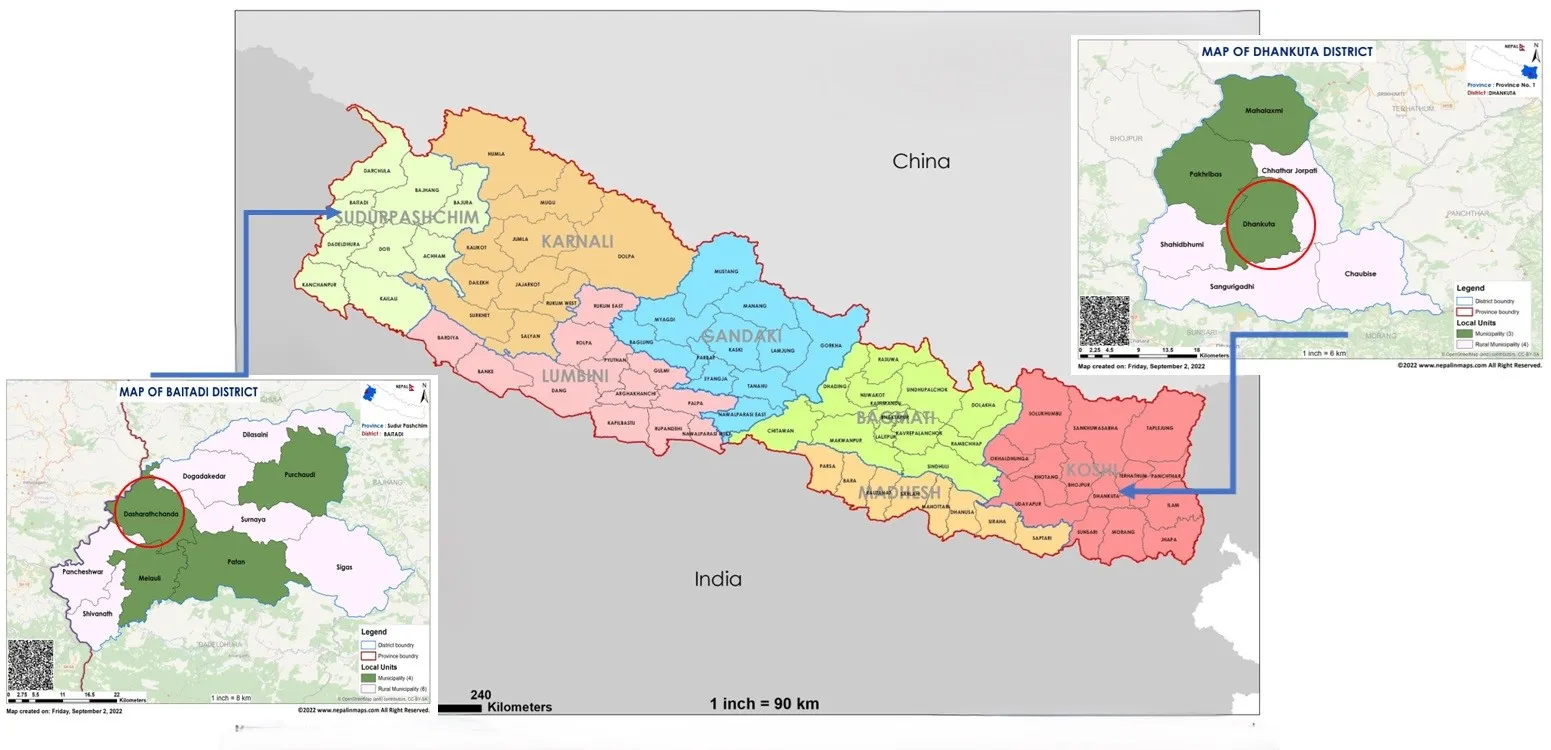
This research highlights the governance of landscape and policy coherence to ensure a sustainable supply of ecosystem services through incentives for ecosystem schemes at the municipal level in Nepal. The study was carried out in Dhankuta and Dasarath Chand municipalities representing Nepal’s Koshi and Sudur Paschim provinces. Six aggregate governance indicators adopted by the World Bank Group were assessed through interviews with primary stakeholders of selected landscapes in two municipalities, followed by Key Informant Interviews. The study indicates that implementation of the Incentive for Ecosystem service scheme is feasible, creating multi-stakeholder institutions at the local level. However, there are several governance challenges to ensure its success. In particular, incentives for ecosystem schemes must be part of local government planning, where multisectoral coordination and collaboration are essential. While municipal authorities have constitutional jurisdictions to initiate such schemes, they lack the human resources to understand ecosystem management for a sustainable supply of ecosystem services. Therefore, landscape governance is essential to make incentive schemes successful and ensure transparency and equitable benefits among ecosystem service providers.
Open Access
Opinion
22 August 2024Medical Drones for Public Health Emergency Preparedness, Response, and Resilience: Delivering Health for All
Amid a global metacrisis of health, environmental and economic challenges, medical delivery drones (or uncrewed aerial vehicles) offer a promising method to prepare for, and rapidly respond, to future emergencies. This opinion article summarizes the current medical delivery drone landscape, evidence base, and policy implications in the context of public health emergencies, such as pandemics, natural disasters, and humanitarian crises, with a particular emphasis on the region of sub-Saharan Africa. Using a multilateral, international health policy perspective, key challenges and opportunities, such as the development of sustainable funding mechanisms, robust regulatory frameworks, and capacity building, are identified.

Open Access
Article
22 March 2024Community Sport, Australian Sport Policy and Advocacy: A Qualitative Study of Stakeholder Perspectives
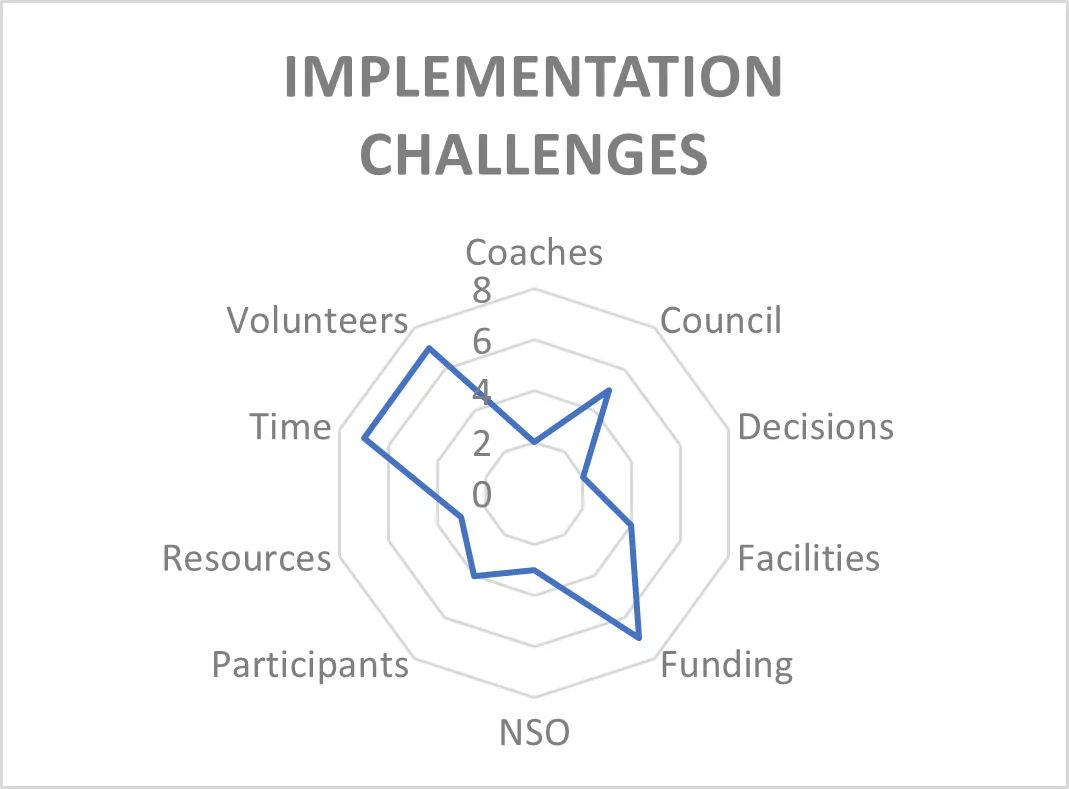
This article explored aspects of the community sport policy process in rural New South Wales, Australia, focusing on the views of community sport club (CSC) officials relating to policy matters. Community sport represents a complicated policy arena, and rural communities face a level of disparity compared with better-resourced urban CSCs, particularly concerning policy implementation and advocacy issues. Officials at CSCs from ten different sports (n = 10) in a rural setting participated in semi-structured interviews to pinpoint themes common in the community sport policy process. Further, the research identified aspects of the connections that impact CSCs, including those with government and National Sporting Organisations (NSOs). To highlight the beliefs and attitudes of the CSC officials, the interviews had two key thematic foci—implementation and advocacy—and the findings highlighted sub-themes relating to the fundamental interests of CSCs. Overall, the research accentuated the hierarchical nature—a power imbalance—of sport policy processes, the potential for CSCs to have a bottom-up role in policy creation, and the consideration of a policy analysis and evaluation structure such as the Advocacy Coalition Framework. Finally, the outcome points to enthusiasm for strengthening community sport by giving CSCs a voice through localized advocacy.
Open Access
Article
18 February 2024The Sustainable Development Concept in the Polish Legal Space from a Legal-Dogmatic Perspective
The sustainable development concept is of crucial importance for the socioeconomic development processes, not only at the international community level, but also—or, perhaps, particularly—at the national or even local levels. The aim of the article is to demonstrate, from a legal-dogmatic perspective, the place, role and significance of the sustainable development concept in the Polish legal space. This perspective applies to both the state policy intended to formulate a strategy which provides a basis for law-making processes and to find normative solutions making it possible to reconcile legally protected values which sometimes compete with one another, with account taken of the needs of future generations. The sustainable development concept has been very broadly followed in Poland not only in the legal doctrine, but also in the doctrine of economic and social sciences. This term has turned out to be such an effective political catchword that it has been commonly abused and, therefore, it has lost a good deal of its social importance; this makes it substantially more difficult to apply a normative approach to the issues related to the implementation of the concept in legislative practice. In the Polish legal space, the sustainable development concept has become the leading theme of many documents and legal acts, particularly those concerned with environmental protection, but also, although to a much more modest extent, those addressing the issues of socioeconomic development.

Open Access
Editorial
06 September 2022