
Comprehensive Evaluation of an Intelligent Feeding Robot for the Elderly: Effectiveness, Safety, and Human-Robot Interaction
Comprehensive Evaluation of an Intelligent Feeding Robot for the Elderly: Effectiveness, Safety, and Human-Robot Interaction
Fangting Chen
1,2,3,†
 Haozhi Zhao
1,2,3,†
Jianlin Ou
4
Yuehua Huang
5
Diansheng Chen
6
Yafei Wang
1,2,3
Lijuan Li
1,2,3
Yangyang Lin
1,2,3,*
Yuling Wang
1,2,3,*
Haozhi Zhao
1,2,3,†
Jianlin Ou
4
Yuehua Huang
5
Diansheng Chen
6
Yafei Wang
1,2,3
Lijuan Li
1,2,3
Yangyang Lin
1,2,3,*
Yuling Wang
1,2,3,*
Received: 06 May 2026 Revised: 10 June 2026 Accepted: 23 July 2026 Published: 06 August 2026

© 2026 The authors. This is an open access article under the Creative Commons Attribution 4.0 International License (https://creativecommons.org/licenses/by/4.0/).
1. Introduction
China is among the countries experiencing the fastest growth in its aging population worldwide. As life expectancy increases and birth rates decline, projections indicate that the proportion of individuals aged 60 and above will increase significantly, from 12.4% (168 million) in 2010 to 28% (402 million) by 2040 [1]. This demographic shift will lead to a substantial increase in elderly individuals requiring care. From 2010 to 2050, China’s dependency ratio is expected to rise from 5.6% to 6%, with approximately 66 million elderly people requiring care services [2].
The growing care demand has posed great pressure on both family caregivers and the formal care system. The shortage of professional care workers has become a prominent contradiction in elderly care services, and feeding assistance, as one of the most frequent daily care tasks, takes up a large amount of care workers’ working time [3,4,5]. However, numerous individuals encounter eating difficulties, particularly the elderly, stroke survivors, those affected by Parkinson’s disease, and individuals with hand disabilities, frequently resulting in the loss of independent eating ability [6,7,8,9]. This loss of autonomy in eating can lead to depression and self-blame, while simultaneously creating additional temporal and financial burdens for families [10,11,12]. Restoration of independent eating capability would not only ensure adequate nutritional intake but also substantially enhance mental well-being and quality of life [13].
In recent years, with the rapid development of intelligent robotics technology, feeding robots have gradually entered the field of elderly care to assist in completing automatic feeding tasks, which is expected to alleviate the contradiction between supply and demand of care services. We have witnessed the development of various intelligent feeding aids by researchers globally, including smart spoons, assisted feeding devices, and feeding robot systems [14,15,16,17,18,19]. Prior research has made notable contributions to advancing robotic feeding capabilities. The Dutch RSI service robot (1982) established an early proof-of-concept for robotic feeding assistance using a simple robotic arm [20]. However, as a general-purpose platform rather than a dedicated feeding device, its feeding functionality remained rudimentary, constrained by inadequate adaptive control for varying food consistencies, low positioning accuracy, and minimal user interface options. Subsequently, Mike Topping from the United Kingdom developed Handy1, which implemented feeding functions through switch-based user control. However, its large physical footprint limited deployment in space-constrained care environments [21]. In 2016, Desin from the United States introduced the Obi feeding robot, which gained attention for its compact dimensions and user-friendly segmented plate system with button-based interfaces. Yet, its reliance on pre-programmed positioning and lack of adaptive food recognition restricted its flexibility in complex meal configurations [22]. Meanwhile, Japan’s My Spoon achieved enhanced precision through a five-degree-of-freedom robotic arm but suffered from limited system integration and cumbersome operational procedures, reducing its intuitiveness for elderly users [23]. More recently, hybrid brain-computer interface-based control systems have been proposed, but the need to wear multiple biosignal acquisition devices poses practical challenges for daily use [24].
Despite these contributions, four persistent barriers impede the translation of feeding robots from laboratory prototypes into practical, acceptable assistive devices for real-world elderly care. First, most existing systems rely heavily on pre-programmed positioning and lack adaptive control for varying food consistencies, resulting in suboptimal handling of diverse meals with mixed textures. Second, practical deployment is frequently constrained by large physical footprints or low system integration that necessitates multiple separate components and complex operating procedures, thereby reducing usability for elderly users. Third, advanced interfaces such as BCI require users to wear cumbersome biosignal acquisition devices, posing substantial daily usability challenges. Fourth, current research on intelligent feeding robots, both domestically and internationally, primarily focuses on evaluating the robots’ intrinsic technical performance, including aspects such as robotic arm control, positioning accuracy, and food target detection processing speed [25,26,27], with less attention given to user-centered clinical outcomes in real-world meal scenarios. Technical metrics alone cannot adequately reflect a feeding robot’s performance in actual meal scenarios, where food is randomly distributed, textures vary, and users have individual eating preferences. A system that excels in engineering benchmarks may still achieve low food intake percentage, produce uncoordinated or jerky feeding motions, or fail to deliver a satisfactory user experience when deployed with older adults in real-world settings. Given these barriers, developing a feeding robot that simultaneously addresses technical adaptability and user-centered clinical evaluation is necessary for translating laboratory prototypes into practical care solutions.
2. Robot System Design
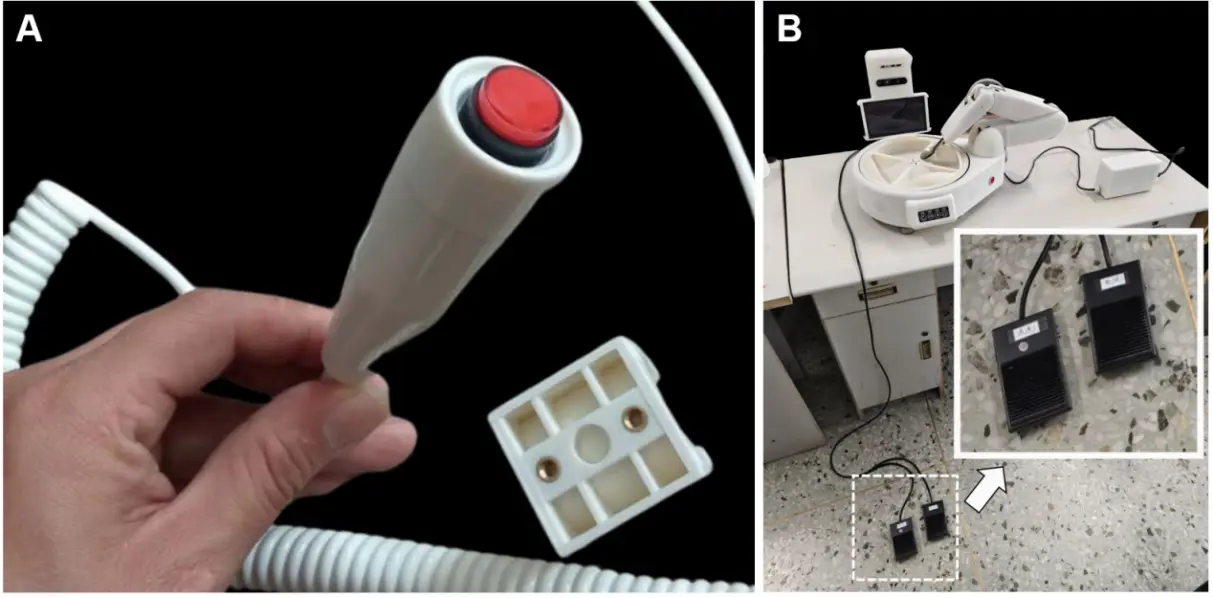
To bridge these gaps, we developed “Xiao Xi” (Figure 1), an intelligent feeding robot grounded in human-centered design principles. The system integrates three key functional modules: (i) a multimodal interaction module incorporating voice control, handheld buttons (Figure 2A), foot pedals (Figure 2B), and mechanical buttons to accommodate diverse user capabilities; (ii) a deep learning-based visual perception module that enables real-time food recognition and mouth localization for precise food delivery; and (iii) a spoon-chopstick integrated end-effector that handles both solid and semi-solid foods, coordinated with a robotic arm and rotating meal plate to enhance food acquisition from randomly distributed items. The entire system features a lightweight, compact design (total weight ≤ 5.0 kg) to facilitate deployment in space-constrained care environments. To assess its real-world applicability, we enrolled 40 healthy elderly participants in a randomized crossover trial to evaluate the effectiveness, safety, and user acceptance of robot-assisted feeding sessions (RFS) compared with human-assisted feeding sessions (HFS).
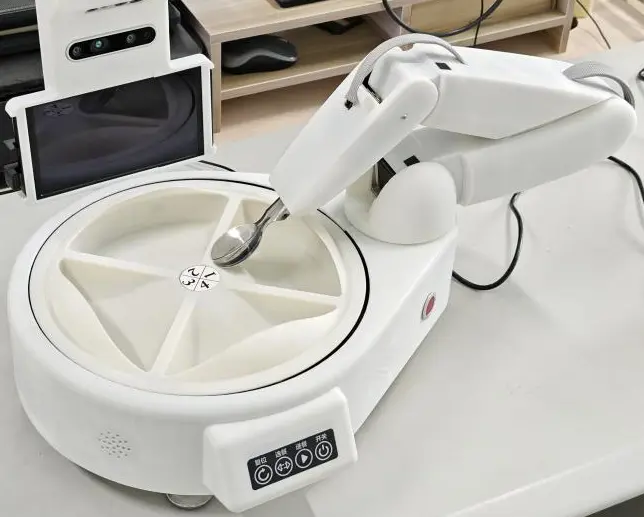
Figure 1. Feeding Robot “Xiao Xi”(the four black buttons correspond to reset, food selection, feeding, and power on/off, respectively).
2.1. Hardware Configuration
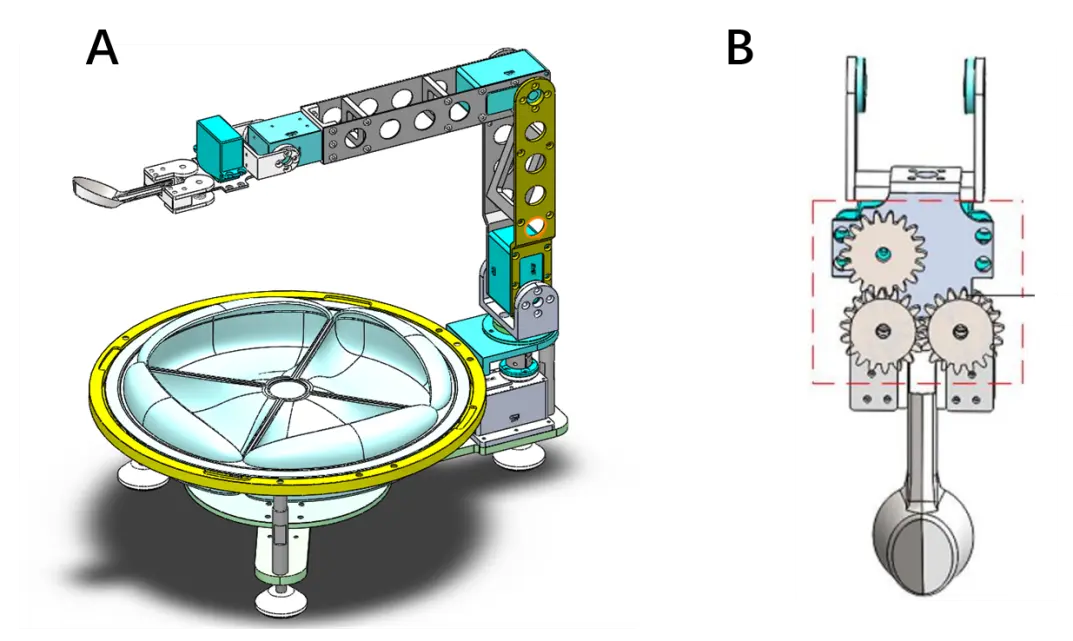
The “Xiao Xi” feeding robot mainly consists of a 4-DOF serial robotic arm, a rotating meal plate, and a spoon-chopstick integrated end-effector [28]. The key innovation of the system lies in the spoon-chopstick integrated end-effector (Figure 3). It consists of two half-spoon structures connected by a gear transmission mechanism. When the two halves close, they form a complete spoon suitable for scooping gelatinous or soft foods; when opened, they function as chopsticks for grasping solid foods. This dual-function design enables the robot to handle diverse food types seamlessly without requiring tool changes, addressing a major limitation of most existing feeding robots that rely on single-type end-effectors.
2.2. Perception and Recognition Algorithms
Food Recognition: Single-dish recognition utilizes color-based segmentation. For practical multi-dish scenarios with heterogeneous foods on one plate, an improved YOLOv5s model was developed [29]. This model significantly enhances detection performance for multiple simultaneously presented dishes. Compared with the baseline YOLOv5s and conventional single-task approaches commonly used in prior feeding robot studies, the improved model achieved a mean Average Precision (mAP) of 0.848, representing an approximately 10% improvement (Table 1). It demonstrates strong capability in accurately identifying and localizing multiple food types in a single view, effectively addressing the challenge of randomly distributed foods in real meal settings.
Table 1. Detection Precision Comparison of YOLOv5s (baseline) and Improved YOLOv5s.
|
Detection Precision |
YOLOv5s (Baseline) |
Improved YOLOv5s |
|---|---|---|
|
R-type dishes (AP) |
0.779 |
0.892 |
|
G-type dishes (AP) |
0.731 |
0.824 |
|
B-type dishes (AP) |
0.714 |
0.805 |
|
mAP (Average accuracy) |
0.744 |
0.848 |
Facial Detection and Mouth Localization: The Dlib library combined with OpenCV enables reliable face detection and 68 facial landmark extraction (Figure 4). Mouth center position is calculated from key landmarks, with binocular stereo vision providing 3D spatial coordinates. The system robustly tracks the user’s mouth in real time, even with head movements, and selects the most prominent face when multiple faces are detected.
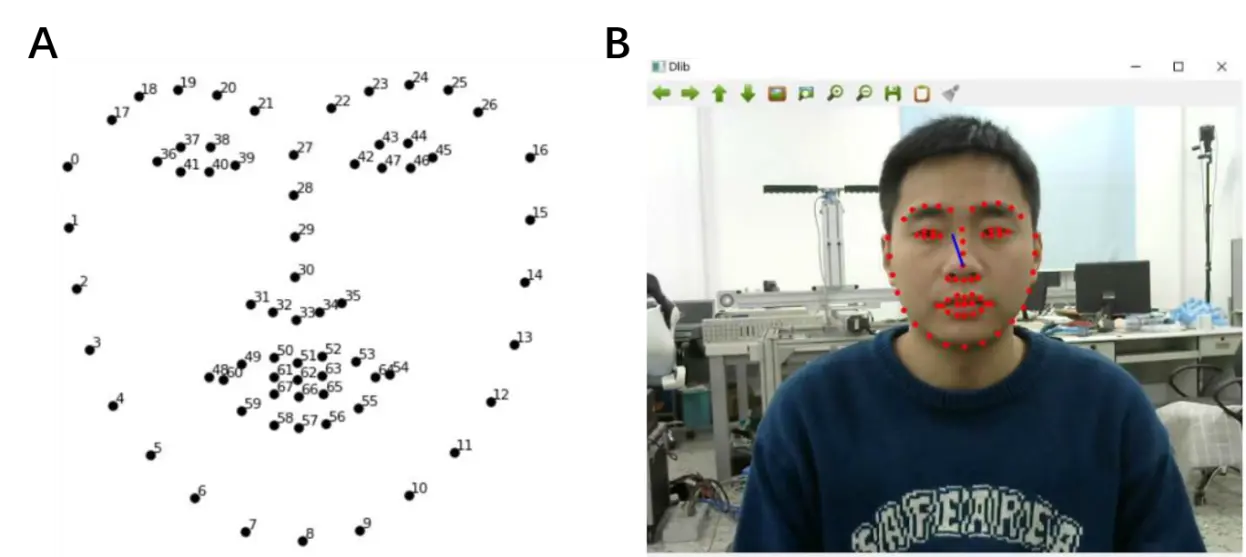
Figure 4. OpenCV-based 68-point face recognition. (A) Annotation of 68 facial keypoints; (B) 68-point landmarks tracked on video faces.
2.3. Control Strategy and Trajectory Planning
The “Xiao Xi” feeding robot employs a vision-servo control strategy that tightly integrates real-time mouth position recognition from the visual system with robotic motion planning and control. As shown in the control architecture (Figure 5), the system takes the 3D mouth coordinates obtained from facial landmark detection and binocular stereo vision as the primary input. This visual feedback is fused into a closed-loop pipeline comprising trajectory planning, real-time interpolation, joint controller, and motion execution, enabling dynamic adjustment to user’s head movements during feeding.

High-level task planning coordinates food grasping from the rotating meal plate and feeding actions, while mid-level trajectory generation utilizes multi-segment linear interpolation to produce smooth, safe paths. The low-level joint servo controllers ensure precise execution. For safety and user comfort, the final feeding position is consistently maintained 20–30 mm in front of the detected mouth location. This vision-based closed-loop approach allows the robot to continuously track and adapt to the user’s mouth position in real time, achieving reliable and natural feeding motions in practical scenarios.
2.4. Safety Mechanisms
Safety is prioritized through hardware and software measures: force-limited servos with collision detection, physical emergency stop buttons, software watchdog timers, fault recovery (e.g., re-localization on detection failure), conservative feeding distance offsets, and physical design constraints to limit contact forces. All experiments confirmed safe operation under realistic conditions.
This comprehensive system design provides the technical foundation for the subsequent user-centered evaluation presented in this study.
3. Materials and Methods
3.1. Participants
Participants were recruited from the Sixth Affiliated Hospital of Sun Yat-sen University. The inclusion criteria were as follows:
-
Age ≥60 years;
-
Ability to maintain a sitting position for ≥30 min;
-
Stable vital signs, absence of mental illness;
-
No severe cognitive impairment, Mini-Mental State Examination (MMSE) score ≥17, ability to understand and comply with the trial requirements;
-
Willingness to provide informed consent.
Exclusion criteria included severe organ failure and an inability to feed orally.
3.2. Methods
The feeding scenario utilized a standardized 500-g meal comprising four dishes: shredded pork with eggplant, scrambled eggs with tomatoes, mapo tofu, and broccoli. A random allocation sequence was generated using SPSS version 25.0. Participants were assigned in a 1:1 ratio to one of two feeding sequences according to this sequence. In sequence A, participants received RFS at lunch, followed by HFS at dinner. In sequence B, participants received HFS at lunch followed by RFS at dinner. Each participant completed both feeding conditions. Period and sequence effects were included in the statistical analysis to account for potential lunch–dinner differences, order effects, learning effects, and fatigue.
3.3. Feeding Procedure
All participants experienced both RFS and HFS. Prior to the experiment, all participants were instructed to finish the entire 500 g meal under both conditions, unless the feeding process itself could no longer proceed meaningfully (e.g., the robot ceased feeding upon consecutive empty spoons or when the spoon contained minimal food, or the caregiver dropped the spoon). This instruction was applied identically to both sessions. The specific procedures for each intervention are described below.
3.3.1. RFS
The meal was presented on a designated plate, where the robot’s depth camera automatically identified the food items (Figure 6A). Upon identification, the system displayed the relevant food items for the user. Participants could select multiple interaction methods for feeding (Figure 6B).
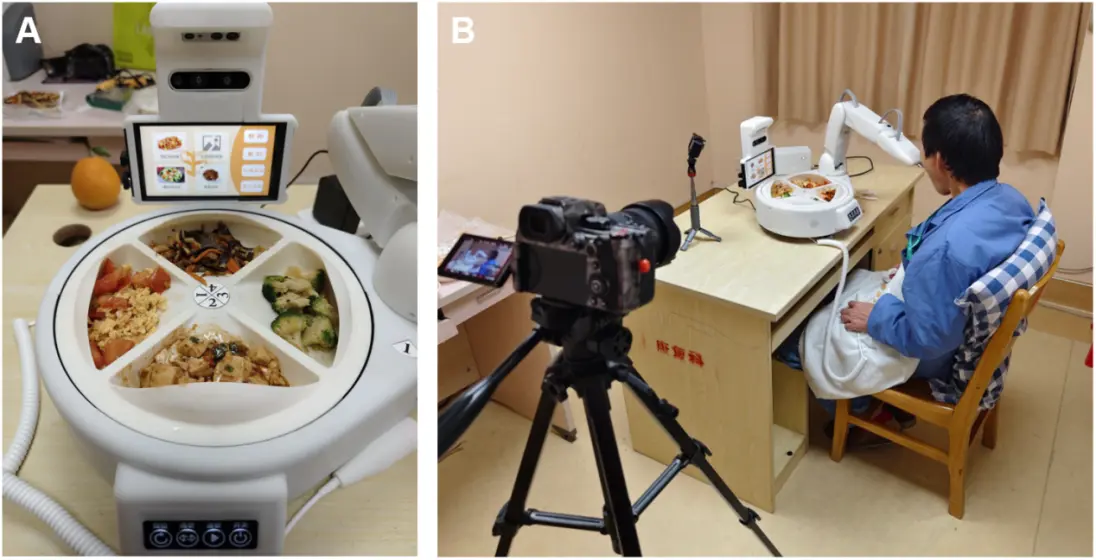
Figure 6. Robot-assisted feeding procedure. (A) The robot recognizes the dishes; (B) The participant is being fed by the “Xiao Xi”.
For voice interaction, users activated the system with phrases “Xiao Xi, please help me get * number food” or “Xiao Xi, I want to eat ****”. After system acknowledgment, the selected food item was retrieved and feeding commenced. The phrase “Xiao Xi, I’m done” reset the robotic arm. Alternatively, subjects could utilize handheld buttons, foot pedals, or mechanical buttons during feeding. The feeding process terminated upon three consecutive empty spoons or when less than one-third of the spoon surface contained food.
3.3.2. HFS
The relatives provided the participants with identical types and weights of food as those used in the RFS.
3.4. Evaluation Indicators
3.4.1. Effectiveness Indicators
- a.
-
Food intake percentage: This was calculated as (weight of food consumed/total weight of food on plate before meal) × 100%. All food portions were pre-weighed using a digital scale (accuracy ±1 g). After each session, any leftover food on the plate and all food spilled onto the bib, tray, or surrounding area were collected and weighed together to determine the remaining food weight, ensuring accurate calculation of actual intake.
- b.
-
Successful feeding percentage: This was calculated as (number of successful attempts/total attempts within the first 16 trials) × 100%. A feeding attempt was considered successful only when all three criteria were met: (i) more than two-thirds of the food on the spoon surface was delivered to and consumed by the participant; (ii) no food spillage occurred during transport or transfer; and (iii) no robot malfunction interrupted the process. If any criterion was violated, the attempt was recorded as unsuccessful.
- c.
-
Single feeding task duration: All feeding sessions were video-recorded using a high-definition camera. Two independent evaluators reviewed the footage and extracted the duration of selected feeding attempts using timing software, with the average of the two measurements used for analysis. The 5th, 10th, and 15th feeding attempts were selected for analysis, and their average duration was calculated. For the RFS, task time was measured from the moment the participant issued the command (voice, button, or foot pedal) until the food was delivered to the participant’s mouth. For the HFS, task time was measured from the moment the caregiver’s spoon began to move upward from the plate toward the participant’s mouth until the food was delivered. This metric primarily reflects the robot’s feeding efficiency.
3.4.2. Interaction Indicators
Interaction satisfaction was assessed using the Quebec User Evaluation of Satisfaction with Assistive Technology (QUEST 2.0) [25]. QUEST 2.0 is originally designed to evaluate user satisfaction with assistive technology and related services. In the present study, it was used to assess participants’ satisfaction with the overall feeding assistance experience under both feeding conditions. For the RFS, participants rated their satisfaction with the feeding robot and the related service process. For the HFS, the same item framework was applied to the HFS process, and participants rated their satisfaction with the assistance method and service experience, including perceived comfort, convenience, safety, and overall acceptability. The scale consists of 12 items and uses a 5-point Likert scoring system, with scores from 1 to 5 representing satisfaction levels from very dissatisfied to very satisfied. The maximum total score is 60 points, with higher scores indicating greater satisfaction. Because QUEST 2.0 was originally developed for assistive technology assessment, its application to the HFS condition should be interpreted as a comparative measure of feeding-service satisfaction.
3.4.3. Safety Indicators
- a.
-
Record adverse events, such as a malfunctioning robotic arm during feeding or a spoon causing injury to the patient;
- b.
-
Monitor vital signs: document heart rate, blood pressure, and blood oxygen levels before and after feeding;
- c.
-
Assess symptoms: check for any occurrences of dizziness, headache, chest tightness, chest pain, or difficulty breathing during feeding.
4. Statistical Methods
Statistical analyses were performed using R. Continuous outcomes were summarized as mean ± standard deviation or median with interquartile range according to data distribution. Linear mixed-effects models were used for food intake percentage, average feeding duration, and QUEST 2.0 satisfaction score. Feeding condition, period, and sequence were included as fixed effects, and participant was included as a random intercept. Successful feeding was analyzed as the number of successful attempts out of 16 attempts using a generalized linear mixed-effects model with a binomial distribution. Effect sizes were calculated using Cohen’s dz for paired continuous outcomes. Effect estimates were reported as adjusted mean differences or odds ratios with 95% confidence intervals. Safety outcomes were analyzed using change values calculated as post-feeding minus pre-feeding values. A two-tailed p-value < 0.05 was considered statistically significant.
5. Results
5.1. Demographic and Clinical Baseline Data
The study included 40 participants, including 12 males (30%) and 28 females (70%). The median age was 64 (63, 67) years, and the median MMSE score of the participants was 26 (26, 27) points; All participants scored 0 points on the EAT-10 assessment, achieved FOIS level 7, and the 15-item Geriatric Depression Scale (GDS-15) score was 1 (0, 1). These scores indicate that participants exhibited no swallowing impairments and maintained good mental health status.
5.2. Verification Results of Effectiveness and Interactivity
Mixed-effects models showed that RFS had a significantly lower food intake percentage than HFS (adjusted mean difference = −33.90%, 95% CI: −35.57 to −32.23, p < 0.001). RFS also required a longer average feeding duration (adjusted mean difference = 2.78 s, 95% CI: 2.35 to 3.21, p < 0.001). No significant difference was observed in successful feeding percentage between the two conditions (OR = 0.93, 95% CI: 0.43 to 2.03, p = 0.860). QUEST 2.0 satisfaction scores were not significantly different between RFS and HFS (adjusted mean difference = −0.80 points, 95% CI: −1.61 to 0.01, p = 0.054). No sequence effect was detected for the main outcomes. A period effect was observed for the QUEST 2.0 satisfaction score. Detailed outcome comparisons are presented in Table 2, and the corresponding distributions are illustrated in Figure 7.
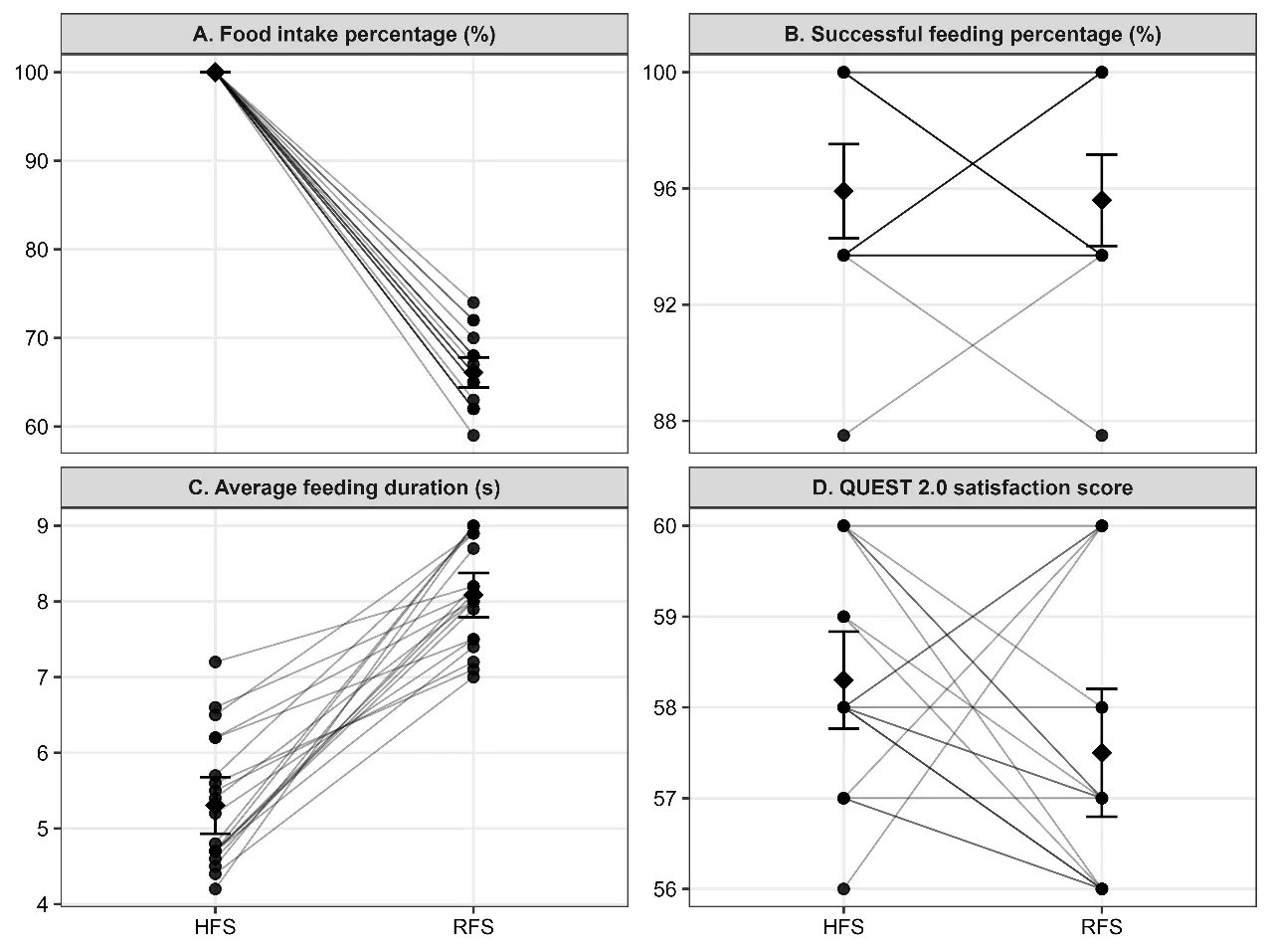
Figure 7. Comparison of effectiveness and human–robot interaction outcomes between RFS and HFS. (A) Food intake percentage; (B) successful feeding percentage; (C) average feeding duration per attempt; (D) QUEST 2.0 satisfaction score. Data are shown as paired observations for each participant, with group-level summaries presented as mean and 95% confidence interval. HFS, human-assisted feeding session; RFS, robot-assisted feeding session.
Table 2. Effectiveness and human–robot interaction outcomes.
|
Outcome |
HFS |
RFS |
Effect (RFS − HFS) |
95% CI |
p Value |
Effect Size |
|---|---|---|---|---|---|---|
|
Food intake percentage (%) |
100.00 ± 0.00 |
66.10 ± 3.91 |
MD = −33.90 |
−35.57 to −32.23 |
<0.001 |
dz = −8.68 |
|
Successful feeding percentage (%) |
95.91 ± 3.69 |
95.59 ± 3.59 |
OR = 0.93 |
0.43 to 2.03 |
0.860 |
- |
|
Average feeding duration (s) |
5.31 ± 0.85 |
8.08 ± 0.66 |
MD = 2.78 |
2.35 to 3.21 |
<0.001 |
dz = 2.51 |
|
QUEST 2.0 satisfaction score |
58.30 ± 1.22 |
57.50 ± 1.61 |
MD = −0.80 |
−1.61 to 0.01 |
0.054 |
dz = −0.37 |
Values are presented as mean ± standard deviation. MD represents the adjusted mean difference; OR represents the odds ratio. The effect estimate is calculated as RFS minus HFS for MD and RFS relative to HFS for OR. dz represents Cohen’s dz. HFS, human-assisted feeding session; RFS, robot-assisted feeding session; CI, confidence interval.
5.3. Results of Safety Verification
No adverse events occurred during either feeding condition. No participant reported dizziness, headache, chest tightness, chest pain, dyspnea, or feeding-related injury. Small fluctuations in vital signs were observed after feeding. In the within-condition analysis, systolic blood pressure increased slightly after RFS, and heart rate increased slightly after HFS. The between-condition comparisons of change values showed no significant differences in systolic blood pressure, diastolic blood pressure, heart rate, or oxygen saturation. The absolute magnitude of these changes was limited, and all vital signs remained within acceptable physiological ranges. These findings indicate that RFS was well tolerated by healthy elderly participants under the present experimental conditions. The results are presented in Table 3.
Table 3. Safety outcomes.
|
Outcome |
Condition |
Before Feeding |
After Feeding |
Δ |
p within Condition |
Between-Condition Δ |
p Between Δ |
|---|---|---|---|---|---|---|---|
|
SBP, mmHg |
HFS |
122.30 ± 10.34 |
124.15 ± 11.76 |
1.85 ± 4.86 |
0.105 |
||
|
SBP, mmHg |
RFS |
121.20 ± 12.55 |
123.85 ± 13.08 |
2.65 ± 3.80 |
0.006 |
0.80 (−1.73 to 3.33) |
0.515 |
|
DBP, mmHg |
HFS |
75.75 ± 5.10 |
76.10 ± 4.71 |
0.35 ± 2.62 |
0.557 |
||
|
DBP, mmHg |
RFS |
76.65 ± 4.34 |
76.25 ± 2.65 |
−0.40 ± 3.03 |
0.562 |
−0.75 (−1.98 to 0.48) |
0.218 |
|
Heart rate, bpm |
HFS |
75.85 ± 9.50 |
77.80 ± 8.20 |
1.95 ± 4.14 |
0.048 |
||
|
Heart rate, bpm |
RFS |
76.35 ± 8.10 |
77.15 ± 6.98 |
0.80 ± 2.89 |
0.232 |
−1.15 (−3.39 to 1.09) |
0.297 |
|
SpO2, % |
HFS |
97.05 ± 1.10 |
97.20 ± 0.95 |
0.15 ± 1.53 |
0.666 |
||
|
SpO2, % |
RFS |
96.95 ± 0.89 |
97.15 ± 1.14 |
0.20 ± 1.11 |
0.428 |
0.05 (−0.62 to 0.72) |
0.878 |
Values are presented as mean ± standard deviation. Δ was calculated as the after-feeding value minus the before-feeding value. p within condition represents the pre–post comparison within each feeding condition. Between-condition Δ represents the adjusted difference in change values between RFS and HFS. HFS, human-assisted feeding session; RFS, robot-assisted feeding session; SBP, systolic blood pressure; DBP, diastolic blood pressure; SpO2, peripheral oxygen saturation; CI, confidence interval.
6. Discussion
The loss of independent eating ability significantly affects self-efficacy and autonomy [30,31], often triggering helplessness, social withdrawal, and increased caregiver burden [32,33,34]. Intelligent feeding robots offer a promising solution, yet evidence on their real-world performance against HFS remains scarce. This study evaluates “Xiao Xi”, a feeding robot distinguished by two design features: (i) the integration of multimodal interaction with deep learning-based perception and a spoon-chopstick mechanism adapted for Chinese cuisine; and (ii) a user-centered, randomized crossover design comparing RFS with HFS using clinically validated outcome measures in a real meal scenario. Unlike previous investigations that have relied largely on engineering benchmarks, this evaluation emphasizes operational effectiveness, user satisfaction, and safety under realistic conditions.
6.1. Key Findings and Performance Comparison
In this randomized crossover investigation, we compared RFS with HFS under standardized meal conditions. The results showed that RFS was less efficient than HFS, as reflected by a lower food intake percentage and a longer average feeding duration. This finding indicates that the current robot system still has limitations in completing a full meal as efficiently as human assistance. The lower food intake percentage may be related to insufficient real-time tactile feedback and adaptive spoon control, which may limit the robot’s ability to retrieve scattered food residues, scrape the plate, and adjust spoon orientation during delivery. The longer feeding duration may also reflect the sequential nature of robot operation, including food recognition, food acquisition, trajectory planning, and delivery. In contrast, human caregivers can flexibly adjust food collection strategies, feeding angle, speed, and spoon orientation through visual and tactile feedback.
Despite these efficiency limitations, the successful feeding percentage did not differ substantially between RFS and HFS. This suggests that once the robot acquired food and delivered it to the mouth, the feeding action itself was generally reliable. Therefore, the main limitation of the current system appears to lie in food acquisition efficiency and adaptive control rather than in the basic ability to deliver food to the mouth. QUEST 2.0 satisfaction scores were also comparable between the two feeding conditions, suggesting that healthy elderly participants showed good acceptance of RFS. This may be partly explained by the autonomy, novelty, and multimodal interaction options provided by the robot, which may have compensated for its slower feeding process.
The crossover design may be affected by order effects, learning effects, fatigue, and differences between lunch and dinner. Therefore, period and sequence effects were included in the statistical model. No sequence effect was detected for the main outcomes, suggesting that the order of RFS and HFS did not substantially influence the main findings. However, a period effect was observed for the QUEST 2.0 satisfaction score, indicating that subjective satisfaction may have been influenced by meal period, prior task experience, or adaptation to the feeding procedure. This result should be interpreted cautiously.
Overall, these findings indicate that “Xiao Xi” has achieved acceptable basic feeding reliability, user satisfaction, and short-term safety in healthy elderly participants, but its feeding efficiency remains lower than HFS.
6.2. User Feedback and Directions for Interaction Optimization
The feedback collected during the validation phase provided crucial insights for optimizing human-robot interaction. Users were permitted to select their preferred interaction modes, and their feedback was systematically collected. Although voice control offered convenience, the necessity for repeated commands with each feeding cycle increased user fatigue, adversely affecting the overall experience. Some participants suggested a “continuous feeding mode” where the robot would automatically proceed to the next desired food item after each successful delivery, only requiring interruption when changing food type.
Despite the robot’s high accuracy in recognizing standard Mandarin, it demonstrated limitations with regional dialects such as Cantonese, potentially hindering technology adoption among linguistically diverse populations. Future iterations should incorporate multilingual and dialect-specific speech recognition modules adapted to various regional linguistic and cultural contexts.
6.3. Limitations and Future Directions
This study has several limitations. First, the exclusive enrollment of healthy elderly participants without swallowing or feeding disorders limits the generalizability of our findings to clinical populations, including stroke survivors, patients with Parkinson’s disease, and individuals with upper limb motor impairments, who represent the ultimate target users of this technology. Future studies in these specific populations are essential before clinical application can be recommended. Second, the modest sample size and single-session protocol constrain conclusions regarding long-term usability, user adaptation, and the durability of outcomes. Extended trials with larger cohorts and repeated feeding sessions are needed to address these gaps. Third, the absence of multimodal sensor data, such as robotic arm motion trajectories and food recognition accuracy, limits objective and quantitative assessments of technical performance in the current study.
Based on this study’s findings and limitations, several future development directions are proposed. First, feeding efficiency needs further improvement, which can be realized by integrating force-torque sensors for adaptive scooping and optimizing the deep learning-based food recognition model for dynamic path planning to maximize food retrieval [35,36,37]. Second, further optimizing interaction modes to reduce operational fatigue and balancing technical complexity and user-friendliness is still crucial for achieving accurate and humanized robotic feeding services in real scenarios [25,38]. Third, to promote real-world application, the system’s speech recognition should add support for Chinese regional dialects and multiple languages to improve accessibility for linguistically diverse elderly groups. Fourth, most importantly, strict verification among target clinical groups, including stroke survivors, Parkinson’s patients, and people with upper limb motor impairments, is necessary to confirm the generalizability and clinical value of assisted feeding robots.
7. Conclusions
In healthy elderly participants, “Xiao Xi” demonstrates high user satisfaction, and no adverse events were observed under the present experimental conditions; however, improvements in feeding efficiency are necessary. It is important to note that these findings are preliminary and limited to healthy older adults; further validation in populations with actual feeding impairments is required.
Statement of the Use of Generative AI and AI-Assisted Technologies in the Writing Process
In the process of preparing this manuscript, the author(s) utilized ChatGPT (OpenAI) to enhance the text’s clarity, grammar, and readability by means of language refinement and style polishing. Following the use of this tool/service, the author(s) examined and revised the content as necessary and assume(s) complete responsibility for the published article’s content.
Acknowledgments
We sincerely thank all participants for their valuable contributions to this study.
Author Contributions
Conceptualization, Y.W. (Yuling Wang), Y.L. and D.C.; Methodology, Y.W. (Yafei Wang) and L.L.; Software, H.Z.; Validation, F.C., H.Z. and Y.H.; Formal Analysis, Y.W. (Yafei Wang) and L.L.; Investigation, Y.H., J.O. and F.C.; Resources, Y.W. (Yuling Wang) and D.C.; Data Curation, H.Z. and F.C.; Writing-Original Draft Preparation, F.C.; Writing-Review & Editing, J.O., H.Z. and F.C.; Visualization, H.Z.; Supervision, Y.W. (Yuling Wang) and Y.L.; Project Administration, Y.W. (Yuling Wang) and Y.L.; Funding Acquisition, Y.W. (Yuling Wang).
Ethics Statement
The study was approved by the Medical Ethics Committee of the Sixth Affiliated Hospital of Sun Yat-sen University (Ethics No.2023ZSLYEC-161, approved on 31 March 2023).
Informed Consent Statement
All participants provided written informed consent before the measurements.
Data Availability Statement
The datasets used and/or analyzed during the current study are available from the corresponding author upon reasonable request.
Funding
This work was supported by Guangdong Provincial Clinical Research Center for Rehabilitation Medicine (2023B110003) and the National Key Research and Development Program of China (Project Number: 2020YFC2007704, “Product Testing and Application Verification of Aids for Eating, Bathing, and Emotional Support”). The funders had no involvement in the study design, data collection, analysis, interpretation, or preparation of the manuscript.
Declaration of Competing Interest
The authors declare that they have no known competing financial interests or personal relationships that could have appeared to influence the work reported in this paper.
References
- World Health Organization. Secondary Ageing and Health Financing; World Health Organization: Geneva, Switzerland, 2023. [Google Scholar]
- Harwood RH, Sayer AA, Hirschfeld M. Current and future worldwide prevalence of dependency, its relationship to total population, and dependency ratios. Bull. World Health Organ. 2004, 82, 251–258. Available online: https://www.scielosp.org/pdf/bwho/2004.v82n4/251-258/en (accessed on 22 July 2026).
- Simmons SF, Schnelle JF. Individualized Feeding Assistance Care for Nursing Home Residents: Staffing Requirements to Implement Two Interventions. J. Gerontol. Ser. A Biol. Sci. Med. Sci. 2004, 59, M966–M973. DOI:10.1093/gerona/59.9.M966 [Google Scholar]
- Morrison-Koechl J, Wu SA, Slaughter SE, Lengyel CO, Carrier N, Keller HH. Hungry for more: Low resident social engagement is indirectly associated with poor energy intake and mealtime experience in long-term care homes. Appetite 2021, 159, 105044. DOI:10.1016/j.appet.2020.105044 [Google Scholar]
- Avraham R, Lev N, Deutsch JM, Davidovitch N, Shapira S. Older Adults’ Experiences of Institutional Eating and Dining: A Qualitative Study on Mealtimes in Adult Day Centers. Nutrients 2025, 17, 420. DOI:10.3390/nu17030420 [Google Scholar]
- Ji EK, Wang HH, Jung SJ, Lee KB, Kim JS, Jo L, et al. Graded motor imagery training as a home exercise program for upper limb motor function in patients with chronic stroke. Medicine 2021, 100, e24351. DOI:10.1097/MD.0000000000024351 [Google Scholar]
- Prince MJ, Wu F, Guo Y, Gutierrez Robledo LM, O’Donnell M, Sullivan R, et al. The burden of disease in older people and implications for health policy and practice. Lancet 2015, 385, 549–562. DOI:10.1016/S0140-6736(14)61347-7 [Google Scholar]
- Antonini A, Barone P, Bonuccelli U, Annoni K, Asgharnejad M, Stanzione P, et al. ICARUS study: Prevalence and clinical features of impulse control disorders in Parkinson’s disease. J. Neurol. Neurosurg. Psychiatry 2017, 88, 317–324. DOI:10.1136/jnnp-2016-315277 [Google Scholar]
- Nayar SK, Alcock HMF, Edwards DS. Primary amputation versus limb salvage in upper limb major trauma: A systematic review. Eur. J. Orthop. Surg. Traumatol. 2022, 32, 395–403. DOI:10.1007/s00590-021-03008-x [Google Scholar]
- Simões P, Amaral AP, Rocha C. Malnutrition in elderly: Relationship with depression, loneliness and quality of life. Eur. J. Public Health 2021, 31, ckab120-093. DOI:10.1093/eurpub/ckab120.093 [Google Scholar]
- Yang C, Zhao F, Xie C, Zhang Y, Dou Z, Wei X. Community-based group rehabilitation program for stroke patients with dysphagia on quality of life, depression symptoms, and swallowing function: A randomized controlled trial. BMC Geriatr. 2023, 23, 876. DOI:10.1186/s12877-023-04555-0 [Google Scholar]
- Horn J, Simpson KN, Simpson AN, Bonilha LF, Bonilha HS. Incidence of Poststroke Depression in Patients with Poststroke Dysphagia. Am. J. Speech Lang. Pathol. 2022, 31, 1836–1844. DOI:10.1044/2022_AJSLP-21-00346 [Google Scholar]
- Yang X, Hao Y, George SM, Wang L. Factors associated with health-related quality of life among Chinese caregivers of the older adults living in the community: A cross-sectional study. Health Qual. Life Outcomes 2012, 10, 143. DOI:10.1186/1477-7525-10-143 [Google Scholar]
- Liu F, Xu P, Yu H. Robot-assisted feeding: A technical application that combines learning from demonstration and visual interaction. Technol. Health Care 2021, 29, 187–192. DOI:10.3233/THC-202527 [Google Scholar]
- Kim K, Kim JH, Kim JB. Design, control, and evaluation of a meal-assistive robot based on gravity compensation for elderly people with muscle weakness. Gerontechnology 2022, 21, 7. DOI:10.4017/gt.2022.21.s.541.7.sp1 [Google Scholar]
- Turgeon P, Dubé M, Laliberté T, Archambault PS, Flamand VH, Routhier F, et al. Mechanical design of a new device to assist eating in people with movement disorders. Assist. Technol. 2022, 34, 170–177. DOI:10.1080/10400435.2020.1734111 [Google Scholar]
- Dubé M, Laliberté T, Flamand V, Routhier F, Campeau-Lecours A. Mechanical design improvement of a passive device to assist eating in people living with movement disorders. arXiv 2021, arXiv:2010.06752. DOI:10.48550/arXiv.2010.06752 [Google Scholar]
- Turgeon P, Laliberte T, Routhier F, Campeau-Lecours A. Preliminary Design of an Active Stabilization Assistive Eating Device for People Living with Movement Disorders. In Proceedings of the 2019 IEEE 16th International Conference on Rehabilitation Robotics (ICORR), Toronto, ON, Canada, 24–28 June 2019; pp. 217–223. [Google Scholar]
- Hong W, Lee J, Lee WG. A Dual-Padded, Protrusion-Incorporated, Ring-Type Sensor for the Measurement of Food Mass and Intake. Sensors 2020, 20, 5623. DOI:10.3390/s20195623 [Google Scholar]
- Mokhtari M, Feki MA, Abdulrazak B, Grandjean B. Toward a Human-Friendly User Interface to Control an Assistive Robot in the Context of Smart Homes. In Advances in Rehabilitation Robotics; Bien ZZ, Stefanov D, Eds.; Springer: Berlin/Heidelberg, Germany, 2004; Volume 306, pp. 47–56. [Google Scholar]
- Topping M. Flexibot—A multi‐functional general purpose service robot. Ind. Robot Int. J. 2001, 28, 395–401. DOI:10.1108/01439910110401466 [Google Scholar]
- Irving M. Obi Robot Arm Gives Disabled Diners a Helping Hand. New Atlas. 2016. Available online: https://newatlas.com/obi-robot-feeding-arm/44394/ (accessed on 23 July 2026).
- Soyama R, Ishii S, Fukase A. Selectable operating interfaces of the meal-assistance device “My Spoon”. In Advances in Rehabilitation Robotics; Bien ZZ, Stefanov D, Eds.; Springer: Berlin/Heidelberg, Germany, 2004; Volume 306, pp. 47–56. [Google Scholar]
- Ha J, Park S, Im CH, Kim L. A Hybrid Brain–Computer Interface for Real-Life Meal-Assist Robot Control. Sensors 2021, 21, 4578. DOI:10.3390/s21134578 [Google Scholar]
- Liu F, Yu H, Wei W, Qin C. I-feed: A robotic platform of an assistive feeding robot for the disabled elderly population. Technol. Health Care 2020, 28, 425–429. DOI:10.3233/THC-202320 [Google Scholar]
- Park D, Hoshi Y, Mahajan HP, Kim HK, Erickson Z, Rogers WA, et al. Active robot-assisted feeding with a general-purpose mobile manipulator: Design, evaluation, and lessons learned. Robot. Auton. Syst. 2020, 124, 103344. DOI:10.1016/j.robot.2019.103344 [Google Scholar]
- Chan SCC, Chan APS. The Validity and Applicability of the Chinese Version of the Quebec User Evaluation of Satisfaction with Assistive Technology for People With Spinal Cord Injury. Assist. Technol. 2006, 18, 25–33. DOI:10.1080/10400435.2006.10131904 [Google Scholar]
- Wang C, Wang K, Li J, Wang X, Chen Y. Structure Design and Trajectory Planning of Meal-assistance Robot. In Proceedings of the 2022 12th International Conference on CYBER Technology in Automation, Control, and Intelligent Systems (CYBER), Baishan, China, 25–27 July 2022. [Google Scholar]
- Wentao H, Lan W, Yan L. Meal target detection based on improved YoloV3 Algorithm. In Proceedings of the 2022 12th International Conference on CYBER Technology in Automation, Control, and Intelligent Systems (CYBER), Baishan, China, 25–27 July 2022. [Google Scholar]
- Thompson CJ, Martin-Wagar CA. Cognitive flexibility and emotion regulation in eating disorder patients with comorbid generalized anxiety and posttraumatic stress symptoms. Eat. Disord. 2025, 33, 666–680. DOI:10.1080/10640266.2024.2405290 [Google Scholar]
- Volkert D, Beck AM, Cederholm T, Cruz-Jentoft A, Hooper L, Kiesswetter E, et al. ESPEN practical guideline: Clinical nutrition and hydration in geriatrics. Clin. Nutr. 2022, 41, 958–989. DOI:10.1016/j.clnu.2022.01.024 [Google Scholar]
- Palese A, Bressan V, Hayter M, Watson R. Enhancing independent eating among older adults with dementia: A scoping review of the state of the conceptual and research literature. BMC Nurs. 2020, 19, 32. DOI:10.1186/s12912-020-00425-x [Google Scholar]
- Yan Z, Drury P, Alananzeh I, Zugai J, Halcomb E. Improving Mealtime Independence for People with Dementia Living in Nursing Homes: A Pilot Study. Nurs. Res. Pract. 2025, 2025, 8948151. DOI:10.1155/nrp/8948151 [Google Scholar]
- Fetherstonhaugh D, Haesler E, Bauer M. Promoting mealtime function in people with dementia: A systematic review of studies undertaken in residential aged care. Int. J. Nurs. Stud. 2019, 96, 99–118. DOI:10.1016/j.ijnurstu.2019.04.005 [Google Scholar]
- Saklani A, Tiwari S, Pannu HS. Ameliorating multimodal food classification using state of the art deep learning techniques. Multimed. Tools Appl. 2024, 83, 60189–60212. DOI:10.1007/s11042-023-17850-0 [Google Scholar]
- Christodoulidis S, Anthimopoulos M, Mougiakakou S. Food Recognition for Dietary Assessment Using Deep Convolutional Neural Networks. In New Trends in Image Analysis and Processing—ICIAP 2015 Workshops; Springer: Cham, Switzerland, 2015; pp. 458–465. [Google Scholar]
- Weng WT, Huang HP, Zhao YL, Lin CY. Development of a Visual Perception System on a Dual-Arm Mobile Robot for Human-Robot Interaction. Sensors 2022, 22, 9545. DOI:10.3390/s22239545 [Google Scholar]
- Blavette L, Dacunha S, Alameda-Pineda X, Hernández García D, Gannot S, Gras F, et al. Acceptability and Usability of a Socially Assistive Robot Integrated with a Large Language Model for Enhanced Human-Robot Interaction in a Geriatric Care Institution: Mixed Methods Evaluation. JMIR Hum. Factors 2025, 12, e76496. DOI:10.2196/76496 [Google Scholar]