
Optimizing Material Selection for Hydrogen Storage Tanks Using Finite Element Analysis for Sustainable Energy Applications

Optimizing Material Selection for Hydrogen Storage Tanks Using Finite Element Analysis for Sustainable Energy Applications
Chima Samuel Ike
1
 Daniel Arinze Ekpechi
1,*
Oluchi Rosemary Paul-Okore
1
Uchechukwu Victor Opara
1
Olisaemeka Chukwudozie Nwufo
1
Okoro Owara Ota
1
Nkechinyelu Ifeatu Ezeaku
2
Muhammad Ahmad
3
Daniel Arinze Ekpechi
1,*
Oluchi Rosemary Paul-Okore
1
Uchechukwu Victor Opara
1
Olisaemeka Chukwudozie Nwufo
1
Okoro Owara Ota
1
Nkechinyelu Ifeatu Ezeaku
2
Muhammad Ahmad
3
Received: 25 April 2026 Revised: 12 May 2026 Accepted: 20 May 2026 Published: 01 June 2026

© 2026 The authors. This is an open access article under the Creative Commons Attribution 4.0 International License (https://creativecommons.org/licenses/by/4.0/).

Graphical Abstract
1. Introduction
The global pursuit of clean and sustainable energy solutions has intensified due to mounting environmental concerns, including ecosystem degradation and greenhouse gas emissions [1]. Furthermore, the effect is also involved in the impacts of climate change, such as erratic weather patterns and global warming [2]. These challenges have accelerated the transition from low-carbon alternatives and fossil-based energy systems to renewable [3]. Among these, solar energy [4] and green hydrogen [5] have emerged as promising candidates. Green hydrogen, produced via electrolysis using renewable energy sources, offers the merits of high energy content and zero-emission combustion, making it a viable fuel for future energy systems [6]. However, despite its potential, hydrogen storage remains one of the most critical technical barriers to widespread adoption [7].
The application of green hydrogen has cut across most production industries. In the steel industry, green hydrogen replaces coal-based blast furnaces to produce green steel [8]. Green hydrogen energy has also impacted the chemical industry, such as in fertilizers, plastics, and synthetic fuels production [9,10]. Also, it is used in refineries for hydrocracking and desulfurization of crude oil [11]. In the electric energy sector, green hydrogen has made a huge impact, where it can be used in grid balancing and energy storage [12]. In the same energy sector, the excess renewable energy (solar/wind) can be stored as hydrogen and later converted back into electricity via fuel cells or turbines [13]. Also, it can replace natural gas in electricity generation [14]. In the transportation industry, it can be used in fuel cell electric vehicles (FCEVs), such as buses, trucks, trains, and even ships [15]. Also, hydrogen based synthetic fuels (e-fuels) can decarbonize the aviation industry [16]. On the area of industrial heating, green hydrogen is used in cement, glass, and ceramic production where high temperatures are required [17,18]. In the electronics and semiconductor industry, green hydrogen can be used in the production of semiconductors and display panels to prevent oxidation [19,20]. In the food and beverages industry, green hydrogen can be used in the hydrogenation of fats and oils, which is used to convert vegetable oils into margarine and other food products [21,22]. Finally, in maritime and shipping, the application of hydrogen fuel for ships reduces emissions in the shipping industry by replacing heavy fuel oils with hydrogen-powered propulsion systems [23,24].
To establish reliable and efficient industrial applications of green hydrogen, a sustainable and affordable methodology needs to be utilized. Conventional hydrogen storage methods, particularly high-pressure gaseous storage, present significant issues [25]. The issues include high cost on manufacturing and in operation [26], limited volumetric energy density [27], and safety risks due to pressurization [28]. These limitations have spurred ongoing research into advanced storage solutions that prioritize economic viability, durability, efficiency, and safety [29,30]. The design of high-performance hydrogen storage tanks requires innovative geometrical configurations [31]. It also needs careful, robust structural assessment and material selection to ensure reliability under dynamic loading, mechanical, and thermal conditions [32]. As such, computational tools have become essential for predicting performance and evaluating candidate materials under simulated service environments [33].
Related Work
Although a good number of studies have been conducted to establish the impact of software in determining the best material for component design and development. Such as Senthil Kumar et al. [34] researched on the thermal and structural analysis of hydrogen storage tanks for applications such as fuel in aircraft. Using finite element simulations, various coating materials, including titanium, nickel, alumina, and zirconium oxide, were evaluated for mechanical performance. Results showed that titanium with zirconium showed the least deformation of 0.00625 mm, indicating superior performance. The research highlights the importance of structural and material design in insulation production, maximizing strength and minimizing heat leakage. However, it is limited by its focus on specific coatings and materials. Further introduction of some other materials will bring about expanding the material selection landscape for hydrogen storage solutions.
Magliano et al. [35] present a comprehensive and systematic review of hydrogen storage technologies, focusing on safety, design, materials, and regulatory frameworks from both historical and recent perspectives. Analyzing 55 scientific articles, the study identified six major thematic areas and emphasized the growing importance of composite materials in developing thin-walled industrial hydrogen storage vessels. Its findings highlight the urgent need for safer designs, improved materials, and supporting infrastructure to enable a successful transition to hydrogen-based energy systems. The review’s strength lies in its unbiased, procedural approach, offering a replicable model for future assessments. However, the study’s limitation is its general, literature-focused nature, lacking simulation-based validation or a detailed comparison of specific tank materials under different conditions.
William et al. [36] investigated the structural performance of a composite cylindrical hydrogen storage tank made of a 6061-aluminum liner overwrapped with carbon fibre, using 3D finite element analysis under a burst pressure of 1610 bars. With a service pressure of 700 bars and a safety factor of 2.3, the study highlights optimal tank configurations including tailored reinforcements, optimized dome geometries, and efficient valve connections. The analysis demonstrates that complex filament winding patterns, especially in dome regions with variable fibre orientation and thickness, can be accurately modelled using macro-mechanical property transformations. A key finding is that metallic inserts extending through the dome increase stress concentrations at the cylinder-dome junction, while inserts placed at the boss region offer better structural integrity. However, its limitation lies in focusing only on a carbon fibre and aluminium configuration, leaving out comparative evaluation across multiple materials.
Yuan and Liu [37] constructed a finite element mechanics model using Ansys Composite PrepPost (ACP) and Static Mechanical software to evaluate the structural stability, deformation, and stress concentration of a Type IV hydrogen storage tank under coupled pressure and temperature cycles. Their results revealed that stress concentration at low temperatures risks fracturing the internal polyethylene liner, while the aluminum alloy plug is highly susceptible to yield failure at approximately 85 MPa under a nominal temperature of 85 oC. However, their study restricted its focus exclusively to a Type IV tank geometry under standard operating envelopes. There is need to expand multi-physics comparative evaluation of distinct structural candidate materials, simulated under a uniform extreme internal pressure alongside critical thermal insulation and modal frequency analyses.
Cui et al. [38] investigated hydrogen transport mechanisms in Cr–Mo steel pressure vessels using FEA, focusing on how initial hydrogen concentrations and structural sizes affect hydrogen diffusion and embrittlement at room temperature. The study reveals that hydrogen atoms penetrate the steel microstructure, leading to lattice distortion and degradation in strength and toughness, especially around structural discontinuities like nozzles. Supported by a national research project in China (2015–2019), the work provides foundational insights for future studies on hydrogen-induced damage and fracture behaviour. Its significance lies in deepening the understanding of hydrogen embrittlement, a key challenge in hydrogen storage. A key limitation is the scope, which is restricted to room temperature and specific steel types, which may not reflect all real-world operating conditions.
Although several studies have employed FEA to assess materials for green hydrogen storage, most focus on isolated structural or thermal responses using varying modelling assumptions and software platforms [39]. Consequently, a clear gap exists in integrated, comparative multi-physics evaluation of hydrogen storage materials conducted under a uniform simulation framework. In particular, limited studies have utilized ANSYS 2024 R1 to perform combined structural, thermal, and modal analyses of carbon fibre, titanium alloy, stainless steel, and aluminium alloy within the same modelling environment.
Furthermore, existing literature largely emphasizes validation-driven or single-material analyses, while fewer studies adopt a screening-level comparative approach aimed at identifying relative performance trends under identical boundary conditions. These limits informed early-stage material selection for hydrogen storage tank design.
Therefore, the main objective of this study is to conduct a unified multi-physics finite element evaluation of four candidate materials under identical loading and boundary conditions to determine their structural, thermal, and dynamic suitability for high-pressure hydrogen storage tanks. By providing a consistent comparative framework, this work aims to support rational material selection for safe, efficient, and sustainable hydrogen storage systems aligned with SDGs 7, 9, and 13 [40,41].
2. Materials and Methods
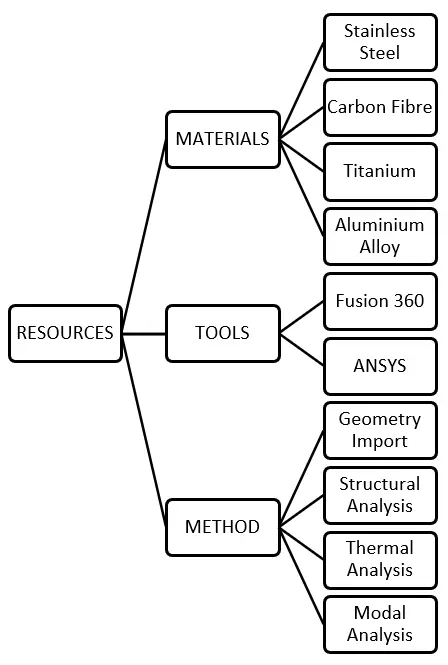
This research employed a computational modelling approach to investigate the structural, thermal, and dynamic performance of a hydrogen storage tank fabricated from four engineering materials: carbon fibre, titanium, stainless steel, and aluminium alloy. The research method for this study is illustrated in Figure 1.
2.1. Materials
Carbon fibre is a high-performance composite material with an exceptional tensile strength of approximately 230 GPa. It is widely used in aerospace and automotive applications due to its superior strength-to-weight ratio, making it an ideal candidate for lightweight, high-strength structures such as hydrogen tanks [42]. Titanium is a corrosion-resistant, lightweight metallic material known for its excellent strength-to-weight ratio. Its high mechanical integrity and resistance to thermal and chemical degradation make it suitable for critical structural applications in engineering systems [43]. Stainless steel offers outstanding mechanical strength and resistance to corrosion and oxidation. These characteristics render it a reliable choice for structural components requiring durability and long-term performance under harsh environmental conditions [44]. Aluminium alloys are lightweight metals with good formability and corrosion resistance. Their mechanical properties can be customized through alloying, which makes them applicable in sectors such as transportation and energy storage [45]. For transparency and numerical reproducibility, the mechanical and thermal properties of the candidate storage tank materials employed in the finite element simulations are presented in Table 1. The corresponding thermophysical properties of compressed hydrogen (H2) at the specified operating conditions are provided in Table 2.
Table 1. Physical Properties of the Selected Materials.
|
Material |
Density (kg/m3) |
Young’s Modulus (GPa) |
Poisson’s Ratio |
Yield Strength (MPa) |
Thermal Conductivity (W/m·K) |
Specific Heat (J/kg·K) |
|---|---|---|---|---|---|---|
|
Carbon Fibre Composite |
1600 |
135 |
0.30 |
600 (directional) |
6 |
710 |
|
Titanium Alloy (Ti–6Al–4V) |
4430 |
110 |
0.34 |
880 |
7.2 |
560 |
|
Stainless Steel (AISI 316L) |
8000 |
193 |
0.30 |
290 |
16.2 |
500 |
|
luminum Alloy (AA 6061-T6) |
2700 |
69 |
0.33 |
276 |
167 |
896 |
Table 2. Physical Properties of H2 for Storage Tank Design.
|
Property |
Value |
Significance in Tank Design and FEA |
|---|---|---|
|
Density (Gas) |
0.0899 kg/m3 |
Determines the volumetric efficiency and tank size requirements. |
|
Density (Liquid) |
70.8 kg/m3 |
Relevant for cryogenic storage simulation and structural weight loading. |
|
Boiling Point |
−252.87 °C (20.3 K) |
Defines the extreme thermal gradient for Thermal Analysis. |
|
Critical Pressure |
12.97 bar |
Important for defining the phase state during high-pressure compression. |
|
Diffusion Coefficient |
0.61 cm2·s−1 (in air) |
High permeability dictates the need for liners to prevent hydrogen embrittlement. |
|
Lower Flammability Limit |
4.0% (in air) |
Drives the safety factor requirements in the structural analysis. |
|
Specific Heat (Cp) |
14.3 kJ/kg·K |
Crucial for Thermal Analysis to predict heat transfer through tank walls. |
|
Thermal Conductivity |
0.1805 W/m·K |
Influences the insulation thickness and material thermal stress. |
The software tools applied in this study include: Fusion 360 version 2024, which is a cloud-based CAD/CAE software, used for the 3D modelling of the hydrogen tank geometry. The model was exported as a STEP file for subsequent FEA [46]. Another software used for this study was ANSYS Mechanical APDL 2024 R1. This was utilized for comprehensive simulations, including static structural, thermal, and modal analyses. Its parametric design environment enabled the evaluation of various physical responses of the tank under defined boundary conditions and material assignments [47].
2.2. Methods
2.2.1. Geometry Import
A cylindrical hydrogen tank with hemispherical end caps was designed using Autodesk Fusion 360. The tank dimensions were: inner radius 0.25 m, outer radius 0.30 m, total length 1.2 m, and wall thickness 0.05 m. The structure was modelled as a thin-walled pressure vessel and exported in STEP/IGES format for finite element analysis in ANSYS. The 3D geometry was imported into ANSYS with solid and surface bodies preserved, while advanced features such as associativity and smart CAD updates were enabled to maintain geometric integrity throughout the simulation process. For numerical discretization, the tank was meshed using 3D quadratic tetrahedral solid elements, suitable for curved pressure vessel geometries. A moderate mesh density was adopted, with local mesh refinement applied at regions of high stress concentration, particularly around the hemispherical end caps and cylinder cap junctions. Mesh quality was verified to ensure solution convergence and accuracy while maintaining computational efficiency.
To ensure numerical reliability, a mesh convergence (mesh independence) study was conducted by progressively refining the mesh and monitoring changes in maximum von Mises stress and total deformation. Mesh refinement was continued until further increases in element density yielded negligible variation (<5%) in key response parameters, confirming mesh-independent, stable simulation results.
2.2.2. Structural Analysis
Static structural analysis was conducted for each material to evaluate the mechanical response of the tank under internal pressure (70 MPa) and standard atmospheric external pressure (0.1013 MPa). Boundary conditions included fixed support and gravity loading. Key results extracted were total deformation, equivalent (von-Mises) stress, and principal stress distributions. These metrics helped assess the tank’s structural integrity and failure margins under realistic loading scenarios [37].
2.2.3. Thermal Analysis
A steady-state thermal analysis was performed to understand the thermal behaviour of the tank materials. A uniform initial temperature of 22 °C was applied. Convection heat transfer was simulated with a heat transfer coefficient of 100 W/m2·°C on the external surfaces, subjected to an ambient temperature of 45 °C. The objective was to evaluate internal temperature gradients and thermal resistance characteristics of each material [35].
2.2.4. Modal Analysis (Dynamic Stability Assessment)
Modal analysis was conducted to evaluate the dynamic structural integrity of the hydrogen storage tank. While structural analysis addresses static pressure, modal analysis is critical for determining the Natural Frequencies (fn) and corresponding Mode Shapes of the vessel. This is essential in real-world applications where the tank is subjected to external vibrational excitation from transport vehicles (engine harmonics, road irregularities) or industrial pumping systems. Using an eigenvalue-based linear perturbation method within the ANSYS environment, the study identifies the frequencies at which the tank is susceptible to resonance. Resonance occurs when operational vibration frequencies match the tank’s natural frequencies, potentially leading to accelerated fatigue or fitting failure. To ensure a comprehensive vibrational profile, the first six (6) fundamental modes were extracted. This assessment ensures that the selected materials (Carbon Fibre, Titanium, etc.) provide a sufficient “stiffness-to-mass” ratio to keep the natural frequencies outside the range of common industrial and vehicular excitation frequencies (0–200 Hz), thereby ensuring vibrational stability and long-term safety [25,26,27,28,29,30,31,32,33,34].
2.2.5. Mesh Convergence (Mesh Independence)
Following Reda et al. [43] methodology, to ensure the numerical reliability and accuracy of the finite element results, a systematic mesh convergence study was conducted. Since stress gradients are expected to be significant at the cylinder hemispherical dome junction and along the inner wall subjected to high internal pressure (70 MPa), particular attention was given to local mesh refinement in these regions. The tank geometry was discretised using 3D quadratic tetrahedral solid elements (SOLID187 in ANSYS), which are well-suited for curved geometries and nonlinear stress distribution. Progressive mesh refinement was performed by reducing the global element size while maintaining consistent boundary conditions and loading parameters. The maximum equivalent (von Mises) stress and total deformation were monitored as convergence indicators. Figure 2 presents the 3D and mechanical simulation analysis view of the modelled green hydrogen thank into ANSYS environment.
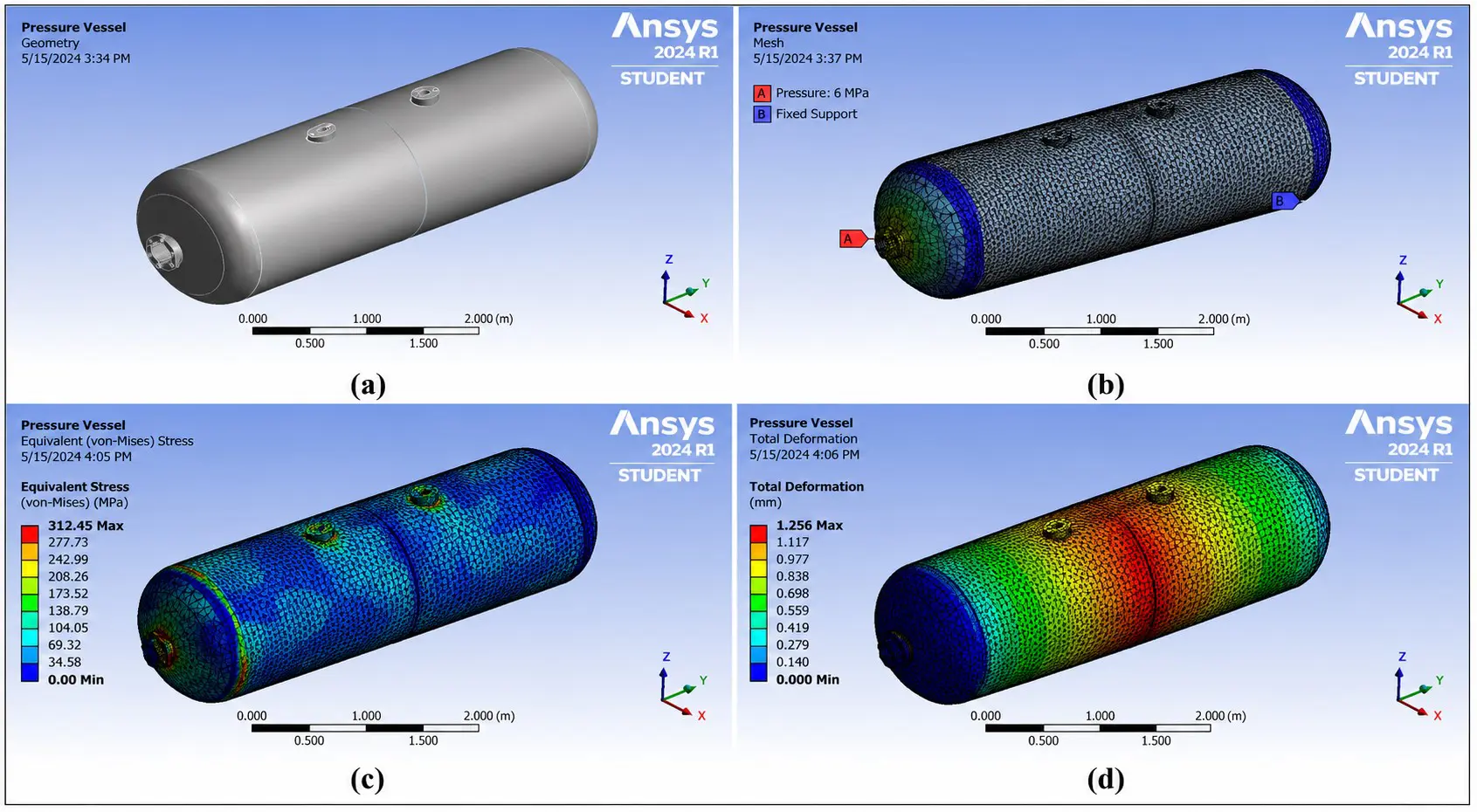
Figure 2. 3D and Mech Views of the Designed Green Hydrogen in ANSYS Environment. Where (a) is the Conceptual Model of the Tank. While (b), (c) and (d) is the Structural, Thermal and Modal Simulation views of the Tank in ANSYS Software.
This section outlined the tools, procedures, and parameters used in modelling and simulating the hydrogen storage tank. Using consistent boundary conditions and analysis methods for all four materials allowed for a direct comparison of their mechanical and thermal performance. The results are presented and discussed in the next section.
3. Results and Discussion
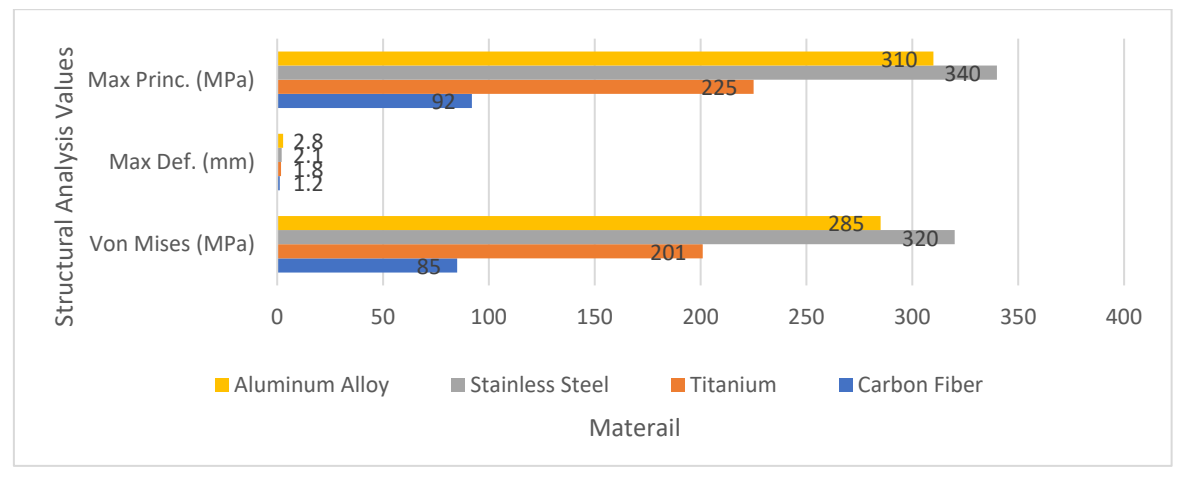
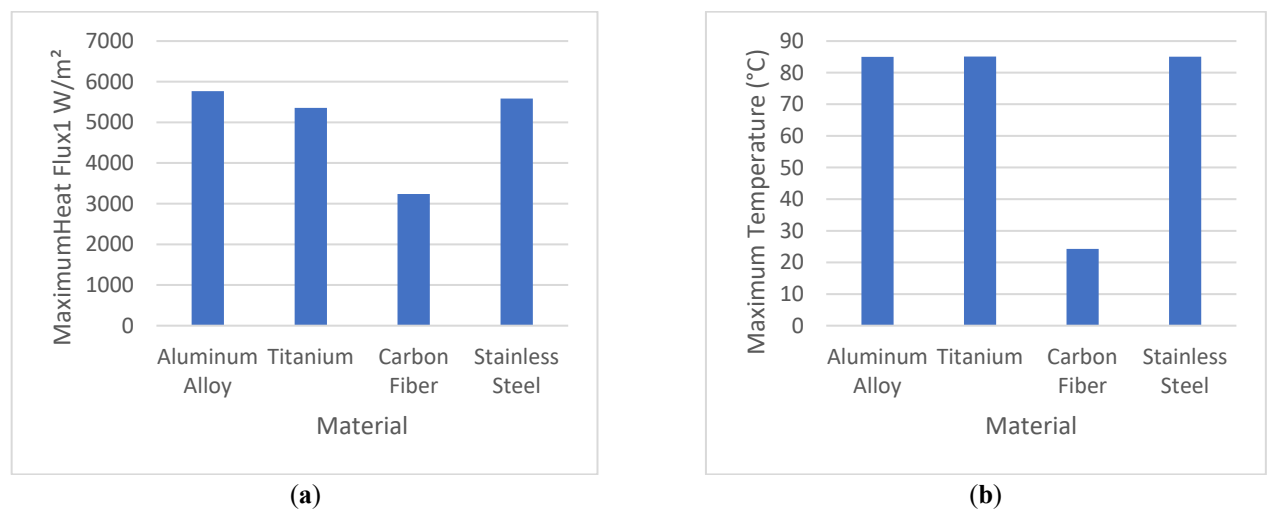
To evaluate the performance of the designed hydrogen storage tank, simulations were conducted using ANSYS 2024 R1. Table 1 and Figure 3 and Figure 4 illustrate the structural, thermal, and modal analyses of the study, respectively. Which were performed to assess the mechanical strength, heat resistance, and dynamic stability of four candidate materials. The results provide critical insights into the suitability of each material under standard operating conditions.
Structural Analysis
The structural response of the hydrogen storage tank under a uniform internal pressure of 70 MPa reveals clear differences in material performance, as summarized in Figure 3. Carbon fibre exhibited the lowest von Mises stress of 85 MPa and maximum principal stress of 92 MPa, indicating excellent stress distribution due to its high specific stiffness. However, its moderate deformation of 1.2 mm suggests increased flexibility, which may limit its suitability as a standalone load-bearing material in high-pressure hydrogen storage systems. This result aligns with findings by Reda et al. [43] who observed similar low-stress behaviour in carbon fibre composites, making them favourable in weight-sensitive applications but structurally limited for high-pressure storage.
Titanium alloy demonstrated a balanced structural response, with moderate von Mises stress of 201 MPa and principal stress of 225 MPa, alongside controlled deformation of 1.8 mm. These results confirm titanium’s favourable strength-to-weight ratio and elastic stability, supporting its widespread application in high-performance pressure vessels and aerospace structures where both durability and weight reduction are critical [48].
Stainless steel recorded the highest stress of 320 MPa von Mises and 340 MPa principal stress levels among the materials tested, but maintained relatively low deformation of 2.1 mm, reflecting its high stiffness and resistance to shape change. This supports previous studies by Cavaliere et al. [44], which found that stainless steel demonstrated exceptional strength under pressure but posed a potential hydrogen embrittlement risk in harsh conditions.
The aluminum alloy exhibited a comparatively high stress of 285 MPa and the largest deformation of 2.8 mm, indicating reduced rigidity under high internal pressure. Although aluminum remains attractive due to its low cost and weight, these results suggest limitations for high-pressure hydrogen storage without structural reinforcement [49]. These findings identify titanium alloy as the most structurally efficient material, offering the best compromise between stress resistance and deformation control, thereby meeting the study’s objective of ensuring safety, efficiency, and mechanical reliability in high-pressure hydrogen storage applications [50].
From the result obtained on the thermal analysis in Figure 4, carbon fibre exhibited a significantly heat flux of 3238.1 W/m2 and a lower maximum temperature of 24.26 °C. This result indicates minimal heat conductivity and excellent thermal insulation properties, which are advantageous for minimizing thermal risks. This behaviour is consistent with findings by Alshihabi et al. [51], who highlighted carbon fibre composites’ effectiveness in thermal barrier applications and low thermal conductivity.
In contrast, stainless steel, titanium, and aluminium alloy all showed maximum temperatures above 85 °C, with aluminium alloy having the highest heat flux 5765.2 W/m2. This suggests potential vulnerability to rapid heat transfer and high thermal conductivity. These findings align with the thermal properties described by Callister & Rethwisch [52], where aluminium’s high thermal conductivity was noted as both an advantage in heat dissipation and a challenge in insulation-critical environments. Titanium, with the lowest heat flux of 5356.4 W/m2 among metals, offered a more thermally stable behaviour. These results underscore carbon fibre as the most thermally efficient material, making it a strong candidate for thermal insulation in hydrogen tanks, although its mechanical performance must be carefully weighed alongside.
Table 3 presents the modal frequencies and corresponding maximum deformation of the investigated materials under dynamic loading. Stainless steel recorded the lowest maximum deformation of 0.96 mm, indicating superior stiffness and resistance to vibration-induced deflection. Also, stainless steel modal frequencies within 31.4–119.8 Hz, showed a stable and progressive increase across modes, reflecting strong structural rigidity and favourable dynamic performance [53]. This observation is consistent with findings by Zhao et al. [54], who emphasized the dynamic stability of high-strength metals under cyclic loading.
Table 3. Modal Frequencies and Maximum Deformation of the materials.
|
Material |
Mode 1 (Hz) |
Mode 2 (Hz) |
Mode 3 (Hz) |
Mode 4 (Hz) |
Max Deform. (mm) |
|---|---|---|---|---|---|
|
Aluminum Alloy |
28.5 |
42.3 |
67.8 |
105.2 |
1.51 |
|
Titanium |
35.2 |
51.7 |
89.4 |
132.6 |
1.25 |
|
Carbon Fiber |
42.8 |
68.5 |
112.3 |
168.7 |
1.63 |
|
Stainless Steel |
31.4 |
47.9 |
78.6 |
119.8 |
0.96 |
Titanium alloy exhibited moderate deformation of 1.25 mm with relatively higher modal frequencies within 35.2–132.6 Hz compared to stainless steel and aluminum alloy. This combination indicated a balanced stiffness-to-weight ratio, confirming titanium’s suitability for applications requiring both mechanical reliability and reduced mass, as widely reported in aerospace and pressure vessel literature [55].
Carbon fibre demonstrated the highest modal frequencies across all modes, which is within 42.8–168.7 Hz, attributable to its high specific stiffness. However, it also showed the largest deformation of 1.63 mm, suggesting increased flexibility despite its dynamic responsiveness. This reflects the anisotropic nature of composite materials, where high stiffness in certain directions may coexist with greater overall deformation [56]. Aluminum alloy recorded the lowest modal frequencies within 28.5–105.2 Hz and relatively high deformation of 1.51 mm, indicating lower rigidity under dynamic loading. This confirms known limitations of aluminum in vibration-sensitive, high-pressure structural applications [43]. The results identified that stainless steel as the most dynamically stable material, while titanium offers an optimal compromise between stiffness, deformation, and weight. Carbon fibre exceled in dynamic responsiveness but requires careful structural reinforcement, whereas aluminum alloy is less suitable for high-demand dynamic conditions [57,58]. Table 4 and Figure 5 summarizes the mesh refinement levels and corresponding numerical results for the carbon fibre configuration (representative case).
Table 4. Outcome of the Mesh Convergence Analysis of Carbon Fibre configuration.
|
Mesh Level |
Global Element Size (mm) |
Number of Elements |
Number of Nodes |
Max von Mises Stress (MPa) |
Total Deformation (mm) |
|---|---|---|---|---|---|
|
Coarse |
20 |
42,318 |
68,742 |
92.4 |
1.31 |
|
Medium |
15 |
78,564 |
121,905 |
87.1 |
1.24 |
|
Fine |
10 |
156,882 |
241,336 |
85.3 |
1.21 |
|
Very Fine |
8 |
238,417 |
362,508 |
85.0 |
1.20 |
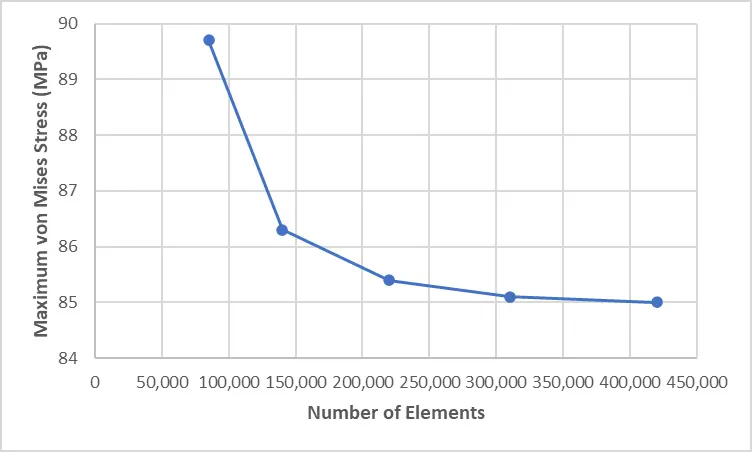
As shown in Figure 5, the trend shows the mesh independence curve, indicating that the maximum von Mises stress stabilizes with progressive refinement. The results show that stress variation between the Fine and Very Fine meshes was less than 0.4%, while deformation variation was below 0.8%. Based on this negligible change (<5% criterion), the Fine mesh (10 mm global element size with local refinement to 5 mm at the dome–cylinder junction) was selected for all subsequent simulations, as it provided a suitable balance between computational efficiency and numerical accuracy. These findings confirm that the reported stress and deformation values are mesh-independent and that the discretization adequately captures stress concentration effects at critical geometric transitions [25,26,27,28,29,30,31,32,33,34].
4. Conclusions
The transition toward sustainable hydrogen energy systems necessitates the development of storage vessels capable of withstanding extreme operational conditions. This research addressed this challenge by systematically optimizing material selection for high-pressure hydrogen storage tanks through an integrated FEA framework. Utilizing Fusion 360 for geometric modeling and ANSYS 2024 R1 for multi-physics simulation, a cylindrical tank with hemispherical ends was subjected to a uniform internal pressure of 70 MPa. The study comparatively assessed the structural, thermal, and modal (dynamic) performance of four critical engineering materials: carbon fibre, titanium alloy, stainless steel, and aluminum alloy. By evaluating metrics such as von Mises stress, total deformation, and natural frequency response, the following conclusions were drawn:
- i.
-
A critical trade-off between stress resistance, deformation control, and thermal performance governs material suitability for 70 MPa storage. No single material excels in all categories, necessitating a selection based on specific application priorities.
- ii.
-
Carbon fibre demonstrated the highest stress efficiency of 85 MPa and superior thermal insulation. However, its moderate deformation limits its suitability as a primary standalone load-bearing material, suggesting its optimal role is in hybrid reinforcement or insulation layers.
- iii.
-
While stainless steel exhibited high stiffness and strong vibration resistance, its elevated stress levels of 320 MPa and high mass-to-strength ratio impose significant durability and design constraints for lightweight, mobile hydrogen storage.
- iv.
-
Aluminum alloy offered cost-effectiveness and weight advantages but experienced the highest deformation of 2.8 mm among the candidates. This restricts its application to lower-pressure systems or as an internal liner rather than a standalone high-pressure vessel.
- v.
-
Titanium alloy emerged as the most structurally reliable candidate, delivering a balanced performance profile of 201 MPa stress and 1.8 mm deformation. Its combination of thermal robustness and controlled dynamic response makes it the most suitable material for safe and reliable high-pressure hydrogen applications.
The findings of this research provide a robust comparative framework for engineers and policymakers aiming to deploy safe, sustainable, and high-performance hydrogen storage infrastructure.
5. Limitations and Future Scope
This study is limited to numerical simulations and does not account for fatigue, impact loading, crashworthiness, or experimental validation under real service conditions. Future research should integrate experimental testing, life-cycle cost assessment, hydrogen permeability analysis, and hybrid material designs to improve safety, scalability, and long-term performance of hydrogen storage systems.
Statement of the Use of Generative AI and AI-Assisted Technologies in the Writing Process
Large Language Model (ChatGPT, OpenAI) was used solely for language editing, grammar improvement, and clarity enhancement. All scientific content, analysis, results, and conclusions were developed and verified by the authors.
Author Contributions
This work was carried out in collaboration between all authors. Author C.S.I., O.C.N. and D.A.E. arranged the conceptualization, methodology, project administration, and the writing, original draft. D.A.E., O.R.P.-O. and U.V.O. worked on the software, structural analysis, thermal analysis, visualization, writing, review & editing. O.C.N., O.O.O. and N.I.E. did the data curation and simulation setup. M.A., D.A.E. and O.R.P.-O. worked on the literature review, results interpretation, & editing.
Ethics Statement
Not applicable.
Informed Consent Statement
Not applicable.
Data Availability Statement
Data will be made available upon request on arinze.ekpechi@futo.edu.ng (Corresponding Author’s ‘Daniel Arinze Ekpechi’ Email).
Funding
This research received no external funding.
Declaration of Competing Interest
The authors declare that they have no known competing financial interests or personal relationships that could have appeared to influence the work reported in this paper.
References
-
Lucić R, Raposo M, Chervinska A, Domingos T, Teixeira RFM. Global greenhouse gas emissions and land use impacts of soybean production: Systematic review and analysis. Sustainability 2025, 17, 3396. DOI:10.3390/su17083396 [Google Scholar]
-
Dol SS, Amin AHM, Hamdan H. Advances in renewable energy research and applications. Energies 2024, 17, 6198. DOI:10.3390/en17236198 [Google Scholar]
-
Rahman A, Farrok O, Haque MM. Environmental impact of renewable energy source-based electrical power plants: Solar, wind, hydroelectric, biomass, geothermal, tidal, ocean, and osmotic. Renew. Sustain. Energy Rev. 2022, 161, 112279. DOI:10.1016/j.rser.2022.112279 [Google Scholar]
-
Mdallal AM, Yasin A, Mahmoud M, Abdelkareem MA, Alami AH, Olabi AG. A comprehensive review on solar photovoltaics: Navigating generational shifts, innovations, and sustainability. Sustain. Horiz. 2025, 13, 100137. DOI:10.1016/j.horiz.2025.100137 [Google Scholar]
-
Silinto BF, van der Laag Yamu C, Zuidema C, Faaij APC. Hybrid renewable energy systems for rural electrification in developing countries: A review on energy system models and spatial explicit modelling tools. Renew. Sustain. Energy Rev. 2025, 207, 114916. DOI:10.1016/j.rser.2024.114916 [Google Scholar]
-
Chybowski L. Advances in fuel energy. Energies 2026, 19, 328. DOI:10.3390/en19020328 [Google Scholar]
-
Taušová M, Mykhei M, Čulkova K, Tauš P, Petráš D, Kaňuch P. Development of the implementation of renewable sources in EU countries in heating and cooling, transport, and electricity. Sustainability 2025, 17, 766. DOI:10.3390/su17020766 [Google Scholar]
-
Ijaz A, Qureshi S, Zia UUR, Zia S, Malik SAA, Zulfiqar M. Green hydrogen as a decarbonization pathway for steel industry in Pakistan. Eng. Proc. 2025, 111, 39. DOI:10.3390/engproc2025111039 [Google Scholar]
-
Reddy VJ, Hariram NP, Maity R, Ghazali MF, Kumarasamy S. Sustainable e-fuels: Green hydrogen, methanol and ammonia for carbon-neutral transportation. World Electr. Veh. J. 2023, 14, 349. DOI:10.3390/wevj14120349 [Google Scholar]
-
Adeli K, Nachtane M, Faik A, Saifaoui D, Boulezhar A. How green hydrogen and ammonia are revolutionizing the future of energy production: A comprehensive review of the latest developments and future prospects. Appl. Sci. 2023, 13, 8711. DOI:10.3390/app13158711 [Google Scholar]
-
Taneja S, Jain A, Bhadoriya Y. Green hydrogen as a clean energy resource and its applications as an engine fuel. Eng. Proc. 2023, 59, 159. DOI:10.3390/engproc2023059159 [Google Scholar]
-
Barbosa LT, Vasconcelos SD, Rosas PAC, Castro JFC, Barbosa DCP. Assessment of green hydrogen as energy supply alternative for isolated power systems and microgrids. Energies 2024, 17, 4774. DOI:10.3390/en17194774 [Google Scholar]
-
Marouani I, Guesmi T, Alshammari BM, Alqunun K, Alzamil A, Alturki M, et al. Integration of renewable-energy-based green hydrogen into the energy future. Processes 2023, 11, 2685. DOI:10.3390/pr11092685 [Google Scholar]
-
Kostidi E, Kotrikla AM, Maglara A, Lilas T. Sustainable fuel supply for very small island transportation: The potential of hybrid renewable energy and green hydrogen. J. Mar. Sci. Eng. 2025, 13, 579. DOI:10.3390/jmse13030579 [Google Scholar]
-
Ameli H, Strbac G, Pudjianto D, Ameli MT. A review of the role of hydrogen in the heat decarbonization of future energy systems: Insights and perspectives. Energies 2024, 17, 1688. DOI:10.3390/en17071688 [Google Scholar]
-
Gołdasz A, Sztekler K, Mika Ł. Technical analysis of the possibility of burning hydrogen in furnaces of the metallurgical sector. Energies 2024, 17, 4733. DOI:10.3390/en17184733 [Google Scholar]
-
Rego G, Rocha J, Faria JA, Afonso JL, Monteiro V. A review of hydrogen production methods and power electronics converter topologies for green hydrogen applications. Energies 2024, 17, 5579. DOI:10.3390/en17225579 [Google Scholar]
-
Hassan A, Abdel-Rahim O, Bajaj M, Zaitsev I. Power electronics for green hydrogen generation with focus on methods, topologies, and comparative analysis. Sci. Rep. 2024, 14, 24767. DOI:10.1038/s41598-024-76191-6 [Google Scholar]
-
Tuluhong A, Chang Q, Xie L, Xu Z, Song T. Current status of green hydrogen production technology: A review. Sustainability 2024, 16, 9070. DOI:10.3390/su16209070 [Google Scholar]
-
Angelico R, Giametta F, Bianchi B, Catalano P. Green hydrogen for energy transition: A critical perspective. Energies 2025, 18, 404. DOI:10.3390/en18020404 [Google Scholar]
-
Alavi-Borazjani SA, Adeel S, Chkoniya V. Hydrogen as a sustainable fuel: Transforming maritime logistics. Energies 2025, 18, 1231. DOI:10.3390/en18051231 [Google Scholar]
-
Bacquart T, Moore N, Wilmot R, Bartlett S, Morris ASO, Olden J, et al. Hydrogen for maritime application—Quality of hydrogen generated onboard ship by electrolysis of purified seawater. Processes 2021, 9, 1252. DOI:10.3390/pr9071252 [Google Scholar]
-
Atilhan S, Park S, El-Halwagi MM, Atilhan M, Moore M, Nielsen RB. Green hydrogen as an alternative fuel for the shipping industry. Curr. Opin. Chem. Eng. 2021, 31, 100668. DOI:10.1016/j.coche.2020.100668 [Google Scholar]
-
Motevakel P, Roldán-Blay C, Roldán-Porta C, Escrivá-Escrivá G, Dasí-Crespo D. Strategic resource planning for sustainable biogas integration in hybrid renewable energy systems. Appl. Sci. 2025, 15, 642. DOI:10.3390/app15020642 [Google Scholar]
-
Muthukumar S, Jassim MAJM, Mathangee PS, Vignesh S. Finite element analysis and thickness optimisation of composite tank for high pressure hydrogen storage. Int. J. Veh. Struct. Syst. 2024, 16, 23. DOI:10.4273/ijvss.16.1.23 [Google Scholar]
-
Gómez J, Castro R. Green hydrogen energy systems: A review on their contribution to a renewable energy system. Energies 2024, 17, 3110. DOI:10.3390/en17133110 [Google Scholar]
-
Muthukumar P, Singhal A, Bansal GK. Thermal modeling and performance analysis of industrial-scale metal hydride-based hydrogen storage container. Int. J. Hydrogen Energy 2012, 37, 14351–14364. DOI:10.1016/j.ijhydene.2012.07.010 [Google Scholar]
-
Freni A, Cipitì F, Cacciola G. Finite element-based simulation of a metal hydride-based hydrogen storage tank. Int. J. Hydrogen Energy 2009, 34, 8574–8582. DOI:10.1016/j.ijhydene.2009.07.118 [Google Scholar]
-
Kumar N, Aepuru R, Lee SY, Park SJ. Advances in catalysts for hydrogen production: A comprehensive review of materials and mechanisms. Nanomaterials 2025, 15, 256. DOI:10.3390/nano15040256 [Google Scholar]
-
Irham A, Roslan MF, Jern KP, Hannan MA, Mahlia TMI. Hydrogen energy storage integrated grid: A bibliometric analysis for sustainable energy production. Int. J. Hydrogen Energy 2024, 63, 1044–1087. DOI:10.1016/j.ijhydene.2024.03.235 [Google Scholar]
-
Califano M, Califano F, Sorrentino M, Rosen MA, Pianese C. Hydrogen-based microgrid: Development of medium level controls in a multilevel algorithm framework. Int. J. Hydrogen Energy 2024, 52, 1173–1189. DOI:10.1016/j.ijhydene.2023.06.286 [Google Scholar]
-
Okonicha AC, Okwuanaso CI. A review of green hydrogen production and the obstacles to the hydrogen green economy. Int. J. Sci. Res. Arch. 2024, 12, 1867–1872. DOI:10.30574/ijsra.2024.12.2.1465 [Google Scholar]
-
Sharma VK, Monteleone G, Braccio G, Anyanwu CN, Aneke NN. A comprehensive review of green energy technologies: Towards sustainable clean energy transition and global net-zero carbon emissions. Processes 2025, 13, 69. DOI:10.3390/pr13010069 [Google Scholar]
-
Senthil SK, Bibin C, Ramachandran M. Design and analysis of hydrogen storage tank with different materials by ANSYS. IOP Conf. Ser. Mater. Sci. Eng. 2020, 810, 012016. DOI:10.1088/1757-899X/810/1/012016 [Google Scholar]
-
Magliano A, Perez Carrera C, Pappalardo CM, Guida D, Berardi VP. A comprehensive literature review on hydrogen tanks: Storage, safety, and structural integrity. Appl. Sci. 2024, 14, 9348. DOI:10.3390/app14209348 [Google Scholar]
-
William G, Shoukry S, Prucz J, Evans T. Finite element analysis of composite over-wrapped pressure vessels for hydrogen storage. SAE Int. J. Passeng. Cars Mech. Syst. 2013, 6, 1499–1504. DOI:10.4271/2013-01-2477 [Google Scholar]
-
Yuan K, Liu Z. A structural mechanics analysis on a Type IV hydrogen storage tank during refueling and discharging. Eng. Fail. Anal. 2024 165, 108822. Doi:10.1016/J.Engfailanal.2024.108822 [Google Scholar]
-
Cui TC, Liu PF, Zheng JY, Gu CH. Finite element analysis of hydrogen transport in steel pressure vessel at room temperature. J. Fail. Anal. Prev. 2016, 16, 449–456. DOI:10.1007/s11668-016-0105-2 [Google Scholar]
-
Atstāja D. Renewable energy for sustainable development: Opportunities and current landscape. Energies 2025, 18, 196. DOI:10.3390/en18010196 [Google Scholar]
-
Mneimneh F, Ghazzawi H, Hejjeh MA, Manganelli M, Ramakrishna S. Roadmap to achieving sustainable development via green hydrogen. Energies 2023, 16, 1368. DOI:10.3390/en16031368 [Google Scholar]
-
Edbais A, Hossain M. Future roadmap for the implementation of Sustainable Development Goals SDG9: Industry, innovation, and infrastructure in Kuwait. Sustainability 2025, 17, 477. DOI:10.3390/su17020477 [Google Scholar]
-
Canaroli L, Baldi N, Del Pero F, La Battaglia V, Arcidiacono G, Citti P. Mechanical characterization of carbon fiber composite materials with different reinforcement and thickness cured in autoclave. Hybrid Adv. 2025, 11, 100550. DOI:10.1016/j.hybadv.2025.100550 [Google Scholar]
-
Reda R, Ataya S, Ashraf A. Finite Element Modeling of Different Types of Hydrogen Pressure Vessels Under Extreme Conditions for Space Applications. Processes 2025, 13, 1429. DOI:10.3390/pr13051429 [Google Scholar]
-
Cavaliere P, Sadeghi B, Perrone A, Marsano D, Marzanese A. Modelling of hydrogen diffusion leading to embrittlement in austenitic stainless steels. Int. J. Press. Vessel. Pip. 2024, 208, 105120. DOI:10.1016/j.ijpvp.2023.105120 [Google Scholar]
-
Feng Q, Li C. Light alloy and its application (2nd edition). Metals 2026, 16, 70. DOI:10.3390/met16010070 [Google Scholar]
-
Willis KDD, Pu Y, Luo J, Chu H, Du T, Lambourne JG, et al. Fusion 360 Gallery: A dataset and environment for programmatic CAD reconstruction. ACM Trans. Graph. 2021, 40, 1–24. DOI:10.1145/3450626.3459818 [Google Scholar]
-
Ansys Academic Development Team. Materials Selection Challenge Report 2024 (PAPMSCEN24); Ansys Inc.: Canonsburg, PA, USA, 2024. Available online: https://www.ansys.com/content/dam/web/academic/education-resources/resources/materials-selection-challenge-reports-2024-papmscen24.pdf [Google Scholar]
-
Li W, Wang S, Yang X, Duan H, Wang Y, Yang Z. Research progress on fatigue damage and surface strengthening technology of titanium alloys for aerospace applications. Metals 2025, 15, 192. DOI:10.3390/met15020192 [Google Scholar]
-
Reda R, Ashraf A, Magdy I, Ragab M, Eldabaa N, Elmagd MA, et al. An investigation on the potential of utilizing aluminum alloys in the production and storage of hydrogen gas. Materials 2024, 17, 4032. DOI:10.3390/ma17164032 [Google Scholar]
-
Takahashi RJ, Assis JMKD, Fazan LH, Rodríguez LAA, Capella AG, Reis DAP. TBC development on Ti–6Al–4V for aerospace application. Coatings 2025, 15, 47. DOI:10.3390/coatings15010047 [Google Scholar]
-
Alshihabi M, El Said M, Alshami A, Ali S, Deiab I. Influence of carbon fiber reinforcement on mechanical and thermal behavior of PLA and PAHT in additive manufacturing. Machines 2025, 13, 985. DOI:10.3390/machines13110985 [Google Scholar]
-
Callister WD, Jr., Rethwisch DG. Materials Science and Engineering: An Introduction, 10th ed.; Wiley: Hoboken, NJ, USA, 2018. [Google Scholar]
-
Zeng F, Yang S, Gao K, Xiao Q. Analysis of the mechanical behavior of a new stainles steel formwork. Buildings 2025, 15, 2394. DOI:10.3390/buildings15142394 [Google Scholar]
-
Zhao Q, Sun Q, Xin S, Chen Y, Wu C, Wang H, et al. High-strength titanium alloys for aerospace engineering applications: A review on melting-forging process. Mater. Sci. Eng. A 2022, 845, 143260. DOI:10.1016/j.msea.2022.143260 [Google Scholar]
-
Zhao Q, Wang H. Performance Modulation of AB2-Type Ti-Mn-Based Alloys for Compact Solid-State Hydrogen Storage Tank. Energies 2025, 18, 4980. DOI:10.3390/en18184980 [Google Scholar]
-
Chung S, Kim C-J. Evaluation of the modal parameters of a unidirectional carbon-based composite structure using the influential factor of static loading. Materials 2024, 17, 3209. DOI:10.3390/ma17133209 [Google Scholar]
-
Lionetto F. Advances in carbon fiber reinforced polymers. Materials 2026, 19, 231. DOI:10.3390/ma19020231 [Google Scholar]
-
Yang WB, Zhan L, Liu L, Meng FX, Zhang R, Tuerxun K, et al. The microstructure regulation mechanism and future application of aluminum alloys manipulated by nanocrystalline structures formed by in situ amorphous crystallization. Materials 2025, 18, 4206. DOI:10.3390/ma18174206 [Google Scholar]