Deadline for manuscript submissions: 30 June 2026.

The purpose of this thematic issue is to show, by bringing together useful and informative articles, the diversity of the factors influencing the capabilities of photocatalytic materials. Accordingly, we hope that the researchers in the field of photocatalysis will be interested in contributing to this thematic issue.
The characteristics of the photocatalytic materials can include the synthesis, the treatments, the chemical composition (optionaly comprising the combination of several materials, the support and deposition methods), the structure, the texture, the optical and electrical properties, the stability, the lack of toxicity, the potential cost, etc.
Assessing the potential of the photocatalytic materials will require tests that are as appropriate as possible for the expected use.
Each manuscript will be published immediately once accepted and proofread, with a clear mention of the thematic issue, without waiting for more articles to complete the issue. Therefore, there is no deadline for submitting.
Obviously, submissions of manuscripts on photocatalysis topics that are not included in this thematic issue will continue to be welcomed, as usual.
Keywords
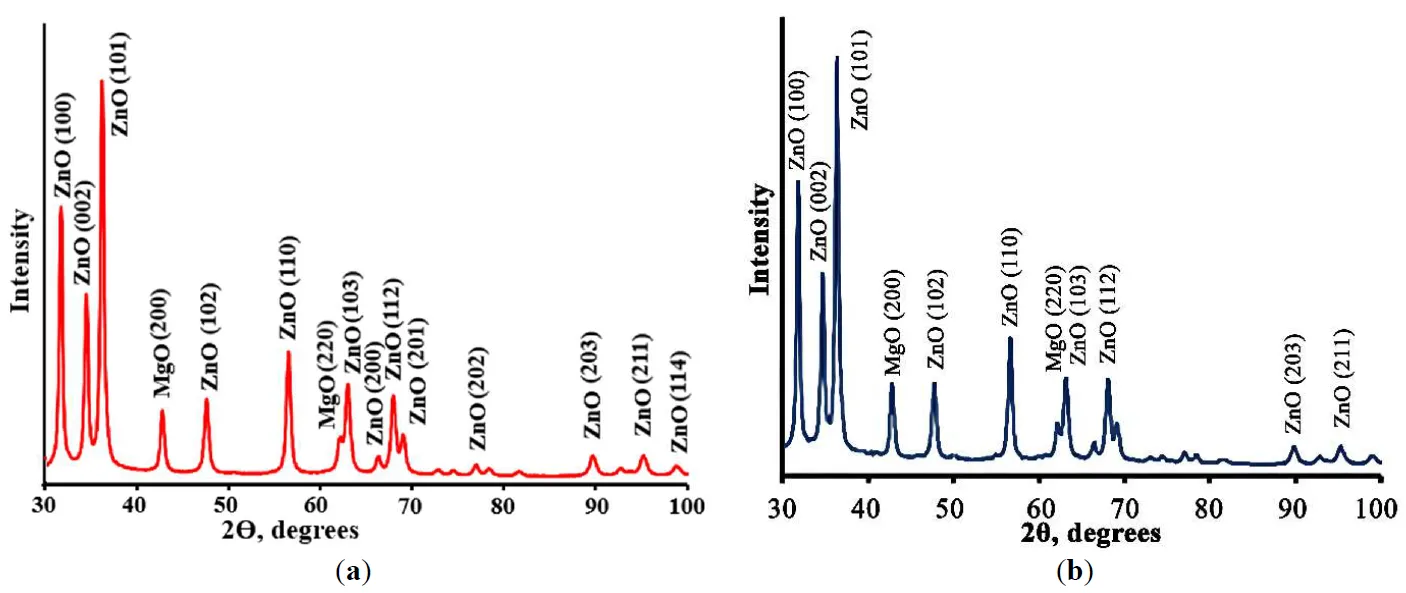
Porous Cu(Mn):ZnO-MgO composites synthesized by polymeric sol-gel method were characterized. The crystal structure, morphology, spectral properties, the ability of the photogeneration of chemically active singlet oxygen under external visible irradiation, photocatalytic and antibacterial properties of porous composites were studied. Obtained composites consist of small ZnO and MgO crystals having size less than 20 nm. It was found that Cu2+ and Mn2+ ions are embedded into the lattices of ZnO and MgO crystals, altering their crystal cell parameters. The band gap values of obtained composites are 3.41 ÷ 3.42 eV which are slightly higher than the band gap of pure ZnO. Prepared materials demonstrate a high ability of photogeneration of chemically active singlet oxygen under blue light (λ = 405 nm) irradiation. It was found that dependencies of the intensity of singlet oxygen photogeneration from the power density of visible irradiation are linear. Photocatalytic decomposition of the diazo dye Chicago Sky Blue in solutions under UV and blue light irradiation proceeds rapidly in the presence of the prepared composites (constants rate of photocatalytic dye decomposition under UV irradiation are 0.024 min−1 and 0.025 min−1 for ZnO-MgO composites doped with Cu and Mn, correspondingly). Porous composites demonstrate superior antibacterial activity against gram-positive bacteria. These materials are promising for practical application in medicine and photocatalytic technologies of air and water cleaning.
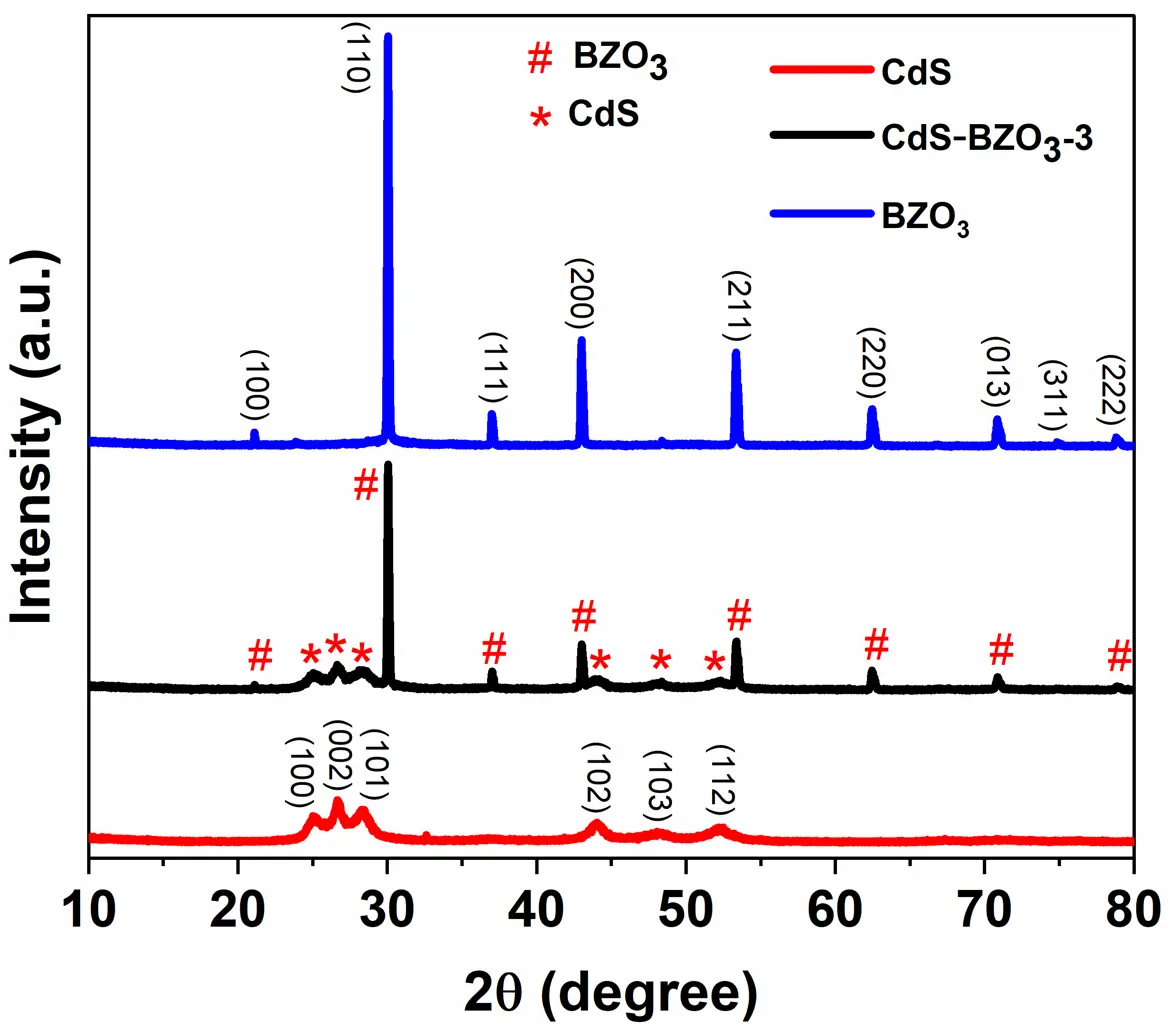
Photocatalytic water splitting using solar light, a promising technical approach for hydrogen production. However, the slow charge transfer and rapid recombination of photogenerated charge carriers in photocatalysis limit their practical application. To address these issues, in this work, we successfully prepared a novel CdS-BaZrO3 (CdS-BZO3) heterojunction via a simple chemical-bath deposition method. The as-prepared heterojunctions facilitate the separation and transportation of photogenerated charges, while also maintaining the high redox-oxid ation ability of the photocatalysts. As a result, CdS-BZO3 heterojunctions show enhanced photocatalytic water-splitting hydrogen production ability without a co-catalyst. Especially, the optimized CdS-BZO3 sample exhibits high photocatalytic activity with a hydrogen production rate of 44.77 μmol/h, which is 4.4 and 2.9 times higher than that of BZO3 and CdS, respectively. At the same time, the CdS-BZO3 heterojunction exhibits good stability in the photocatalytic hydrogen production cycle test. This work provides a reference for the heterostructure construction of perovskite-based photocatalysts to improve photocatalytic performance.
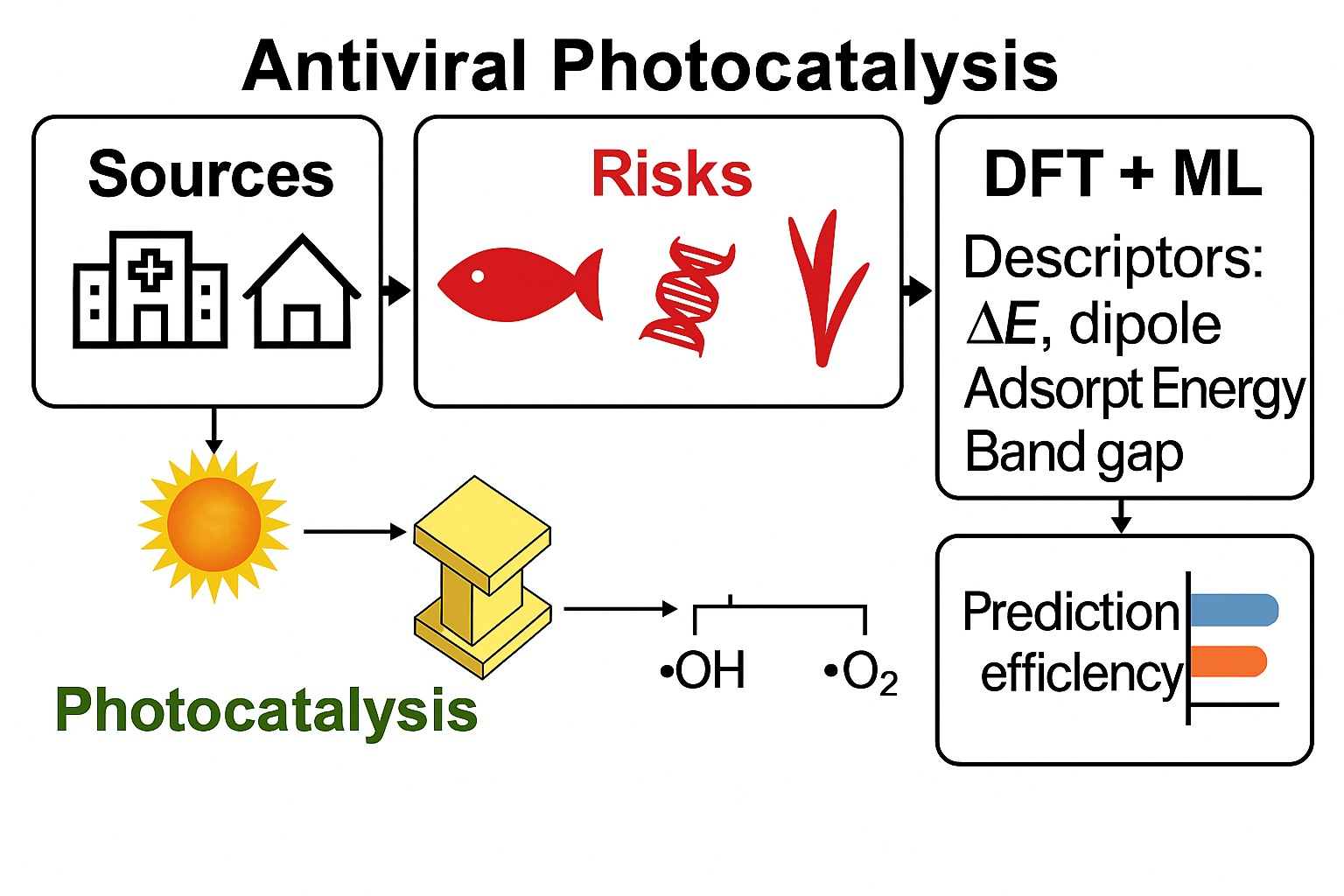
The widespread use of antiviral pharmaceuticals during and after the COVID-19 pandemic has raised growing concerns about their role as emerging environmental contaminants. These compounds, including favipiravir, remdesivir, molnupiravir, and oseltamivir carboxylate, are frequently detected in hospital effluents, municipal wastewater, and surface waters. Unlike many previous reviews that treat pharmaceuticals as a broad and undifferentiated class, this article focuses specifically on antiviral drugs as a distinct group of emerging contaminants and provides an integrated perspective that is still largely missing from the literature. As a review article, this work offers a critical and comprehensive synthesis that brings together environmental monitoring data, ecotoxicological and resistance-related risks, and advanced remediation strategies within a single framework. Particular emphasis is placed on recent advances in semiconductor-based photocatalytic degradation (TiO2, ZnO, g-C3N4, and their hybrids) and on mechanistic insights supported by density functional theory (DFT) and machine-learning (ML) approaches, which are used to link molecular-level properties to degradation efficiency and pathway selectivity. By systematically combining occurrence patterns, risk assessment, and DFT/ML-informed photocatalysis—specifically for antiviral pharmaceuticals—this review is among the first to delineate design principles and knowledge gaps unique to this drug class. The article highlights critical research needs and outlines future directions toward reproducible, computationally guided, and scalable treatment technologies for antiviral pollutants.