This work constitutes the second part of an investigation into the mechanical mechanism of laminar-turbulent transition in pipe Poiseuille flow, a canonical wall-bounded-flow problem in turbulence-research. Conventional hydrodynamic-stability studies mainly focus on disturbance effects while paying relatively little attention to the intrinsic mechanical properties of flow structures. In the present study, the tensile-energy-flux vector (renamed from the viscous-energy-flux vector in earlier work) and its divergence are theoretically derived and analyzed for pipe Poiseuille flow. The tensile-energy-flux vector vanishes both at the pipe wall and at the centerline of the pipe. Its divergence equals zero at the radial position 0.707R. Once the tensile force flow reaches its critical threshold value, this base-flow feature identifies 0.707R as a candidate radial location with enhanced susceptibility to localized laminar-turbulent transition. The combination of the critical-tensile-force-flow criterion and the critical-tensile-energy-flux criterion introduces a new critical-tensile-flux criterion. This predicted position lies within the radial oscillation range reported in published transition experiments. When the membrane theory for spherical shells is applied to the virtual fluid-shell element, this critical candidate position corresponds to a zenith angle of 45°. This angle bears a heuristic geometric analogy to the crack orientation observed in uniaxial-compression tests on rock specimens; nevertheless, the physical mechanisms governing solid fracture and hydrodynamic transition are fundamentally different. This paper further demonstrates that the critical-Reynolds-number criterion for pipe-flow laminar-turbulent transition is not an absolute universal constant. Under the working hypothesis that the critical-tensile-flux criterion behaves like a fluid-related property parameter, the ratio between critical tensile energy flux and cross-section-averaged kinetic energy flux exhibits an inverse-Reynolds-number scaling, reminiscent of the well-known inverse relationship between the laminar pipe-friction coefficient and Reynolds number.
Early turbulence in dilute polymer-solution pipe flows and full-chord laminar flow on suction-controlled wings at Reynolds numbers (Re) up to 2,000,000 evidently markedly deviate from the conventional pipe-flow transition criterion with a critical Re of 2000–2300. Inspired by the spherical-shell membrane-force theory from structural mechanics, this work develops a force-balance model employing a virtual constant-thickness spherical fluid shell to interpret these anomalous laminar-turbulent transition behaviors. For low-Reynolds-number laminar pipe flow, the curvature radius of the virtual fluid layer varies inversely with the pressure gradient. Laminar-to-turbulent transition is hypothesized to take place when the shell curvature radius becomes smaller than the physical pipe radius. This condition defines a candidate critical tensile-force-flow threshold, expressed as twice the product of the fluid viscosity and the maximum pipe velocity, divided by the pipe radius. In general, in laminar pipe flow, the wall shear stress represents the flow-direction component of the tensile force flow. At this hypothesized transition threshold, wall shear stress numerically equals the critical-tensile-force-flow value, which yields qualitative consistency with documented early-turbulence observations. Furthermore, the proposed critical-tensile-force-flow concept offers a physical interpretation for high-Reynolds-number laminar pipe flow stabilized by wall suction. For suction-stabilized laminar pipes, the actual physical pipe may be conceptualized as a subsection of a larger hypothetical, virtual pipe that reaches the critical-tensile-force-flow condition. The real-wall shear stress is attenuated by a factor related to the ratio between the average velocity in the actual physical pipe and its center-line maximum velocity. We emphasize that this threshold is treated as a Newtonian hydrodynamic baseline rather than a universal intrinsic fluid-material property; further well-controlled experimental validation is required to test its general applicability.
In the theory of Navier–Stokes (N–S) equations, an incompressible fluid in motion is modeled as a homogeneous and dense assemblage of constituent “fluid particles” with viscous stress proportional to the rate of strain. The crucial concept in fluid flow is the velocity of a particle, which is accelerated by the pressure and viscous interactions around it. In this paper, by virtue of an alternative constituent “micro-finite element”, we introduce a set of new intrinsic quantities, called the vortex fields, to characterize the relative orientation between elements and the feature of micro-eddies in the element, while the description of viscous interaction in the fluid returns to that the interlayer friction is proportional to the slip strength, more matching Newton’s original intuition. Such a framework enables us to reconstruct the dynamics theory of viscous fluid, in which the fluid can be modeled as a finite covering of elements and consequently its flow is indicated by a space-time differential manifold that admits complex topological evolution.
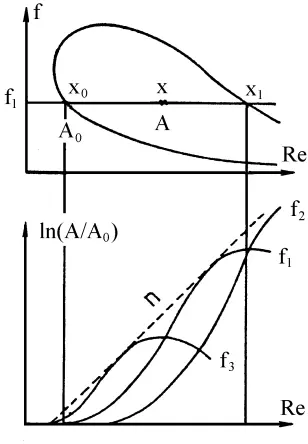
Turbulent transition refers to the complex flow phenomenon of laminar flow evolving into turbulence, and the criteria for judging transition constitute a core research topic in fluid mechanics, computational fluid dynamics, flow experiments, and engineering applications. This study systematically reviews the evolutionary framework of transition criteria over the past century, ranging from the empirical Reynolds number rule, linear stability theory, and the engineering en method, to semi-empirical correlations, the intermittency factor γ model, energy gradient theory, and state-of-the-art numerical criteria based on direct numerical simulation (DNS) and large eddy simulation (LES). Specialized stability criteria for non-parallel flows such as Taylor–Couette flow and Dean flow are sorted out, and the evolutionary paths, theoretical foundations, and applicable working conditions of low-turbulence natural transition and high-disturbance bypass transition are clarified. The progress of existing research is summarized, with critical bottlenecks identified, including high-Reynolds-number transition, three-dimensional coupled complex flows, and poor generalization of data-driven models. The applicable scopes and inherent defects of diverse transition theories are compared: energy gradient theory explains the instability mechanism of finite-amplitude perturbations; the intermittency factor model dominates industrial numerical simulations; and high-fidelity numerical simulation serves as the core tool for uncovering micro transition mechanisms. Four major future research directions are proposed: unified multi-scale theoretical frameworks, efficient computational fluid dynamics (CFD) algorithms, data-driven prediction models, and engineering applications for novel fluid machinery, delivering theoretical support for transition prediction and flow control.