Found 11 results
Open Access
Article
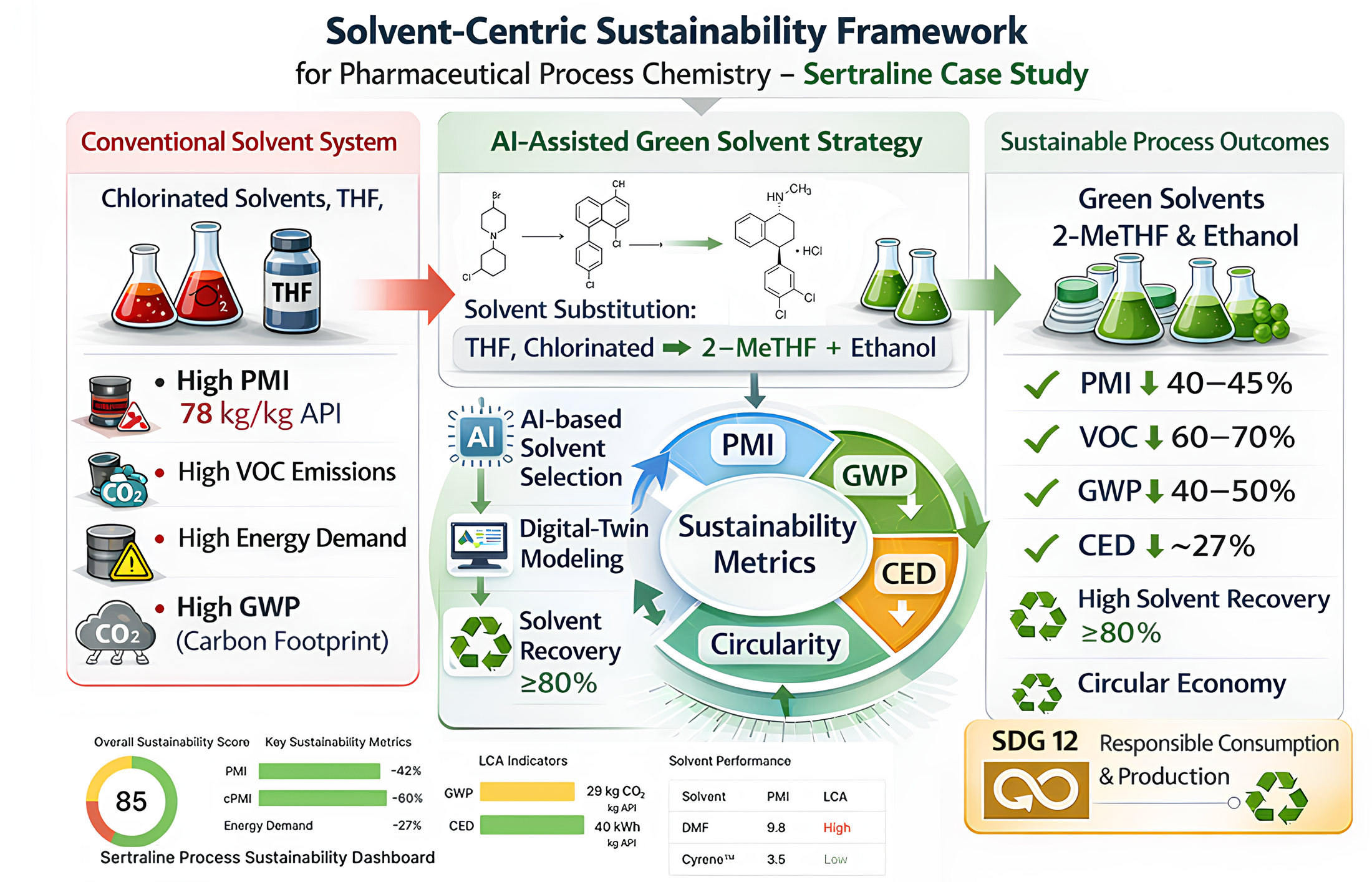
10 March 2026Solvent-Centric Sustainability Framework for Pharmaceutical Process Chemistry: Integrated Metrics, Circularity, and Digital Tools Demonstrated Through a Sertraline Case Study
Solvents dominate mass input, energy demand, and environmental impact in pharmaceutical manufacturing, yet solvent selection and recovery are often evaluated using fragmented or non-comparable metrics. Here, we present a solvent-centric sustainability framework that integrates mass-based indicators with life-cycle and energy metrics to enable transparent comparison of conventional and redesigned solvent systems. The framework harmonizes Process Mass Intensity (PMI), circular PMI (cPMI), Global Warming Potential (GWP), and Cumulative Energy Demand (CED) within consistent cradle-to-gate system boundaries, supported by literature-derived data, machine-learning (ML) models, and digital-twin–based sustainability assessment tools. The methodology is demonstrated using Sertraline as a representative solvent-intensive active pharmaceutical ingredient (API). A simplified, literature-based synthesis route contextualizes solvent use across key reaction and isolation steps. Targeted solvent substitutions—most notably replacement of tetrahydrofuran, chlorinated solvents, and dipolar aprotic media with 2-methyltetrahydrofuran and ethanol-based systems—are evaluated alongside enhanced solvent recovery and catalytic hydrogenation. Relative to the solvent-dominant subsequence of the synthesis (PMI ≈ 78 kg·kg−1 API), for which detailed solvent mass-balance data are available, the redesigned solvent strategy reduces PMI to approximately 45 kg·kg−1 API, achieves a cPMI of 6–10 at ≥80% solvent recovery, and consistently decreases GWP and CED. By explicitly mapping solvent redesign outcomes to the 12 Principles of Green Chemistry, this study demonstrates how solvent-focused interventions, supported by predictive digital tools with excellent agreement between modelled and empirical trends, can deliver substantial sustainability improvements without modifying the underlying synthetic route or relying on proprietary process data. While not intended as an industrial benchmark, the Sertraline case study illustrates how harmonized metrics, life-cycle thinking, and AI-enabled digital assessment can support evidence-based solvent selection and sustainability-oriented process development in API manufacturing.
Open Access
Article
28 February 2026Unveiling the Dynamics: How Does the Digital Economy Influence the Development of New-Type Urbanization in China
Digital economy is a vital driving engine for new-type urbanization and continues to promote the regional economy. In this study, it adopts the entropy weight method is adopted to measure the digital economy and new-type urbanization in 31 provinces in China from 2011 to 2021, and conducts an in-depth analysis on the relationship between them. The conclusions are: Digital economy has a significant role in promoting new-type urbanization and is regionally heterogeneous, especially the impact in eastern region; Moreover, through the mediating mechanisms analysis, it indicates that industrial structure and innovation level are important paths to promote new-type urbanization. Along with the increase of R&D intensity, the promotion effect shows a non-linear characteristic of “increasing marginal effect”. In light of this, the following countermeasures are put forward to strengthen digital economy’s impetus for new-type urbanization: promote the gradient development of digital technologies and innovate digital economy application scenarios to fuel new-type urbanization; establish a novel digital-industrial integration model and capitalize on the fundamental role of industrial transformation in new-type urbanization; and refine the innovation system and fully realize the marginal incremental effect of R&D intensity once it crosses the threshold.

Open Access
Review
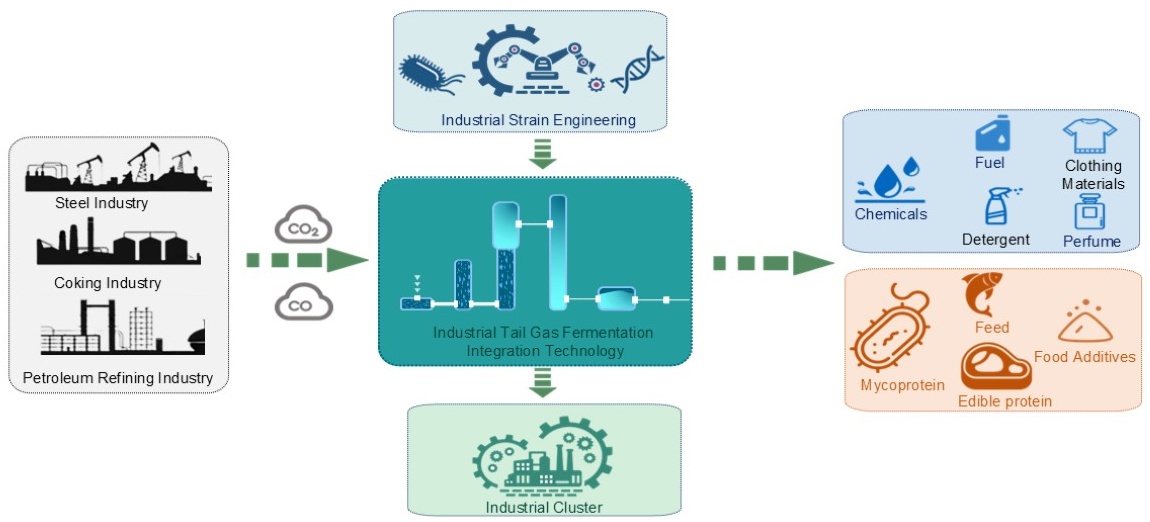
24 February 2026Technological Innovation in Syngas Fermentation and Prospects for Industrial Application
In the context of the global carbon neutrality strategy, syngas fermentation technology has emerged as a research hotspot in biomanufacturing because it can recover and convert industrial exhaust gas. Relying on the Wood-Ljungdahl pathway in acetogens, this technology converts gaseous substrates, such as CO and CO2, into high-value-added chemicals. However, bottlenecks including low gas-liquid mass-transfer efficiency and challenges with scale-up, severely limit its industrialization. The review focuses on core research-level topics, including the key enzymatic mechanisms of acetogens, metabolic regulation strategies, and high-throughput strain construction technologies; systematically analyzes the feed gas pretreatment process, design principles of large-scale reactors, fermentation process optimization, efficient product separation and purification technologies, and full-process integration at the process level; and summarizes techno-economic analysis and global policy support for industrial application. Finally, it thoroughly analyzes the core challenges of this technology across core mechanisms, engineering operations, economic markets, and industrial chain coordination, and outlines the future development direction of the technology. By systematically collating the syngas fermentation technology system and its industrialization bottlenecks, this review provides references for its industrialization. It is positioned to boost the economic viability and industrial appeal of the CCUS system, acting as a pivotal engine for advancing deep industrial decarbonization and fostering emerging green industries.
Open Access
Perspective
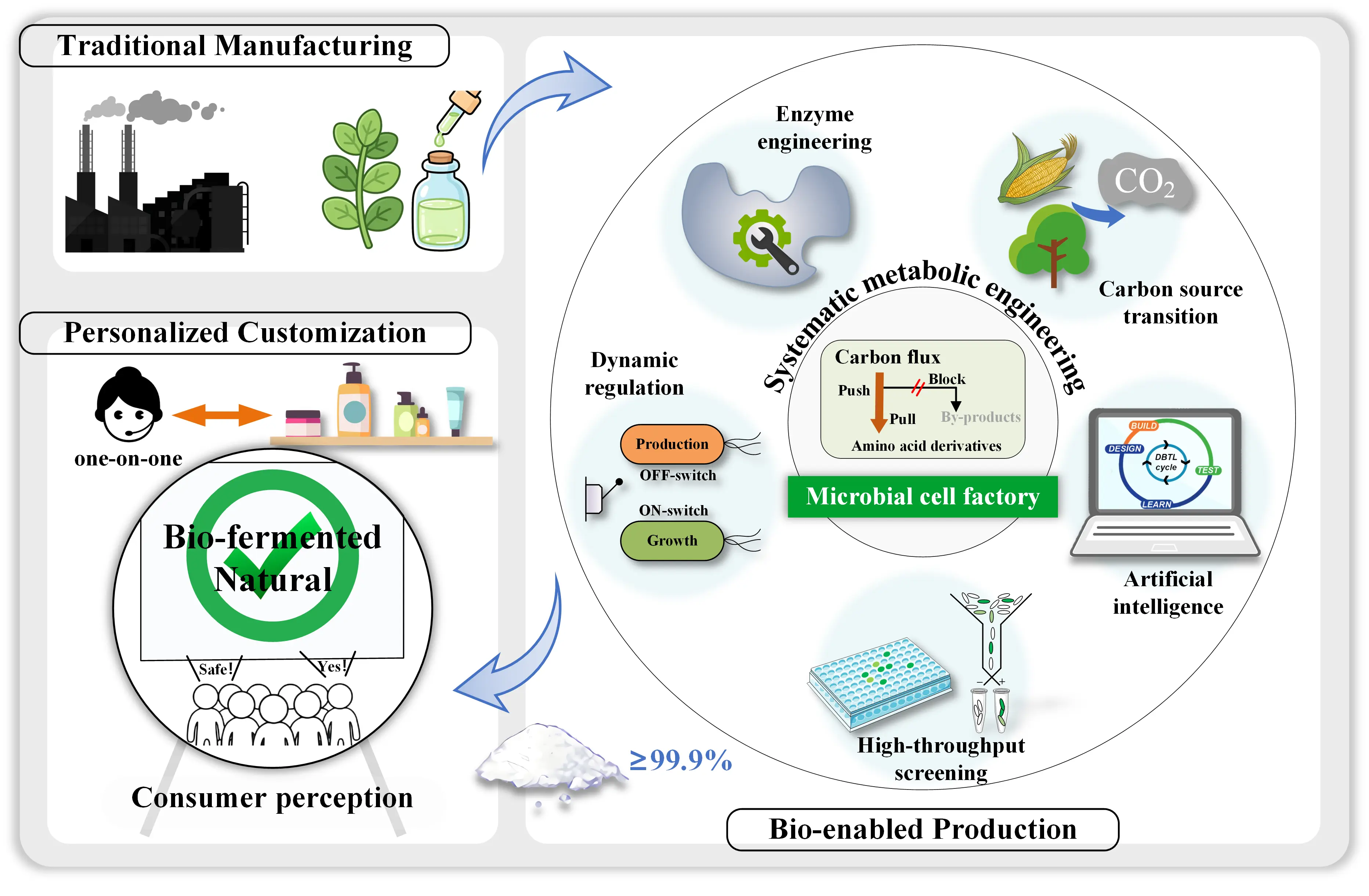
24 February 2026Synthetic Biology–Driven Innovation in the Production of Cosmetic Ingredients: From Natural Mimicry to Precision Creation
The cosmetics industry is undergoing a historic transition from natural extraction to precision biomanufacturing. Amino acid derivatives, as a kind of core functional cosmetic ingredient, have witnessed synthetic biology–based production technologies overcome traditional bottlenecks in efficiency and cost. In this Perspective, grounded in recent advances in the construction of amino acid derivative cell factories, we propose the core trends for the future development of cosmetic ingredients: enzyme engineering, dynamic metabolic control, and irrational strategies are converging to enable both functional customization and production intelligence. Star molecules such as ergothioneine, spermidine, and bioactive peptides are poised to redefine the boundaries of anti-aging efficacy, while AI-driven R&D paradigms offer broad prospects but must still overcome cost, regulatory, and consumer perception barriers. We emphasize that only by establishing an integrated “efficient synthesis–precise delivery–validated activity” end-to-end chain can cosmetic ingredients move from laboratory to market, achieving an industrial leap from chemical addition to biological empowerment.
Open Access
Review
28 October 2025Digital Transformation and Circular Economy Integration: Pathways for Sustainable Business Innovation
The accelerating pace of digital transformation has reshaped how industries pursue sustainability, offering innovative ways to integrate environmental responsibility into business strategy. This study examines how digital technologies such as artificial intelligence, blockchain, the Internet of Things, and big data analytics enable the adoption of circular economy principles in sustainable business innovation. Using a systematic literature review of 85 studies published between 2015 and 2025, the research identifies key mechanisms through which digital transformation enhances resource efficiency, extends product lifecycles, and promotes transparent supply chains. The findings show that digitalization strengthens competitiveness and sustainability but presents challenges such as high implementation costs, unequal access to digital infrastructure, and the environmental footprint of information and communication technology systems. The study concludes that aligning digital adoption with organizational culture, governance structures, and supportive policy frameworks is essential for realizing circular economy strategies at scale and achieving resilient, low carbon, and sustainable business models.

Open Access
Editorial
22 October 2025
Open Access
Review
18 September 2025Programmable Multiplex Genome Editing: Innovations in CRISPR Effectors, crRNA Engineering, and Delivery Strategies
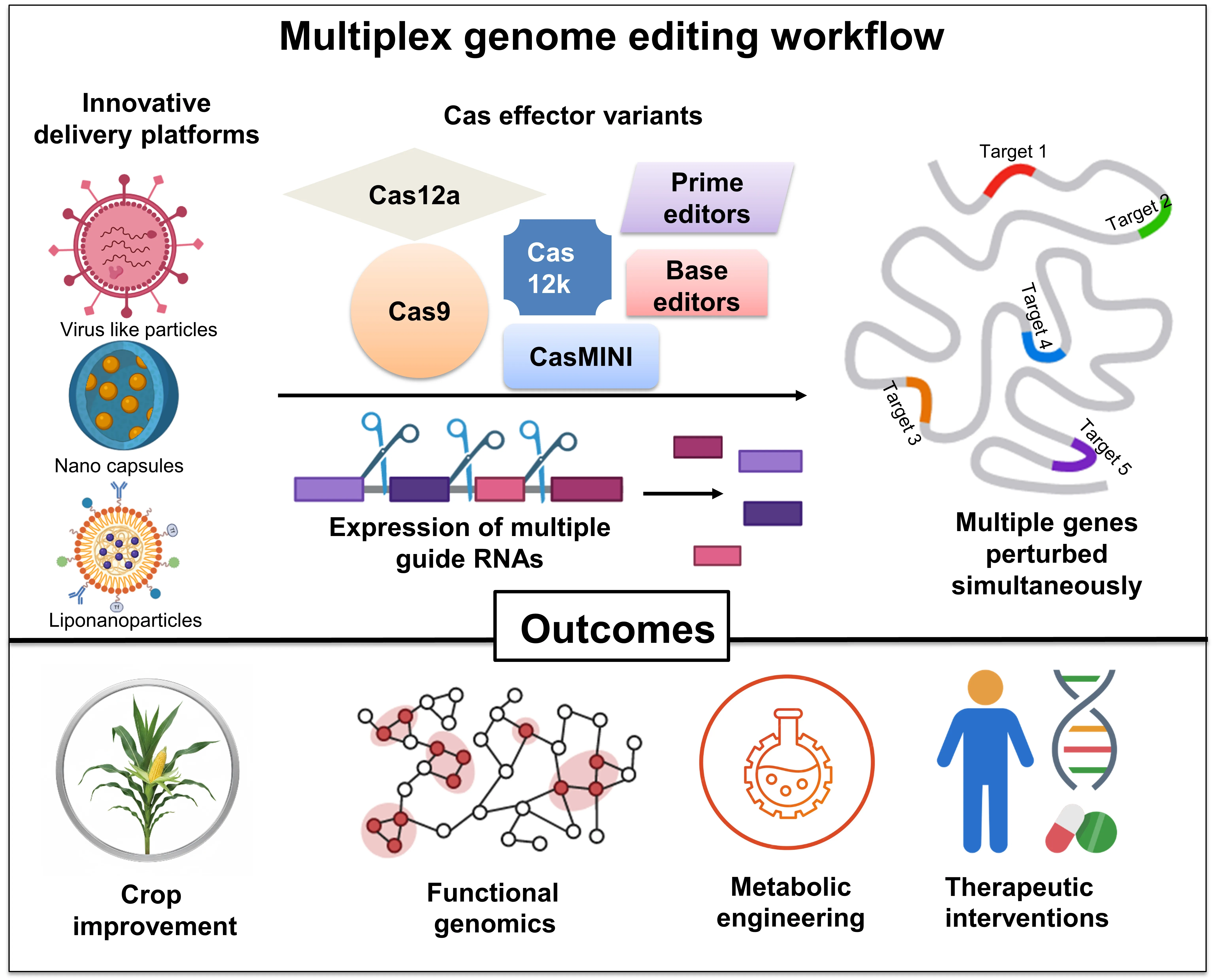
The discovery of CRISPR based technologies has transformed genome engineering and synthetic biology. With advancements in the ability to do multiplex genome editing, it is now emerging as an ideal approach for trait stacking to improve crops, functional genomics, and complex metabolic engineering in various biological systems. This review discusses engineering and optimization of the latest CRISPR effectors for scalable and precise multiplex editing, ranging from well-known systems like Cas9 and Cas12 variants, to newer, smaller variants such as CasMINI, Cas12j2, and Cas12k. We highlight how the emergence of base editors and prime editors enabled efficient editing across multiple loci without double strand breaks. We also elaborate on the expression and processing strategies of crRNA arrays, which are central to any multiplexing approach. These include tRNA-based and ribozyme-mediated methods, synthetic modular designs, and AI-optimized guide RNAs tailored to diverse systems. Additionally, we assess next-generation delivery platforms such as lipid nanoparticles, virus-like particles, and metal-organic frameworks that overcome conventional barriers in in vivo applications. This review provides a critical take on technological advances enabling precise, high-throughput, and programmable multiplex genome editing across biological systems, setting the foundation for future innovations in synthetic biology, crop improvement, and therapeutic intervention in multigene diseases.
Open Access
Review
02 April 2025Wide-Bandgap Semiconductors: A Critical Analysis of GaN, SiC, AlGaN, Diamond, and Ga2O3 Synthesis Methods, Challenges, and Prospective Technological Innovations
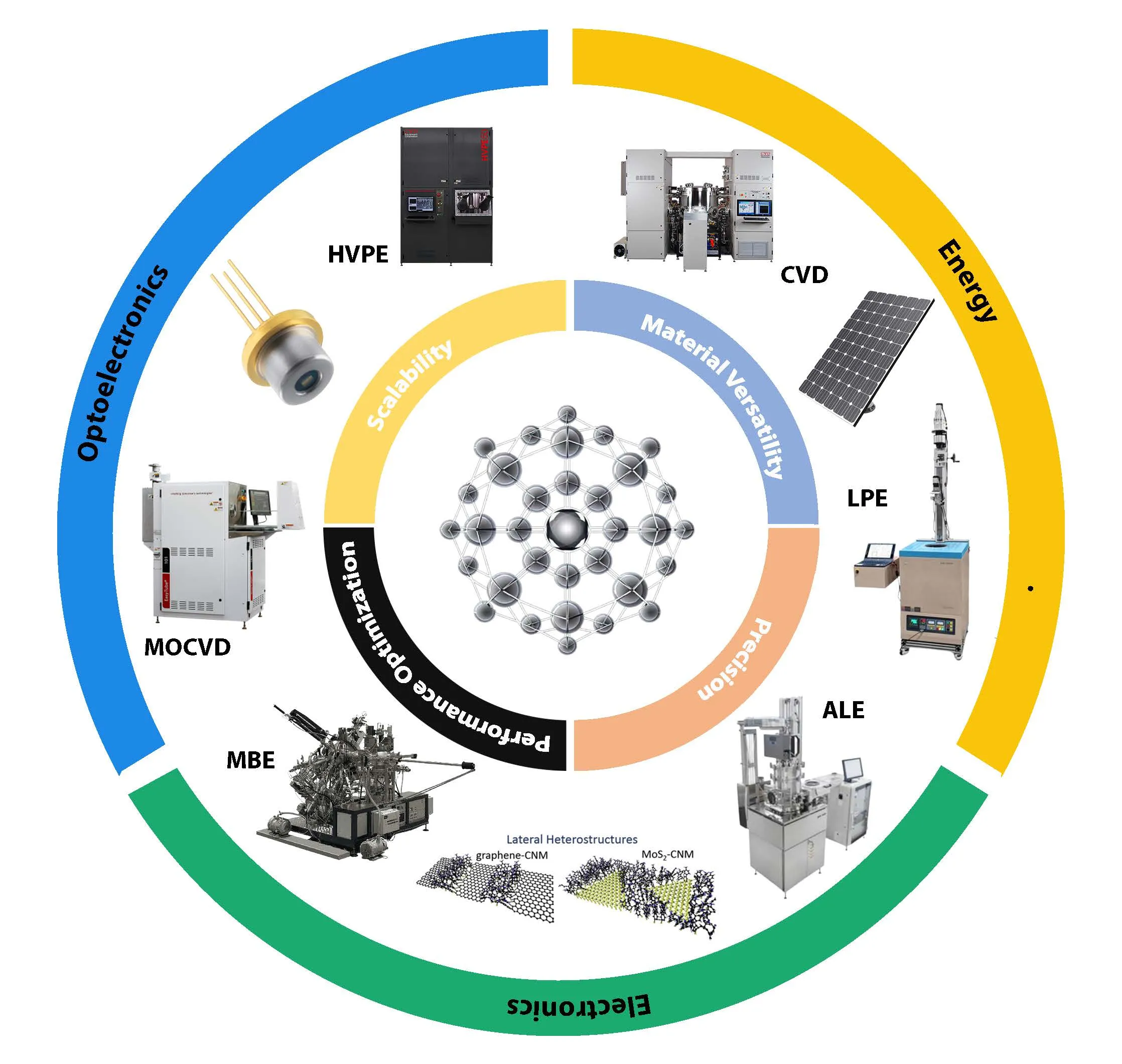
The increasing demand for high-performance Wide-Bandgap (WBG) semiconductors, including GaN, SiC, and emerging Ultrawide-Bandgap (UWBG) materials such as Ga2O3 and diamond, has driven significant advancements in epitaxial growth techniques. However, achieving scalability, defect-free growth, and sustainability remains a major challenge. This review systematically evaluates Molecular Beam Epitaxy (MBE), Metal-Organic Chemical Vapor Deposition (MOCVD), Hydride Vapor Phase Epitaxy (HVPE), and other novel growth and hybrid growth techniques, emphasizing energy efficiency, defect control, and environmental impact. Industry 4.0-driven AI-based process optimization and closed-loop recycling have emerged as transformative strategies, reducing waste and improving manufacturing efficiency. Key findings reveal that HVPE enables rapid defect-free GaN fabrication, Hot-Filament CVD enhances SiC growth with superior thermal properties, and Atomic Layer Epitaxy (ALE) achieves sub-nanometer precision crucial for next-generation quantum and RF applications. Despite these advancements, p-type doping in UWBG materials, substrate compatibility, and thermal management remain unresolved challenges. Future research must focus on scalable eco-friendly epitaxy, novel doping mechanisms, and policy-driven sustainability efforts. This review provides a comprehensive roadmap for sustainable WBG semiconductor manufacturing, bridging materials innovation, energy efficiency, and industrial adoption to support the next generation of power electronics and optoelectronics.
Open Access
Review
25 February 2025Innovations in IN939: From Cast Alloy to Additive Manufacturing
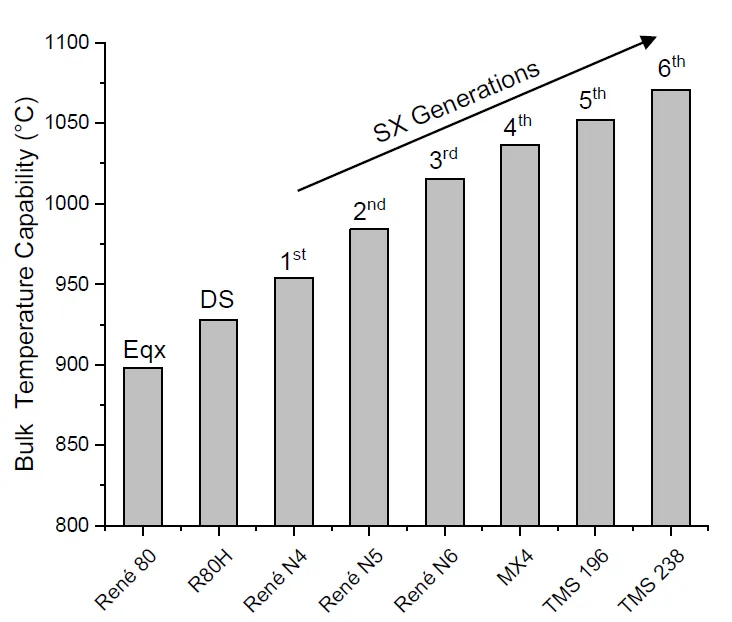
Nickel-based superalloys are the most reliable material choice for the hot sections of turbines. These superalloys are mainly employed in aircraft engines, particularly in the combustor and turbine sections. In this scenario, the growing need for materials that can endure high temperatures while retaining their strength has driven the development of IN939. Although IN939 holds these significant important properties and applications, it has received less attention in recent literature than other superalloys. This review aims to comprehensively analyze the main research on IN939 over the past 50 years. From 1970 to 1980, research primarily focused on the development of IN939 through casting methods. Between 1980 and 1990, the emphasis shifted to studying its oxidation resistance and microstructural stability during service. The period from 1990 to 2000 focused on repairing components after long service time at high temperatures. In recent decades, advances in additive manufacturing techniques have led to growing interest in developing IN939 using methods like laser powder bed fusion (LPBF). Research in the area has demonstrated that the LPBF technique offers a promising approach to manufacturing high-performance IN939 components.
Open Access
Article
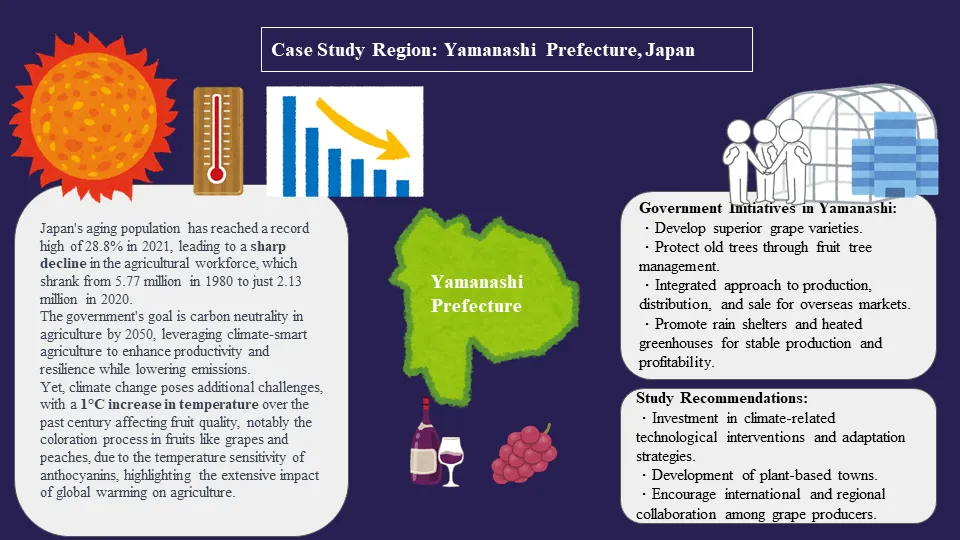
09 January 2024Climate Change Adaptation Strategies for Grape Cultivation in Yamanashi Prefecture of Japan
Climate change impacts agricultural production, especially fruits. Amongst fruits, the grape is economically valuable and highly affected by climate change. Therefore, climate adaptation strategies are essential in overcoming the detrimental effects of climate change on grape cultivation. The study summarises adaptation strategies for grape cultivation in general and focuses on climate change. The Yamanashi prefecture in Japan is taken for the case study. Our findings indicate a decline in grape production in Japan and Yamanashi prefecture. This is attributed to the effects of climate change. Following this, various support measures (adaptative, mitigation, others) provided by the Yamanashi government towards grape cultivation are summarised and analyzed. The study concludes by offering recommendations by drawing lessons from the literature review on adaptation strategies for grape cultivation, focusing on overcoming climate change impact in the context of Yamanashi prefecture.