Found 3 results
Open Access
Article
02 September 2025The Crystallography of Diverse Intermetallic Phases in Binary La-Ni Alloy Obtained by Melting and Its Structural Evolution under High Temperature Sintering
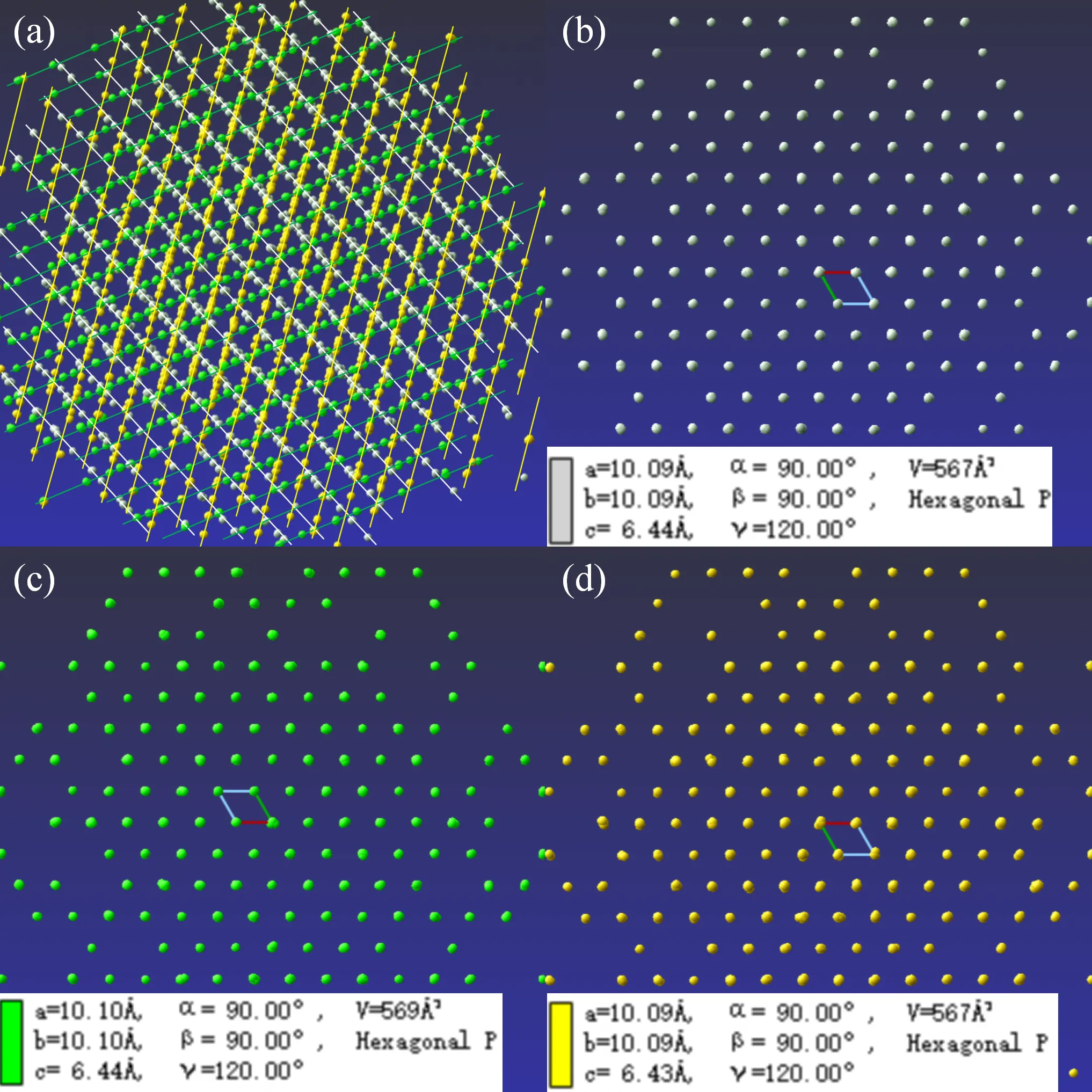
In this study, we have investigated the structural evolution of binary La-Ni alloy under different heat treatments by combing single crystal X-ray diffraction (SXRD) as well as scanning electron microscope (SEM) and transmission electron microscopy (TEM). It has been found that LaNi and La7Ni3 can be successfully synthesized through the arc melting method. Then it was found that LaNi5 appears in the binary La-Ni mixture wrapped by a Tantalum sheet, followed by high-temperature sintering. Next, some pilot experiments have been carried out on the La-Ni mixture by sealing tube technique with some residual oxygen. Serendipitously, oxidation has not been found while La3Ni3Si2 and La2NiSi besides LaNi phase show up. Meanwhile, the detailed crystal structure information and their topological features of the aforementioned phases as well as their high-resolution TEM images, have been obtained. Furthermore, the orientation relationships of the Si-contaminated mixed phases have been thoroughly investigated by advanced precession images of SXRD patterns.
Open Access
Review
19 June 2025Research Progress on High-Entropy Fibrous Materials
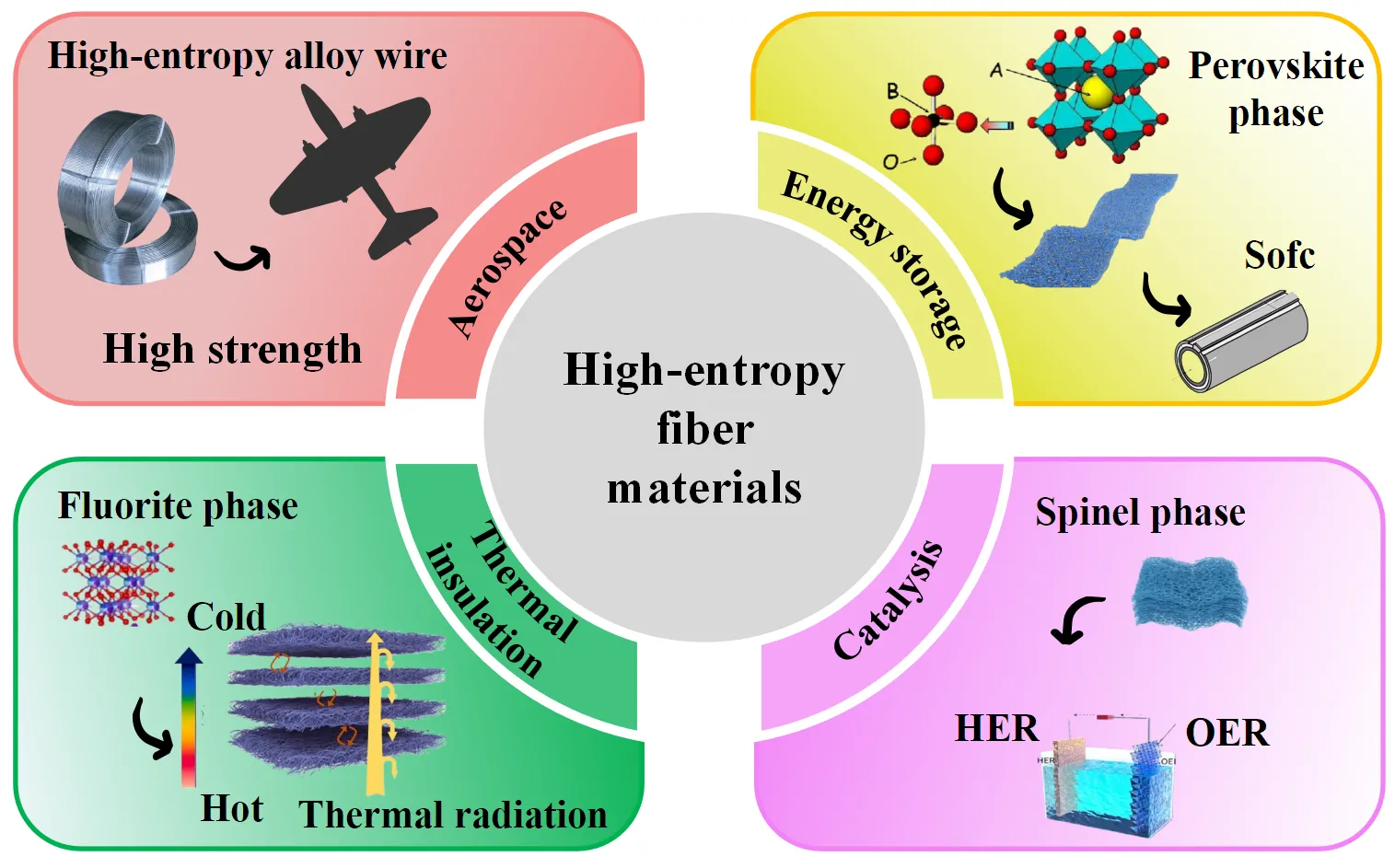
Due to their lightweight, high strength, and thermal resistance, HEFMs exhibited significant potential in aerospace, energy storage, environmental protection, and defense. This review systematically presented the research progress on high-entropy fibrous materials (HEFMs), covering their fundamental concepts, fabrication methods, crystal structure characteristics, performance advantages, and application fields. The different crystal structure types and fabrication techniques of high-entropy ceramic fibers and high-entropy alloy fibers were discussed. Additionally, the mechanical property advantages of HEFMs and their applications in thermal insulation materials, catalysis, and energy storage were analyzed. Finally, the current challenges in HEFM research and provide an outlook on future development directions.
Open Access
Article
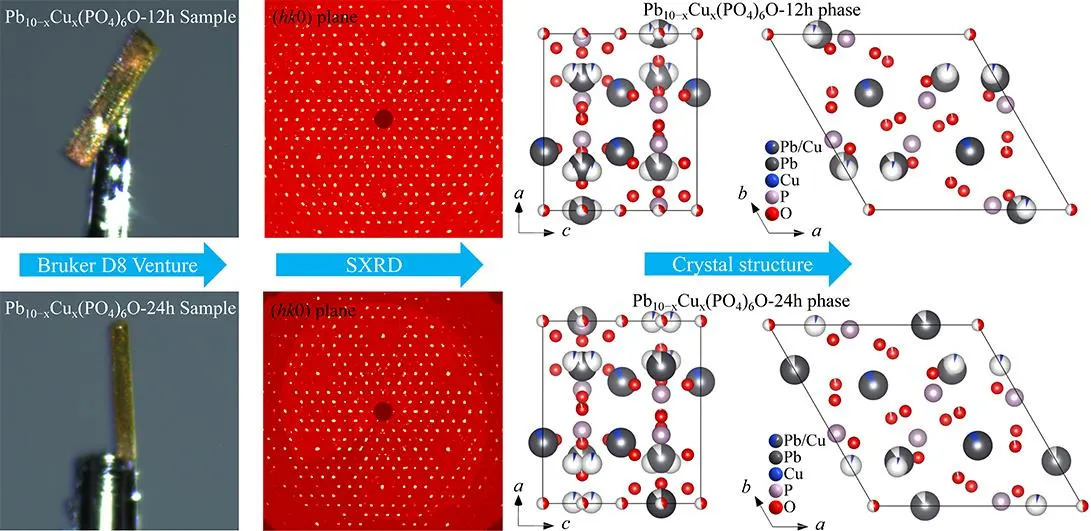
25 April 2025The Crystal Structure of Apatite and Copper-Doped Apatite
The recent claim of superconductivity above room temperature in Pb10−xCux(PO4)6O, where 0.9 < x < 1 (referred to as LK-99), has generated significant interest. In this study, we first investigated the detailed crystal structures of four natural apatite by single crystal X-ray diffraction (SXRD) combined with a scanning electron microscope (SEM) equipped with energy dispersive X-ray spectroscopy (EDX) measurement. Secondly, pilot experiments of doping copper (Cu) atoms into the apatite lattice were carried out by high-temperature mixed pure copper and natural apatite powders. Finally, copper-doped lead apatite has been synthesized via a three-step solid-state reaction method, and its crystal structure has been determined using SXRD, SEM/EDX, and transmission electron microscopy (TEM).