Found 2 results
Open Access
Review
08 September 2025Epithelial-Mesenchymal Niche Dysfunction in COPD: Emerging Opportunities for Targeting Cellular Plasticity and Crosstalk
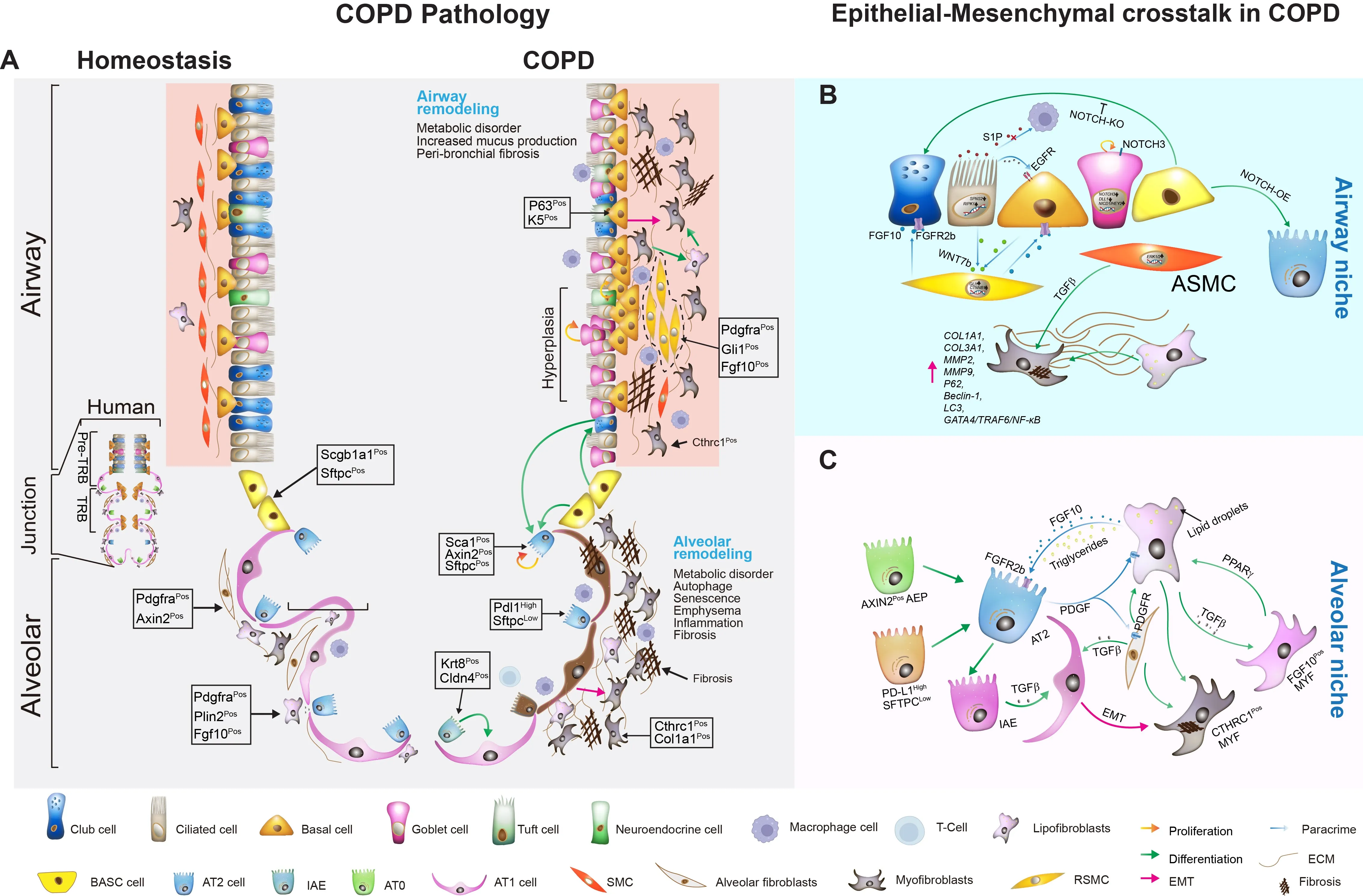
Chronic obstructive pulmonary disease (COPD) is a leading cause of global morbidity and mortality, characterized by progressive airway and alveolar remodeling. The disease pathogenesis is commonly driven by chronic environmental insults, leading to airway obstruction, emphysema, and chronic bronchitis. This review synthesizes emerging evidence that altered epithelial cell behavior and dysfunctional epithelial-mesenchymal interactions serve as pivotal drivers of COPD pathogenesis, orchestrating failed repair and structural degeneration. We detail how altered responses of airway (ciliated, club, basal, goblet) and alveolar (AT1 and AT2) epithelial cells lead to cellular senescence, metaplasia, defective regeneration, and barrier disruption, acting as primary instigators of pathogenesis. We also summarize current knowledge on the mechanisms of activation and pathogenic role of mesenchymal cells, which drive peribronchiolar fibrosis, alveolar destruction, and metabolic reprogramming, alongside the compromised reparative function of mesenchymal stem cells (MSCs). We emphasize how distinct mesenchymal niches (e.g., PDGFRαPos MANCs, FGF10Pos lipofibroblasts, SFRP1Pos fibroblasts) and distinct epithelial stem/progenitor subpopulations critically contribute to pathogenesis. Key signaling pathways—including FGF10/FGFR2b, WNT, Hippo, NOTCH, and TGF-β—mediate epithelial-mesenchymal transition (EMT), stem cell niche function, and structural remodeling. By dissecting how epithelial injury responses and mesenchymal niche failure collaboratively drive COPD progression, we identify actionable targets to disrupt pathogenesis and restore endogenous repair. We propose targeting EMT, including inhibiting EMT/fibrosis, promoting alveolar regeneration, MSC-based therapies, exosome-delivered biomolecules, and precision cell transplantation strategies, as promising future therapeutic strategies.
Open Access
Review
09 December 2024The Multifaceted Roles of Neutrophil Death in COPD and Lung Cancer
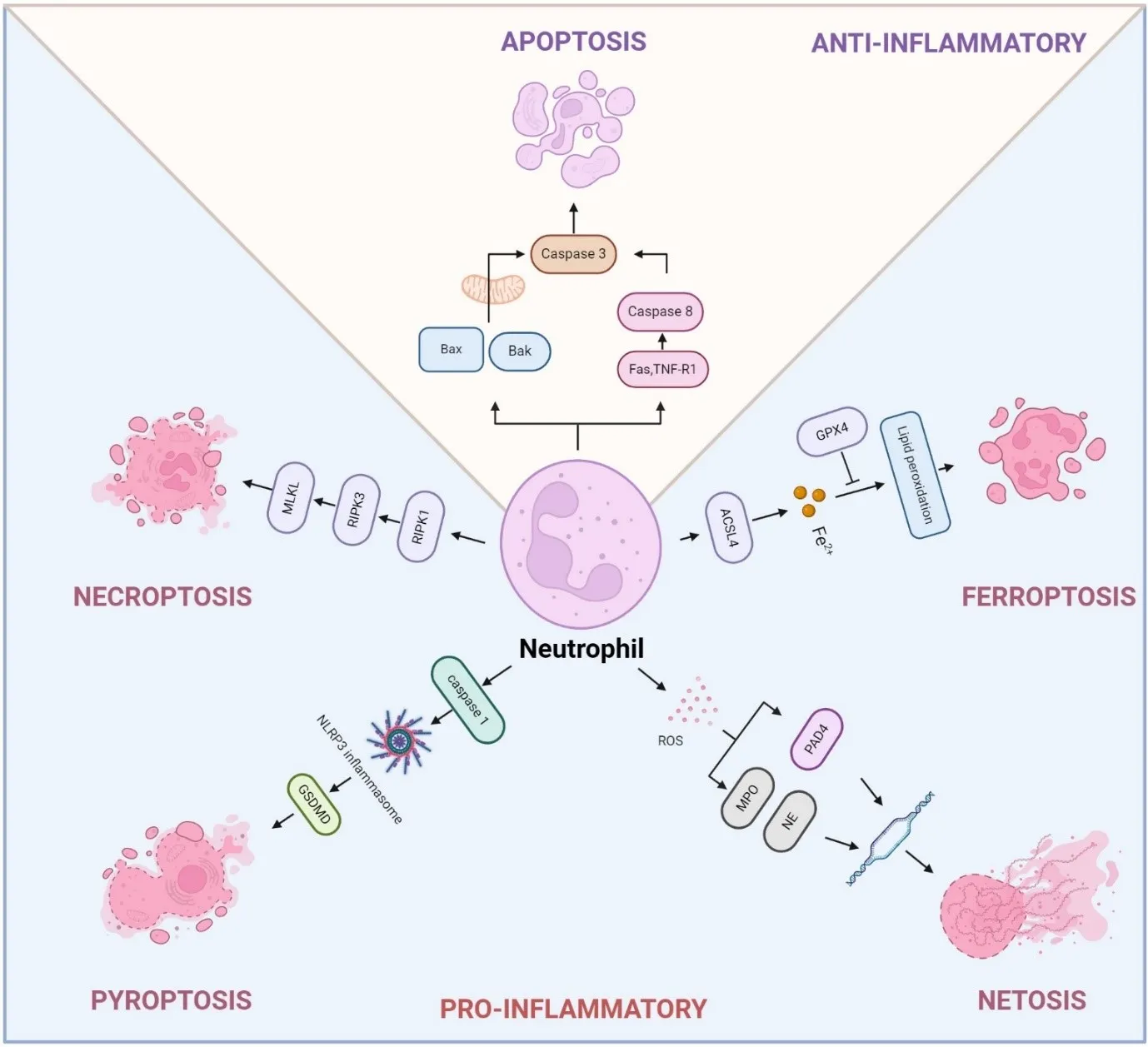
Chronic obstructive pulmonary disease (COPD) and lung cancer are closely linked, with individuals suffering from COPD at a significantly higher risk of developing lung cancer. The mechanisms driving this increased risk are multifaceted, involving genomic instability, immune dysregulation, and alterations in the lung environment. Neutrophils, the most abundant myeloid cells in human blood, have emerged as critical regulators of inflammation in both COPD and lung cancer. Despite their short lifespan, neutrophils contribute to disease progression through various forms of programmed cell death, including apoptosis, necroptosis, ferroptosis, pyroptosis, and NETosis, a form of neutrophil death with neutrophil extracellular traps (NETs) formation. These distinct death pathways affect inflammatory responses, tissue remodeling, and disease progression in COPD and lung cancer. This review provides an in-depth exploration of the mechanisms regulating neutrophil death, the interplay between various cell death pathways, and their influence on disease progression. Additionally, we highlight emerging therapeutic approaches aimed at targeting neutrophil death pathways, presenting promising new interventions to enhance treatment outcomes in COPD and lung cancer.