Found 74 results
Open Access
Article
21 August 2023Role of Youth in Implementing SDGs Future City in Tosacho, Kochi, Japan
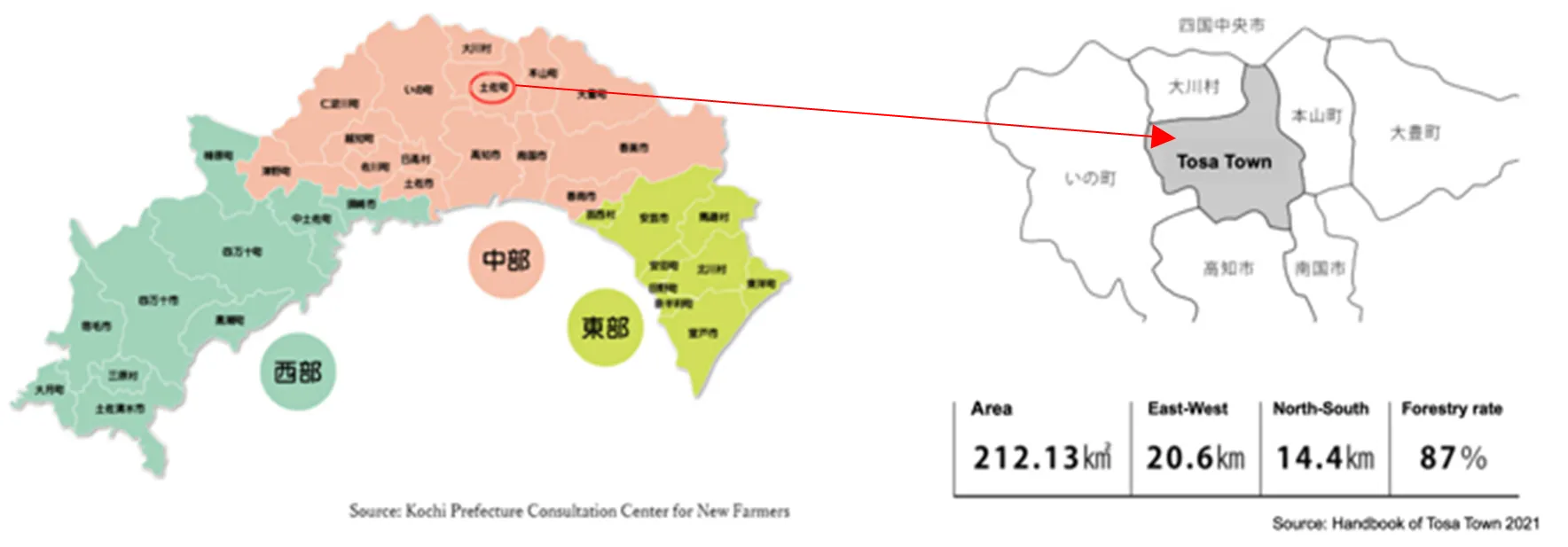
The “SDG Future Cities” established by the SDG (Sustainable Development Goals) Promotion Headquarters of Cabinet Office of Government of Japan, are being expanded to all municipalities in Japan through government support for the efforts of leading municipalities. Tosa town is a small town with less than 4000 people with high aging population and surrounded by mountains in Kochi Prefecture. The town was selected as one of the SDG Future City in 2020. In this paper, through a literature review, interviews with the Tosa Town Office, and a questionnaire survey and interview with residents of Tosa town, we considered what young people need to do to achieve SDG-11. Although Tosa Town has a variety of local government initiatives, the definition of a town where young people can continue to live, as revealed in the literature review, was found to be insufficient in terms of “economic resources,” “decision-making,” “data,” and “knowledge”. However, it was found that “community leaders,” “nature/topography,” and “community/people” are the most important factors for creating a town where people can continue to live. As for future issues, it is necessary to take measures for “decision-making,” “data,” and “knowledge,” as well as to solve issues specific to Tosa town.
Open Access
Article
22 May 2023Fed-batch Self-regulated Fermentation of Glucose to Co-produce Glycerol and 1,3-propanediol by Recombinant Escherichia coli
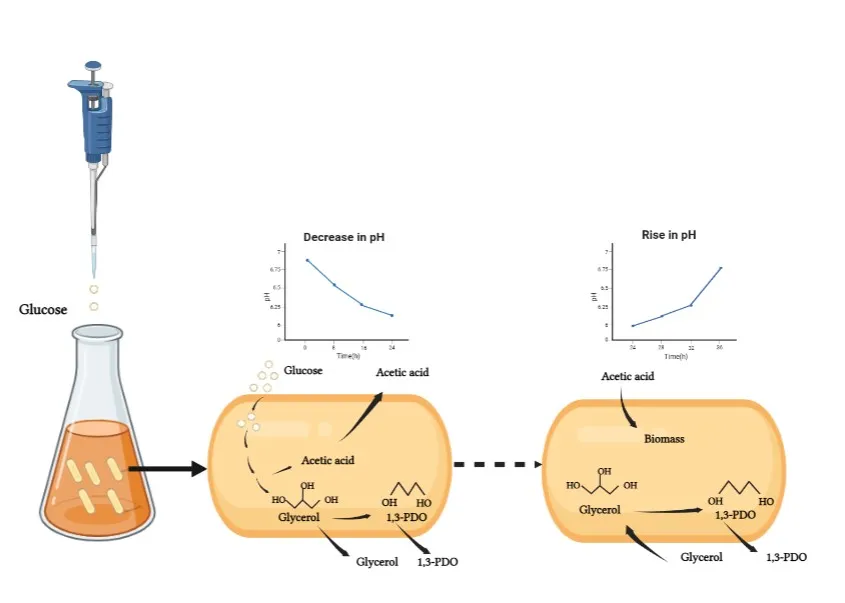
As important bio-chemicals, glycerol and 1,3-propanediol (1,3-PDO) have been widely used in numerous fields, e.g., polymers, cosmetics, foods, lubricants, medicines, and so on. Bio-based 1,3-PDO is generally produced from glycerol or glucose by natural or recombinant strains, during which organic acids are always co-produced. In this work, acetic acid was also co-produced when 1,3-PDO was obtained from glucose by a recombinant strain of E. coli MG1655. Usually, a base was added to adjust the fermentation pH, resulting in the accumulation of organic salts and difficulty in the next down streaming process. Herein, a novel strategy was developed to consume the produced acetic acid by cells self in fed-batch self-regulated fermentation. The recombinant E. coli cells produced 48.33 g/L glycerol and 61.27 g/L 1,3-PDO with a total mass yield of 45.6% and without any other byproducts at the end of 5 fed-batch fermentations. The initial buffer pH, glucose concentration, pulse feeding sugar amount, time for a single batch fermentation and reducing acid were investigated by a series of comparative experiments. This fed-batch self-regulated fermentation has potential for the co-production of 1,3-PDO and glycerol, and will highlight the subsequent modification of recombinant E. coli strain by synthetic biology.
Open Access
Article
10 May 2023Development of a New 1,2,4-butanetriol Biosynthesis Pathway in an Engineered Homoserine-producing Strain of Escherichia coli
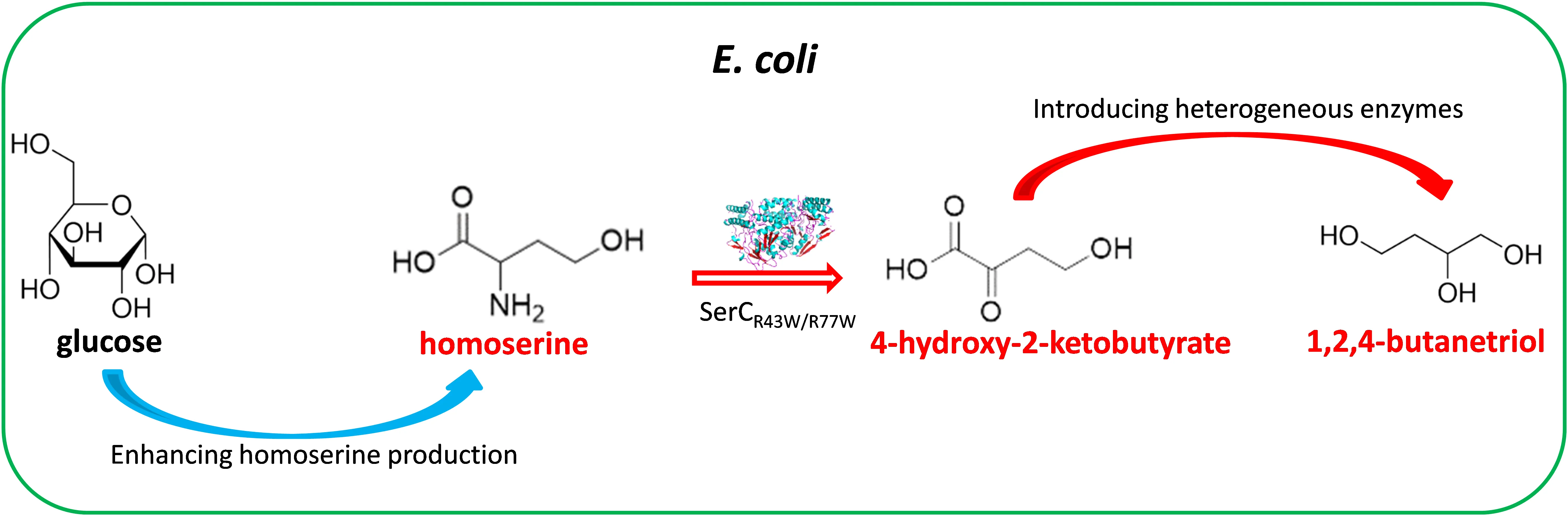
1,2,4-butanetriol (BT) is a compound of high interest with applications in pharmaceutical and materials. In this work, we designed a novel biosynthetic pathway for BT from glucose via a nonessential amino acid homoserine. This non-natural pathway used an engineered phosphoserine transaminase (SerCR42W/R77W) to achieve the deamination of homoserine to 4-hydroxy-2-oxobutanoic acid (HOBA). Three consecutive enzymes including a lactate dehydrogenase, a 4-hydroxybutyrate CoA-transferase and a bifunctional aldehyde/alcohol dehydrogenase are used to catalyze HOBA to BT. To enhance the carbon flux to homoserine, a homoserine-producing Escherichia coli was developed by improving the overexpression of two relevant key genes metL and lysC (V339A). The simultaneous overexpression of the genes encoding these enzymes for the homoserine-derived BT pathway enabled production of 19.6 mg/L BT from glucose in the homoserine-producing E. coli.
Open Access
Perspective
07 March 2023Pulsed Ultraviolet C as a Potential Treatment for COVID-19
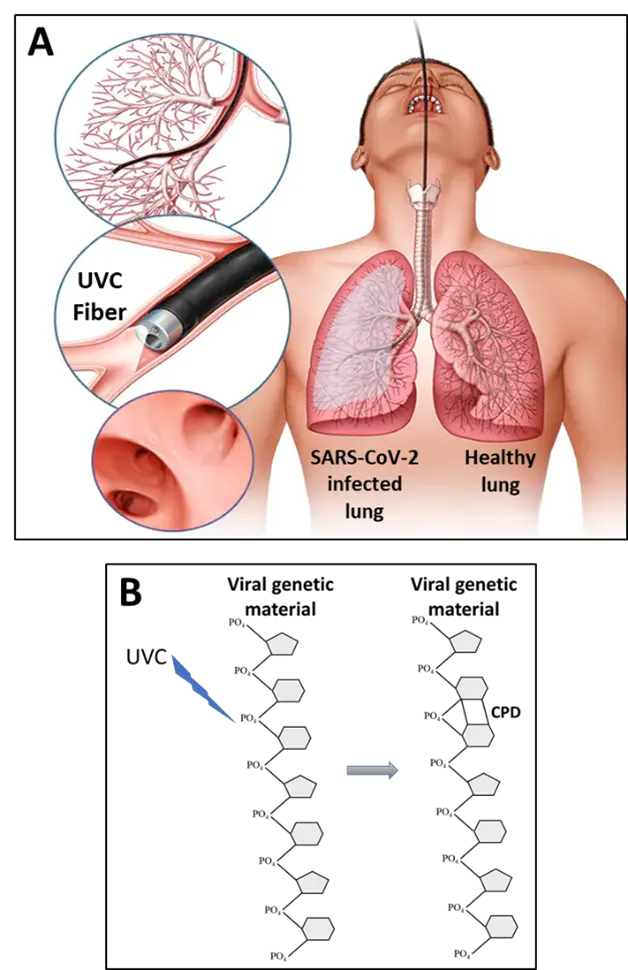
Currently, low dose radiotherapy (LDRT) is being tested for treating life-threatening pneumonia in COVID-19 patients. Despite the debates over the clinical use of LDRT, some clinical trials have been completed, and most are still ongoing. Ultraviolet C (UVC) irradiation has been proven to be highly efficient in inactivating the coronaviruses, yet is considerably safer than LDRT. This makes UVC an excellent candidate for treating COVID-19 infection, especially in case of severe pneumonia as well as the post COVID-19 pulmonary fibrosis. However, the major challenge in using UVC is its delivery to the lungs, the target organ of COVID-19, due to its low penetrability through biological tissues. We propose to overcome this challenge (i) by using pulsed UVC technologies which dramatically increase the penetrability of UVC through matter, and (ii) by integrating the pulsed UVC technologies into a laser bronchoscope, thus allowing UVC irradiation to reach deeper into the lungs. Although the exact characteristics of such a treatment should yet to be experimentally defined, this approach might be much safer and not less efficient than LDRT.