Found 492 results
Open Access
Article
12 October 2024Production and Destruction of Plant Organic Matter in Bog Ecosystems in the South of Western Siberia
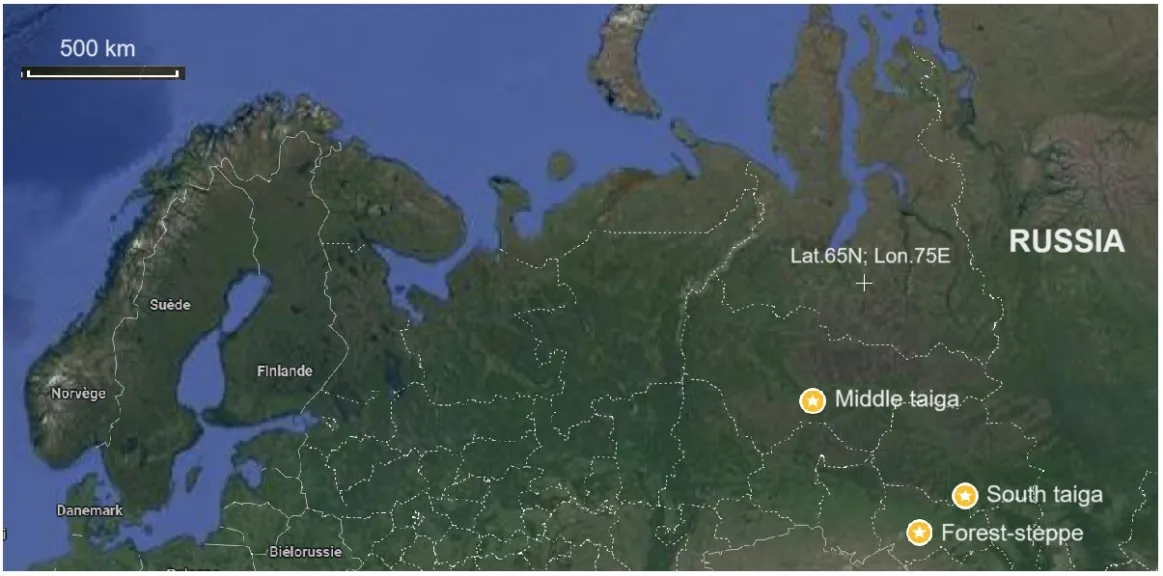
There are still many gaps in studies of the carbon cycle in northern ecosystems. It is challenging also in the context of climate change. This new study focuses on providing the state of the art data on the dynamics of plant organic matter, namely, the live plant biomass (phytomass), the dead biomass (mortmass), the Net Primary Production (NPP), as well as the rate of decomposition of plant organic matter of the major plant species, contributed to peat deposits. The study was conducted via direct in–situ measurements of different fractions of plant organic matter at a few test sites of oligotrophic pine–dwarf shrub–Sphagnum bogs at a wide geographic gradient (from the middle taiga to the forest-steppe regions in Western Siberia) based on an original methodology of measurements developed by the authors. In general, the five groups of plant species were distinguished in terms of productivity and decomposition rates. The study revealed a strong correlation between the net primary production (NPP) and the rate of decomposition of plant organic matter in pristine northern peatlands: an increase in productivity (NPPs) was basically leading to an increase in rates of decomposition in all plant materials collected in bog ecosystems. The study contributes to a global understanding of patterns and main drivers related to basic set of carbon cycle components in the northern wetland (peatland) ecosystems, their diversity and their spatial distribution.
Open Access
Perspective
10 October 2024Conceptual Design of Aerostat-Based Autonomous Docking and Battery Swapping System for Extended Airborne Operation
In response to the ever-growing global demand for Unmanned Aerial Vehicles, efficient battery solutions have become vital. This paper proposes a design and concept of an Autonomous Mid Air Battery Swapping System for Vertical Take-Off and Landing Unmanned Aerial Vehicles. The proposed design integrates Aerial Mechatronics, Lighter than Air Systems, and Digital Modelling by leveraging the innovative concept of aerostats for battery swapping. This adaptive and effective technology paves the way for the next generation of autonomous Vertical Take-Off and Landing, ensuring a longer flight time and range. Modern-day technologies have empowered Unmanned Aerial Vehicles to operate autonomously and be remotely controlled, expanding their utility across diverse industries. The enhanced Vertical Take-Off and Landing capabilities include the ability to dock on an aerostat-mounted system, facilitating seamless battery swapping without human intervention and ensuring extended flight duration and operational flexibility. These advancements promise to broaden the applications of Unmanned Aerial Vehicles across various industries.

Open Access
Review
09 October 2024A Review of Multi-Domain Urban Energy Modelling Data
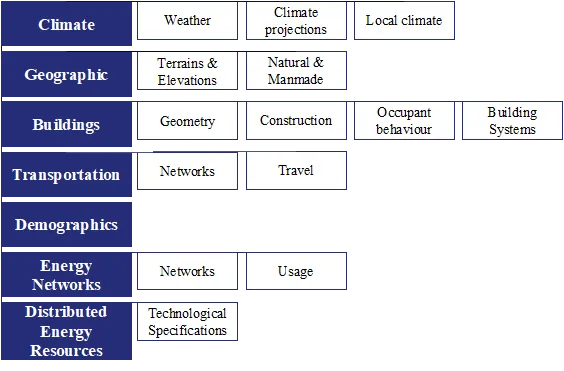
Urban energy models (UEMs) simulate energy use at the urban scale and are used to inform urban planning, policy development, infrastructure development, and digital twin monitoring and forecasting. Recent technological improvements have spurred interest in large, multi-domain UEMs, which analyse multiple interconnected parts of these energy systems, such as geography, transport, and buildings. Reviews have focussed on single domains or aspects of UEM data. However, multi-domain UEMs require detailed multi-domain data inputs to provide accurate results. This paper provides a comprehensive review of data requirements and a repository of data-specific information for researchers, including data formats, sources, acquisition methods, bridging methods, and challenges. The review was conducted using academic search engines and the authors’ direct research experience. Domains are characterised by Climate, Geographic, Building, Transportation, Demographics, Energy Networks and Consumption, and Distributed Energy Resources. Additionally, challenges common to multiple sectors are identified, and methods for addressing these are proposed. The paper concludes with a series of recommendations drawing from the general and sector-specific challenges. Overall, a large amount of data exists, but their use by urban energy modellers is limited due to lack of coordination and standardisation, and concerns over privacy and commercial interests. Coordinated public effort is required to overcome these limitations and improve the results of UEMs in the future.
Open Access
Review
30 September 2024The Jerusalem Megalithic Rock Calendar Is an Identical Representation to That Found in Lanzarote Island (Canary Islands, Spain)
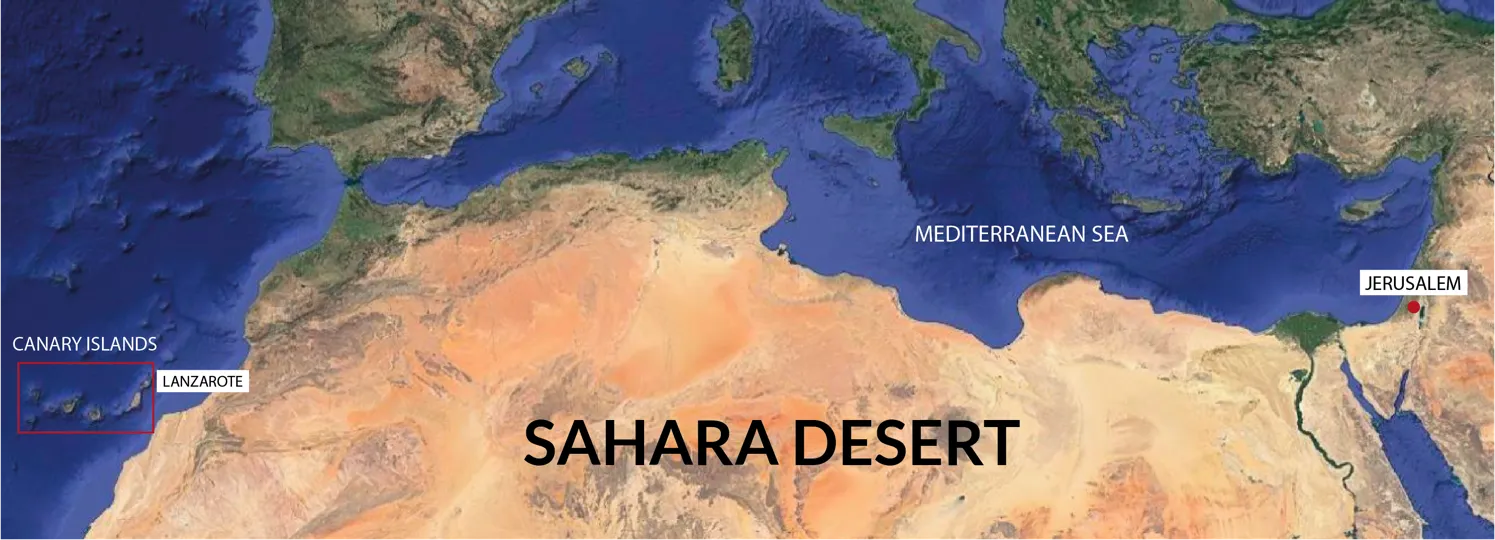
We have recently found that a megalithic basaltic rock lunisolar calendar in Lanzarote, Canary Islands (“Quesera or Cheeseboard” of Zonzamas) has almost a twin monument in Jerusalem (Al Quds in Arab). These two unique monuments are on the West and East sides of the Sahara Desert and support the hypothesis of a common “Green” Saharan culture and a later migration of people towards the Atlantic, Mediterranean, Middle East and other areas when desiccation started after 10,000 years BC, thus spreading culture and genes. Traces of this culture can still be found in Iberian rock inscriptions on the Canary Islands and in the Sahara Desert, particularly at Tim-Missaou in Algeria.This is concordant with Usko-Mediterranean languages (Basque and Berber are related and also with Iberian and Etruscan), genetics and other common anthropological traits. In this paper, we analyse the Al Quds-Jerusalem megalithic monument as representing a solar calendar of Egyptian-type (365 days in 1 year) and show how it could be identical to the Lanzarote megalithic calendar (“Quesera or Cheeseboard” of Zonzamas). Both monuments,each crest/channel, are coincidental in each solar month assignment in both Lanzarote and Jerusalem rock calendars representation. Jerusalem’s megalithic calendar was built at least 900 years BC, when it fell out of use. Therefore, it can be assumed that the Lanzarote megalithic calendar was constructed around a similar time, meaning an undetermined period over 2800 years ago.
Open Access
Article
30 September 2024Synthetic Biology in Nigeria: The Level of Awareness amongst Stakeholders
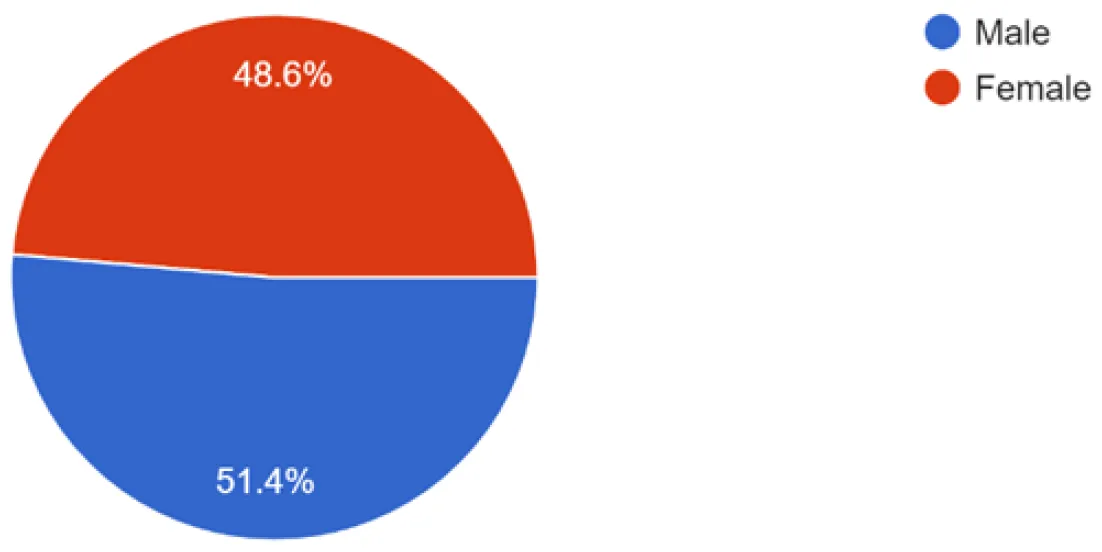
Synthetic biology, an emerging field at the intersection of biotechnology and engineering, has seen a global surge in application and awareness, necessitating a comprehensive understanding of its safe potentials to drive the bio-economy. This study aimed to assess the awareness and perceptions of synthetic biology among Nigerian biosciences stakeholders, including researchers, academicians, policymakers and students. The study employed a purposive online survey targeting diverse bioscience individuals and groups across Nigeria’s six geopolitical zones. The study received 107 responses from balanced gender representation with majority within the age group of 31–45 years old. The findings revealed a significant knowledge gap, with only 27.1% of respondents familiar with synthetic biology and 23.4% entirely unaware of it. Most respondents associated synthetic biology with biotechnology or genetic engineering and identified its applications to be in agriculture, medicine, environmental sustainability and research. Despite recognizing its benefits, many expressed concerns about safety, ethics, and regulation; notably, 43.9% of the respondents had concerns about synthetic biology with primary focus on safety and ethical implications. As regards the regulation of synthetic biology, the study showed that 80.4% of the respondents supported the need for synthetic biology regulation with few of the respondents (16.8%) aware of existing agency mandated to regulate synthetic biology. The respondents provided valuable insights into the various ways synthetic biology can be advanced in Nigeria which include increased awareness and capacity building, engagement through social media platforms, integration into education curricula and increased funding and investment in the research. The overall sentiment towards synthetic biology was positive, with 81.3% supporting its practice and 76.6% recognizing its positive global impact. However, a significant portion of respondents remained undecided. This study concludes that there is substantial gap in the knowledge of synthetic biology among bioscience stakeholders in Nigeria and the need for a heightened advocacy including continuous conferences and symposiums for the Nigeria bioscience community on the global potentials, concerns and regulation of synthetic biology. This will foster the acceptance of safe and responsible synthetic biology in Nigeria, thereby contributing to the broader national bio-economy development.
Open Access
Article
29 September 2024Reactions and Phase Transformations at Sintering of Cubic Boron Nitride Based Materials
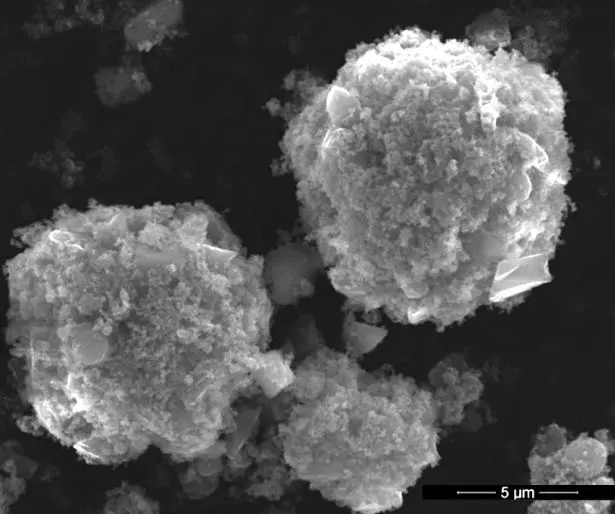
Superhard cubic boron nitride (cBN) cutting materials with different contents of cBN were investigated. The compositions of cBN-based materials included ceramic and metallic binders. The sintering of materials was performed by high-temperature hot pressing (HPHT) six-anvil apparatus at pressure 4.5 GPa and temperatures 1400–1450 °C. The process of compaction and processing of superhard cBN materials is followed by numerous chemical reactions. The chemical reactions are very important in compaction and sintering. The volume transformations during chemical reactions affect the shrinkage of the materials and may also impact the residual porosity of the finished products. The adhesion between the grains also depends on these chemical reactions. The research analyzed the volume transformations of various reactions during HPHT sintering of cBN materials, which may play a significant role in forming their structure and properties.
Open Access
Article
27 September 2024Responsibility as Method—A Model for Operationalizing Ethical Reflection in the Sciences
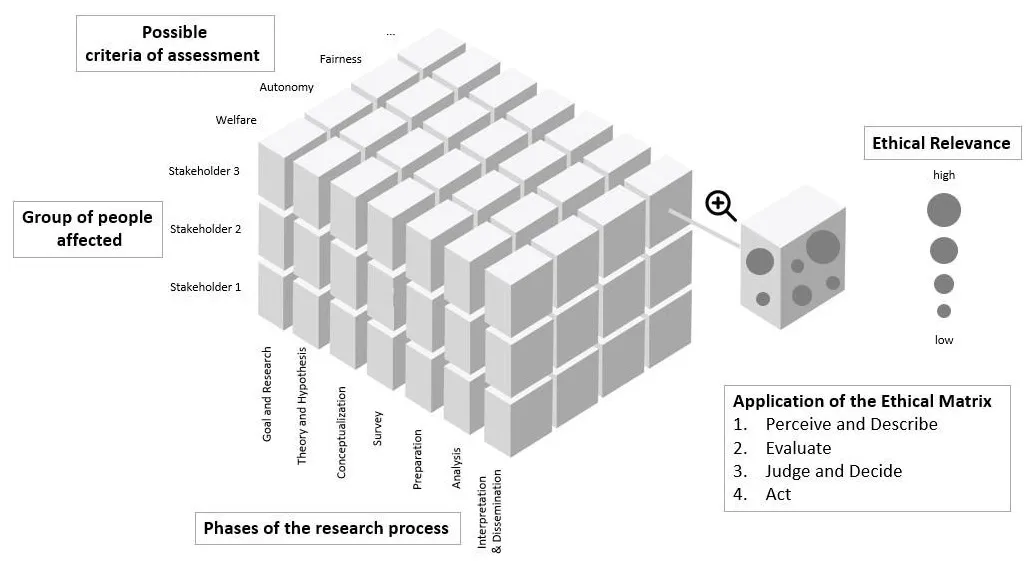
In this article, we show why the growing significance of ethics entails that the call for ethical evaluations is no longer just a specific issue for the particular discipline of academic ethics but a challenge for all academic researchers. Therefore, complex theoretical approaches must be put into practice, and the relationship between ethics and other scientific fields must be clarified. Hence, this essay shows how these requirements can be fulfilled and how to cope with the complexity of ethical consideration on a practical level. We aim to operationalize responsibility as a method. In order to achieve this, basic criteria of practical ethical reflection are elaborated. As a result, we suggest an extended ethical matrix covering the entire research process using a step-by-step model. Our ethical matrix is designed to help researchers reflect and make judgments on moral and ethical issues, enabling them to find their own solutions to these challenges without providing a formal guideline for moral decision-making.
Open Access
Article
27 September 2024The Relationship between Negative Cognitive Processing Bias, Self-Control, and Depressive Symptoms among University Students: A Network Analysis
Depression is a heterogeneous disease, with individual symptoms uniquely associated with negative cognitive processing bias and self-control. However, studies on the relationships among them from a fine-grained level are lacking. The present study employed network analysis to explore the specific connections among the three constructs based on the dual-process model. Recruiting 1168 Chinese university students, the study estimated a regularized partial correlation network. Depression, negative cognitive processing bias, and self-control were assessed with the nine-item Patient Health Questionnaire (PHQ-9), the Negative Cognitive Processing Bias Questionnaire (NCPBQ), and the Brief Self-Control Scale (BSCS), respectively. Depression nodes fatigue, sad mood, and guilt were the most central symptoms. Negative memory bias, negative attention bias, and guilt were the bridge nodes. Network revealed distinct relations between different negative cognitive processing bias dimensions and depression symptoms, self-control and depression symptoms, and direct antagonistic effects between negative cognitive processing bias and self-control. The current study showed specific pathways between the three communities, and highlighted the role of dual-process model variables in depression development. Focusing on the identified critical depression nodes and related pathways could be effective for depression prevention and intervention.

Open Access
Article
27 September 2024Strategic Deployment of Service Vessels for Improved Offshore Wind Farm Maintenance and Availability
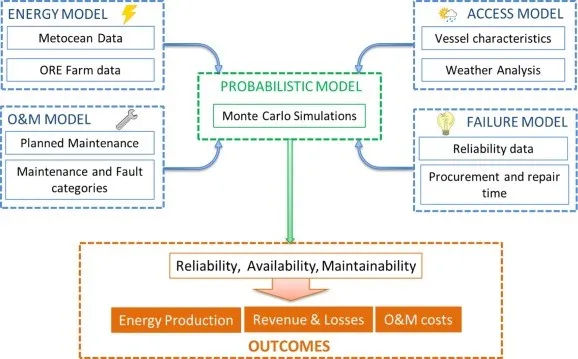
This research explores the optimization of Operations and Maintenance (O&M) strategies for offshore wind farms using a sophisticated O&M simulator built on the Markov Chain Monte Carlo method. By integrating real-world constraints such as vessel availability and weather conditions, the study assesses O&M logistics’ impacts on wind farm availability, energy production, and overall costs across different scenarios in the Celtic Sea. Through comparative analysis of eight case studies involving various combinations of Crew Transfer Vessels (CTV) and Service Operation Vessels (SOV), the research highlights the critical role of strategic vessel deployment and the potential of permanent SOV stationing to enhance operational efficiency, reduce downtime, and lower O&M costs. In this study, the permanent SOV can increase up to 20% availability of the whole wind farm. The findings underscore the importance of adaptive O&M planning in improving the sustainability and financial viability of offshore wind energy projects.
Open Access
Article
26 September 2024Distribution Patterns of Tigers and Leopards in Thung Yai Naresuan (East) Wildlife Sanctuary, Western Thailand
Examining the distribution patterns of sympatric large carnivores provides critical insights into the roles of prey availability and human disturbances in shaping the landscape use of these key predators. The Thung Yai Naresuan (East) Wildlife sanctuary (TYNE) in western Thailand has been presumed to be a natural stronghold for tigers (Panthera tigris), leopards (Panthera pardus), and large ungulates, but little was known about their habitat relationships there. During April 2010–February 2012, camera trap surveys (n = 106 camera trap locations; n = 1817 trap nights) and sign surveys (n = 493 km of transects) were designed to systematically cover overlapping areas of 925 km2 and 1421 km2, respectively, to characterize and evaluate tiger and leopard distribution in TYNE. Occupancy modeling was used to estimate the potential environmental and anthropogenic factors that best explained habitats used by these large carnivores. The predictive model of tiger and leopard occupancy from surveys at the same sampling scale revealed similar relationships between limiting factors and space use. Camera surveys show that tigers are more likely than leopards to inhabit areas where gaur (Bos gaurus) and sambar (Cervus unicolor) are frequently found.. Sign surveys from across TYNE also indicated tiger distribution was characterized by the presence of large ungulates, as well by areas with high ranger patrol effort; leopard distribution was characterized by a higher occurrence of smaller barking deer (Muntiacus vaginalis) and wild boar (Sus scrofa), and by areas with low human disturbance. Our findings suggest that tigers and leopards have specific habitat preferences within the TYNE, with tigers showing a preference for areas with larger ungulates. In contrast, leopards are more likely to be found in areas with smaller prey. Human settlement areas and disturbance activities were identified as key factors influencing the distribution of both species, limiting their range to the central to the eastern part of the sanctuary.
