
Drivers and Socio-Ecological Consequences of Human-Wildlife Conflict in Uttarakhand, India
Drivers and Socio-Ecological Consequences of Human-Wildlife Conflict in Uttarakhand, India

Received: 25 May 2026 Revised: 22 July 2026 Accepted: 07 August 2026 Published: 13 August 2026

© 2026 The authors. This is an open access article under the Creative Commons Attribution 4.0 International License (https://creativecommons.org/licenses/by/4.0/).
1. Introduction
Human–wildlife conflict (HWC) refers to problems that arise when wild animals come into contact with people and cause harm or are perceived as a threat to human life, crops, or property. This situation can lead to conflicts among people and can negatively affect both humans and wildlife [1]. As humans use more land, they increasingly come into contact with wildlife. This often creates conflict because the needs of people and animals are different.
These conflicts can harm lives and livelihoods, especially for poor rural communities [2]. HWC happens when wildlife harms people, or when people harm wildlife [3]. As human activities expand, natural habitats are degraded and fragmented, forcing wildlife to compete with people for resources and leading to HWC [4]. When people and animals come into contact, conflicts can occur, often leading people to kill animals in self-defence or in response, which can threaten their survival [5].
HWC has existed since the beginning of human civilisation. In the past, when humans lived in forests and depended on wildlife for food, the killing of animals was common, whereas human fatalities resulting from such conflicts were relatively low. This situation continued for many years in different phases. With the spread of education and increasing awareness of wildlife conservation, new policies were formulated and implemented to protect forests and wildlife. As a result, wildlife populations increased, which in turn led to a rise in HWC and, consequently, a substantial increase in fatalities among rural populations. HWC is a major challenge to conservation and development worldwide. It occurs mainly due to the expansion of human populations and increasing interference with wildlife habitats, thereby negatively affecting both people and wildlife species. In the past, over 75% of wildlife, such as elephants, were victims of these conflicts. As a result, global wildlife populations have declined by an average of 68% since 1970 due to conflict and habitat loss [6,7].
Recently, the situation has become more adverse, as the number of human fatalities has surpassed wildlife deaths in many regions. The World Bank reported that HWC has increased by about 73%, with 79% crop damage, 60% livestock losses, and 57% of humans encountering wildlife across 180 countries worldwide [8]. Climate change is also playing a vital role in intensifying HWC, with an estimated 25% increase in wildlife encounters under climate-related stress [2]. These conflicts have severely impacted human livelihoods and have serious implications for conservation, including the killing of wildlife and the loss of their habitats. Consequently, HWC poses a significant threat to the sustainable coexistence of people and wildlife [9].
Socio-environmental challenges arising from rapid population growth, changes in land-use patterns, habitat disruption, and climate variability have increased HWC, particularly in forest-fringe and agrarian communities. Large mammals such as elephants, tigers, leopards, and deer are the primary species involved in these conflicts, resulting in loss of human lives, livestock depredation, and extensive crop damage. In India, human–elephant conflict alone causes the deaths of approximately 100 elephants and 400 humans annually, along with substantial crop losses and damage to nearly 1 million hectares of agricultural land [10]. About 828 human deaths occurred due to elephant-related conflicts in Chhattisgarh between 2000 and 2023 [11]. Similarly, high numbers of conflict-related deaths have been reported in Odisha, Karnataka, Assam, and Jharkhand [12]. Changing land-use patterns and expanding infrastructure development have further intensified HWC across the country [13]. These conflicts underscore the urgent need for landscape-level planning, community-based mitigation strategies, and effective compensation mechanisms [14].
Uttarakhand is a predominantly mountainous state, with about 93% of its area classified as mountainous terrain. Forests cover more than 63% of the state’s geographical area, comprising largely dense forest cover. Among the Himalayan states, Uttarakhand has one of the highest proportions of dense forests, and its forest diversity is particularly rich [15]. Historically, Uttarakhand was part of Uttar Pradesh and was known as the UP Hills. It attained statehood on 9 November 2000. Following statehood, the Government of India’s major legislations—the Wildlife (Protection) Act of 1972 and the Forest Conservation Act of 1980—were implemented more rigorously in the state. This strengthened protection framework led to an increase in wildlife populations and, subsequently, an escalation in HWC [16].
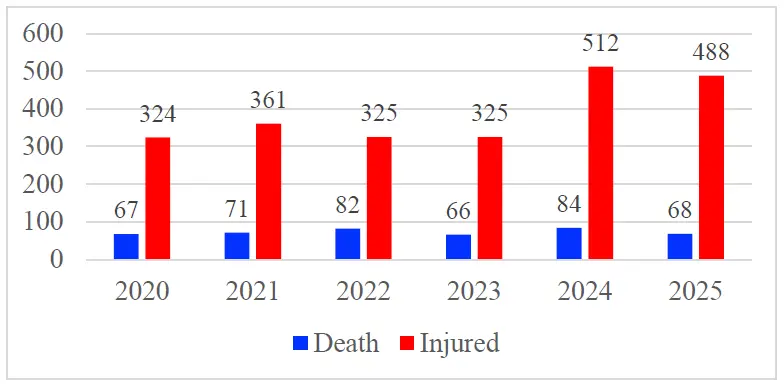
At present, Uttarakhand is experiencing severe HWC, which has become a major concern for the Forest Department, the state government, and rural communities. Moreover, the intensity and frequency of conflicts are increasing. On a day-to-day basis and across almost the entire state, one or more conflict incidents occur, resulting in loss of human life and a large number of injuries. Officials of the Forest Department claim that mitigation plans have been implemented to reduce conflicts; however, the persistently high number of fatalities remains a serious concern. Earlier, HWC was largely confined to forested areas, but most conflicts now occur within human settlements. According to the Forest Department report (December 2025), 84 human deaths and 512 injuries were recorded in 2024. In 2025, the corresponding figures were 68 deaths and 488 injuries.
The research questions guiding this study are as follows: (1) What are the principal drivers of HWC, and what are their associated consequences? (2) What strategies can be employed to mitigate such conflicts? Although numerous studies have been conducted in the past, the present research is an empirical, qualitative study.
This paper examines HWC in the Uttarakhand Himalaya and further investigates the major drivers affecting HWC and their socio-ecological consequences. Finally, the study proposes strategies for short- and long-term policies that integrate human safety, wildlife conservation, and sustainable forest management. It also examines trends in increasing wildlife populations, the drivers of this increase, the nature and extent of HWC, human deaths and injuries resulting from wildlife attacks, and the role of the state government and local communities in wildlife management and conflict mitigation.
It was hypothesised that anthropogenic factors are significant predictors of HWC frequency and intensity. The implementation of integrated mitigation strategies significantly reduces the occurrence and impacts of HWC.
Literature Review
Several studies have examined HWC worldwide. Studies emphasise the role of conservation efforts in shaping HWC dynamics [17,18]. Other scholars argue that land-use change, the expansion of human populations near forested areas, increasing wildlife populations and their spatial expansion within forest landscapes, and climate change have collectively intensified HWC [19,20]. While many studies primarily focus on conflicts between humans and wildlife rather than on their broader relationships [21], others highlight positive human–wildlife interactions. These studies note that rural communities often maintain emotional, spiritual, and cultural connections with wildlife [22,23], which motivate local people to protect wildlife and advocate for its conservation [24].
India has a large rural population, with approximately 69% of its people residing in rural areas according to the Census of India (2011). The collection of forest products and livestock rearing constitute major livelihood options for rural communities living near forested landscapes [25]. Economic losses among agricultural and pastoral communities due to wildlife depredation in India are increasing, alongside a rise in human casualties [26]. Additional impacts of HWC include psychological stress, fear, and disruptions to food security [27]. In Uttarakhand, HWC poses a serious threat to rural livelihoods [28]. India’s wildlife conservation legislation, though pioneering in intent, has inadvertently contributed to the escalation of HWC, including increased human fatalities [29,30,31,32]. Forest-dwelling Adivasi and tribal communities are among the most affected, as their livelihoods are heavily dependent on the collection of forest resources.
2. Materials and Methods
2.1. Study Area
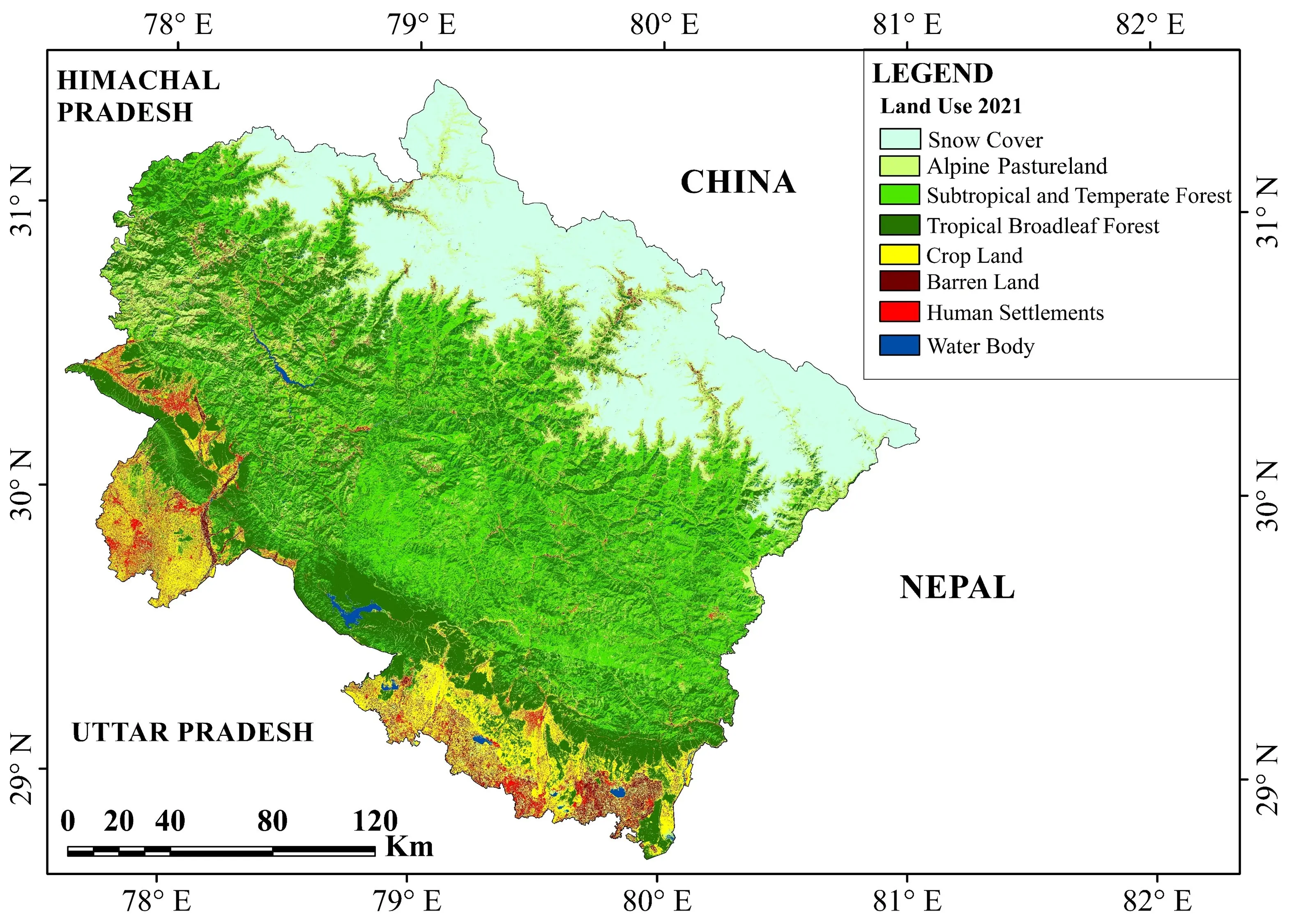
Uttarakhand, located in northern India, is a mountainous state of the Republic of India. Tibet borders it to the north, Nepal to the east, Uttar Pradesh to the south, and Himachal Pradesh to the west. Approximately 93% of the state’s total geographical area is hilly and mountainous, with about 16% remaining under permanent snow cover. Forests account for more than 63% of the state’s area, with a substantial proportion being dense, biodiversity-rich forests. Faunal diversity is equally high, encompassing species adapted to subtropical, temperate, and cold climatic zones (Figure 1). Much of the mountainous terrain is highly undulating, with steep, precipitous slopes. Human settlements are primarily concentrated at middle altitudes and in river valleys, where extensive terraced arable fields are also found [33].
In recent decades, large-scale out-migration from the mountainous mainland to other parts of India has occurred, resulting in the abandonment of many villages [34]. One of the major drivers of this out-migration is the increasing incidence of HWC, which is linked to a growing wildlife population [18]. Reports indicate that one or more individuals are killed or injured by wildlife almost daily, with leopards, bears, and elephants being the most prominent species involved in fatal attacks. In addition, species such as langurs and wild boars cause extensive crop damage, leading to significant losses in agricultural production and the rural economy.
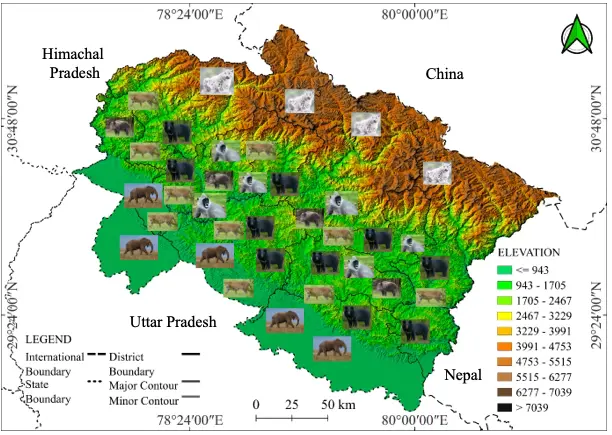
The major wildlife species found in Uttarakhand include snow leopards, musk deer, Himalayan black bears, ghorals, elephants, tigers, leopards, and bears. The present study focuses specifically on snow leopards, leopards, bears, wild boars, elephants, and langurs, as these species are most frequently associated with HWC. Uttarakhand has 12 national parks and wildlife reserves, which together cover approximately 13.8% of the state’s geographical area.
2.2. Data Sources, Methods, Field Survey, Spatial Analysis
This study employed both qualitative and quantitative research approaches. Data were primarily collected from secondary sources, i.e., the Uttarakhand State Forest Department (December 2025) and the Forest Survey of India (Dehradun, 2023). The data focus on wildlife populations in the Uttarakhand Himalaya, particularly large mammals responsible for human fatalities and injuries.
Data were collected on human deaths and injuries resulting from wildlife attacks over the past 25 years (2000–2025). Additionally, year-wise data on human deaths and injuries due to HWC were collected for the period 2020 to 2025. Finally, data on overall wildlife populations, as well as human deaths and injuries, were compiled from these sources.
A field survey was conducted in July 2024 and January 2025. The author visited the major affected areas of the Garhwal and Kumaon hills, where HWC was most intensive. Interviews were conducted with 212 people from five villages—Gumkhal, Kotdwar, Dudhali, Khirsu, and Agra Khal (42 respondents from each village)—using eight perception-based questions with multiple response categories. The interview process adhered to relevant ethical protocols.
The selection of these villages was based on the intensity of wildlife attacks on the human population, as these areas are severely affected by HWC. Respondents were selected based on their availability in the respective villages. The major themes of the questionnaire included wildlife dominance, frequency of attacks, types of losses, causes of HWC, impacts on livelihoods, measures to reduce conflict, crop protection, and support mechanisms for mitigation. Responses were quantified and expressed as percentages.
Spatial analysis was supported by preparing a location map and a district-wise map illustrating the dominance of major wild animal species in Uttarakhand. The gathered data were presented through tables and graphs. Furthermore, repeated field visits to Uttarakhand enabled direct observation of human–wildlife interactions and conflict situations.
3. Results
3.1. Types and Number of Wildlife in Uttarakhand
Table 1 shows the types of wildlife and their numbers in Uttarakhand. It shows that bears constitute the highest wildlife population; however, this figure is an estimate due to the absence of systematic population censuses for bears. Among the other species, leopards have the highest population, followed by elephants, while tigers represent the smallest population. Of the estimated 560 tigers in the state, 260 are located within the Corbett Tiger Reserve.
Table 1. Wildlife and their numbers in Uttarakhand.
|
Wildlife (Scientific Name) |
Number |
|---|---|
|
Tigers (Panthera tigris) |
560 (260 in Corbett) |
|
Elephants (Elephantidae) |
2026 |
|
Leopards (Panthera pardus) |
2276 |
|
Bear (Ursus thibetanus) |
3200 (+estimation) |
|
Total |
4902 |
Source: The Uttarakhand Forest Department records, December 2025.
3.2. District-Wise Domination of Wildlife and Major Reasons of Conflict
Table 2 presents district-wise patterns of HWC and the major contributing factors across Uttarakhand. In Pauri district, a high population of leopards and bears is the primary cause of frequent conflict incidents. In Nainital district, the large presence of tigers and leopards contributes significantly to HWC, largely due to the proximity of the Corbett Tiger Reserve. Haridwar district records a high elephant population, and elephant mortality is frequently reported along the Dehradun–Haridwar railway line, where train collisions are common due to the absence of a properly designed elephant corridor. Tehri district is also severely affected by HWC, predominantly involving leopards and bears, and is identified as a major conflict hotspot in the state.
Table 2. District-wise domination of wildlife and the major reasons for conflict.
|
District |
Main Wildlife |
Reasons for Conflict |
|---|---|---|
|
Pauri |
Leopards and Bears |
A higher number of leopard and bear attacks |
|
Nainital |
Tigers and Leopards |
Corbett Tiger Reserve |
|
Haridwar |
Elephants and Tigers |
Elephant corridors of Rajaji National Park |
|
Tehri |
Leopards and Bears |
Hotspot for leopards and bears |
Source: The Uttarakhand Forest Department records, December 2025.
Figure 2 illustrates the district-level dominance of wild animal species that are involved in HWC across Uttarakhand. Elephants dominate conflict incidents in the plains districts, including Dehradun, Haridwar, Nainital, and Udham Singh Nagar (USN). Bears account for the highest number of conflict cases overall and are responsible for the greatest number of human injuries and fatalities, particularly in the middle Himalayan region, where they are the dominant conflict species. Leopards are equally prominent in the middle Himalayan region in terms of conflict frequency and human casualties. Wild boars and langurs are also active in these areas, causing significant damage to standing crops. In the Greater Himalayan region, snow leopards are present; however, they pose minimal risk to humans due to the extremely low human presence in these high-altitude landscapes.
3.3. Human Deaths and Injuries Due to Wildlife Attacks
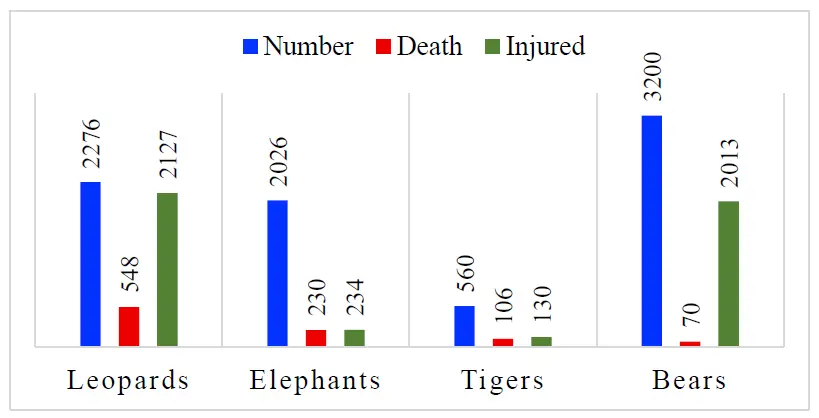
According to estimates from the Forest Department, approximately 954 people died as a result of HWC in Uttarakhand during the 25 years from 2000 to 2025, representing an average of about 30 deaths per year (Table 3). The number of human fatalities has shown an increasing trend in recent years. Leopards were responsible for the highest number of deaths (548), followed by elephants (230) and tigers (106). During the same period, bears accounted for 70 human fatalities. In terms of non-fatal incidents, leopard attacks resulted in the highest number of injuries (2127), followed closely by bear attacks (2013) and elephant attacks (234). Tiger attacks caused injuries to 130 people.
Regarding animal deaths resulting from human-animal conflict, no records are available. The deaths mainly occurred near human settlements, community forests, and grazing areas. Wildlife leaves the forest and enters crop fields and settlements, where it attacks humans.
Table 3. Human deaths and injuries due to attacks by animals in the past 25 years.
|
Animals |
Deaths |
Injuries |
|---|---|---|
|
Leopards |
548 |
2127 |
|
Elephants |
230 |
234 |
|
Tigers |
106 |
130 |
|
Bears |
70 |
2013 |
|
Total |
954 |
4504 |
Source: The Uttarakhand Forest Department records, December 2025.
3.4. Year-Wise Human Deaths and Injuries Due to Wildlife Attacks
According to the Forest Department's latest report (31 December 2025), human fatalities from bear attacks have been increasing in Uttarakhand. Although leopard attacks remained the most frequent in both the plains and mountainous regions during the period 2000–2025, bear-related attacks were notably high in 2025 (Figure 3). Between 2020 and 2025, a total of 438 human deaths and 2335 injuries were recorded due to HWC. The highest number of fatalities occurred in 2024 (84 deaths), followed by 2022 (82 deaths). In terms of injuries, the peak was in 2024 (512), followed by 2025 (488).
A comparison between the long-term period (2000–2025) and the recent six-year period (2020–2025) reveals a disproportionately higher rate of deaths and injuries in the latter, despite it representing only about one-quarter of the total study duration. This clearly indicates an intensification of wildlife attacks in recent years. In 2025 alone, 68 people were killed, and 488 were injured due to HWC; of these, eight deaths and 108 injuries were caused by bear attacks, while leopard attacks resulted in 102 injuries. In response to the escalating conflict, the Forest Department has intensified mitigation efforts through rescue operations and the procurement of specialised resources to reduce HWC.
3.5. Overall Analysis of Number of Wildlife, Deaths of People and Injured Persons
Figure 4 indicates that bears constitute the largest wildlife population in Uttarakhand, with an estimated population exceeding 3000, according to the Forest Department’s estimates. Although bear-related fatalities are relatively low, the number of people injured in bear encounters is high, and incidents of human–wildlife conflict involving bears have been increasing in recent years. Leopards represent the second-largest population, followed by elephants and tigers. In contrast to bears, leopards cause the most human fatalities, followed by elephants and tigers, and they also account for a substantial number of injuries.
3.6. HWC Hotspots in Uttarakhand
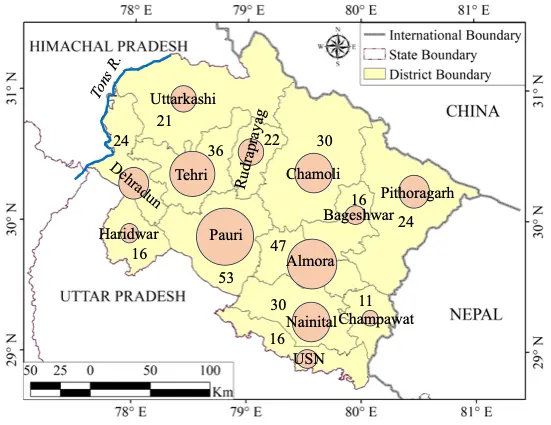
HWC hotspots were mapped across Uttarakhand (Figure 5) using district-level data on human fatalities from 2019 to 2024. These data were obtained from the Forest Department. The highest number of human fatalities was recorded in Pauri district, followed by Almora and Tehri districts. Chamoli and Nainital districts also reported a considerable number of fatalities. Similarly, Dehradun and Pithoragarh districts experienced substantial human losses due to HWC.
In contrast, other districts such as Bageshwar, Udham Singh Nagar (USN), Haridwar, and Champawat recorded relatively fewer incidents of human fatalities caused by wildlife. A year-wise analysis of human fatalities from 2020 to 2025 indicates an increasing trend, with 47 deaths reported in 2019, rising to 67 in 2024.
3.7. People’s Perceptions of Conflicts
A perception study was conducted in five villages—Gumkhal, Kotdwar, Dudhali, Khirsu, and Agra Khal—where 212 respondents were interviewed. The interviewees were generally aged 45–50 years, and all had education levels above secondary school. Eight perception-based questions were asked, each with multiple response categories, and the percentage of respondents selecting each category was calculated (Table 4). The first question asked which animals cause the most conflict. Approximately 70% of respondents identified leopards and bears, followed by elephants (20%) and wild boars (10%). Elephant-related conflicts were mainly reported in valley villages such as Kotdwar and Dudhali, whereas conflicts with leopards and wild boars were more prevalent in mountainous villages. The second question addressed the frequency of HWC, with 60% of respondents replying “frequently”, and 20% each replying “very frequently” or “occasionally”. The third question assessed the types of losses due to wildlife. Human loss, injury, and fear/stress were reported by the highest proportion of respondents (30% each), followed by crop damage and livestock loss (15% each), and property damage (10%). In the fourth question, respondents were asked about the main causes of the increase in HWC. Poor management was cited by 30% of respondents, while forest degradation, decline in wild food, and agricultural expansion were each cited by 20%. Climate change accounted for 10% of responses. The fifth question explored the extent to which HWC has affected livelihoods. About 50% of respondents reported a high impact, 30% a moderate impact, and 20% a low impact. Regarding the effectiveness of government or forest department measures in reducing conflict, 55% of respondents considered them ineffective, 25% somewhat effective, and only 20% effective. Regarding methods used to protect crops and livestock, 40% of respondents used fencing, while noise/fire and community action were each reported by 30%. The final question asked what support is most needed to reduce HWC. About 40% of respondents suggested better forest management, 30% suggested awareness programs, 20% suggested physical barriers, and 10% suggested compensation.
Table 4. People’s perception on human-animal conflicts (n = 212).
|
Q. No. |
Perception Question |
Response Categories |
% of Respondents |
|---|---|---|---|
|
1 |
Which wild animal causes the most conflict in your area? |
Leopard and Bear |
70 |
|
Wild Boar |
10 |
||
|
Elephant |
20 |
||
|
2 |
How frequently do you experience human–wildlife conflict? |
Very frequently |
20 |
|
Frequently |
60 |
||
|
Occasionally |
20 |
||
|
3 |
What type of loss do you face due to wildlife? |
Crop damage |
15 |
|
Livestock loss |
15 |
||
|
Property damage |
10 |
||
|
Human loss & injury |
30 |
||
|
Fear & stress |
30 |
||
|
4 |
What is the main cause of increasing human–wildlife conflict? |
Forest degradation |
20 |
|
Decline in wild food |
20 |
||
|
Agricultural expansion |
20 |
||
|
Climate change |
10 |
||
|
Poor management |
30 |
||
|
5 |
To what extent has human–wildlife conflict affected your livelihood? |
High |
50 |
|
Moderate |
30 |
||
|
Low |
20 |
||
|
6 |
How effective are government/Forest Department measures in reducing conflict? |
Effective |
20 |
|
Somewhat effective |
25 |
||
|
Not effective |
55 |
||
|
7 |
What method do you use to protect crops/livestock? |
Fencing |
40 |
|
Noise/fire |
30 |
||
|
Community action |
30 |
||
|
8 |
What support is most needed to reduce human–wildlife conflict? |
Compensation |
10 |
|
Physical barriers |
20 |
||
|
Awareness programs |
30 |
||
|
Better forest management |
40 |
3.8. Causes of Increasing Wildlife and Conflicts
The Government of India enacted two key pieces of legislation for wildlife and forest conservation: the Wildlife Protection Act on 9 September 1972 and the Forest Conservation Act on 25 October 1980. Subsequently, the Uttar Pradesh State Government adopted and rigorously implemented these Acts in the hilly regions that now constitute Uttarakhand. Protected areas, including National Parks and Wildlife Sanctuaries, were established to safeguard biodiversity. Species-specific initiatives, such as Project Tiger (1973) and the Corbett Tiger Reserve, were also launched. Hunting and trade of wildlife, along with illegal tree felling, were prohibited under these regulations. After Uttarakhand attained statehood, following its separation from Uttar Pradesh, these Acts were further strengthened, contributing to a substantial increase in wildlife populations across the state.
Several additional factors contribute to HWC in Uttarakhand. Forestlands are under the exclusive control of the Forest Department, and local communities are largely restricted in their use of these resources. Apart from the collection of fuelwood and fodder, other activities—including tree cutting for construction or personal needs—require formal permission from the Forest Department. The killing of animals is strictly prohibited, even in situations of direct conflict, and violations are met with severe legal penalties. This regulatory framework, while aimed at conservation, represents one side of the HWC, as local communities often face restrictions even when their safety or livelihoods are threatened.
In addition to legal and management factors, ecological and human-induced pressures significantly contribute to HWC in Uttarakhand. Rapid population growth and widespread deforestation have led to habitat loss and forest encroachment, while changing human behaviours—often driven by climate change—and improper waste disposal have attracted wildlife to settlements and agricultural fields. Human interference in natural habitats is increasing steadily. Meanwhile, populations of prey species such as deer and kakkars are declining due to poaching. As these animals are the primary prey of large predators such as tigers, leopards, and bears, the decline in prey availability forces these predators to leave their natural habitats in search of food and water, bringing them into closer contact with rural communities.
Forest fires, which commonly occur from February to mid-June until the onset of the monsoon, have been increasing in frequency and intensity in Uttarakhand [33]. These fires force wildlife to flee their natural habitats and move toward human settlements in search of safety. Additionally, rising temperatures and declining water availability in forest areas further compel animals to leave their habitats and disperse to new locations, increasing the likelihood of human–wildlife interactions.
Villagers dumping garbage near rural settlements attracts wildlife to the site in search of food at all times. During that time, they encounter humans, and the conflict starts.
3.9. Socio-Ecological Consequences of Conflicts
The socio-ecological consequences of HWC in Uttarakhand are substantial. Fatal attacks on individuals, particularly older people, have severe repercussions for families, as young adults and school-aged children often constitute the primary support system. Following such fatalities, households frequently experience economic hardship and financial instability. In remote areas, wildlife threats have also disrupted education, leading to the closure of several schools. For instance, the District Magistrates of Chamoli and Pauri districts recently implemented a revised school timetable—from 9:00 a.m. to 2:00 p.m.—to reduce the risk of wildlife attacks. In the Jakholi region, school authorities and parents decided that children should travel to and from school in groups to ensure collective safety during wildlife encounters.
The regional economy of Uttarakhand relies heavily on agriculture, livestock farming, and the collection of non-timber forest products, including fuelwood, fodder, and fruits [28]. Women are particularly affected by HWC, as they often enter forest areas to gather fuelwood and fodder and are at risk of attacks by leopards or bears. Livestock rearing has also become increasingly hazardous, as wildlife frequently kills animals in the forests. As a result, many households have shifted to stall-feeding practices. Moreover, fear of wildlife has made it difficult to collect fodder from forested areas, creating additional challenges for livestock rearing and threatening a key component of local livelihoods.
Medical facilities in remote rural areas of Uttarakhand are limited, leaving people who are attacked by wildlife vulnerable to both physical injuries and mental distress. Villagers most affected by wildlife conflict frequently experience psychological stress, while the scarcity of healthcare services exacerbates these challenges. A small number of doctors and psychiatrists serve a large rural population, leaving many without adequate care. This situation has also contributed to out-migration, as people relocate to safer areas. The resulting abandonment of arable land has led to its conversion into barren land, reducing water recharge to natural springs and further contributing to water scarcity. Farmers who remain in rural areas have altered their cropping patterns in response to frequent wildlife-caused crop damage. Collectively, these factors have caused significant socio-ecological changes in the region.
4. Discussions
HWC in Uttarakhand has a long history, dating back centuries to the period when people first migrated to the mountainous mainland of the Uttarakhand Himalaya. Historically, local communities had the liberty to hunt wildlife, including deer, reindeer, kakkar, and other species, both for food and protection, as the inhabitants of this region are largely non-vegetarian. Dangerous wildlife—such as leopards, bears, wild boars, and elephants—occasionally entered human settlements, damaging crops and sometimes attacking people. In the past, human-wildlife attacks and conflicts were less frequently reported due to a smaller human population and limited data on such conflicts. Furthermore, the human encroachment on wildlife habitats was minimal. However, during this period, when wild animals entered villages, local communities often managed to kill them, as the government or the Forest Department imposed no legal restrictions. Consequently, the wildlife population was kept in check, and conflicts, though present, were comparatively limited.
The Wildlife Protection Act of 1972 and the Forest Conservation Act of 1980 established strict rules and regulations for wildlife and forest protection across India. Uttarakhand, then part of the Uttar Pradesh Hills, implemented these Acts rigorously. Following its statehood in 2000, Uttarakhand further strengthened its enforcement efforts, resulting in a significant impact on forest and wildlife conservation. The author observed that strict enforcement of these Acts has limited the physical expansion of many hill towns and tourist destinations and, in some cases, even reduced their populations. Towns such as Gwaldam, Kaushani, Mussoorie, Chakrata, and Chopta have remained largely unchanged in size over the past three decades. Additionally, out-migration from rural areas to urban centres has intensified human–wildlife conflict, as abandoned lands and reduced human presence have altered wildlife movement patterns.
Currently, local communities in Uttarakhand have no legal right to kill wildlife without explicit permission from the State Government. Violations carry severe penalties, including substantial fines and imprisonment. Consequently, wildlife attacks have become a daily occurrence, with media reports indicating that, on average, at least one person is killed and several others injured each day. Often, the Forest Department underreports these incidents, leading to widespread dissatisfaction among residents over perceived mismanagement of wildlife. Villagers have repeatedly requested permission to control dangerous animals such as leopards, bears, and wild boars; however, the State Government often approves only after situations become critical, at which point professional shooters are employed to eliminate the threat.
The severity of the situation poses risks to school-aged children and women who enter forests to collect fodder for livestock. In addition, wild boars and langurs cause substantial damage to crops in villages located near forested areas. Human–wildlife conflict is thus a major factor driving out-migration from remote rural areas of the Uttarakhand Himalaya, further affecting local livelihoods and socio-ecological stability. Notably, the issue has gained national attention, with questions about wildlife management raised in the Indian Parliament by Mr Baluni, Member of Parliament from the Garhwal constituency.
The current situation represents a reversal of the historical pattern of human–wildlife interactions. In the past, wildlife populations were often reduced by human hunting in response to conflict. Today, however, the trend has shifted, and human fatalities caused by wildlife are increasing significantly. Both extremes—excessive killing of wildlife in the past and rising human deaths in the present—are unsustainable and detrimental to the state, local communities, and biodiversity. The State Government has struggled to manage this problem effectively, underscoring the urgent need for a solution that safeguards both humans and wildlife. While wildlife protection remains crucial, ensuring human safety is equally important. A balanced, coherent, and amicable strategy is essential to address human–wildlife conflict sustainably.
5. Conclusions
Several measures can be implemented to protect both humans and wildlife in Uttarakhand. Awareness campaigns and the use of modern technologies—such as camera traps, high fencing, and systematic wildlife population monitoring—are particularly important. Effective management requires active participation from both the government and local communities. Habitat preservation can be ensured by reducing deforestation and implementing afforestation programs, especially in degraded areas. Dumping of garbage near human settlements can be discouraged. The State Government must strive to balance developmental needs with conservation priorities.
The Forest Department can play a critical role in identifying the causes of wildlife entering human settlements and in devising strategies to keep animals within their natural habitats. Addressing post-conflict situations is also crucial. Families who have lost members due to wildlife attacks require adequate support, including timely and fair compensation. Recently, the State Government increased compensation for victims from ₹6 lakhs to ₹10 lakhs. The choice of crops to grow can be changed. Wildlife do not eat medicinal plants and chillies. These crops can be grown in areas near forests, where wild animal activity is high. These issues highlight the need for comprehensive short- and long-term policies that integrate human safety, wildlife conservation, and sustainable forest management.
Statement of the Use of Generative AI and AI-Assisted Technologies in the Writing Process
During the preparation of this manuscript, the author(s) used ChatGPT to grammar-check. After using this tool/service, the author(s) reviewed and edited the content as needed and take(s) full responsibility for the content of the published article.
Acknowledgements
The author wishes to thank all who assisted in conducting this work.
Ethics Statement
This study involved 212 human participants, who were interviewed about their economic activities and income from each source, particularly in the agricultural and tourism sectors. The Research Ethics Committee of Mizoram University, India, approved the study (MZU368; 10 April 2026). It is further certified that the study was conducted in accordance with the ethical standards laid down in the 1964 Declaration of Helsinki.
Informed Consent Statement
Informed consent to publish was obtained from all participants. For respondents under 18 years of age, consent was obtained from a parent and/or legal guardian.
Data Availability Statement
All data generated or analysed during this study are included in this published article.
Funding
This research received no external funding.
Declaration of Competing Interests
The author declares that he has no known competing financial interests or personal relationships that could have appeared to influence the work reported in this paper.
References
- Food and Agriculture Organisation (FAO). Human-Wildlife Conflict. 2023. Available online: https://www.fao.org/wildlife-protected-areas/main-themes/human-wildlife-conflict/en (accessed on 11 August 2026).
- Gaynor KM, Green JR. Human–wildlife conflict. Curr. Biol. 2026, 36, R240–R244. DOI:10.1016/j.cub.2026.02.013 [Google Scholar]
- Mekonen S. Coexistence between human and wildlife: The nature, causes and mitigations of human wildlife conflict around Bale Mountains National Park, Southeast Ethiopia. BMC Ecol. 2020, 20, 51. DOI:10.1186/s12898-020-00319-1 [Google Scholar]
- Seoraj-Pillai N, Pillay N. A Meta-Analysis of Human–Wildlife Conflict: South African and Global Perspectives. Sustainability 2016, 9, 34. DOI:10.3390/su9010034 [Google Scholar]
- UNEP, WWF. Human-Wildlife Conflict One of the Greatest Threats to Wildlife Species; UNEP: Nairobi, Kenya; WWF: Gland, Switzerland, 2021. [Google Scholar]
- WWF, UNEP. A Future for All: The Need for Human-Wildlife Coexistence; World Wide Fund for Nature: Gland, Switzerland; United Nations Environment Programme: Nairobi, Kenya, 2021. [Google Scholar]
- World Wildlife Fund. Human-Wildlife Conflict: Global Status and Conservation Implications. 2025. Available online: https://www.worldwildlife.org/our-work/wildlife/wildlife-crime/human-wildlife-conflict/?utm_source=chatgpt.com (accessed on 11 August 2026).
- World Bank. Human-Wildlife Conflict: Global Policy and Perception Insights. 2025. Available online: https://www.worldbank.org/en/programs/global-wildlife-program/brief/human-wildlife-conflict-global-policy-and-perception-insights?utm_source=chatgpt.com (accessed on 11 August 2026).
- CITES. Human-Wildlife Conflict: The Cost and the Need to Foster Coexistence. 2023. Available online: https://cites.org/sites/default/files/documents/E-AC32-Inf-7_0.pdf?utm_source=chatgpt.com (accessed on 11 August 2026). [Google Scholar]
- Gubbi S, Poornesha HC, Madhusudan MD. Impact of vehicular traffic on the use of highway edges by large mammals in a South Indian wildlife reserve. Curr. Sci. 2012, 102, 1047–1051. Available online: https://www.jstor.org/stable/24084545 (accessed on 6 August 2026).
- Roy K, Pandey RK, Athira NG, Dutta A, Mittal D, Nigam P, et al. Long-term trends in human fatalities from human–elephant conflict in Chhattisgarh, India. Sci. Rep. 2025, 15, 27360. DOI:10.1038/s41598-025-13005-3 [Google Scholar]
- The Print. Human-Animal Conflict: Data Shows Decline in Fatalities in Kerala. 2024. Available online: https://theprint.in/india/human-animal-conflict-data-shows-decline-in-fatalities-in-kerala/1978103/?utm_source=chatgpt.com (accessed on 11 August 2026).
- Media India Group. Human-Animal Conflict Rises in India as Forest Land Diversion Hits Decade High. 2023. Available online: https://mediaindia.eu/environment/human-animal-conflict-rises-in-india-as-forest-land-diversion-hits-decade-high/?utm_source=chatgpt.com (accessed on 11 August 2026).
- Times of India. Human-Wildlife Conflict Worsening in India; Crops and Livelihoods at Risk. 2024. Available online: https://timesofindia.indiatimes.com/city/pune/humanwildlife-conflict-worsening-in-maharashtra-mp-medha-seeks-urgent-measures-crops-worth-rs-10000cr-destroyed/amp_articleshow/126070618.cms?utm_source=chatgpt.com (accessed on 11 August 2026).
- Sati VP. Sustainable Forest Management in the Himalaya; Springer Nature: Cham, Switzerland, 2023. [Google Scholar]
- Kavuri T. The Constitutional Scheme of Animal Rights in India; Animal Legal & Historical Centre, Michigan State University College of Law: East Lansing, MI, USA, 2020. [Google Scholar]
- Nyhus PJ. Human–Wildlife Conflict and Coexistence. Annu. Rev. Environ. Resour. 2016, 41, 143–171. DOI:10.1146/annurev-environ-110615-085634 [Google Scholar]
- König HJ, Kiffner C, Kramer‐Schadt S, Fürst C, Keuling O, Ford AT. Human–wildlife coexistence in a changing world. Conserv. Biol. 2020, 34, 786–794. DOI:10.1111/cobi.13513 [Google Scholar]
- Anand S, Radhakrishna S. Investigating trends in human-wildlife conflict: Is conflict escalation real or imagined? J. Asia-Pac. Biodivers. 2017, 10, 154–161. DOI:10.1016/j.japb.2017.02.003 [Google Scholar]
- Manral U, Sengupta S, Hussain SA, Rana S, Badola R. Human-wildlife conflict in India: A review of economic implications of loss and preventive measures. Indian For. 2016, 142, 10. [Google Scholar]
- Bhatia S, Redpath SM, Suryawanshi K, Mishra C. The Relationship Between Religion and Attitudes Toward Large Carnivores in Northern India? Hum. Dimens. Wildl. 2017, 22, 30–42. DOI:10.1080/10871209.2016.1220034 [Google Scholar]
- Oommen MA. Beasts in the Garden: Human-Wildlife Coexistence in India’s Past and Present. Front. Conserv. Sci. 2021, 2, 703432. DOI:10.3389/fcosc.2021.703432 [Google Scholar]
- Sati VP. Out-migration in Uttarakhand Himalaya: Its types, reasons, and consequences. Migrat. Lett. 2021, 18, 281–295. DOI:10.33182/ml.v18i3.957 [Google Scholar]
- Pooley S, Bhatia S, Vasava A. Rethinking the study of human–wildlife coexistence. Conserv. Biol. 2021, 35, 784–793. DOI:10.1111/cobi.13653 [Google Scholar]
- Sati VP. Uttarakhand: Society, Culture, and Pilgrimages; Today and Tomorrow: New Delhi, India, 2022. [Google Scholar]
- Singh N. Introduction: Affective Ecologies and Conservation. Conservat. Soc. 2018, 16, 1–7. DOI:10.4103/cs.cs_18_33 [Google Scholar]
- Gulati S, Karanth KK, Le NA, Noack F. Human casualties are the dominant cost of human–wildlife conflict in India. Proc. Natl. Acad. Sci. USA 2021, 118, e1921338118. DOI:10.1073/pnas.1921338118 [Google Scholar]
- Barua M, Bhagwat SA, Jadhav S. The hidden dimensions of human–wildlife conflict: Health impacts, opportunity and transaction costs. Biol. Conserv. 2013, 157, 309–316. DOI:10.1016/j.biocon.2012.07.014 [Google Scholar]
- Agrawal A, Redford K. Conservation and Displacement: An Overview. Conservat. Soc. 2009, 7, 1–10. DOI:10.4103/0972-4923.54790 [Google Scholar]
- Gadgil M, Guha R. This Fissured Land: An Ecological History of India; Oxford University Press: New Delhi, India, 2012. [Google Scholar]
- Rai ND, Benjaminsen TA, Krishnan S, Madegowda C. Political ecology of tiger conservation in India: Adverse effects of banning customary practices in a protected area. Singapore J. Trop. Geogr. 2019, 40, 124–139. DOI:10.1111/sjtg.12259 [Google Scholar]
- Saravanan V. Colonialism and Wildlife: An Environmental History of Modern India; Taylor & Francis: Abingdon, UK, 2023. [Google Scholar]
- Sati VP. Forest fires in the Indian Central Himalaya: Major drivers, implications, and mitigation measures. Environ. Hazards 2024, 23, 390–404. DOI:10.1080/17477891.2024.2304211 [Google Scholar]
- Sati VP, Kumar K. Uttaranchal: Dilemma of Plenties and Scarcities; Mittal Publications: New Delhi, India, 2004. [Google Scholar]