Found 2 results
Open Access
Review
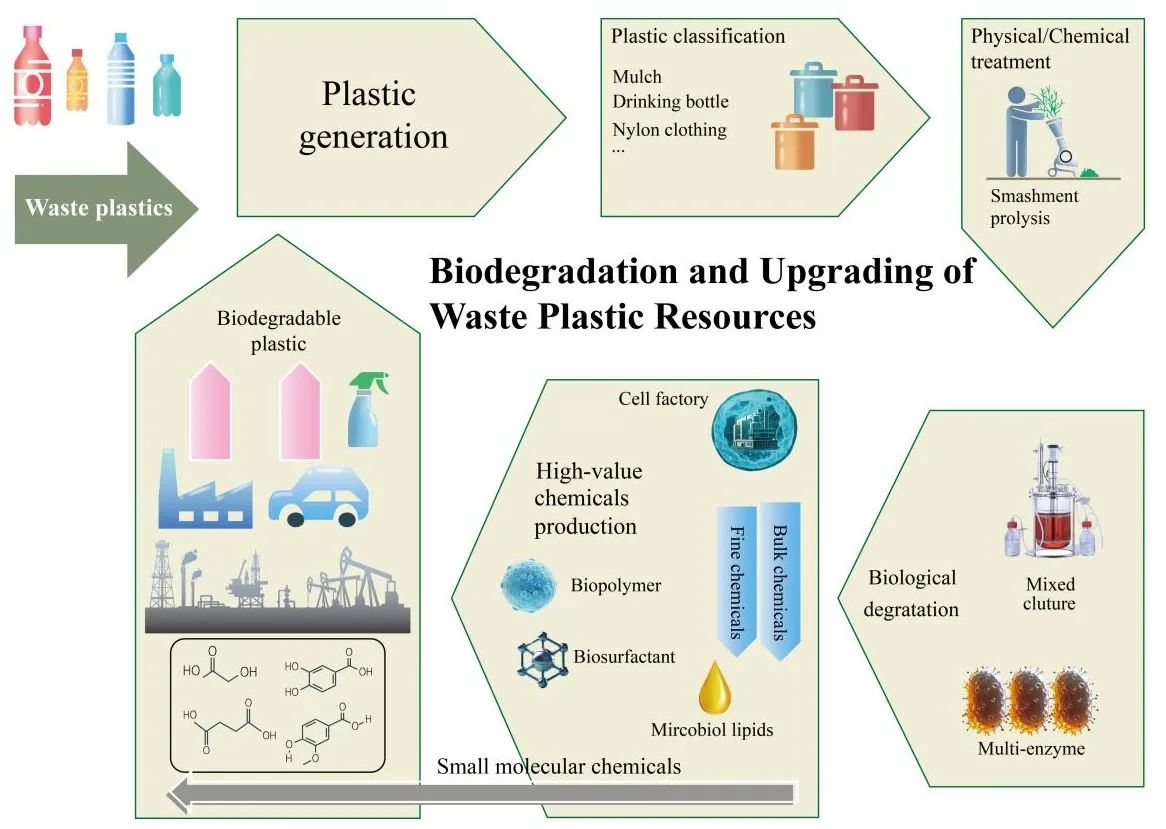
28 February 2025Synthetic Biology Boosts the Biological Depolymerization and Upcycling of Waste Plastic Resources
The high molecular weight, hydrophobicity, and strong chemical bonds of petroleum-based synthetic plastics make them highly resistant to both abiotic and microbial degradation. This resistance plays a significant role in the growing problem of “white pollution” where the accumulation of plastic waste has become a major environmental issue worldwide. Currently, plastic waste management relies largely on landfill disposal and incineration, with only about 20% of plastic waste being recycled. However, both methods create secondary environmental risks, such as contamination of groundwater, soil, air, and oceans. Therefore, developing a sustainable and efficient approach for recycling and reusing plastic waste is essential for tackling plastic pollution and promoting a circular plastic economy. One promising solution involves utilizing microorganisms and enzymes to break down plastics into oligomers or monomers, which can then be transformed into valuable chemicals. This method provides a more environmentally friendly and milder alternative to conventional waste management techniques. This review explores recent progress in biodepolymerization and biotransformation processes for plastic waste, including the identification of plastic-degrading microorganisms and enzymes, the creation of microbial consortia and enzyme mixtures, an investigation into the mechanisms of plastic depolymerization, and the conversion of degradation products into useful materials such as chemicals, energy, and other resources. Despite these advancements, several challenges remain, such as the limited availability of effective degradation enzymes, low degradation efficiency, and difficulties in utilizing the breakdown products. However, emerging technologies in synthetic biology, such as high-throughput screening, evolutionary metabolic engineering, and bioinformatics to study catalytic mechanisms of degradation enzymes, offer promising solutions to address these issues. By improving enzyme design, optimizing microbial consortia interactions, and developing efficient metabolic pathways for plastic degradation products, these innovations could greatly enhance plastic biodegradation. These advancements hold the potential to provide environmentally sustainable, economically feasible, and technically viable solutions for promoting a circular plastic economy, particularly in countries like China.
Open Access
Review
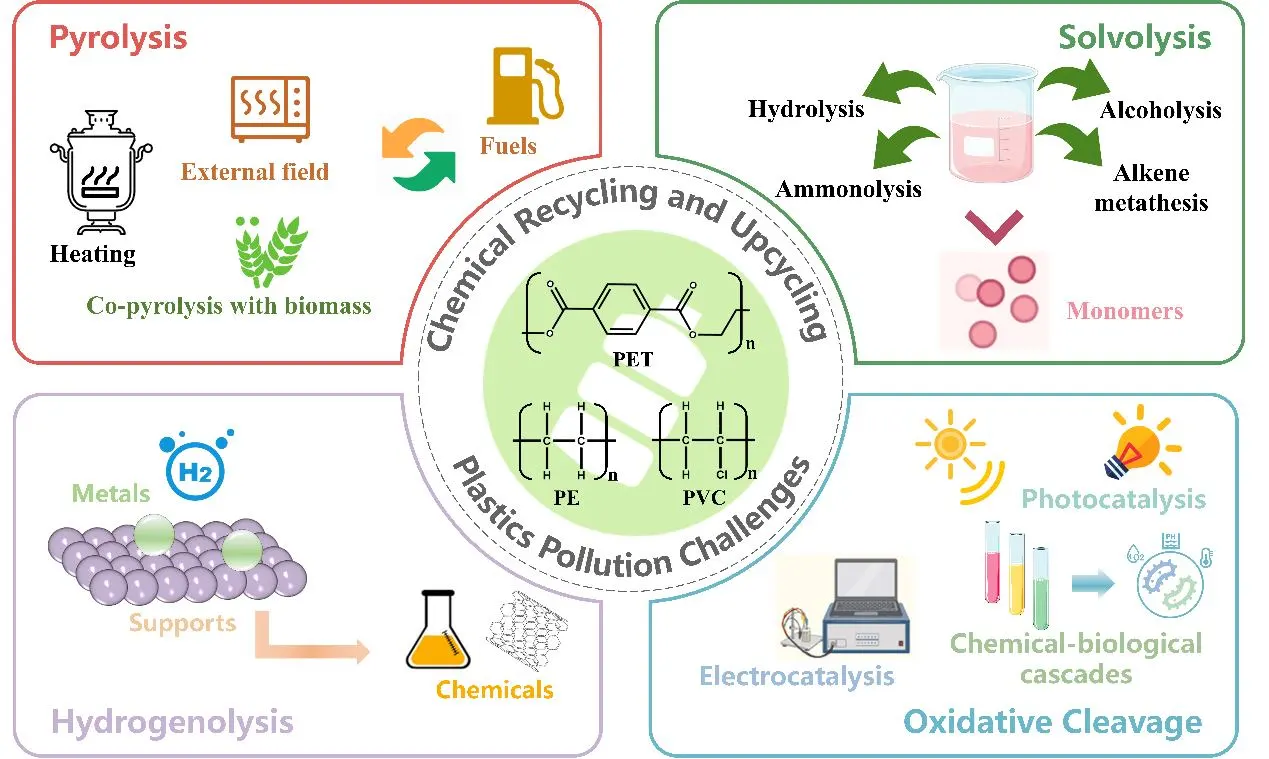
23 October 2024Chemical Recycling and Upcycling of Waste Plastics: A Review
The indiscriminate disposal of plastic waste represents a significant environmental hazard. Conventional remediation techniques, such as landfilling and incineration, also encounter limitations and are unable to adequately address the pollution issue. Chemical recycling and upcycling represent an effective method for the degradation of plastics into oligomers and subsequent transformation into other product substances. This review provides an overview of the various chemical treatment methods currently in use, from the earliest thermal degradation techniques to the emerging strategies. The conventional techniques for thermal degradation of discarded plastics frequently encounter difficulties due to the necessity for elevated temperatures, substantial energy consumption, and the generation of a heterogeneous product mixture. Significant advances have been made in the fields of catalytic solvolysis, hydrotreating, and oxidative cleavage for the recycling and upcycling of plastics under mild conditions. This review provides a comprehensive overview of the chemical treatment methods currently employed for plastics, with a particular focus on the principles and current developments, as well as the reaction mechanisms involved. Additionally, it offers a detailed introduction to various advanced catalytic technologies and the catalysts utilized. Finally, it presents prospective outlooks for different methods, based on their current development status and the gap between actual needs.