Sort by

Found 4 results

Open Access

Review

09 May 2026

Fibrinaloid Microclots-Induced Microcirculation Dysfunction: Mechanism and Laser-Based Haemodynamic Validation

The microcirculation typically refers to those capillaries less than 100 μm in diameter. We have shown that blood can clot into an anomalous amyloid form, manifesting as microclots of typically 2–200 μm equivalent diameter that are rather resistant to fibrinolysis. Because they contain fibrin and other proteins in an amyloid form, we have referred to them as fibrinaloid microclot complexes. We have also previously developed the idea that endothelial dysfunction can both lead to and be caused by the fibrinaloid microclots so formed, such that this can slow or block entirely parts of the microcirculation. The microclots might be thought of as a ‘structural’ manifestation in that they are actual, observable structures. This impairment of the microcirculation is referred to in Traditional Chinese Medicine (TCM) as ‘blood stasis’. It is thus desirable to have ‘functional’ methods that can measure these effects on the microcirculation directly. As a complement to a recent survey of nailfold capillaroscopy, the present paper provides a wide-ranging review of the utility of laser speckle imaging (LSI) and laser Doppler imaging (LDI) for assessing the microcirculation in a large variety of diseases in which it is considered to be involved. These include Long COVID, sepsis, and ischaemic stroke. In all cases in which fibrinaloid microclots have been observed, so too do these methods detect an impairment of the microcirculation. Notably, blood pressure is raised while blood flow in the microcirculation is lower; this clearly speaks to occlusion and/or capillary rarefaction, and indicates that the raised blood pressure is the effect and not the cause of the decrease in flow rate or stasis of the microcirculation. As rapid, information-rich and non-invasive methods, LSI and LDI seem to have outstanding potential for assessing the role of fibrinaloid microclots in affecting blood stasis in the microcirculation, in a huge variety of inflammatory diseases and syndromes.

Keywords: Clotting; Amyloid; Fibrinaloid; Laser-doppler imaging; Laser speckle imaging; Cross-seeding; Fibrils; Microcirculation
Cardiovasc. Sci.
2026,
3
(2), 10005; 
Open Access

Article

10 April 2026

Validation of Thymidylate Synthase as a Key Gene Inhibiting WSSV Proliferation in Procambarus clarkii

White spot syndrome virus (WSSV) is a highly pathogenic agent that poses a significant constraint on the sustainable aquaculture of the red swamp crayfish (P. clarkii). Thymidylate synthase (TS) and ribonucleotide reductase (RR), two genes involved in viral DNA replication, are potential targets for RNAi-based control, but their functional validation and low-cost use remain limited. Bioinformatics analysis revealed that WSSV TS differs evolutionarily from crustacean TS but shares 64% homology with P. clarkii TS, suggesting potential virus-host substrate competition. In vitro-synthesized dsRNA-TS and dsRNA-RR both significantly suppressed WSSV replication in infected P. clarkii. TS was selected for further study due to its evolutionary profile and potential compatibility with molecular breeding approaches. The dsRNA-TS injection eliminated detectable virus within 3 days and reduced cumulative mortality by 10%. Under simulated transport stress conditions, dsRNA-TS did not enhance survival rates, likely due to immunosuppressive effects; however, it sustained the suppression of WSSV replication from 7 to 14 days post-infection. The dsRNA-TS expressed in Escherichia coli HT115 (DE3) had no significant effect, probably because of low purity, low concentration, and poor delivery. The findings provide a sustainable biological control strategy against WSSV in P. clarkii aquaculture, and lay the foundation for the optimization of prokaryotic dsRNA production systems as well as the integration of RNAi with molecular breeding techniques.

Keywords: dsRNA; White spot syndrome virus; Procambarus clarkii; Thymidylate synthase; Ribonucleotide reductase
Biobreeding
2026,
1
(2), 10006; 
Open Access

Article

28 November 2024

Correlations of System Degradation, Losses and Significant Parameters for 49 MW Large Scale Solar Plant with Real Site Data Validations

A smooth transition towards a clean and sustainable environment will heavily rely on the continuous increase of renewable energy (RE) integration. Malaysian authorities have set targets to increase the RE capacity to 31% by the end of 2025 and achieve 40% by 2035, specifically through the power generation plan. Solar PV systems have been widely used, from industries to residential homes, because Malaysia receives a high irradiation potential of up to 5000 Wh/year. The increase in the potential of solar PV usage has allowed solar companies to provide this system regardless of its complexity and system size. However, a drop in efficiency due to system parameters within the photovoltaic (PV) system is evident over time. This study aims to analyze the relationship between solar PV system parameters and their energy performance, particularly in a tropical climate region, for a large-scale solar (LSS) plant. This project was undertaken with two objectives: First, it is to develop an optimum solar PV system by adhering to and implementing GCPV standards in Malaysia. Stage 1 will primarily focus on managing and manipulating various PV system parameters to ensure the optimum energy yield received from the plant. The system parameters analyzed are tilt angle, module technology and its effect on different temperatures, the effect of the optimizer, sizing and thermal loss. Stage 2 will then incorporate the industry data of the LSS plant by creating a Pearson’s Correlation model on how energy yield is correlated against real time system parameter values obtained. An optimum tilt angle of 10°, monocrystalline module and inclusion of optimizer increases the overall energy production from 88,986 MWh/year to 89,782 MWh/year and performance ratio (PR) from 78.9% to 79.8%. The outcome of this study demonstrates the significant parameters of the PV system to maximize the energy output to the grid. This will further support the government’s plan to reduce GHG emissions by 45% through the use of renewable energy, with the aim of producing up to 2.5 GW from LSS systems by 2030.

Keywords: Performance ratio; Correlation; Optimizer; Pearson; Temperature
Clean Energy Sustain.
2025,
3
(1), 10022; 
Open Access

Article

20 March 2024

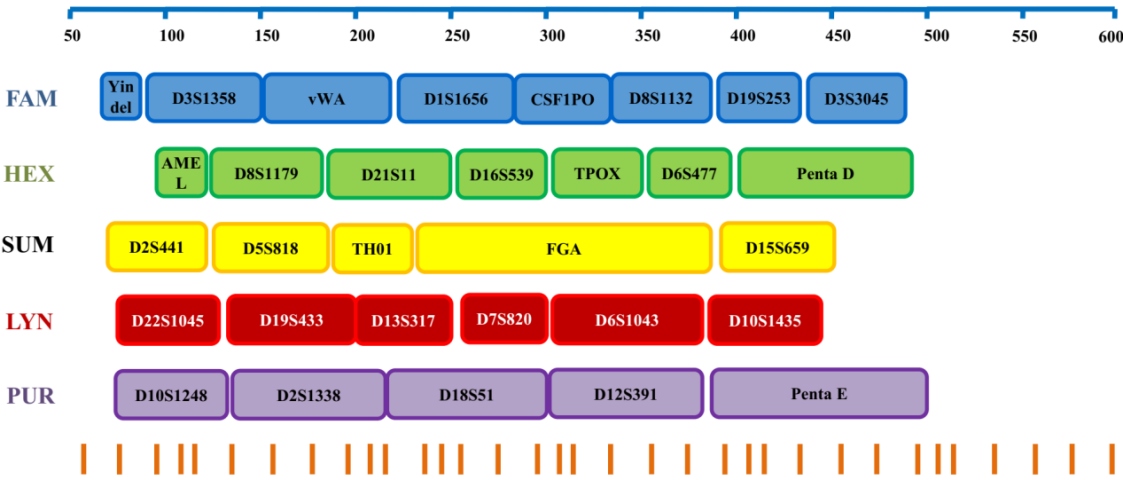
Development and Validation of a Novel 29-plex STR Multiplex System for Legal and Forensic Science

Short tandem repeat (STR) analysis is the gold standard method in forensics for personal identification and paternity testing. Researchers have been working on developing novel multiplex systems containing more STRs for database construction and improvement of personal identification ability. This study's six-dye multiplex amplification system contained 29 autosomal loci, Y-indel, and Amelogenin. System optimization and performance measures were out according to the recommendations of the Scientific Working Group on DNA Analysis Methods, including PCR condition, sensitivity, mixture, inhibitor, species specificity, reproducibility, precision, stutter, concordance, and population study. The results showed that the complete profile was obtained with 125 pg of DNA input in a sensitivity study and a mixture ratio of 1:4. The full profile was observed with a hematin concentration ≤ 125 μmol/L, hemoglobin ≤ 200 μmol/L, EDTA ≤ 1.5 mmol/L, humic acid ≤ 1.5 μg/μL, indigo ≤ 12 mmol/L, and calcium ≤ 6.0 mmol/L. Meanwhile, the system also showed reasonable species specificity. Population genetic results showed the high performance of this panel with high informative and polymorphic loci, which possessed high estimates of the combined power of discrimination (1–7.16 × 10⁻³⁵) and the combined power of exclusion (1–1.98 × 10⁻¹²) in southern Han Chinese populations.
Keywords: Forensic genetics; Short tandem repeat; Validation; 29-plex STR multiplex system
Perspect. Legal Forensic Sci.
2024,
1
(1), 10004; 
TOP