Found 12 results
Open Access
Review
02 September 2024A Review on the Application of Nanomaterials to Boost the Service Performances of Carbon-Containing Refractories
To meet the high-quality requirements for clean steel production and fully exploit the performance advantages of carbon-containing refractories, nanomaterial has been introduced into the matrix to develop advanced carbon-containing refractories. Nanomaterials, as critical additives, play a crucial role in developing novel refractories. The service performances of carbon-containing refractories are affected not only by their physical and chemical properties but also by their microstructure. This review provides a comprehensive overview of the latest research on oxide-carbon composite refractories containing nanomaterials, categorized by their composition: nanocarbons, nano oxides, and nano non-oxides. Incorporating nanomaterials can enhance the service performances of the refractories, optimizing phase composition and microstructure. Furthermore, future research directions in nanomaterial technology for carbon-containing refractories are discussed.

Open Access
Article
28 August 2024Metallurgical Characteristics of 316L Stainless Steel by Laser Additive Manufacturing
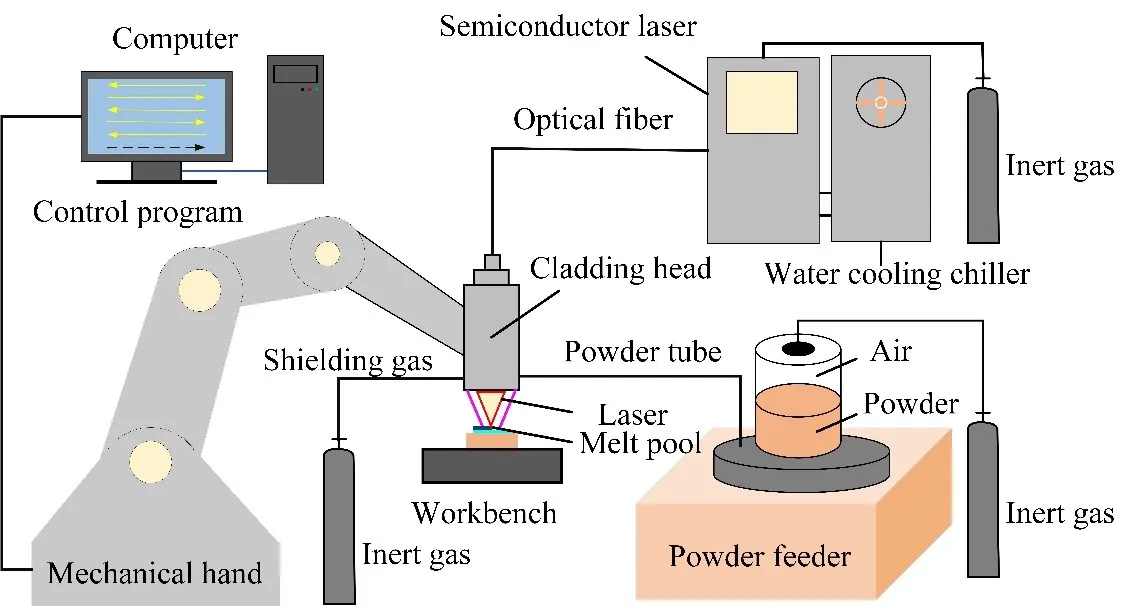
Laser Additive Manufacturing (LAM), an avant-garde technology in manufacturing, harnesses the precision of laser energy to fabricate intricate parts through the meticulous process of melting and subsequently depositing layers of metal powders. Among the esteemed materials employed, 316L stainless steel (316L SS) stands out for its unparalleled corrosion resistance, exceptional high-temperature tolerance, and remarkable creep strength, making it a ubiquitous choice in the aerospace, medical, and nuclear power sectors. LAM has distinguished itself in the fabrication of intricate 316L SS components, yet enhancing the metallurgical bonding strength within these structures remains a pivotal area of ongoing research. This research endeavor delves into the intricate microstructure and mechanical properties that characterize the interface between the LAM-produced 316L SS cladding layer and its substrate, further investigating how varying laser energy densities (E) subtly influence these properties within the additive manufactured components. Remarkably, the interface region exhibits a tensile strength of 615.1 MPa, surpassing that of both the deposited layer and the substrate by 5.4% and 7.4% respectively, underscoring a robust bond between the two layers. This investigation not only sheds light on the unique process capabilities and performance merits of LAM in crafting 316L SS cladding layers but also pioneers novel approaches and conceptual frameworks for bolstering the metallurgical bonding strength of this esteemed material. As such, it constitutes a treasure trove of insights for subsequent research endeavors and practical applications across related disciplines.