Found 3 results
Open Access
Article
13 January 2026Small Is Big: Making Difference in Lives of Small and Marginal Farmers with Focus on Women Through Rice Nursery Entrepreneurship
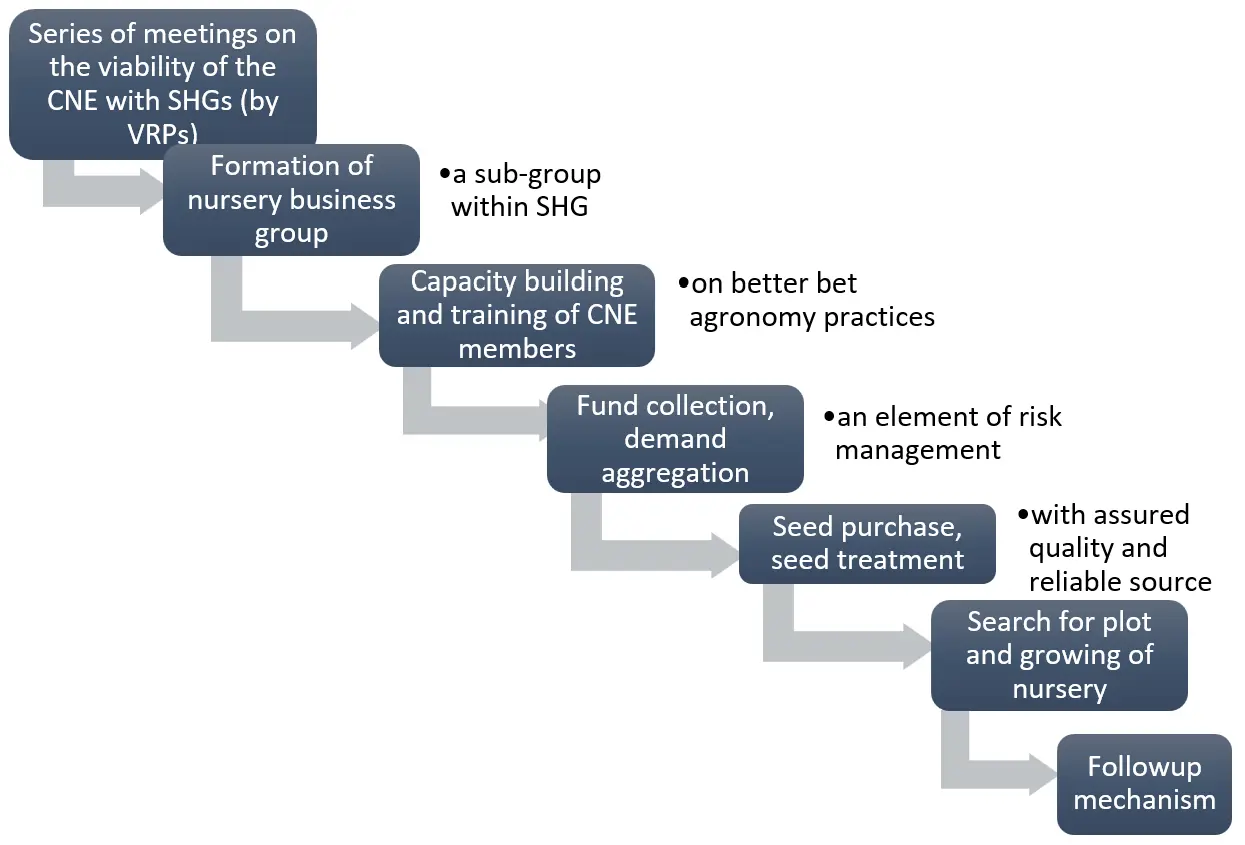
With increasing climate stress and monsoon variability, it becomes imperative to design and plan innovations catering to the needs of small and marginalized farmers in rice farming. This requires interventions to encourage farmers to adopt better management practices in their fields, using cost-saving technologies. Along with technology innovation improving yields, strategy promoting inclusion is equally important to address the gender gap existing in rice farming for equitable development. Cereal Systems Initiative for South Asia has initiated one such innovation known as Rice Nursery Enterprise (RNE), led by small and marginal farmers in the state of Bihar, India. This very innovation adopted a livelihood centric approach, reaching out to farmers through strategic partnerships with community-based organization, research universities, government agencies, private players, and Bihar Rural Livelihood Promotion Society, popularly known as JEEVIKA. In order to understand the process, characteristics, and feasibility of rice nursery entrepreneurship (RNE), a field study was organized with both men and women farmers in the state of Bihar. It was found that RNE helps both women and men farmers to set up a coping mechanism tackling monsoon variability with the availability of timely seedlings and generating additional income in their household through the service economy. Importantly, when women farmers are strategically mainstreamed with informed choices to lead through Self Help Groups (SHGs), it was found that, along with added income and coping variable monsoon, they are increasingly establishing their identity as farmers at both the household and community level.
Open Access
Article
04 January 2026Valuing Family Farming in Portugal through the Family Farming Statute
Many family farmers depend on public support to maintain their activity, which highlights the need to review the challenges associated with their farming system and marketing. The importance of family farming reinforces the need to include this sector in agricultural, environmental, and social policies, identifying opportunities and promoting the necessary changes to ensure more equitable and balanced development. In Portugal, in 2018, the Family Farming Statute was established to distinguish, recognise, and value family farming through specific local support measures. In this study, farmers with the Family Farming Statute in the North of Portugal were characterised. Interviews were conducted using questionnaires, and the indicators/requirements currently provided in the statute were analysed. Based on the literature review, new indicators have been suggested to help increase the number of family farmers included in the Statute. Despite being a good policy to support family farming, the Family Farming Statute needs revision to ensure wider inclusion. Support should be more attractive and comprehensive, including economic support, technical assistance, training programmes, local marketing channels, valorisation of traditional products, and short supply chains.

Open Access
Article
03 June 2025Ecosystem Service Importance, Contributions, and Trends: Perspectives from Farmers in the Mountains of Nepal
Understanding farmers’ perceptions of local ecosystem services is crucial for developing effective ecosystem management strategies and policy interventions to improve the overall welfare of residents. Although there is widespread recognition of the linkages between ecosystem services and human well-being, empirical studies examining farmers’ perceptions and contributions to local ecosystem services, particularly at the micro level in mountainous regions, remain limited. To address these knowledge gaps, we conducted an empirical study employing focus group discussions (n = 6), key informant interviews (n = 12), and household surveys (n = 370) in Mid-Marsyangdi watershed, Lamjung, Nepal. The study revealed that farmers perceive high dependency on regulating followed by provisioning, supporting, and cultural ecosystem services such as freshwater, nutrient cycling, water regulation and purification, timber production, livestock fodder, and natural hazard regulation. Their contributions are notably high in managing freshwater, nutrient cycling, and timber production. Farmers’ practices like forest conservation, agroforestry, inter-cropping, terracing, terrace improvement, multi-year cropping, and organic composting enhance ecosystem services. A significant discrepancy exists between perceived importance and actual contribution, particularly in water regulation, purification, and wild edible food, highlighting areas needing greater attention. The study showed a significant difference (p < 0.001) between perceived importance and contribution across all ecosystem services, with perceived importance consistently higher. Further, a study showed the influence of socio-demographic variables on the farmers’ perception. These findings can inform more effective policy-making for farmer welfare, mountain development, and environmental management.
