Found 79 results
Open Access
Review
23 September 2024Icing Models and Mitigation Methods for Offshore Wind in Cold Climate Regions: A Review
Offshore wind turbines (OWTs) in cold climate regions have become increasingly significant due to the abundant wind resources with the development of renewable energy. These areas offer considerable potential for the development of OWTs. Generating energy for communities in cold climate regions involves overcoming significant challenges posed by the remote and harsh environmental conditions. This review presents the state-of-the-art research regarding prediction models for ice accretion on wind turbine components. Furthermore, this review summarizes advanced mitigation solutions, such as cold-weather packages and ice protection systems, designed to address icing issues. The present study identifies critical knowledge gaps in OWT deployment in cold climate regions and proposes future research directions.

Open Access
Article
03 September 2024The Economic Impact of High-Speed Rail on Rural and Inner Urban Areas Economy: The Case Study of HSR Naples-Bari in South of Italy
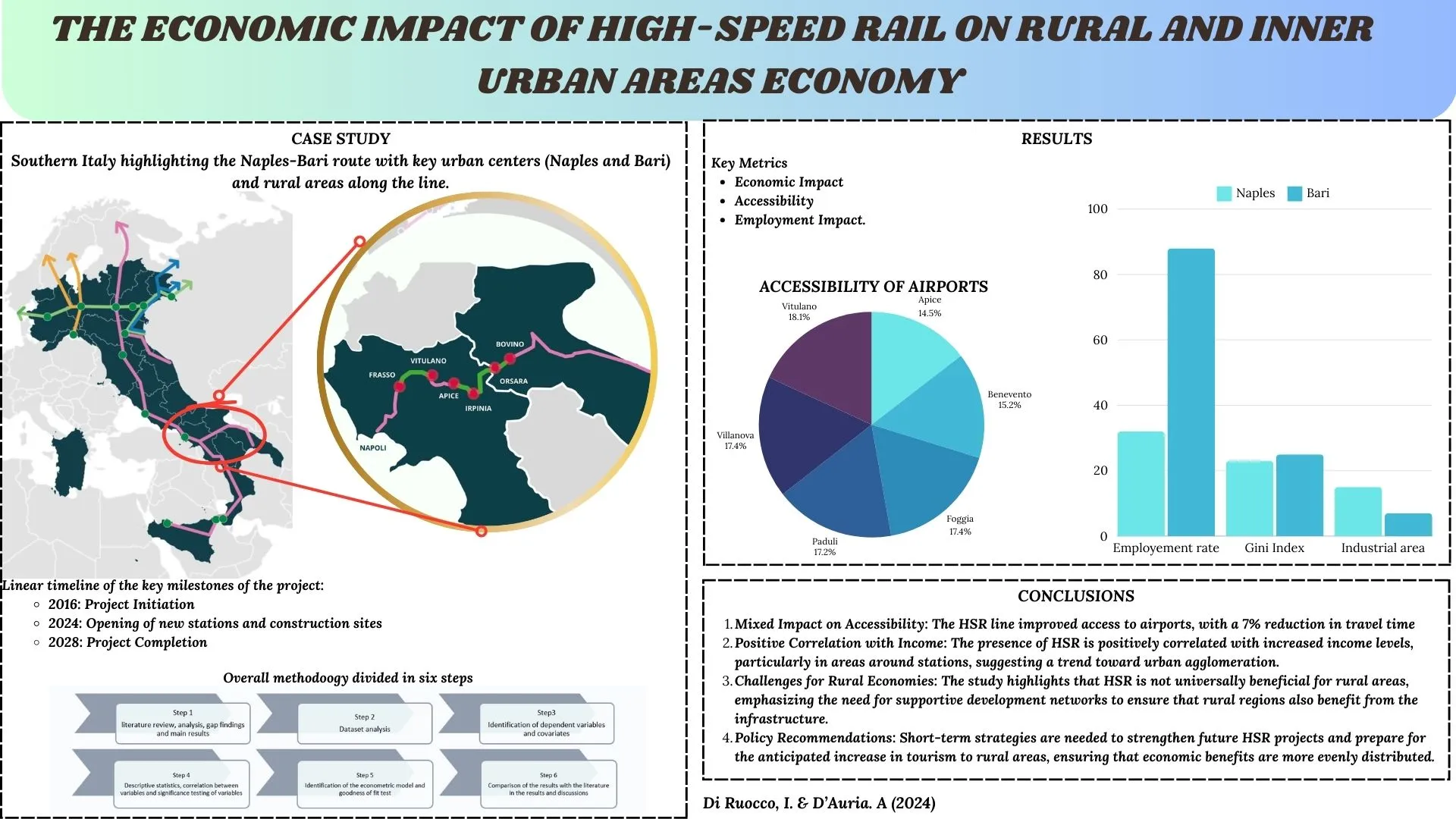
High-speed rail (HSR) has revolutionized global transportation by providing fast, reliable, and efficient city-to-city travel. While its urban benefits are well-documented, the potential advantages for rural development are often overlooked. The high-speed rail project on the Naples-Bari route in Southern Italy aims to connect the urban centers of Naples in Campania and Bari in Apulia, traversing inland and rural areas. Initiated in 2016 and planned for completion in 2028, this project is anticipated to deliver numerous benefits. The purpose of this research is to examine the largely overlooked high-speed rail (HSR) in Southern Italy from an economic and territorial perspective and to determine whether it can sustainably promote rural development in the areas along the railway line. This study examines whether the HSR line will enhance economic activities, strengthen industries, and improve spatial accessibility in rural areas. Using a 2020 dataset covering 25 municipalities along the railway line, including those with stations and construction sites projected to open by 2024, three regression models were employed to estimate potential improvements in income and employment. The findings indicate mixed results: access time to airports improves, decreasing by 7%, while access to ports does not see similar benefits. Income shows a positive correlation with HSR, increasing with population growth around stations, suggesting a trend towards urban agglomeration. However, the study underscores that HSR is not universally beneficial for rural economies and that supportive development networks are crucial. Policies should adopt short-term strategies to strengthen future HSR projects and prepare for the anticipated surge in mass tourism to rural areas.
Open Access
Article
30 August 2024Model for Forecasting the Raw Material Base of the Textile Industry Based on the Analysis of the Dynamics of Production Volumes
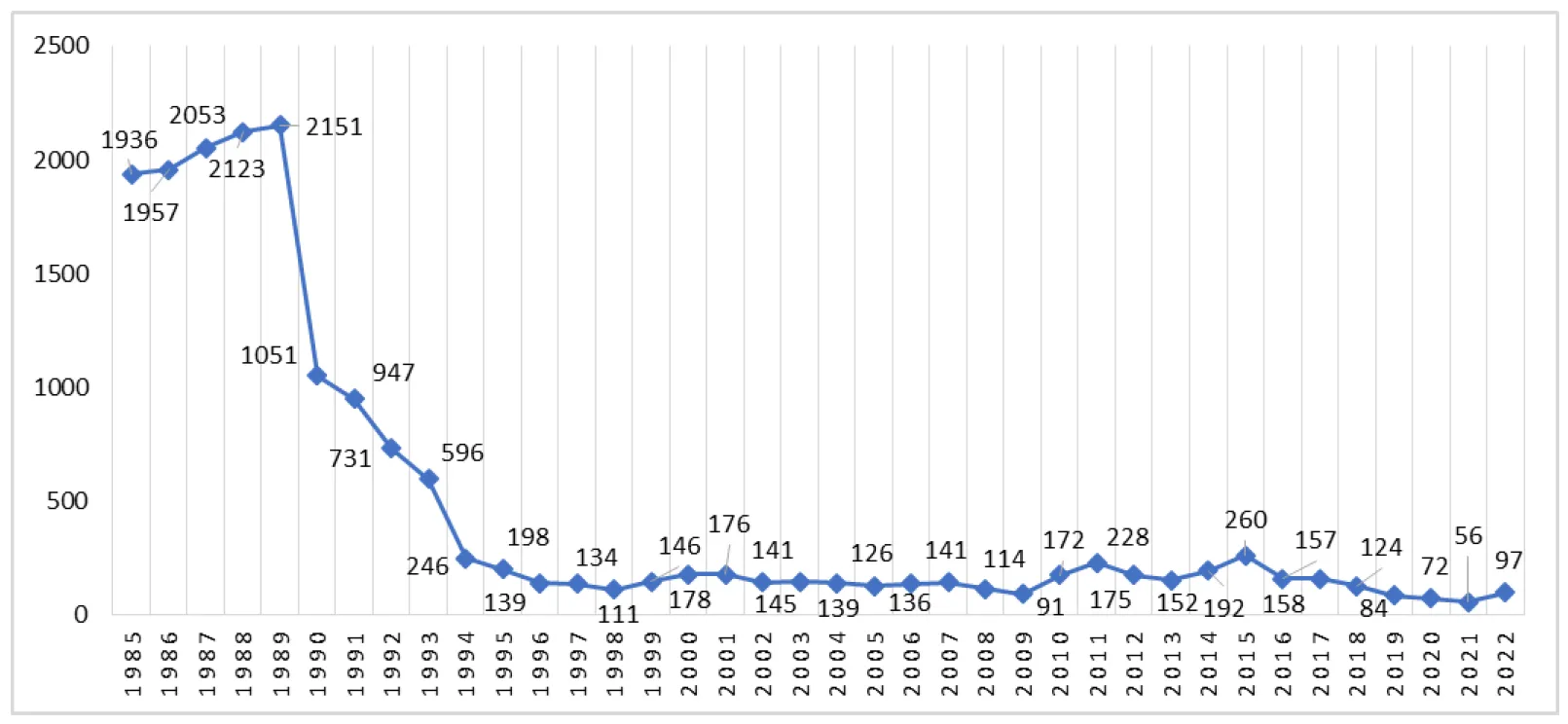
The scientific article analyzes the dynamics of textile industry production in the USSR and the Russian Federation from 1985 to 2022 years.The article provides a fairly complete overview of modern methods of forecasting the development of objects, mainly based on time series analysis, including issues of forecasting cyclic and discontinuous processes, forecasting multidimensional objects with a correlated system of indicators. Authors calculate the forecast until 2026 year based on a bank of mathematical forecasting models implementing various monotonic nonlinear transformations both along the ordinate axis and along the abscissa axis. The criterion of the minimum variance of the forecast error was used as a criterion for selecting a specific model from the bank. The scientific value of the article lies in the fact that, for the first time, it offers a criterion for choosing a mathematical model from a set of them, which uses the minimum estimate of the variance of forecast errors for this model. This work can be considered a step towards the creation of artificial intelligence since the selection of the optimal model for a specific time series allows to obtain a training sample for it, which is fundamentally impossible to obtain without it.
Open Access
Article
28 August 2024Overcoming SME Legal and Regulatory Challenges and Fostering Sustainable Collaboration and 7PS Engineering in the Digital Age through Integrating the X.0 Wave Theory & SME 5.0 Concept
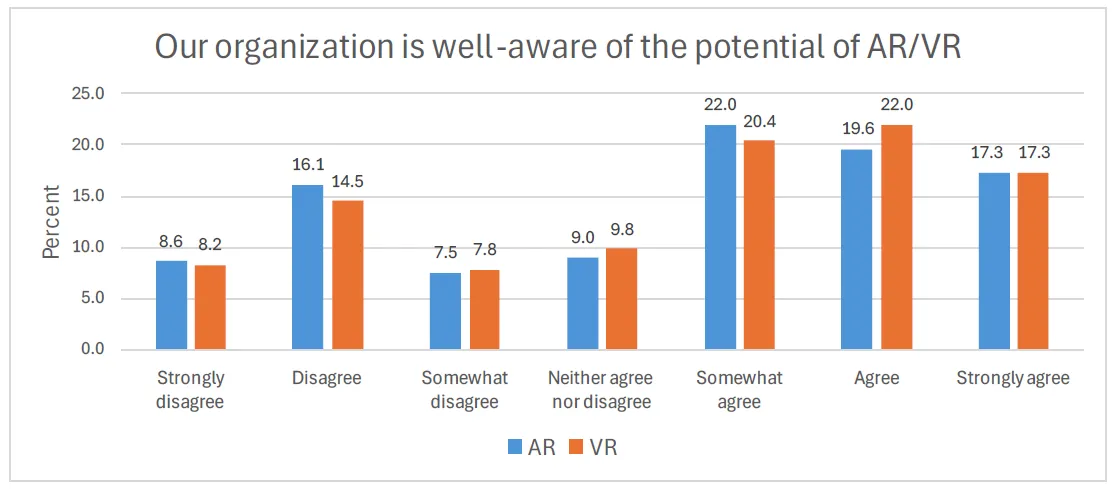
Technological innovations, education, business and society change quickly and often unpredictably. The fusion of artificial intelligence (AI), machine learning, augmented reality (AR), virtual reality (VR) and augmented reality (XR) opens a new era in which work, production, communication and thought processes are massively transformed. In this context, the challenge arises: How can small and medium-sized enterprises (SMEs) adapt to this accelerated change? This study highlights a path forward and introduces the concept of “SME 5.0” or “Hybrid SME” or “SME of Tomorrow” as a comprehensive solution to address the complexities of the digital age. In this integrated exploration of the X.0 Wave Theory and SME 5.0 Concept, the framework for human civilization’s evolution and technological shifts converges with a practical roadmap for small and medium-sized enterprises (SMEs) navigating the dynamic digital landscape. Acknowledging transformative waves in technology, economics, and societal structures within the X.0 Wave Theory, the study accentuates the ongoing nature of these shifts. It advocates for a long-term perspective, urging policymakers and industry leaders to consider potential future scenarios to devise strategies fostering innovation, competitiveness, and privacy safeguards. Simultaneously, the study introduces SME 5.0 as a holistic solution for SMEs, aligning with the transformative success envisioned by the X.0 Wave Theory. Proposing the Seven Pillars of Sustainability (7PS) framework tailored to SMEs, the concept emphasizes digitalization and sustainable technology. The title, “Harmonizing the X.0 Wave Theory and SME 5.0 Concept”, encapsulates the synergy between theoretical underpinnings and practical solutions. The subtitle, “Fostering Sustainable Collaboration, 7PS Engineering, and Overcoming Legal Challenges in the Digital Age”, provides a glimpse into the study’s focus on practical implications, sustainability, engineering, and legal considerations for SMEs in the rapidly evolving digital era.
Open Access
Review
27 August 2024Strongly Correlated Electrons and High Temperature Superconductivity
It is very important to clarify the mechanism of high-temperature superconductivity in strongly correlated electron systems. The mechanism of superconductivity in high temperature cuprate superconductors has been studied extensively since their discovery. We investigate the properties of correlated electron systems and mechanism of superconductivity by using the optimization quantum variational Monte Carlo method. The many-body wave function is constructed by multiplying by correlation operators of exponential type. We show that d-wave superconducting phase exists in the strongly correlated region where the on-site repulsive interaction is as large as the bandwidth or more than the bandwidth. The d-wave pairing correlation function is shown as a function of lattice sites, showing that the long-range order indeed exists.

Open Access
Review
22 August 2024Current Application of Modeling and Cell-Free System for Synthetic Gene Circuit Design
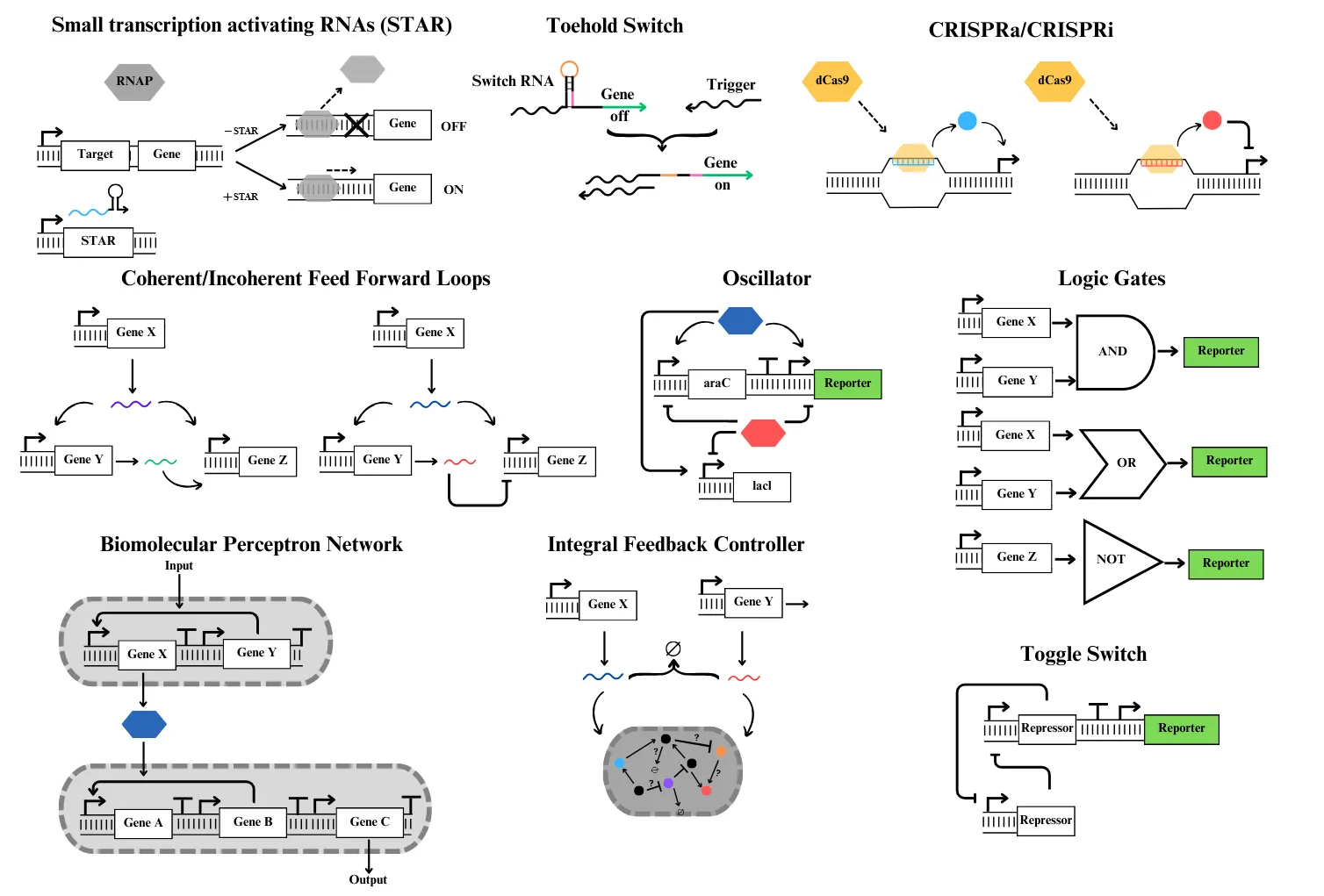
The desire to harness nature’s capability of precise gene expression regulation has motivated the pursuit of synthetic gene circuits. However, designing and building novel synthetic gene circuits with predictable dynamics is nontrivial. To facilitate the design, cell-free systems have emerged as an effective alternative testbed to living biological systems in characterizing and prototyping synthetic gene regulatory networks, given its relative simplicity and designability in terms of cellular contents. Meanwhile, as parameterizing and analyzing first principle-based models can shed light on the required kinetic parameter values, thus the specific regulatory components, for the desired dynamics, coupling mathematical modeling with cell-free experiments has become an effective approach in exploring novel synthetic gene circuits. In this mini-review, we provide an overview of current progress on using deterministic first principle-based mathematical modeling in conjunction with cell-free systems, in designing and characterizing novel gene circuits, as well as the standing challenges and issues with this approach.
Open Access
Article
19 August 2024Maturity Model for the Manufacturing Industry with Case Experiences
This manuscript describes the research path when extending a maturity model. The initial model—ManuMaturity—was for manufacturing companies aiming beyond Industry 4.0. The extended OSME model covers data sharing within a supply chain, an open innovation ecosystem and sustainable manufacturing. The OSME maturity model has five maturity levels: traditional factory, modern factory, agile factory, agile cognitive factory and agile cognitive industry and seven dimensions (such as infrastructure, data, customer, business model, employee, sustainability and processes). The tool was experimented with in manufacturing companies on two occasions: with a set of manufacturing companies and a group of companies. In both cases, feedback was gathered from the respondents. The article follows the maturity assessment development phases such as scope, design, populate, test, deploy and maintain, and reports the software implementation of the maturity tool. With the help of the developed maturity model and the tool, it was possible to make assessments in case companies, where the tool and its results were commented mostly positively. The tool can be applied in various ways. For example, a group of people can jointly submit their common understanding and have a thorough discussion or a group of company representatives submit their responses and the variation is discussed afterwards.

Open Access
Review
30 May 2024A Review on Design of Sustainable Advanced Materials by Using Artificial Intelligence
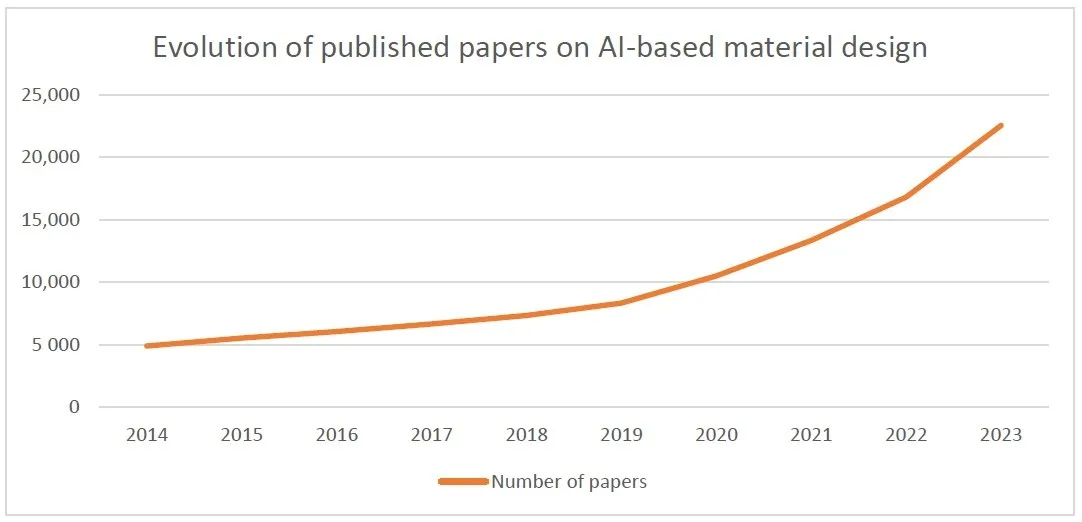
This paper gives a comprehensive review of scientific interests and current methodologies of artificial intelligence applied to advanced material design and discovery by taking into account multiple sustainable design criteria such as functionalities, costs, environmental impacts, and recyclability. The main research activities include predicting material properties, compositions, and structures with data mining, new material discovery, hybrid modeling approaches combining AI techniques and classical computational formulations based on physical and chemical laws, and multicriteria optimization of materials. Based on this review, a short analysis is provided on the perspectives of this research area in the future, aiming at creating an everything connected material life cycle with real-time traceability systems
Open Access
Communication
30 May 2024A Novel Animal Model for Pulmonary Hypertension: Lung Endothelial-Specific Deletion of Egln1 in Mice
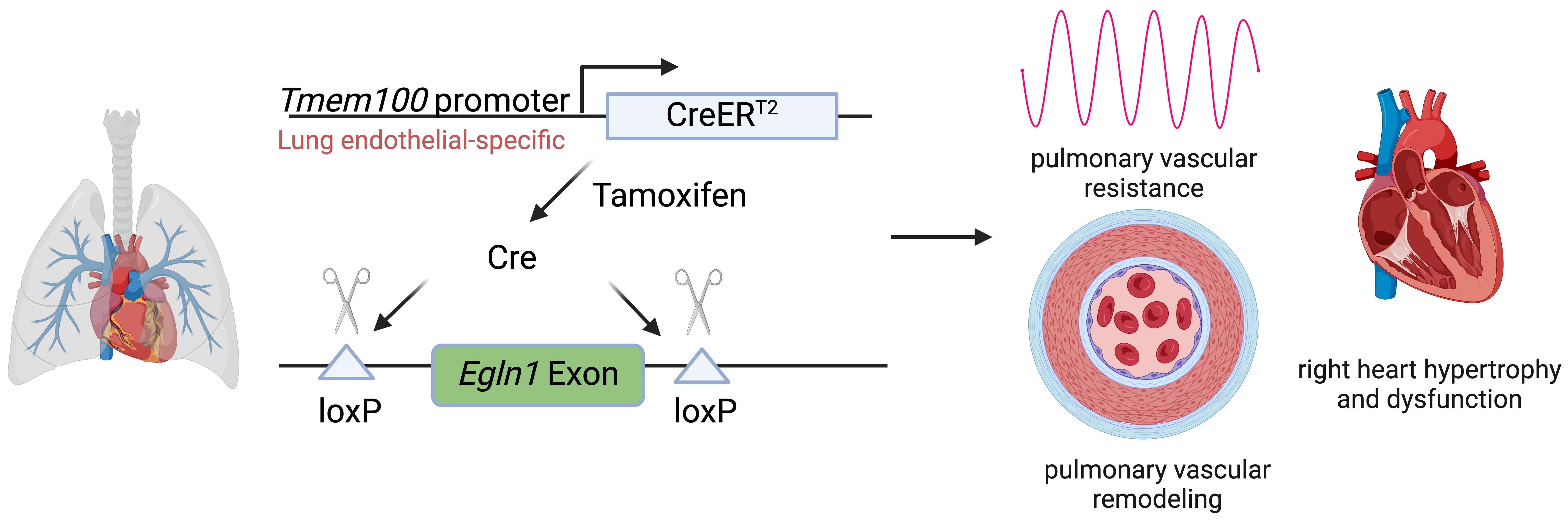
Pulmonary arterial hypertension (PAH) is a devastating disease characterized by high blood pressure in the pulmonary arteries, which can potentially lead to heart failure over time. Previously, our lab found that endothelia-specific knockout of Egln1, encoding prolyl 4-hydroxylase-2 (PHD2), induced spontaneous pulmonary hypertension (PH). Recently, we elucidated that Tmem100 is a lung-specific endothelial gene using Tmem100-CreERT2 mice. We hypothesize that lung endothelial-specific deletion of Egln1 could lead to the development of PH without affecting Egln1 gene expression in other organs. Tmem100-CreERT2 mice were crossed with Egln1flox/flox mice to generate Egln1f/f;Tmem100-CreERT2 (LiCKO) mice. Western blot and immunofluorescent staining were performed to verify the knockout efficacy of Egln1 in multiple organs of LiCKO mice. PH phenotypes, including hemodynamics, right heart size and function, pulmonary vascular remodeling, were evaluated by right heart catheterization and echocardiography measurements. Tamoxifen treatment induced Egln1 deletion in the lung endothelial cells (ECs) but not in other organs of adult LiCKO mice. LiCKO mice exhibited an increase in right ventricular systolic pressure (RVSP, ~35 mmHg) and right heart hypertrophy. Echocardiography measurements showed right heart hypertrophy, as well as cardiac and pulmonary arterial dysfunction. Pulmonary vascular remodeling, including increased pulmonary wall thickness and muscularization of distal pulmonary arterials, was enhanced in LiCKO mice compared to wild-type mice. Tmem100 promoter-mediated lung endothelial knockout of Egln1 in mice leads to development of spontaneous PH. LiCKO mice could serve as a novel mouse model for PH to study lung and other organ crosstalk.
Open Access
Article
14 May 2024Measurement and Structure of Common Prosperity of Urban Residents the Case of Hangzhou, China
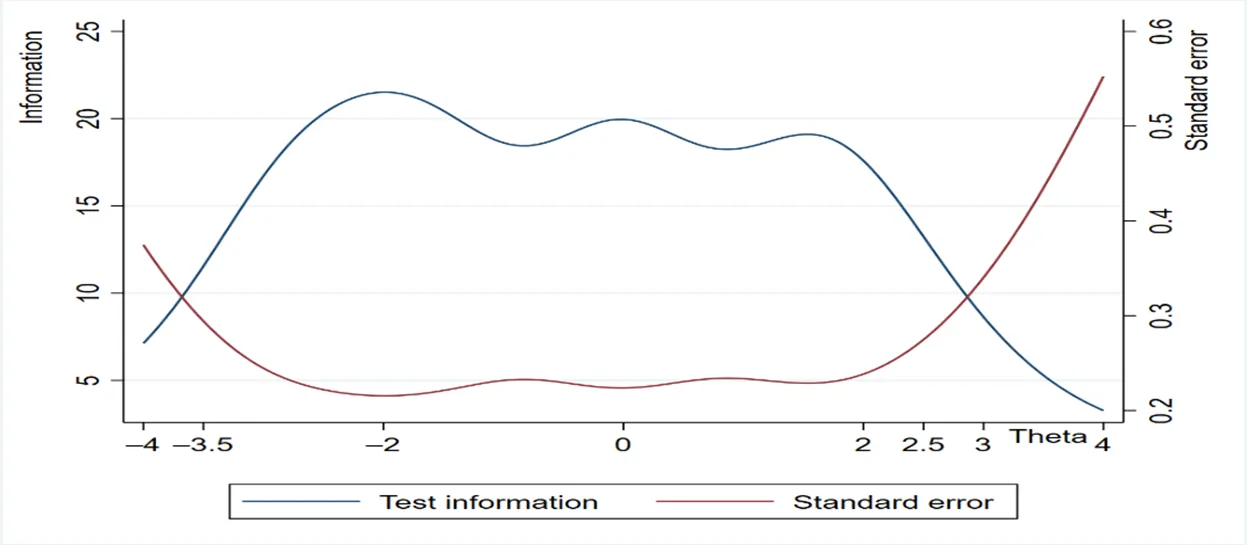
Common prosperity is an important feature of the social state that the people of the world aspire to, and an important feature of the Chinese path to modernization. Taking common prosperity as the result of income and assets does not facilitate a full understanding of people’s common prosperity, because common prosperity also includes people’s pursuit of subjective happiness such as happiness and satisfaction. From the perspective of the need for a better life in China, this study constructs a subjective evaluation system of the common prosperity of urban residents, including 5 dimensions and 25 specific indicators. It uses survey data from 460 participants and applies the graded response models to estimate parameters and predict latent variables. We find that 21 indicators are in line with the reasonable range of basic assumptions and parameters. They have a strong ability to distinguish the common prosperity of residents in different regions, but have different functional characteristics. The confirmatory factor analysis shows that the common prosperity index of residents includes four potential factors: income, education, medical care, and old-age care, and ecology, which has a good structural effect. In terms of weight, education, medical care and old-age care are the most important factors influencing common prosperity. Among them, the classification policy of high school entrance examination, the quality and fairness of primary and secondary education, the degree of medical insurance security, and the waste sorting and community security are important aspects of evaluating the Common prosperity of residents.